-
page 3
-
page 2
-
page 1
About The Project
Inspiration
At our university, attendance tracking is a real and recurring issue. Large class sizes, manual roll calls, and delayed reporting make it hard to identify students at risk early. We wanted to solve a problem we see every semester: by the time attendance issues are noticed, it is often too late for timely intervention.
This project was inspired by one core question:
How can we convert attendance from a manual checklist into an automated early-warning system?
What We Built
We built an AI-powered attendance monitoring platform that automates the full workflow:
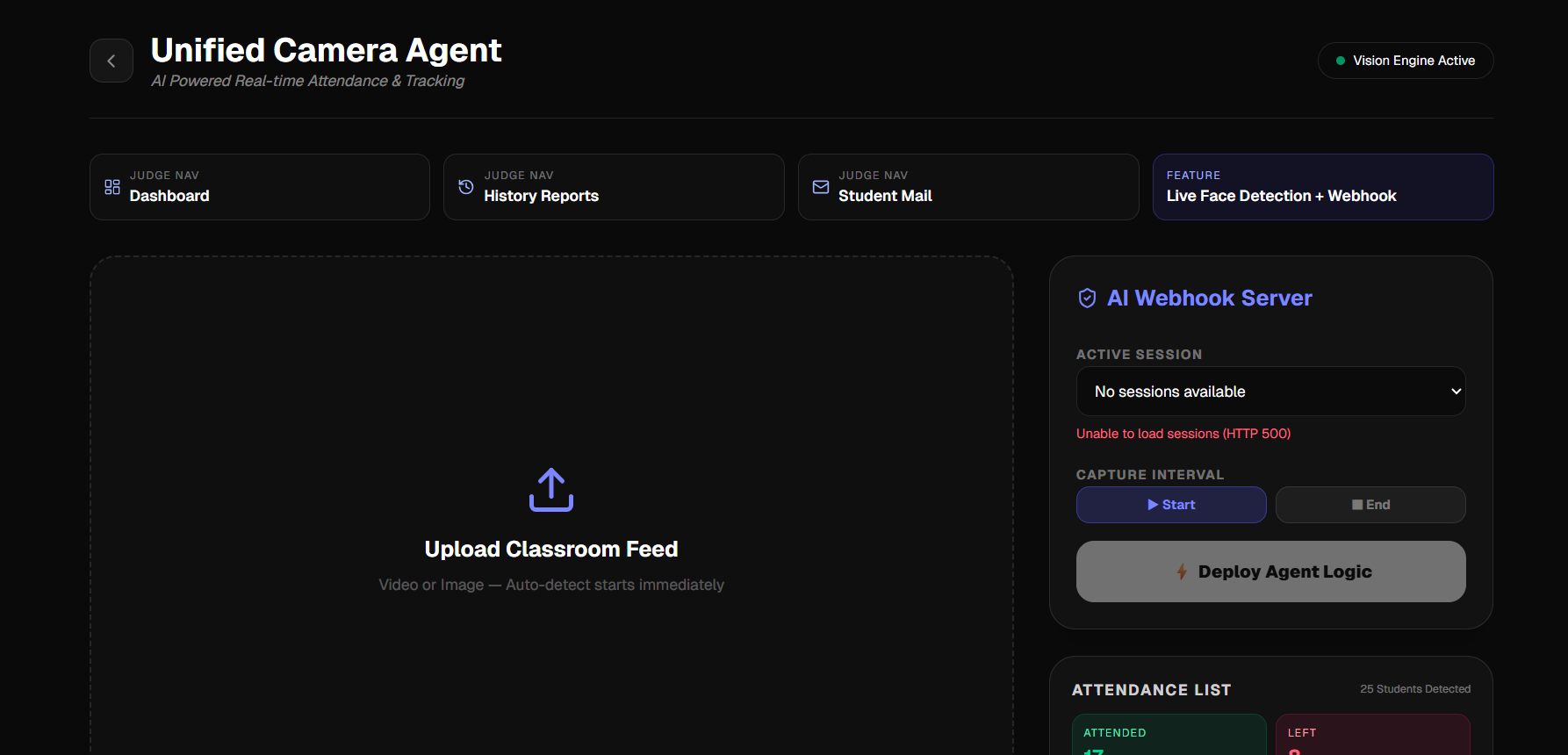
- Classroom capture and session monitoring
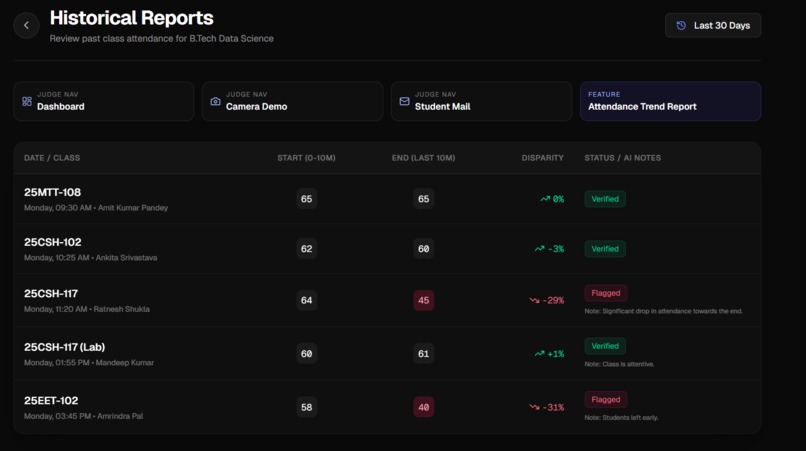
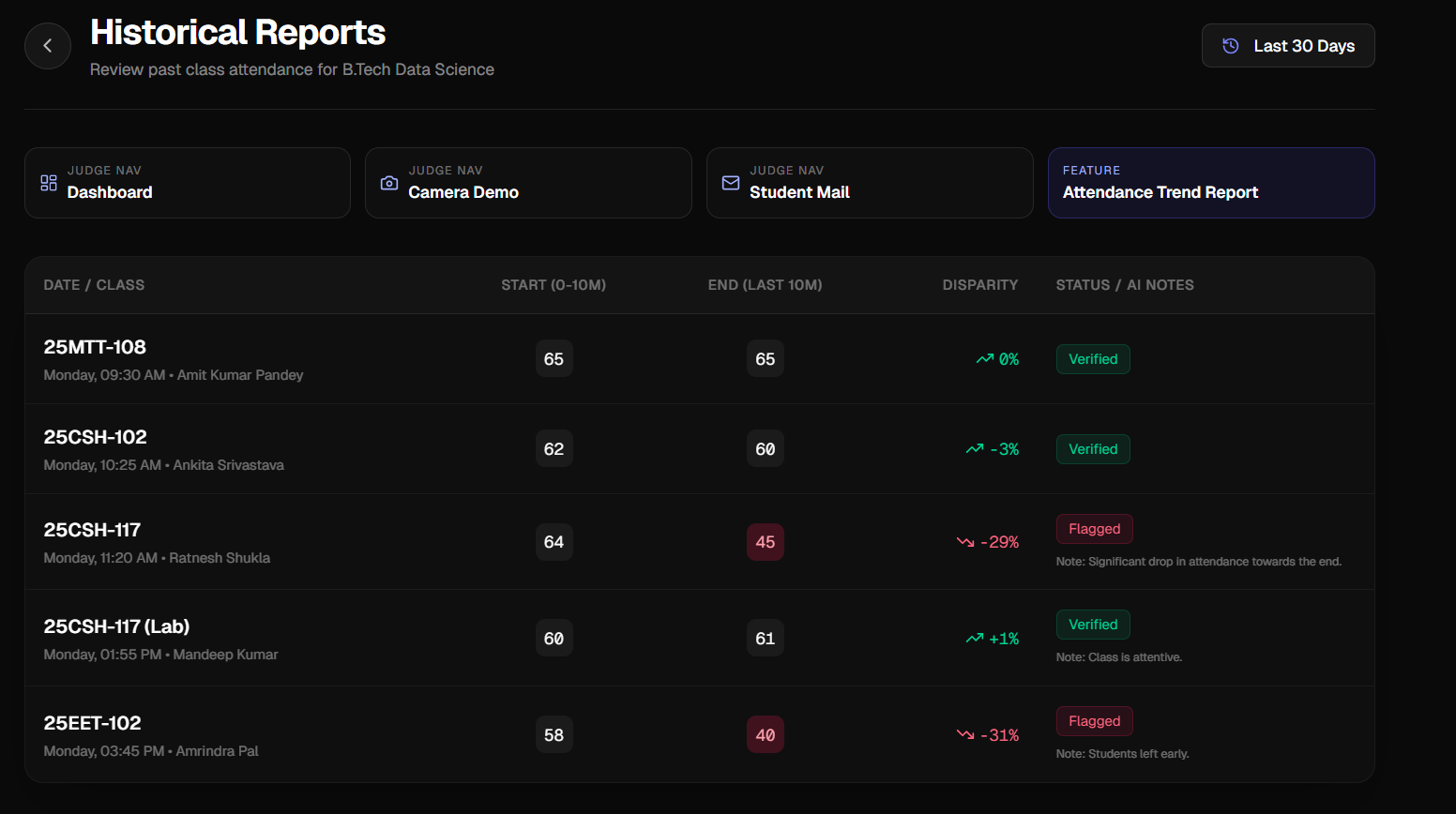
- Attendance discrepancy detection
- Low-attendance risk identification (below 75%)
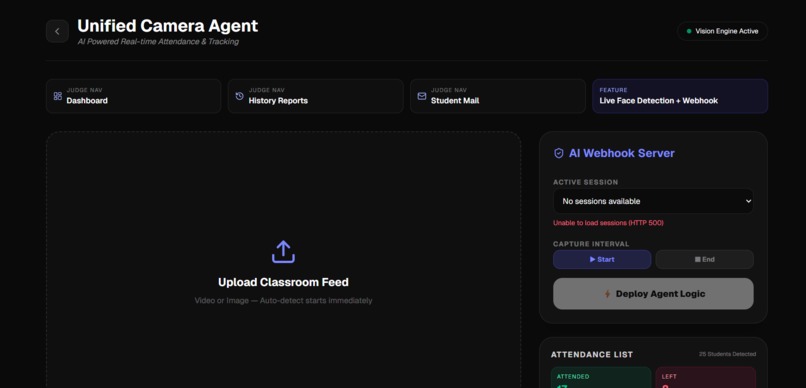
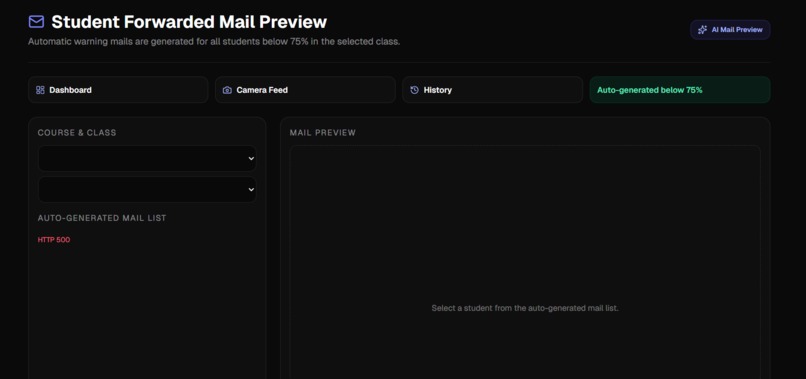
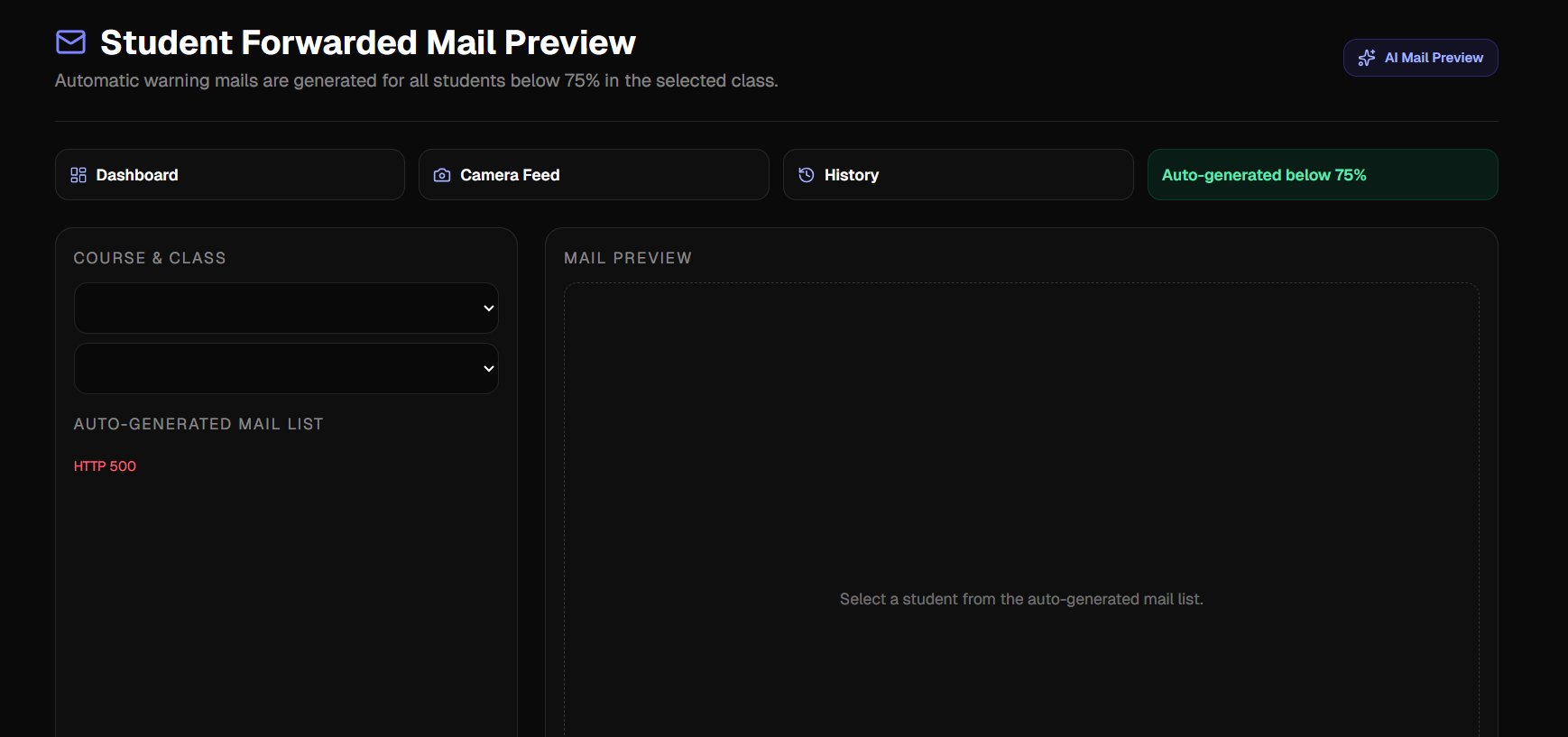
- Automated warning email generation
- Subject-level prioritization insight for each student
The platform gives faculty and admins a live dashboard view (Course -> Subject -> Class), camera/analysis workflow, historical reporting, and student-specific mail previews.
How We Built It
Our stack:
- Next.js + TypeScript for full-stack app architecture
- Prisma + PostgreSQL for structured attendance/session data
- Gemini API for analysis and communication intelligence
- Nodemailer for automated warning mail pipeline
- Face-detection-assisted classroom feed workflow for attendance context
Core system flow:
- Capture classroom feed snapshots
- Analyze session context and attendance signals
- Compare across class intervals
- Compute attendance percentage by student
- Flag students under threshold
- Generate personalized warning content automatically
Challenges We Faced
- Deployment consistency on cloud builds (Prisma client + cached dependency behavior)
- Runtime stability between local and production environments
- Handling missing/incomplete real-world data during demo scenarios
- Ensuring the platform remains functional even when external services are partially unavailable
- Designing a judge-ready UI that clearly demonstrates end-to-end automation
What We Learned
- Production readiness is not just coding features, it is handling edge cases and deployment behavior.
- AI is most useful when connected to operational workflows, not used as an isolated chatbot.
- Good intervention systems require explainability, not just alerts.
- Building for real institutional use means reliability, graceful fallbacks, and clear data visibility.
Why This Matters
This is not a hypothetical problem for us. Attendance management is one of the practical issues in our university, and this project is our attempt to make that process intelligent, proactive, and scalable.
A Simple Framing
If attendance risk is modeled as:
$$ R = \max(0, 75 - A) $$
where $A$ is a student’s attendance percentage, then our platform is designed to detect non-zero risk early and trigger intervention automatically, before academic impact compounds.
Outcome
We transformed attendance from a reactive administrative task into a proactive AI-assisted intervention pipeline.
The result is faster decisions, lower manual workload, and better support for students who need attention first.
Built With
- framer-motion
- gemini-api-(google-generative-ai)
- lucide-react
- next.js
- node.js
- nodemailer-(smtp)
- postgresql
- prisma-orm
- react
- tailwind-css
- typescript
- vercel

Log in or sign up for Devpost to join the conversation.