-
-
Slide Deck
-
Slide Deck
-
Slide Deck
-
Slide Deck
-
Slide Deck
-
Slide Deck
-
Slide Deck
-
Slide Deck
-
Slide Deck
About the Project
Inspiration
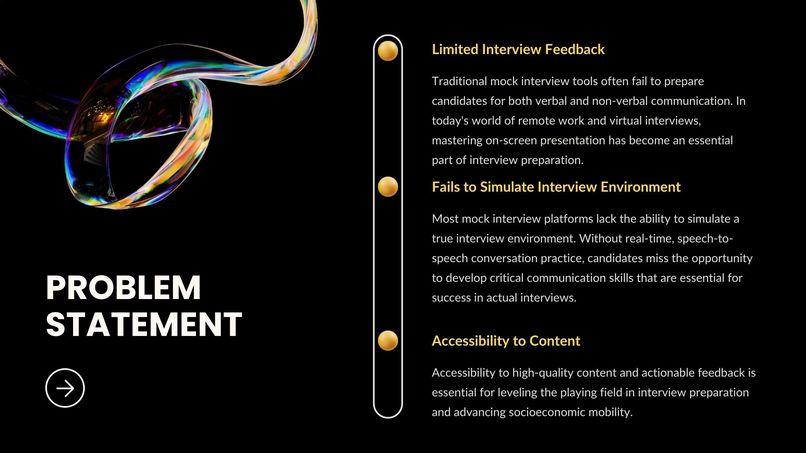
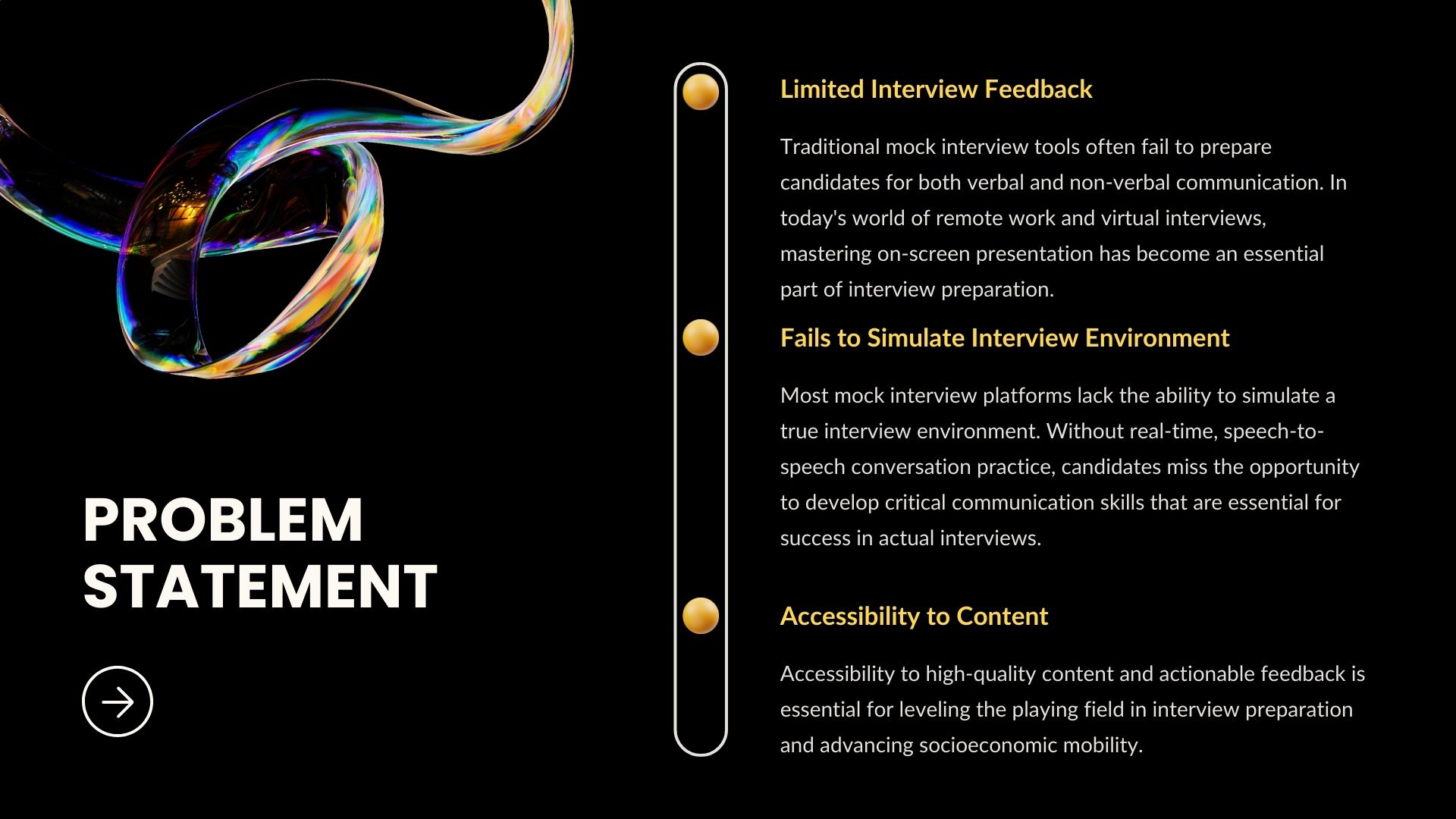
In today’s highly competitive job market, excelling in interviews is no longer optional—it’s essential. Yet, most mock interview platforms fall short in preparing candidates holistically, focusing only on verbal responses while neglecting non-verbal communication—an area that can make or break an interview.
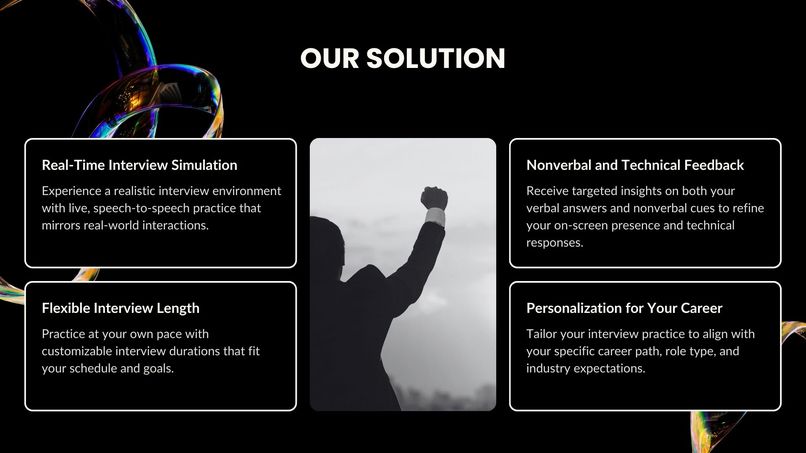
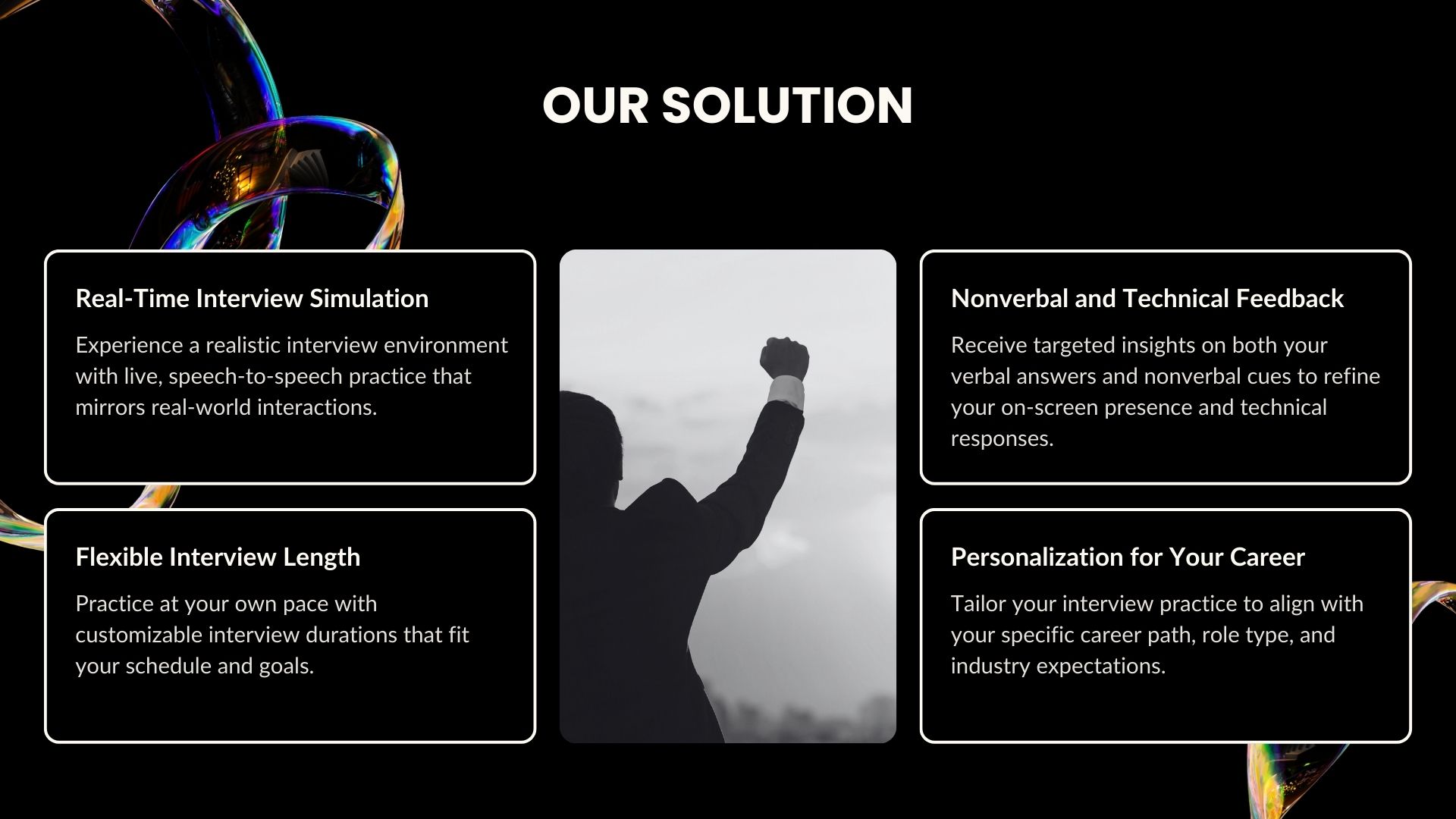
We set out to address this gap by creating a tool that provides comprehensive, real-time feedback on non-verbal cues such as body language, eye contact, facial expressions, and voice modulation. These factors are especially critical in remote interview settings, where subtle communication nuances are easily lost. Importantly, our target audience includes individuals who lack access to interview coaching and professional development resources, empowering them with the tools needed to succeed and grow. With Pre-view: AI Mock Interview Coach, we aim to help candidates build confidence, enhance their presentation, and deliver standout performances.
What it Does
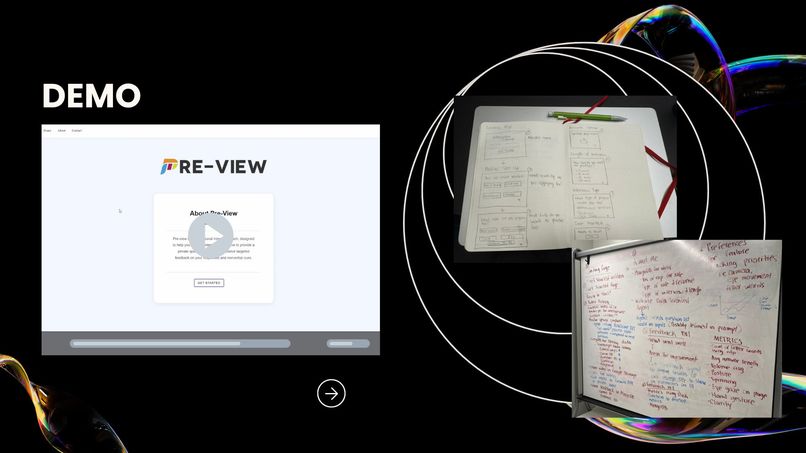
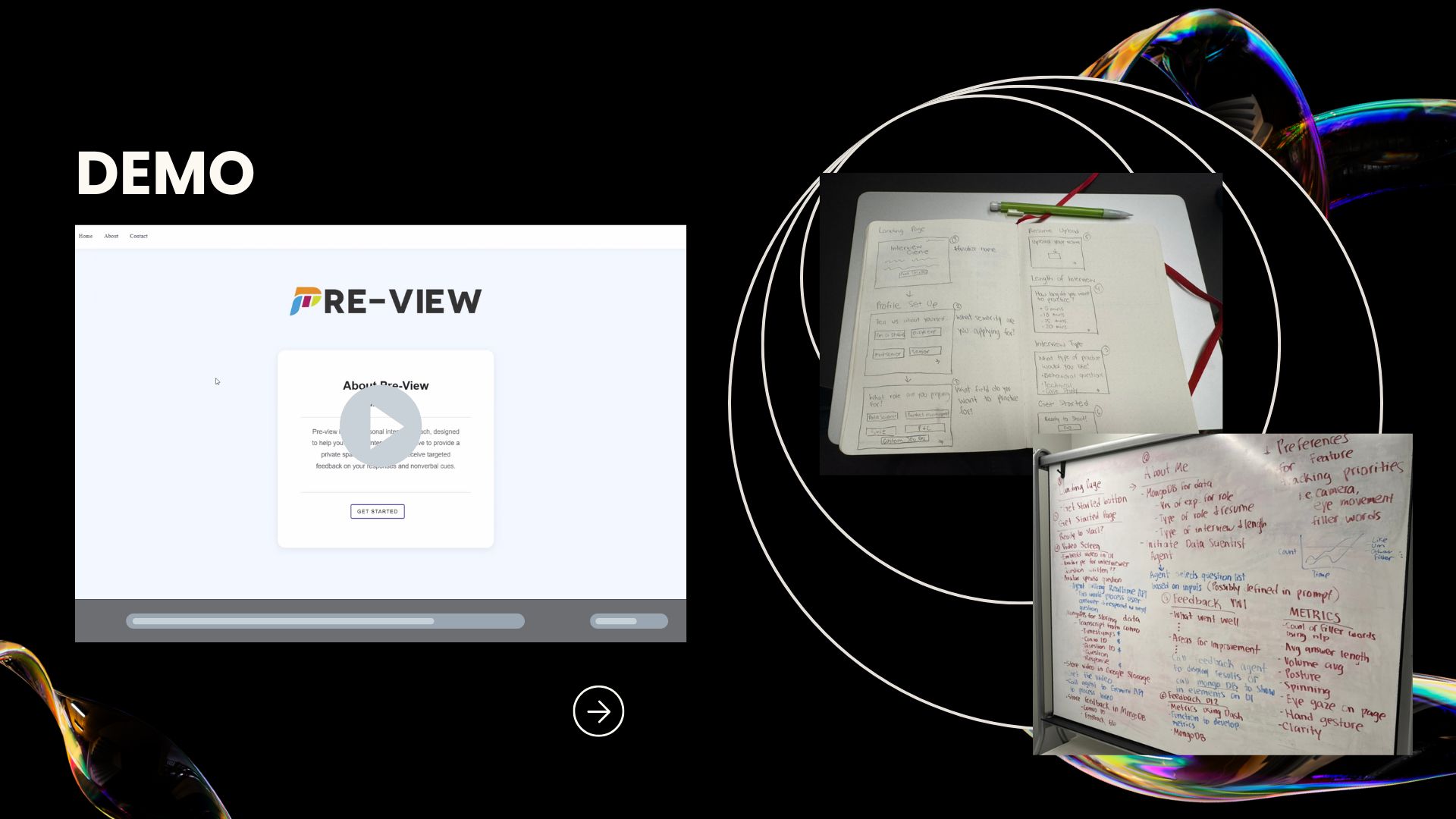
Pre-view is an AI-powered mock interview simulator that offers fully customizable interview experiences. Users can select their job role, industry, interview type, seniority level, and preferred length, creating a tailored preparation plan. During the simulated interview, candidates interact with AI-generated questions and afterward, receive in-depth feedback on both verbal and non-verbal aspects, including facial expressions (e.g., smiling, frowning), eye contact consistency, hand gestures, tone, filler words, etc... The platform doesn’t stop at generic insights—it delivers question-level feedback with clear recommendations on content strengths, weaknesses, and delivery improvements. Candidates leave each session with an actionable path to improvement, enhancing both how they communicate and what they say.
How We Built It
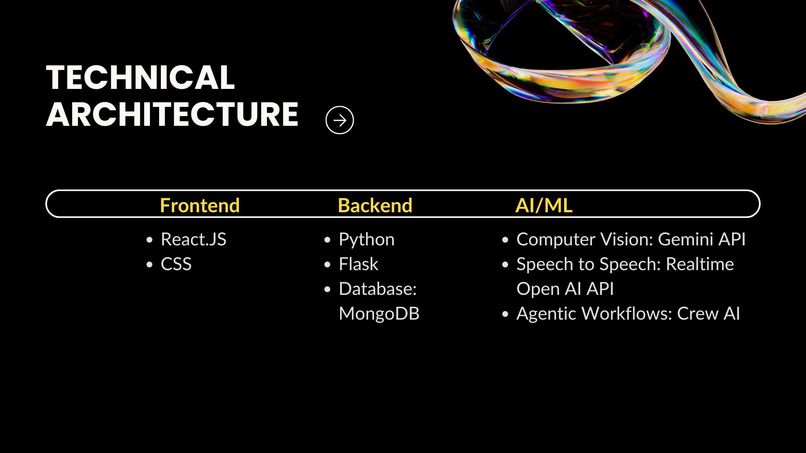
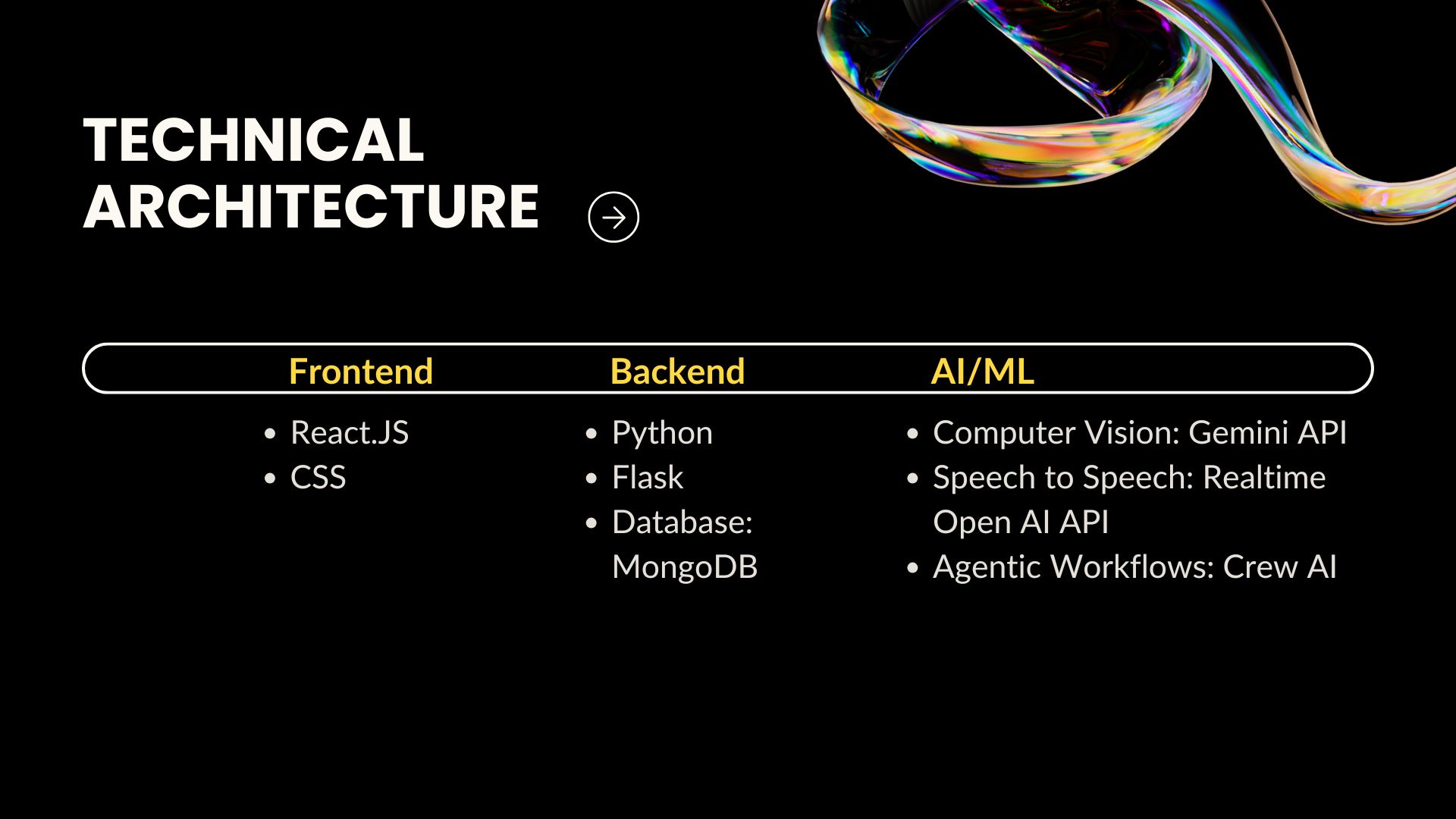
We built Pre-view using an integrated tech stack designed for real-time, interactive mock interview experiences. The back end is powered by Python and Flask, providing robust support for processing and managing data flow. For the front end, we used React, JS, and CSS to create an intuitive, responsive user interface that enhances the candidate's experience.
To analyze non-verbal communication, we used the Gemini API, which processes video and audio data to capture key metrics on eye contact, facial expressions, hand gestures, and speech tone. Additionally, a multi-agent system with Crew AI personalizes the interview experience, allowing for tailored questions based on the candidate's persona and seniority level. For real-time conversation, we integrated OpenAI’s Realtime API, creating a seamless flow for dynamic question-and-answer interactions. Finally, we used MongoDB to store candidate data, feedback metrics, and interview session history, enabling users to track their progress over time.
Challenges We Ran Into
Our main challenge was creating a realistic, real-time conversational flow with speech-to-speech communication to simulate an authentic interview experience. Implementing OpenAI's Realtime API posed unique hurdles, as it is currently in Beta, with limited use cases or resources available online for guidance. This lack of documentation meant we had to experiment and troubleshoot until the last minute, making hard calls about whether to give up or pivot.
Additionally, translating non-verbal feedback into meaningful metrics was complex. Deciding on the best way to capture and convey metrics like eye contact, facial expressions, and body language cues required significant iteration, especially within the constraints of a hackathon. Time was constantly working against us, pushing us to prioritize features and focus on providing the most value through clear, actionable feedback.
Accomplishments That We’re Proud Of
We’re particularly proud of implementing a multi-layered feedback system that provides users with granular insights into both their verbal and non-verbal performance. Building a real-time conversational mock interview platform and gathering feedback for nuanced non-verbal cues, such as tone consistency and hand gesture frequency was a significant accomplishment, as these are areas where traditional mock interview tools fall short. We’re also proud of our intuitive user interface, which guides users seamlessly from setup through review, creating an accessible experience for interview candidates of all backgrounds.
What We Learned
Throughout this project, we learned the importance of user-centric design in building an AI-driven application. It became clear that while our technology can capture various metrics, the real value lies in delivering actionable insights that help users feel empowered rather than overwhelmed. We also gained hands-on experience with integrating machine learning models into a web application, balancing real-time processing with user interface responsiveness.
What’s Next for Pre-view: AI Mock Interview Coach
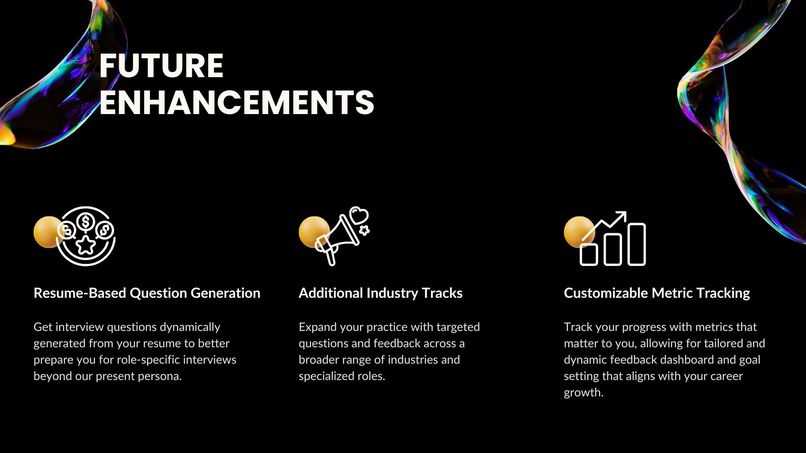
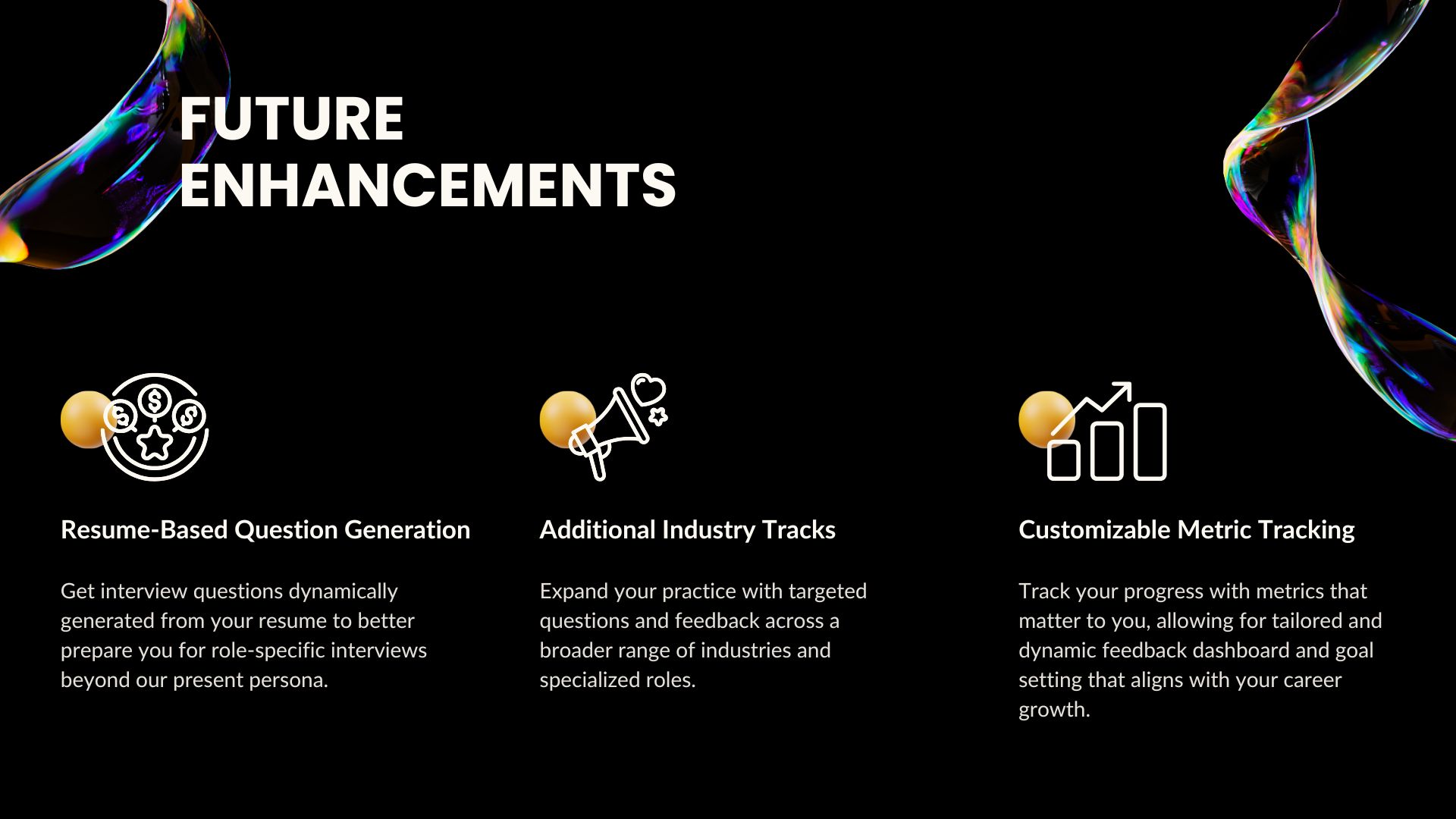
Moving forward, we plan to make Pre-view more accessible and customizable to suit a diverse range of users and industries. We hope to allow users to toggle specific metrics on or off, enabling them to concentrate on areas that matter most, like tone and fluency, while skipping others if preferred. Additionally, we plan to expand industry tracks and question sets, allowing candidates to upload a resume or job description to generate tailored interview questions based on role-specific requirements.


Log in or sign up for Devpost to join the conversation.