-
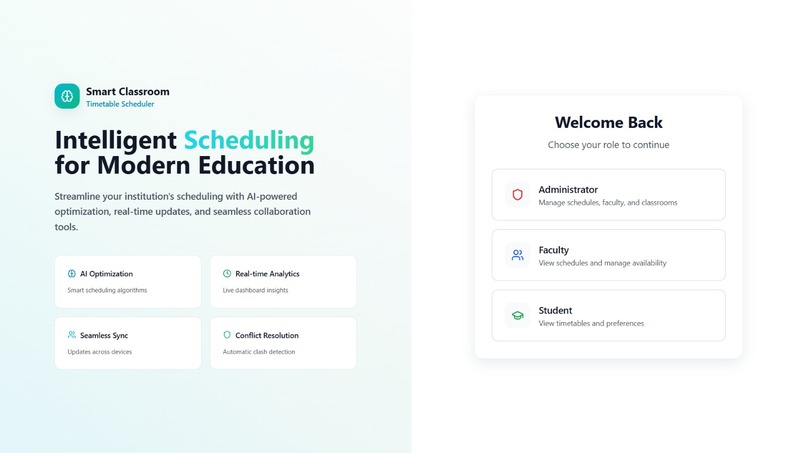
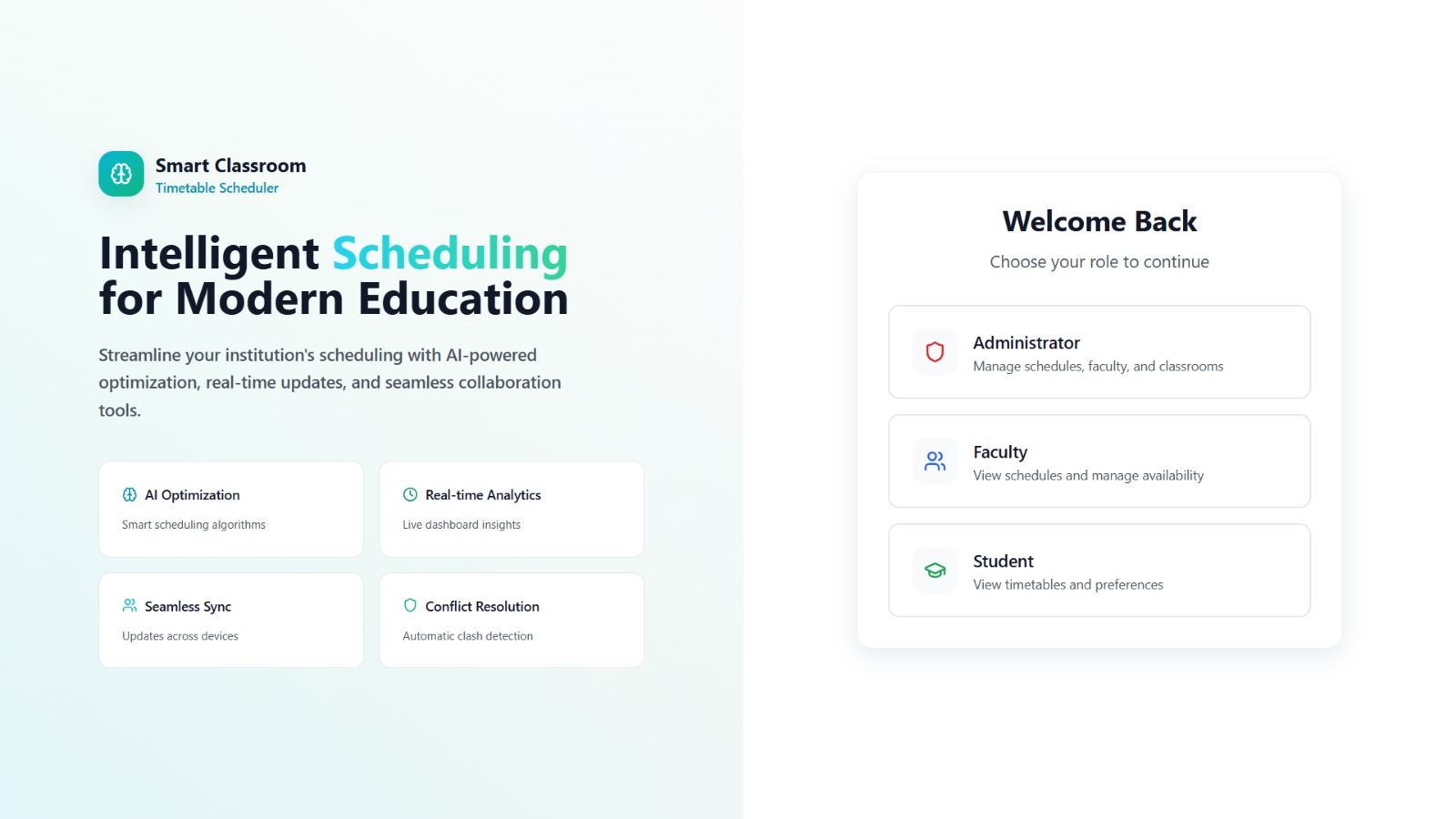
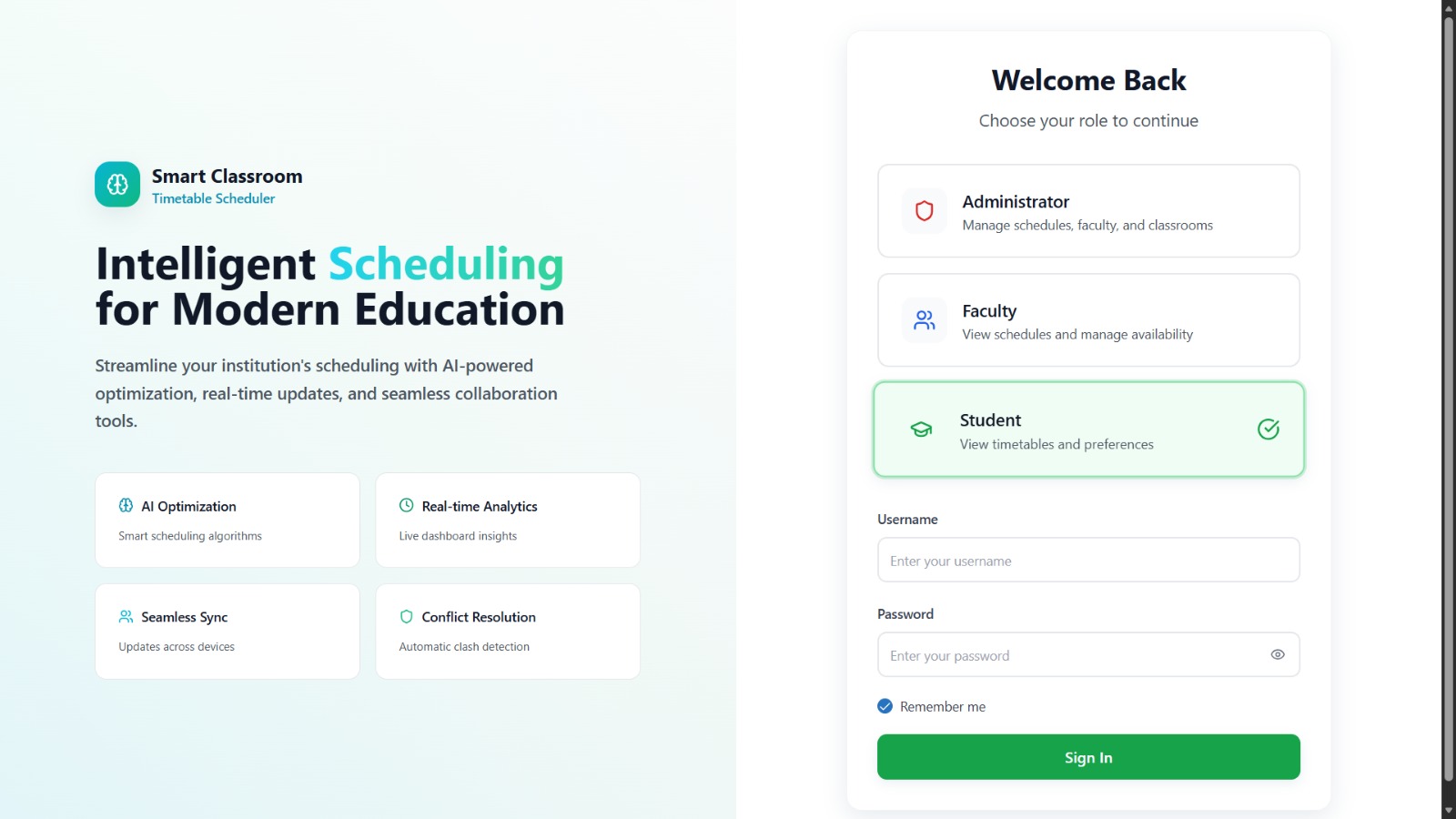
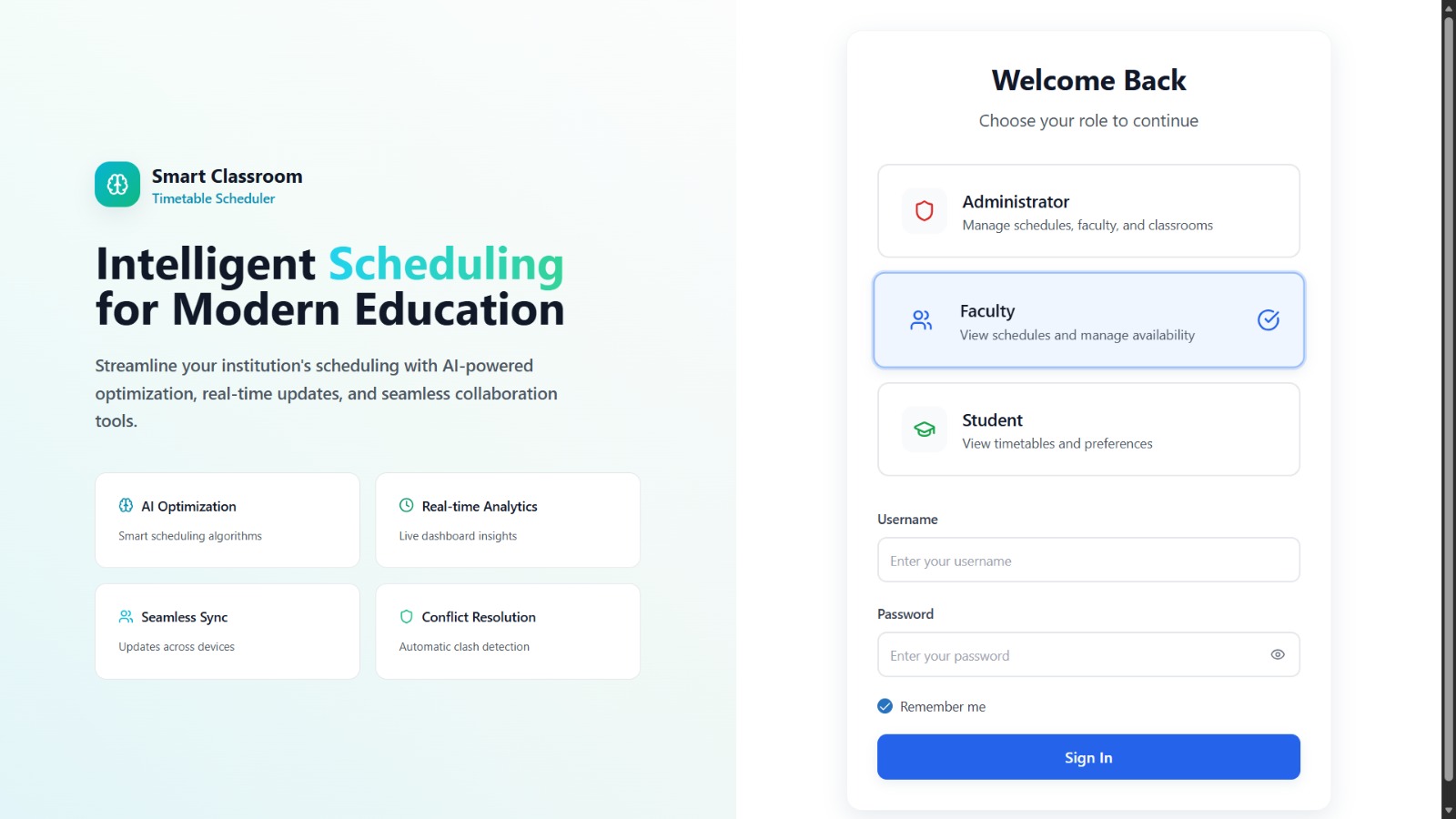
Login Page
-
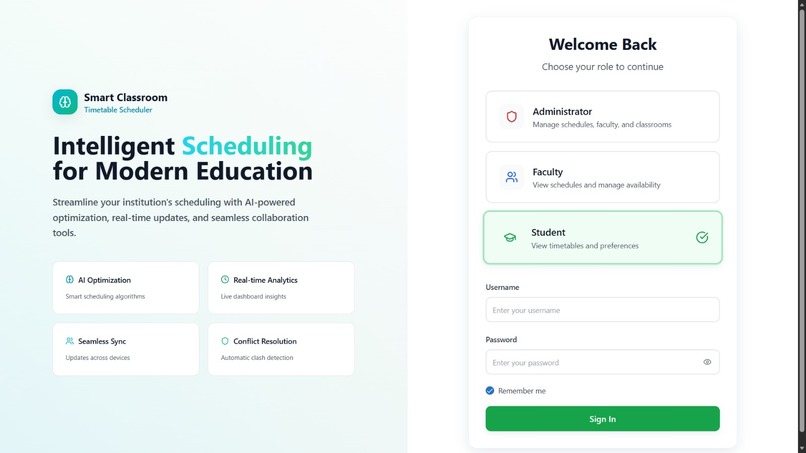
Student Login Page
-
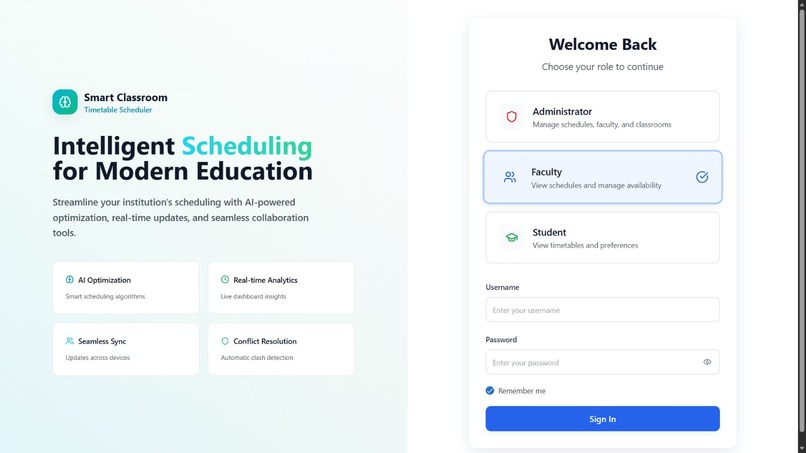
Faculty Login Page
-
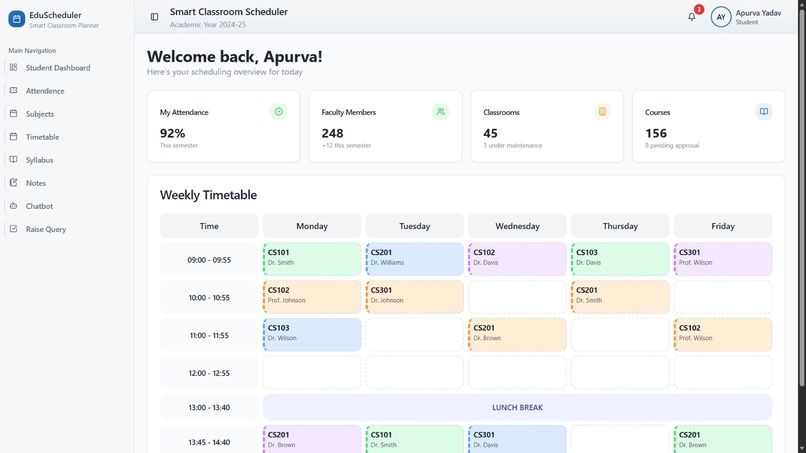
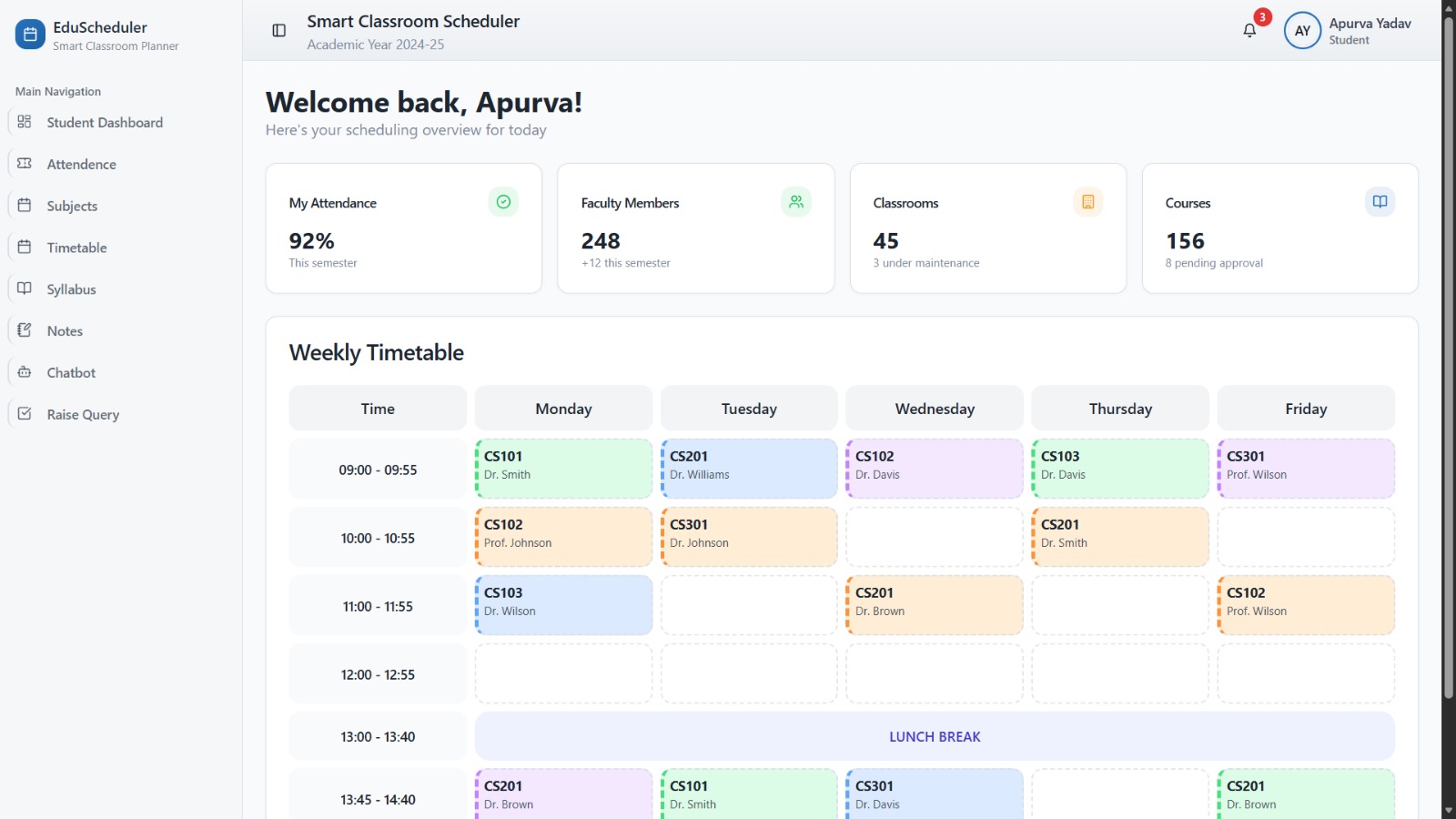
Student Dashboard
-
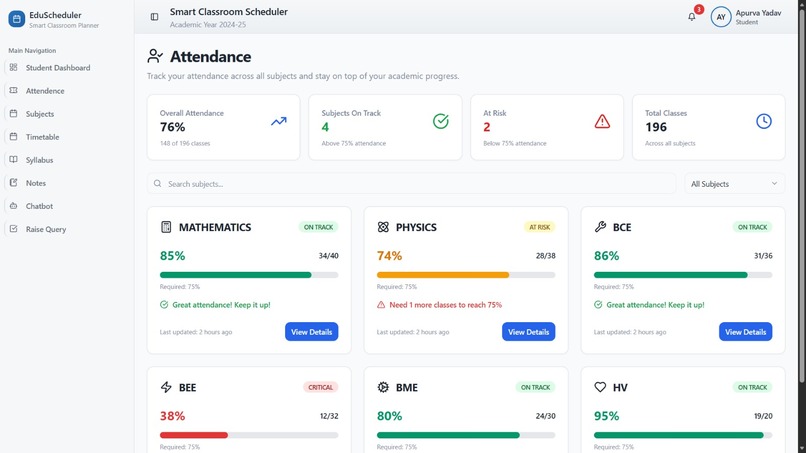
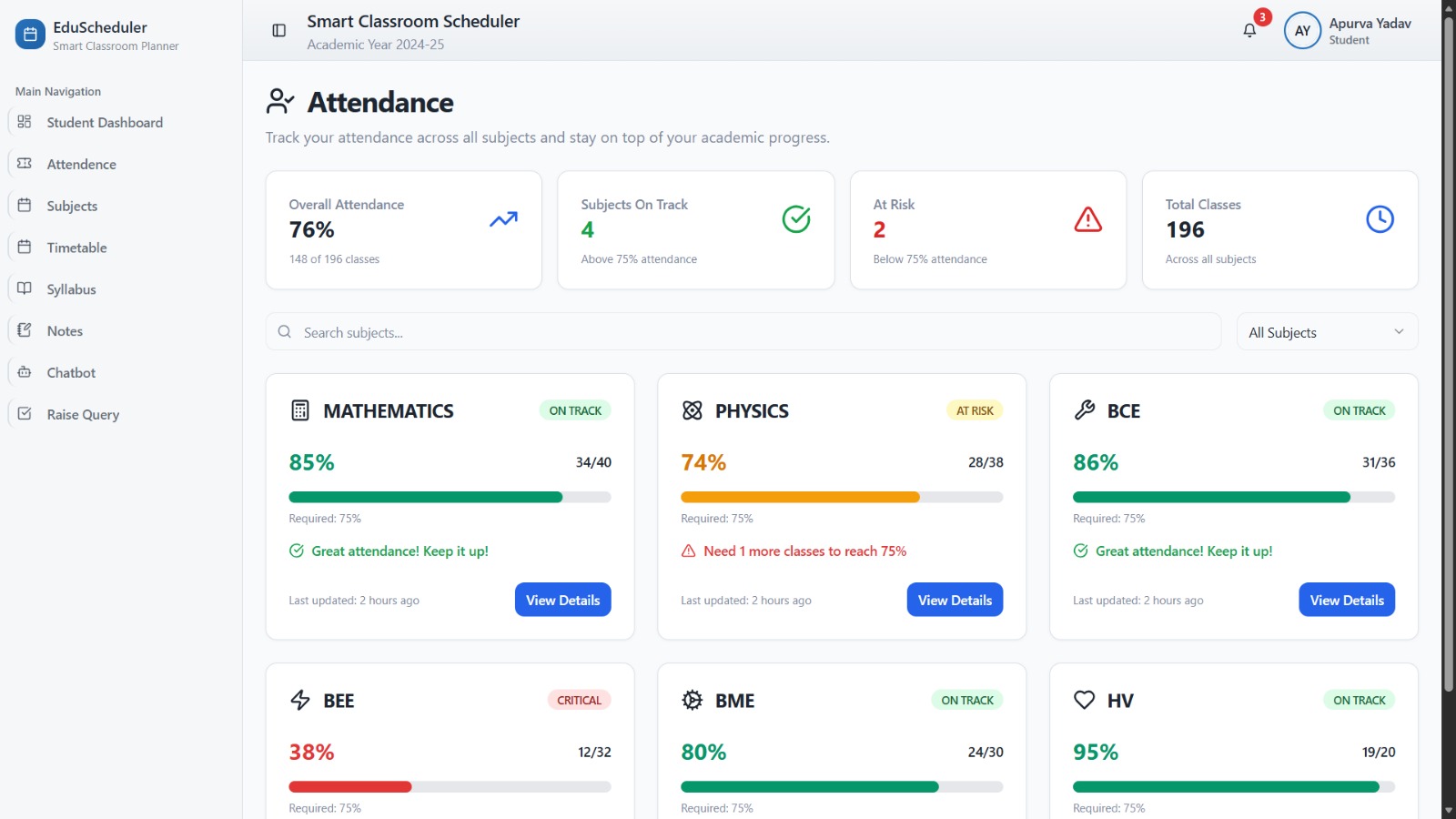
Student Attendance
-
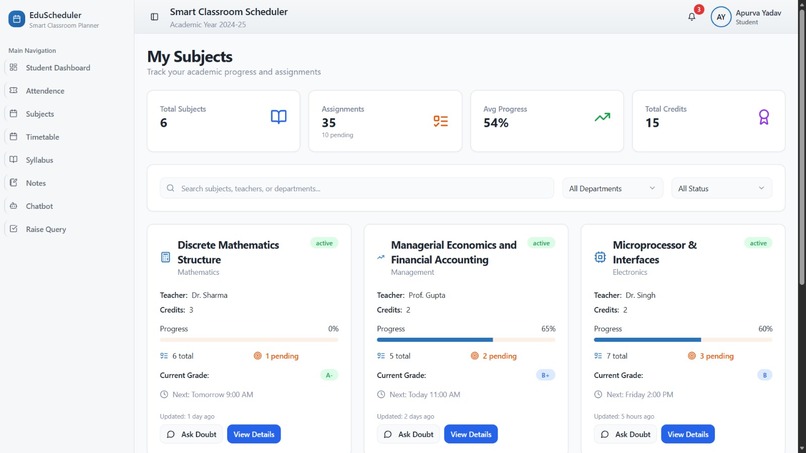
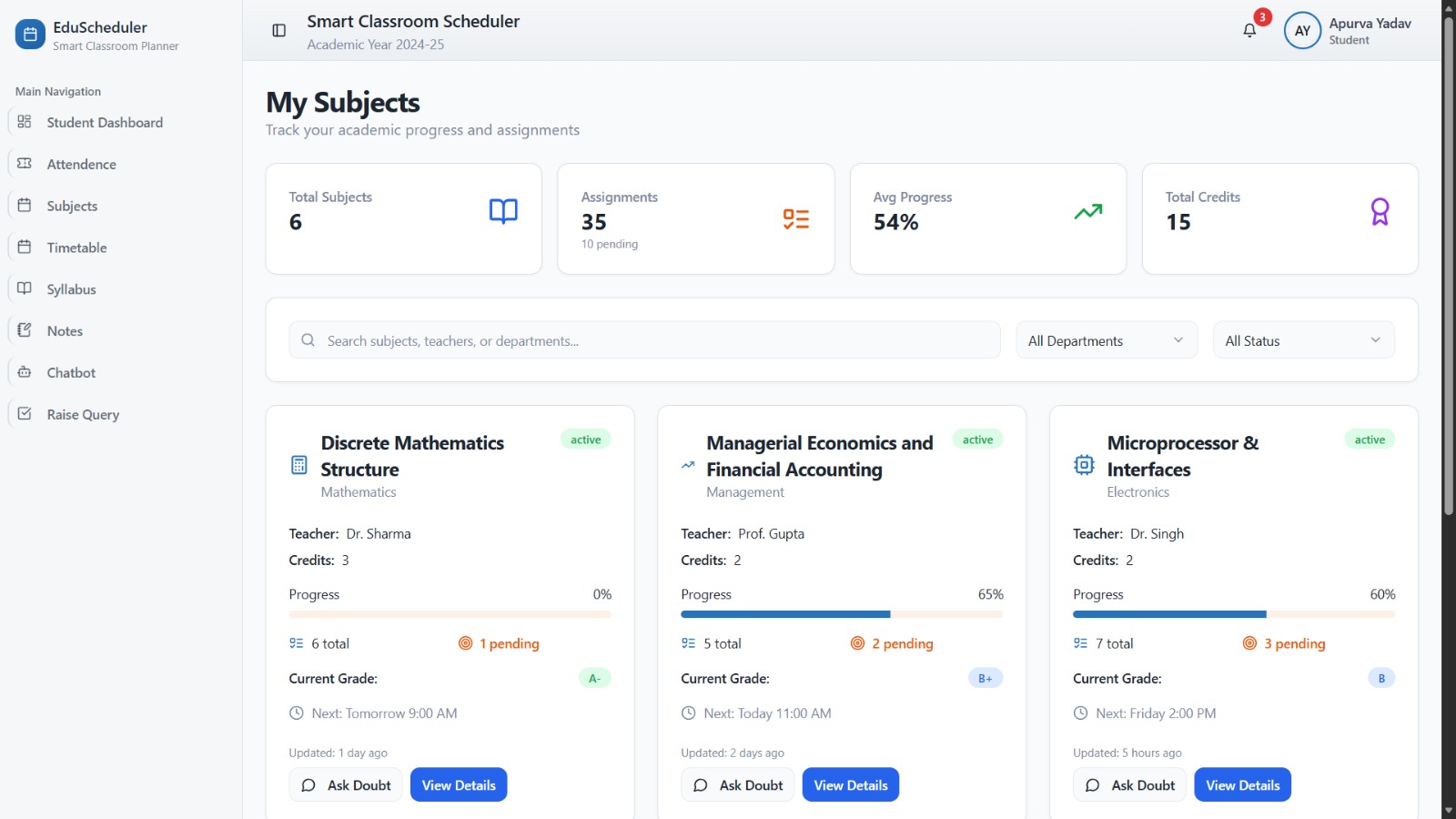
Student Subjects
-
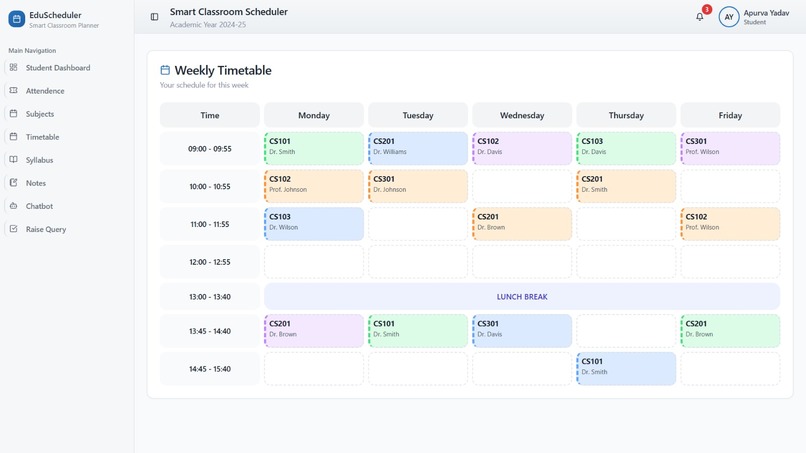
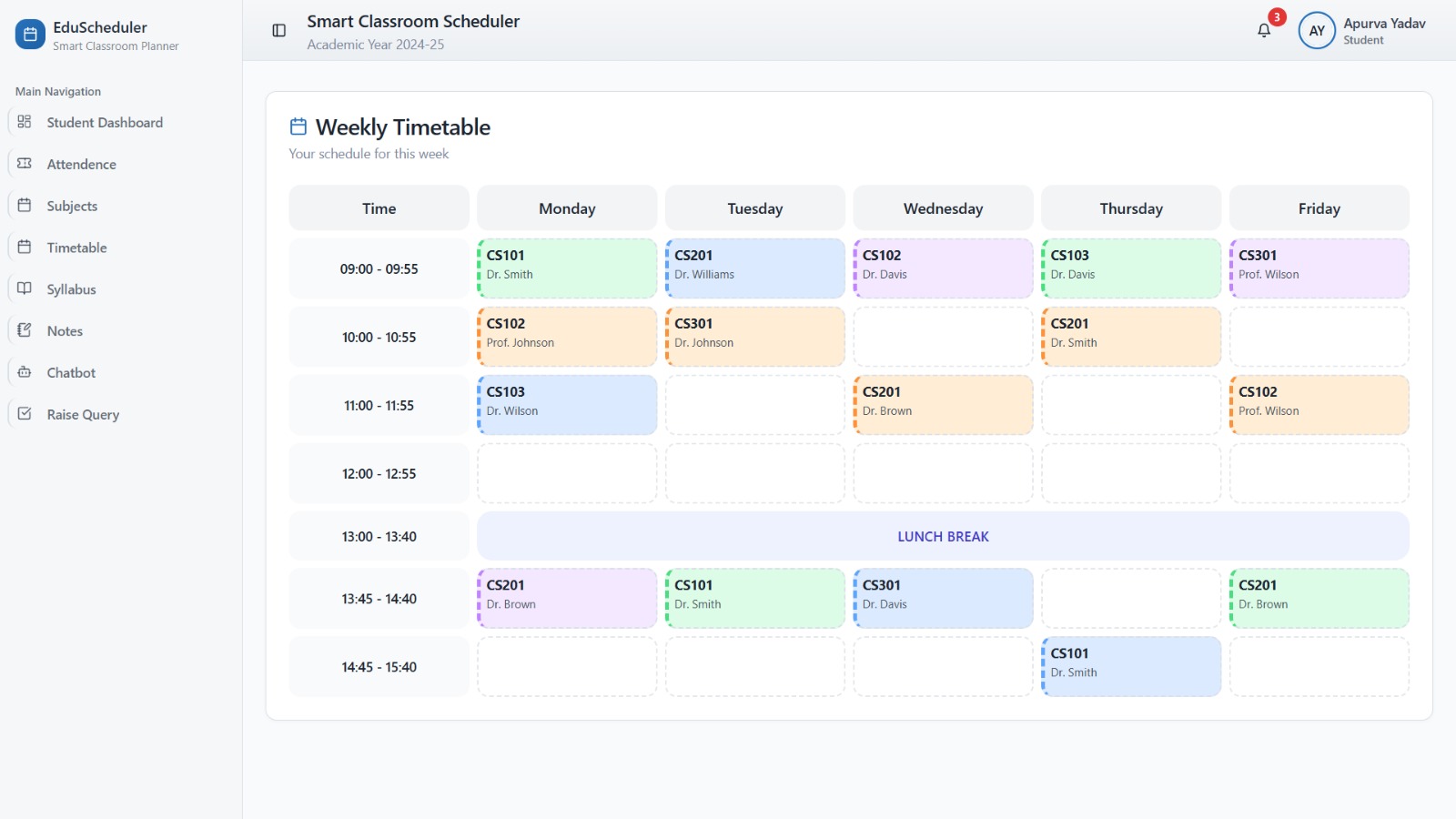
Student Timetable
-
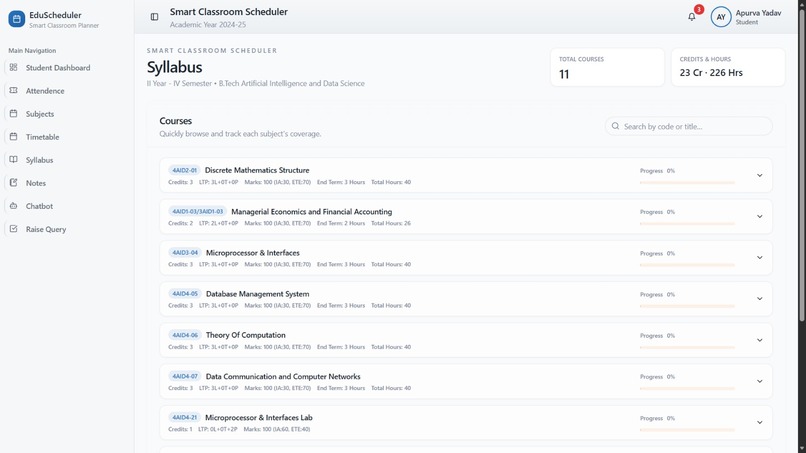
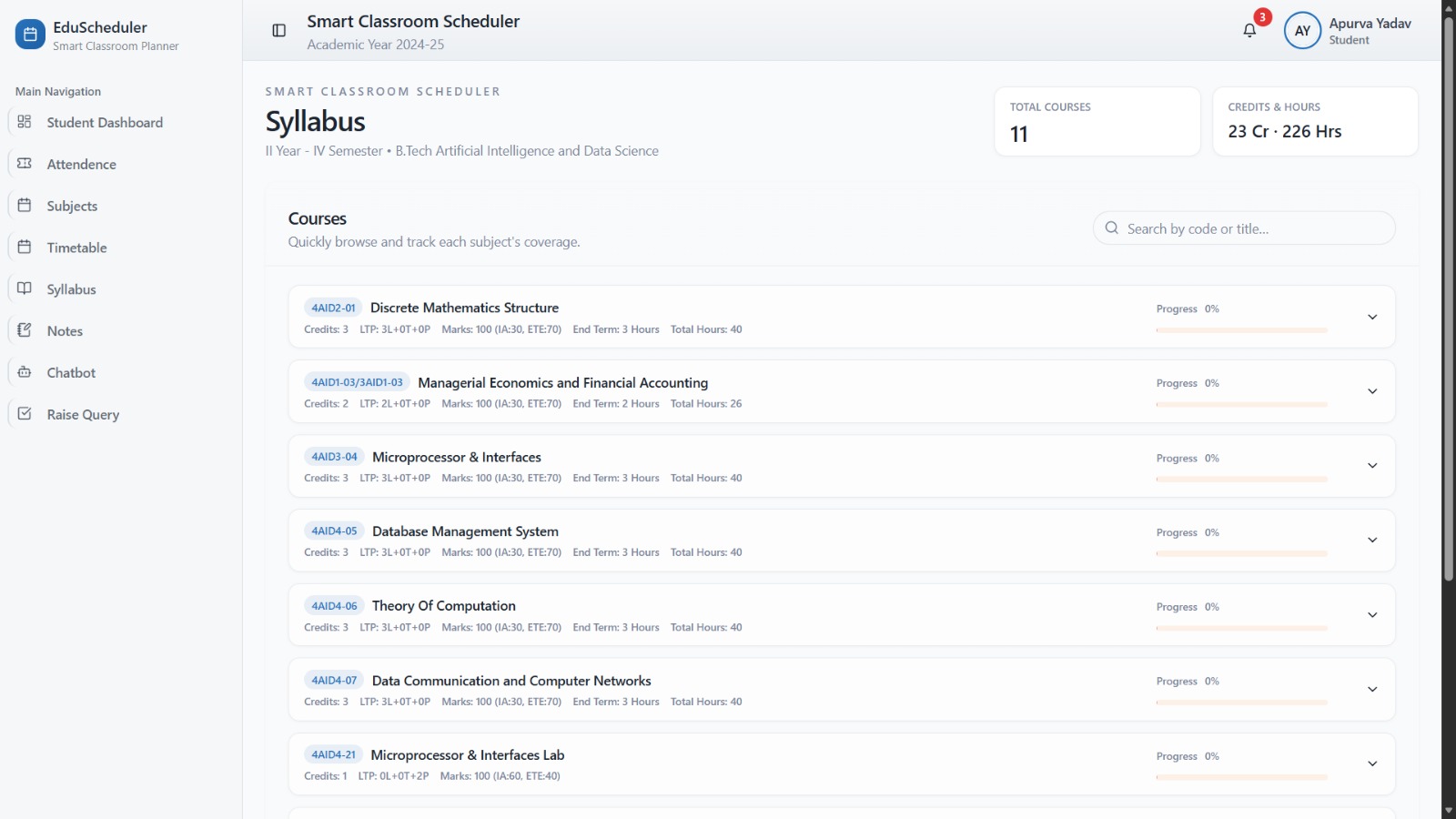
Student Syllabus
-
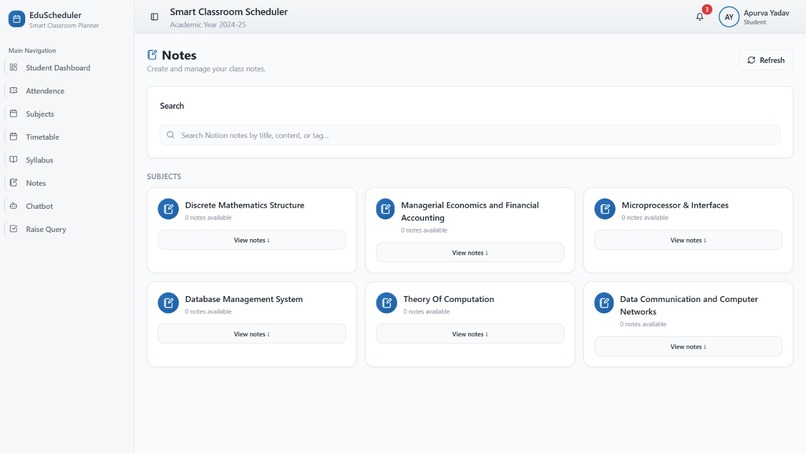
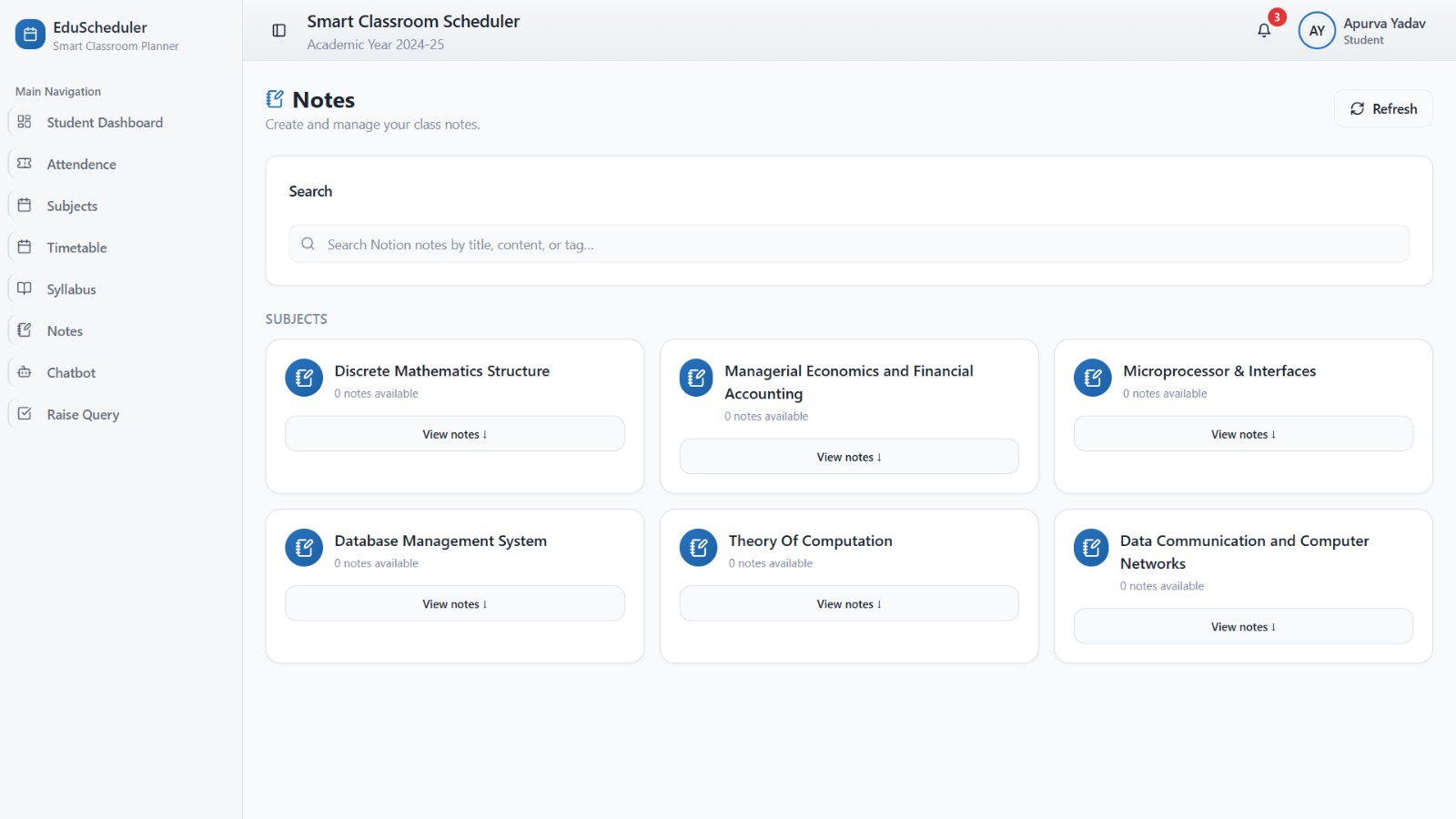
Student Notes
-
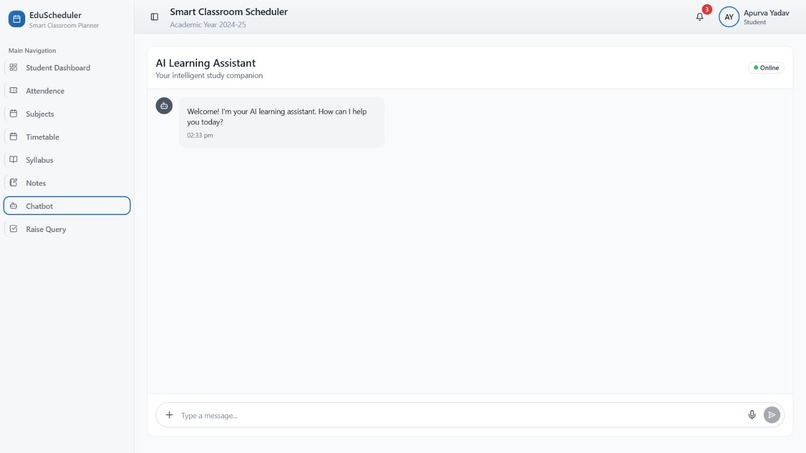
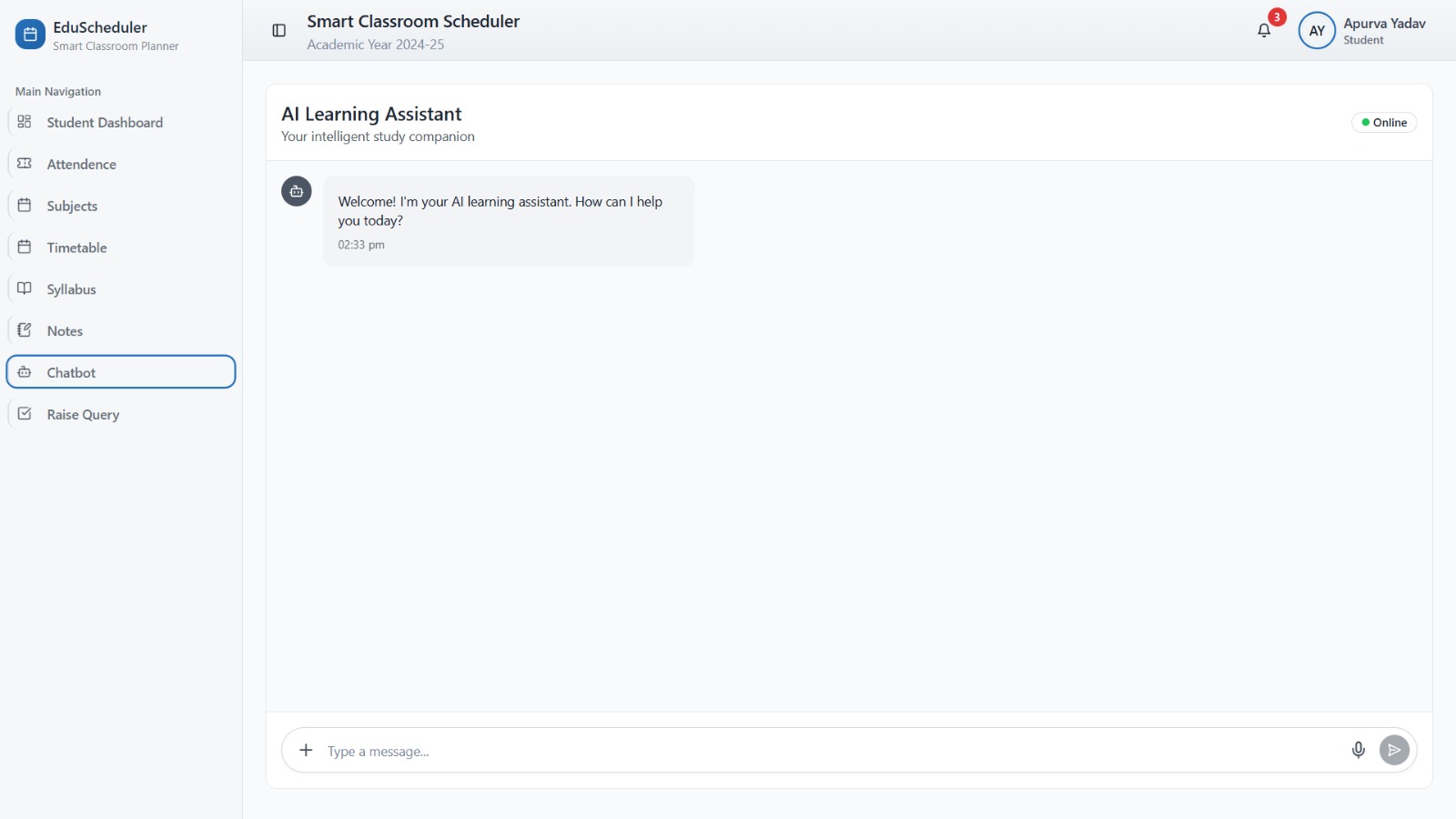
Student Chatbot
-
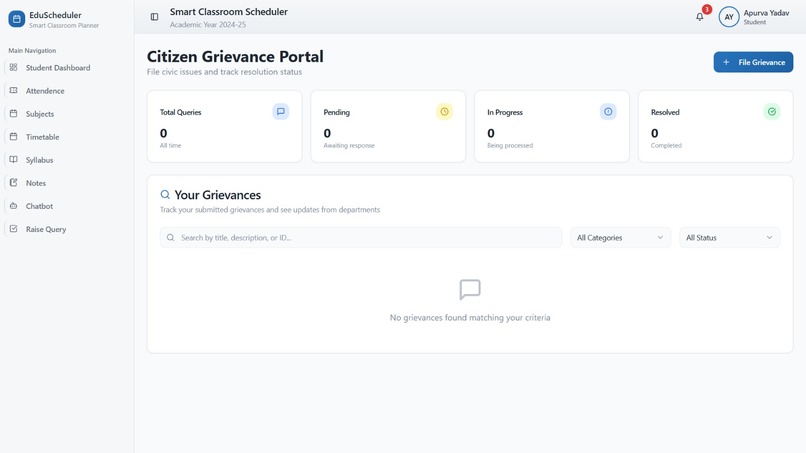
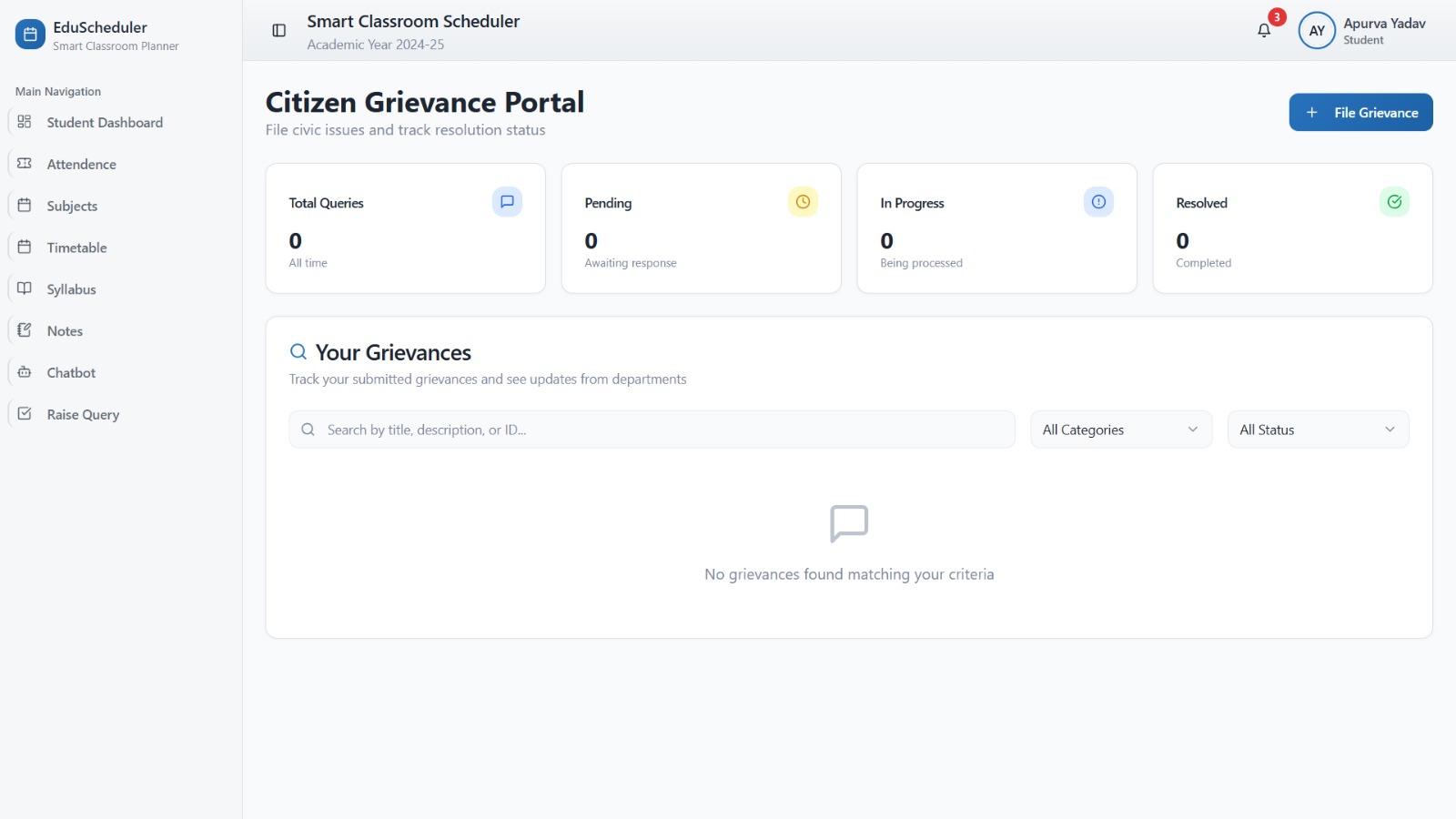
Student Raise Query
Inspiration
In traditional classrooms, large amounts of academic data such as attendance, syllabus progress, quiz scores, and student queries are recorded daily, but this data is rarely used to support real-time teaching decisions. Teachers often realize learning gaps only during exams, when it is already too late to intervene. This inspired us to build a system that does not just collect classroom data but actively helps teachers act on it.
What it does
AI-Assisted Smart Classroom is a role-based classroom management platform with student, teacher, and admin portals. Students can track attendance, syllabus completion, access notes, take quizzes, ask doubts through an AI chatbot, and raise queries to teachers. Teachers can manage attendance, upload resources, analyze quiz performance, and receive alerts when students struggle with specific topics. The system also supports intelligent timetable adjustments in case of teacher unavailability to ensure uninterrupted learning.
How we built it
We designed the system using a modular architecture with separate workflows for students, teachers, and administrators. The frontend focuses on clarity and usability, while the backend handles data management and logic. We implemented rule-based intelligence and explainable AI concepts to analyze quiz results, attendance trends, and student interactions. A chatbot module was integrated for instant doubt resolution, and notification logic was added to assist teachers in decision-making.
Challenges we ran into
One major challenge was designing intelligence that is helpful but not overly complex or opaque. We focused on explainable logic so that teachers can trust and understand system recommendations. Time constraints and limited team size also required us to prioritize core features over advanced automation.
Accomplishments that we're proud of
We successfully built a working prototype that integrates learning analytics, intelligent alerts, and classroom automation in a single platform. Despite being a small team, we delivered a solution that is practical, scalable, and aligned with real classroom needs.
What we learned
Through this project, we learned how to design problem-driven solutions, balance AI with human decision-making, and build modular systems that can evolve over time. We also gained experience in teamwork, system design, and presenting technical ideas clearly.
What's next for AI Assist Smart Classroom & Timetable Schedular
In the future, we plan to add predictive learning analytics, parent dashboards, personalized study recommendations, and deeper AI-driven insights to further improve teaching effectiveness and student outcomes.
