Inspiration
As a creative entrepreneur frustrated by inventory risks and high barriers to monetizing art, I saw a gap: artists deserved a way to turn their creativity into tangible products without the hassle of manufacturing or storage. Watching AI art explode in popularity, I knew combining it with print-on-demand could revolutionize how creators earn—no middlemen, no upfront costs, just pure creativity.
What it does
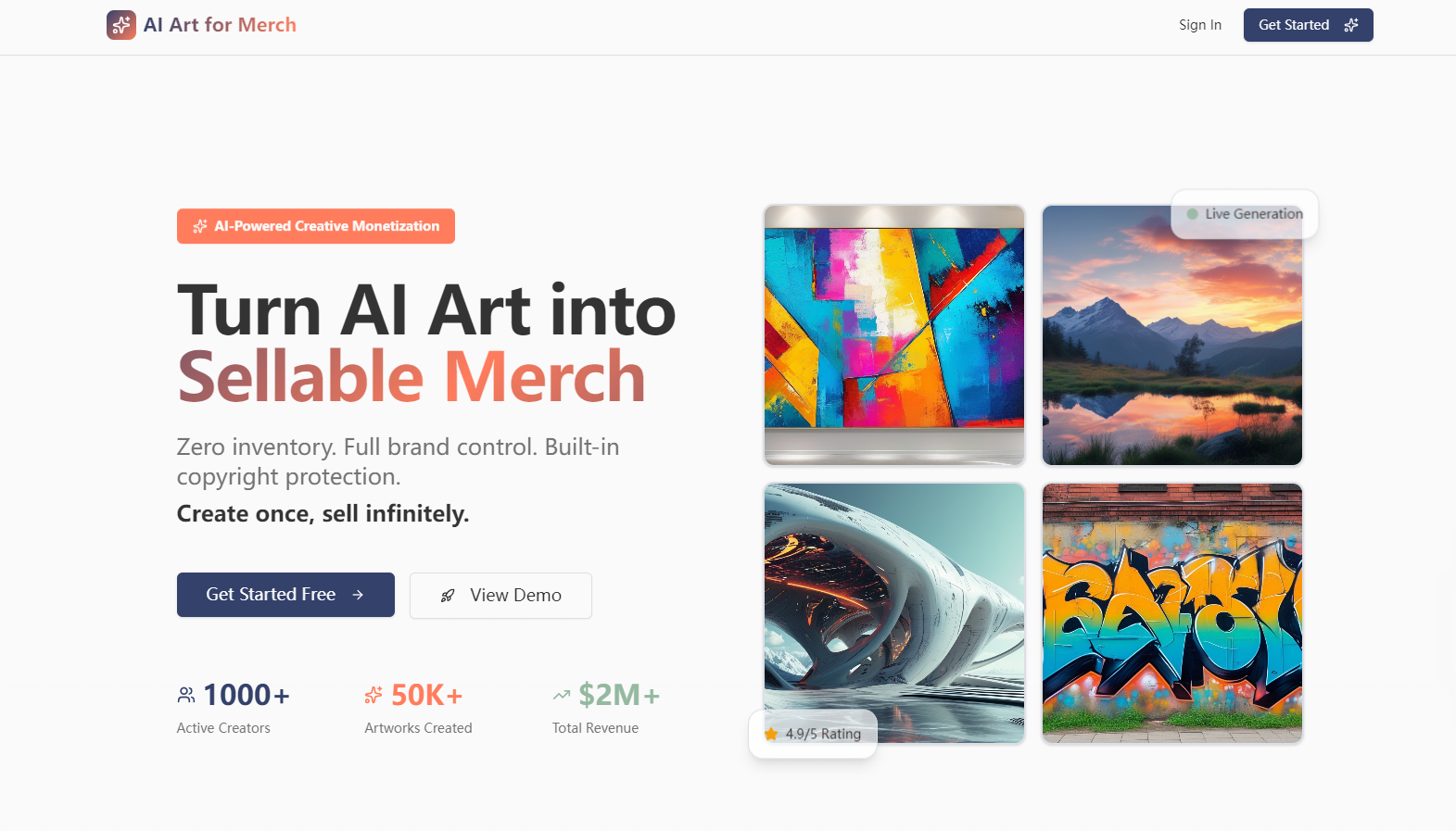
AI Art for Merch lets users generate custom AI artwork from style prompts, create design variations, preview art on 30+ products (teeshirts, mugs, phone cases) with 360° previews, build a branded storefront, and sell directly to customers. The platform handles fulfillment, payments, and earnings tracking—all for a $19/month subscription with transparent transaction fees.
How we built it
We started with core user flows: auth (Google + email/password), AI art generation (OpenAI API integration), and POD mockup tools. We built the frontend with React/Tailwind for mobile responsiveness, backend with Node.js/AWS for scalability, and integrated Stripe for subscriptions. We connected global POD APIs to automate order routing and fulfillment, and used PostgreSQL/Chart.js for sales analytics.
Challenges we ran into
AI art generation consistency was tough—we iterated on prompt engineering to ensure high-resolution (300 DPI+) outputs that worked for merch. POD API downtime forced us to build order queuing logic, and payment processing errors required robust retry flows. Copyright attribution tagging also demanded careful integration to protect user ownership.
Accomplishments that we're proud of
We built a fully functional platform where users can go from text prompt to published product in minutes. The 360° product preview tool delivers hyper-realistic mockups, and the earnings dashboard gives creators real-time visibility into their revenue. Most importantly, users retain full ownership of their AI-generated designs.
What we learned
We mastered balancing AI creativity with practical e-commerce needs—speed, scalability, and user trust are everything. We also learned the criticality of transparent pricing and copyright compliance in creator-focused platforms, and how to build resilient integrations with third-party APIs.
What's next for this project
We’re adding premium AI style training for brand-aligned designs, expanding POD product categories (home decor, accessories), and building a creator community hub for collaboration. We’ll also roll out advanced sales analytics to help users optimize their product lines and pricing strategies.
