-
-
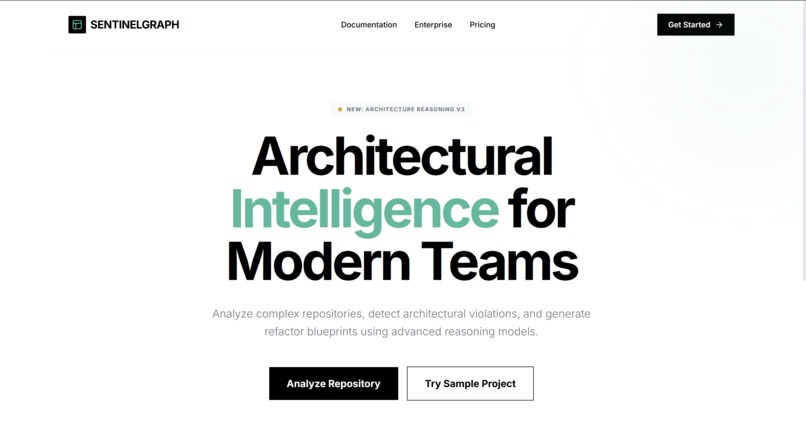
Landing Page
-
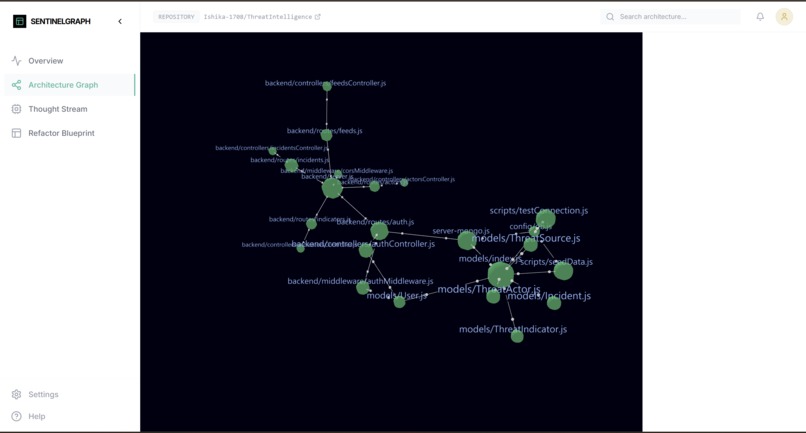
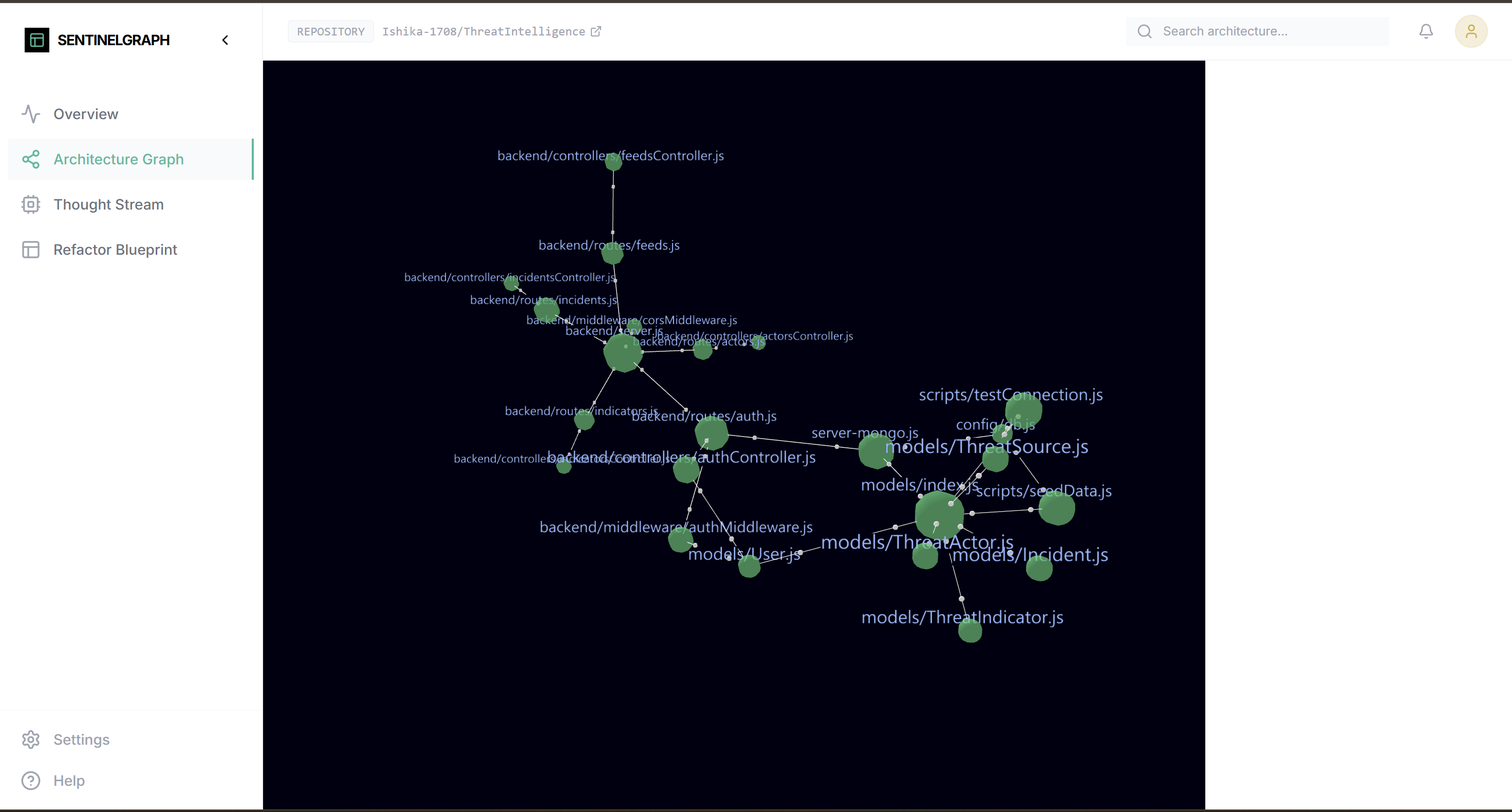
Architectural 3D Graph showing all the nodes in the project
-
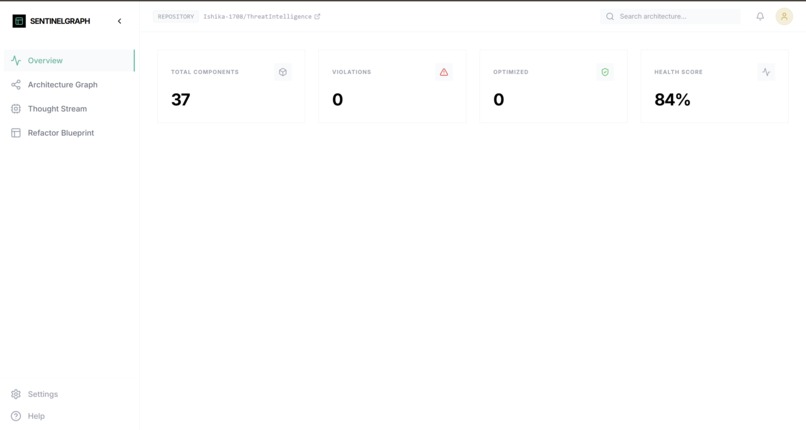
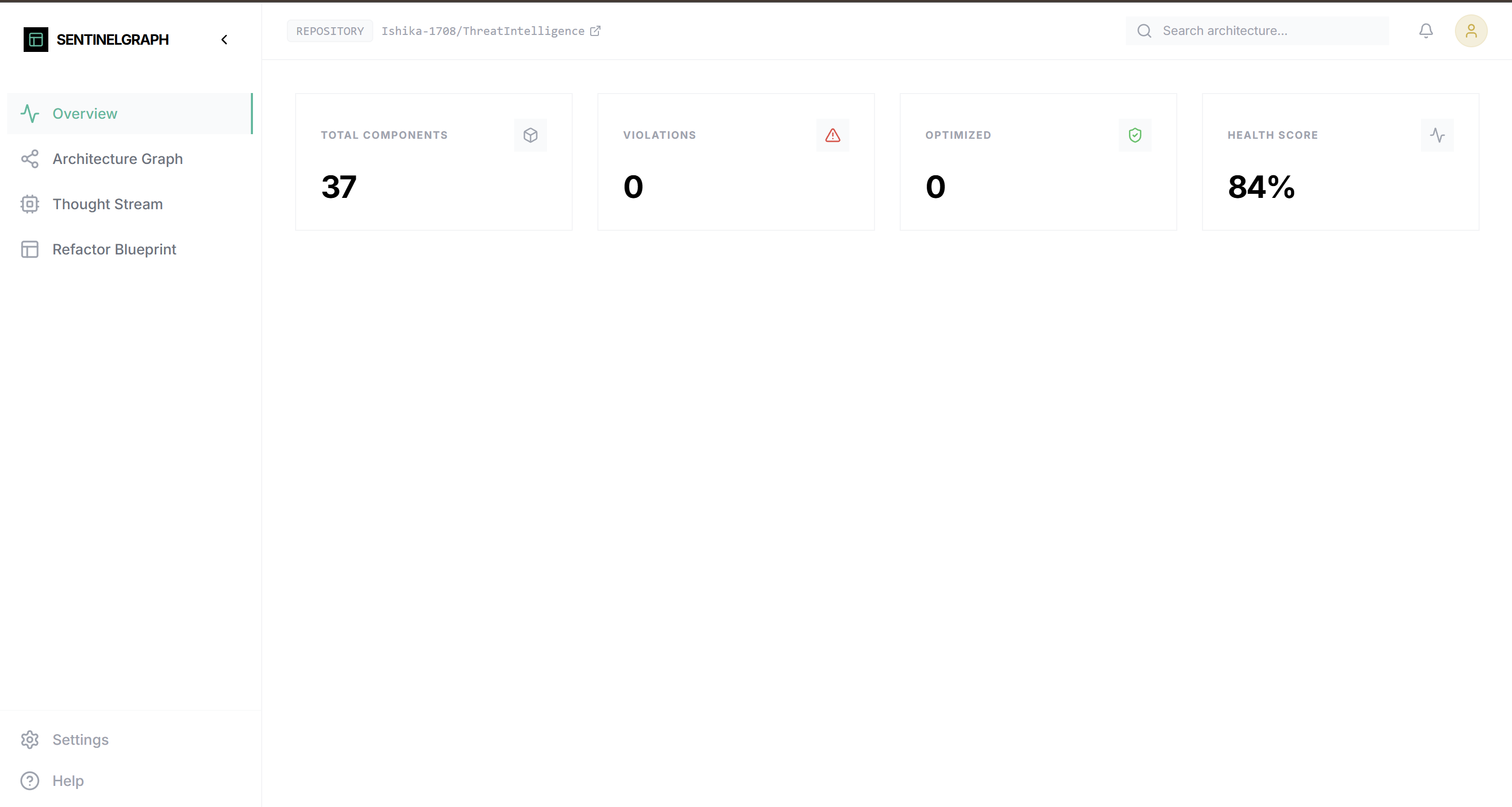
Overview of the repository uploaded
-
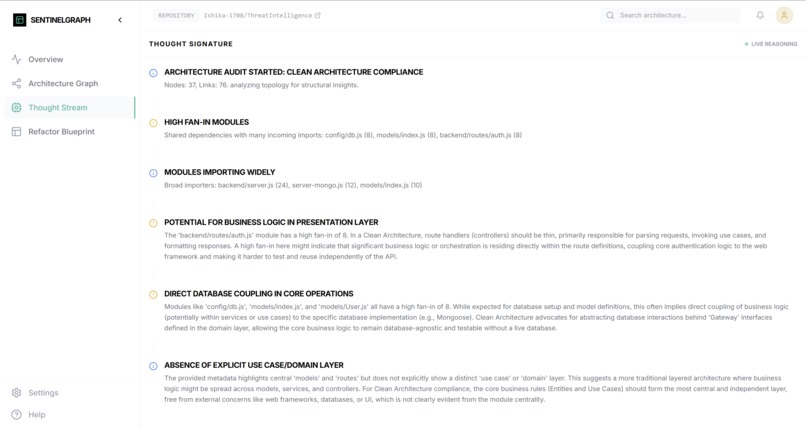
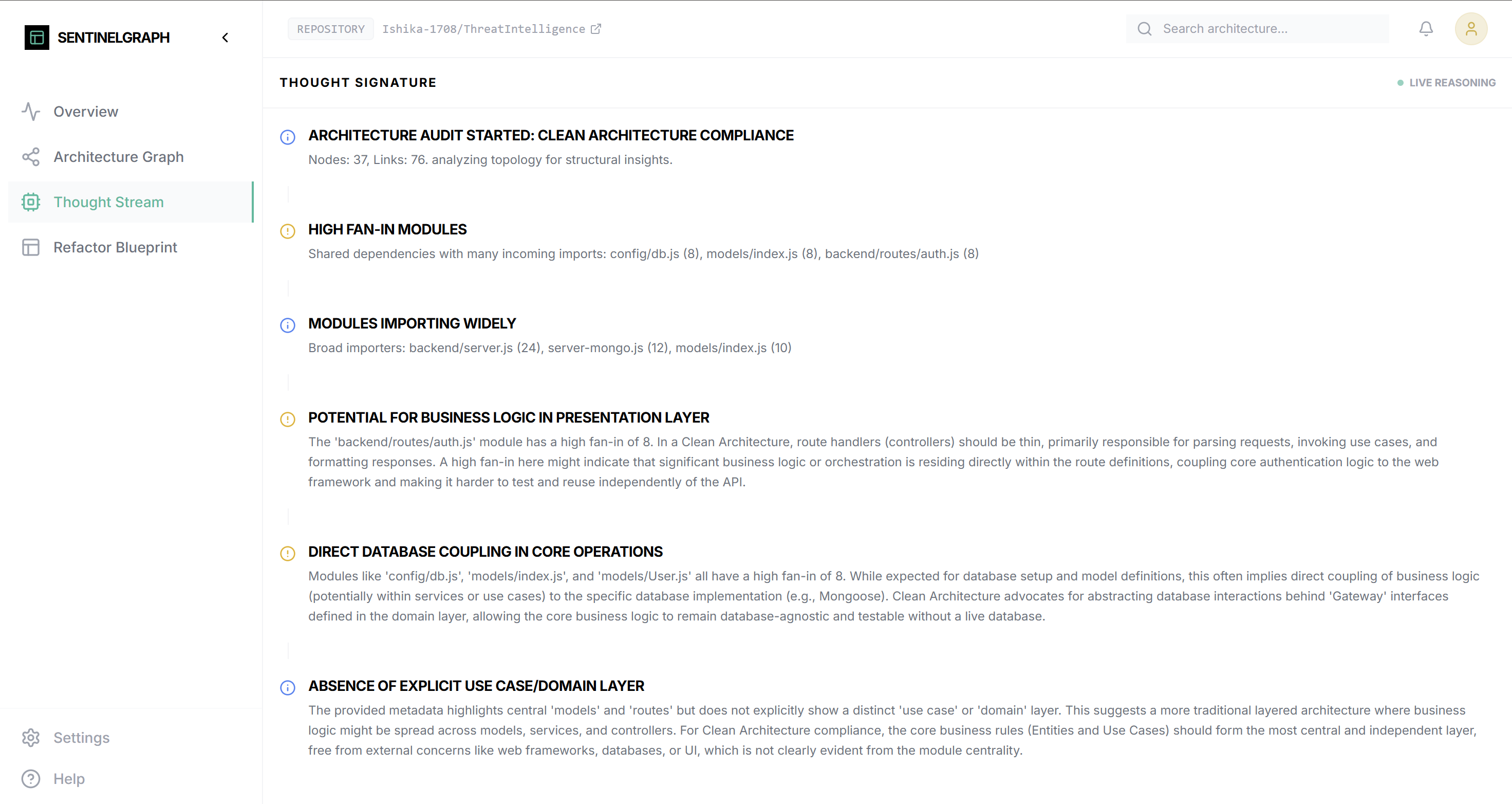
Thought Stream displaying flaws and features
-
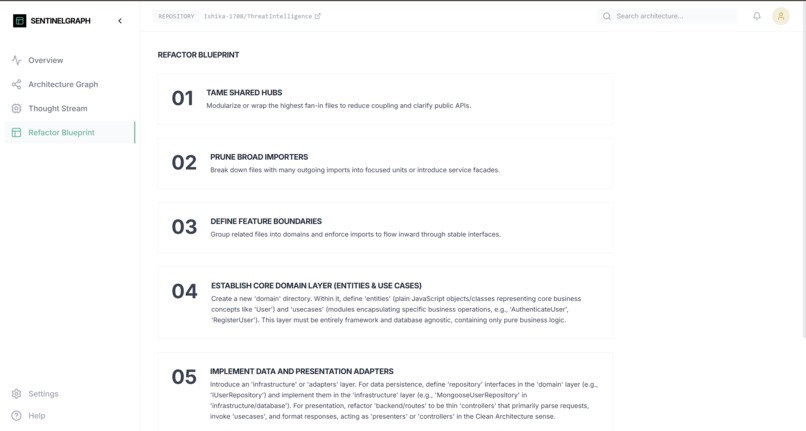
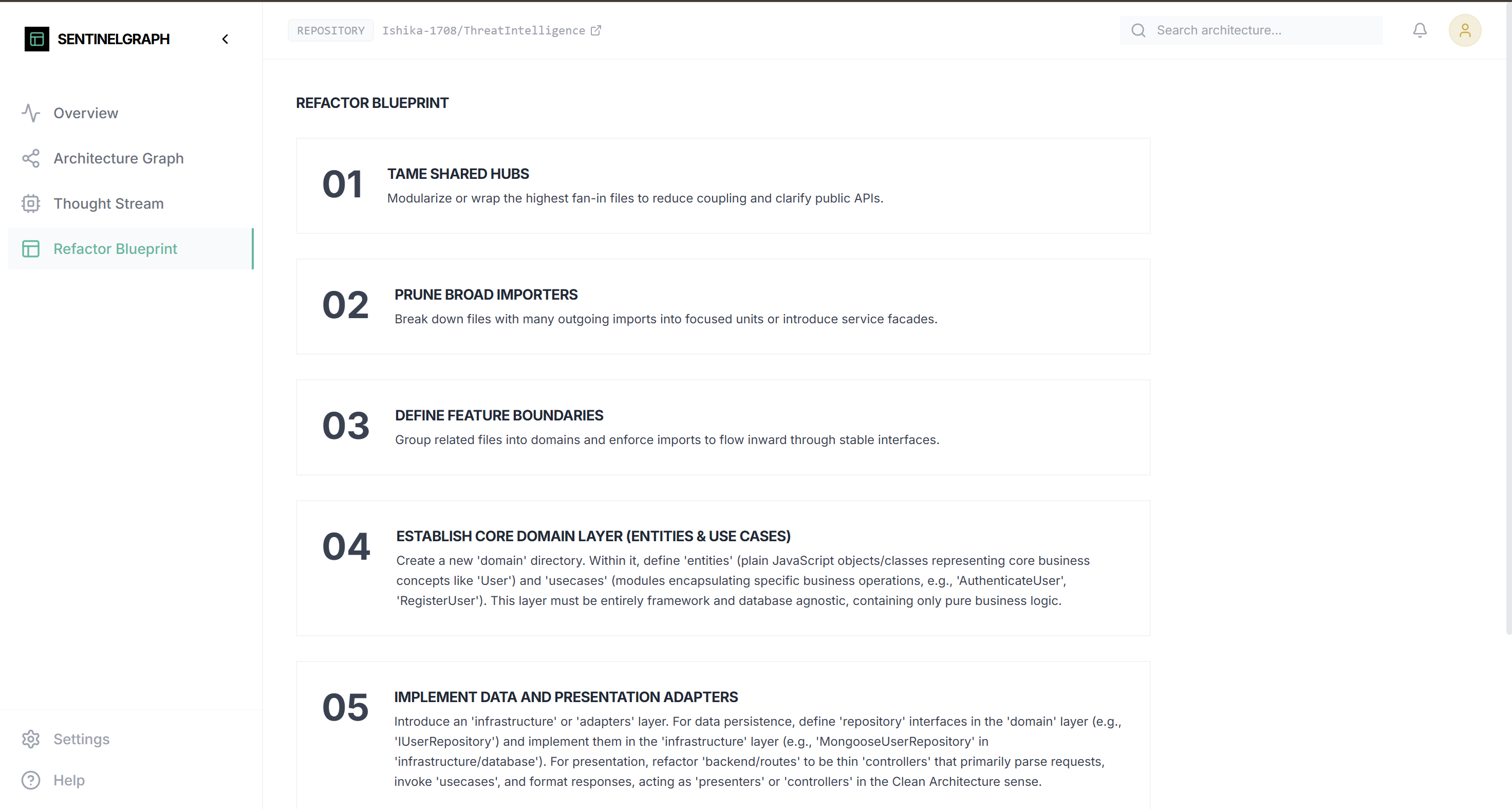
Blueprint refactoring
Inspiration The widespread adoption of artificial intelligence in software engineering has created a significant challenge: code is being generated at a rate that outpaces human architectural oversight. Most AI coding assistants are locally optimized but globally blind, capable of refining a single function while remaining unaware of the structural erosion occurring across an entire repository. SentinelGraph was inspired by the need for a "Global Architect"—a system that monitors systemic health and protects the original design intent of a project as it scales.
What it does AI Architectural Sentinel acts as an autonomous observability and reasoning platform for software structure:
Overview: Provides a centralized command center displaying repository health metrics, including component counts and a calculated "Entropy Score".
Architecture Graph: Renders a 3D force-directed map where nodes represent source files and edges represent imports, allowing developers to visually identify semantic clusters and structural hotspots.
Thought Stream: Exposes the live reasoning process of the Gemini 3 model, providing transparency into how the AI identifies architectural violations and plans its interventions.
Refactor Blueprint: Generates comprehensive, multi-step plans to resolve detected technical debt, ensuring that proposed changes align with established design patterns like Clean Architecture.
How we built it The platform is built on a high-performance, asynchronous stack designed for large-scale repository analysis:
Reasoning Engine: Powered by the Gemini 3 API, utilizing a dual-strategy of Gemini 3 Flash for rapid indexing and Gemini 3 Pro for high-thinking architectural audits.
Frontend: Developed with Next.js and TypeScript, utilizing Tailwind CSS for a professional interface and react-force-graph-3d for complex spatial visualizations.
Backend: Orchestrated via FastAPI and Celery with a Redis task queue to manage long-running repository cloning and analysis tasks without impacting user experience.
State Management: Implemented "Thought Signatures" to maintain reasoning continuity, allowing the AI to preserve context across multiple turns of an architectural audit.
Challenges we ran into A primary technical hurdle was maintaining "Reasoning Persistence" across a 2M token context window. Even with expansive context, architectural integrity requires the AI to remember thousands of individual design decisions made during the audit. We addressed this by implementing a stateful logic layer that pipes the model's internal "Thought Signatures" back into subsequent requests. Additionally, optimizing 3D rendering for repositories exceeding 1,000 files required significant performance tuning within the Three.js environment.
Accomplishments that we're proud of Visualizing Architectural Entropy: Successfully mapping abstract technical debt into a tangible 3D space, enabling developers to visually "touch" the complexity of their code.
High-Context Auditing: Achieving the ability to ingest an entire production-grade repository and accurately identify a circular dependency or layer violation buried deep within the file tree.
Logic Transparency: Developing the Thought Stream to provide a human-readable audit trail of AI reasoning, which is critical for building trust in autonomous architectural tools.
What we learned Building SentinelGraph demonstrated that the future of AI-assisted development lies in "Context Stewardship." We learned that simply providing more data is insufficient; the AI must be grounded in "Intent Alignment." By shifting from a stateless chat model to a stateful execution agent, we proved that Gemini 3 is capable of high-level strategic planning rather than just tactical code generation.
What's next for AI Architectural Sentinel : Codes Guardian The next phase for Codes Guardian involves moving from a dashboard to an active gatekeeper. We plan to launch "Sentinel CI/CD," a GitHub Action that automatically blocks pull requests if they increase the project's total "Architecture Entropy" beyond a defined threshold. Furthermore, we intend to implement advanced "Context Caching" to make real-time, persistent structural monitoring affordable for large-scale enterprise monorepos.## Inspiration

Log in or sign up for Devpost to join the conversation.