Inspiration
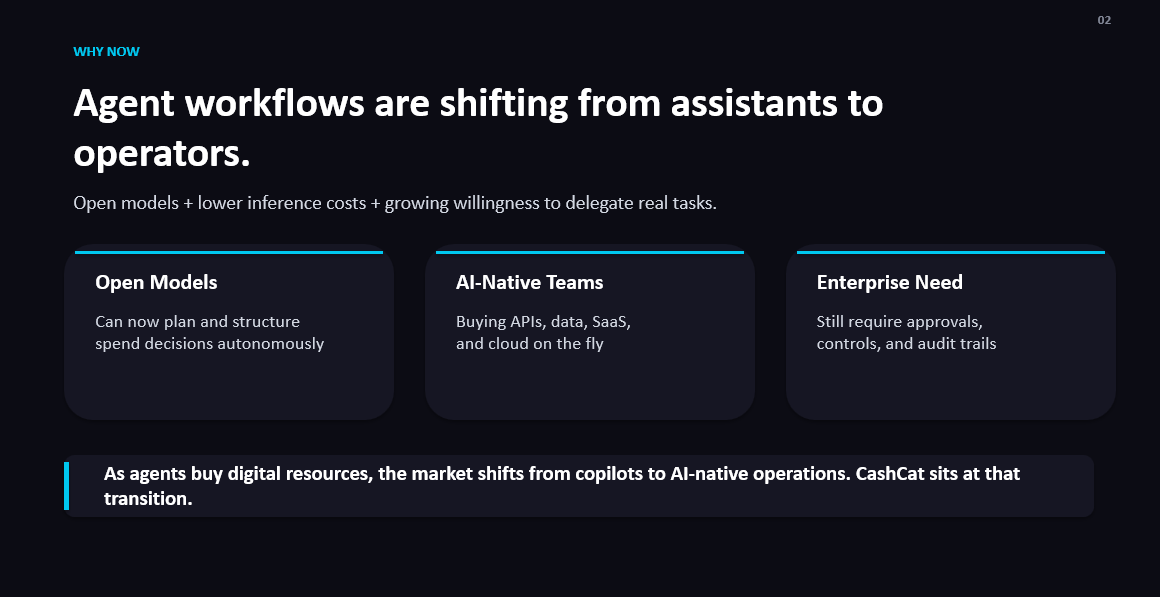
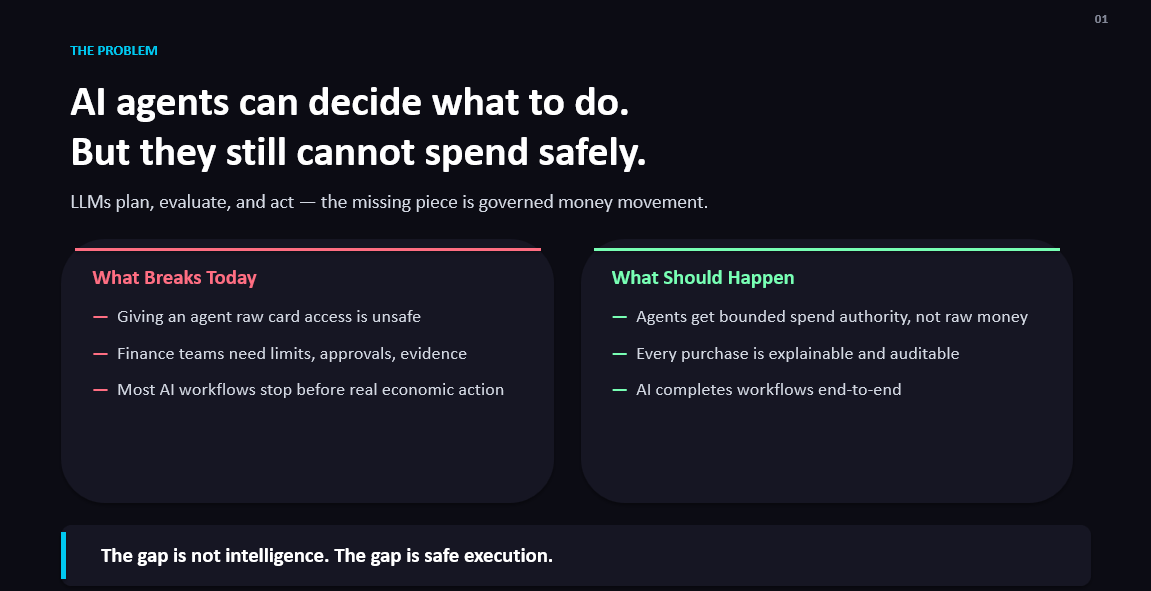
AI agents are moving from chat to action. They can research, plan, call tools, and coordinate workflows, but they still lack a safe way to spend money. Giving an autonomous agent a raw card, wallet key, or payment credential is risky
CashCat was inspired by one question:
If agents are going to work for us, how should they pay for things safely?
What It Does
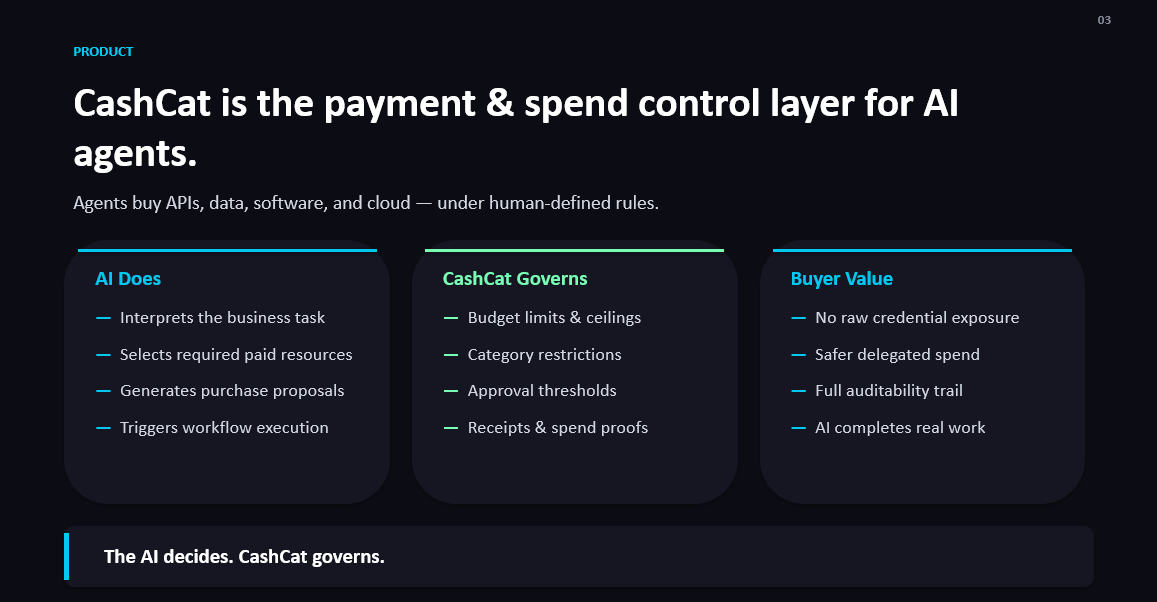
CashCat is an AI Agent Payment OS.
A user gives an AI agent a business task. The agent decides whether paid resources are needed, such as APIs, data, software, compute, or services. CashCat then automates and governs the payment workflow with:
- Budgets
- Approval rules
- Payment intent generation
- Receipts
- Spend proofs
- Audit trails
- Single-agent and multi-agent workflows
The core idea is:
LLMs decide. CashCat governs and executes.
How We Built It
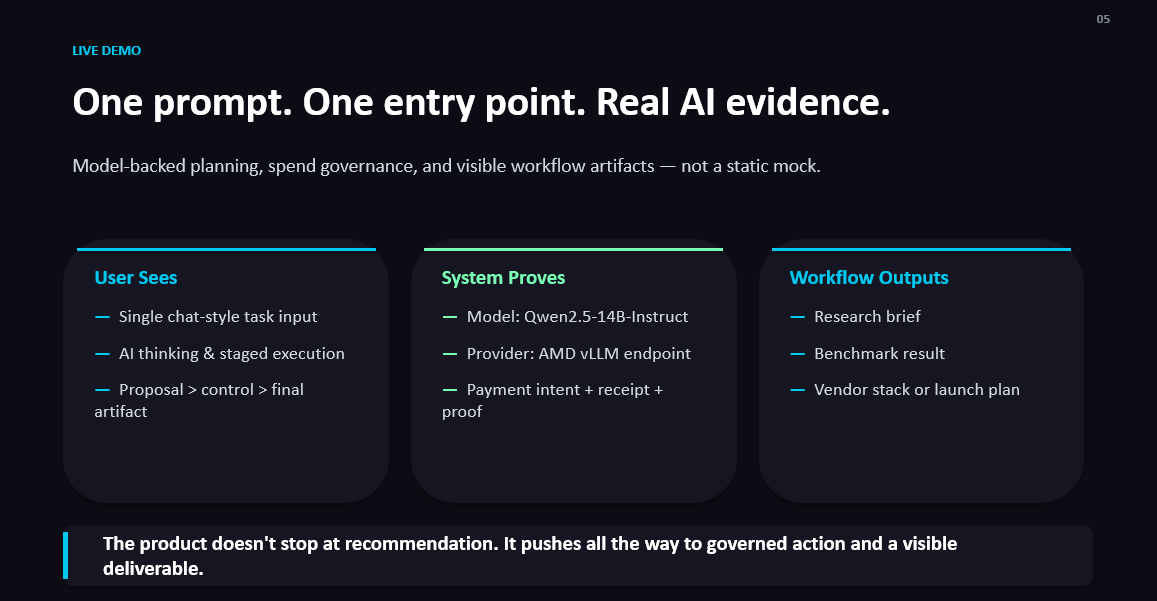
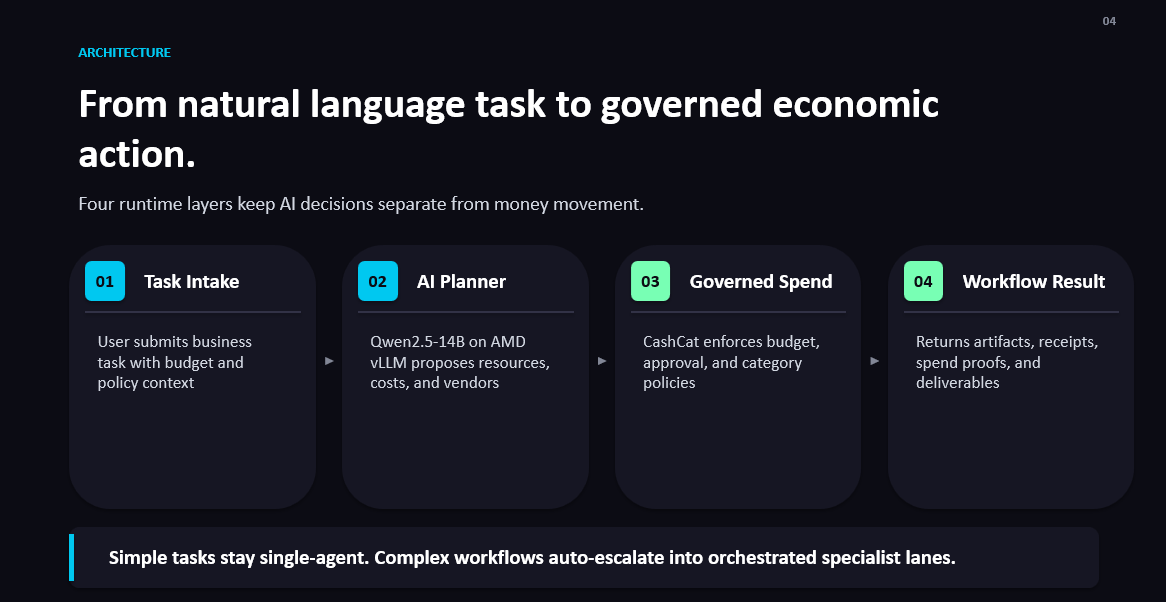
We built a public product demo, architecture, workflow diagrams, schemas, and example agent payment flows. The demo shows a natural-language task flowing through:
- AI task understanding
- Structured spend proposal
- Budget and approval checks
- Governed payment intent
- Receipt and spend proof
- Workflow artifact generation
For the AI layer, we designed the planner around Qwen2.5-14B-Instruct running through an AMD vLLM-style inference endpoint. The model’s role is to translate a natural-language task into a structured payment proposal.
CashCat acts as the payment automation and control layer around that proposal.
What We Learned
We learned that agent payments are not just a payment problem. They are a workflow, security, trust, and automation problem.
The hard part is not simply moving money. The hard part is answering:
- What is the agent trying to do?
- Is this spend within scope?
- Who authorized it?
- What budget applies?
- Does it require human approval?
- How do we prove what happened afterward?
This helped us frame CashCat as more than an API. It is a payment operating layer for autonomous agents.
Challenges
The biggest challenge was making the product understandable.
At first, the project looked too much like a technical protocol demo. We had to reshape it into a product experience where users can immediately understand:
- Give an AI agent a task
- Let it propose paid actions
- Let CashCat automate and govern the payment
- Show receipts, proofs, and workflow results
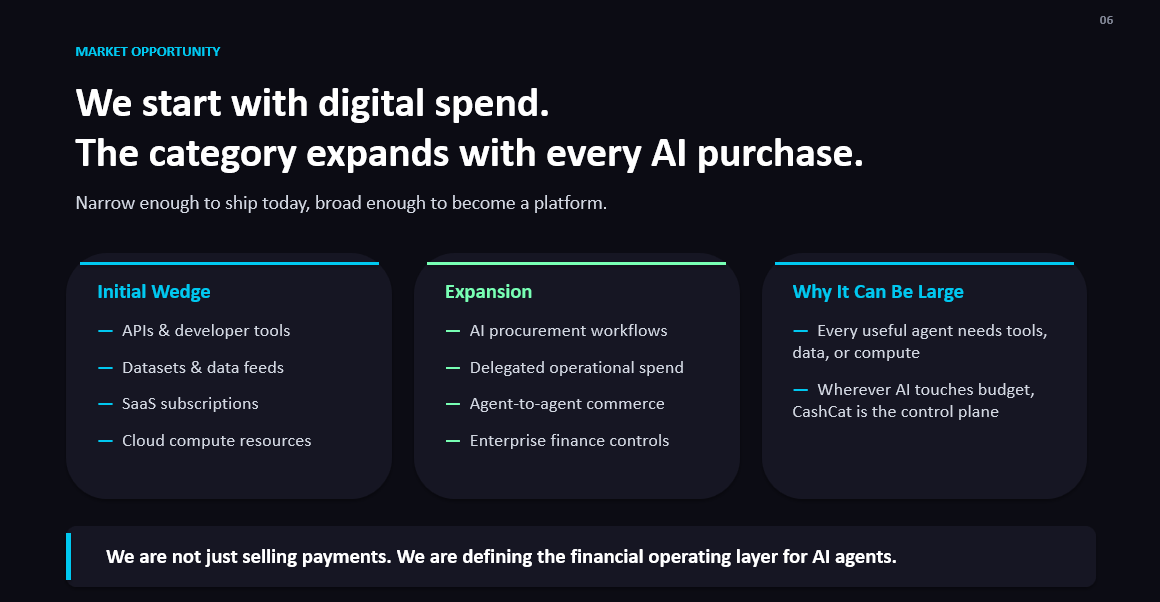
Another challenge was scope. Agent payments can cover APIs, SaaS, cloud, crypto wallets, enterprise cards, and agent-to-agent transactions. We focused the hackathon demo on digital spend, while designing the architecture to support broader payment rails later.
## What Is Next
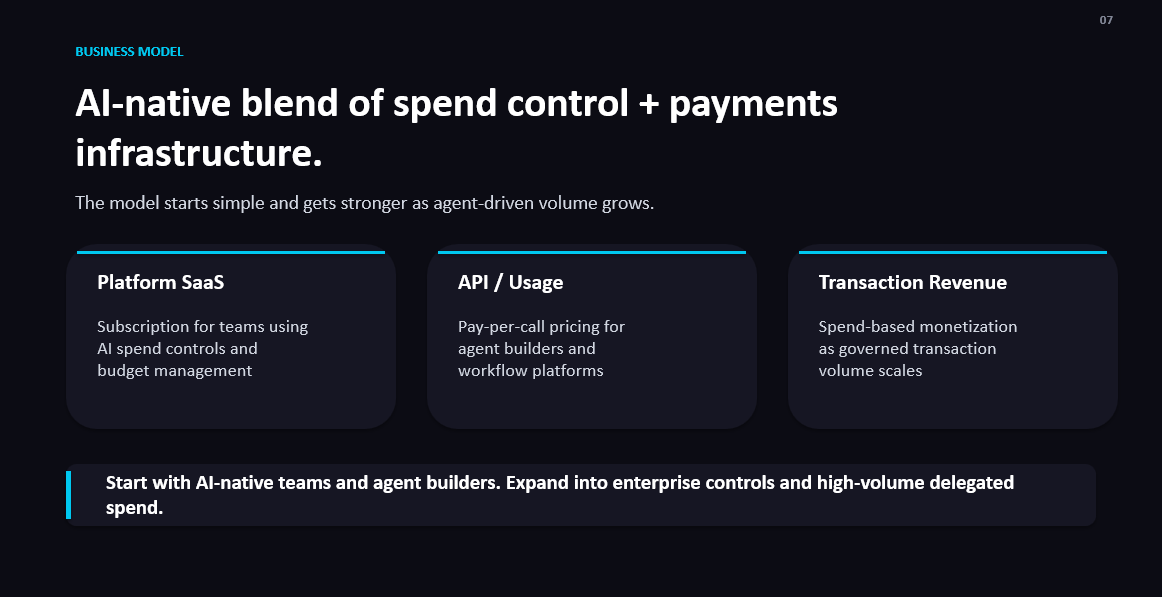
Next, we want to connect CashCat to real payment rails such as Stripe, PayPal, cards, wallets, and crypto infrastructure. We also want to expand the platform into:
- Developer APIs and SDKs
- Enterprise control consoles
- Real approval workflows
- Agent budget allocation
- Payment reconciliation
- Stablecoin and wallet-based settlement
- Agent-to-agent commerce
Our long-term vision is for CashCat to become the financial operating layer for autonomous AI agents
Built With
- amd
- codex


Log in or sign up for Devpost to join the conversation.