Inspiration
Siloed workflows and fragmented developer tooling create friction in modern engineering environments. We wanted to build a seamless multi-agent orchestration pipeline that automates payload validation, data enrichment, and intelligent routing without adding manual overhead.
What it does
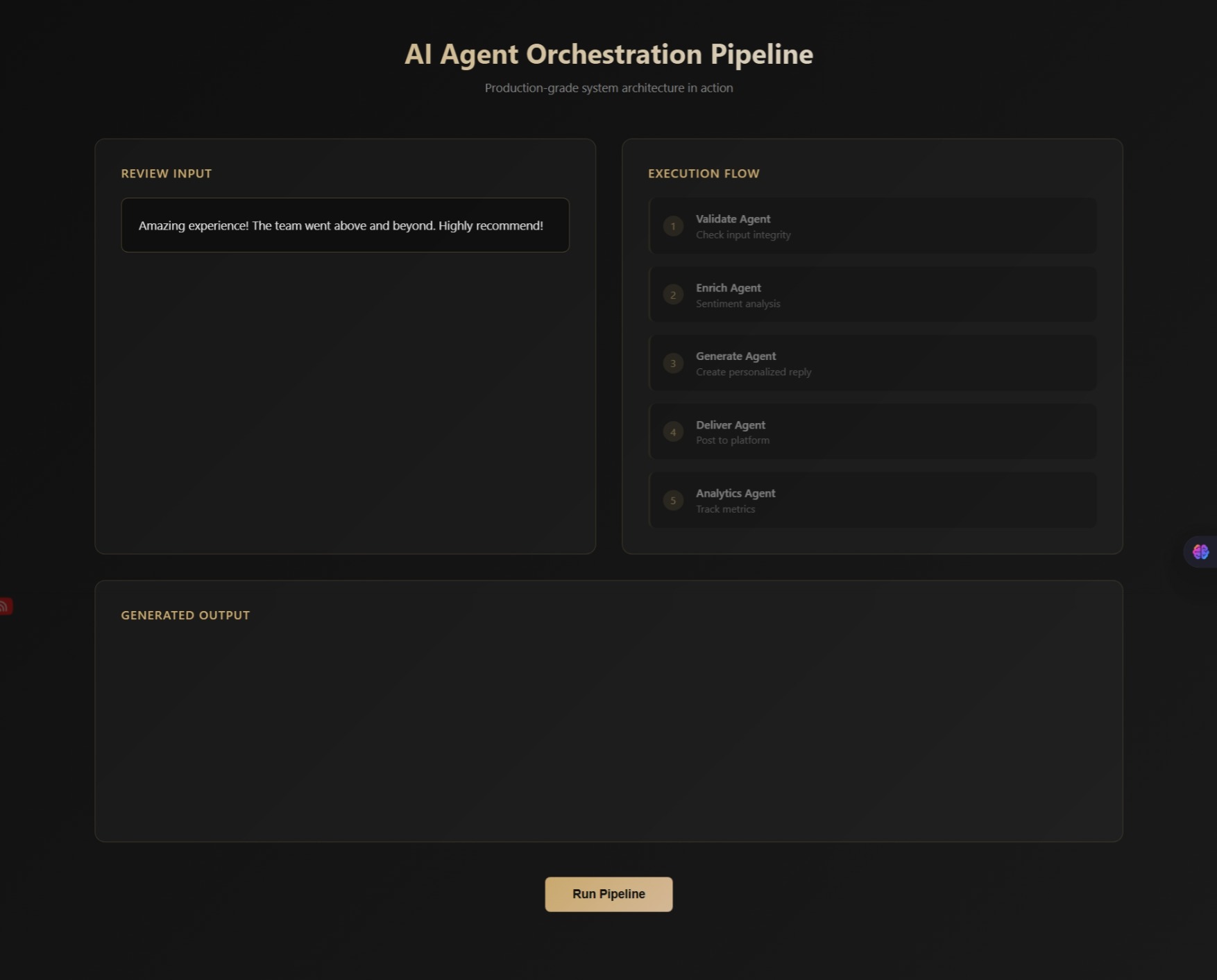
The AI Agent Orchestration Pipeline executes a structured, multi-step workflow:
- Validate Agent: Inspects incoming payloads and checks formatting/parameters.
- Enrich Agent: Performs real-time data extraction and contextual analysis.
- Generate Agent: Synthesizes intent-specific messaging and dynamic actions using modular LLM provider layers.
- Deliver & Analytics Agent: Handles secure downstream posting and tracks telemetry metrics.
How we built it
Built using a low-code/no-code system design methodology centered around Relevance AI for agent workflows, integrated with GitHub for version control, and deployed with a clean frontend interface hosted on Netlify.
Challenges we ran into
Balancing low-latency asynchronous execution across multiple agents while preventing race conditions and maintaining strict data schema integrity during live payload enrichment.
Accomplishments that we're proud of
Successfully deploying a fully operational, production-grade multi-agent interface (ramon-pipeline-demo.netlify.app) that functions as a cohesive, end-to-end automated pipeline.
What we learned
Structuring modular agent handoffs significantly reduces pipeline bottlenecks and improves reliability in multi-step generative AI workflows.
What's next for AI Agent Orchestration Pipeline
Expanding the execution router to support additional enterprise event triggers and deeper telemetry integrations.
Built With
- aiagent
- github
- llm
- netify
- relevanceai
