-
-
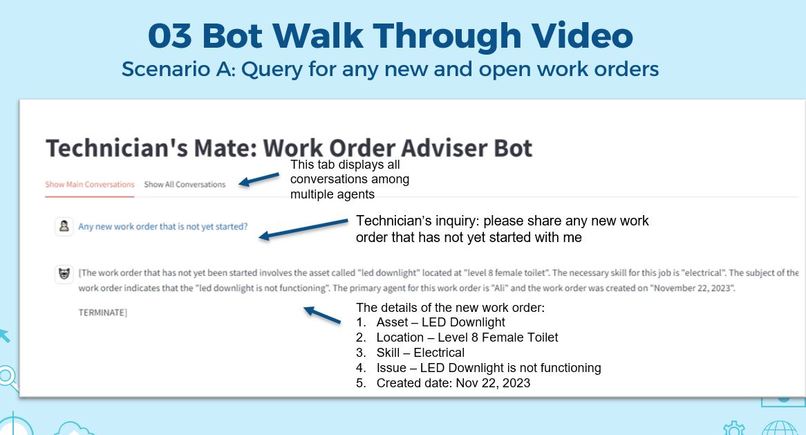
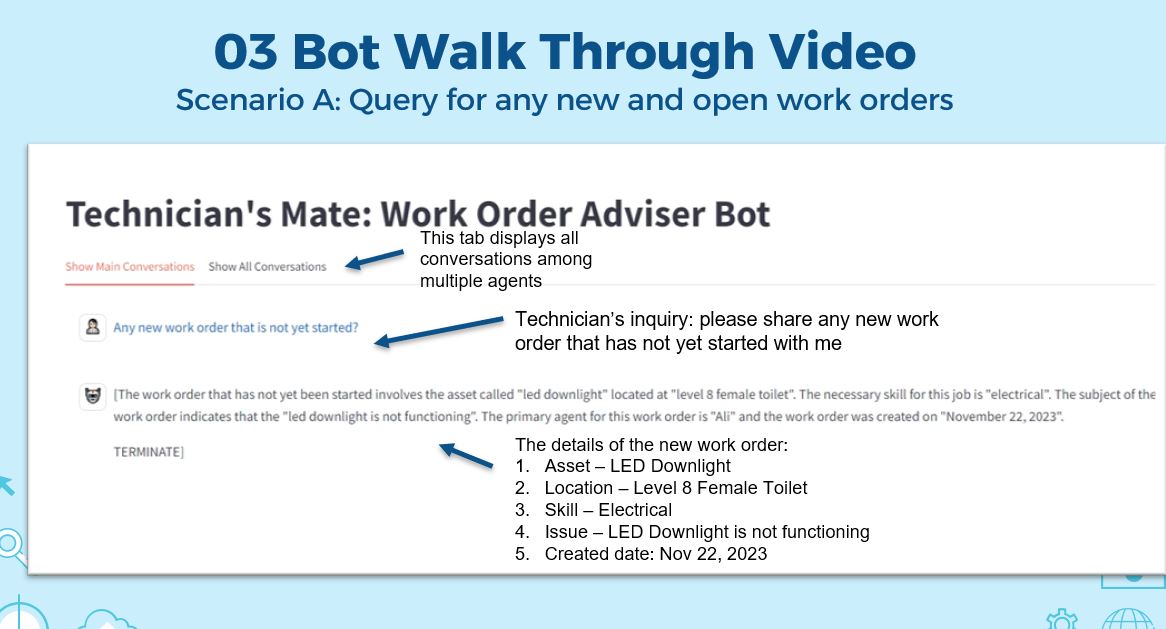
Bot 3 Scenario A Explanation
-
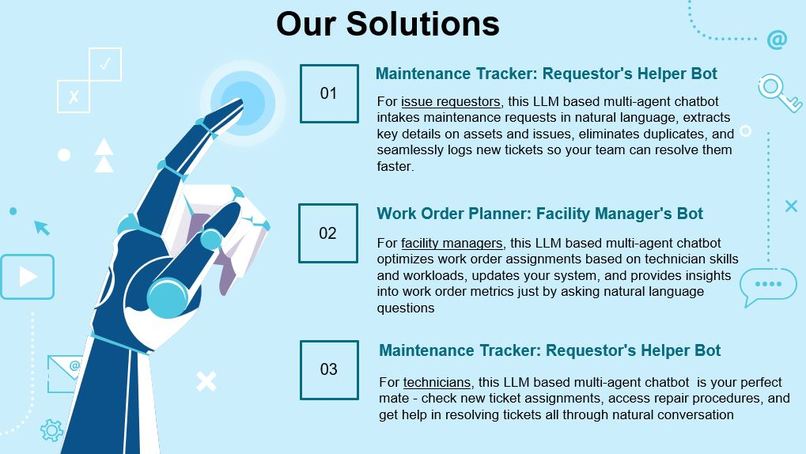
Our Solution
-
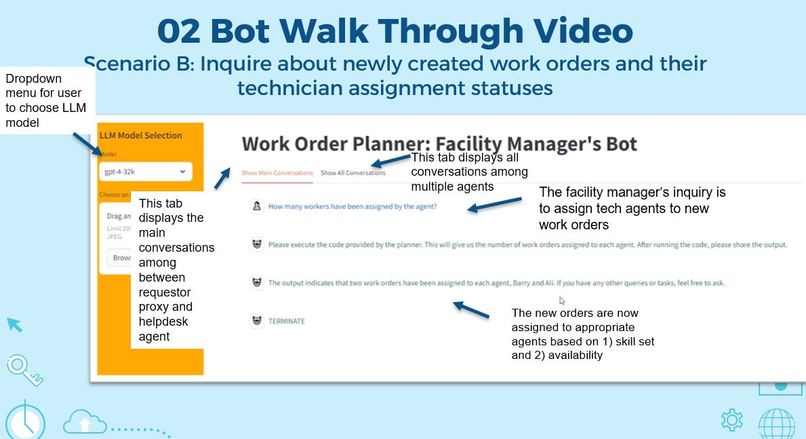
Bot 2 Scenario B Explanation
-
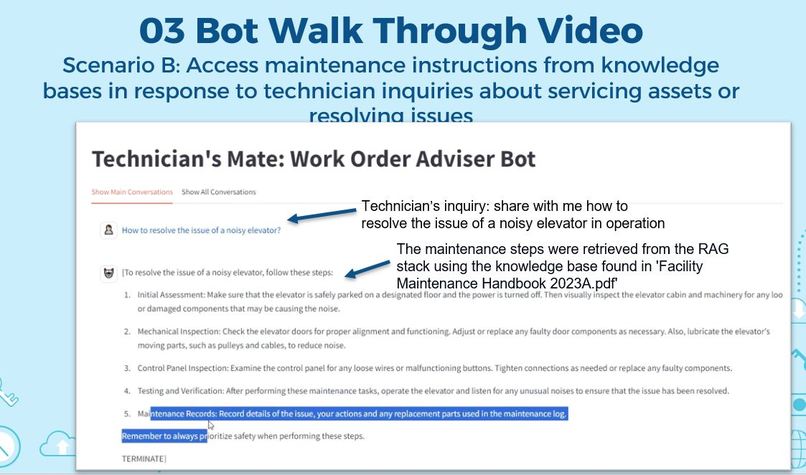
Bot 3 Scenario B Explanation
-
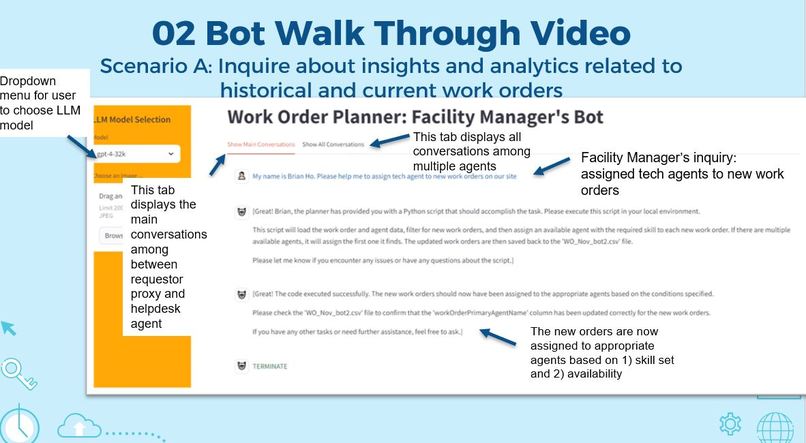
Bot 2 Scenario A Explanation
-
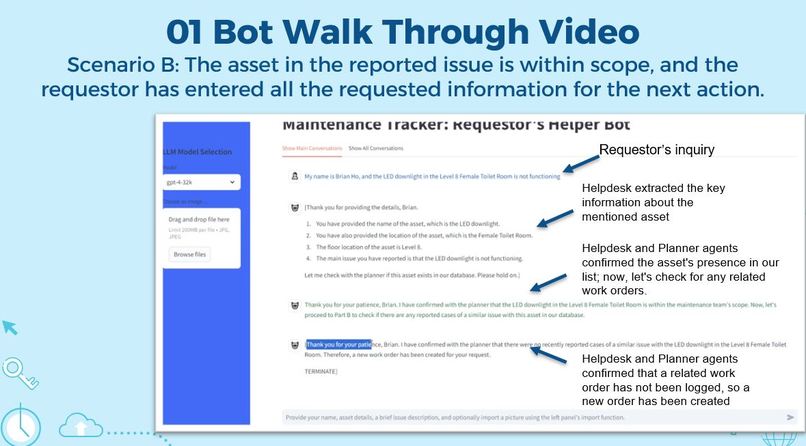
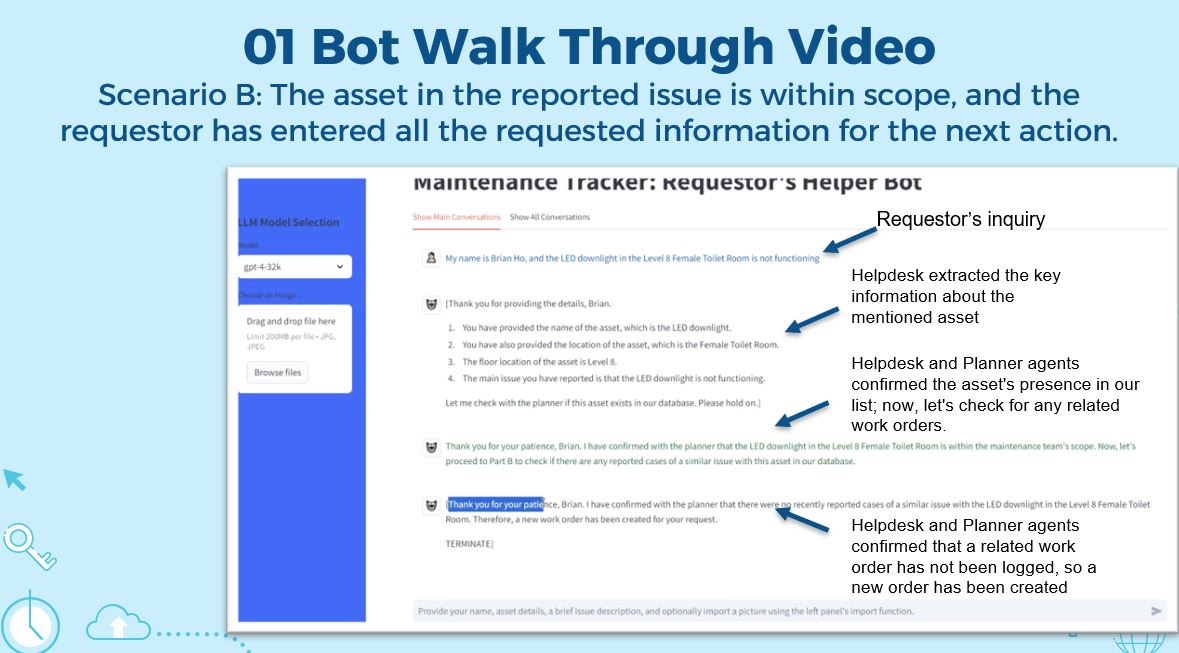
Bot 1 Scenario B Explanation
-
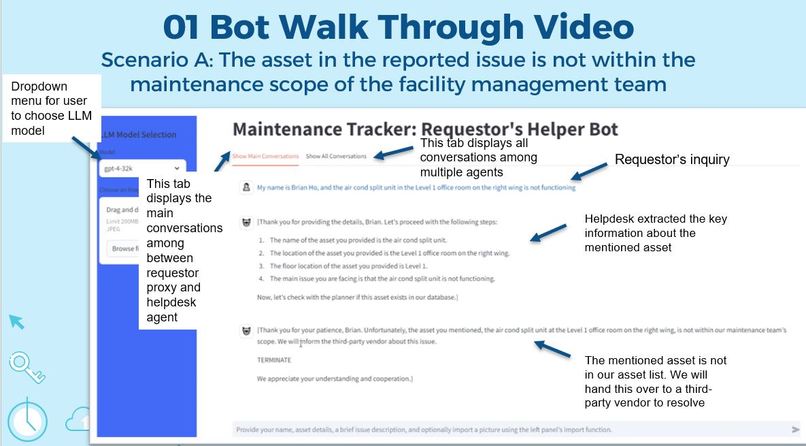
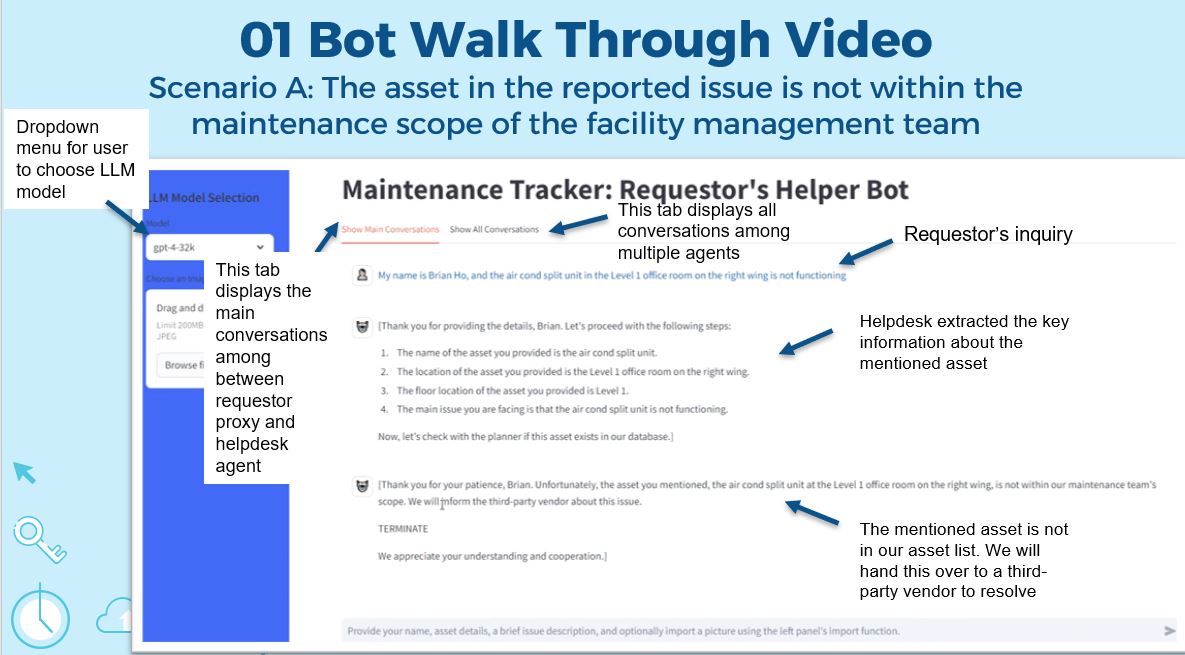
Bot 1 Scenario A Explanation
-
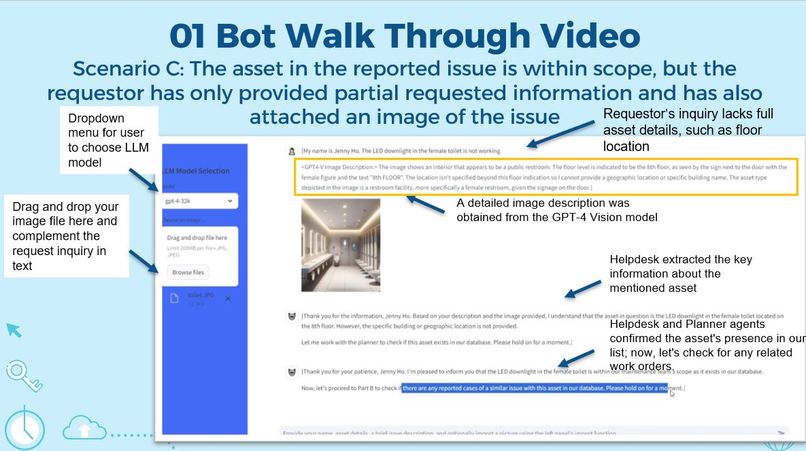
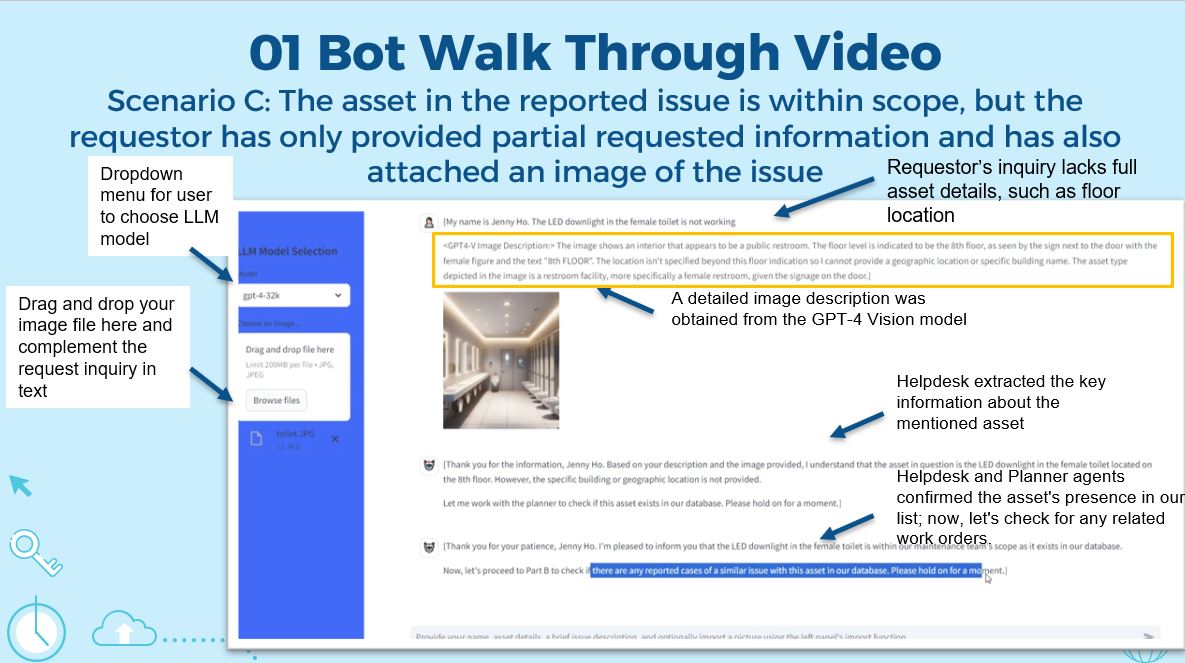
Bot 1 Scenario C Explanation
-
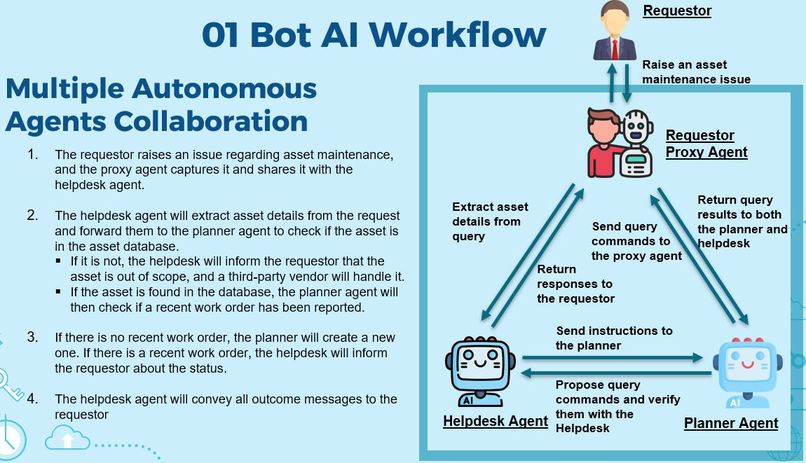
Bot 1 Workflow
-
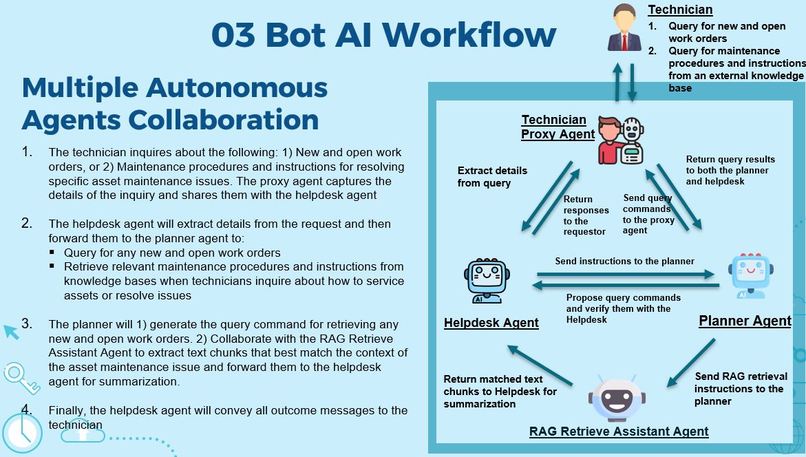
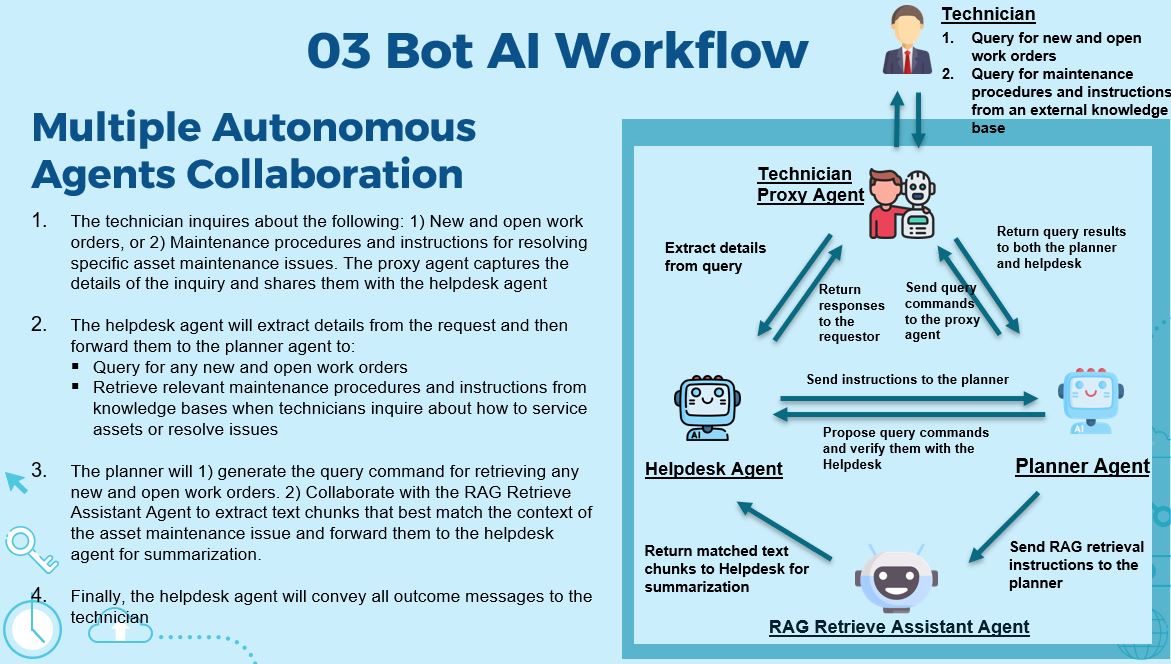
Bot 3 Workflow
-
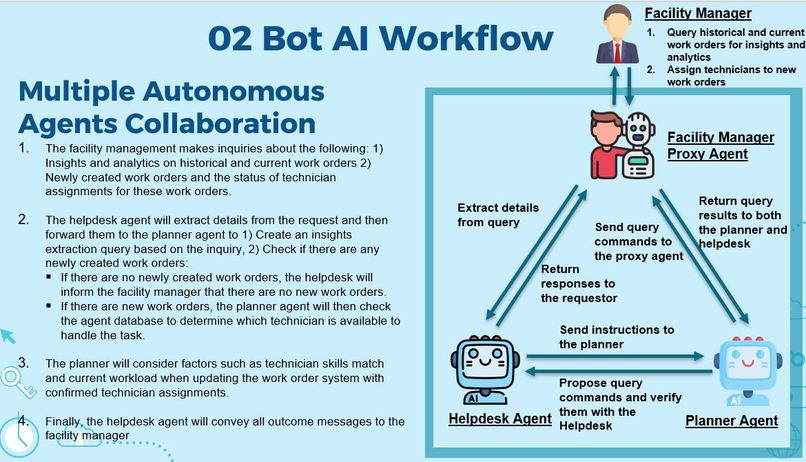
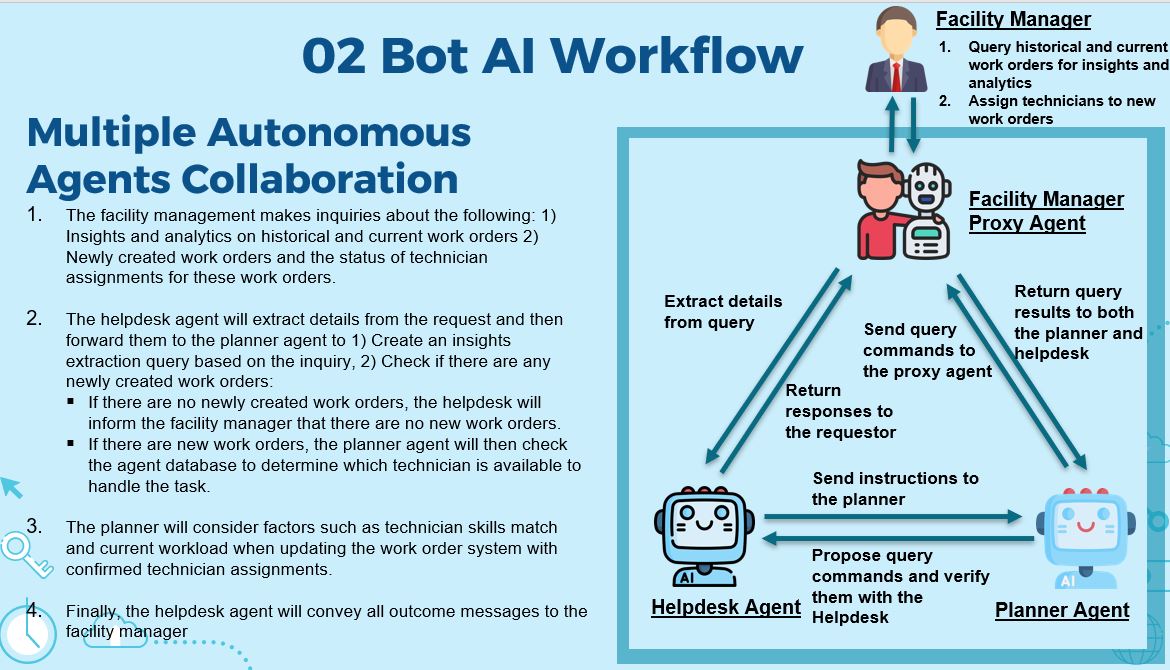
Bot 2 Workflow

Inspiration
Facility maintenance is a complex and critical task, yet it currently faces numerous challenges that hinder productivity and efficiency. We struggle with inefficient maintenance request handling as conventional approaches rely on manual procedures, leading to delays and inaccuracies. Our resource allocation and workload management also needs improvement since manually assigning work orders cannot effectively match technician skills and workloads. Additionally, technicians frequently struggle to quickly access the knowledge or procedures relevant to the task at hand. Finally, facility managers lack access to real-time data and insights crucial for data-driven decision making.
What it does
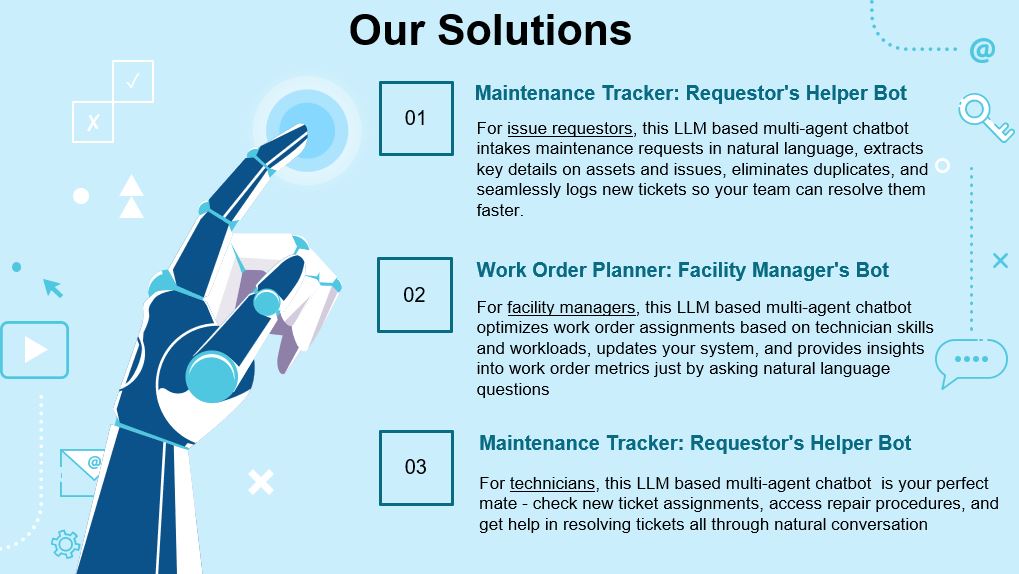
Our solution consists of a suite of AI-powered bots that optimize and simplify facility maintenance from start to finish.
- For issue requestors, there's the Requestor's Helper Bot. This chatbot intakes maintenance requests in plain English, extracts details on assets and problems, prevents duplicate tickets, and logs everything so technicians can resolve problems faster. No more hassle submitting tickets!
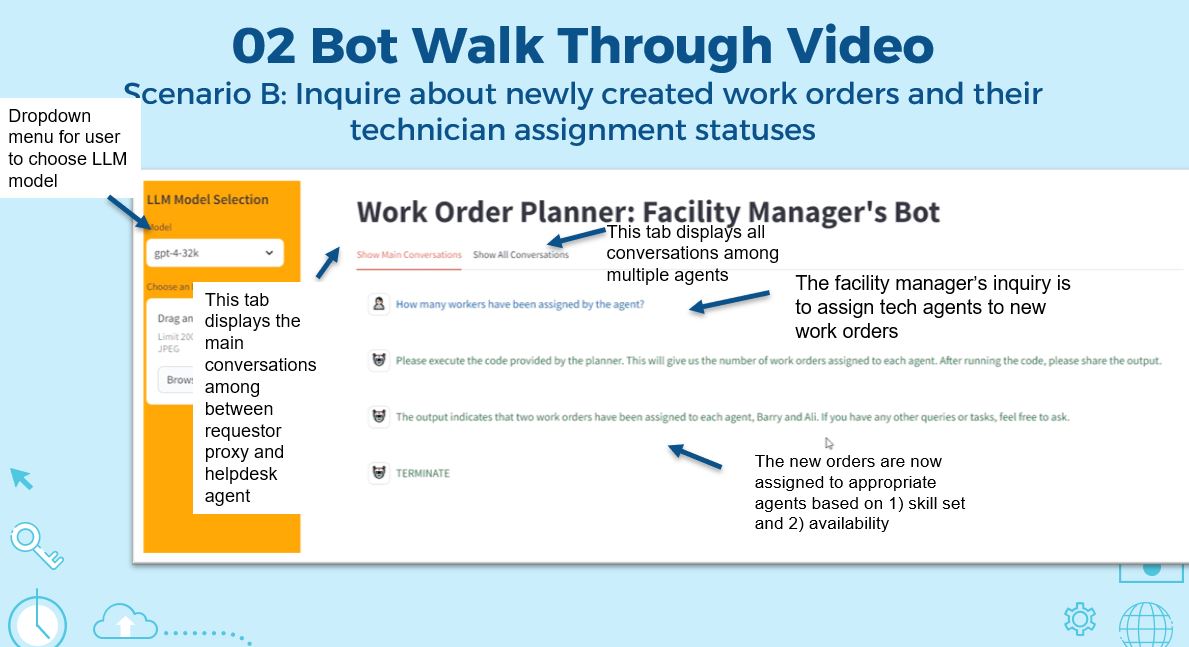
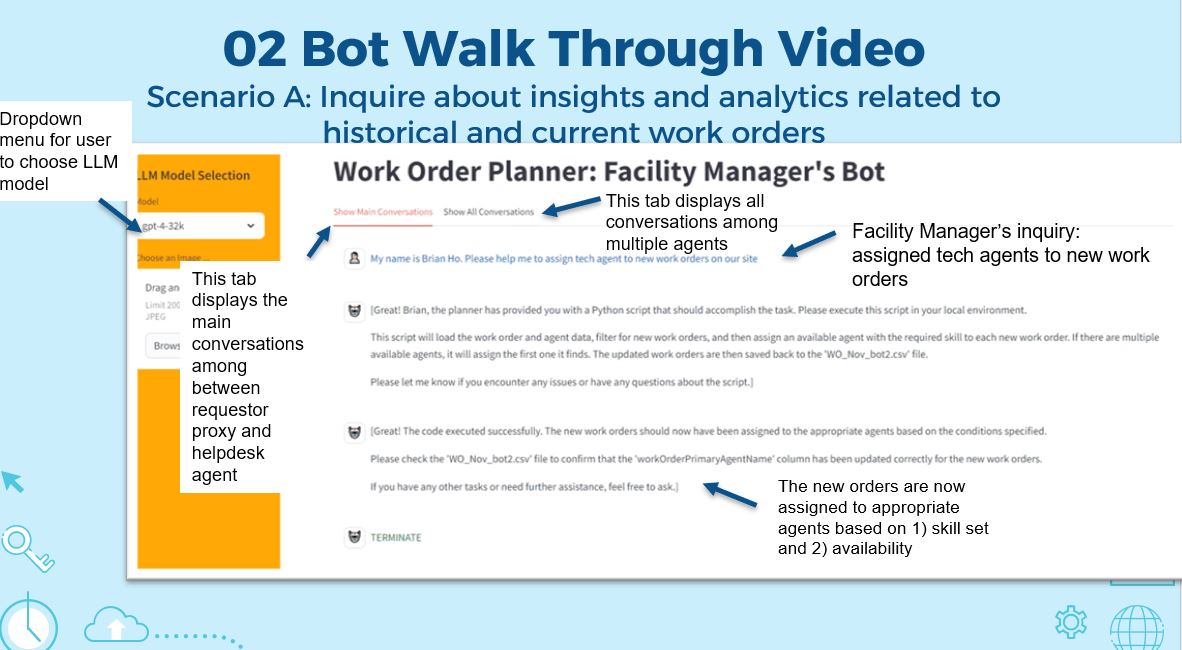
- For facility managers, there's the Work Order Planner Bot. This chatbot automatically assigns work orders to technicians based on their skills and workloads. It updates your system and provides insights into key metrics, just by asking questions in natural language. Now you can optimize assignments in a snap!
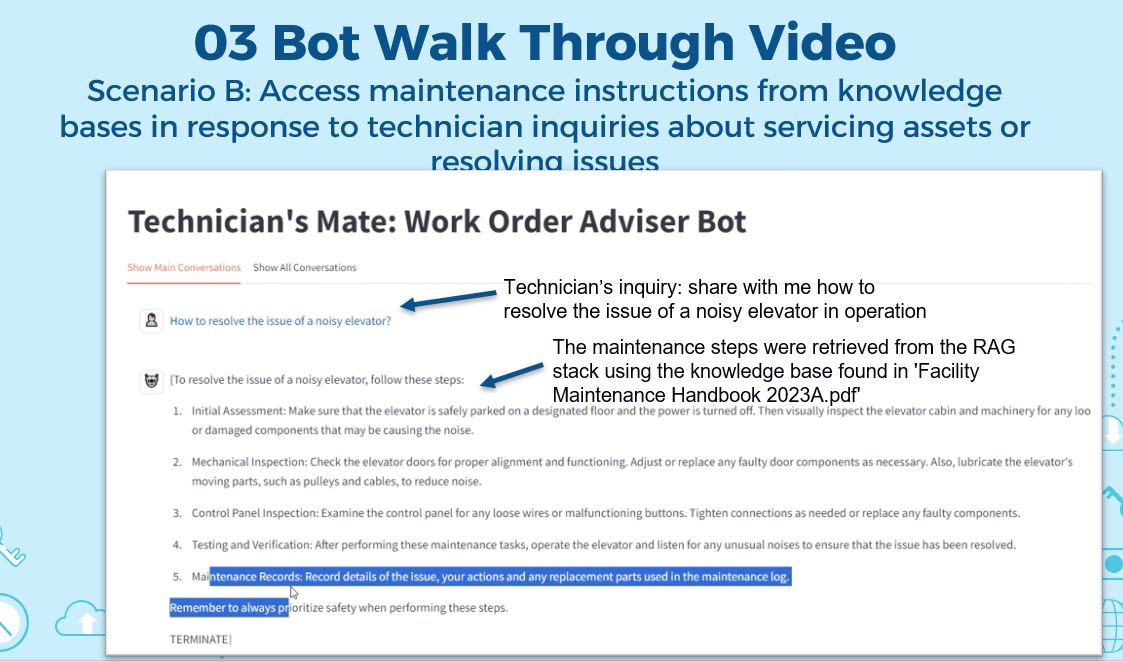
- And for technicians, there's your perfect troubleshooting mate - the Technician's Helper Bot! Check new assignments, access repair procedures, and get help resolving tickets, all through regular conversation. With this bot by your side, resolving maintenance issues is easier than ever!
In summary, our hackathon project seamlessly connects requestors, managers and technicians through AI-powered conversational agents. This suite of bots promises more efficient facility maintenance from beginning to end. We're excited to bring conversational AI into this critical business process! Please refer to this Youtube link for our solution: https://www.youtube.com/watch?v=7OryzECyqYY
How we built it
Our team is excited to present Maintenance Tracker - an AI assistant that aims to streamline facility maintenance management. Through natural language understanding, Maintenance Tracker provides solutions tailored to three key user groups - the requestors, facility managers, and technicians.
- For requestors, it acts as a helper bot that automates ticket logging. You can simply tell it about an asset that needs repairs in plain English. The bot will check existing records to avoid duplicates, and file a new ticket if it's a fresh issue.
- As a facility manager, you can leverage the work order planner bot for smarter resource allocation. When assigning technicians, it suggests optimal matches based on skills and current workloads. It also enables you to analyze historical trends through conversational queries about metrics like ticket resolution times.
- Finally, for technicians, it delivers quick access to documentation required during repairs via chat along with notifications about newly assigned tickets.
In essence, Maintenance Tracker aims to smoothen coordination between all stakeholders through AI assistance. Technicians can focus on repairs rather than manual tracking. Facility managers have enhanced oversight on work orders. And requestors have a simple way to report issues.
Challenges we ran into
- Autogen's relative novelty: As a relatively new framework, Autogen may lack extensive documentation and community support compared to more established tools. This could pose challenges in understanding the framework's nuances and seeking assistance when encountering difficulties.
- Prompt engineering for AI agents: Effectively prompting AI agents in Autogen to align with specific objectives requires careful consideration of the task at hand, the desired outcomes, and the agents' capabilities. This process may involve trial and error to achieve optimal agent behavior.
- Autogen-Databricks LLM integration complexity: Integrating Autogen with Databricks LLM involves a significant amount of configuration and refinement due to the inherent complexities of combining different systems. Automation and additional tools could streamline this process and reduce manual effort.
Accomplishments that we're proud of
We have successfully developed three chatbot prototypes, each designed with distinct objectives, using a multi-agent framework that leverages multiple LLM agents in collaboration. These chatbots are adept at addressing more intricate issues that demand teamwork and specialized knowledge in facility management. Capable of executing complex tasks through straightforward and general text inputs, they potentially pave the way for a research direction that could significantly enhance our company's operations, boost work productivity, and elevate the user experience.
What we learned
- Autogen is currently in its early stages, offering a promising platform for building intricate systems with multiple interacting agents. Despite its nascent state, it holds significant potential for expansive growth and development.
- The integration of Autogen with Databricks requires considerable refinement and development.
- The application of LLM-based multi-agent chatbots in the facility management sector presents a substantial opportunity. Given the industry's reliance on human labor, these chatbots can revolutionize the field by automating numerous processes or enhancing the capabilities of the workforce.
What's next for LLM-Based Multi-Agent Facility Maintenance Chatbots
In our future plans, we aim to improve our service delivery by consolidating help desk and planner agents from three different bots into a unified, intelligent system. This will enhance user experiences and issue request and resolution workflows. We're also considering integrating this unified system into our internal work order system to further streamline our processes. Furthermore, we plan to enhance the integration of AutoGen with Databricks' advanced language models. Our current approach, which involves a proxy server, will still require extensive refinement and automation.
Built With
- autogen
- azure
- azure-openai
- chromadb
- databricks-llm
- databricks-llm-mpt7b
- gpt4-32k
- gpt4-vision
- llamaindex
- openai
- streamlit

Log in or sign up for Devpost to join the conversation.