-
-
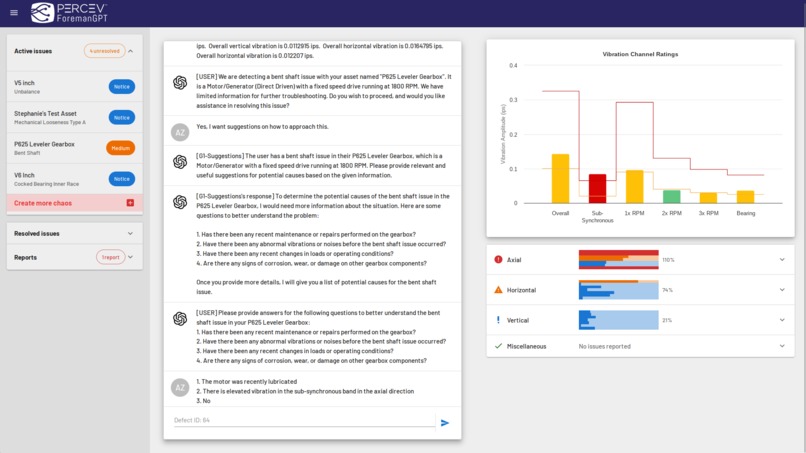
ForemanGPT Graphical Interface
-
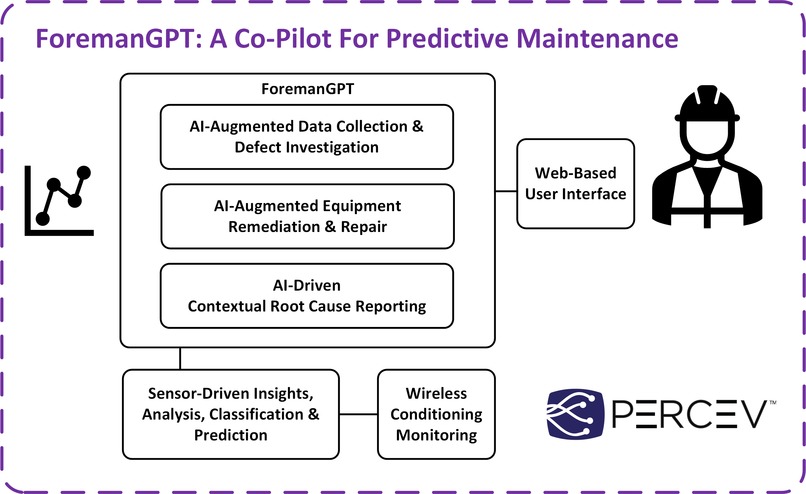
Product Overview
-
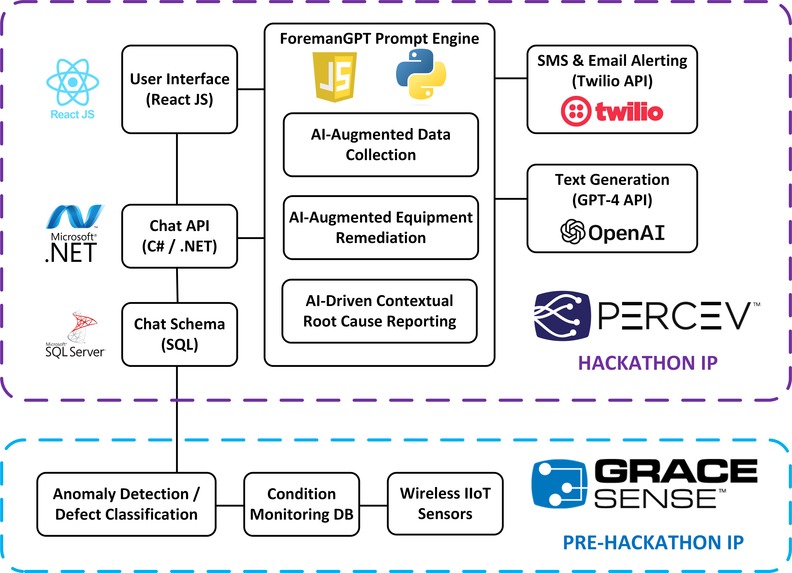
Technical Block Diagram
-
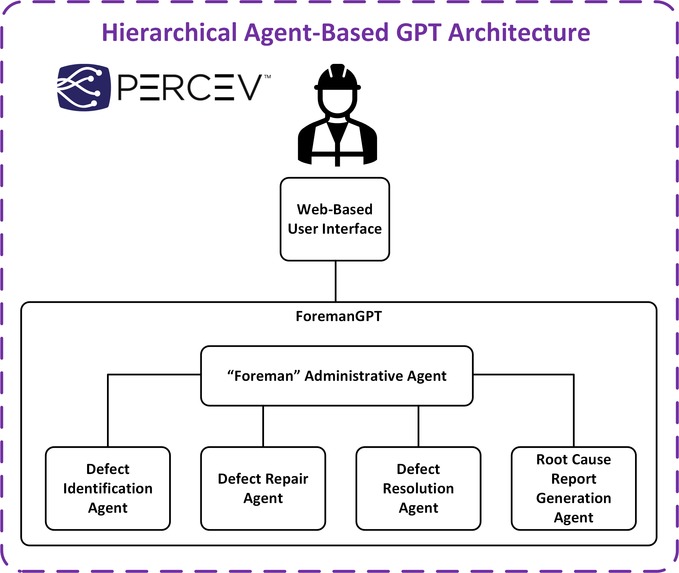
Hierarchical Agent-Based GPT Architecture
-
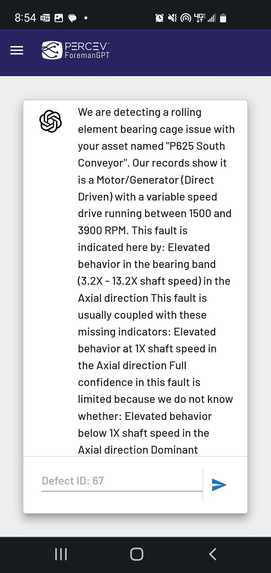
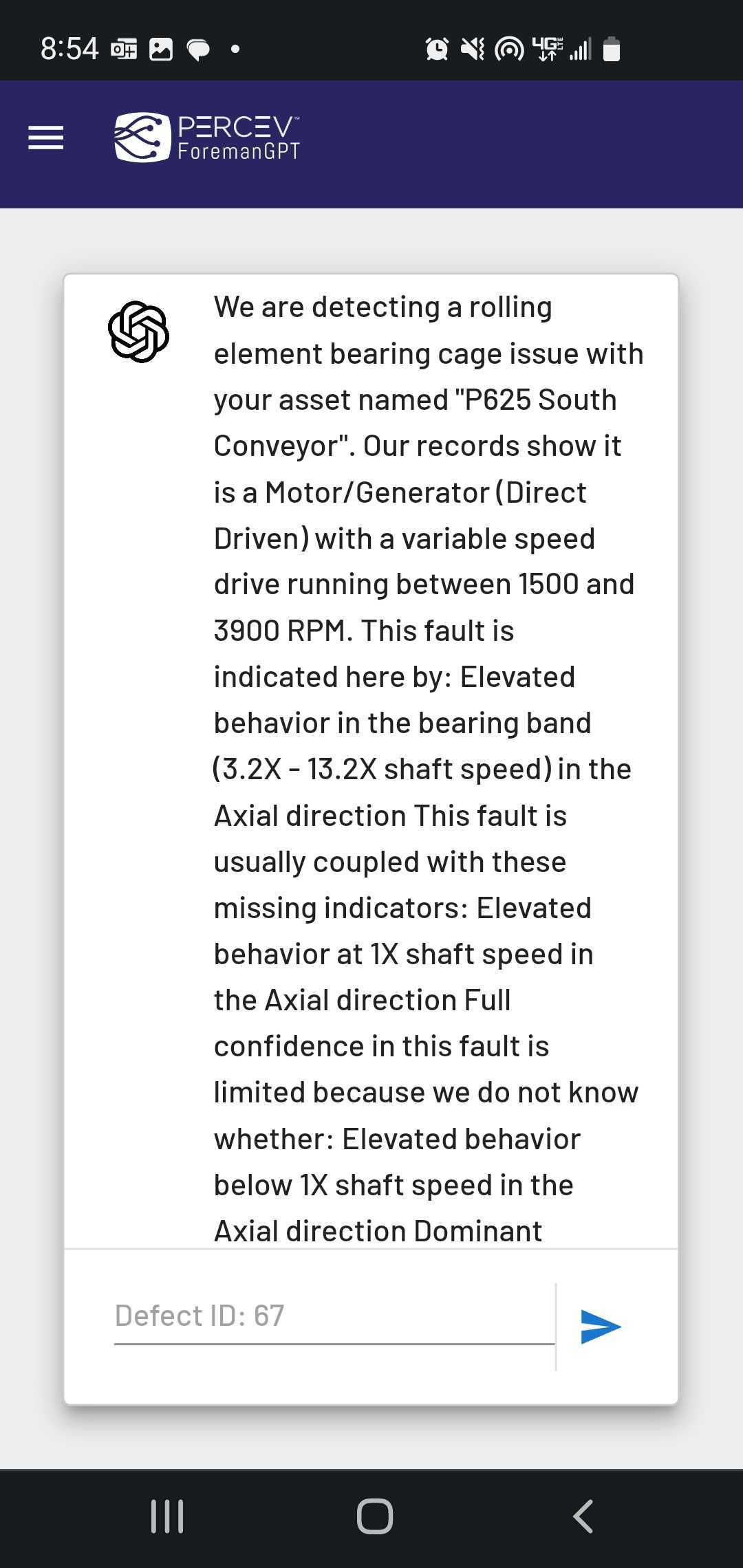
Initial User Interaction
-
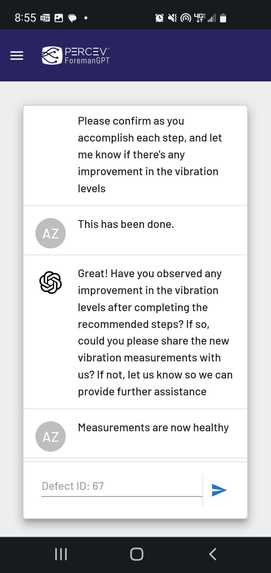
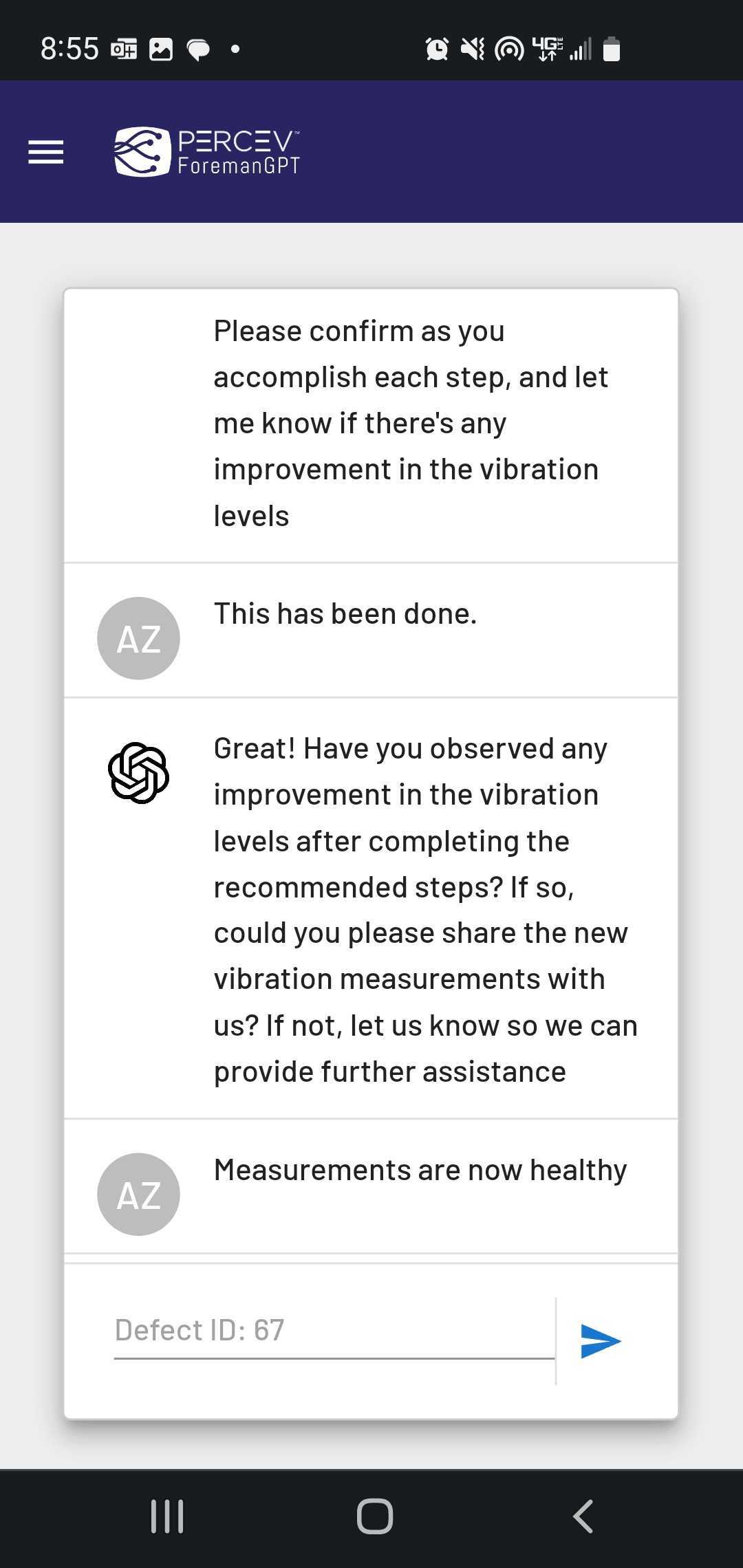
AI-Assisted Remediation
-
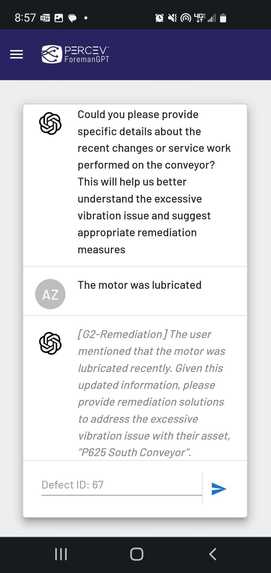
Example Foreman Agent Conversation
-
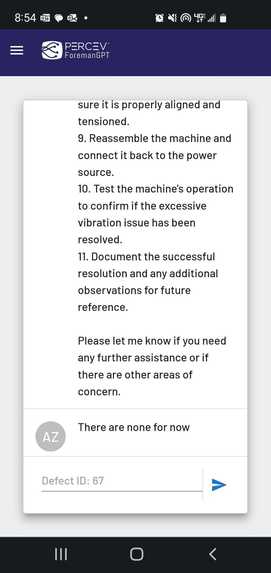
AI-Assisted Root Cause Analysis


Inspiration
Every year, unplanned downtime is a huge problem space that costs manufacturers a staggering $20 billion, and reactive maintenance is to blame for 70% of industrial injuries. Unfortunately, manufacturers can't find qualified maintenance technicians to replace and repair faulty equipment and existing AI solutions are unable to fill the gap because of a lack of quality training data leading to garbage models, untrustworthy predictions, decisions and technical instructions.
What it does
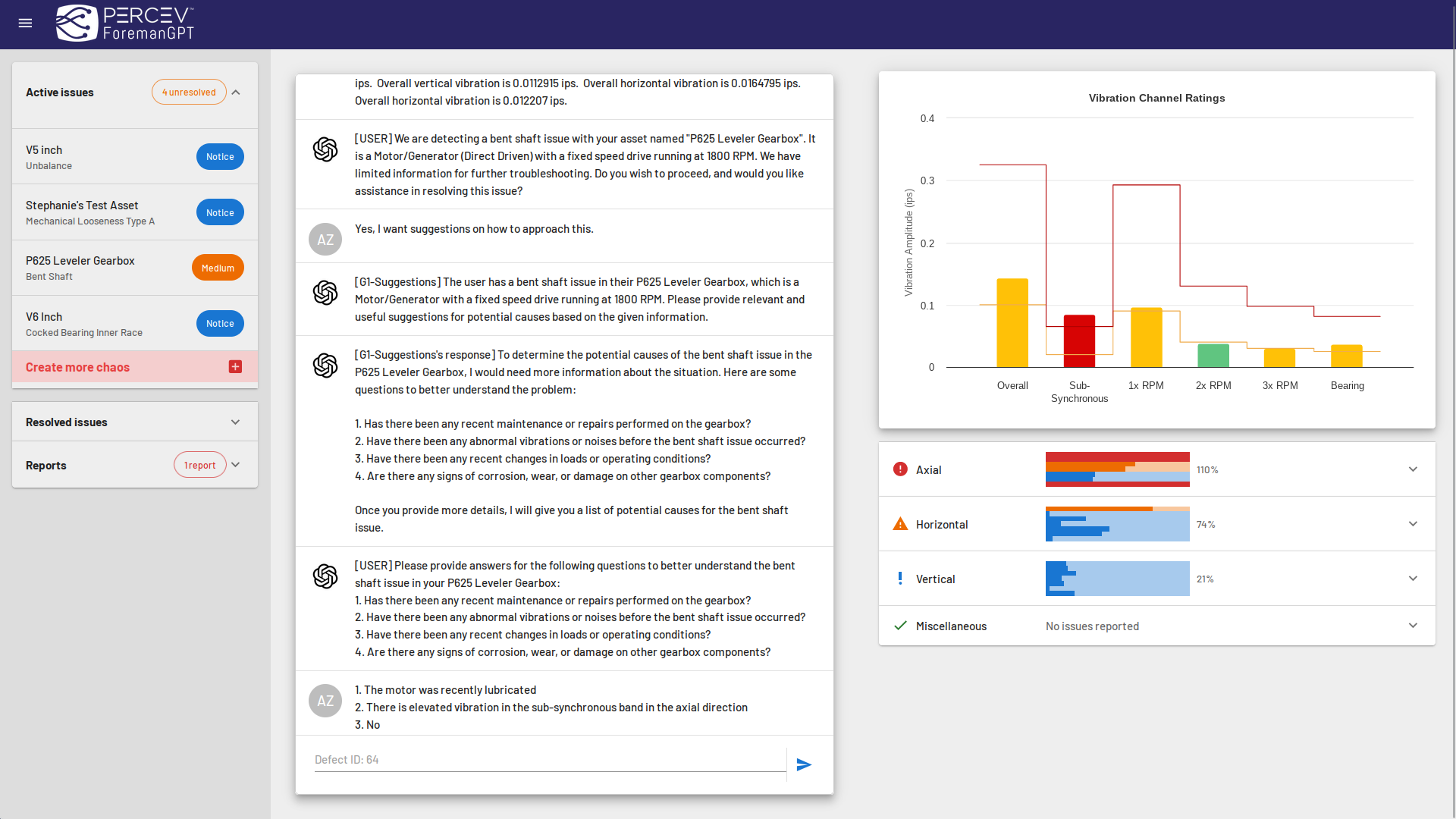
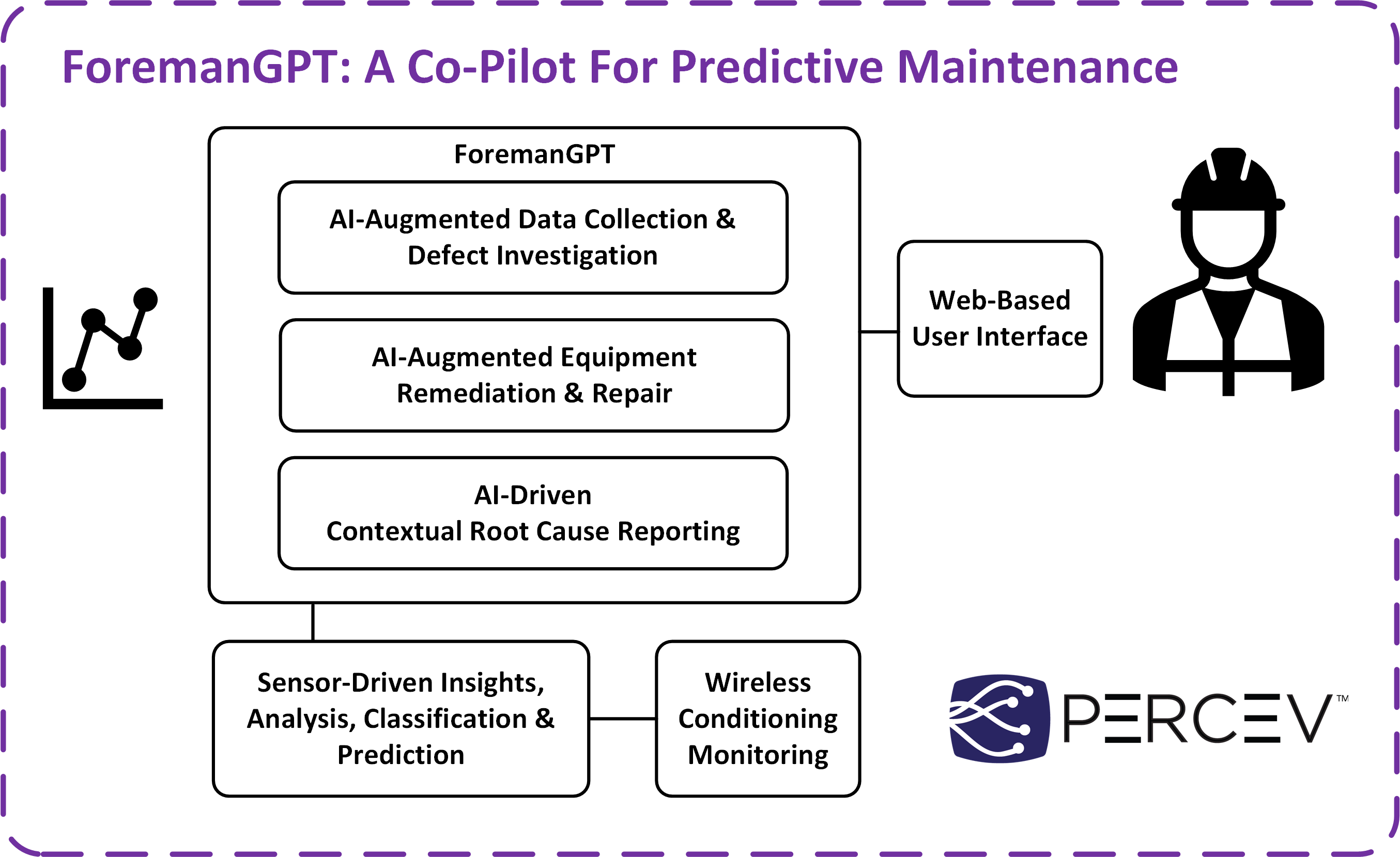
ForemanGPT harnesses the potential of cutting-edge conversational GPT technology to augment a dwindling maintenance workforce and minimize factory downtime. The benefits it brings to maintenance technicians are manifold:
- Investigations: ForemanGPT leads technicians in investigations, filling data and knowledge gaps, and ensuring precise predictions with a human-centric approach.
- Remediation: ForemanGPT instructs even novice technicians in detailed repair procedures, speeding up training and enabling efficient problem resolution.
- Root Cause Reporting: ForemanGPT captures full failure context, creating comprehensive Root Cause Analysis reports for improved equipment uptime.
- Explainable Decisions: ForemanGPT offers transparent explanations for its suggestions, fostering informed decision-making and boosting maintenance effectiveness.
Based on our knowledge of the space, we anticipate ForemanGPT saving hours of maintenance time. Each hour saved equates to $10,000-$50,000 in downtime reduction. In some environments such as Oil and Gas or companies using dispatched contractors, these numbers can be orders of magnitude higher.
How we built it
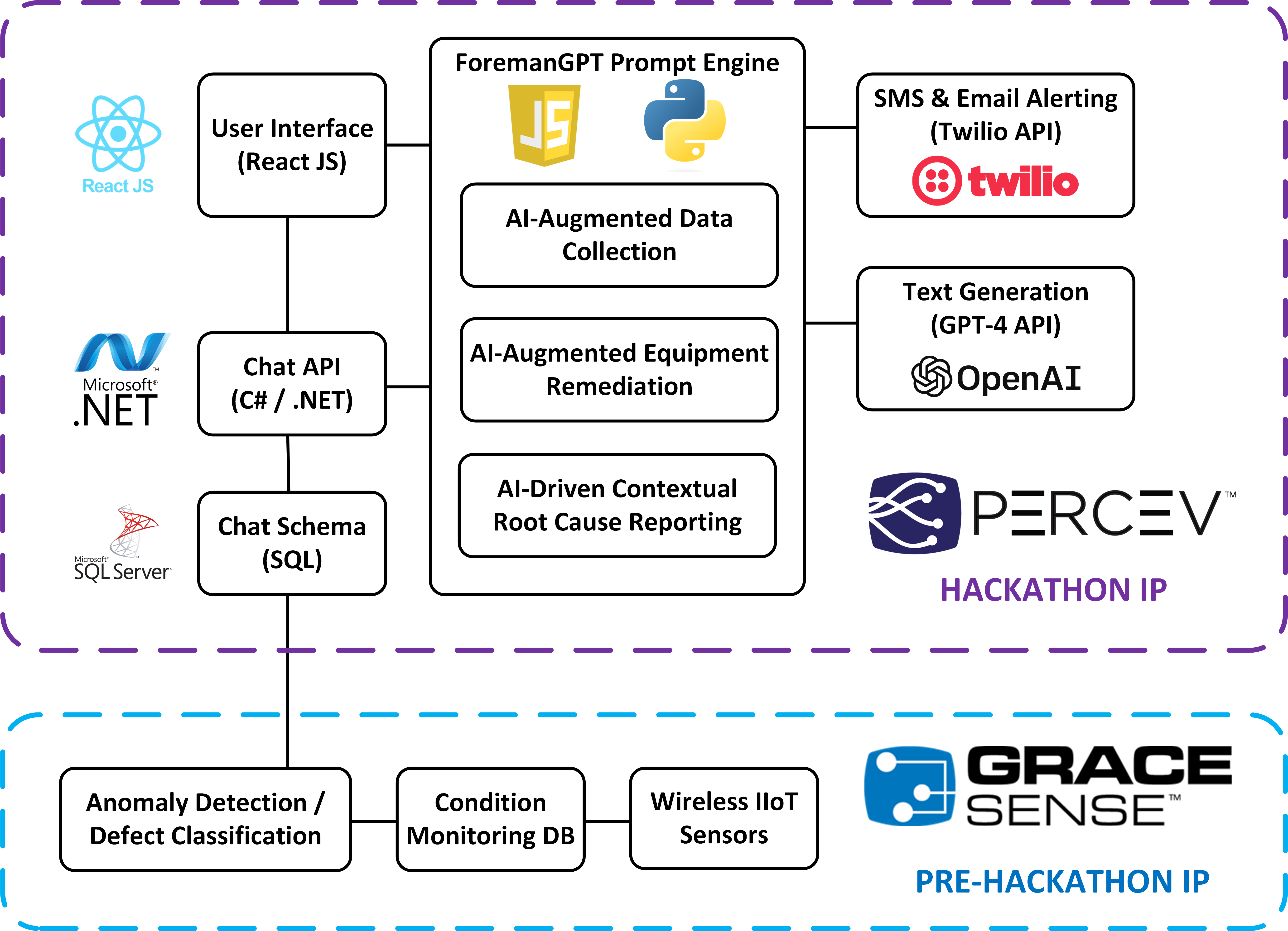
We started with our existing GraceSense IIoT ecosystem and database of industrial failure data, and built a brand new product extension (ForemanGPT) focused on enabling intelligent data-driven chat capabilities. This extension contains:
- A new SQL DB schema and C# API to enable data-to-chat interactions
- A new ReactJS GUI to provide intuitive chat with maintenance personnel
- A novel PromptEngine that leverages a hierarchical GPT prompting architecture to optimize human-to-AI interactions
Technical novelty
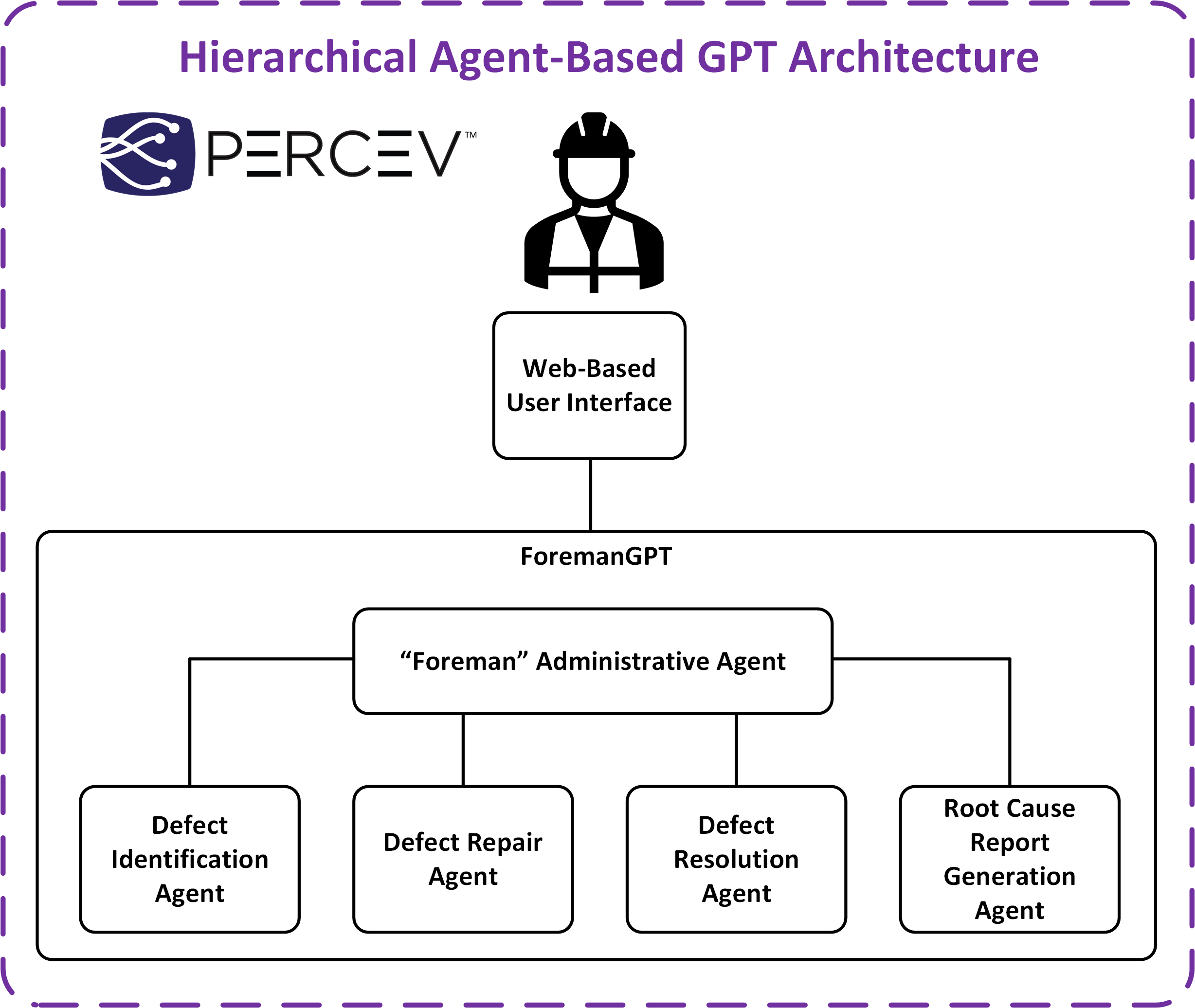
The most novel component of this project hinges on our brand new hierarchical and agent-based GPT architecture. Instead of a single chat agent responding to all user questions, we have the user interact directly with a main "Foreman" GPT agent, who then disseminates generative text queries to multiple other specialized agents who focus on narrow components of the overall conversation.
This sophisticated approach was required due to the level of technicality in performing maintenance fixes on a almost endless variety of assets. General approaches would be unsatisfying to the user, not helpful and ultimately ignored.
Accomplishments that we're proud of
We are proud that we are now able to generate full AI-driven root cause analysis reports based on the entire contextual history generated through a complete end-to-end AI-assisted maintenance investigation of a given maintenance problem. This report would be well beyond the skill of most current maintenance professionals and is evidence of our team's ability to execute the ultimate task that we set out to do.
We built a truly novel platform that can assist an underserved population (maintenance technicians) solve a fiercly complex problem that affects manufacturers around the globe.
Challenges we ran into
- Complexity of designing a full agent-based chat feature in 48 hours
- Multi-step prompting
- Finding "Magic Phrases"
- Storing full context
- Rationalizing AIs
What we learned
- Smaller, targeted GPT prompts allow for a more refined technical conversation.
- An agent-based approach maximizes the effect of each GPT prompt.
- Merging existing domain-specific expertise with the general conversational capabilities of GPT-4 can lead to a powerful solution.
- Prompting a GPT-centric AI is not an exact science
What's next for AI Agent Enhancement of Industrial Defect Analysis & Repair
The future holds immense potential by integrating diverse industrial data streams and leveraging data found in thousands of unstructured Root Cause Analysis (RCA) reports. This rich data resource will enable us to decipher trends in adverse production outcomes and direct actions more effectively. Our ultimate goal is to minimize downtime and optimize operations, driving improved efficiency and productivity across the industrial sector. The expansion of our AI capabilities will also allow us to provide more nuanced insights and predictive strategies, turning reactive measures into proactive solutions.
Speech to text would create a more user friendly experience for maintenance technicians as well.

Log in or sign up for Devpost to join the conversation.