From "Agent Demo" to "Authorized Agent": What Token Vault Actually Changed
There's a moment every agent builder hits. The demo works. The LLM reasons beautifully. It finds the right GitHub issue, drafts the comment, hits send. The room is impressed.
Then someone asks: "But what stops it from doing that to the wrong repo? At 3am? Without telling anyone?"
That question is where most agent projects quietly die. It's where ours almost did too.
The Real Problem Isn't Intelligence — It's Authorization
When we started building AI Agent Control Center, we made a mistake that's almost universal in this space: we treated authorization as infrastructure. Something to wire up at the end. A checkbox before launch.
We had OAuth tokens in environment variables. We had a capable LLM. We had GitHub and Slack integrations that actually worked. What we didn't have was any meaningful answer to who authorized this action, under what conditions, and can we prove it?
Auth0 Token Vault forced us to answer that question architecturally — not as an afterthought.
What Changed When We Built Around Token Vault
The shift wasn't just technical. It was philosophical.
Before Token Vault, our agent held credentials. It had access to whatever secrets were in its environment. That's fine for a demo. It's a liability in production — because the agent becomes the weakest link. Compromise the agent context, compromise everything it can touch.
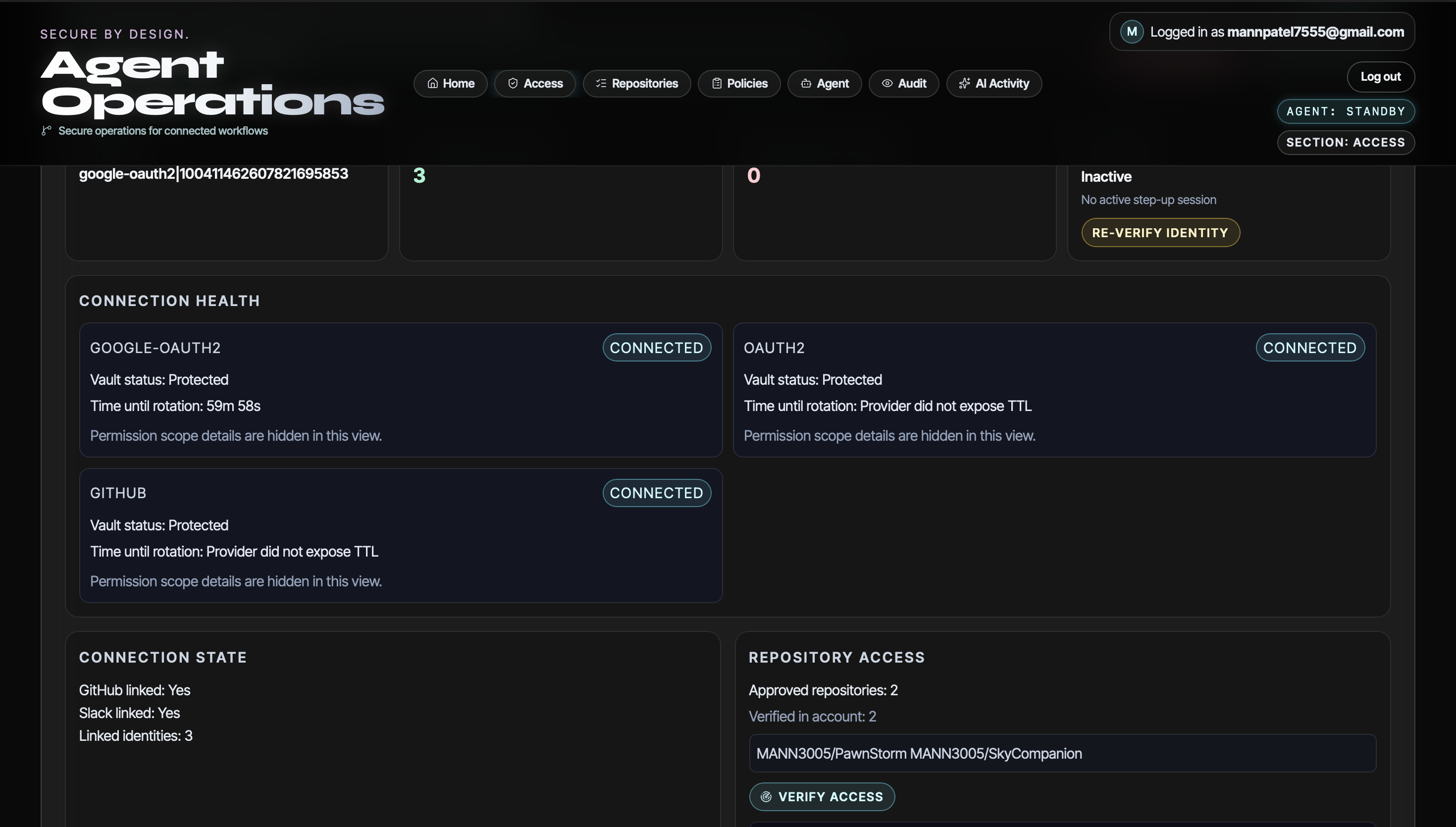
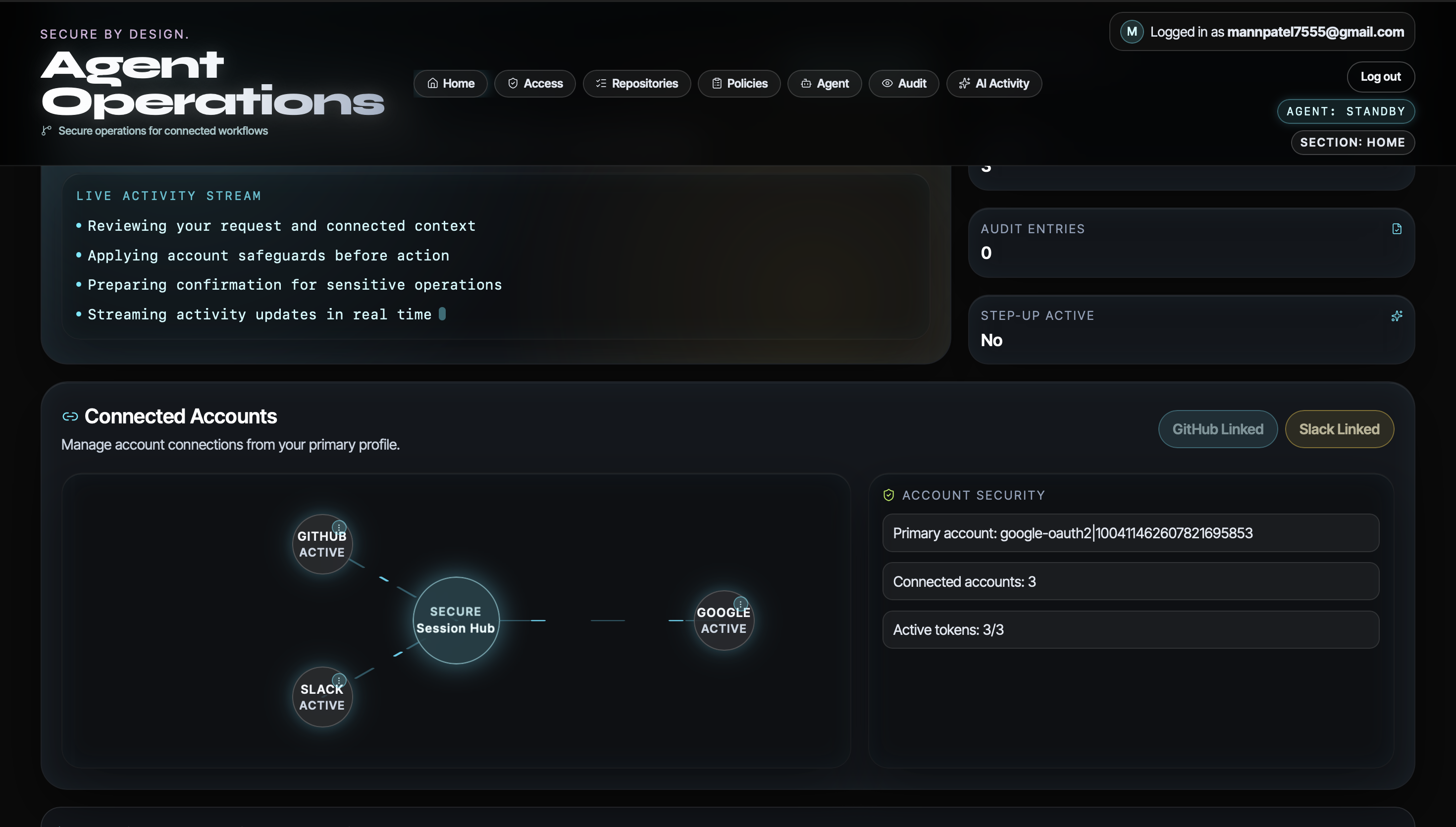
After Token Vault, the agent requests delegated access at runtime, through identity records tied to real users. The token never lives in the application layer. The agent can only act as far as the linked identity and policy configuration allow. There's no "side door" through environment variables.
This one change unlocked three capabilities we couldn't have built cleanly otherwise:
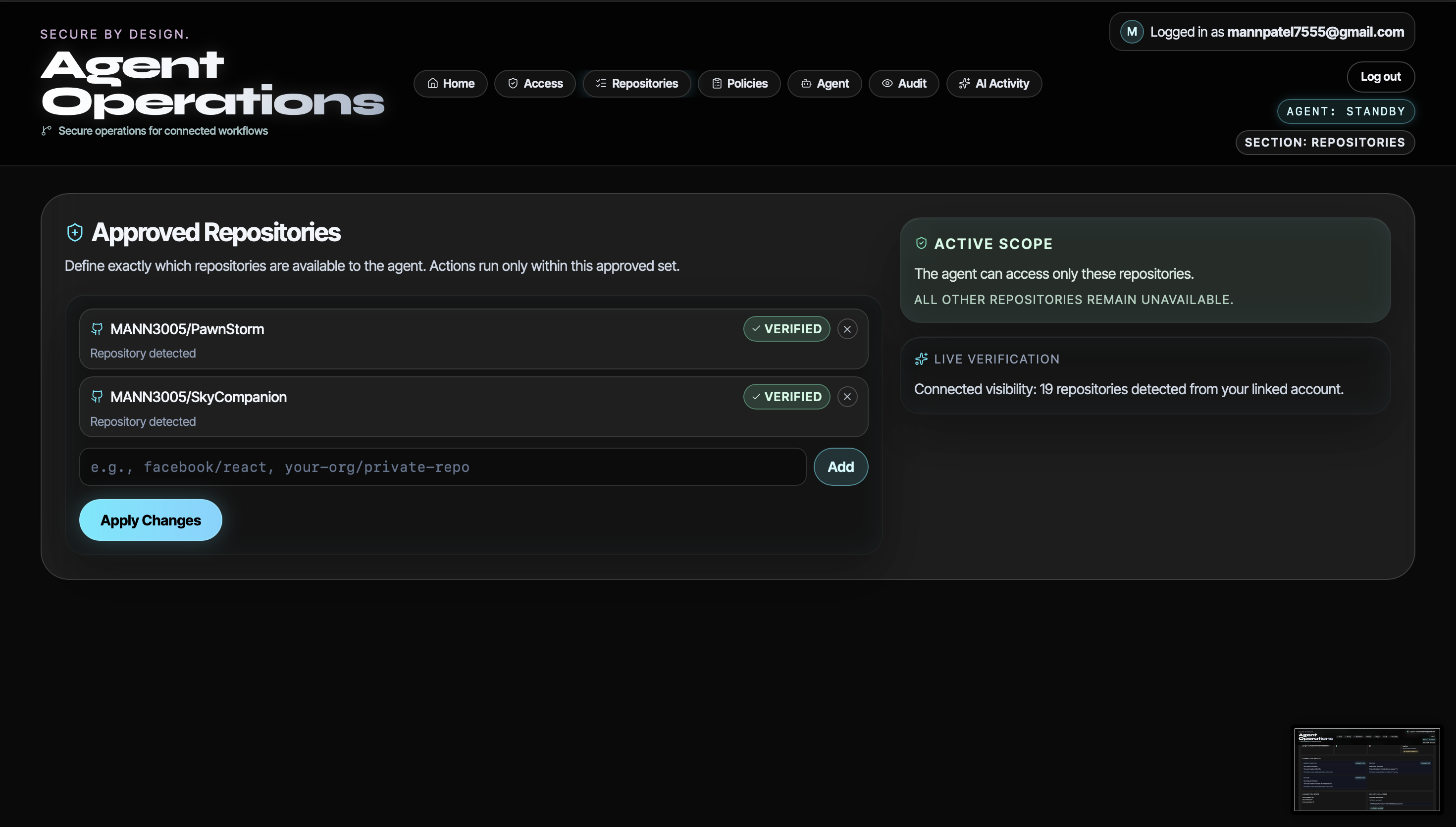
1. Per-user resource scoping. Because token retrieval is identity-aware, we could implement repository allow-lists that actually mean something. When an agent tries to act on a repo that isn't approved, it doesn't fail silently — it fails loudly, with an explainable reason, and a guided path to remediation.
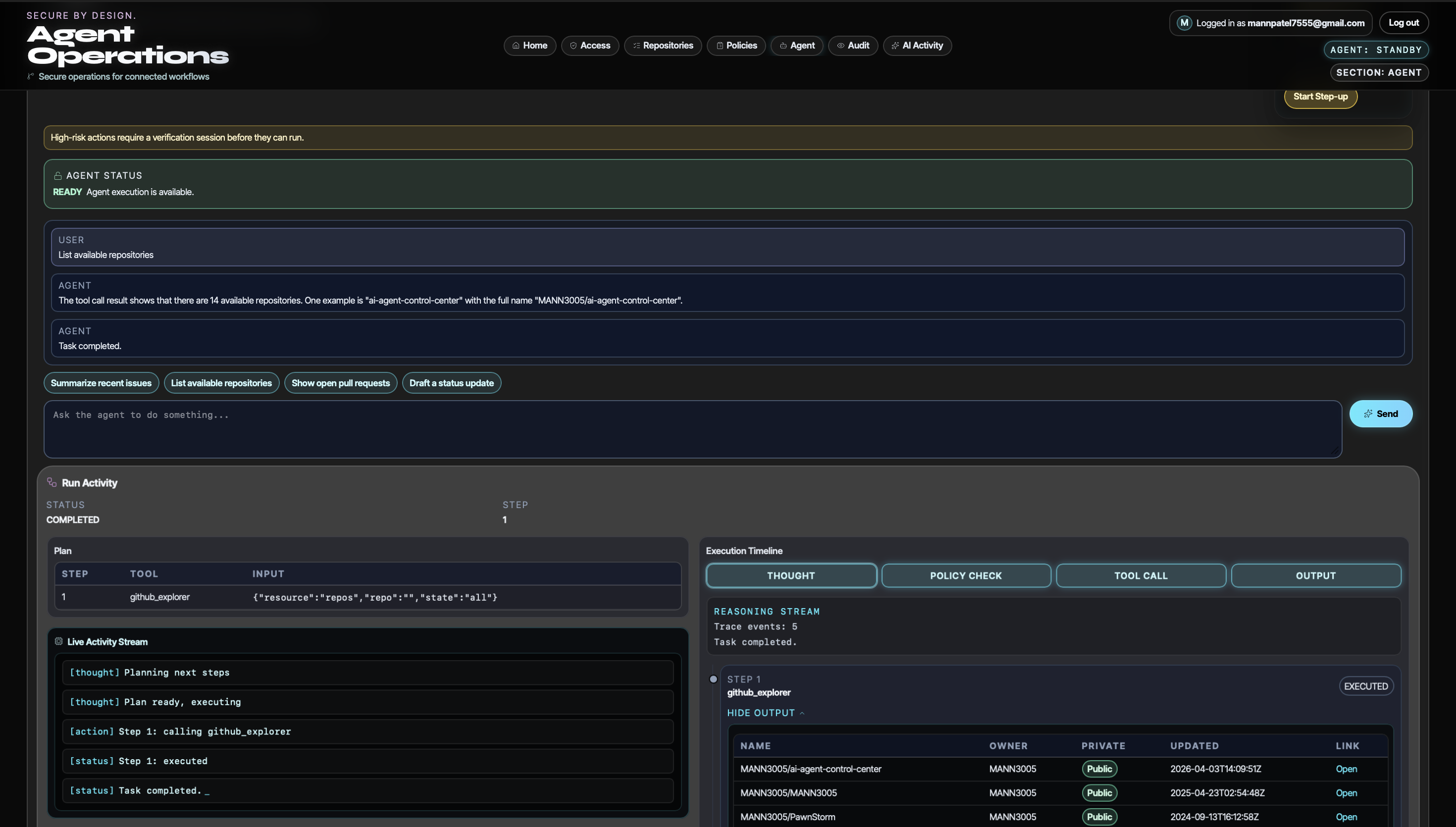
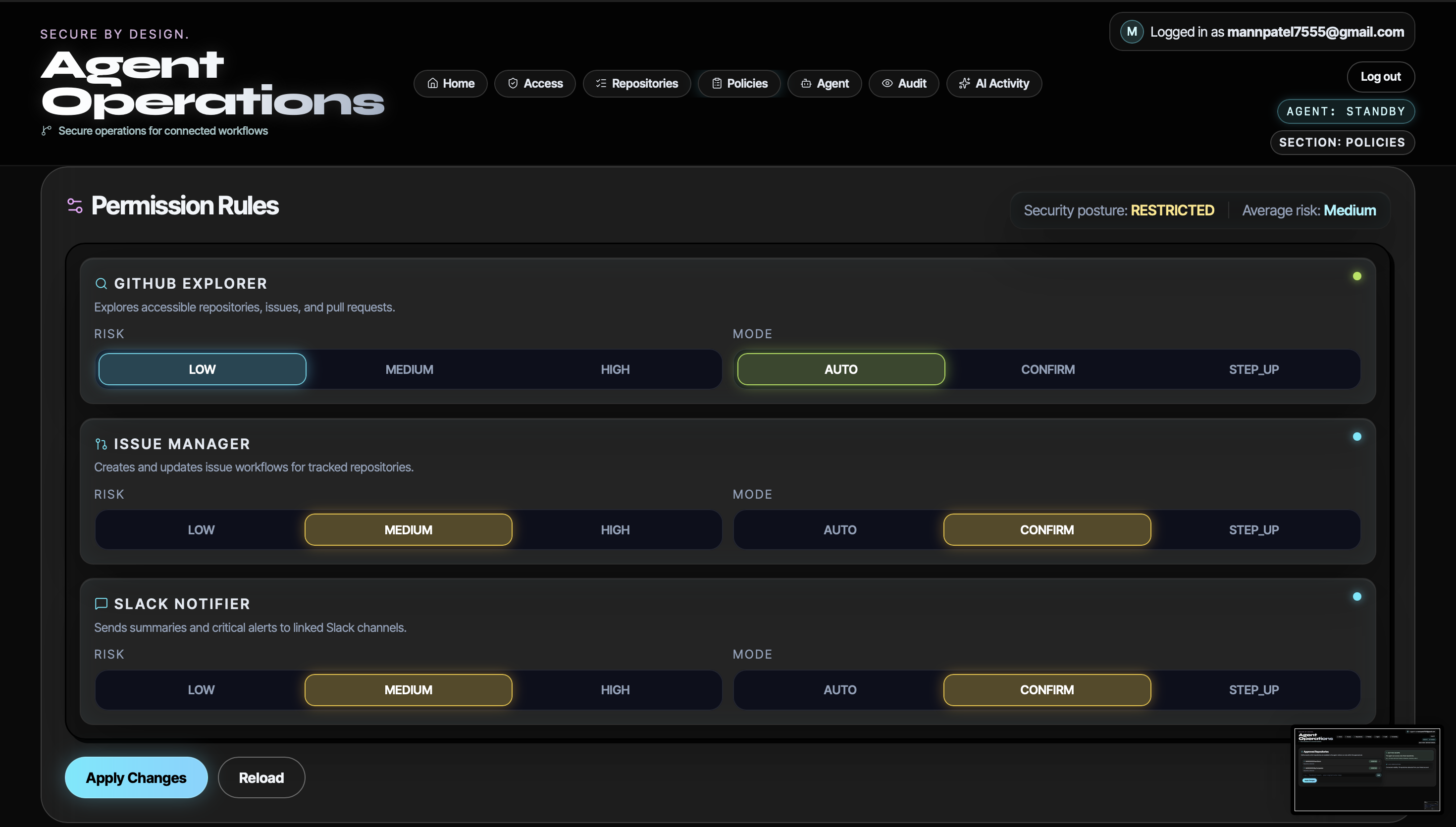
2. Step-up authentication for high-stakes actions. Some actions — closing issues, posting summaries publicly — shouldn't happen without re-verification. We built this as a first-class policy mode. When a tool is configured as STEP_UP, the agent pauses, the user re-authenticates, and only then does execution proceed. This was only possible because our identity layer was live and durable, not a one-time login event.
3. Session lockdown with real teeth. Our "kill switch" — the ability to disarm all agent execution — works because the agent's access path runs through a governed layer, not around it. You can't lock down an agent that holds its own keys. When the keys live in Token Vault-backed identity records, lockdown is a policy decision, not a code change.
Observability Became a Product, Not a Debug Tool
One thing we hadn't expected: once authorization became first-class, observability became natural.
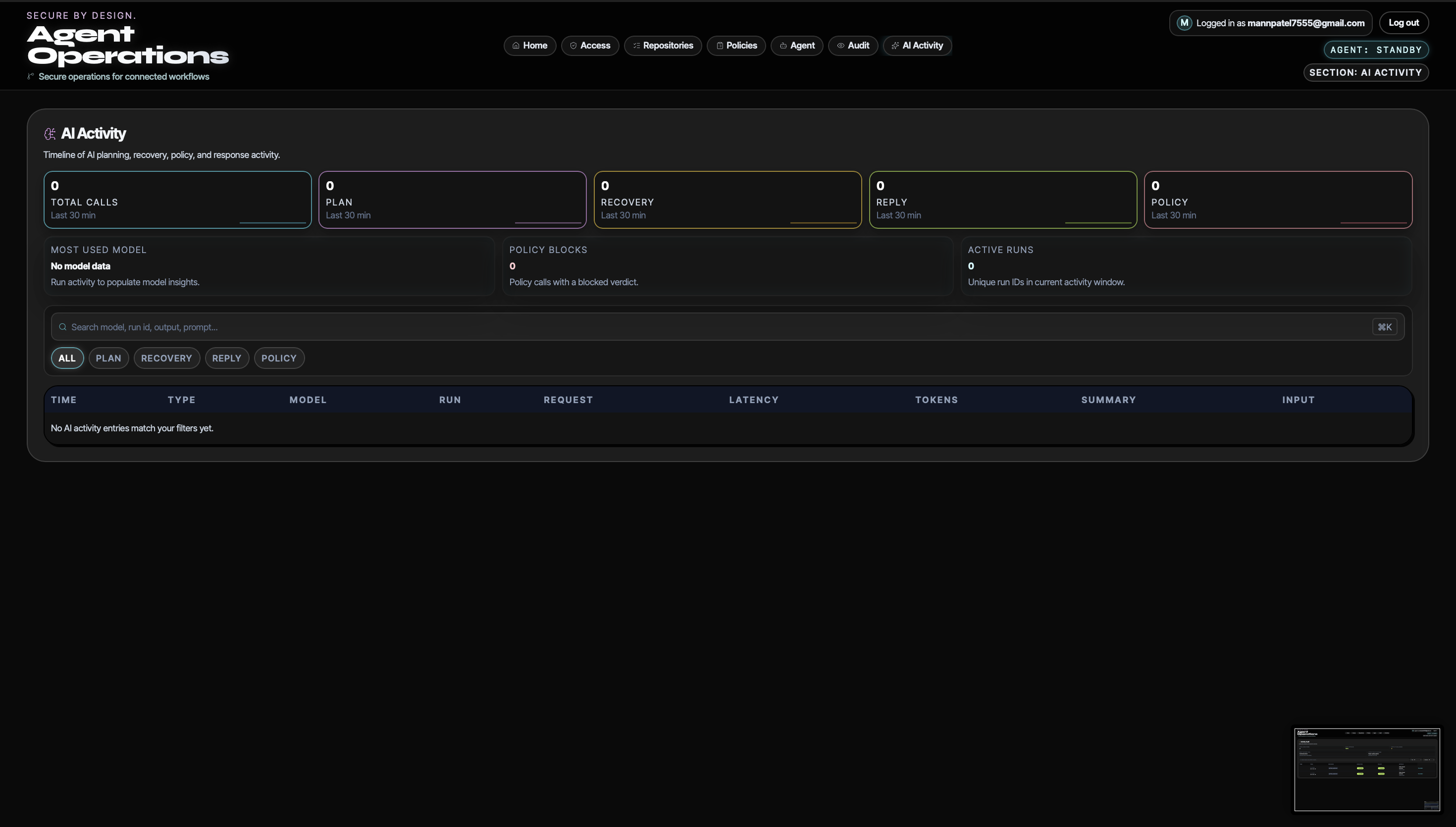
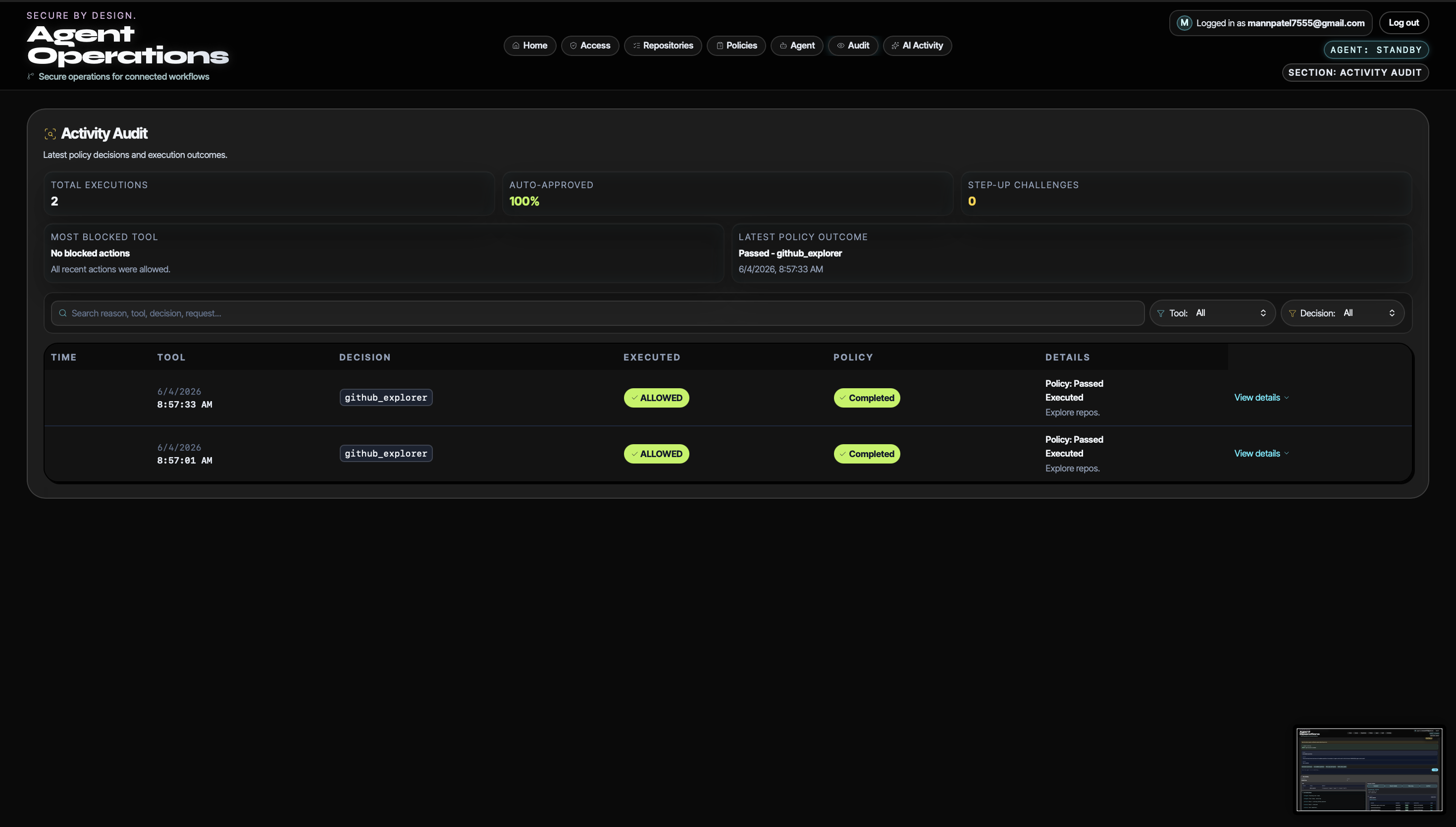
Every policy decision — allow, deny, confirm, step-up — generates a structured outcome. Every LLM call — plan, recovery, reply, policy evaluation — gets logged. We didn't add this as a feature. It emerged from building around a real governance layer.
We made a deliberate choice to surface this in the UI as a product feature, not just hide it in server logs. The Activity Audit view, the AI Activity timeline, the Executive Summary generator — these exist because we believe agents need to be reviewable by humans who weren't in the room when the decision was made.
In practice, this is what enterprise adoption looks like. Security teams don't just want agents that work. They want agents they can audit.
The Pattern We're Leaving With
The biggest thing we learned isn't technical. It's this:
Authorization isn't something you add to an agent. It's something you build the agent inside of.
Token Vault gave us the foundation to do that. It separated identity from execution, turned credential access into a governed runtime event, and made it possible to build a control plane that users can actually understand and trust.
Capable agents are table stakes now. The agents that matter in production will be the ones that can prove they stayed inside their lane — every time, with a receipt.
That's what we built toward. That's the pattern we think wins.
AI Agent Control Center — Built for the Authorized to Act Hackathon


Log in or sign up for Devpost to join the conversation.