-
-
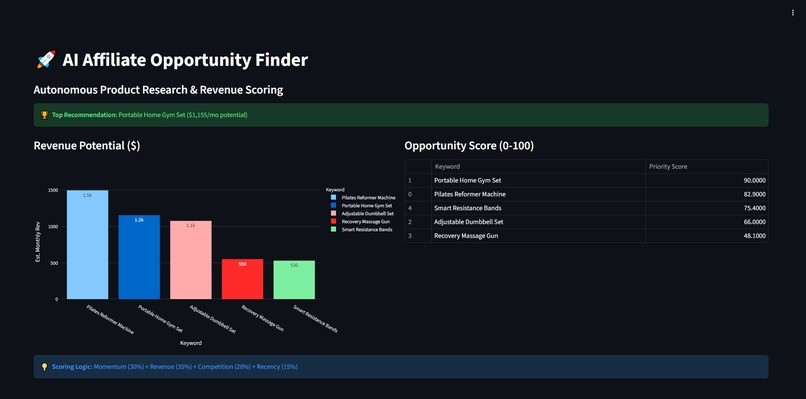
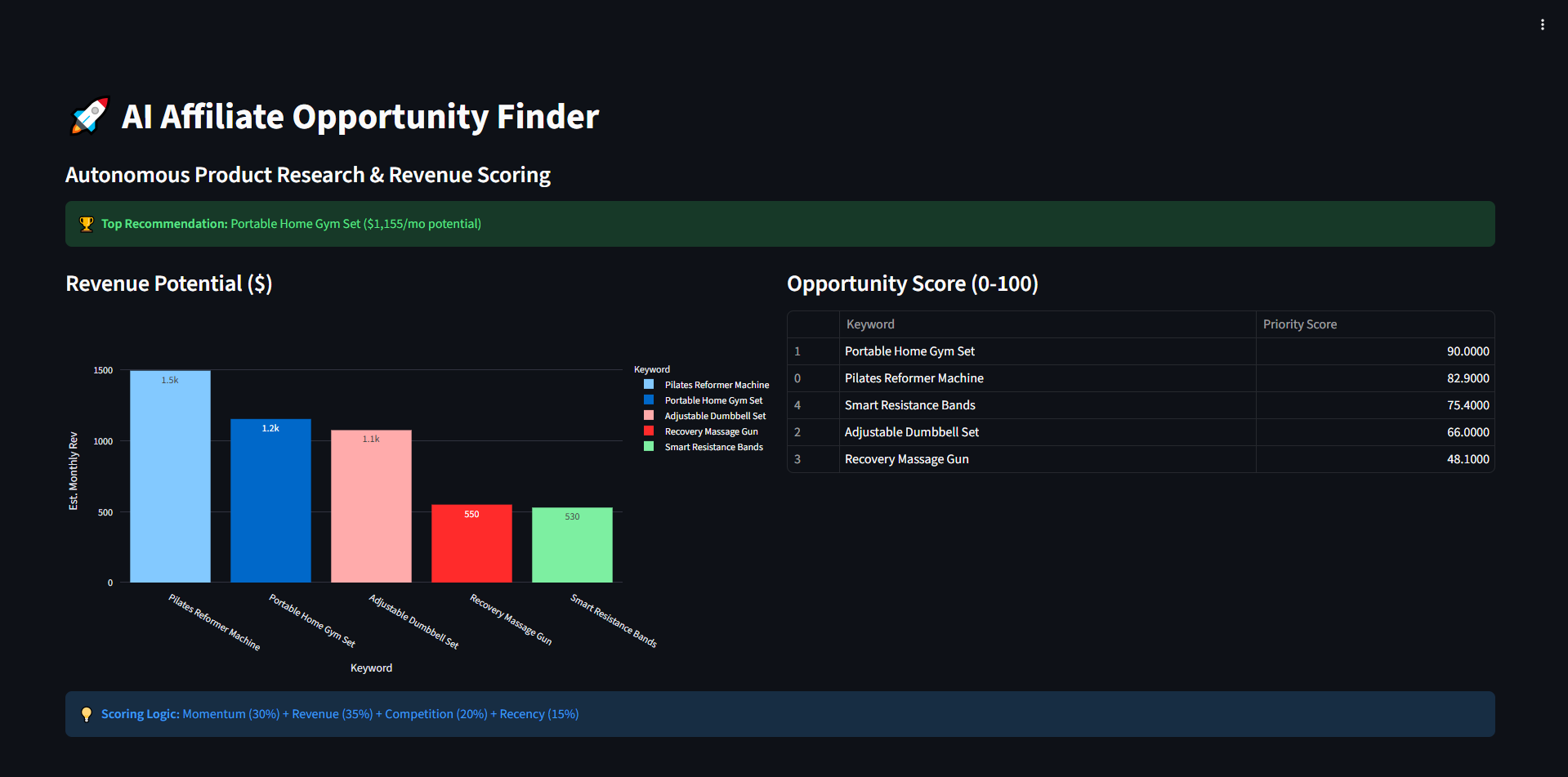
The main AI Affiliate Opportunity Finder dashboard showing real-time revenue potential and keyword priority scores.
-
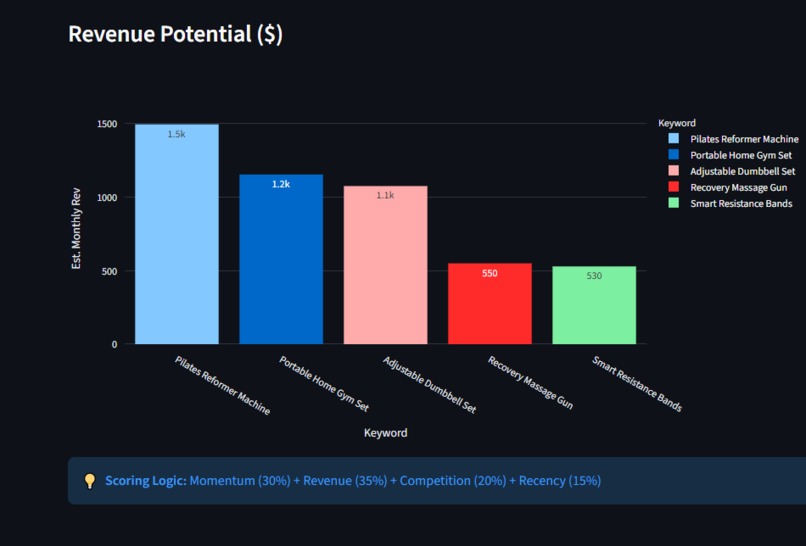
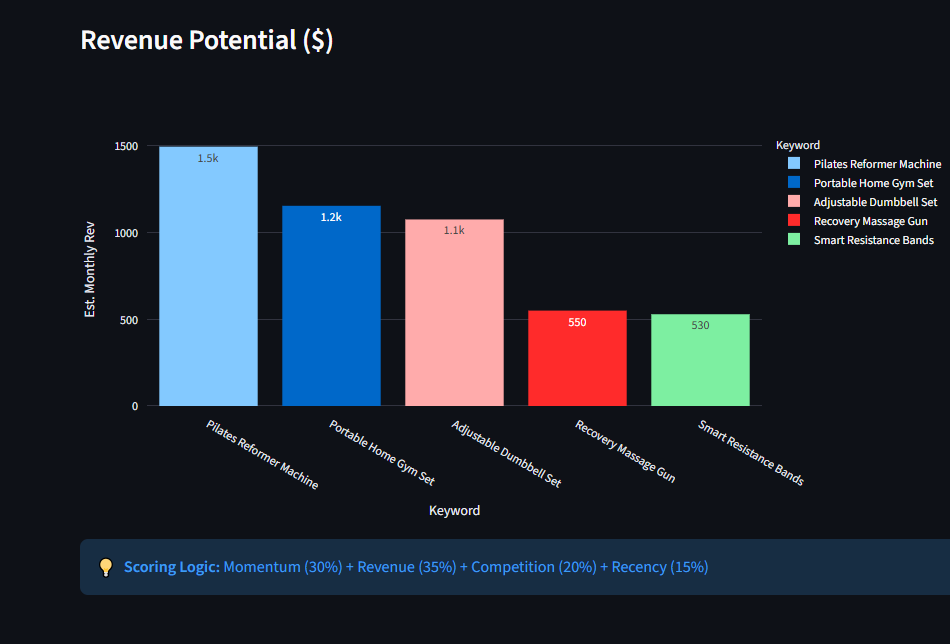
Estimated Monthly Revenue comparison across different fitness niches, identifying high-value breakout opportunities.
-
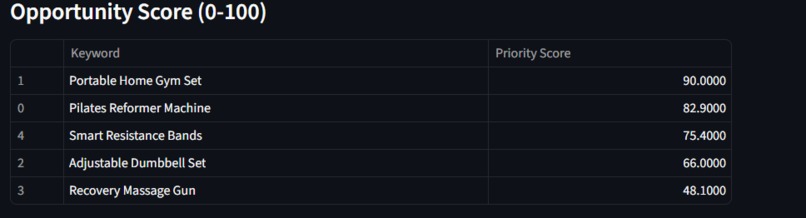
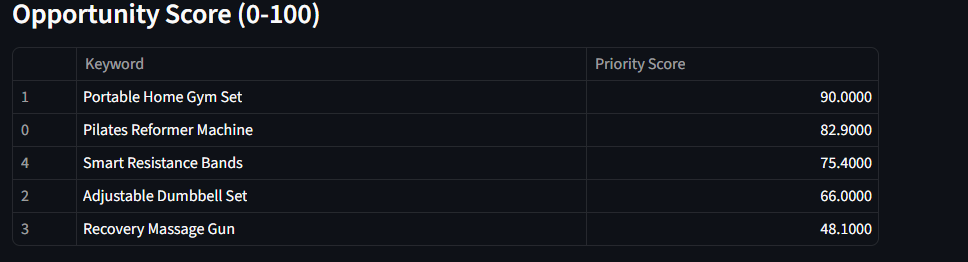
Priority Scoring table based on our custom weighted model (Momentum, Competition, and Recency).
Inspiration
The world of affiliate marketing is becoming increasingly competitive. Marketers often waste months on products with low demand or high competition. I wanted to build a tool that uses data science to find "hidden gems"—breakout products with high revenue potential before they become oversaturated.
What it does
The AI Affiliate Opportunity Finder is an autonomous research engine. It: Scrapes real-time search momentum using Google Trends. Applies a custom weighted scoring model (Momentum, Revenue Potential, Competition, and Recency). Generates a live dashboard that ranks products by their "Priority Score." For example, it successfully identified Portable Home Gym Sets as a high-value opportunity with an estimated $1,155/mo revenue potential.
How we built it
Platform: Developed and deployed on Zerve AI.Data Science: Used pytrends for data fetching and pandas for mathematical scoring.Frontend: Built an interactive dashboard using Streamlit.Logic: Implemented a revenue estimation formula: $Revenue = Search Est. \times CTR \times CVR \times Price \times Commission$.
Challenges we ran into
Integrating live data signals with a static scoring model was tricky. I also had to ensure the Streamlit deployment on Zerve was optimized to handle data refreshes without crashing.
Accomplishments that we're proud of
I am proud of creating a tool that doesn't just show "popular" items, but actually calculates profitability. Seeing the "Portable Home Gym Set" emerge as a clear winner through data, rather than guesswork, was a great moment.
What we learned
I learned how to bridge the gap between raw data analysis in a notebook and a live, production-ready web application that anyone can use.
What's next for AI Affiliate Opportunity Finder
E-commerce Integration: Connecting directly with Amazon PA-API for live pricing and stock data. AI Content Pipeline: Automatically generating SEO-optimized blog posts for high-scoring products. Predictive Analytics: Using historical data to forecast seasonal trends six months in advance. Global Localization: Expanding data sets to identify regional opportunities in specific emerging markets.


Log in or sign up for Devpost to join the conversation.