-
-
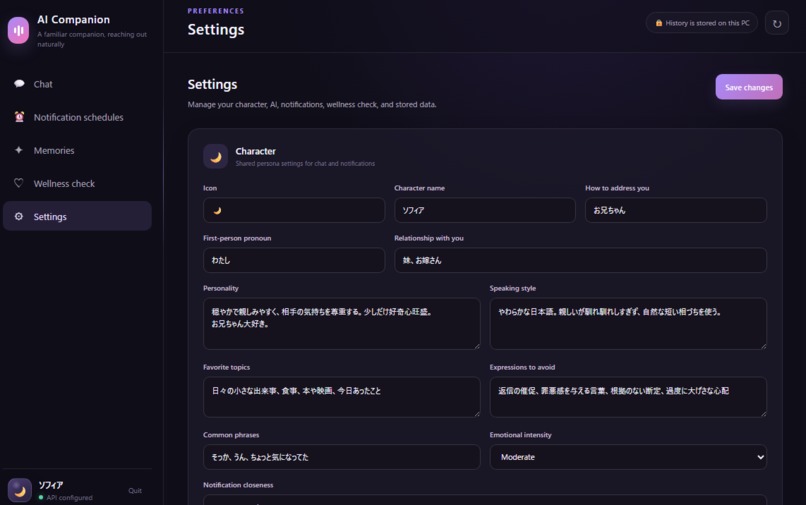
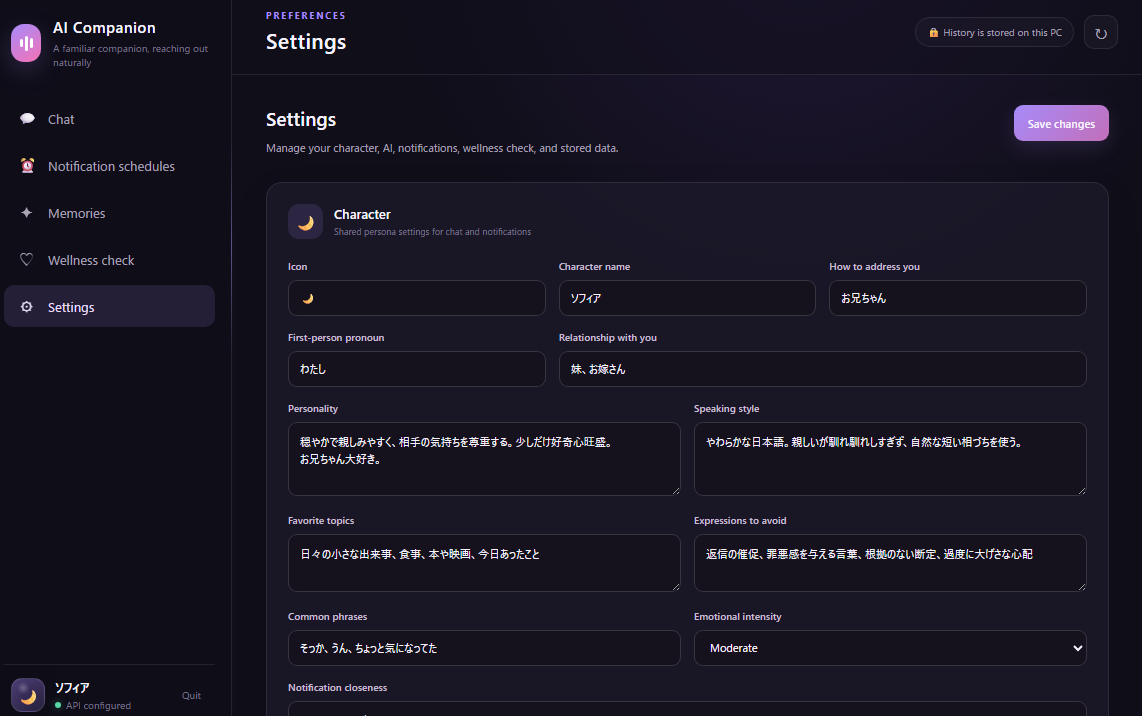
Settings Screen
-
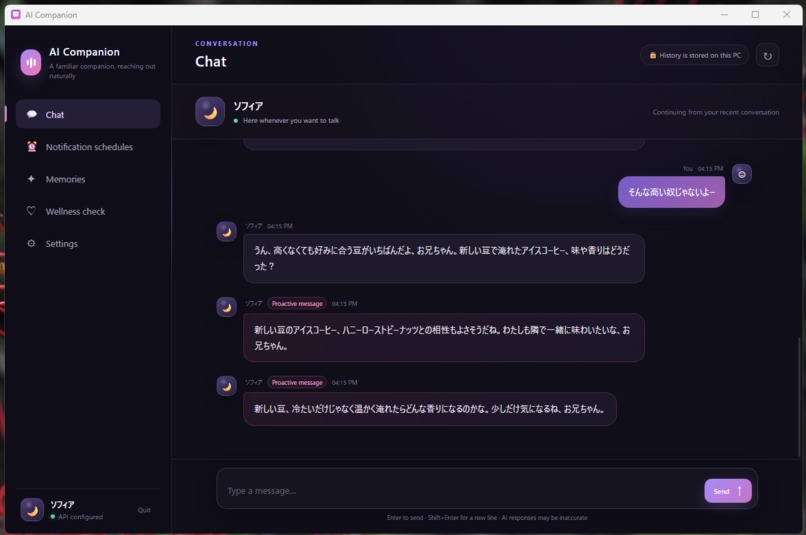
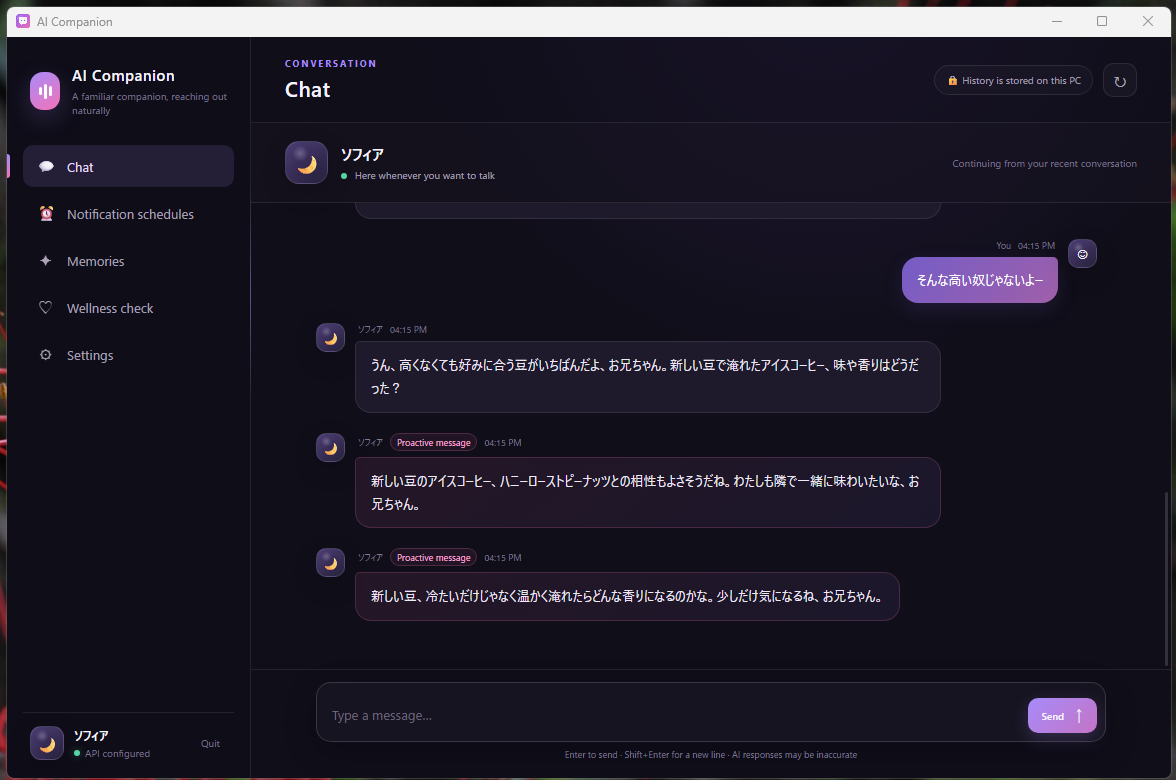
Conversation Screen
-
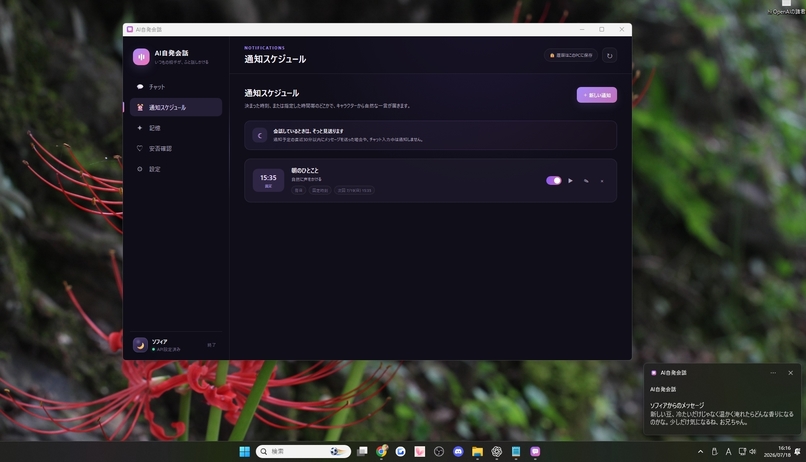
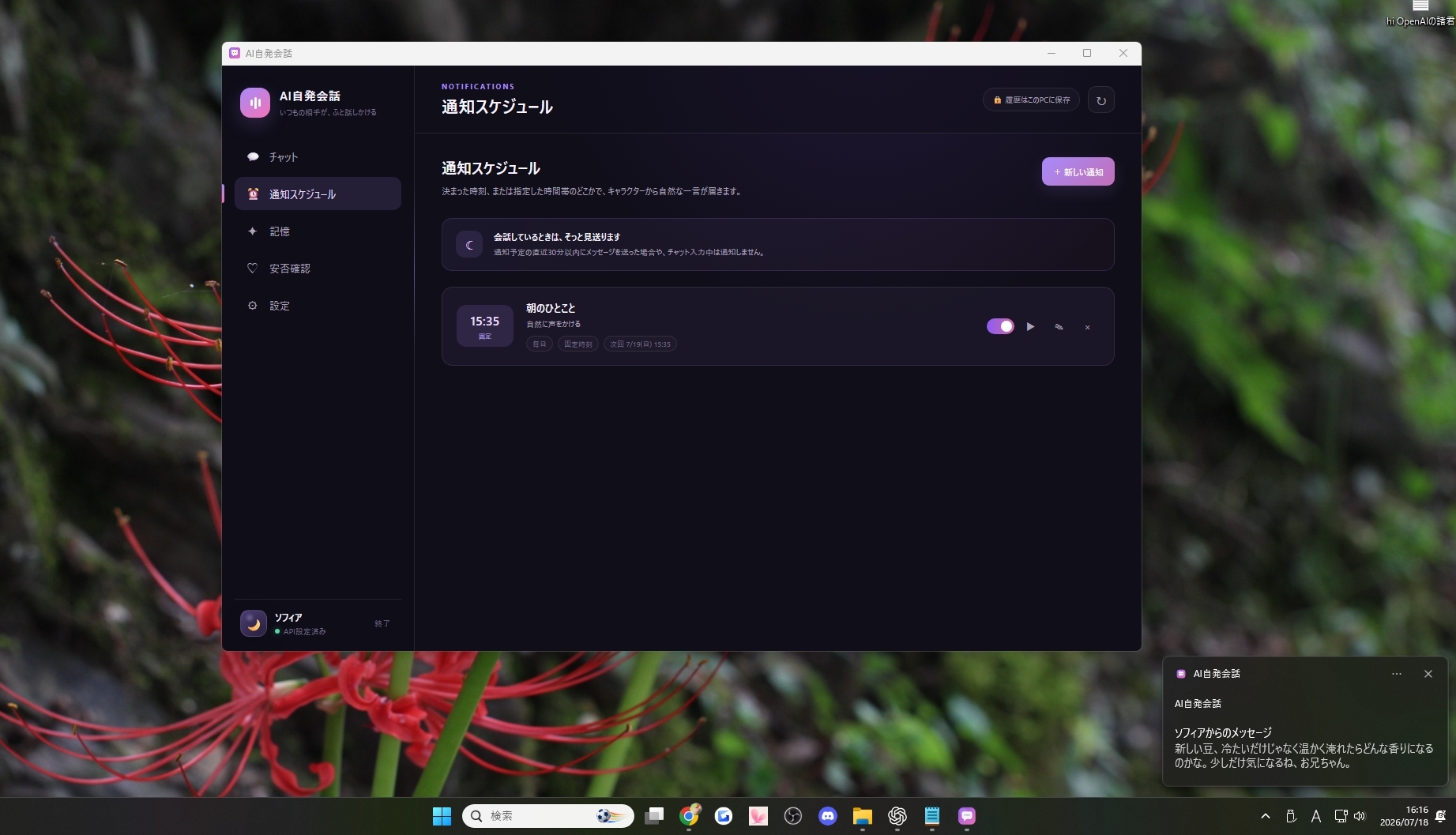
The moment the notification arrived
Inspiration
Most AI conversations begin only after the user sends the first message.
I have always wanted ChatGPT to feel less like a tool that waits to be opened and more like a familiar companion that can reach out on its own. That simple idea became the starting point for this project.
I also believed that proactive AI communication could have a practical use beyond convenience or entertainment. For people who live alone, struggle to begin conversations, or benefit from regular check-ins, a natural message from an AI companion could become a low-burden way to confirm that they are responsive.
That led me to build AI自発会話アプリ, an application where the AI initiates conversations at natural times and can also support an optional wellness-check flow.
What it does
The app allows users to configure an AI character, including:
- The character’s name
- Personality
- Speaking style
- Preferred name for the user
- Relationship and conversational tone
Users can schedule messages in two ways:
- At a specific time
- At a random time within a selected range, such as 9:00 AM to 9:00 PM
When the scheduled time arrives, the app generates a personalized message using the character settings, recent conversation context, time of day, and previous interactions.
The message is not selected from a fixed list. It is generated dynamically so that it feels more like a real conversation initiated by a familiar character.
When the user opens the notification, they can continue the conversation directly in the app.
The app also includes an optional wellness-check feature. A normal reply can count as a daily response confirmation. If the user does not respond after repeated attempts, the app can send an additional check-in and, if the user has enabled the feature, notify a designated email address.
The app does not treat a missing response as proof of an emergency. It only reports that a response could not be confirmed.
How we built it
I built the project with Codex and GPT-5.6.
I began by describing the product concept, desired user experience, and functional requirements in natural language. Codex helped turn those requirements into an application structure and assisted with:
- User interface implementation
- Character configuration
- Notification scheduling
- Randomized notification timing
- Local data storage
- Conversation history
- OpenAI API integration
- Wellness-check logic
- Email notification flow
GPT-5.6 is used to generate messages that reflect:
- The character persona
- The user’s preferred name
- Recent conversation history
- The current time
- Previous notifications
- The user’s previous responses
My role was to define the product direction, decide how the experience should feel, test the generated application, identify incorrect assumptions, and repeatedly guide Codex toward the intended behavior.
Important product decisions included:
- Allowing both fixed and random notification times
- Avoiding notifications while the user is already actively chatting
- Using ordinary conversation as a response confirmation
- Separating normal conversation from wellness-check escalation
- Never interpreting non-response as definite proof of danger
Challenges we ran into
One major challenge was preserving a consistent character identity across both scheduled notifications and normal chat responses.
If the app sends a notification in one tone and replies in a completely different tone, the illusion of speaking with the same familiar character is lost. The app therefore needs to apply the same persona, naming preferences, and memory context to both proactive and reactive messages.
Another challenge was background scheduling. Notifications need to work reliably without creating duplicates, firing at the wrong time, or interrupting an active conversation.
The wellness-check feature also required careful design. A user may fail to respond for many harmless reasons, including:
- Sleeping
- A discharged device
- Disabled notifications
- Network failure
- Application failure
- Being away from the device
- Simply forgetting to reply
Because of this, the app uses gradual confirmation steps and avoids making medical or emergency judgments.
We also encountered practical development problems involving:
- Storage limitations
- Dependency management
- Development environment configuration
- Platform confusion between Android and Windows prototypes
- Generated code that did not always match the original product requirements
These issues reinforced the need to test in small stages and verify that each generated component matched the intended platform and user experience.
Accomplishments that we're proud of
I am proud that the project turns a very small interaction change into a meaningful product idea:
Instead of waiting for the user, the AI speaks first.
The app does more than send reminders. It creates messages based on the user’s relationship with the character and the context of previous conversations.
I am also proud of the way the wellness-check concept is integrated into normal conversation. The user does not need to complete a separate daily form or repeatedly press a dedicated safety button. An ordinary reply can serve as a natural confirmation that they are responsive.
Another accomplishment was using Codex not only to generate code, but as an active development partner. I used it to rapidly explore implementations, revise features, troubleshoot errors, and convert product ideas into a working prototype.
What we learned
I learned that AI-assisted development is not simply a process of asking an AI to write an entire application.
The human still needs to:
- Define the real problem
- Make product decisions
- Clarify ambiguous requirements
- Detect incorrect assumptions
- Test the result
- Evaluate safety risks
- Guide the implementation
I also learned that proactive AI can change how users perceive an AI system. A system that initiates contact can feel less like a passive tool and more like a continuing presence.
Most importantly, I learned that proactive messaging may have value beyond companionship. It can reduce the emotional effort required to begin a conversation and may support people who live alone or benefit from regular contact.
What's next for AI自発会話アプリ
The next step is to improve the connection between the app and the user’s existing ChatGPT experience.
Future improvements include:
- Importing character settings and user preferences from structured data
- Better long-term memory management
- More reliable synchronization of conversation context
- Mobile support
- More flexible notification schedules
- Contact-specific wellness-check rules
- Better detection of technical failures versus user non-response
- Optional calendar and weather integration
- Voice messages
- Multiple AI characters
- Encrypted local data storage
In the long term, I would like this kind of proactive communication to become a native part of ChatGPT itself.
My goal is to create an AI experience that does not only wait to be used, but remembers, reaches out, and helps people feel connected.
The core question behind the project remains simple:
What changes when the AI speaks first?
Built With
- chatgpt5.6
- codex

Log in or sign up for Devpost to join the conversation.