-
-
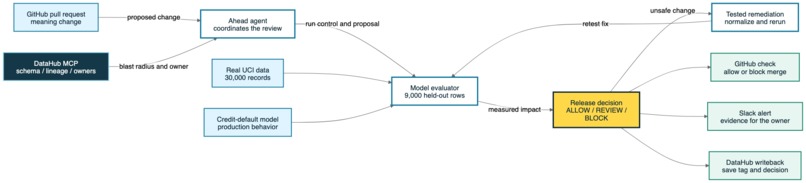
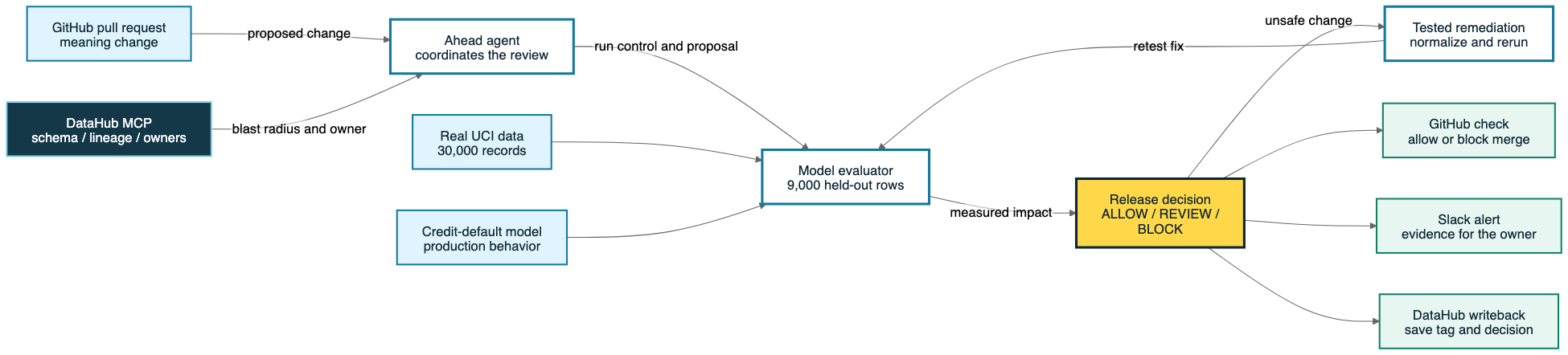
architecture diagram
-
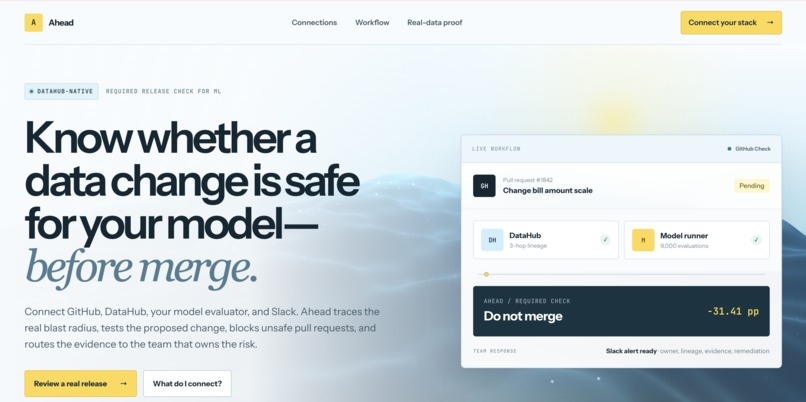
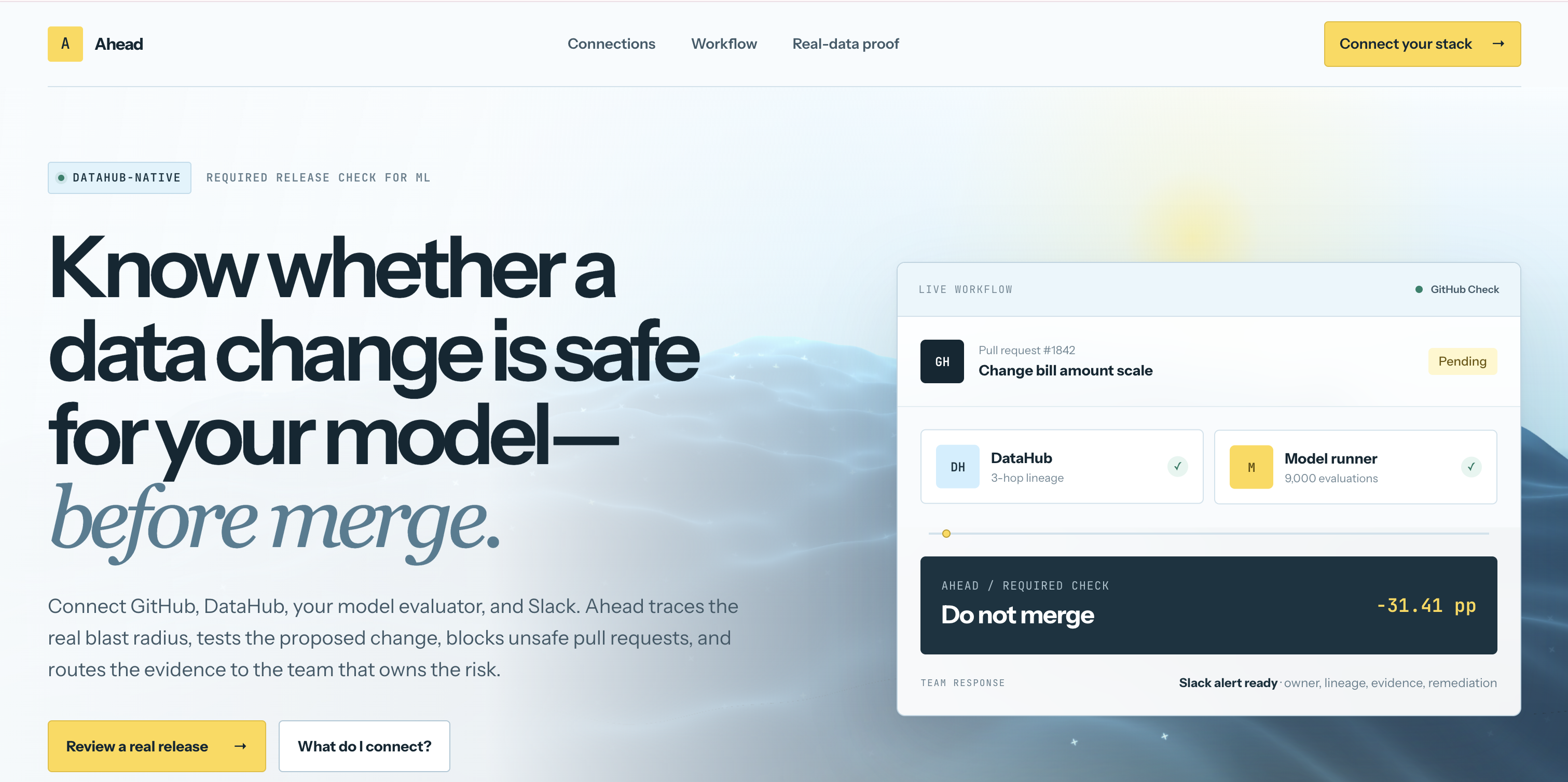
landing page
-

architecture
-
-
-
-

Inspiration
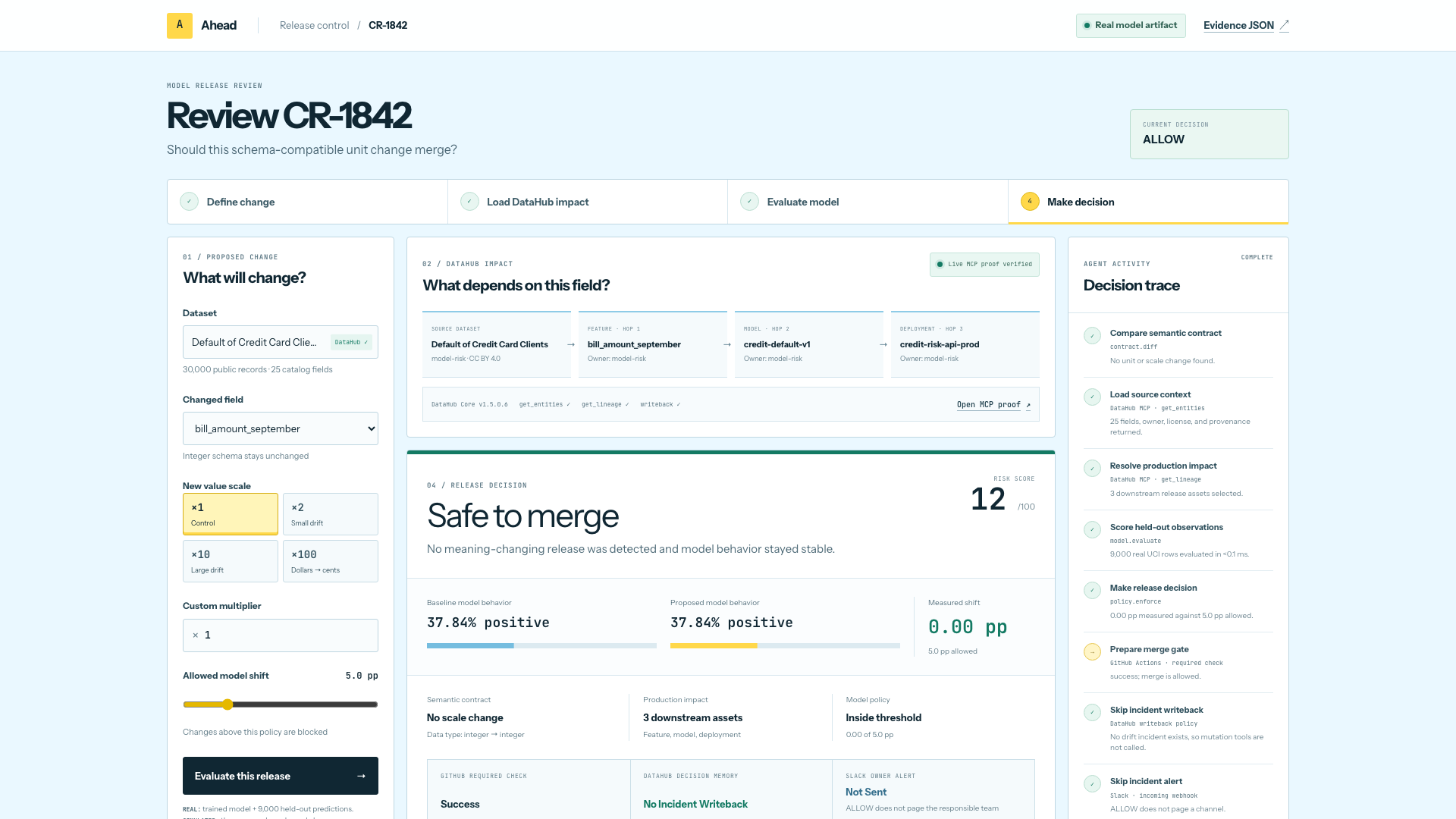
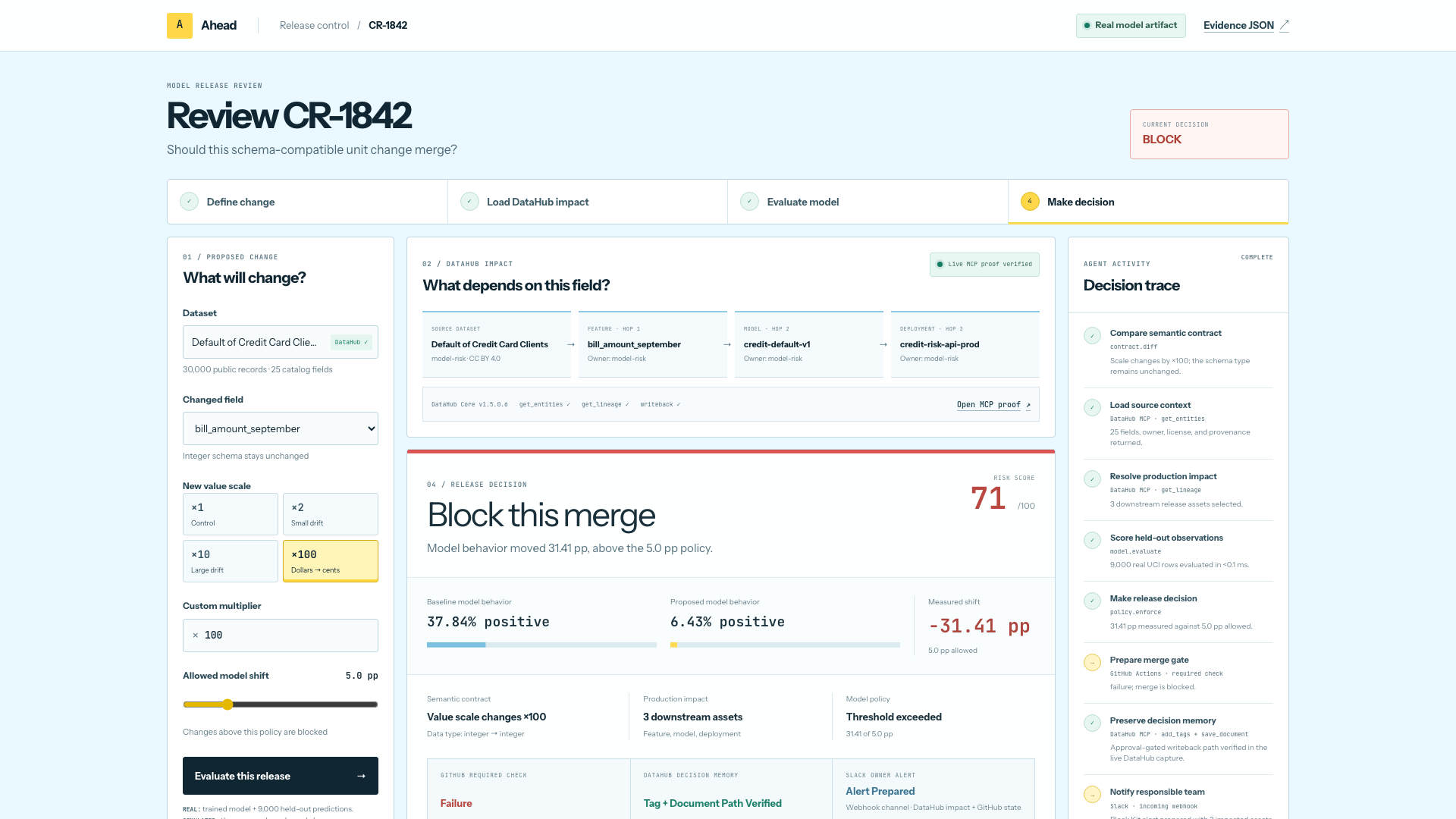
A data change can pass every schema test and still break a machine-learning model. For example, a column may remain an integer while its meaning changes from dollars to cents. The database considers that compatible, but the model suddenly receives values 100 times larger. We built Ahead to catch this kind of hidden failure before it reaches production.
What it does
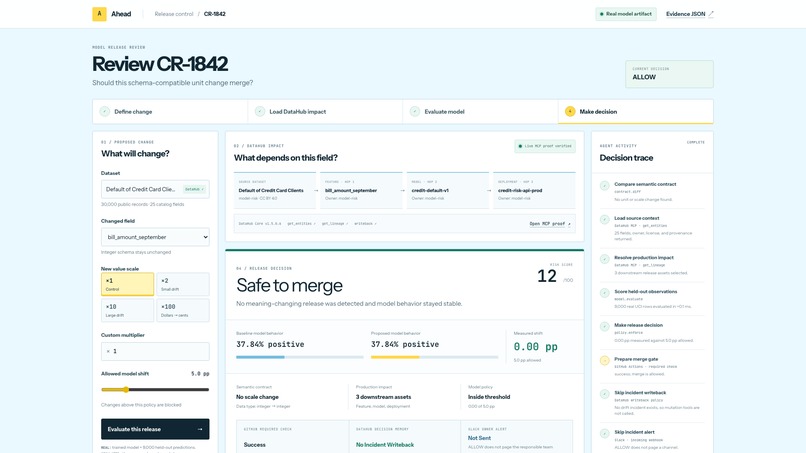
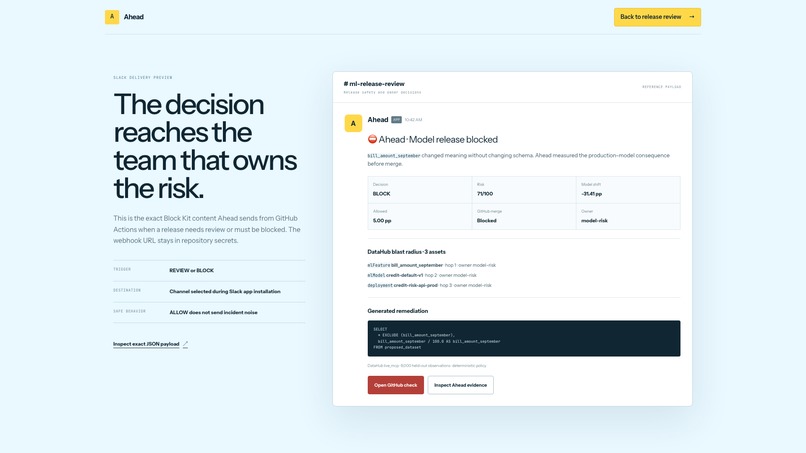
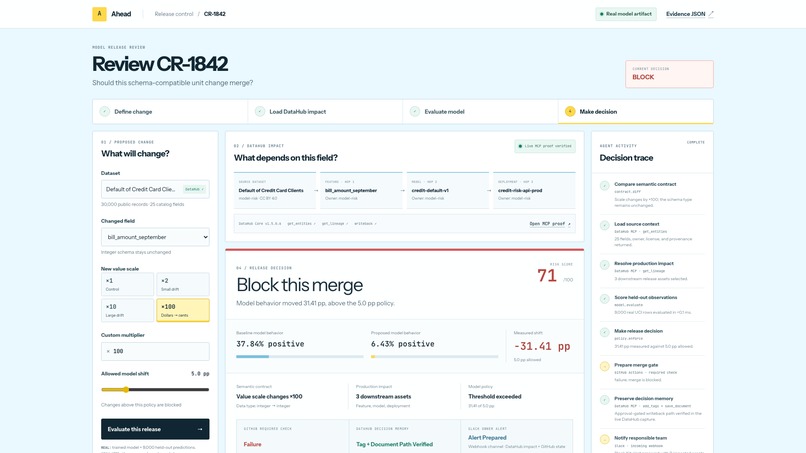
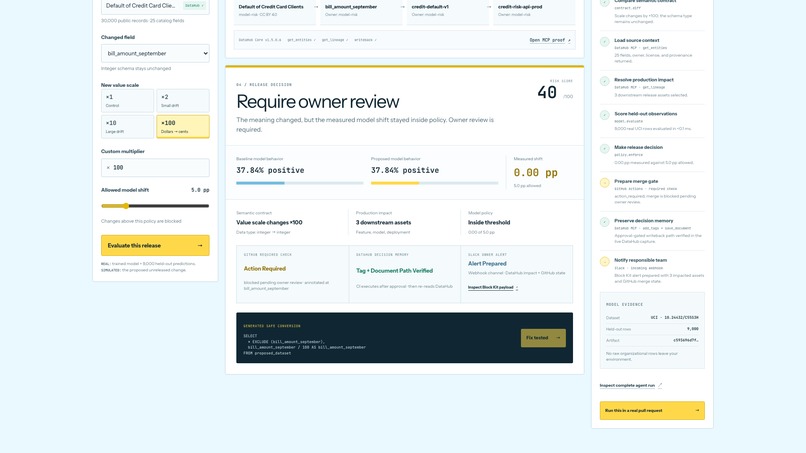
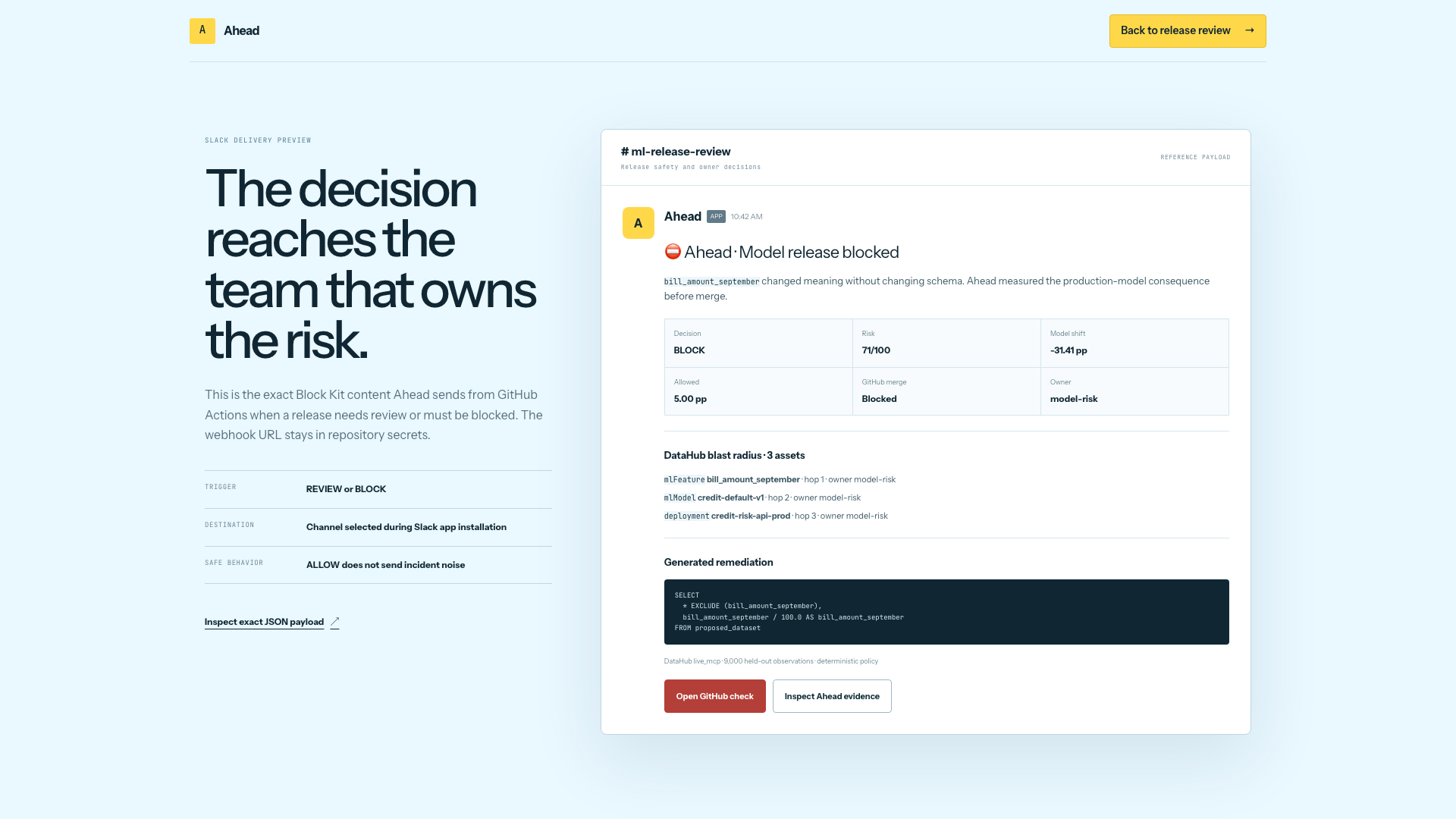
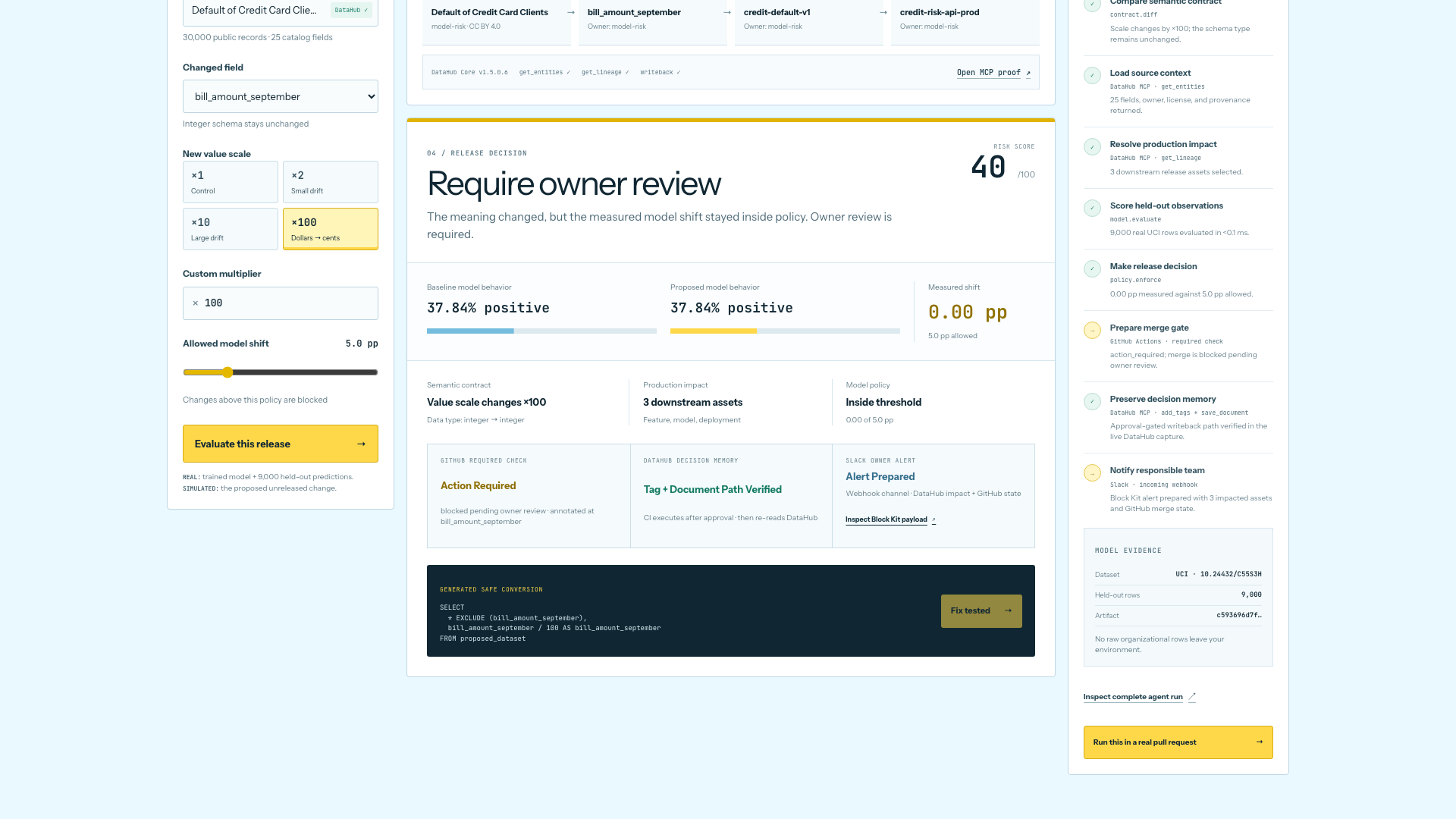
Ahead reviews proposed data changes before they are merged. It uses DataHub to discover: Which dataset and field changed Which features and models depend on that field Which production service could be affected Which team owns the risk Ahead then runs the affected model against held-out data and compares its behavior before and after the change. The result is a clear release decision: ALLOW: The model still behaves normally REVIEW: The change needs owner approval BLOCK: The change is unsafe and cannot ship When a release is unsafe, Ahead proposes a fix, tests it, alerts the owner in Slack, and saves the evidence back to DataHub.
How we built it
Ahead combines: DataHub MCP for schemas, ownership, entities, and lineage DataHub writeback for semantic-drift tags and decision records A real credit-risk dataset containing 30,000 attributed UCI records A trained credit-default model 9,000 held-out records for release evaluation A deterministic policy engine for ALLOW, REVIEW, and BLOCK decisions GitHub-compatible check results for release enforcement Slack Block Kit alerts for notifying the responsible owner Next.js, TypeScript, and Cloudflare for the web application The demonstration compares a safe control run with a dollars-to-cents change. The control produces zero model shift. The proposed change causes the model’s positive prediction rate to fall from 37.84% to 6.43%.
Challenges we ran into
The hardest part was separating a real agent from a convincing-looking demo. We did not want Ahead to replay a fixed result. Every decision had to change when the user changed the multiplier, threshold, sample size, or remediation. We also had to connect technical evidence to a decision a team could actually use. Raw lineage and model statistics were not enough. Ahead needed to answer three simple questions: What will break? Should we stop the release? What can the owner do next? Finally, we had to preserve trust. An AI system may explain the result and propose a fix, but it should not control the final safety policy. Ahead’s release decision is therefore deterministic and inspectable.
Accomplishments that we're proud of
We are proud that Ahead performs real work rather than generating a warning. It evaluates a real trained model against real held-out data It produces different decisions when inputs change It traces the affected path from dataset to production service It blocks an unsafe release before customers are affected It generates a remediation and tests it It sends the evidence to the responsible Slack channel It writes the decision back to DataHub for future people and agents Every important step is available as inspectable evidence The complete product flow is covered by 14 automated tests.
What we learned
Schema compatibility does not guarantee behavioral safety. Metadata becomes much more valuable when it is connected to an action. DataHub does not simply tell Ahead what exists. It gives the agent enough context to find the affected model, identify its owner, measure the risk, and preserve the result. We also learned that AI should support high-stakes decisions without hiding the rules. The strongest design was a combination of agent reasoning, real model evaluation, and a deterministic release policy. What’s next for Ahead: Catch Bad Data Changes Before They Ship Next, we want to connect Ahead directly to production pull-request workflows and support more data and ML platforms. Planned improvements include: Native GitHub App installation dbt, Airflow, Dagster, and Prefect integrations Support for classification, forecasting, ranking, and recommendation models Team-specific release policies Historical comparison across previous releases Automatic reviewer assignment using DataHub ownership One-click remediation pull requests Continuous monitoring after deployment
Built With
- action
- codex
- datahub
- github
- javascript
- slack


Log in or sign up for Devpost to join the conversation.