-
-
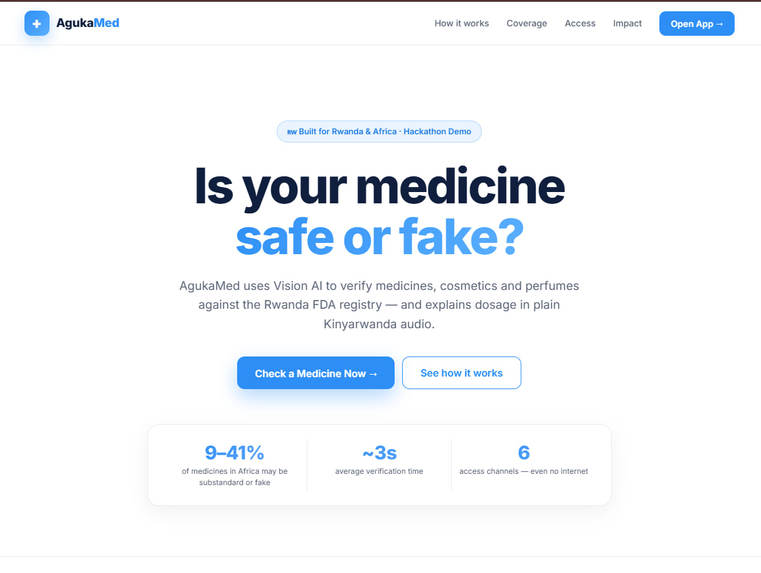
Landing Page
-
-
-
-
-
-
Inspiration
Amina was 19 years old.
She dreamed of becoming a nurse one day and helping people in her community. Like many young women, she cared deeply about her appearance and confidence. One afternoon, while walking through a local market, she found a skin-care cream being sold at a very cheap price. The packaging looked original. The logo looked real. The seller confidently promised her it was authentic.
She bought it because it was affordable.
A few days later, her skin started burning.
Painful rashes appeared across her face. The counterfeit product contained dangerous chemicals that permanently damaged her skin. What hurt even more was the emotional impact that followed. She stopped taking pictures, avoided social gatherings, and slowly lost confidence in herself.
At the same time, her grandmother was struggling with medicine instructions she could barely read. The dosage labels were too small, too complicated, and written in unfamiliar medical language. Sometimes she skipped medicine accidentally. Other times she took the wrong amount.
That reality stayed with me.
As a solo female developer from Africa, I kept thinking about how many people face these problems every day without having tools to protect themselves. Counterfeit medicines and fake cosmetic products are not just market problems — they are human problems that affect health, confidence, dignity, and safety.
I realized technology should do more than just look intelligent.
It should protect people.
It should be accessible.
It should speak their language.
That idea became AgukaMed.
What it does
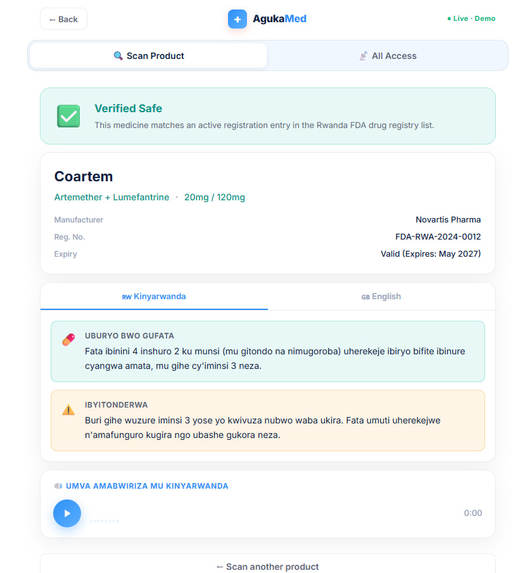
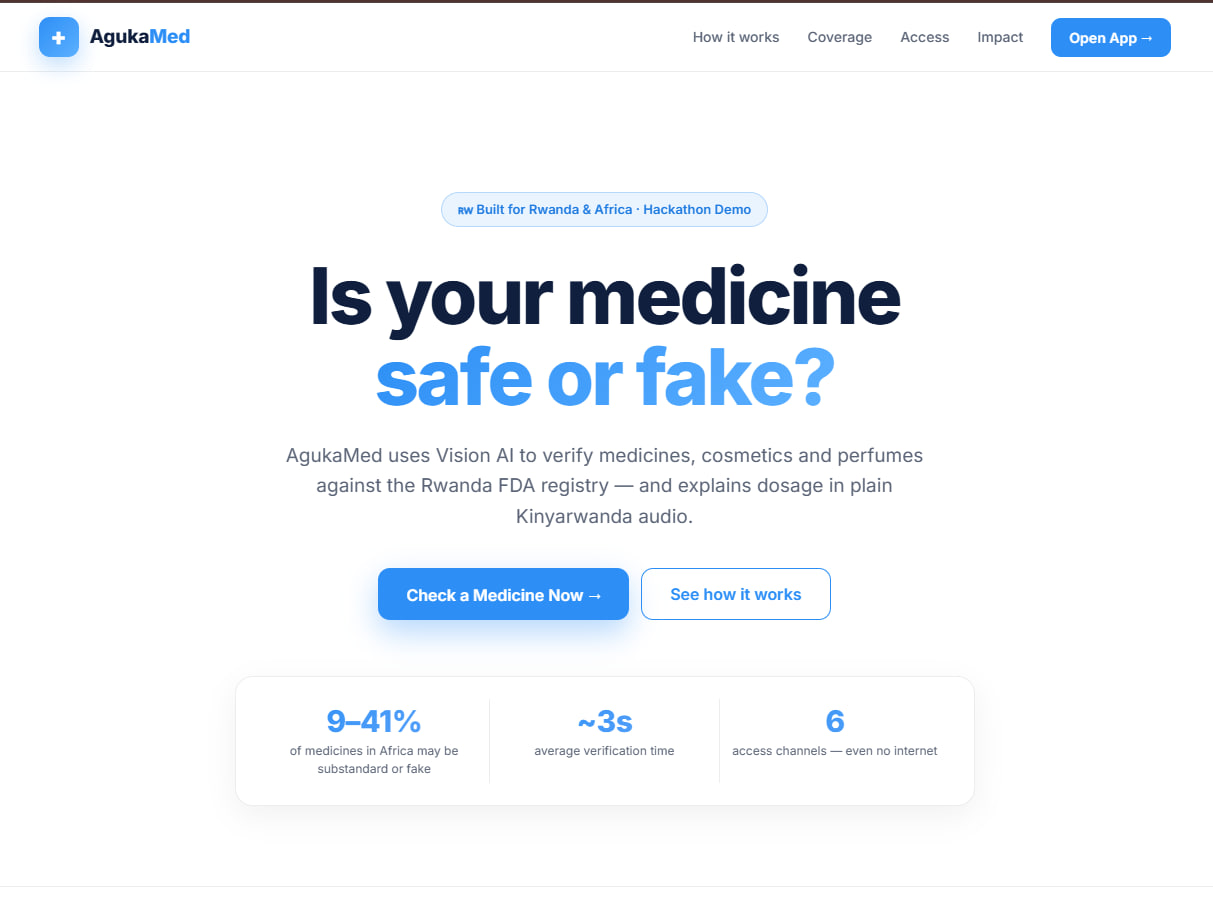
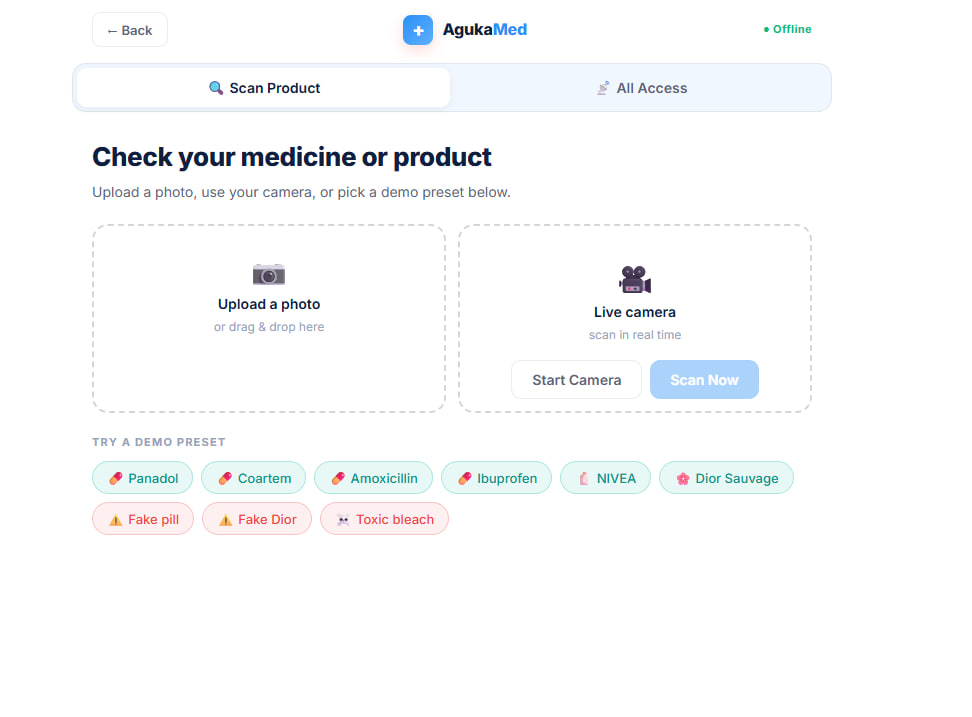
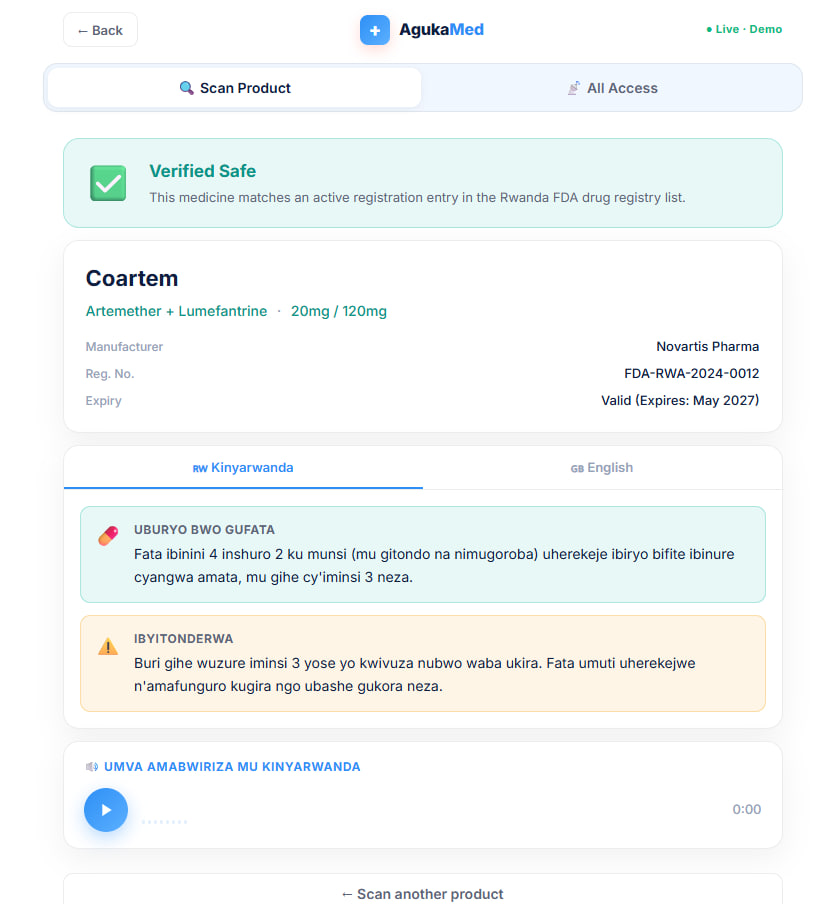
AgukaMed is an AI-powered verification platform that helps users instantly verify:
- medicines
- cosmetics
- perfumes
- skin-care products
- beauty products
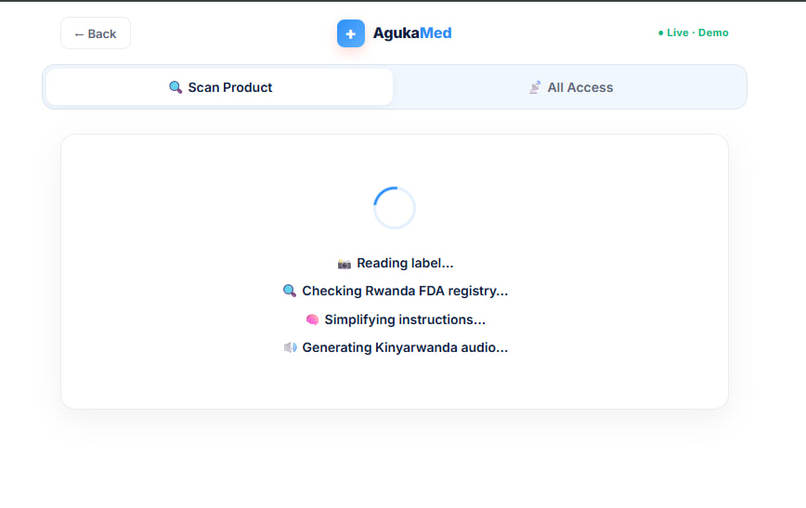
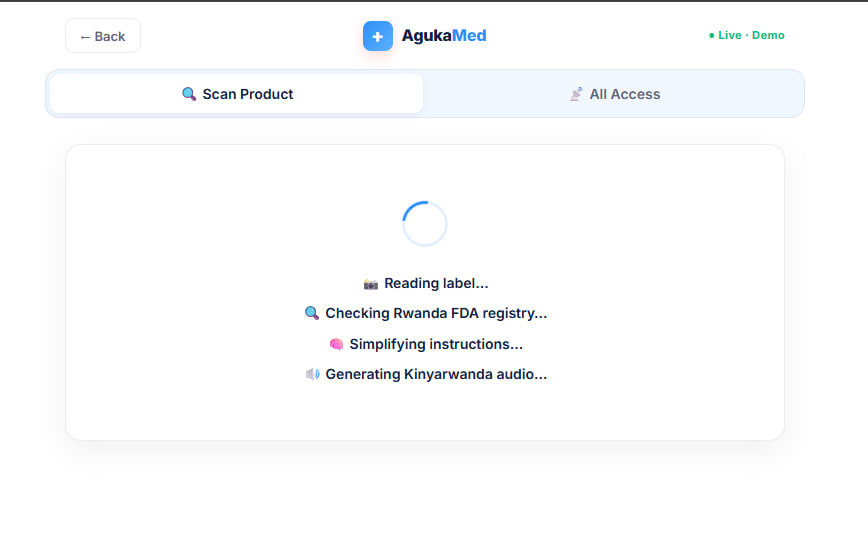
The platform uses AI Vision and OCR technology to:
- scan labels
- detect suspicious packaging
- identify expiry dates
- verify authenticity
- simplify instructions
- generate Kinyarwanda voice guidance
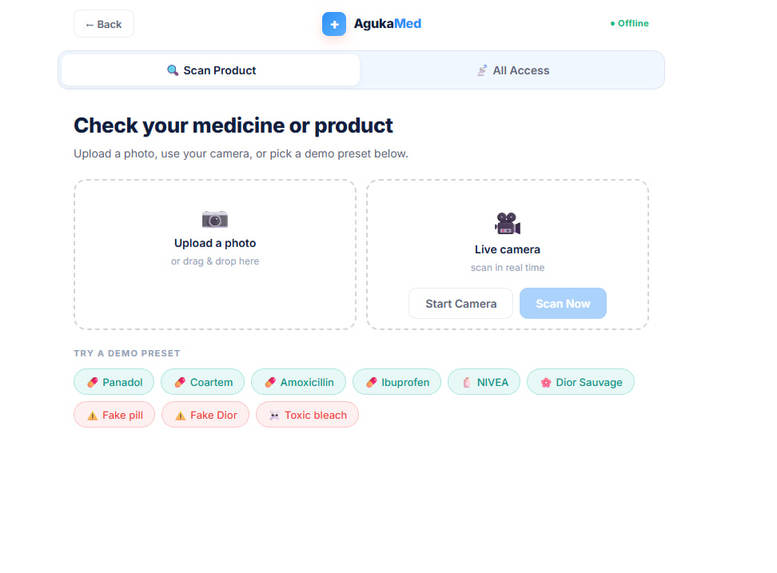
Users can:
- upload product images
- use live camera scanning
- listen to Kinyarwanda audio instructions
- receive instant SAFE or WARNING feedback
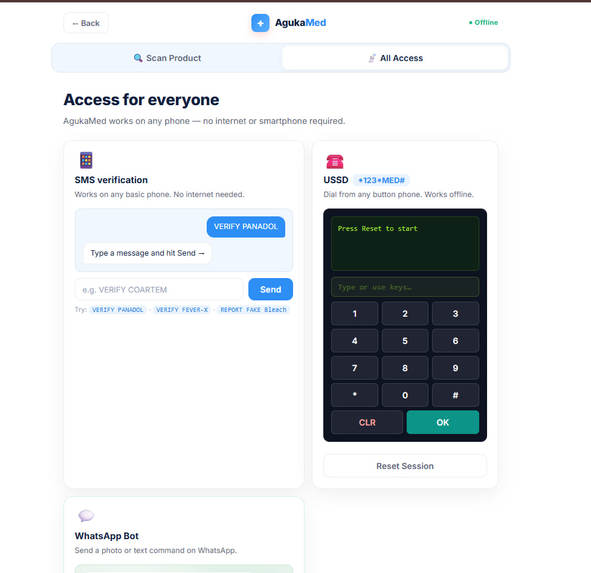
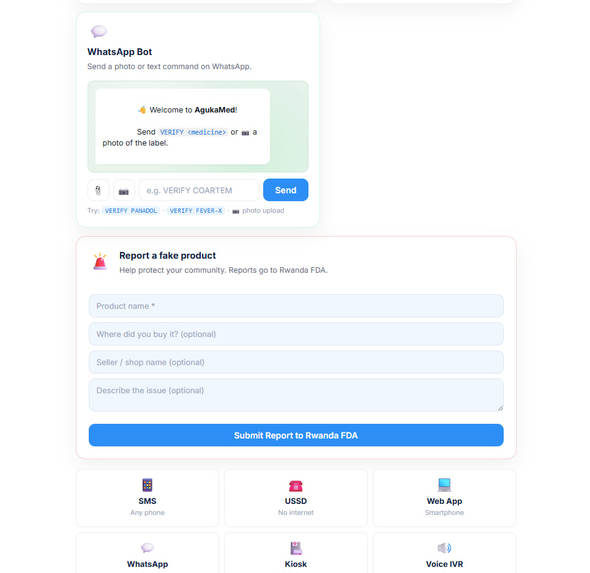
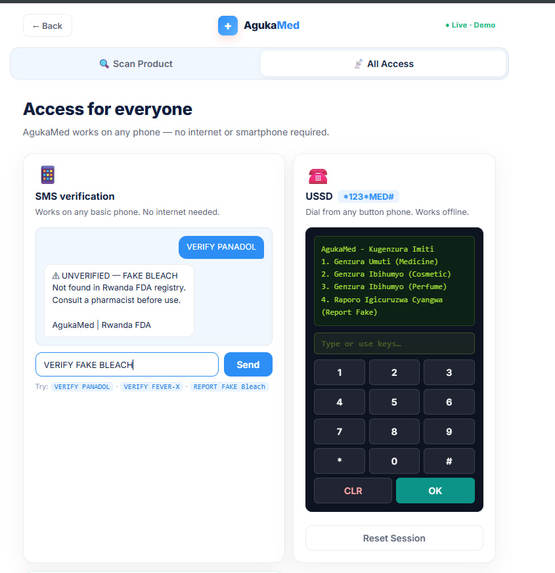
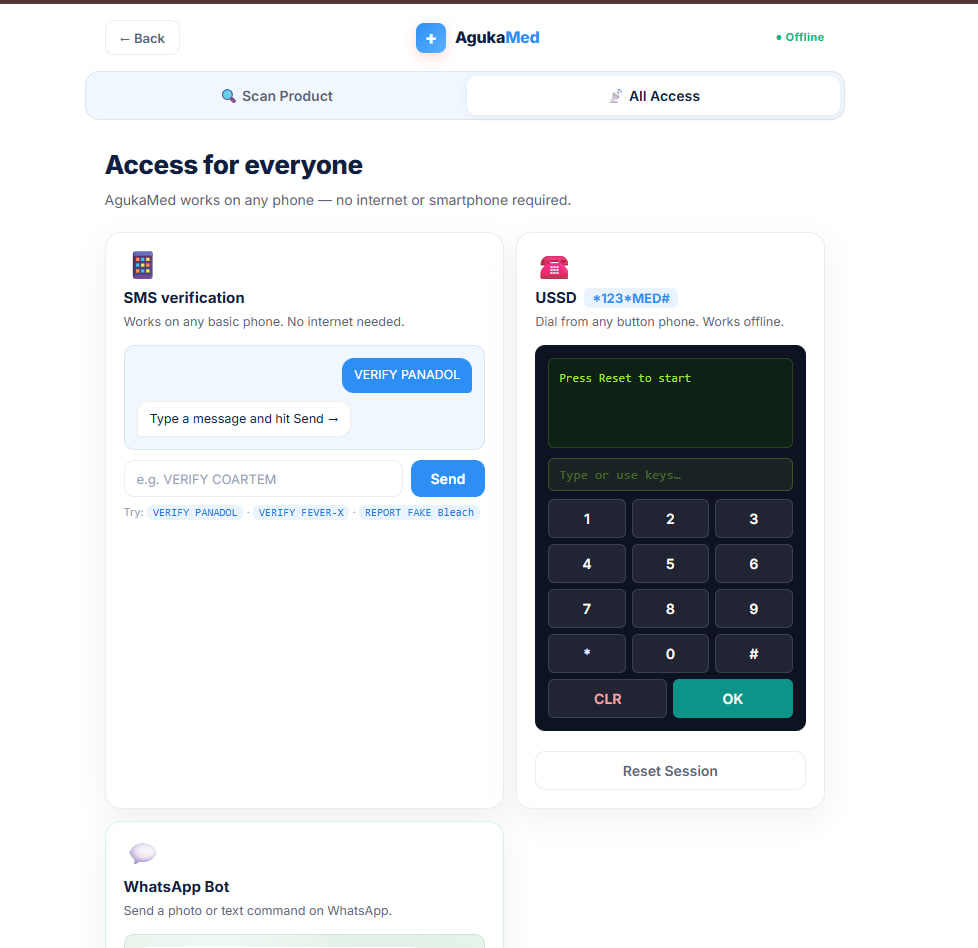
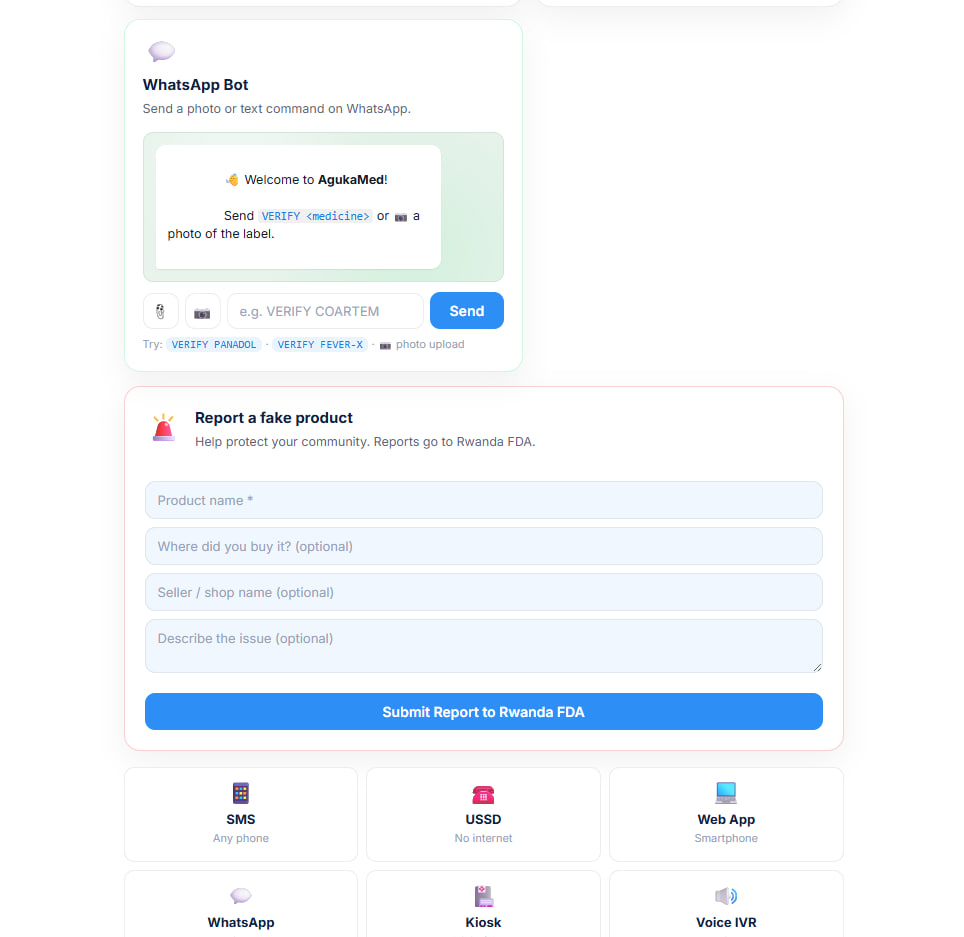
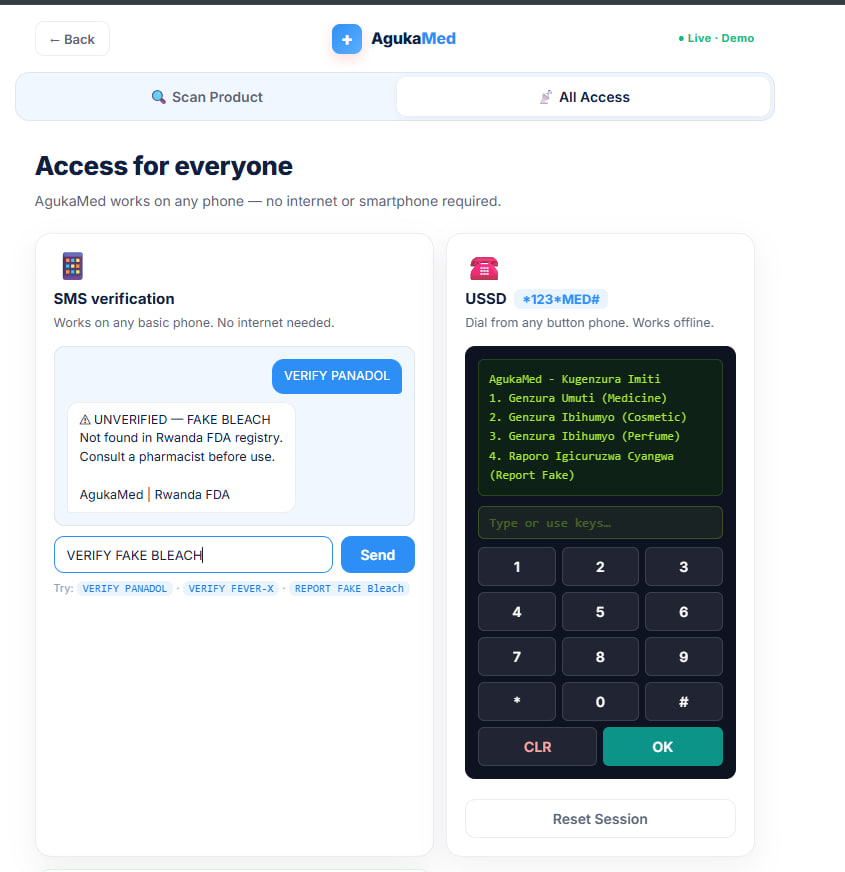
AgukaMed is also designed with accessibility in mind and includes concepts for:
- SMS verification
- USSD systems
- voice-call support
- community health kiosks
The goal is to make product safety understandable in less than 10 seconds.
How I built it
I built AgukaMed as a solo developer using a full-stack JavaScript architecture.
Frontend
Built using:
- HTML5
- CSS3
- Vanilla JavaScript
The frontend includes:
- glassmorphism UI
- live camera scanning
- animated AI timelines
- responsive layouts
- futuristic healthcare-inspired design
- custom Kinyarwanda audio player
Backend
Built using:
- Node.js
- Express.js
- Multer
- dotenv
I created modular services for:
- Vision AI scanning
- OCR extraction
- counterfeit detection
- product verification
- instruction simplification
- text-to-speech generation
AI & APIs
AgukaMed supports:
- Gemini Vision API
- OpenAI Vision
- ElevenLabs TTS
- Google Translate TTS fallback
The platform also includes a smart Demo Mode that simulates AI workflows if no API keys are provided.
Challenges I ran into
One of the biggest challenges was building a system that felt intelligent and realistic while still being lightweight enough for a hackathon project.
As a solo developer, I had to handle:
- frontend development
- backend architecture
- UI/UX design
- AI integration
- accessibility planning
- animations
- demo reliability
Other technical challenges included:
- OCR consistency
- counterfeit detection logic
- generating Kinyarwanda audio
- creating smooth AI processing animations
- handling both medicines and cosmetic products in one platform
Another challenge was designing for users without smartphones. I explored concepts such as:
- SMS verification
- USSD systems
- voice-call accessibility
- rural health kiosk support
because healthcare accessibility should not depend on expensive devices.
Accomplishments that I am proud of
Some accomplishments I am especially proud of include:
- Building the entire project as a solo female developer
- Creating an African-first AI healthcare accessibility platform
- Combining medicine verification and cosmetic authenticity checking in one system
- Designing a premium futuristic UI with real-time AI workflows
- Adding Kinyarwanda voice guidance for accessibility
- Creating a reliable Demo Mode for live hackathon presentations
- Designing concepts for non-smartphone users through SMS and USSD accessibility
I am also proud that AgukaMed focuses on real human problems instead of being just another generic AI demo.
What I learned
Through AgukaMed, I learned:
- how to architect modular AI systems
- how to connect frontend and backend AI workflows
- how important accessibility is in healthcare technology
- how to create emotionally engaging user experiences
- how localization and language support can improve usability
- how to balance technical depth with simplicity
Most importantly, I learned that impactful technology is not only about advanced AI.
It is about empathy and solving real problems for real people.
What's next for AgukaMed
Future plans for AgukaMed include:
- Rwanda FDA integration
- real SMS and USSD verification systems
- WhatsApp AI assistant
- offline-first mobile app
- blockchain-based medicine tracking
- pharmacy dashboards
- advanced fake packaging detection
- AI-powered authenticity confidence scoring
The long-term vision is to build:
“Africa’s accessible AI infrastructure for medicine and product safety.”
AgukaMed is more than a scanner.
It is a protection system designed for people facing real risks every day — especially vulnerable communities often ignored by modern technology.
Built With
- css3
- dotenv
- elevenlabs
- express.js
- gemini
- html5
- javascript
- multer
- node.js
- ocr
- openai
- render
- rest
- translate
- tts
- ui
- vision
- webrtc


Log in or sign up for Devpost to join the conversation.