-
-

Aguacates
-
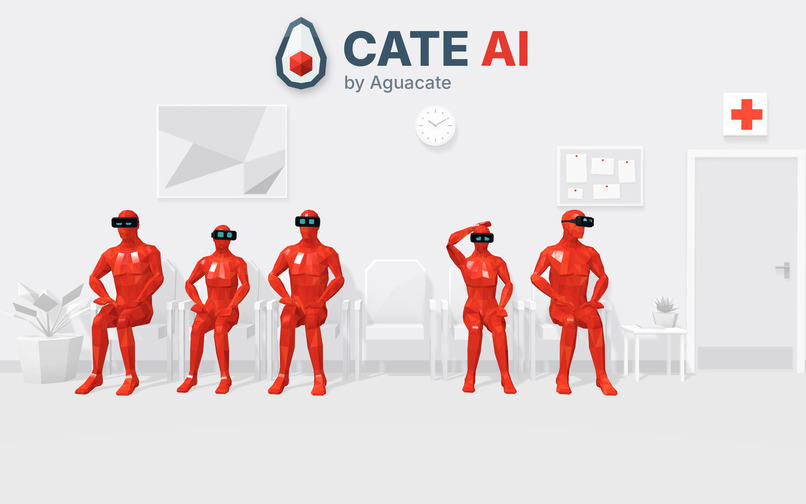
Waiting Room
-
Interactions
-
Dashboard

About us
We are team Aguacate. We built CATE AI (Clinical Anamnesis Training Environment) for the Avelios challenge "VIP: Virtual Interview Patient" at hackaTUM 2026.
Medical students practise history taking with paid patient actors, and they get only a few 20-minute slots. CATE AI is a virtual patient that they can talk to by voice at any time, as often as they want, with nobody watching.
Innovation
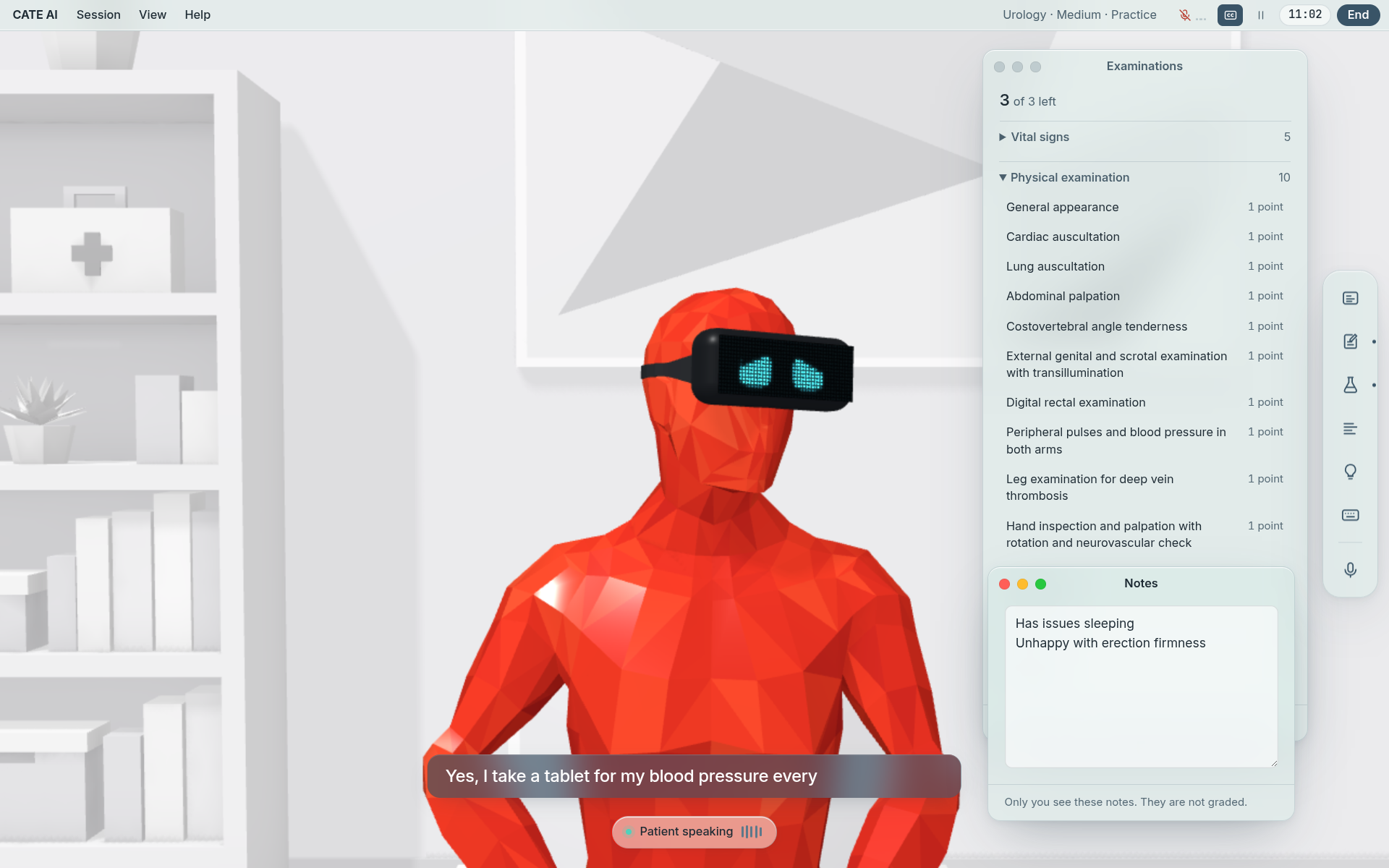
Other chatbot patients answer anything you type. CATE AI behaves like a trained standardized patient - fully renderable in Browser with the ability to grow to VR.
- Case plus mask. Each patient combines a medically reviewed case (the facts) with a personality mask (the behaviour): calm, stoic minimizer, embarrassed, or panicking. 4 cases and 4 masks give 16 different patients, so two patients with the same disease feel different.
- Facts in tiers. Some facts come out on their own, some only when asked, some only after the student earns trust, and some only on one specific question. A vague answer is a limit written in the case file. The patient never lies and never invents a symptom.
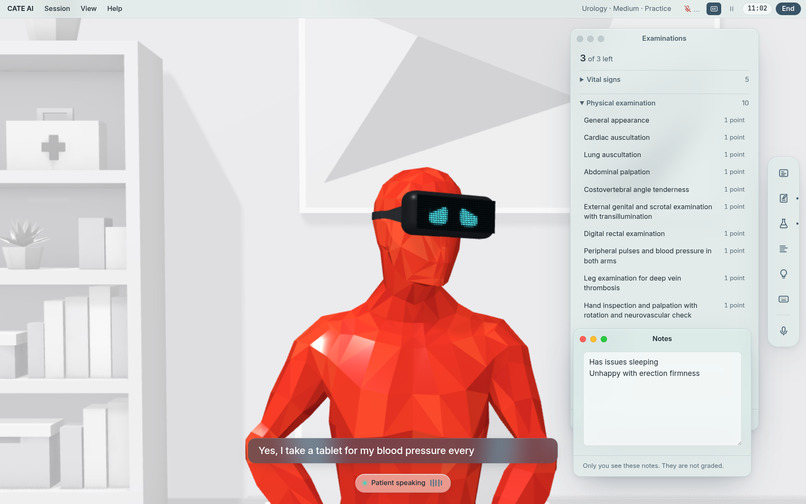
- Empathy you can see. The patient tracks anxiety, trust, frustration and understanding. The student's words change these values, and the LED eyes on the patient's visor show the mood live. If the student insults the patient, the patient warns once and then walks out.
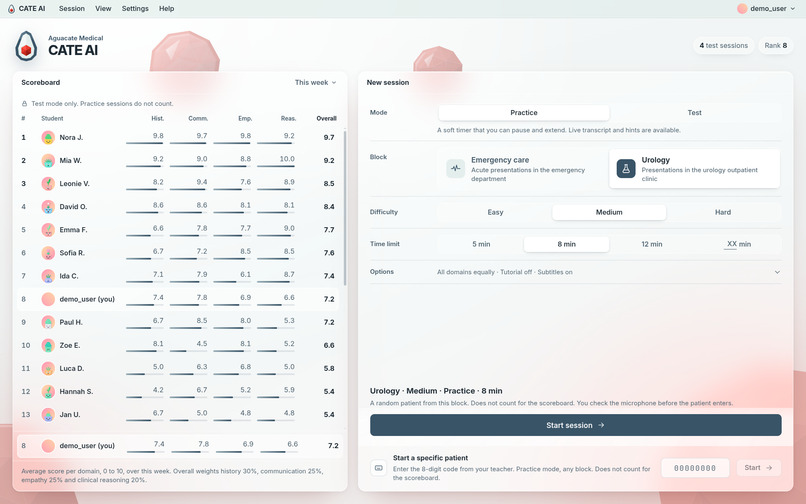
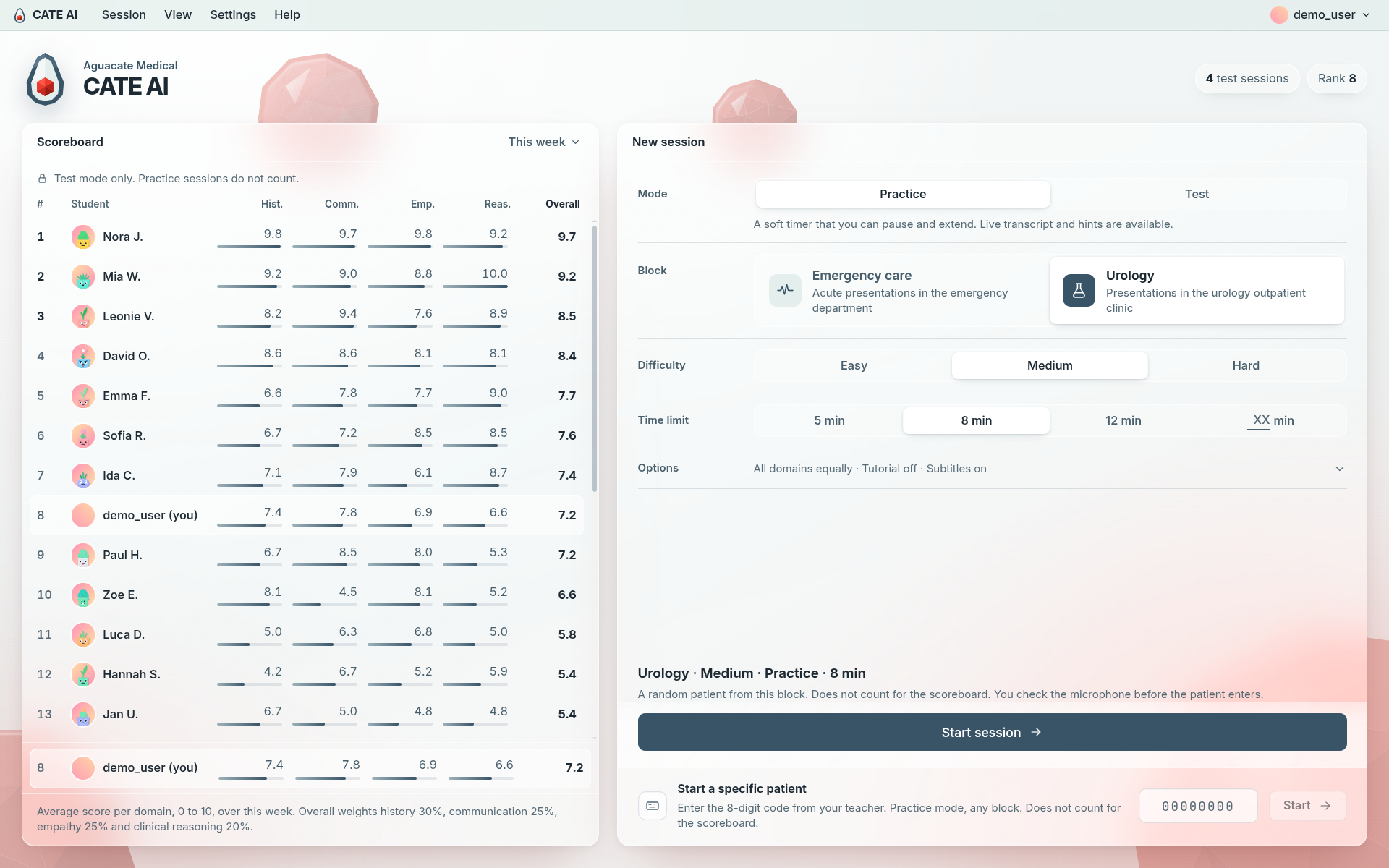
- Feedback with evidence. The student gets scores from 0 to 10 for history, communication, empathy and clinical reasoning, a skill radar, and an emotion timeline. Each finding quotes the exact line that caused it, with a timestamp.
- Teachers build patients. In the patient creator, a teacher picks a diagnosis and writes a short brief. A model drafts the case, and the teacher edits each part. Each patient gets an 8-digit code that the teacher can share as a link.
- Simple and focused, not a game. CATE AI has no streaks, badg es or daily reminders, and it is not a quiz app in the style of Duolingo. A session is one conversation with one patient, the same as the real exam. CATE AI is made for a laptop with a headset, in a quiet room. A history takes 8 minutes of full attention, and that does not fit into short sessions on the go.
User experience
The flow copies a real OSCE station: choose a block and a difficulty, read the briefing card, check the microphone, and the patient walks into the room and sits down. The student speaks first, as in a real exam. No forms or menus appear during the conversation.
- Practice mode: soft timer, live transcript, hint button, and text input for loud rooms.
- Test mode: Hard difficulty, a hard stop at 8 minutes, and no help.
- After the talk, the student writes a working diagnosis, differentials and next steps, and can order examinations from a fixed budget. Then the feedback screen opens. History keeps every attempt.
Quality and scope
The full loop works live at https://aguacates.cloud: identify, select, briefing, voice conversation, report, grading, feedback, history. The voice runs through ElevenLabs Realtime, and the grader uses an OpenAI reasoning model with structured output. The API keys stay on the server. The browser gets single-use tickets only. If the voice connection fails, a scripted demo patient takes over, so the demo never stops.
We have cut our scope to:
- The patient speaks English only.
- We cover two blocks, urology and emergency care.
- Login is a name and a birth date.
Demo
Live: https://aguacates.cloud Video: <https://www.youtube.com/watch?v=Vlt_FUtSfis
Built With
- bun
- elevenlabs
- openai
- sqlite
- three.js
- typescript


