Inspiration
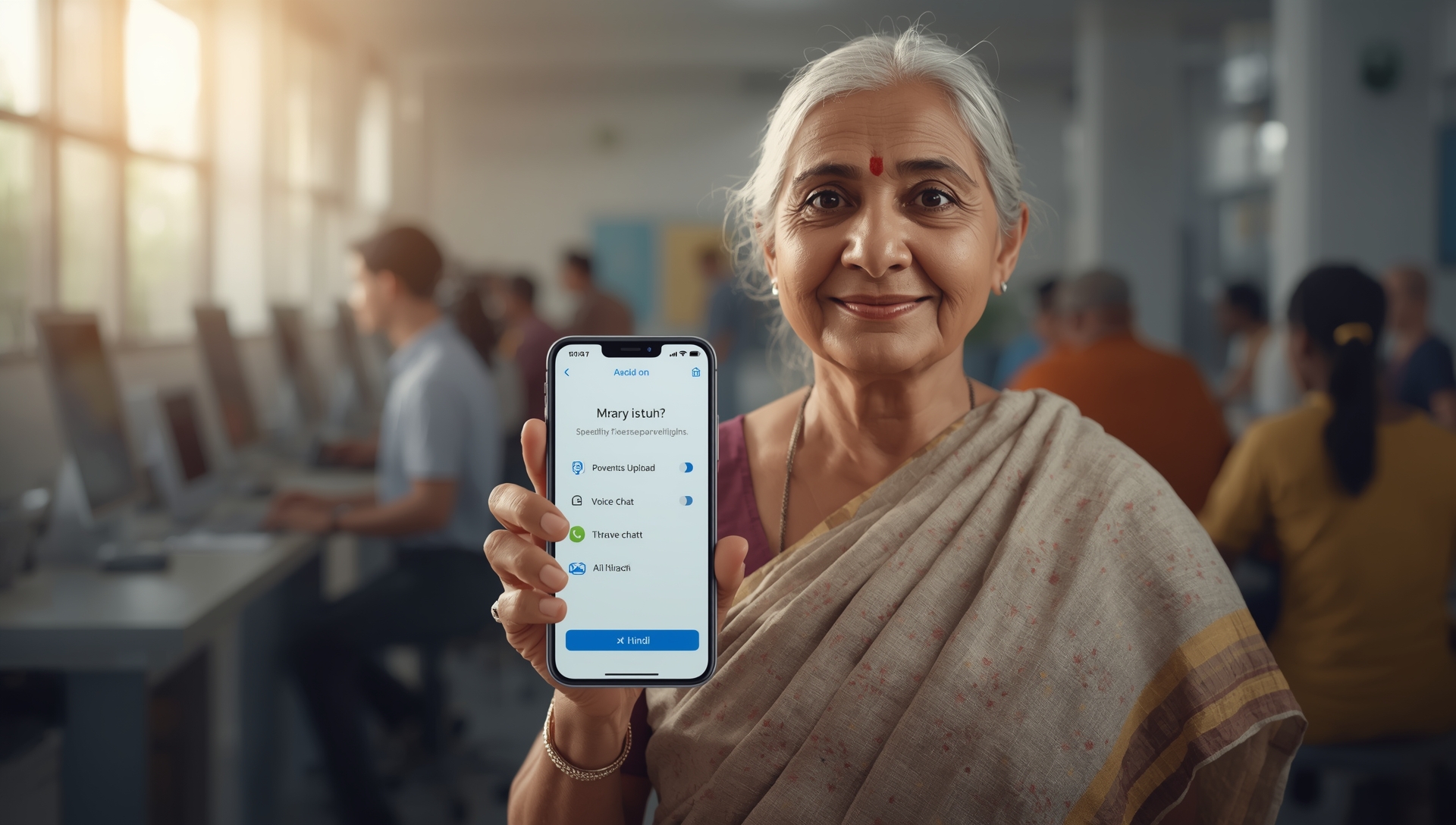
Our inspiration stems from a stark digital divide in India's e-governance landscape. While platforms like UMANG and DigiLocker exist, their potential remains untapped for a vast majority of citizens. We were moved by statistics showing that only ~37% of Indian villages have broadband and a mere 25% of adults can use computers effectively. The high drop-off rates (~60%) and the overwhelming demand for regional languages (88%) highlighted a critical failure in accessibility. We saw that the complexity of availing government schemes often placed an undue burden on the most vulnerable citizens, requiring multiple office visits and manual paperwork. This inspired us to leverage cutting-edge AI not just as a tool, but as an active, empathetic agent that could bridge this gap and make governance truly inclusive.
What it does
AGSA (Automated Government Service Agent) is an agentic AI framework that redefines citizen-government interaction. It autonomously guides a user through the entire journey of accessing a government service. A citizen can simply ask, "How can I get a scholarship?" in their native language via text or voice. AGSA then:
- Discovers the relevant schemes and checks their eligibility.
- Automatically collects and verifies necessary documents (like ID proofs) from integrated platforms like DigiLocker.
- Pre-fills complex application forms.
- Provides 24/7 support through a conversational interface in over 11 Indian languages.
It transforms a multi-day, confusing process into a single, seamless conversation, drastically reducing processing time and errors.
How we built it
We architected AGSA on a robust, open-source IBM tech stack to ensure enterprise-grade performance, safety, and scalability.
- Core AI Engine: We utilized a suite of IBM Granite 3.0 foundation models: the 8B parameter model for advanced natural language understanding (NLU) in our Service Discovery Agent, and the specialized 2B parameter model for document analysis in our Document Processing Agent.
- Safety & Orchestration: The entire system is secured by the Granite Guardian 3.0 framework for content moderation and bias mitigation. The workflow between specialized agents is seamlessly orchestrated by the IBM watsonx Agent Development Kit (ADK), creating a cohesive pipeline.
- Integration Layer: We built robust API connectors to India's digital public infrastructure—UMANG for services, DigiLocker for document access, CPGRAMS for grievance redressal, and Bhashini for real-time translation and speech synthesis.
- Multi-Modal Interface: The front-end interaction layer, powered by the ADK, delivers a unified experience through text chat, voice, and a simple visual UI designed for low-bandwidth environments.
Challenges we ran into
- Architecting a Cohesive Agentic Workflow: Designing a system where multiple autonomous agents (Discovery, Document, Interaction) could hand off context and maintain state throughout a complex, multi-step citizen journey was a significant design challenge.
- Multilingual Nuance and Accuracy: Achieving high accuracy in understanding and generating responses across 11+ linguistically diverse Indian languages, complete with dialects and colloquialisms, required meticulous prompt engineering and model tuning.
- Ensuring Safety and Bias Mitigation: Implementing robust safeguards to prevent misinformation, protect citizen privacy, and mitigate algorithmic bias was paramount. Integrating Granite Guardian effectively required continuous testing and validation.
- API Integration Complexity: Creating stable and secure integrations with multiple government platforms (UMANG, DigiLocker) involved navigating varying API standards, authentication protocols, and data schemas.
Accomplishments that we're proud of
- Creating a Truly End-to-End Agentic Solution: We are proud to have built a fully functional prototype that demonstrates autonomous completion of a complex, real-world process, not just a conversational chatbot.
- Bridging the Digital Divide: Designing a system that is accessible to non-literate and rural populations through voice-first interfaces and low-bandwidth optimization is a core accomplishment we believe in.
- Achieving High Multilingual Coverage: Successfully implementing a system that can serve ~95% of India's population in their mother tongue.
- Leveraging Open-Source for Transparency: Building a solution on an open-source stack that promises transparency, low cost, and avoids vendor lock-in.
What we learned
- The Power of Agentic AI: We moved beyond simple chatbots to understand the architectural paradigms and power of using multiple specialized AI agents working in concert to solve complex problems.
- The Importance of Native Integration: A solution is only as good as its integration with existing systems. We gained deep insights into India's Digital Public Infrastructure (DPI) and the technical challenges of interoperability.
- Responsible AI is Non-Negotiable: We learned to embed safety, fairness, and transparency (through audit trails) into the very core of our architecture, not as an afterthought.
- User-Centric Design is Key: Technology must adapt to the user, not the other way around. Building for low literacy and limited connectivity requires a fundamentally different design philosophy.
What's next for AGSA
Our vision for AGSA is to evolve it from a prototype to a nationwide public good.
- Pilot Deployment: Execute a controlled pilot with a state government for a specific service (e.g., farmer welfare schemes) to validate real-world efficacy and gather data.
- Advanced Agent Capabilities: Integate predictive analytics to proactively inform citizens of schemes they are eligible for but unaware of.
- Expand Service Coverage: Onboard more state and central government services and schemes onto the platform.
- Community & Developer Ecosystem: Open-source certain modules to foster a developer community that can build new agents and integrations, accelerating innovation and adoption.
- Cross-Platform Availability: Deploy AGSA on ubiquitous channels like WhatsApp and IVR systems to achieve maximum reach without requiring users to download a new app.
Built With
- bhashini-api
- digilocker-api
- ibm-granite-3.0-models
- ibm-watsonx-agent-development-kit-(adk)
- umang-api


Log in or sign up for Devpost to join the conversation.