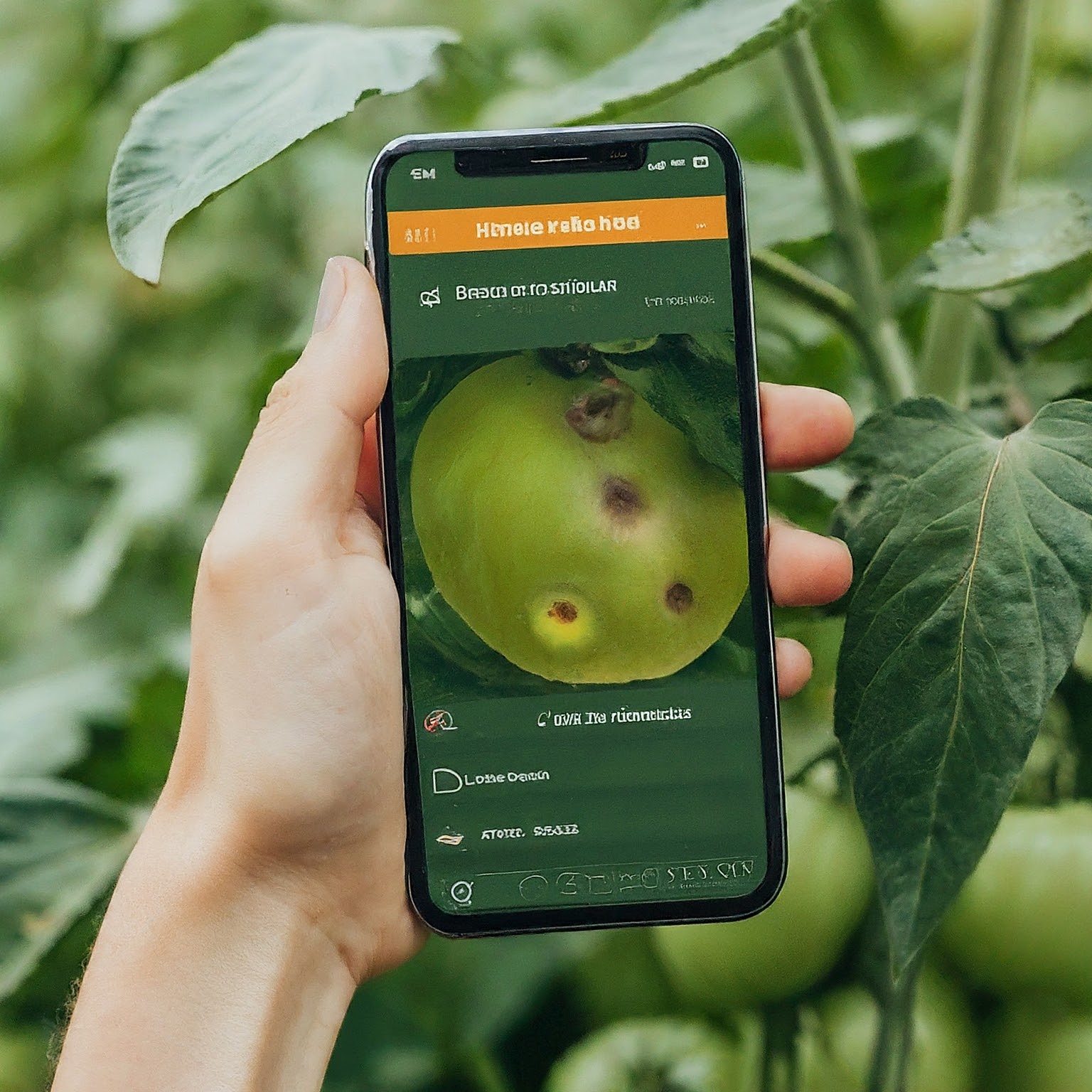
AgroVision: A Journey into Plant Health
Inspiration The idea for AgroVision was sparked by the increasing challenges faced by farmers due to plant diseases. Traditional methods of disease detection are often time-consuming and inaccurate, leading to significant crop losses. I wanted to leverage technology to create a solution that could empower farmers to protect their livelihoods.
Building AgroVision Developing AgroVision was a learning experience. I began by immersing myself in the world of plant pathology and image processing. Understanding the nuances of different plant diseases and their visual symptoms was crucial. I experimented with various deep learning architectures to build a robust model capable of accurately identifying diseases from images.
The core of the application was built using Python, leveraging libraries like TensorFlow and OpenCV for image processing and model development. I employed a transfer learning approach to fine-tune a pre-trained model on a dataset of plant disease images. To ensure user-friendliness, I developed a mobile app interface using Flutter, prioritizing simplicity and intuitiveness.
Challenges Faced One of the primary challenges was building a diverse and high-quality dataset. Collecting images of various plant diseases with clear symptoms was time-consuming. Additionally, ensuring data privacy and security was a top priority. Balancing model accuracy with computational efficiency was another hurdle. Finding the optimal model architecture and hyperparameters required experimentation.
Despite these challenges, the process of building AgroVision was incredibly rewarding. Seeing the potential impact of the application on farmers' lives motivated me to persevere.

Log in or sign up for Devpost to join the conversation.