-
-
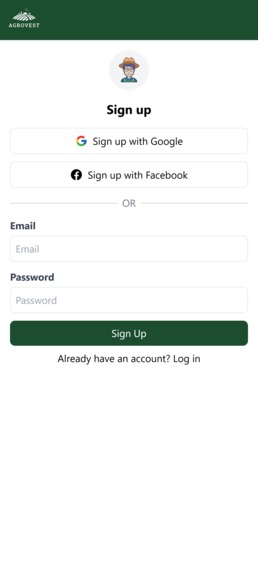
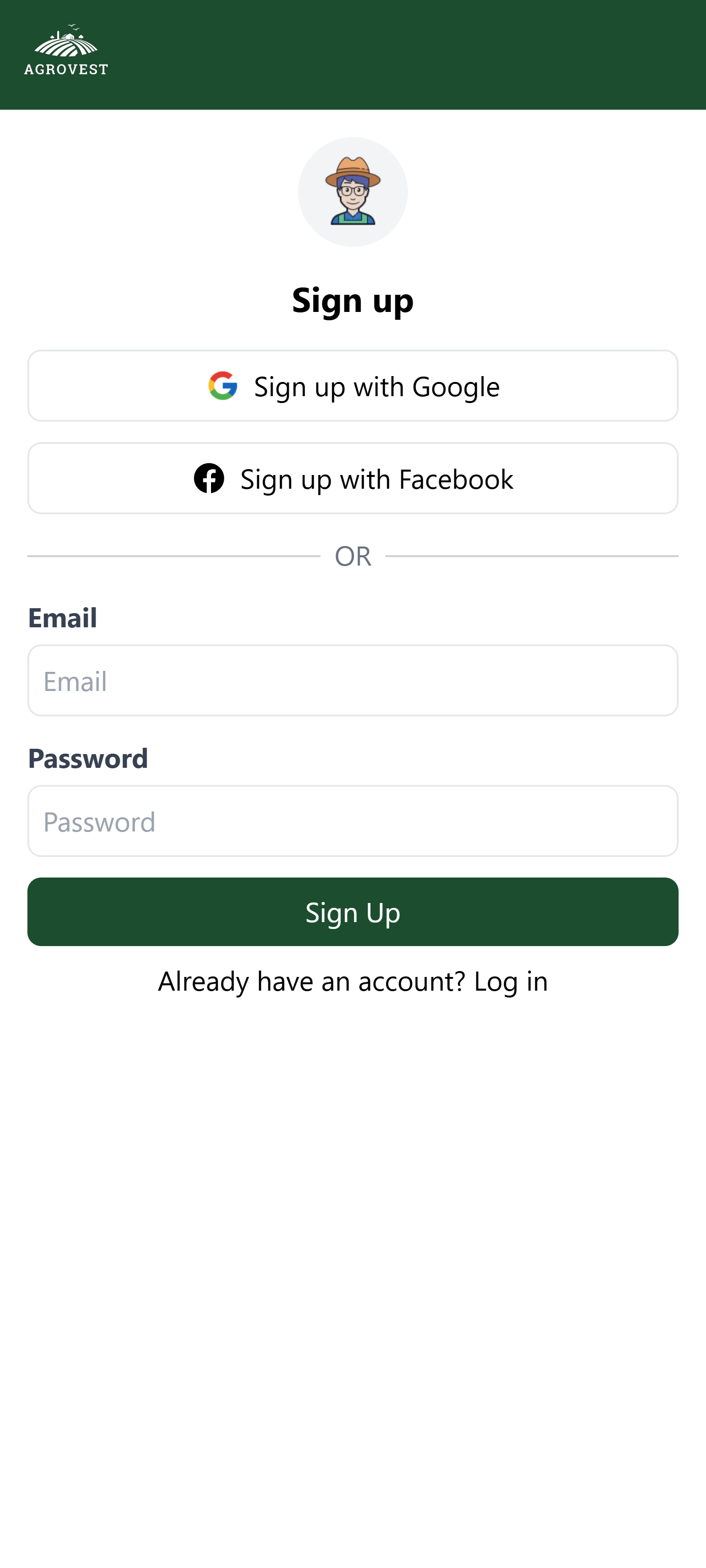
Signup Page
-
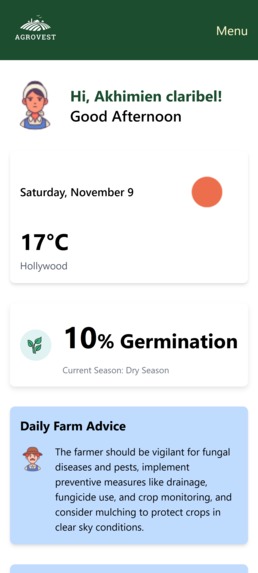
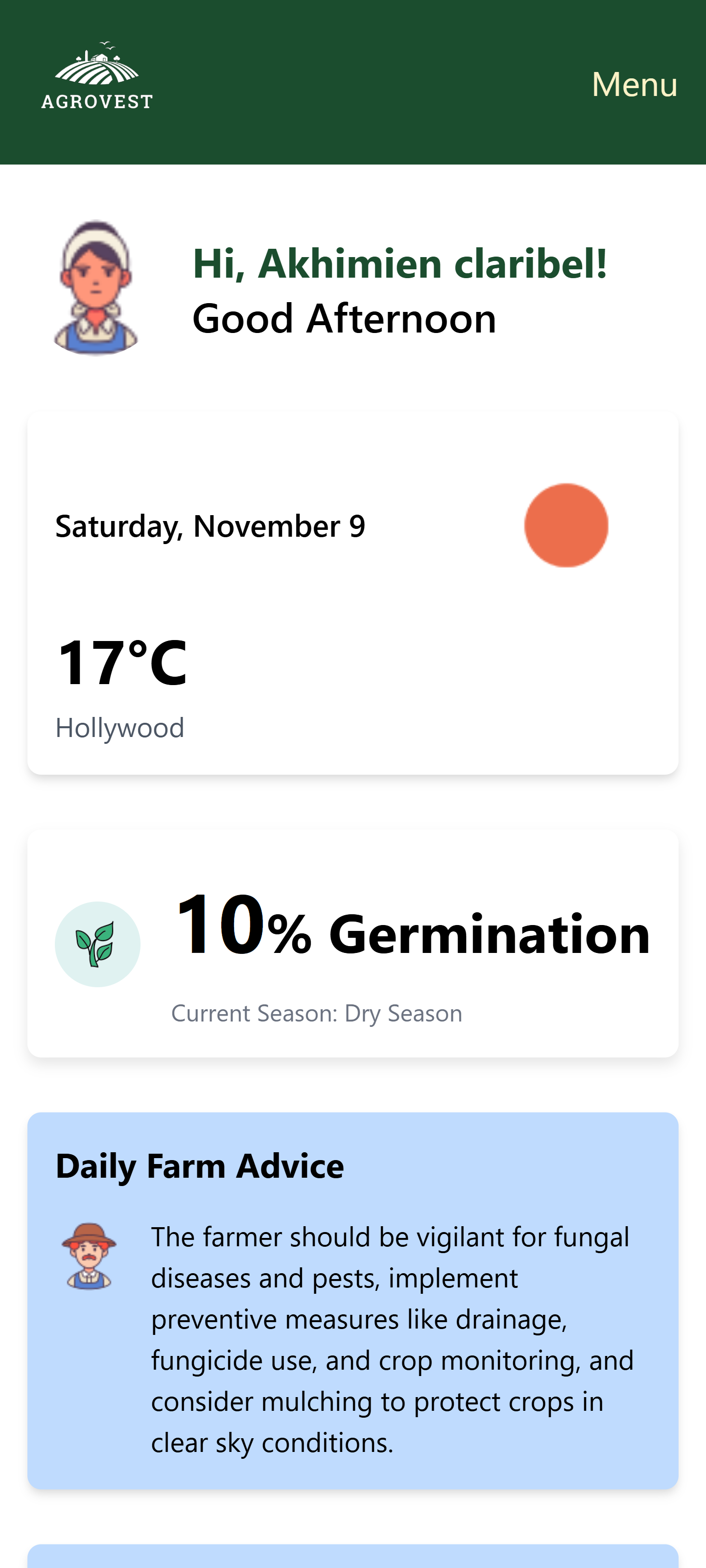
DashBoard
-
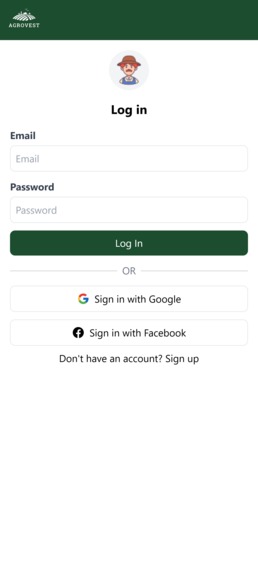
Login Page
-
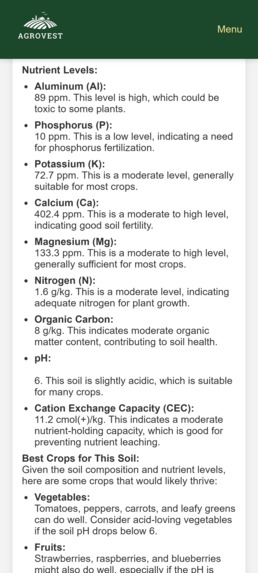
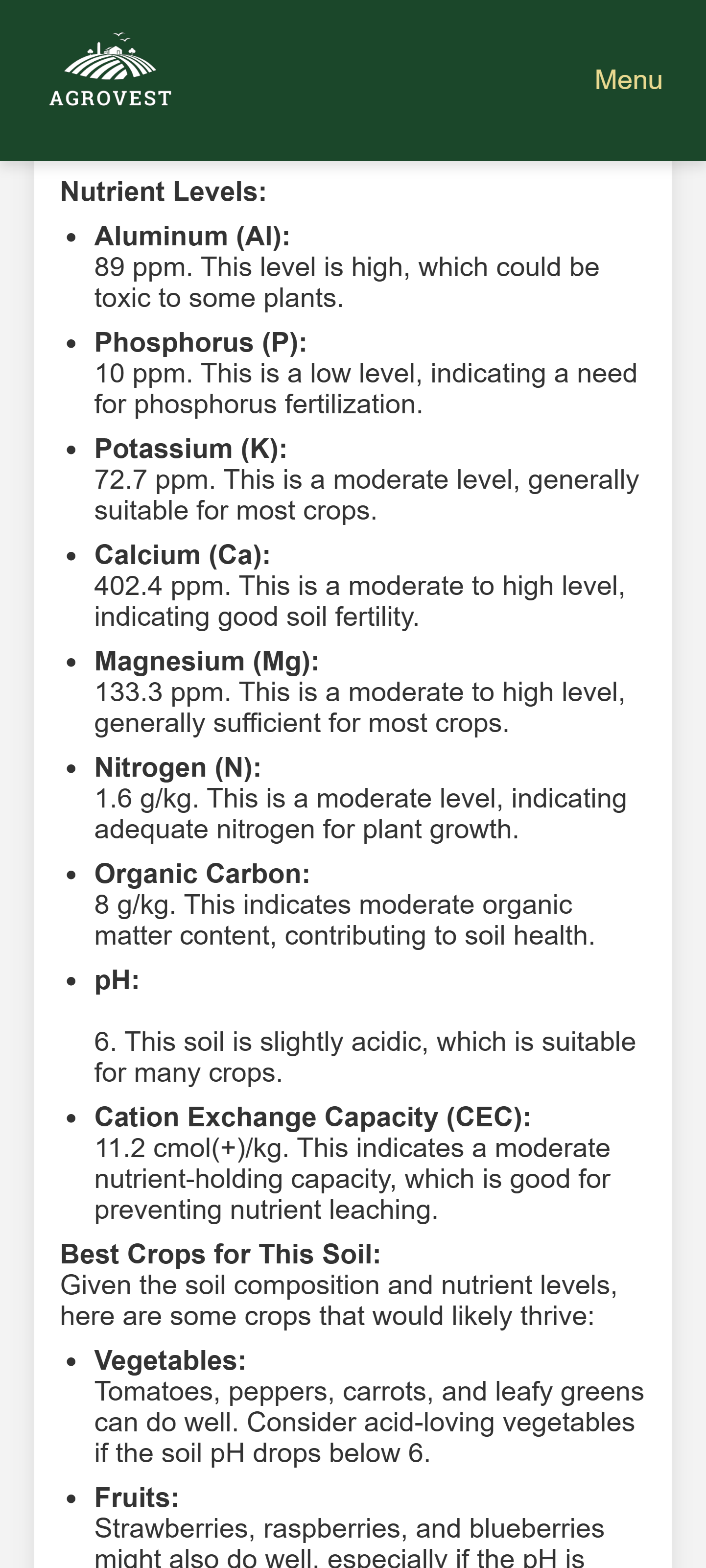
Soil Report
-
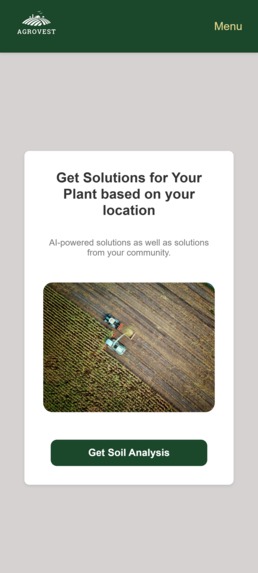
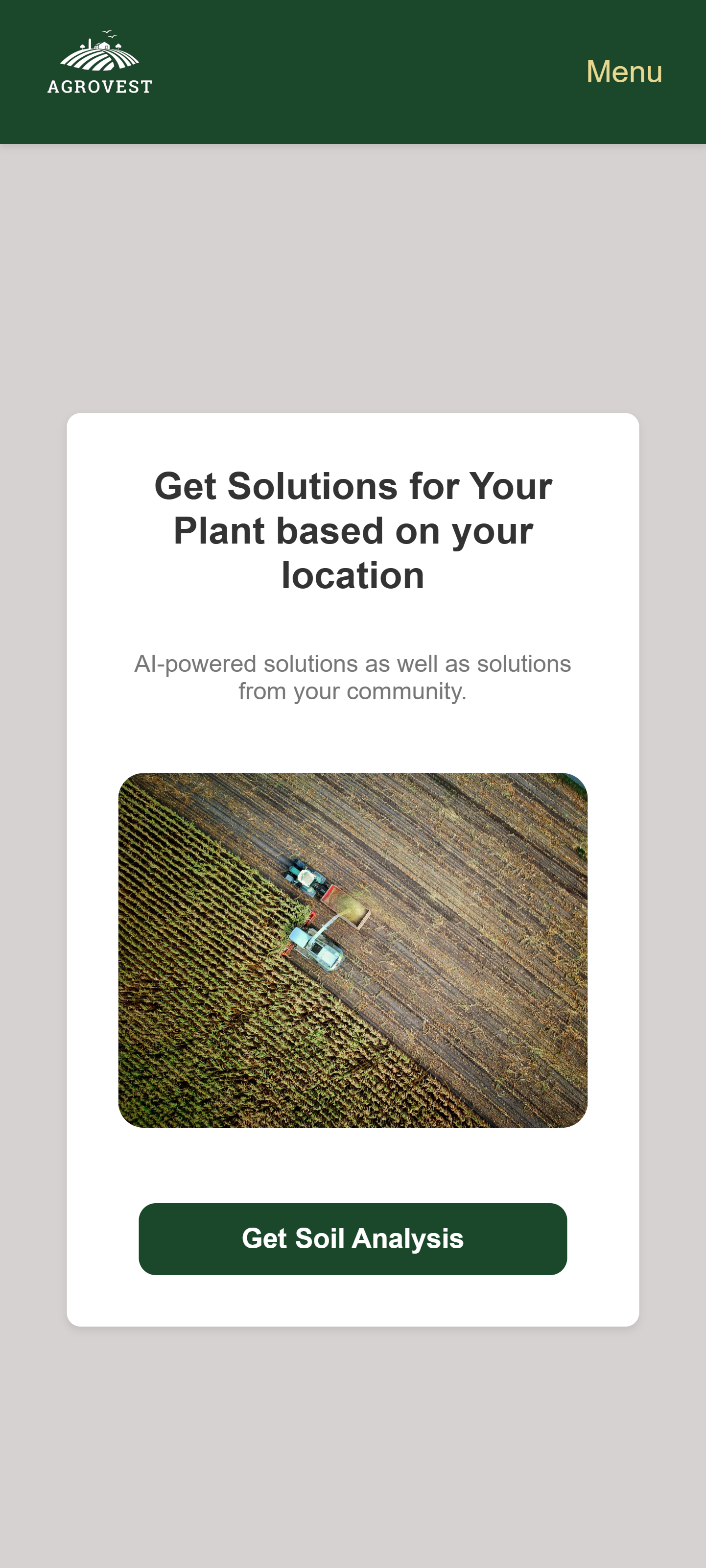
Get soil Analysis base on user location
-
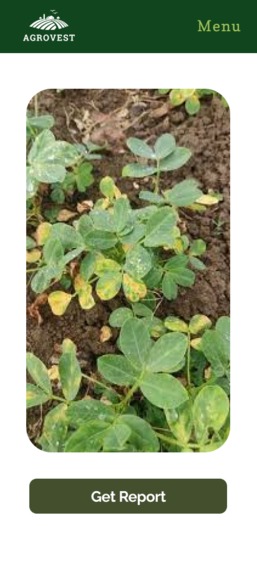
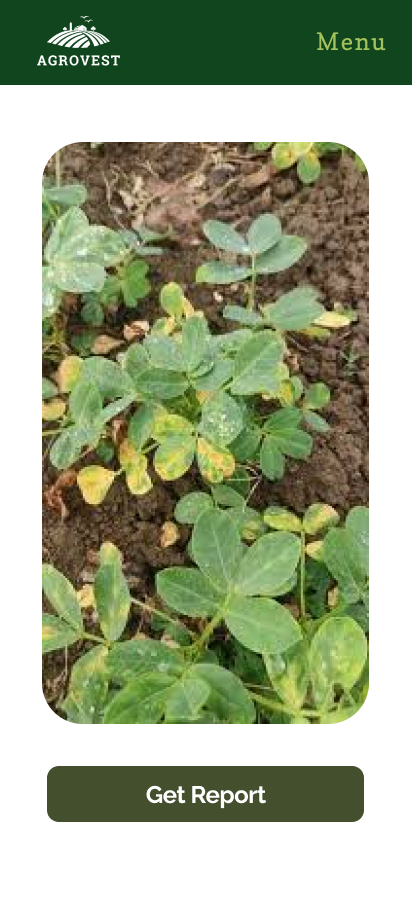
Get Crop Disease Diagnosis
-
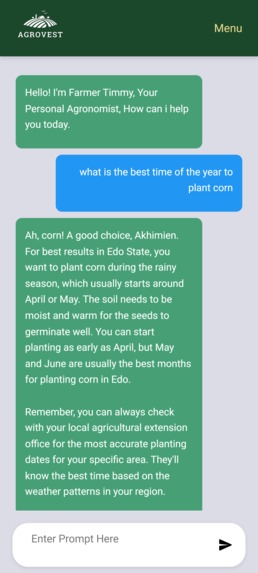
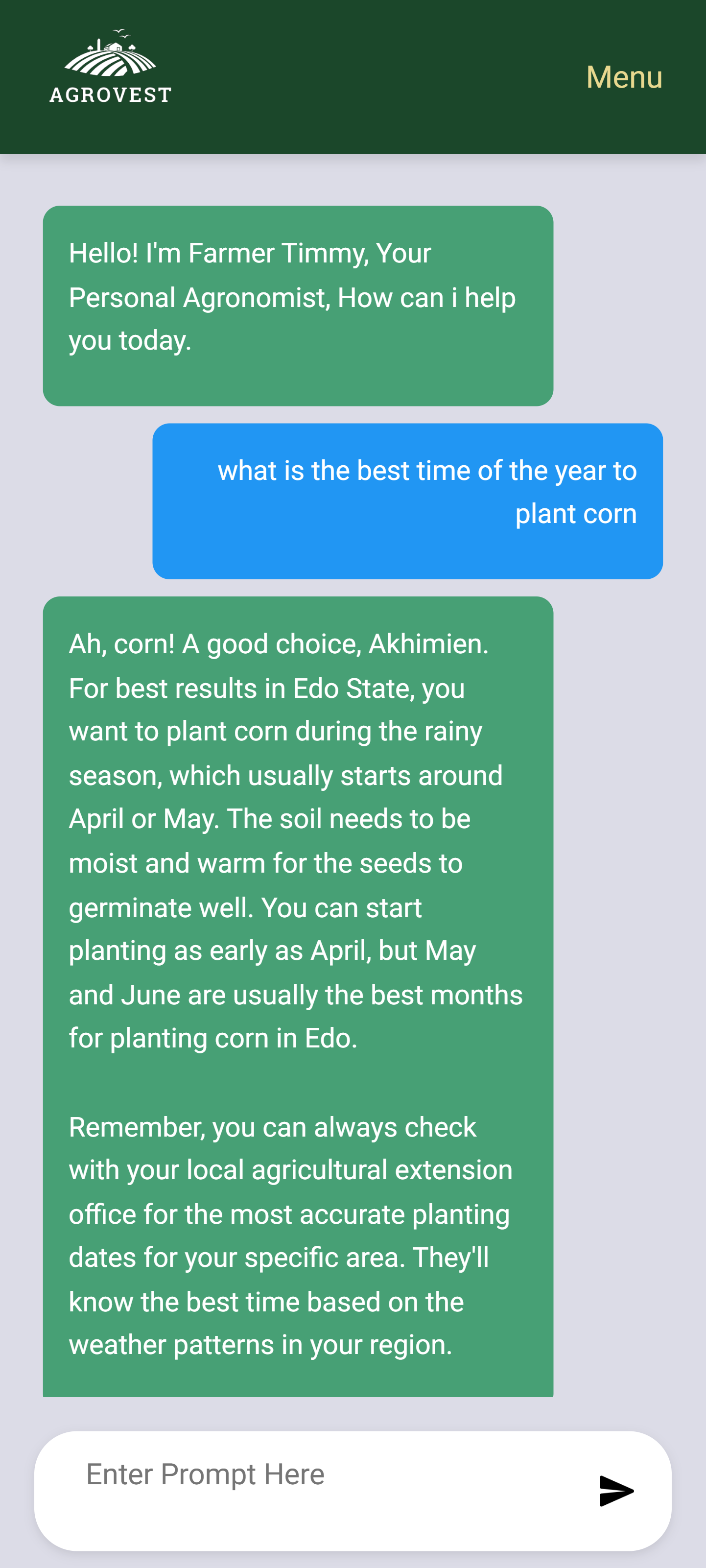
Chatbot
-
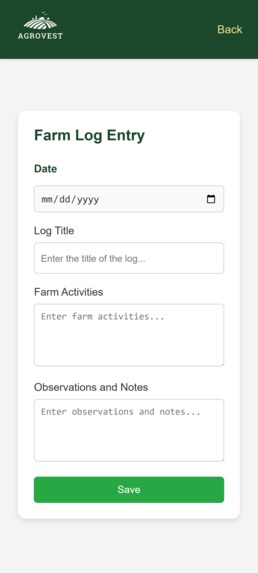
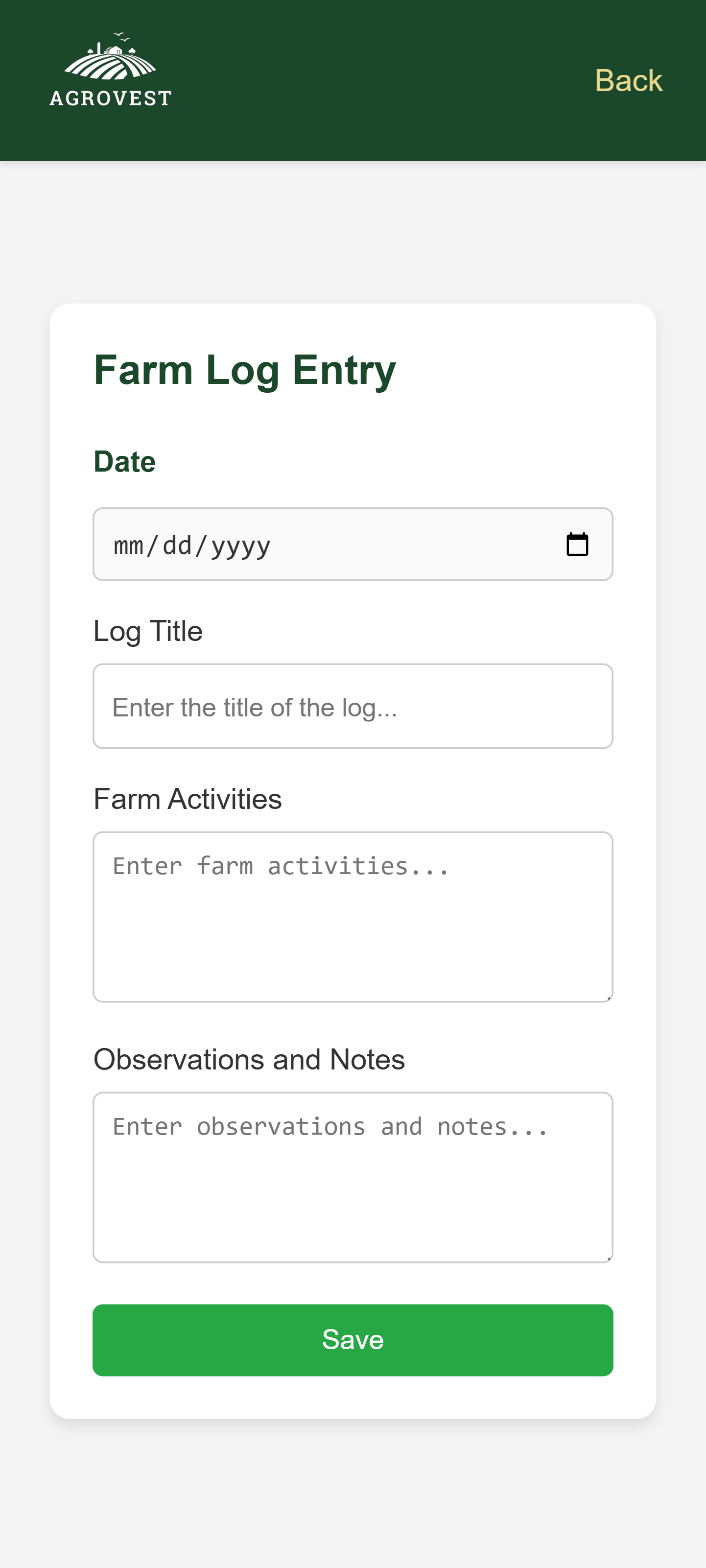
Farmer Log

Inspiration
When I first started using AI, it was mostly for tasks like generating text and conducting research. While useful, I began to wonder: what if this technology could have a much deeper impact? What if it could truly change lives in my community? I thought of the farmers in my country who work tirelessly yet often struggle with knowing the best time to plant, how to tackle pests and diseases, and which crops would thrive in their specific soil. These decisions are the difference between a good harvest and a tough season. The recent tomato crisis in Nigeria is a perfect example. Widespread disease outbreaks devastated crops nationwide, leading to severe scarcity and skyrocketing prices. This crisis affected not just farmers' livelihoods but also millions of households who rely on this staple ingredient. How Disease Outbreak Cause Tomatoes Scarsity in Nigeria
The idea for this app grew from there. we wanted to create something that would provide real support to farmers, helping them know when to plant for the best yields, advising on how to prevent or treat crop diseases, and recommending the most suitable crops based on their soil. I envisioned an app that could track every farm activity, empowering farmers with the knowledge and guidance they need to thrive.
What it does
- Daily weather predictions tailored to each farm's location.
- Provides advice to farmers on actions to maximize yield, based on weather conditions, crop type, farmer location, and other data.
- Offers instant plant disease diagnosis through photo analysis and provides advice on treatment, causes, and future prevention.
- Recommends crops to plant based on soil image analysis.
- Suggests crops suitable for a farmer's location and performs soil analysis based on location.
- Allows farmers to log all farm activities.
- Provides real-time support through an AI-powered agronomist chatbot.
How we built it
- The platform was built on Firebase and Google Cloud.
- We used Firebase Firestore to store user data.
- The platform utilizes Cloud Run functions to fetch weather and soil data for the user’s location from the ISDA open-source soil map.
- AutoML was used to train machine learning models for soil detection and plant disease diagnosis.
- Datasets used to train the ML model were obtained from Kaggle and Roboflow.
- Fine-tuned Gemini 1.5 Flash for report generation and advice.
- Firebase Authentication was implemented for secure application access.
Challenges we ran into
Time Constraint for the hackathon Cost of Training & Deployment for ML models. Data Availability gaps for certain plant diseases and crop types.
What we learned
- Serverless Architecture: Gained hands-on experience with Cloud Run functions, firebase hosting, firestore database.
- Machine Learning with AutoML and Vertex AI: Expanded our skills in training and deploying ML models.
- Agricultural Insights: Learned about crop diseases, soil conditions, and farming practices, deepening our understanding of the agricultural sector.
- Automation and Efficiency: Improved automation techniques to streamline the app’s functions.
What's next for Agrovest AI
- Expand the disease and crop database to cover more local plants.
- Add multilingual support of Local Languages to make the app accessible to local Farmers.
- Improve the AI’s predictive capabilities with additional datasets and user feedback.
- Partner with local agricultural organizations to increase adoption and impact.
Built With
- cloud
- cloudrun
- firebase
- gcp
- vertexai


Log in or sign up for Devpost to join the conversation.