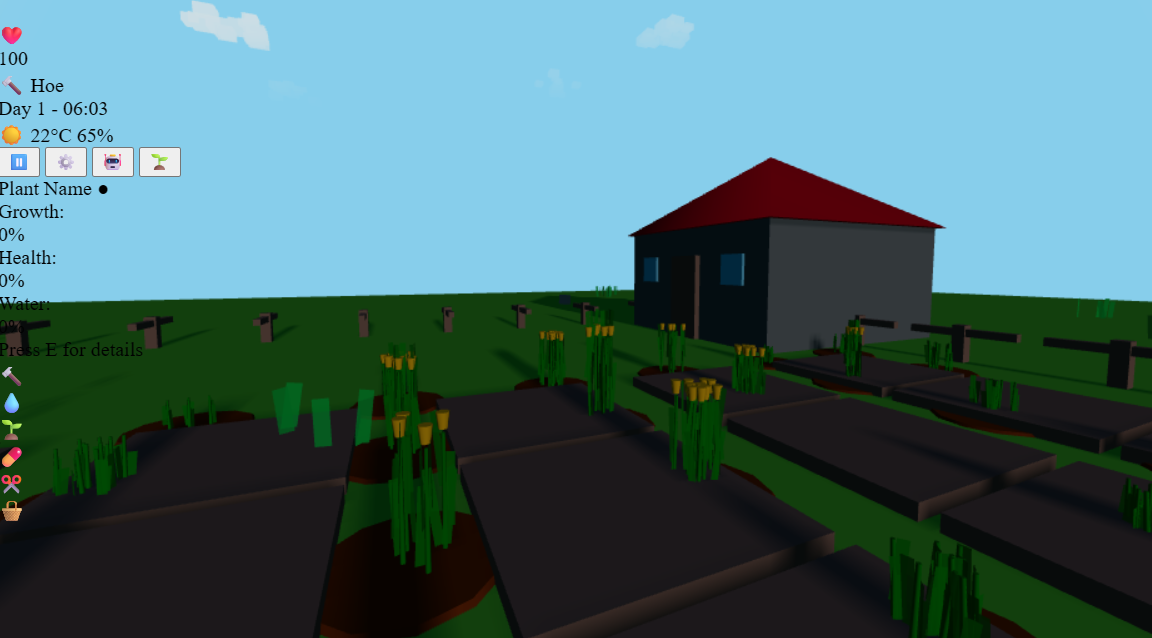
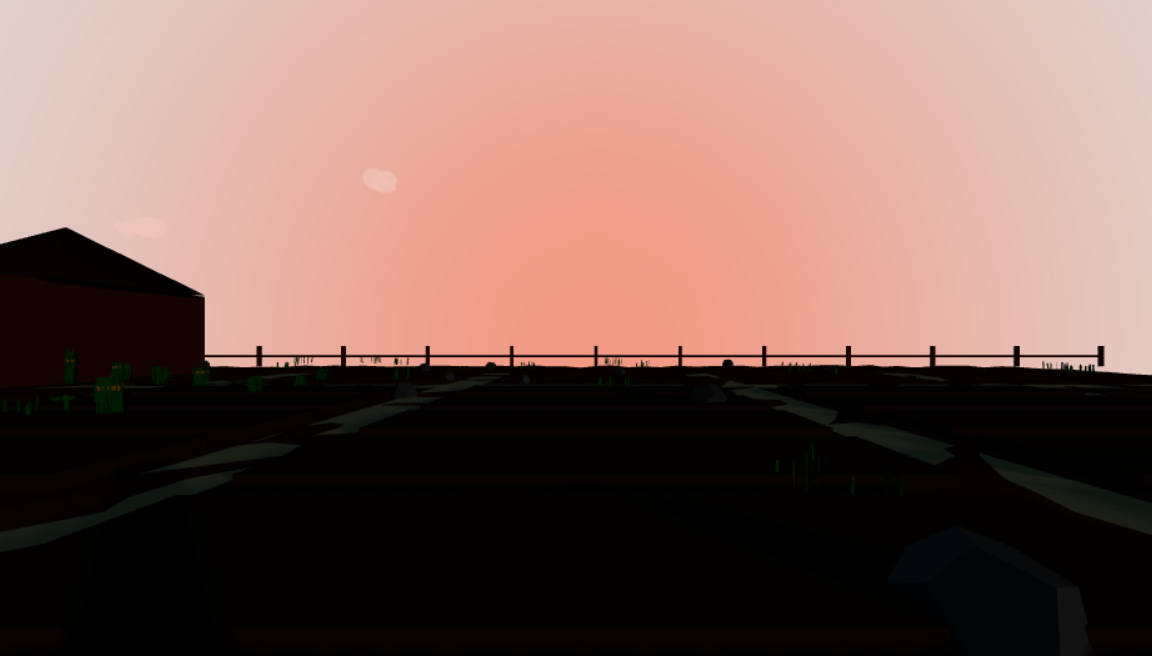
Inspiration Many students in agricultural studies, especially in rural and under-resourced regions, face limited access to diverse soil types, seeds, equipment, and hands-on learning opportunities. This inspired us to create Agroverse—a highly realistic, AI-powered agricultural simulator. Our goal is to bridge the educational gap by providing an immersive, visual learning environment that replicates real-world farming scenarios without requiring physical land or tools.
What It Does Agroverse is a 3D interactive agricultural simulator designed to educate students through realistic crop growth, AI-driven insights, and hands-on virtual farming. The platform includes:
In-game UI with real-time statistics on plant health, growth, soil moisture, and nutrients
AI analysis of environmental stress, disease risk, and predicted yield
A toggle system to view underground root growth and structure
Realistic day/night cycles, seasonal changes, and environmental effects
Unique plant variations and behaviors generated through AI
Disease progression and pest management simulations
A modern, responsive UI with professional design for educational clarity
Agroverse functions as both a learning platform and a smart farming assistant.
How We Built It Agroverse was developed using the following technologies:
Unity Engine for 3D environment development, crop lifecycle simulation, and user interaction
GROQ API for AI-driven insights including yield forecasting, disease prediction, and growth optimization
Blender and AI-powered asset generators for detailed and unique crop models
Custom data structures to model plant behavior, soil moisture, root systems, and environmental variables
Real-time weather simulation logic to incorporate temperature, wind, humidity, and seasonal effects
Glassmorphism-based UI design to ensure a clean, modern user interface embedded in the game window
The system was designed to be modular and scalable for various crops and learning objectives.
Challenges We Ran Into Modeling realistic crop growth using dynamic variables like weather, water, and nutrients
Integrating GROQ-based AI models into a real-time simulation engine without latency
Generating high-fidelity 3D plant models while maintaining performance
Building a user interface that communicates complex agricultural data in an educational and intuitive manner
Achieving accurate simulation of root systems and visual toggling between surface and underground views
Each of these challenges pushed us to innovate and iterate rapidly during development.
Accomplishments That We're Proud Of Successfully visualized realistic plant growth, including underground root structures
Integrated AI-powered insights for disease monitoring, growth prediction, and yield forecasting
Developed a responsive, professional UI embedded entirely within the simulator
Created AI-generated crop variations that simulate real-world plant diversity
Simulated realistic environmental conditions and their effects on plant behavior
Designed the platform specifically to help under-resourced students access modern agricultural education
What We Learned How to bridge the gap between game development and real-world data-driven simulation
How to integrate AI decision systems into an interactive visual experience
The importance of educational design in building tools that are both engaging and informative
Advanced agricultural principles including disease modeling, root system analysis, and precision farming
Scalable design approaches for combining AI, environmental modeling, and interactive 3D interfaces
What's Next for Agroverse Launching a mobile and tablet version for broader accessibility in rural regions
Adding multiplayer and collaborative farming modes for classroom use
Introducing curriculum-based modules tied to academic syllabi for agriculture education
Building an integrated quiz and assessment engine for student testing and certification
Expanding the crop database with region-specific plant types and environmental conditions
Improving disease and pest modeling with AI-enhanced progression patterns
Partnering with educational institutions for pilot testing and real-world deployment

Log in or sign up for Devpost to join the conversation.