-
-
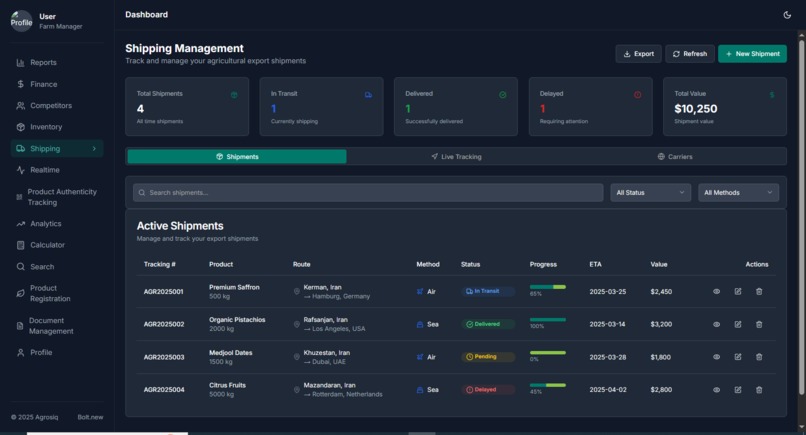
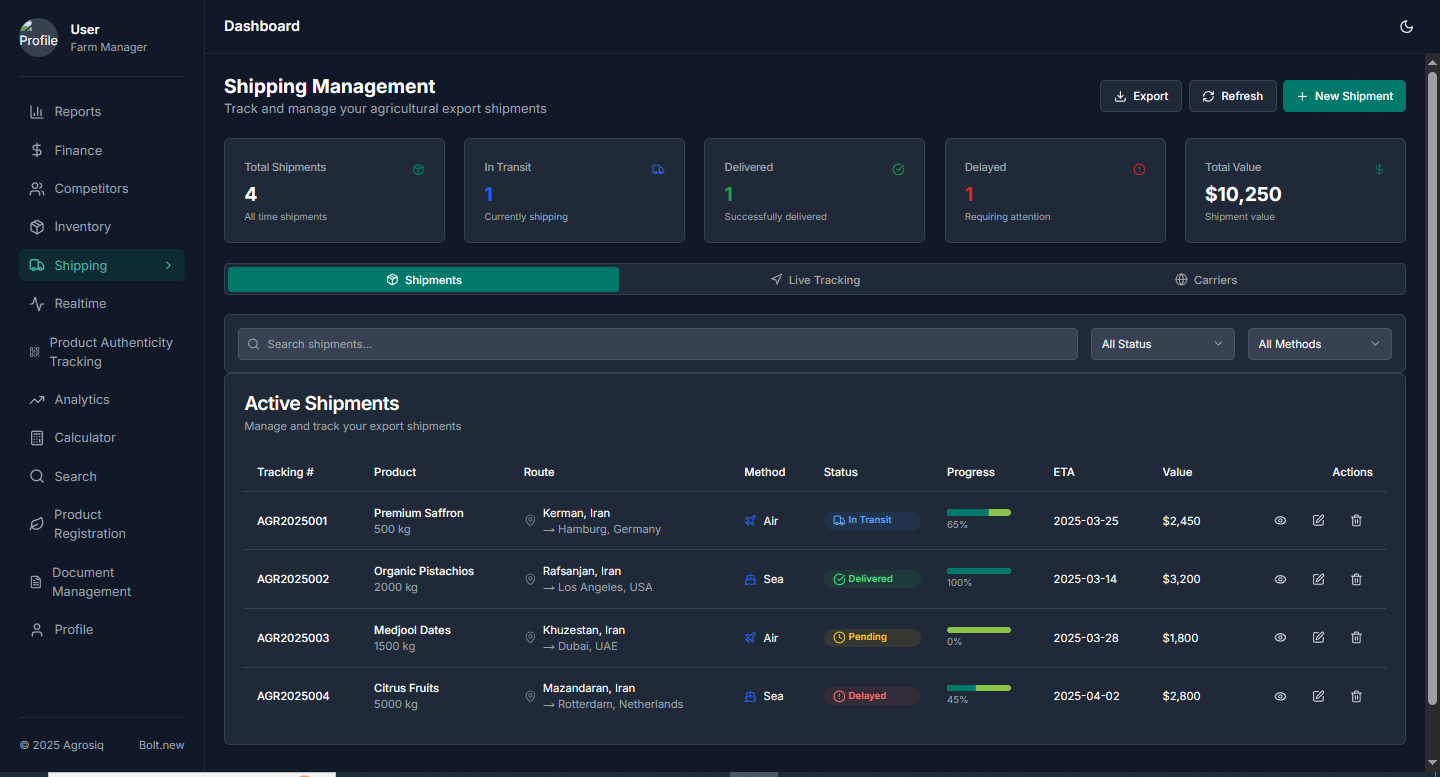
Shipping Management Page
-
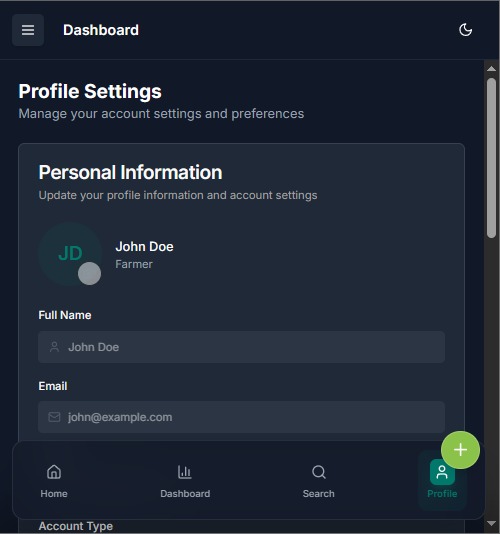
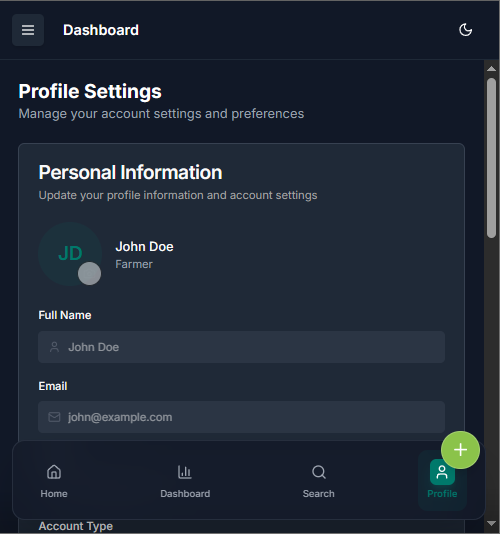
Mobile View Of The App
Inspiration
The spark for this idea ignited about six months ago during a conversation with my father about agriculture, specifically the import, export, and trade of pistachios. In my hometown, pistachio farming is the primary livelihood, and I observed that most local farmers sell their produce to middlemen at low prices. By the time the product reaches the end consumer, its value is diminished either due to a lack of quality control or because the market is oversaturated, leading to low demand.
This inefficiency sparked the core idea for Agrosiq. I was inspired to create a platform that could empower farmers by providing direct market insights and eliminating unnecessary paperwork through modern technology. I wanted to build a solution that uses blockchain to bring transparency and trust to the supply chain, connecting farmers directly to global markets and ensuring the authenticity of their products.
What it does
Agrosiq is an intelligent, integrated platform designed to revolutionize agricultural exports. It combines the power of Artificial Intelligence and Blockchain to solve two critical problems: market uncertainty and product authenticity.
Key functionalities include:
- AI-Powered Demand Forecasting: The platform analyzes global market data, seasonal trends, and import needs of target countries (like the UAE, Qatar, and Oman) to provide exporters with actionable insights. It recommends which products to export, to which markets, and at what optimal time.
- Blockchain-Verified Authenticity: Using QR codes and a blockchain backend (powered by Algorand), Agrosiq creates an immutable digital record for each product batch. Farmers can log every step of the supply chain, from planting to packaging. International buyers can then scan the QR code to instantly verify the product's origin, harvest date, organic certifications, and quality specifications, building unprecedented trust.
- Advanced Financial & Inventory Tools: The platform includes a suite of real-time financial calculators (ROI, Profitability, Break-even) and a comprehensive inventory management system to help exporters manage their business operations efficiently.
- Real-time Data & Reporting: A live dashboard streams real-time market prices and system metrics via WebSockets, while a powerful reporting engine allows users to generate custom analytics reports in various formats (PDF, Excel).
How we built it
We built Agrosiq using a modern, scalable, and asynchronous technology stack to handle real-time data and complex operations efficiently.
Backend: We chose FastAPI, a high-performance Python framework, for its native
asynccapabilities and excellent developer experience. The backend is responsible for all business logic, database interactions, and serving the API. We used SQLAlchemy withasyncpgfor non-blocking communication with our PostgreSQL database.Frontend: The user interface was built with React and Next.js, utilizing Redux Toolkit Query for state management and efficient data fetching from the backend. The design is fully responsive and supports internationalization.
Core Technologies:
- Artificial Intelligence: We developed a simulated AI service to model demand forecasting. For this hackathon, we extensively used AI assistance to brainstorm architectural patterns, debug complex issues, and accelerate our development process.
- Blockchain: We integrated the Algorand network to manage product authenticity. Since this was our first time working with Algorand, we dedicated significant time to studying its documentation to implement asset creation and transaction tracking correctly.
- Real-time Communication: We used WebSockets to stream live data to the frontend dashboard, providing users with real-time market updates.
Challenges we ran into
Our journey was filled with valuable learning experiences and challenges:
Adopting a New Backend Framework: My primary framework has always been Django. For this project, I made the strategic decision to move away from Django's monolithic nature and learn FastAPI. Understanding its asynchronous model and dependency injection system was my biggest personal challenge, but it proved to be the right choice for building a high-performance, modern API. I found the learning curve surprisingly manageable and the benefits were immense.
Mastering a New Frontend Framework: For my friend and teammate, the biggest challenge was learning React. Moving to a component-based, state-driven architecture required a new way of thinking, but it was essential for building the complex and interactive user interface we envisioned.
Complex System Integration: Integrating multiple advanced technologies (AI, Blockchain, WebSockets, Async Database) into a single, cohesive application was a significant architectural challenge. Ensuring all parts communicated seamlessly required careful planning and debugging.
Accomplishments that we're proud of
Effective Teamwork and Mutual Support: We are incredibly proud of how we strengthened our teamwork skills. We learned to collaborate effectively, covering for each other where needed, and providing mutual support through complex challenges. This collaborative spirit was key to our success.
Bringing a Vision to Life: We managed to create a frontend that closely matches our initial vision, inspired by the clean and professional design of modern platforms. The user interface is not just functional but also aesthetically pleasing.
Building a Full-Stack, Real-World Application: We successfully built a feature-rich, end-to-end application that solves a real-world problem. Integrating a Python backend with a React frontend, a PostgreSQL database, and third-party services like a blockchain network is a significant technical accomplishment for our team.
What we learned
This hackathon was an incredible learning journey. Key takeaways include:
- Mastery of New Technologies: We gained practical, hands-on experience with FastAPI and React, moving from beginners to being confident in building full-stack applications with them.
- Asynchronous Programming: We learned the importance and power of
async/awaitin Python for building scalable, non-blocking I/O operations, which is crucial for a real-time application. - Blockchain Integration: We successfully navigated the Algorand ecosystem, learning how to create digital assets and record data on a public ledger, a skill that opens up new possibilities for future projects.
- The Power of AI in Development: We learned how to effectively leverage AI as a development partner for everything from generating boilerplate code and debugging complex errors to translating ideas into technical specifications.
What's next for Agrosiq
We see a bright future for Agrosiq and have a clear roadmap for its evolution:
- Regulatory Integration: Our immediate next step is to start the process of obtaining official licenses and partnerships with import/export authorities in key provinces and cities. This is crucial for digitalizing customs documents and becoming an officially recognized platform.
- Expanding Market Reach: We plan to expand our AI forecasting model to include new target markets, starting with other GCC countries like Saudi Arabia and Kuwait, followed by major Asian markets like India and China.
- Enhancing the AI Model: We will move from a simulated AI to a real machine learning model, training it on historical trade data to provide even more accurate and valuable predictive insights.
- Mobile Application: Developing a dedicated mobile app for warehouse managers and farmers to easily update inventory and track product movements on the go using barcode/QR code scanning.
- FinTech & Insurance Partnerships: Integrating with financial technology companies to offer users direct access to export loans, cargo insurance, and secure international payment gateways directly within the platform.
Built With
- algorand
- asyncpg
- fastapi
- next.js
- postgresql
- postman
- psycopg2
- python
- react
- redux
- sqlalchemy
- typescript
- websockets

Log in or sign up for Devpost to join the conversation.