-
-
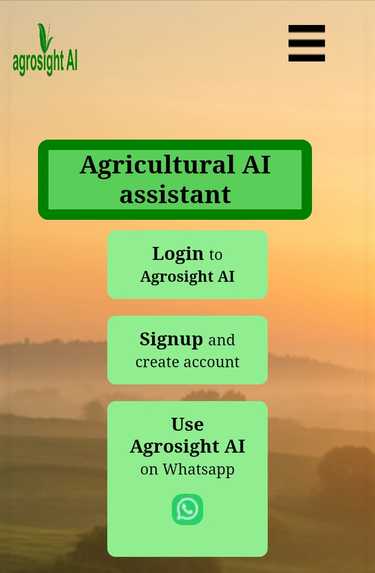
Agrosight login page
-
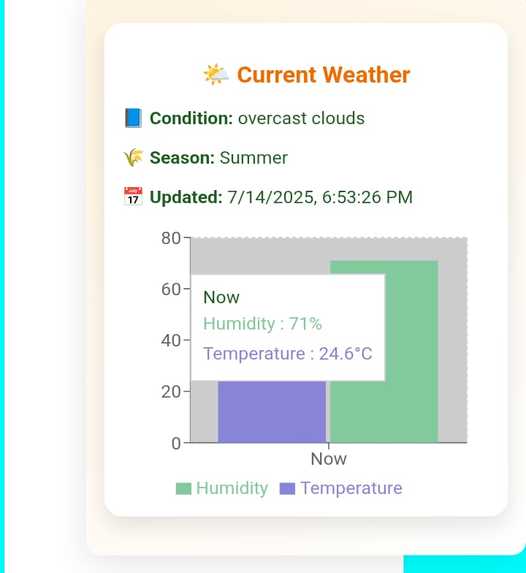
Climate intelligence
-
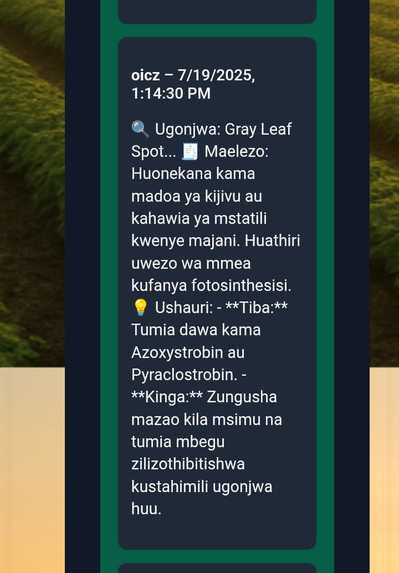
Diagnosis and advice in Kiswahili language
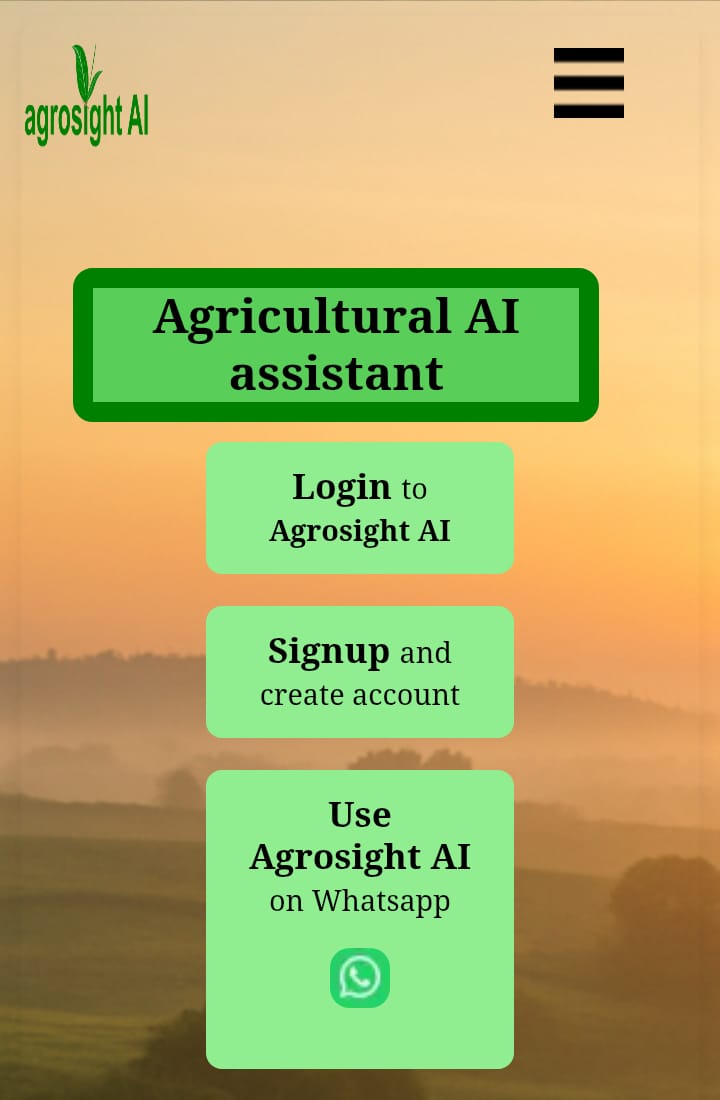
Agrosight AI
Inspiration
Across Africa, smallholder farmers produce nearly 70–80% of the continent’s food supply, yet they remain the most vulnerable to crop losses. One of the most persistent challenges they face is the late or incorrect identification of crop pests and diseases.
Farmers often rely on guesswork or delayed agricultural extension services. By the time an expert is consulted, the damage may already be severe. Studies estimate that up to 40% of crop yields are lost annually due to pests and diseases.
While global AI tools for agriculture exist, most fail in African contexts. They lack localized training data, do not account for regional climate conditions, and frequently generate unreliable advice. Many of these systems are also built for high-bandwidth environments that rural farmers cannot access easily.
This raised a simple question that inspired the project:
What if a farmer could take a photo of a sick crop and instantly receive reliable treatment advice tailored to their environment?
Agrosight AI was built to answer that question.
What It Does
Agrosight AI is an AI-powered crop diagnostic assistant designed specifically for smallholder farmers.
A farmer uploads a photo of a crop, and the system:
- Detects the disease using computer vision.
- Converts the diagnosis into simple agricultural guidance.
- Delivers treatment and prevention advice through accessible platforms like WhatsApp.
This transforms a simple smartphone into a portable agricultural advisor.
Core capabilities include:
- Crop disease detection using computer vision
- Delivery of advice through a WhatsApp interface
- Localized agricultural recommendations
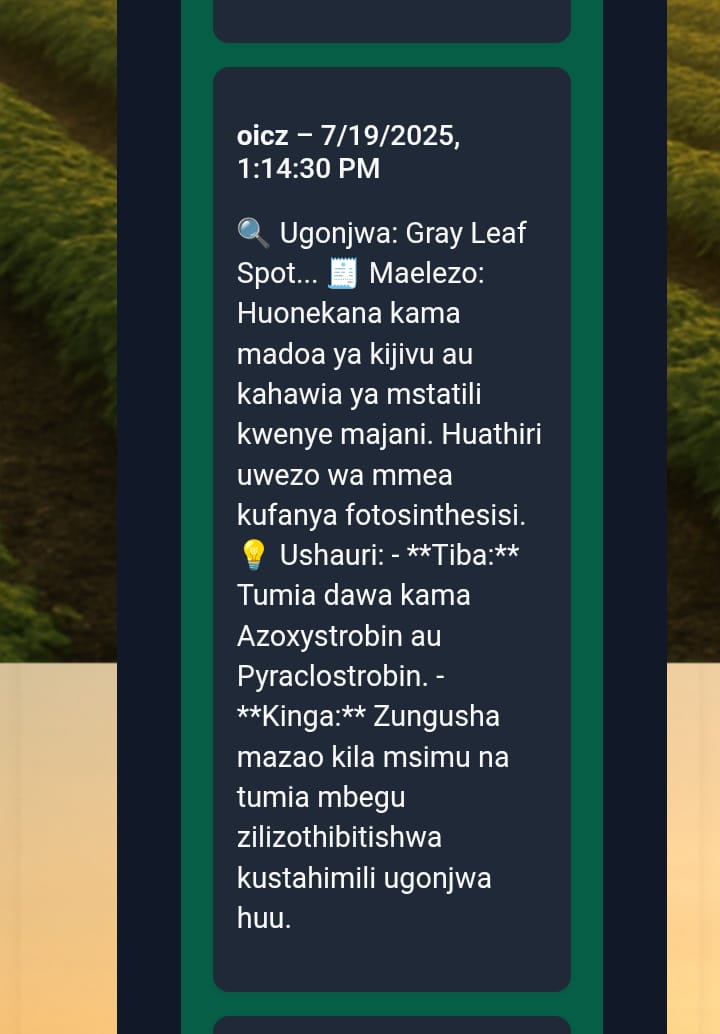
- Swahili language support
- Low-bandwidth friendly infrastructure
The goal is to make advanced agricultural intelligence accessible to farmers regardless of location or connectivity.
How We Built It
Agrosight AI combines computer vision, language models, and messaging infrastructure to create an end-to-end diagnostic system.
Computer Vision Diagnosis
At the core of the system is a YOLOv11 object detection model trained on a dataset of 19,988 labeled crop disease images covering 28 crop classes.
The model analyzes uploaded crop images and identifies visible signs of disease, pest damage, or nutrient deficiencies.
The trained model achieved approximately 90.3% precision in testing, allowing reliable identification of plant health issues.
Vision-Language Pipeline
Instead of allowing a language model to guess the disease, Agrosight AI uses a deterministic architecture.
The computer vision model first produces a structured diagnosis. This output is then passed to an open-source large language model which translates the diagnosis into clear agricultural advice.
This approach ensures that the language model explains verified results rather than hallucinating diagnoses.
The pipeline follows the structure:
Computer Vision → Structured Diagnosis → Language Model Explanation
Farmer Interface
Accessibility was a major design priority.
The system is deployed through:
- A Next.js web application
- A Twilio-powered WhatsApp bot
Farmers can simply send a photo through WhatsApp and receive:
- A diagnosis explanation
- Treatment instructions
- Preventive agricultural practices
The advice is translated into Swahili to support non-English-speaking farmers.
Infrastructure
The backend uses a modular microservices architecture designed for reliability and scalability.
Key infrastructure components include:
- Featherless AI serverless inference infrastructure
- LLMAPI.ai as a fallback language model provider
- Cloud deployment via Vercel
The system is also designed so that the YOLOv11 model can be quantized and deployed on edge devices, enabling potential offline operation in rural environments.
Challenges We Ran Into
Dataset Localization
Many existing agricultural datasets are not representative of African crops or disease patterns. Building a dataset suitable for the model required careful filtering and localization.
Preventing AI Hallucinations
Generic AI chatbots often produce inaccurate or dangerous farming advice because they guess diagnoses.
To prevent this, the architecture ensures that the language model only narrates deterministic computer vision outputs rather than generating diagnoses independently.
Connectivity Constraints
Many rural farmers operate in low-bandwidth environments. The system had to be optimized to function on mobile devices and integrate with platforms that farmers already use, such as WhatsApp.
What We Learned
Building Agrosight AI highlighted the importance of designing AI systems for real-world contexts.
We learned that successful AI solutions for emerging markets must prioritize accessibility, localization, and reliability. High-performing models alone are not sufficient; the interface, language, and infrastructure must also align with the realities of the users.
Future Vision
Agrosight AI is designed as a foundation for a broader agricultural intelligence platform.
Future development plans include:
- Expanding support to more crops and disease classes
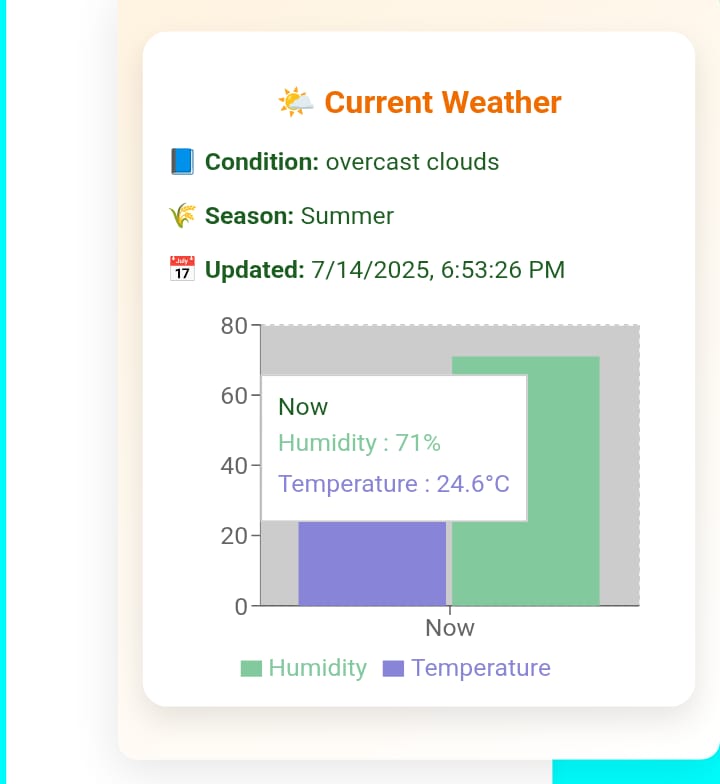
- Integrating weather-aware farming recommendations
- Supporting additional African languages
- Deploying edge models for offline use in remote communities
The long-term goal is to provide millions of farmers with accessible, reliable agricultural expertise directly through their mobile devices.
Agrosight AI demonstrates how modern artificial intelligence can help close the agricultural knowledge gap and strengthen food security across Africa.

Log in or sign up for Devpost to join the conversation.