-
-
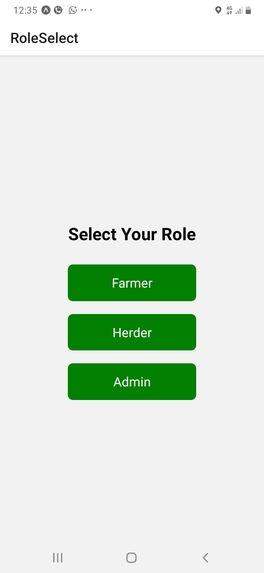
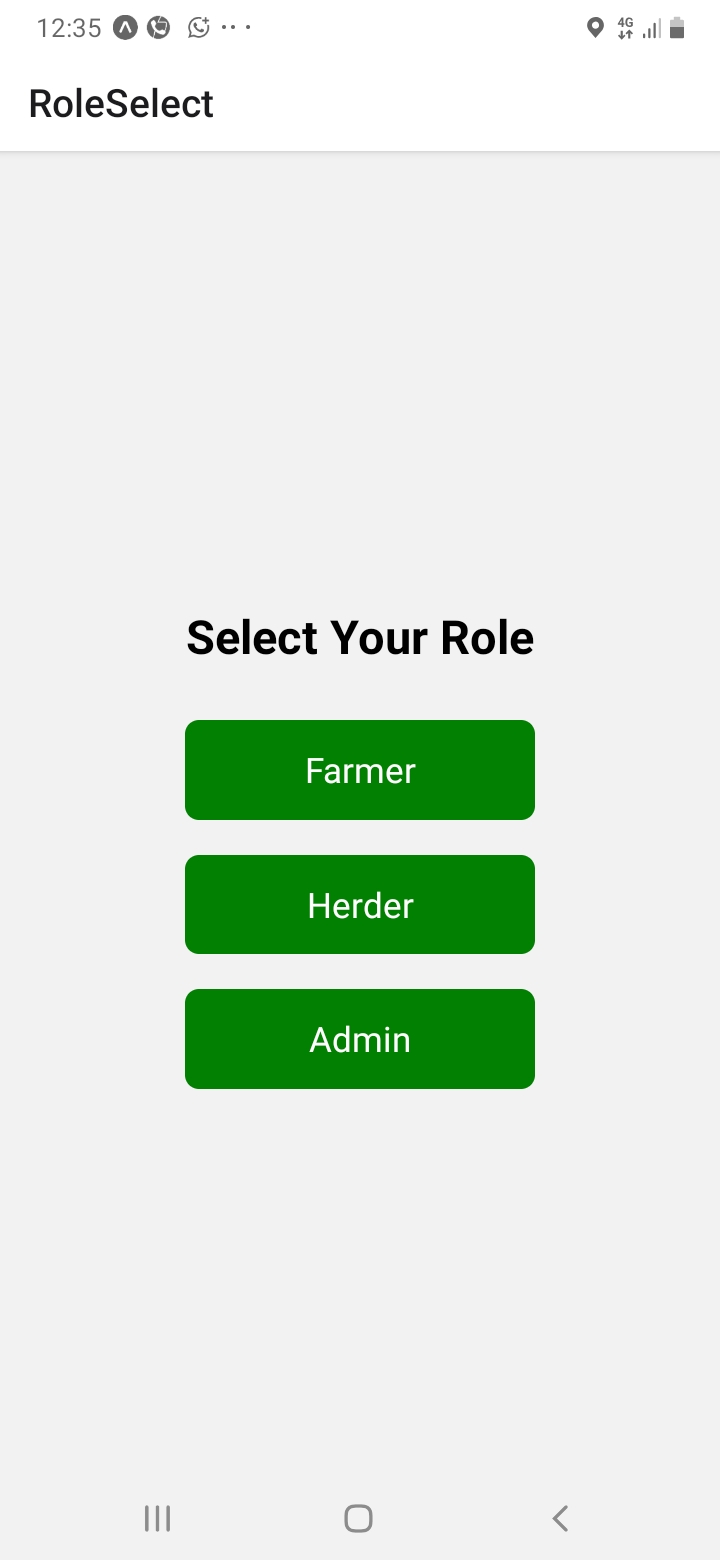
AgroRithm app
-
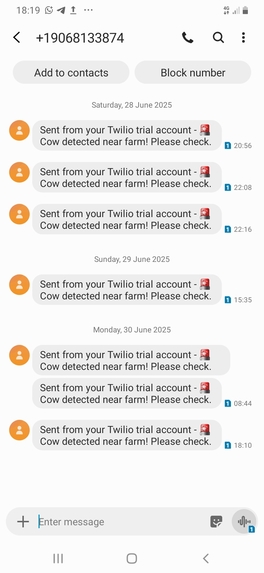
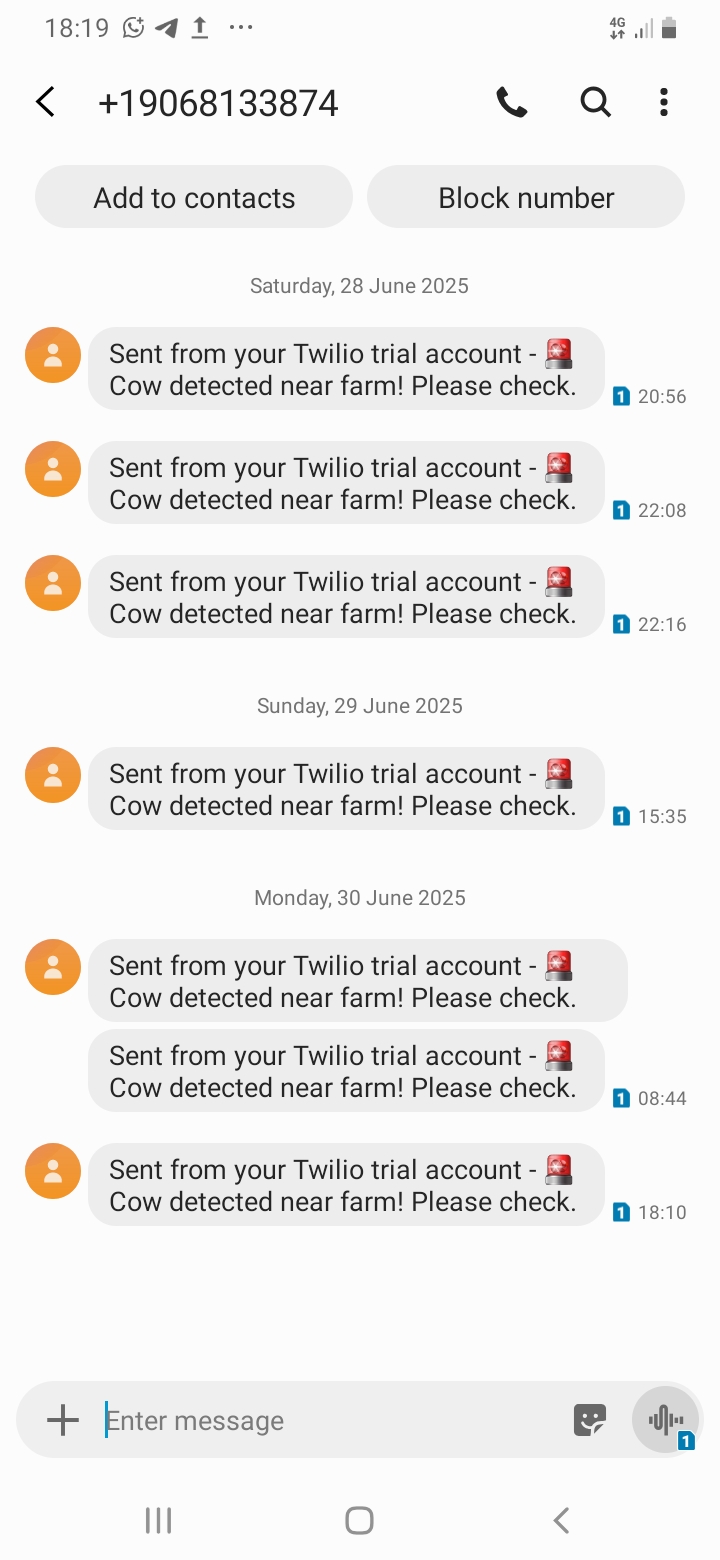
sms alert on cattle intrusion from a computer vision AI
-
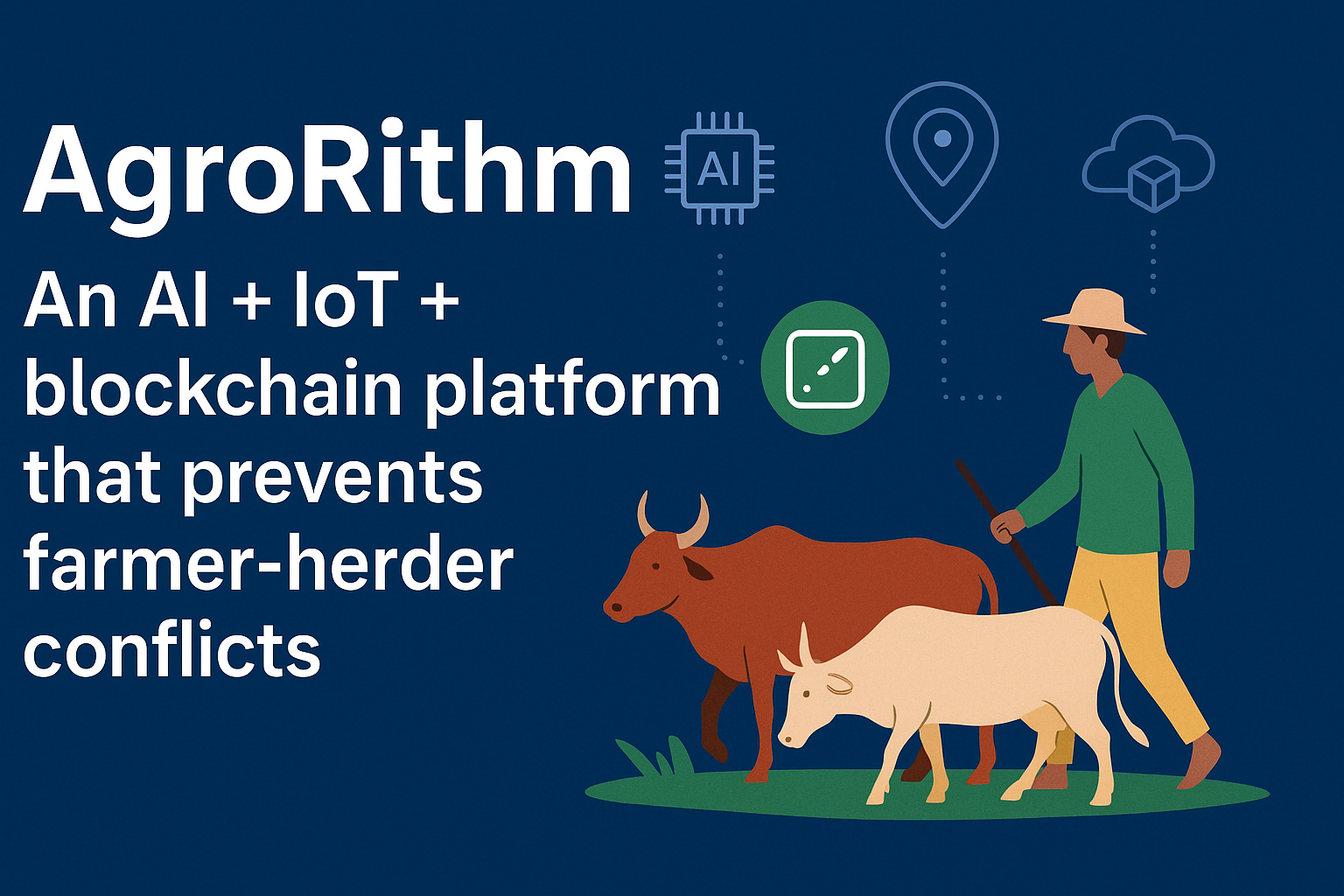
Thumbnail
-
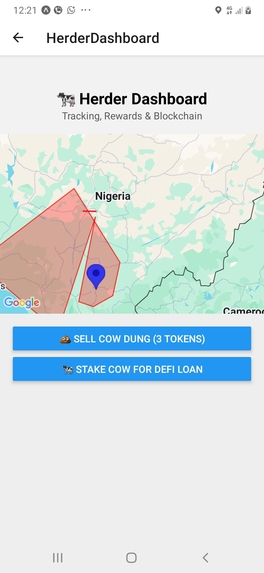
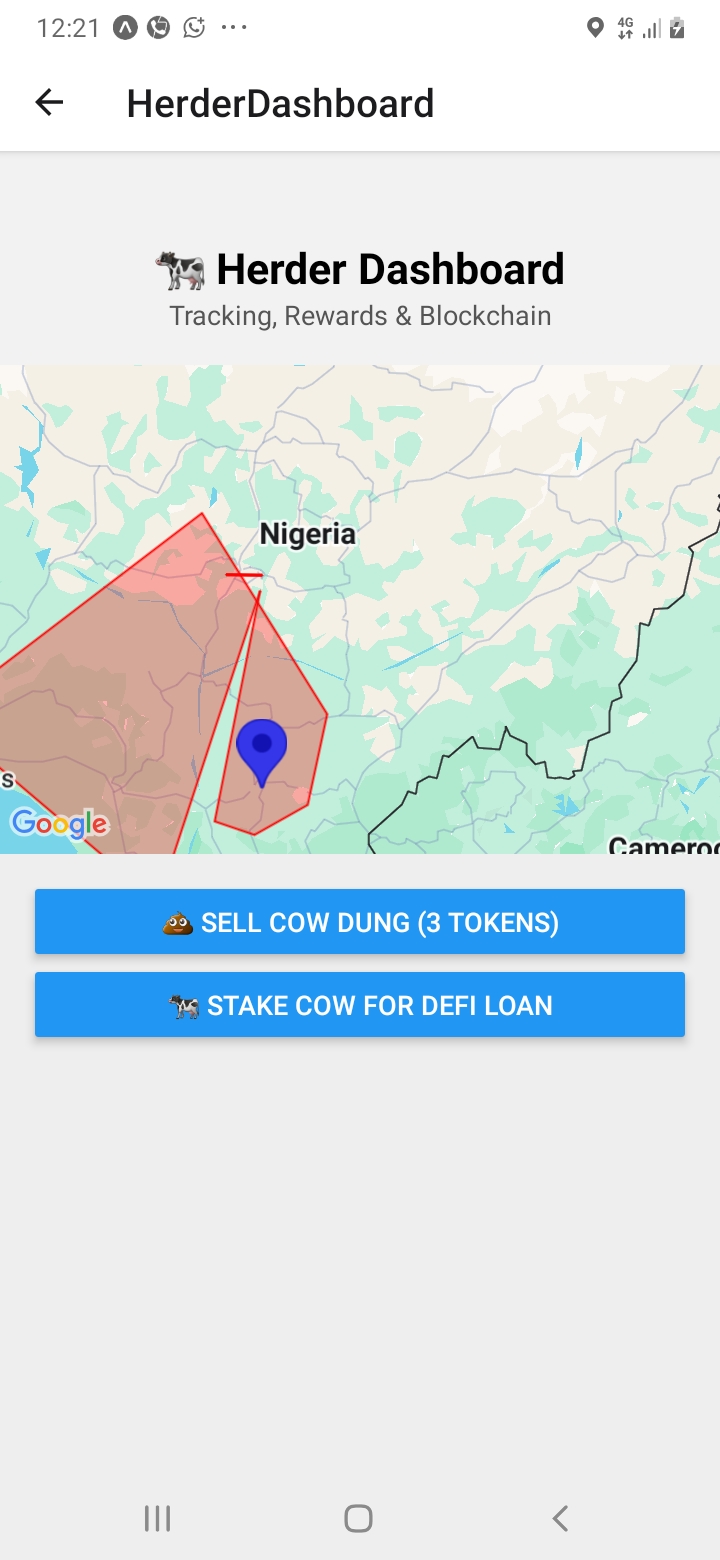
APP SHOWING LOCATION OF CATTLE IN NON GRAZING AREA HENCE THE COW HAVE TO MOVE FOR SUSTAINABILITY
-
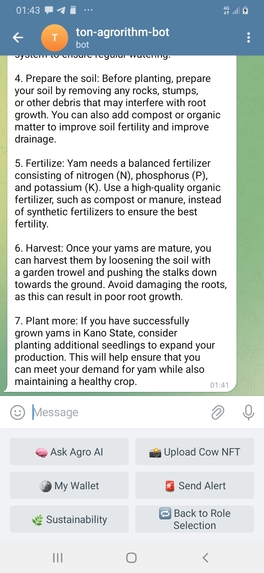
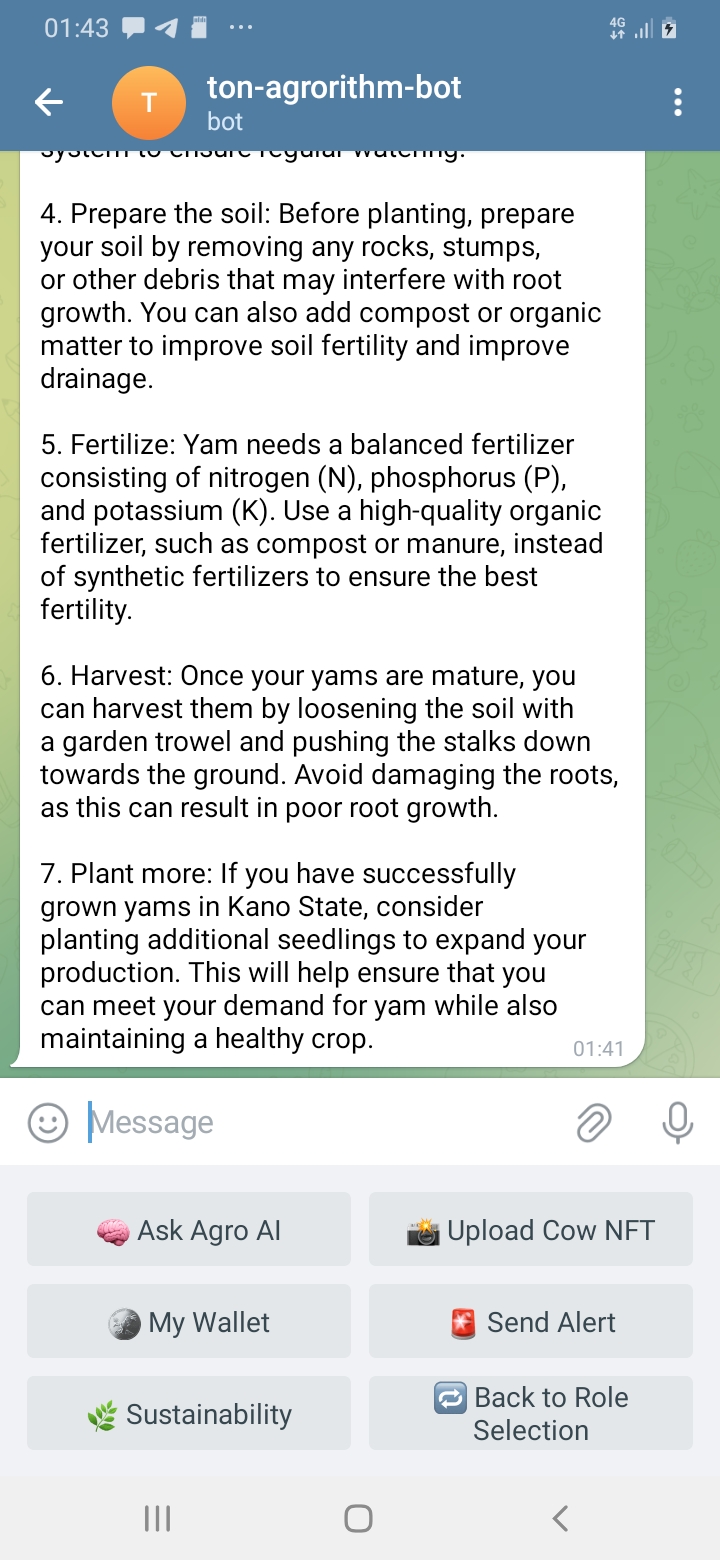
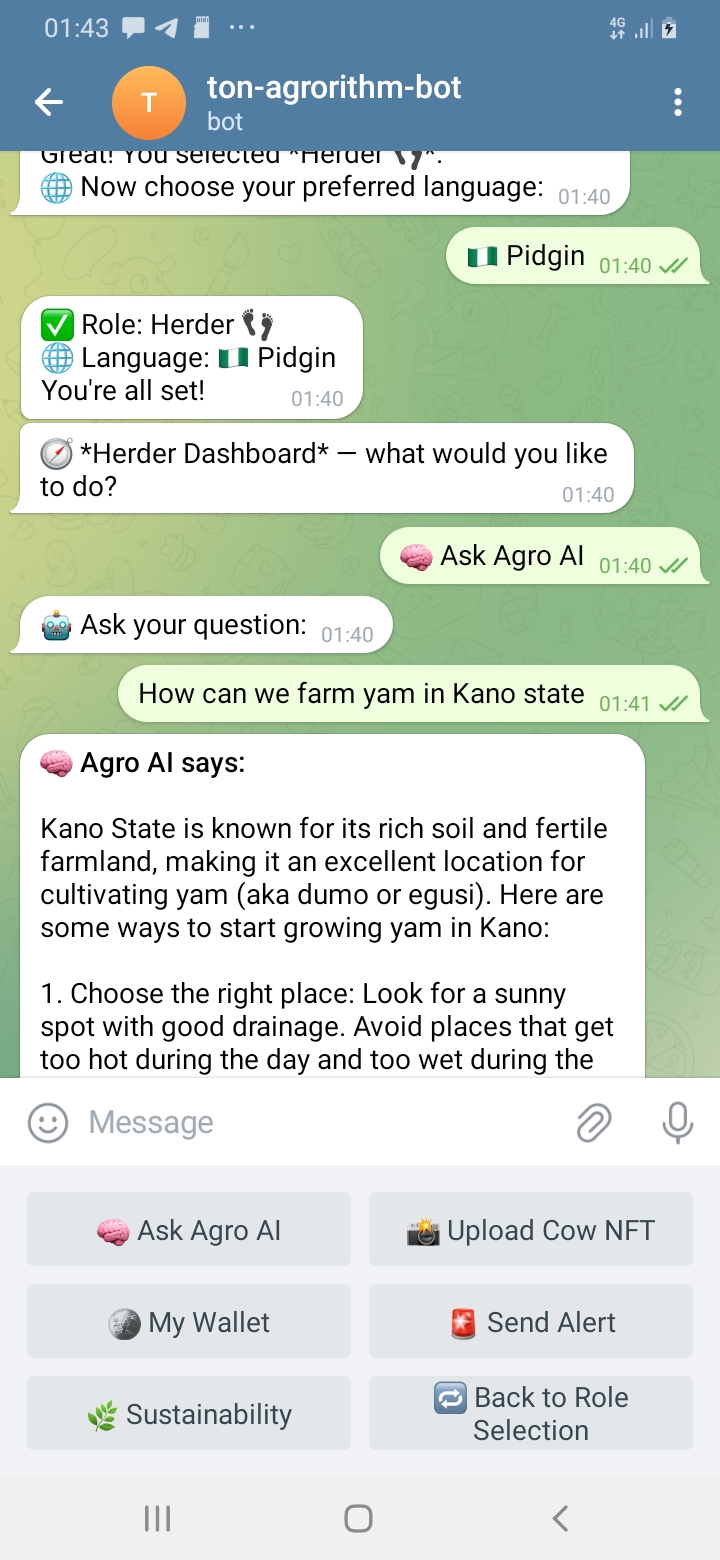
Agro AI
-
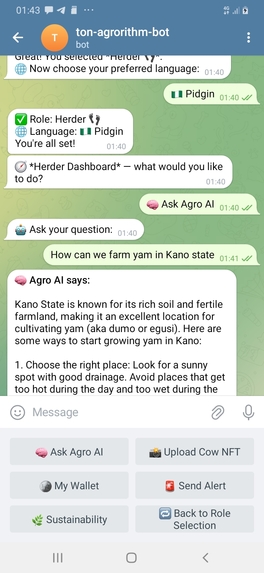
Agro AI chatbot
-
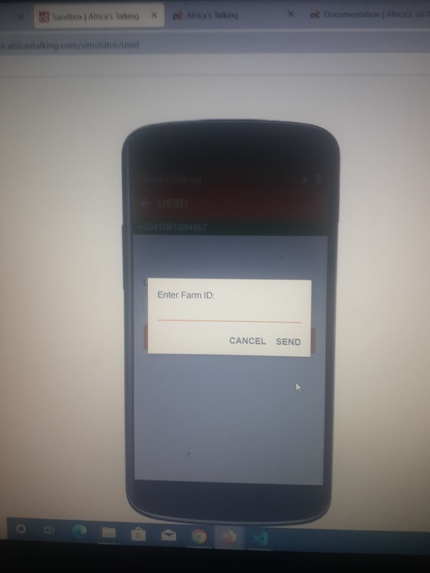
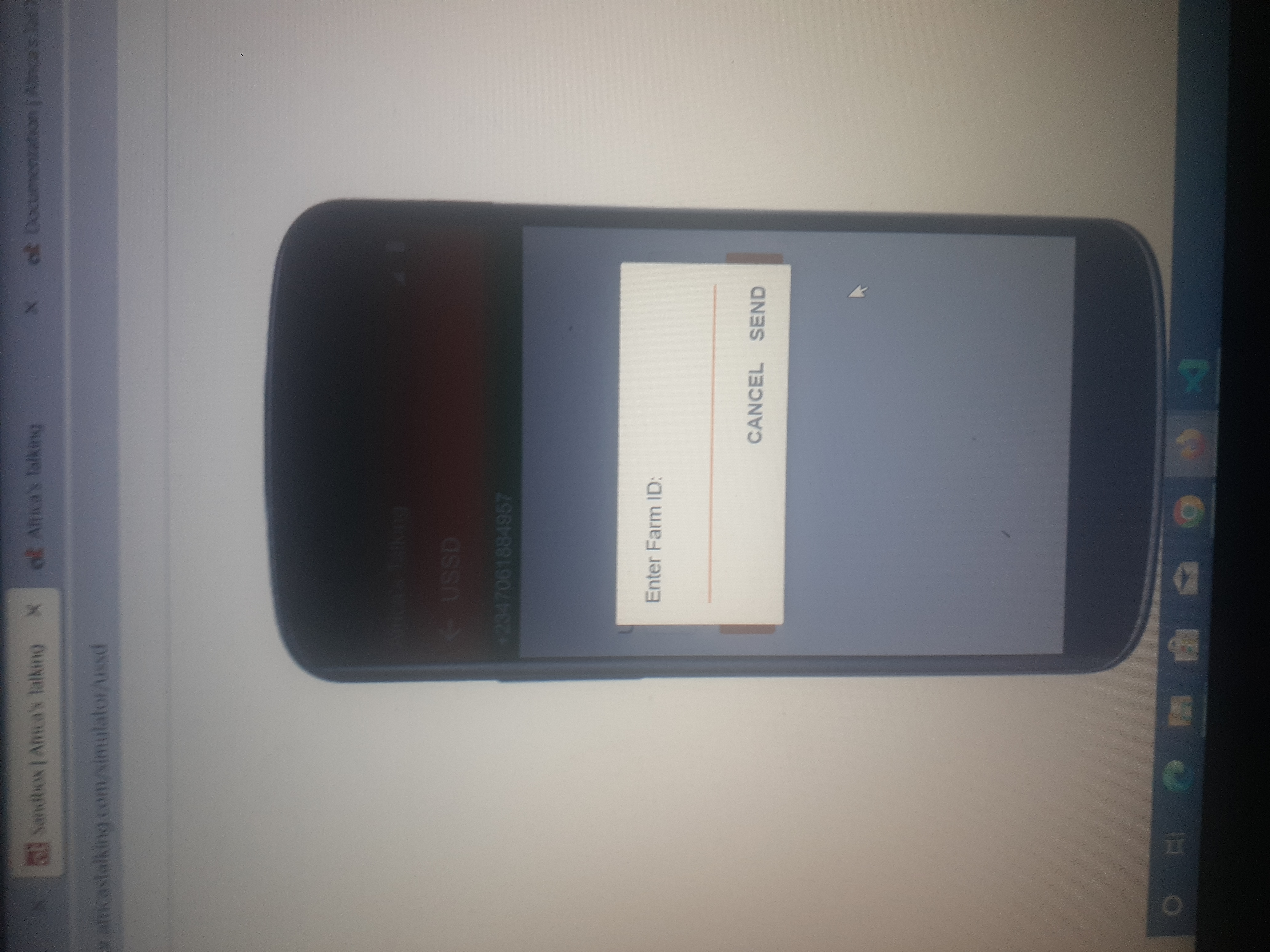
OFFLINE USE VIA USSD
-
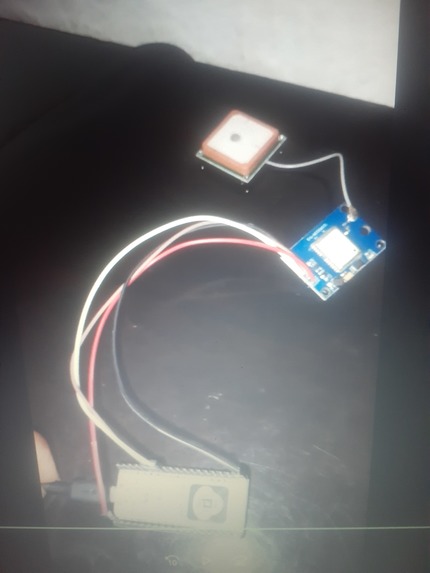
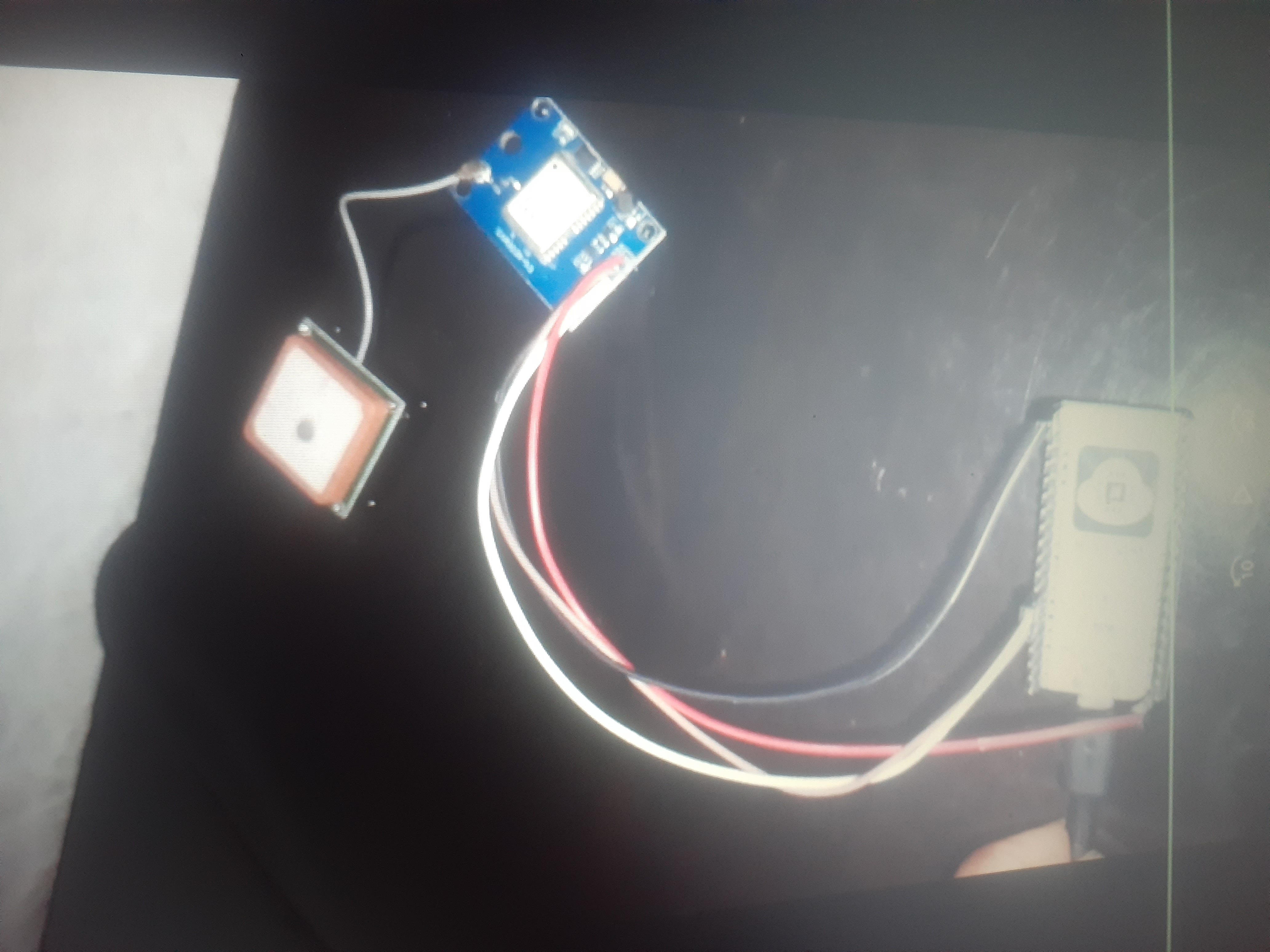
IOT DEVICE FOR CATTLE TRACKING
Inspiration
AgroRithm was inspired by the urgent challenges faced by rural communities where climate change and human conflict threaten livelihoods. In many regions, herders face cattle killings, farmers lose crops, and families are caught in escalating conflicts over grazing land and water. These events not only endanger lives and food security but also deepen poverty and limit access to education. We wanted to create a platform that equips young learners, farmers, and herders with knowledge and actionable tools to reduce conflict, protect resources, and build climate-resilient communities. Rural communities face intertwined challenges of climate change and human conflict: livestock killings, crop losses, and land disputes undermine food security and livelihoods. Young learners, farmers, and herders lack accessible tools to understand these risks, predict environmental and social impacts, or take preventive actions. AgroRithm addresses this by providing AI-driven, offline, multilingual guidance that teaches climate-smart practices while helping communities protect their resources and lives.
What it does
AgroRithm is an AI-powered, offline-first, multilingual platform that helps young learners, farmers, and herders understand and respond to climate and conflict risks. It:
Educates communities about climate change, environmental sustainability, and resource management.
Provides actionable guidance to reduce livestock killings, crop losses, and conflicts over land and water.
Features an AI chatbot tutor in Hausa, Pidgin, and English to answer questions and give personalized advice.
Visualizes environmental and conflict data through interactive dashboards, showing how decisions impact land, livestock, and livelihoods.
Offers simulations where users can test farming and herding strategies to minimize losses and improve resilience.
We also have a point were we tech Agro people how to access opportunities in Tech where people around the world can invest in their cow or farmlands using Blockchain crypto leveraging Hedera.
How we built it
Frontend: React/React Native PWA for cross-device accessibility.
AI: TinyLLaMA powers multilingual Q&A and adaptive learning; predictive models simulate environmental and social impacts.
Offline-first Architecture: Ensures AI guidance, maps, and data are available without internet.
Data Integration: Combines local weather, NDVI, historical crop and livestock data, and conflict patterns for actionable insights.
Challenges we ran into
Dependency issues in the various technologies. Integration of AI.
Accomplishments that we're proud of
Enabled communities to proactively reduce cattle killings, crop losses, and conflict risks through data-driven learning. Built simulations linking farming/herding decisions to environmental and social outcomes. Reduction of waste by connecting herders to buyers for theri cow dung for energy where they get crypto points, also giving farmers points for sustainability actions which they convert for reward.
What we learned
Offline-first AI can empower rural communities with limited connectivity.
Climate education is most impactful when tied to real-world decisions and social contexts.
What's next for AgroRithm Agro Guide
Expand AI simulations to include more crops, livestock, and conflict scenarios.
Integrate SMS/USSD alerts for immediate guidance in areas without internet.
Gamify learning with challenges and rewards to increase adoption.
Partner with schools, NGOs, and local authorities to scale impact.
Continuously refine AI models with real-world data to improve predictions and recommendations.
Built With
- firebase
- gemini
- geofencing
- react
- react-native
- tinyllama

Log in or sign up for Devpost to join the conversation.