-
-
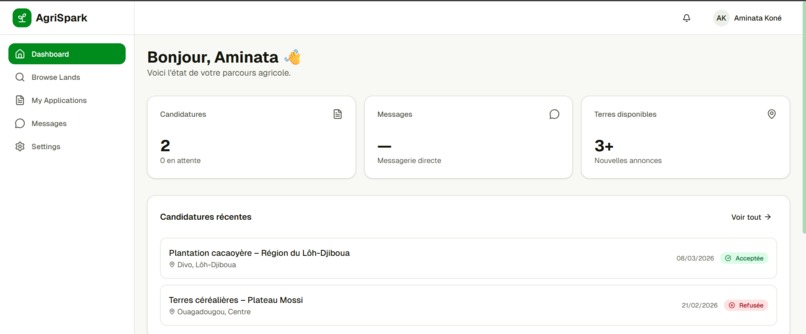
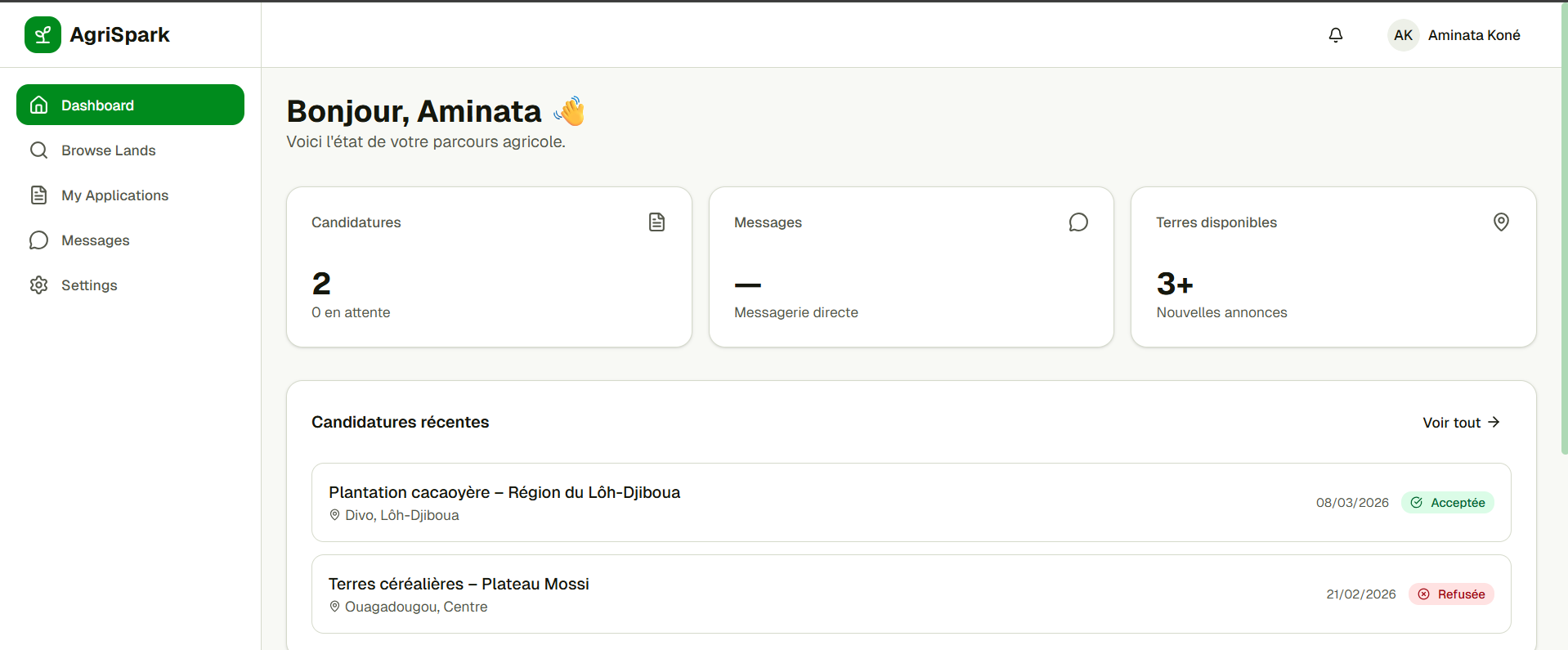
Farmer Dashboard
-
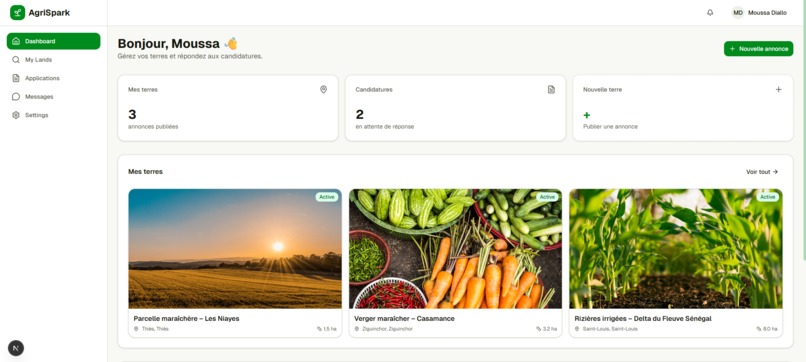
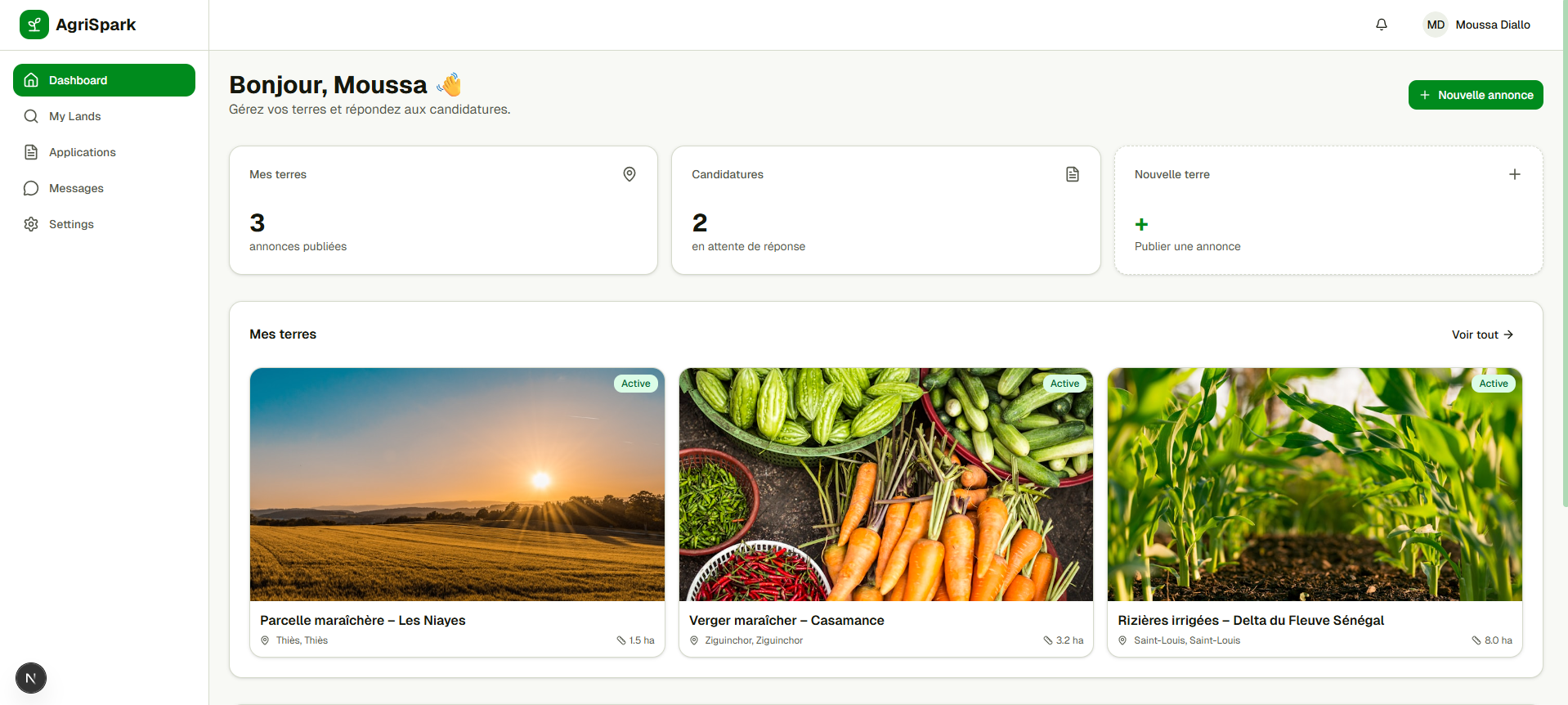
Owner Dashboard
-
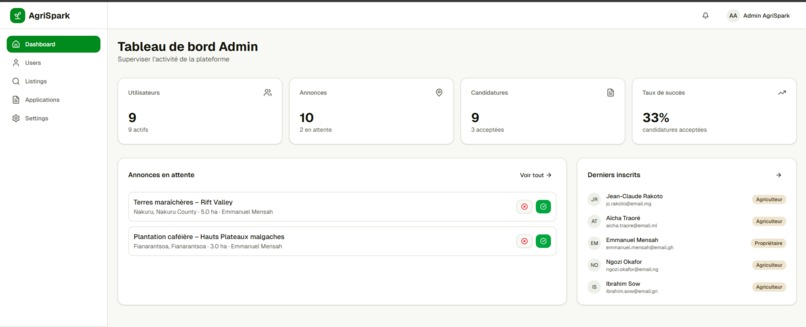
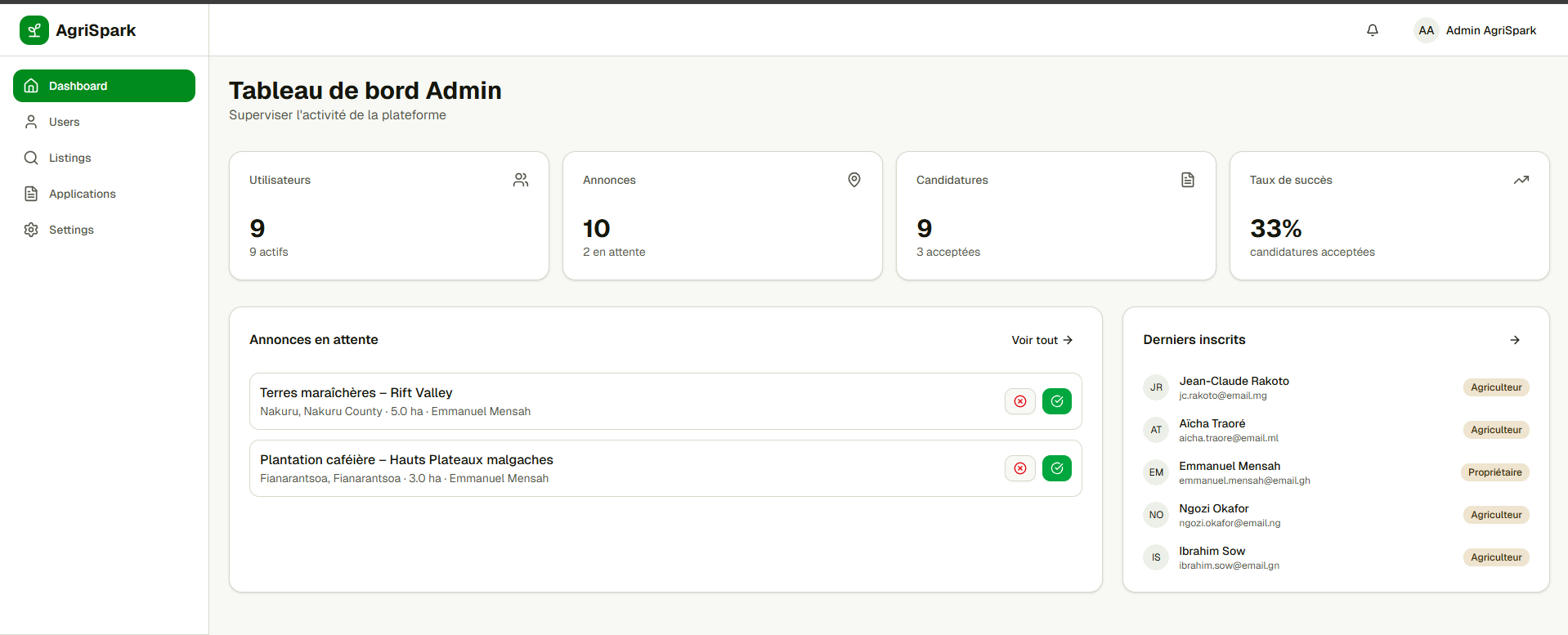
Admin Dashboard
-
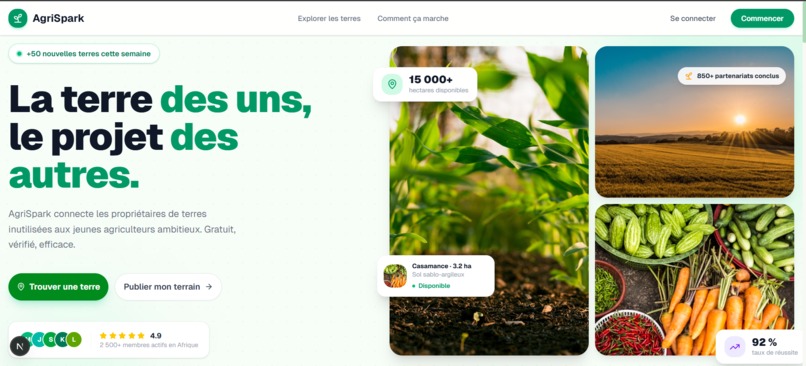
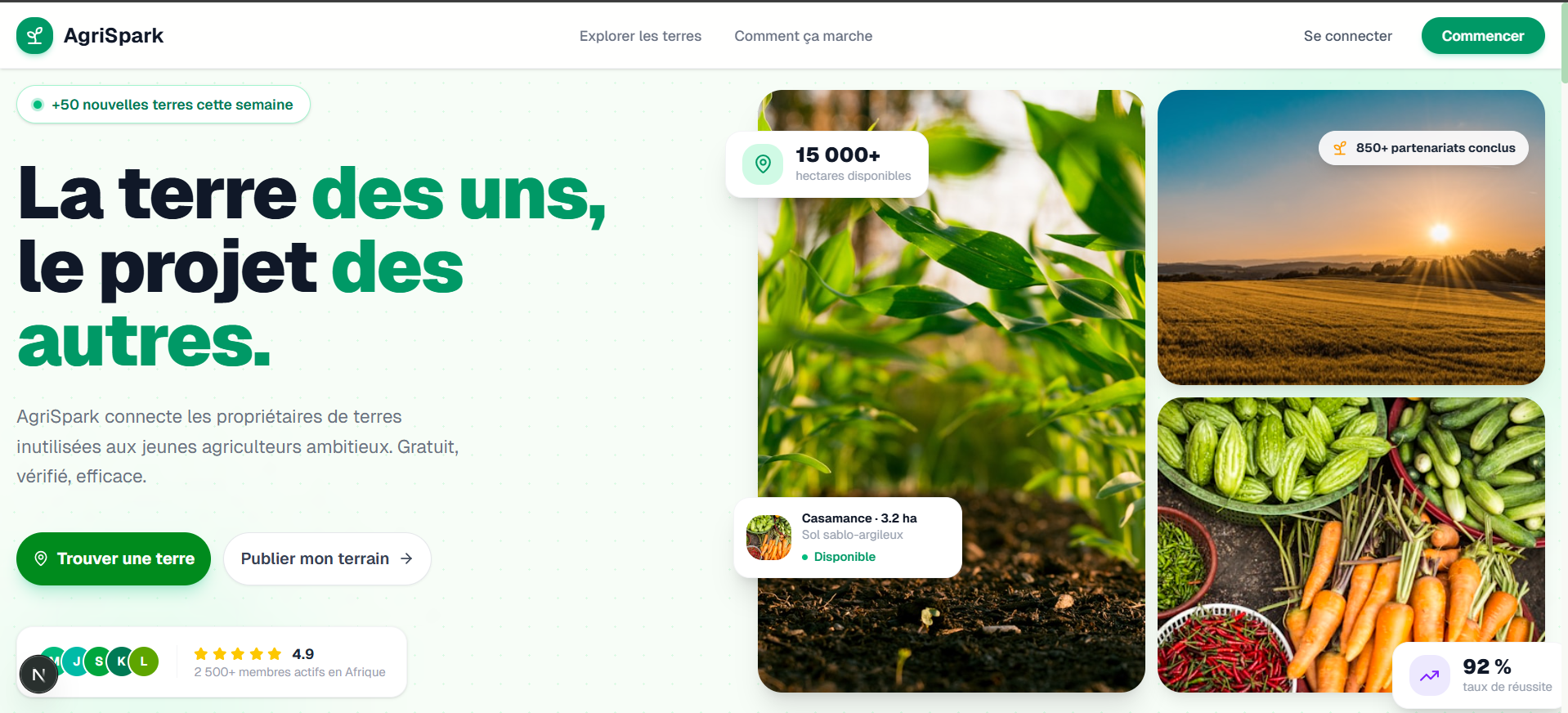
LandingPage
Inspiration
Access to land is one of the biggest barriers facing the next generation of African farmers. Across the continent, millions of hectares of fertile land sit idle — inherited but unused, or simply neglected — while thousands of young, trained agronomists and farmers cannot find a single plot to start their project. We saw this disconnect firsthand and asked a simple question: why isn't there a platform that just connects the two?
We were inspired by the urgency of food security in Africa, where 60% of the world's uncultivated arable land exists, yet over 280 million people face hunger. AgriSpark was born from the conviction that technology can close this gap — not by reinventing agriculture, but by making the land that already exists accessible to those who want to work it.
What it does
AgriSpark is a matchmaking platform between landowners and farmers, built for the African context.
Landowners list their unused land with photos, soil type, surface area, location, and availability conditions (rental or profit-sharing partnership). Farmers browse verified listings, filter by region and crop type, and submit motivated applications directly through the platform. Both sides communicate via a built-in messaging system once a match is initiated, and stay informed through a real-time notification center. An admin dashboard moderates listings, manages users, and ensures the quality of published land offers. The entire flow — from listing to signed partnership — happens on one platform, removing the need for intermediaries, phone calls, or physical travel to find a match.
How we built it
We built AgriSpark as a production-ready full-stack web application in under 72 hours.
Frontend: Next.js 15 (App Router), React 19, TypeScript, Tailwind CSS v4, shadcn/ui Backend: Next.js API Routes and Server Actions Authentication: NextAuth.js v5 with JWT sessions and bcrypt password hashing Database: PostgreSQL on Neon (serverless), with Drizzle ORM for schema and queries File storage: Cloudinary for land photo uploads Email: Nodemailer with Gmail SMTP for transactional notifications (new application, accepted, rejected) Deployment: Netlify with @netlify/plugin-nextjs for full SSR support We structured the app around three distinct user roles (FARMER, OWNER, ADMIN), each with its own dashboard and permissions, enforced at both the API and UI levels.
Challenges we ran into
Land data modeling: Agricultural land has complex attributes — soil type, GPS coordinates, availability windows, partnership conditions. Designing a schema flexible enough to cover diverse African contexts (from Senegalese rice paddies to Ghanaian cocoa farms) without overcomplicating the user experience required multiple iterations.
Role-based access control: Managing three roles with distinct dashboards, protected routes, and permission-aware UI components across a Next.js App Router architecture was non-trivial, especially with NextAuth.js v5 still in beta.
African localization without stereotyping: We wanted the platform to feel genuinely African — not a copy-paste of a European AgTech product with different flags. Finding the right balance of crops, regions, and user stories to represent the diversity of African agriculture took real effort.
Deployment friction: Netlify detected a pnpm-lock.yaml file and conflicted with our package-lock.json, causing build failures. Resolving the package manager conflict mid-hackathon under time pressure was a good lesson in deployment hygiene.
Accomplishments that we're proud of
A fully functional end-to-end platform — users can sign up, list land, apply, message, receive notifications, and get email alerts, all in one cohesive experience. A clean, modern landing page designed specifically to build trust with two very different audiences: tech-savvy landowners and farmers who may be first-time platform users. A real database with seed data representing 10 land listings across 8 African countries — Senegal, Côte d'Ivoire, Burkina Faso, Ghana, Guinea, Nigeria, Mali, Madagascar, and Kenya. Transactional email flows that actually send. Shipping a production deployment on Netlify with SSR, image optimization, and secure environment variable management
What we learned
Context matters deeply in AgTech. A feature that works for European agriculture (fixed lease pricing, standardized soil classifications) may not apply in Sub-Saharan Africa, where profit-sharing partnerships and informal land tenure are common. Building for the right context from day one saves enormous rework. Schema design is product design. The decisions we made about how to model a "land listing" — what fields are required, what is optional, what is an enum vs. free text — directly shaped the user experience on both sides of the platform. Deployment is a product decision. Choosing Netlify over Vercel, managing lock files, configuring SSR plugins — these infrastructure choices have real consequences and deserve as much attention as feature code. Seed data tells a story. Writing realistic demo data for African farmers and landowners forced us to research real crops, real regions, and real constraints. It made our demo much more compelling and our product thinking much sharper.
What's next for AgriSpark
Mobile-first PWA: Most of our target users in rural Africa access the internet primarily via smartphone. A Progressive Web App with offline support is our immediate next priority. Geolocation & map view: Let farmers explore available land on an interactive map filtered by distance, region, and crop suitability. AI crop recommendation: Based on soil type, GPS coordinates, and seasonal data, suggest the most suitable crops for each listed land. Identity verification: Partner with national ID systems or telcos (M-Pesa, Orange Money) to verify landowner identity and build trust before partnerships are signed. Contract templates: Provide downloadable, legally-reviewed rental and profit-sharing contract templates adapted to each country's agricultural law. Multi-language support: Add Wolof, Bambara, Hausa, Swahili, and other major African languages to reach farmers beyond the francophone and anglophone educated elite. Impact tracking dashboard: Let landowners and farmers log harvests, revenue, and employment created — turning AgriSpark into a platform that generates measurable social impact data.
Built With
- cloudinary
- drizzle-orm
- neon
- next.js
- nextauth.js
- nodemailer
- postgresql
- react
- tailwind-css
- typescript

Log in or sign up for Devpost to join the conversation.