💡 Inspiration
My inspiration for Agroit was the John Deere Hack Challenge. I realized that the potential for improving farming practices and profits by using technology to collect and analyse data, that would lead to an increase in production in the farming system is massive and unexploited, and could lead to innovation and implementation of a variety of new ideas. That is why we built a user-friendly and accessible application that helps farmers understand their field profitability and find ways to maximize it. With this tool, we hope to help farmers focus on being both profitable and sustainable.
⚙️ What it does
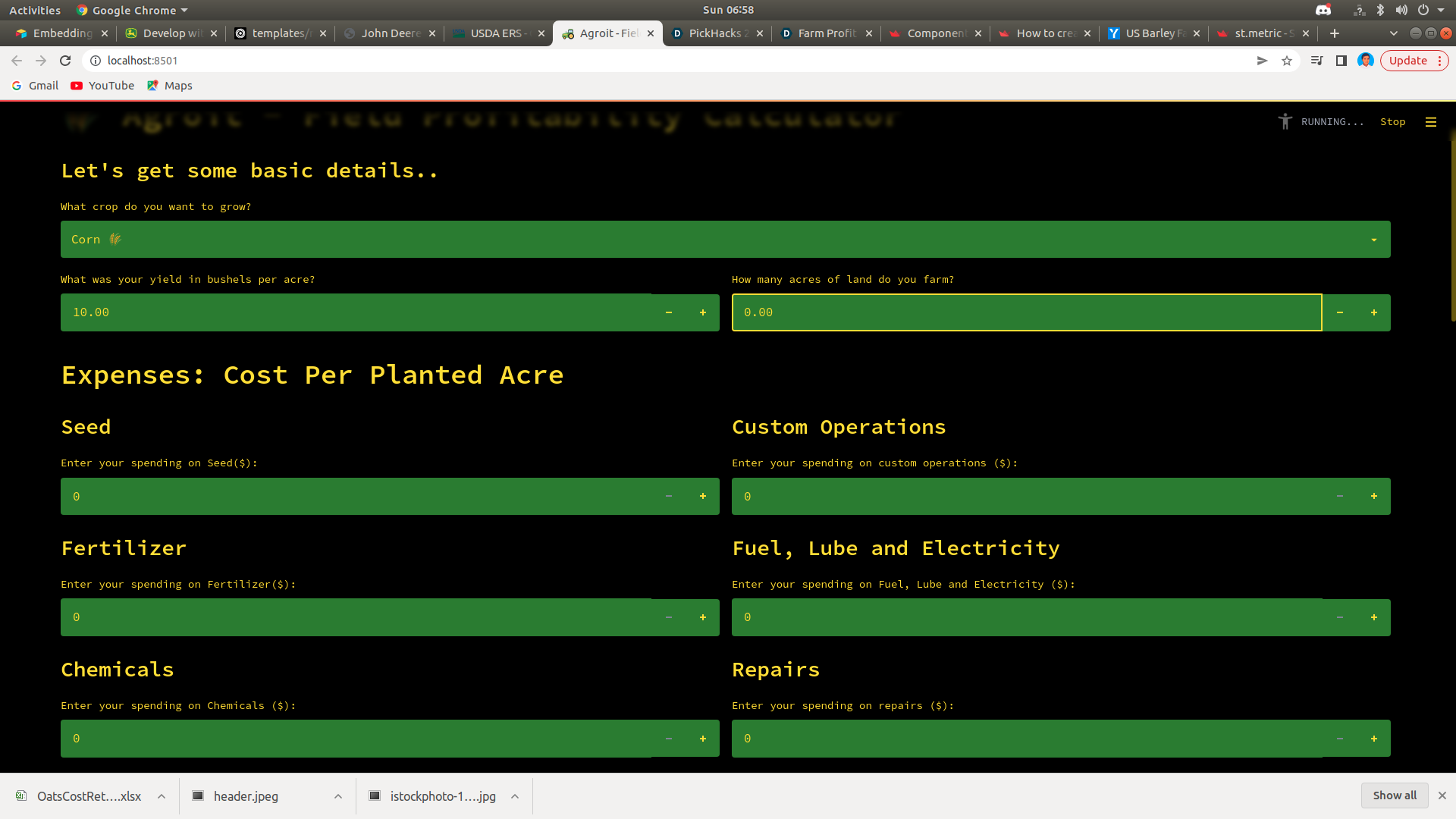
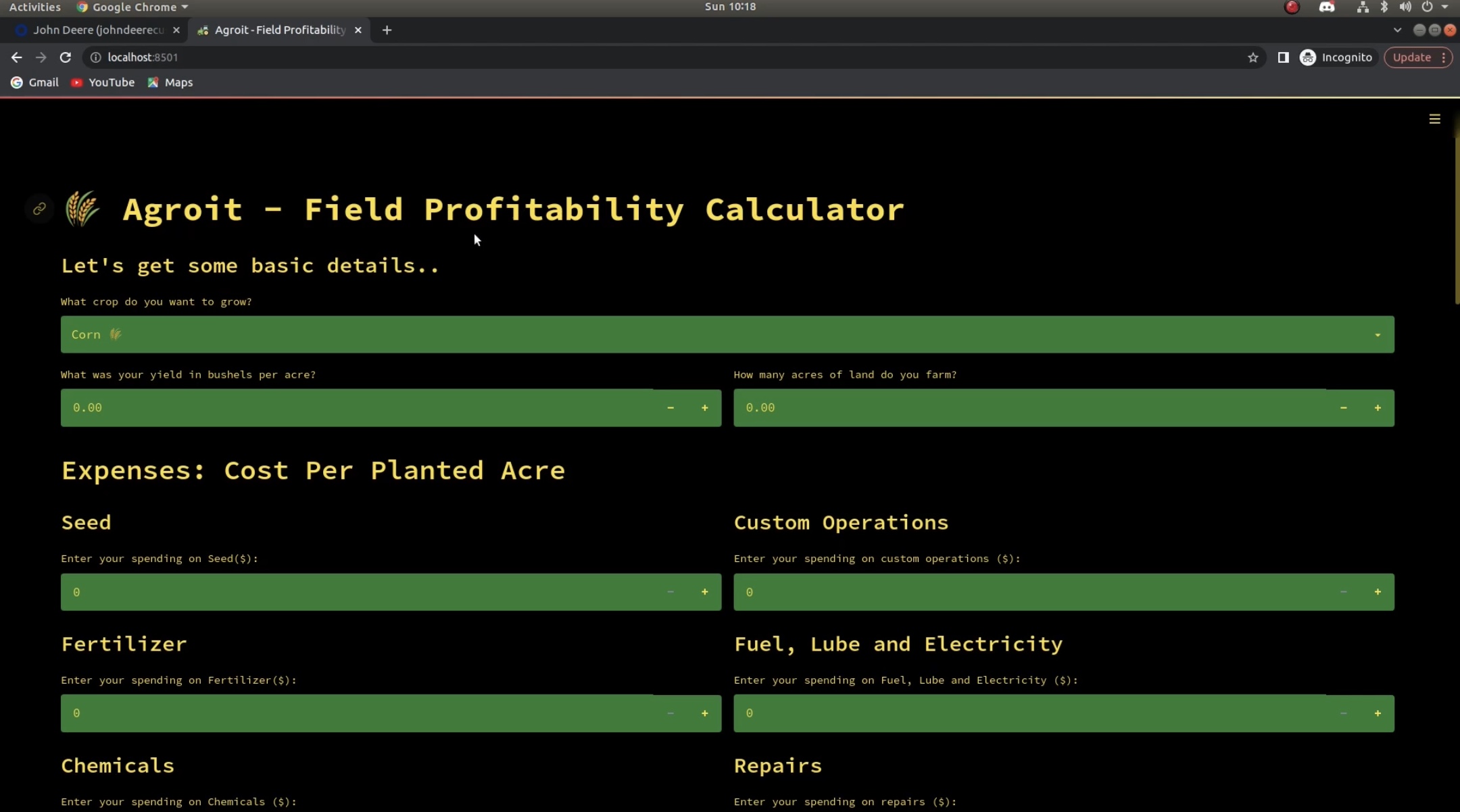
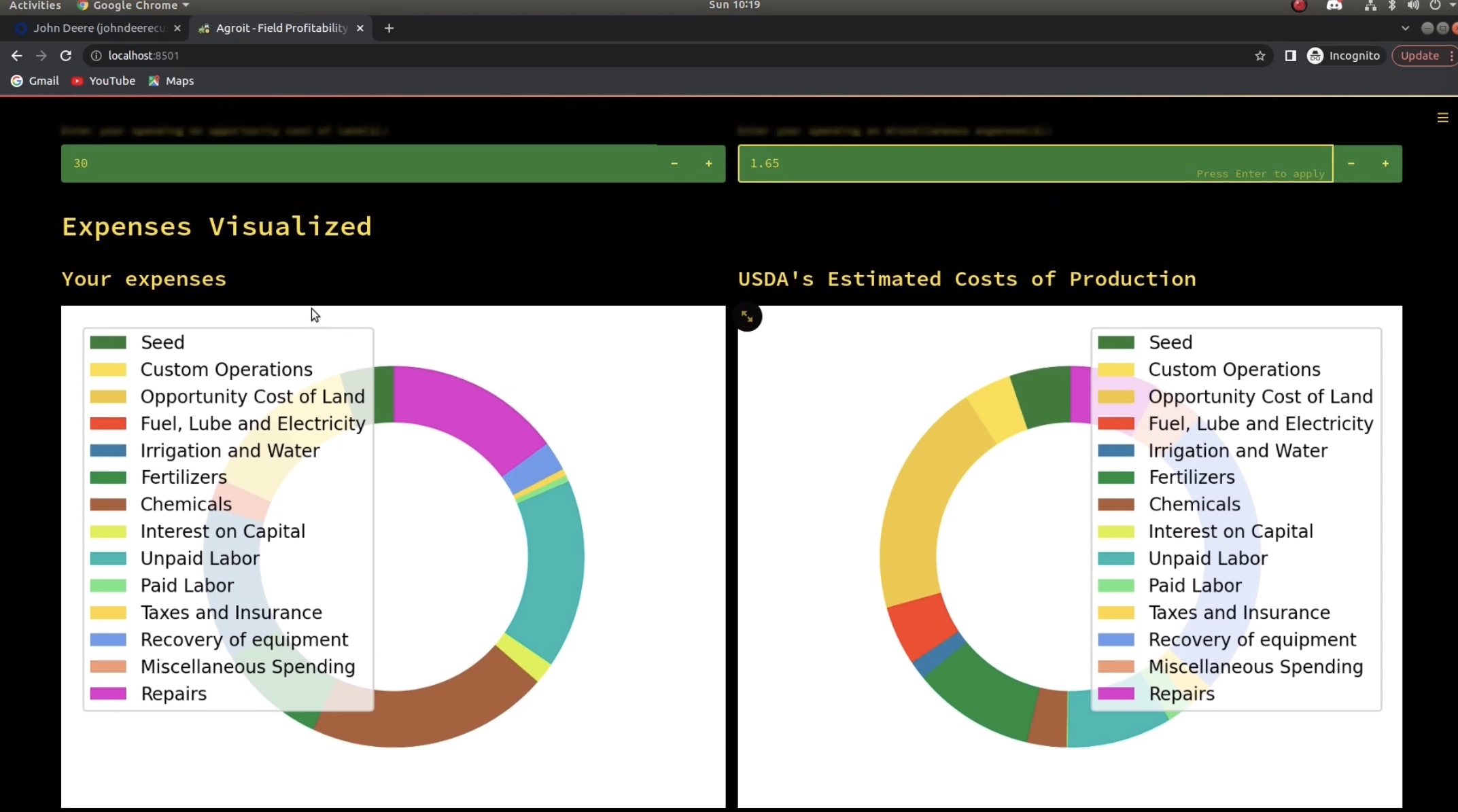
Agroit is a clever, simple and accessible tool that helps farmers assess their farm's profitability and find ways to improve and maximize it. Agroit accepts field data and details of expenses per acre from the farmer and compares them to USDA's estimated costs of production. In order to simplify and visualize all of this data, Agroit plots it in the form of pie charts with plotly, which helps you understand where you can potentially reduce expenses. Finally, you have to enter the your commodity price, and if you don't know it, Agroit provides links to view live commodity prices and futures for the crop you select. Then, it calculates and displays metrics of your field's profitability. Depending on your expenses for a particular area, it also generates ways to reduce them.
🏗 How we built it
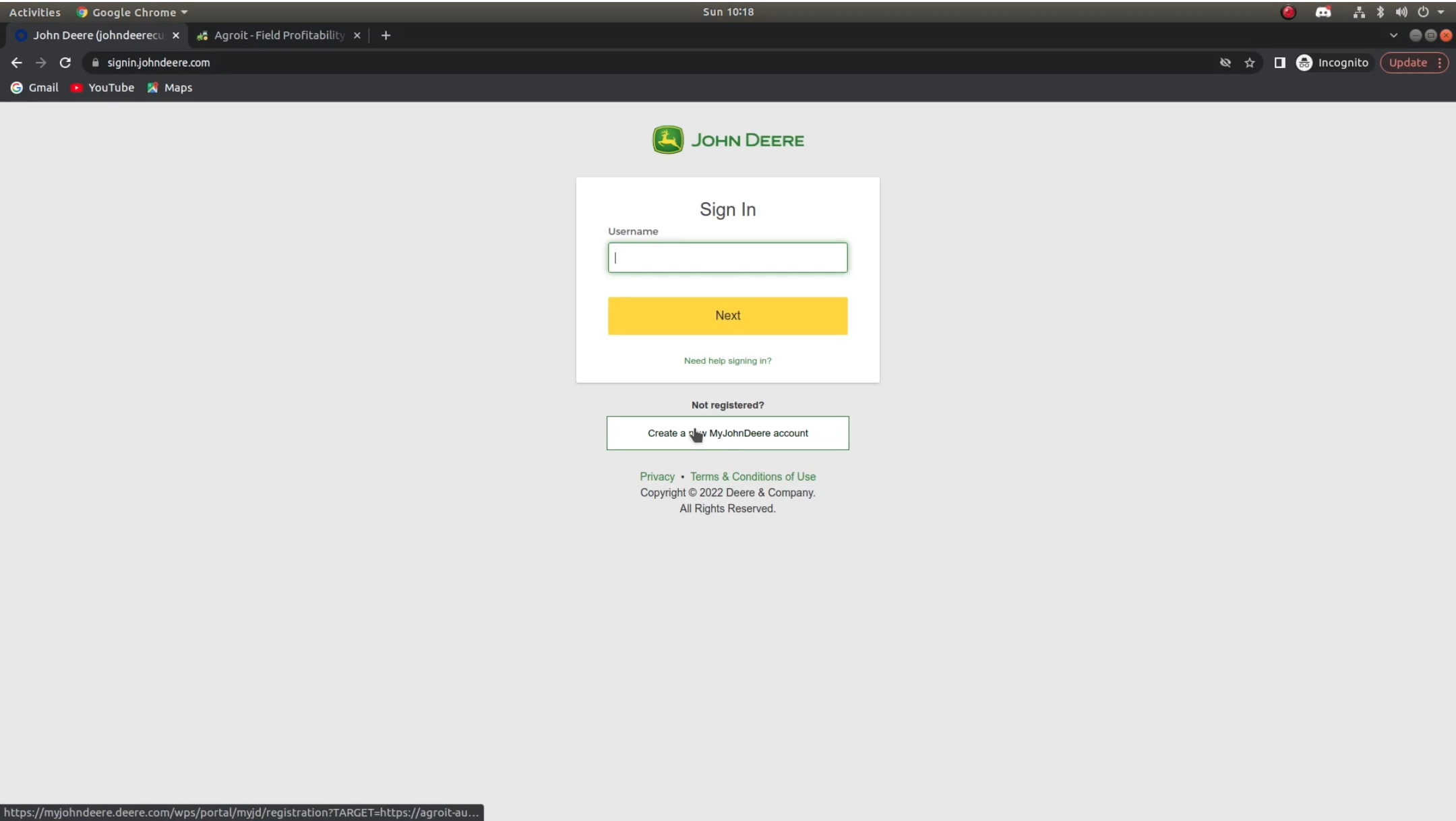
We built Agroit Auth with Flask and John Deere OAuth2 API. The main app is built with Python and Streamlit. It uses data from USDA's ERS page, more specifically the commodity costs and returns, to provide farmers with an estimated cost of production, which enables them to decide where their expenditure could be minimized. For visualizing this data, Agroit has graphs and charts that it generates through Plotly, Matplotlib and Numpy. A quirk/feature you might notice with Agroit, is the color scheme of the app and the logo. Agroit uses the exact shades of Green, Yellow and Black used by John Deere that farmers from around the world associate with. 🚜
🚧 Challenges we ran into
This is easily the most challenging hackathon I've ever done. Here's why:
- Team-finding: My initial teammate had to leave the hackathon because something important came up, and then I got into another team, but I had to leave them too due to differences in ideas and collaboration issues due to timezones 10 hours into the hackathon without being able to get ANY work done collectively.
- Health: I was terribly sick throughout the hackathon's duration, with a really bad cold, slight fever and headache. And not having teammates to split tasks made it worse. For the first day of the hackathon, I couldn't even work at my computer for twenty minutes continuosly. I desperately needed rest, but I couldn't take any because this project was HUGE for me. Because of this, I couldn't even participate in any of the mini events PickHacks had.
- Technical difficulties: At first I was not able to set up John Deere OAuth2 API, but thankfully the API Implementation Example on Deere's GitHub and Docs came to my rescue!
🏆 Accomplishments that we're proud of
- Making a successful and functional application and overcoming the challenges I faced.
What we learned
- How to use flask, how to build authentication for your web application with OAuth
- How to build a web app in Python with streamlit
- How to use Python libraries to visualize data.
What's next for Agroit
- Deploy app to streamlit cloud
- Improve suggestions to maximize profitability
- Also incorporate ways to make farming more sustainable.

Log in or sign up for Devpost to join the conversation.