-
-
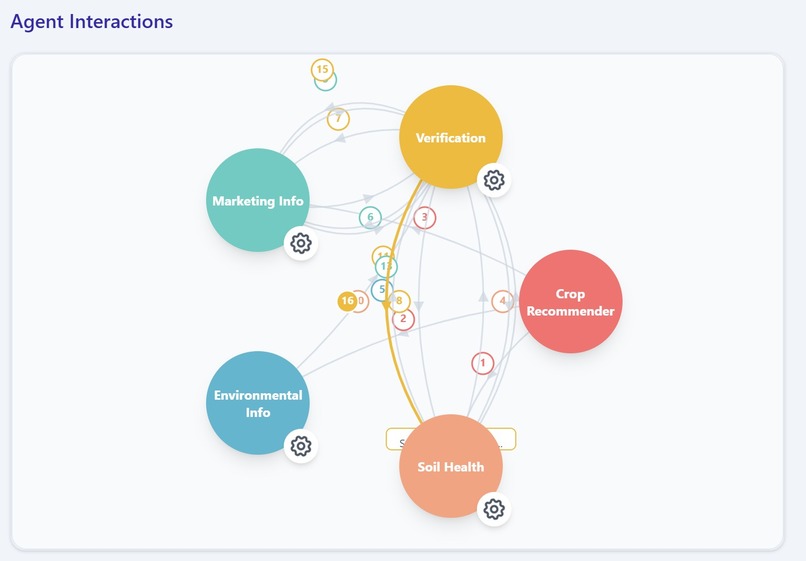
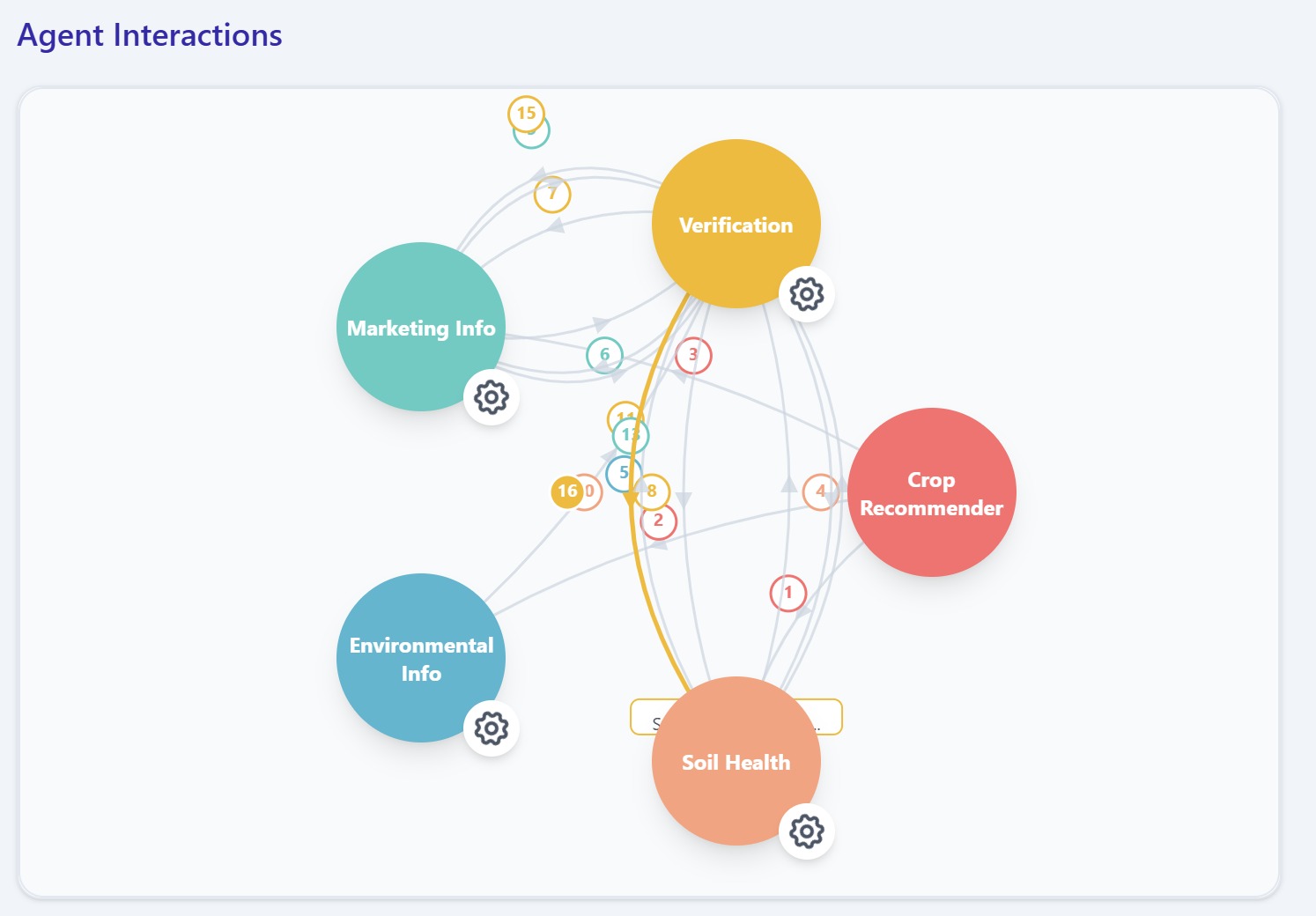
Agent Flow
-
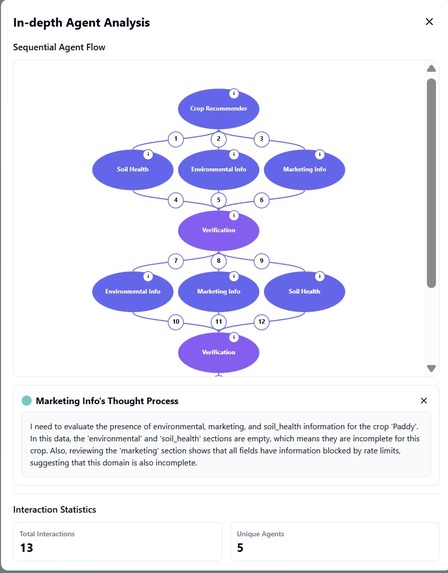
Indepth Agent Analysis
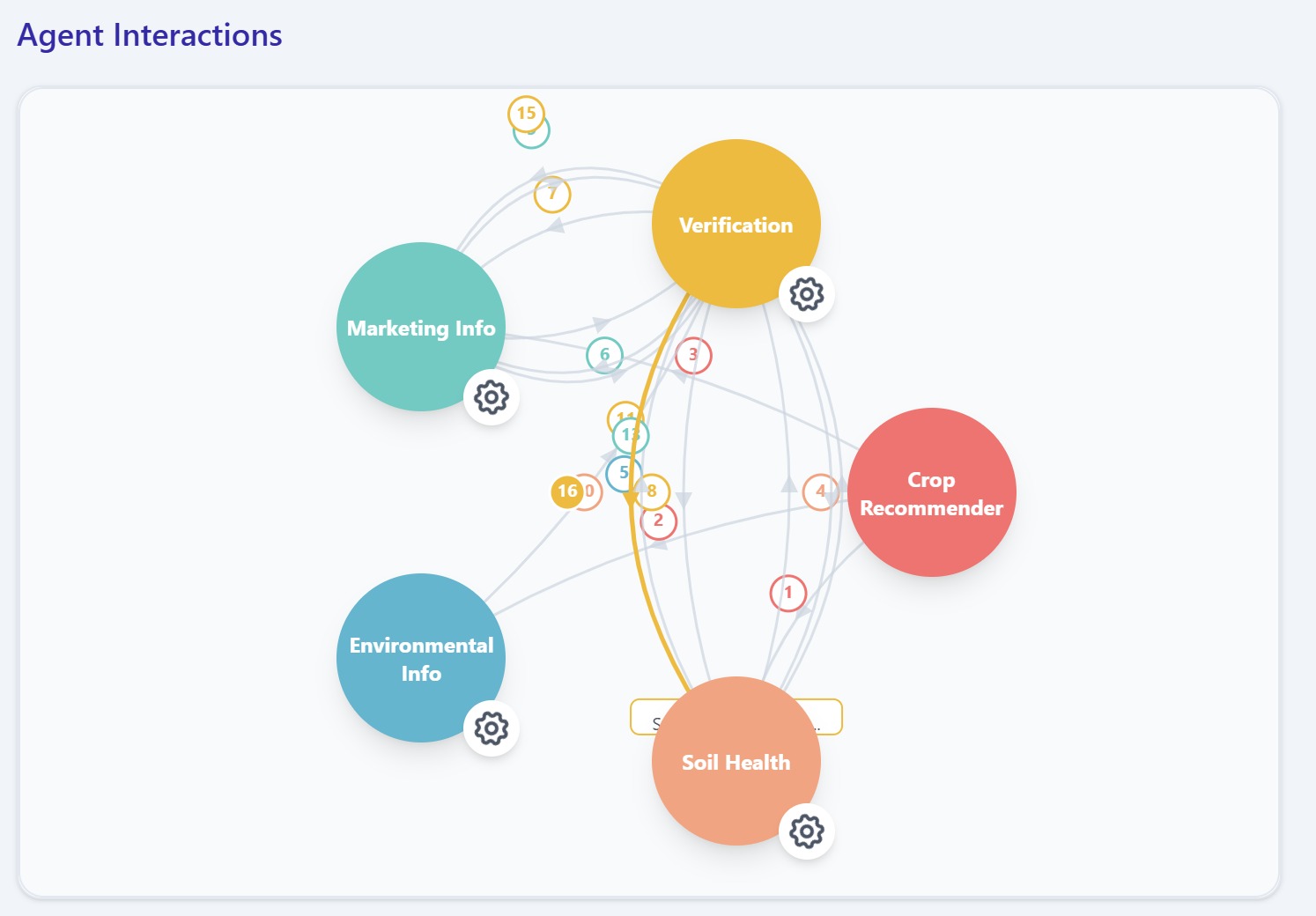
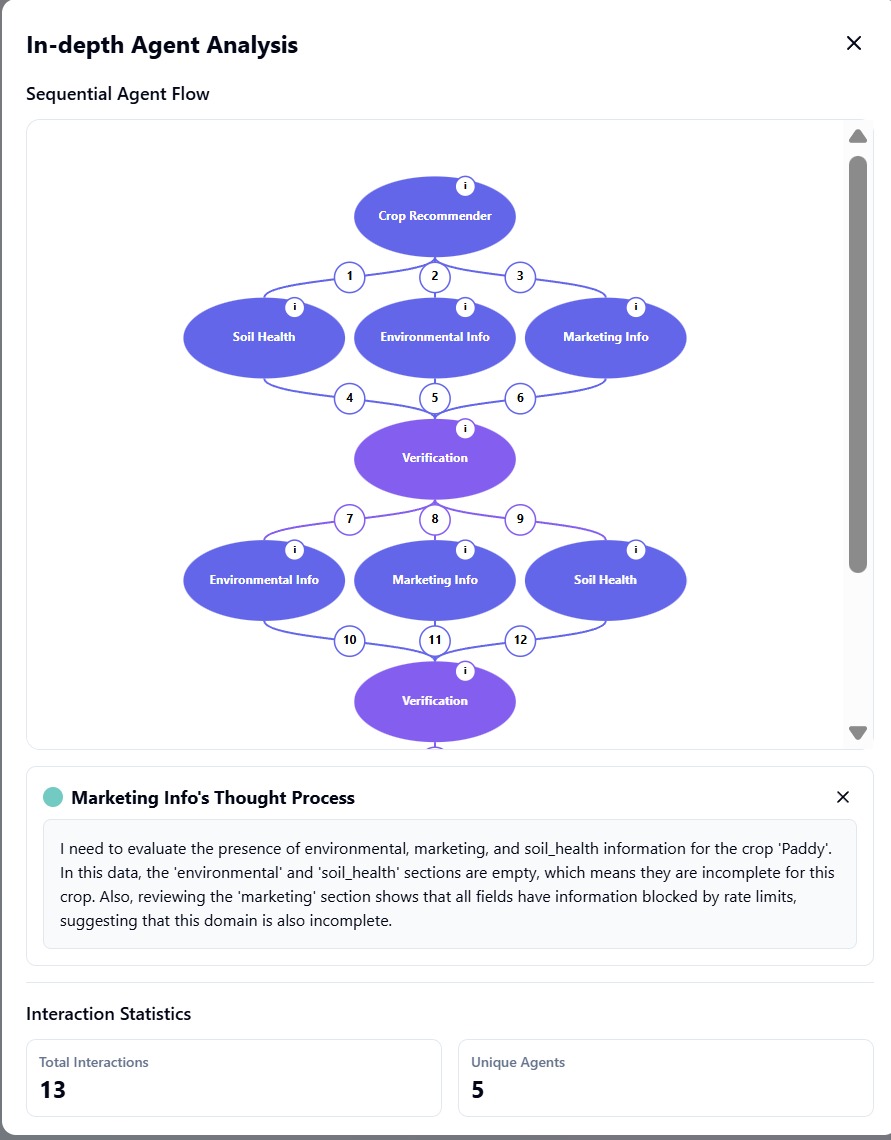
🌾 AgroIntelligence — A Multi-Agent System for Smarter Agriculture
🚀 Inspiration
Farmers often face difficulty accessing reliable data on weather, soil conditions, and market trends when deciding what crops to grow. Inspired by this, we built AgroIntelligence, a multi-agent AI system that simulates the decision-making of agricultural experts — each specializing in a particular domain — to recommend optimal crops in any region based on real-world data.
Our goal is to empower data-driven, sustainable agriculture.
💡 What it does
AgroIntelligence:
- Takes a location as input.
- Uses five specialized agents to gather and analyze:
- Crop suitability
- Environmental data
- Soil health
- Market demand/supply
- Synthesizes this information to recommend ~10 crops, backed by reasoning and data.
- Displays the real-time thinking process of each agent on a React dashboard with WebSocket updates.
🏗️ How we built it
- Built using Agno, an open-source multi-agent orchestration framework.
- Agents communicate by passing structured responses in JSON format.
- FastAPI serves as the backend and agent controller, handling requests and WebSocket streams.
- The frontend, built with React, receives agent outputs in real-time and displays them in an interactive UI.
🤖 Agent Overview
| Agent Name | Description |
|---|---|
CropRecommenderAgent |
Recommends crops suitable for the region using geolocation and agronomy. Starts the workflow, passing the shortlist to downstream agents |
EnvironmentalInfoAgent |
Enriches each candidate crop with location‑specific Environment specific details.Runs in parallel with other agents; data is merged afterward. |
MarketingInfoAgent |
Evaluates the economic feasibility of each crops. Scrapes market data, weighs stability and demand to finalize economic viability for each crop. |
SoilHealthInfoAgent |
Analyzes soil quality, nutrients, and pH levels. Fetches soil surveys, compares actual values with crop‑specific requirements. |
SummaryAgent |
Crafts a clear, farmer‑friendly report from all verified data. Combines all domain insights, ranks crops, and adds practical guidance. |
🧬 Key Code Snippets
🛠️ Agent Definition
crop_recommender_agent = Agent(
    model=make_chat(1000),
    tools=[DuckDuckGoTools()],
    description="CropRecommenderAgent",
    instructions=thinking_prompt(
        """Search DuckDuckGo for agronomic guidance for the region.
        Return 5‑10 suitable crops with sources in `CropsList` format.
        """
    ),
    response_model=CropsList,
    structured_outputs=True
)
🔄 Workflow Setup
def run(self) -> RunResponse:
    self.log_steps: List[Dict[str, Any]] = []
    ...
    self.status_callback(
        AgentStatusUpdate(
            agent="CropRecommenderAgent", status="Started crop recommendation"
        ).json()
    )

    crops_data: CropsList = self.safe_run(
        crop_recommender_agent, location, CropsList()
    )
    self.status_callback(
        AgentStatusUpdate(
            agent="CropRecommenderAgent",
            status="...
                ...,
            next_agent=["SoilHealthInfoAgent", ...,],
        ).json()
    )
    ...
⚡ Real-time WebSocket Handling (Frontend)
useEffect(() => {
  // Connect to FastAPI backend
  socketRef.current = new WebSocket("ws://localhost:8000/ws");

  socketRef.current.onmessage = (event) => {
    const data = JSON.parse(event.data);
    handleWebSocketMessage(data);
  };
  socketRef.current.onerror = (error) => {
      setOutput(prev => prev + "\nError connecting to server");
      setLoading(false);
    };
  socketRef.current.onclose = () => { ... };
  return () => socketRef.current?.close();
  }, []);
📡 FastAPI WebSocket Route
@app.websocket("/ws")
async def websocket_endpoint(websocket: WebSocket):
    await websocket.accept()
    user_input = await websocket.receive_text()
    async for update in run_workflow_stream(user_input):
        await websocket.send_text(update.json())
🧠 Architecture Diagram
🧗 Challenges we ran into
Chaining Agent Responses: Passing outputs as structured JSON between agents while keeping context.
WebSocket Integration: Real-time updates in React from Python (FastAPI) without delays.
Structured Output from LLMs: LLMs often responded with unstructured text; we enforced schemas to fix this.
Debugging Multi-agent Flows: Identifying where breakdowns occurred in an agent chain was tricky.
🏅 Accomplishments that we're proud of
- Built an end-to-end agent-based AI system that mirrors human decision-making.
- Achieved real-time data aggregation using WebSockets and LLMs.
- Created a highly visual dashboard showing live agent states, interactions, and recommendations.
- Modular agent system — easily extendable to other domains like disaster planning or smart cities.
📚 What we learned
- Deep understanding of multi-agent system design and orchestration.
- Structuring agent communication via schemas and response models.
- WebSocket integration between Python backend and React frontend.
- Techniques for handling LLM unpredictability and timeouts in real-time applications.
🌱 What's next for AgroIntelligence
- Add support for live weather APIs, soil sensors, and market APIs.
- Expand to support personalized recommendations per farmer.
- Translate to regional languages and add voice interface.
- Integrate with blockchain supply chains for provenance tracking.
- Release as a mobile app for wider reach in rural areas.
🛠️ Tech Stack
- Backend: Python, Agno, FastAPI, WebSockets
- Frontend: React.js, Tailwind CSS
- Data: DuckDuckGoTools (search), Open-source LLMs (via Ollama)
- Architecture: Multi-Agent Workflow (Agno), REST + Socket APIs
📂 Project Structure
AgroIntelligence/
├── backend/ # FastAPI backend + WebSocket endpoints
│   ├── agent2_v1.py
│   └── requirements.txt
├── agent-dashboard/
│   ├── App.jsx
│   └── components/
│       ├── AgentVisualization.jsx
│       ├── DebugHelper.jsx
│       └── SequentialTreeVisualization.jsx
├── package.json.py
├── index.html
├── ...
├── requirements.txt
└── README.md
🧪 Run Locally
🐍 Backend
Navigate to the
backenddirectory:cd backendInstall the necessary dependencies:
pip install -r requirements.txtRun the FastAPI backend with Uvicorn:
uvicorn agent2_v1:app --reload
⚛️ Frontend
Navigate to the
agent-dashboarddirectory:cd agent-dashboardInstall the required frontend dependencies:
npm installRun the React frontend:
npm run devOpen your browser and navigate to http://localhost:3000 to view the dashboard.
Made with 🧠+🌱 by Team "Barbenheimer" for Luddy Hackathon 2025.
Built With
- agno
- duckduckgo
- fastapi
- openai
- pydantic
- python
- react.js
- rest
- tailwindcss
- websockets


Log in or sign up for Devpost to join the conversation.