Inspiration
Studying bioinformatics engineering surrounded by the agricultural community, we witnessed a recurring problem: traditional farming relies heavily on guesswork. Farmers guess how many seeds they need, struggle to identify specific crop diseases, and often miscalculate pesticide dosages. This leads to massive crop loss, chemical overuse, and financial instability. We wanted to build a bridge between advanced computational biology and everyday farming, creating a tool that brings data-driven precision agriculture directly to the fingertips of local farmers.
What it does
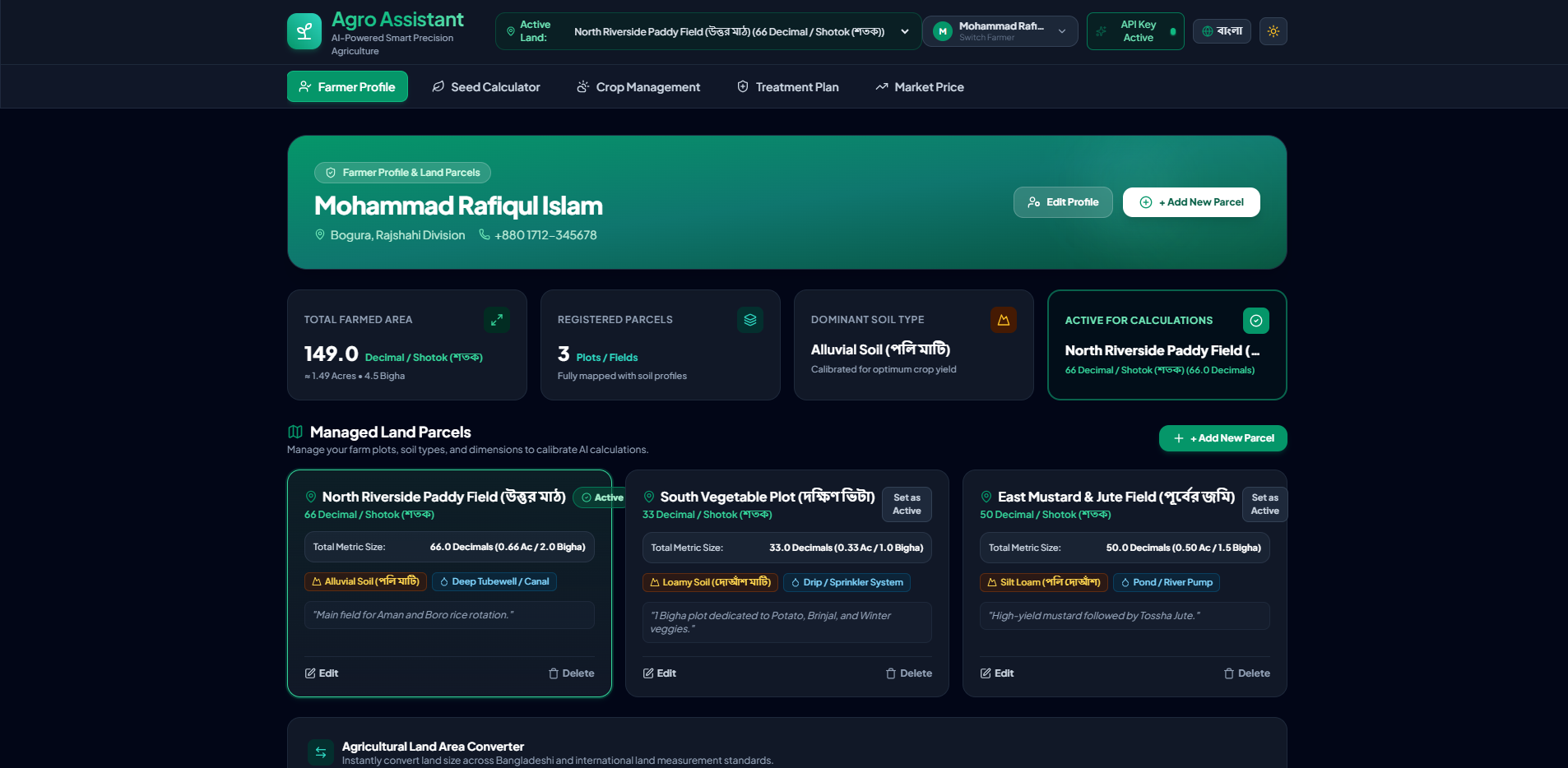
Agro Assistant is a bilingual (English and Bangla) web platform that acts as a digital agronomist. It features four core pillars:
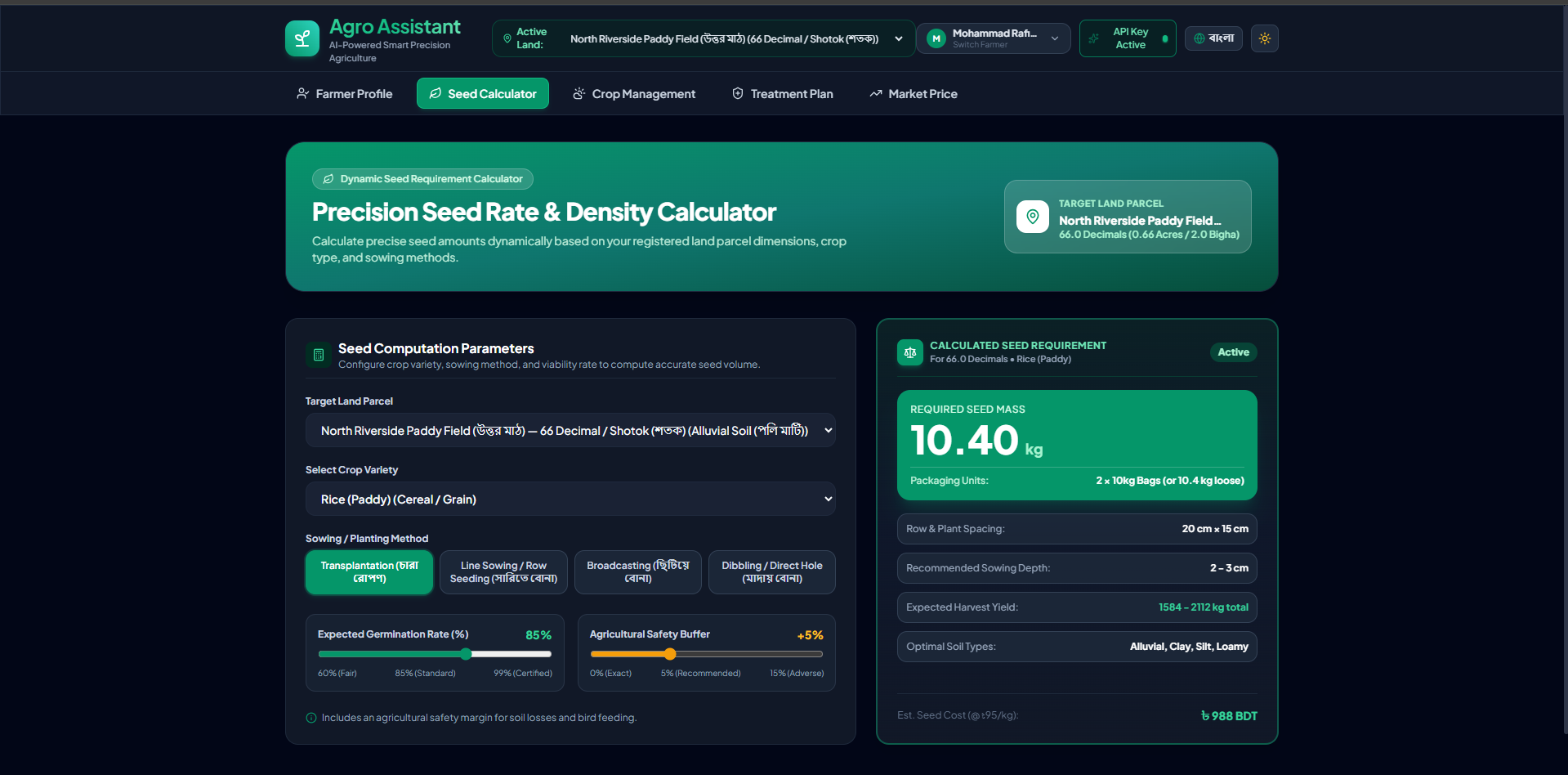
- Seed Management: Dynamically calculates exact seed requirements based on custom land parcel sizes.
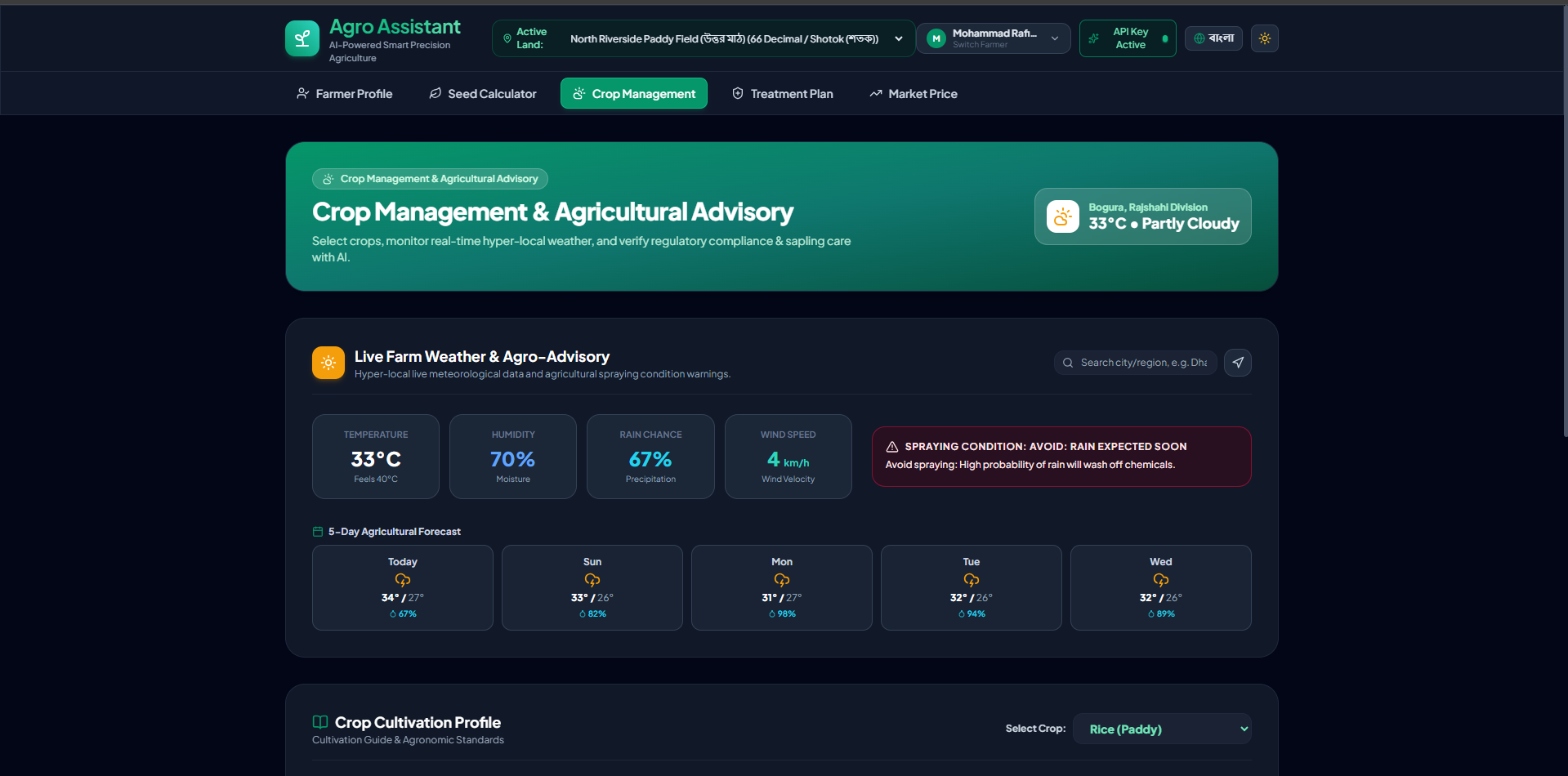
- Crop Management: Tracks 15 different crops, providing estimated growing days, sapling care, and live weather updates.
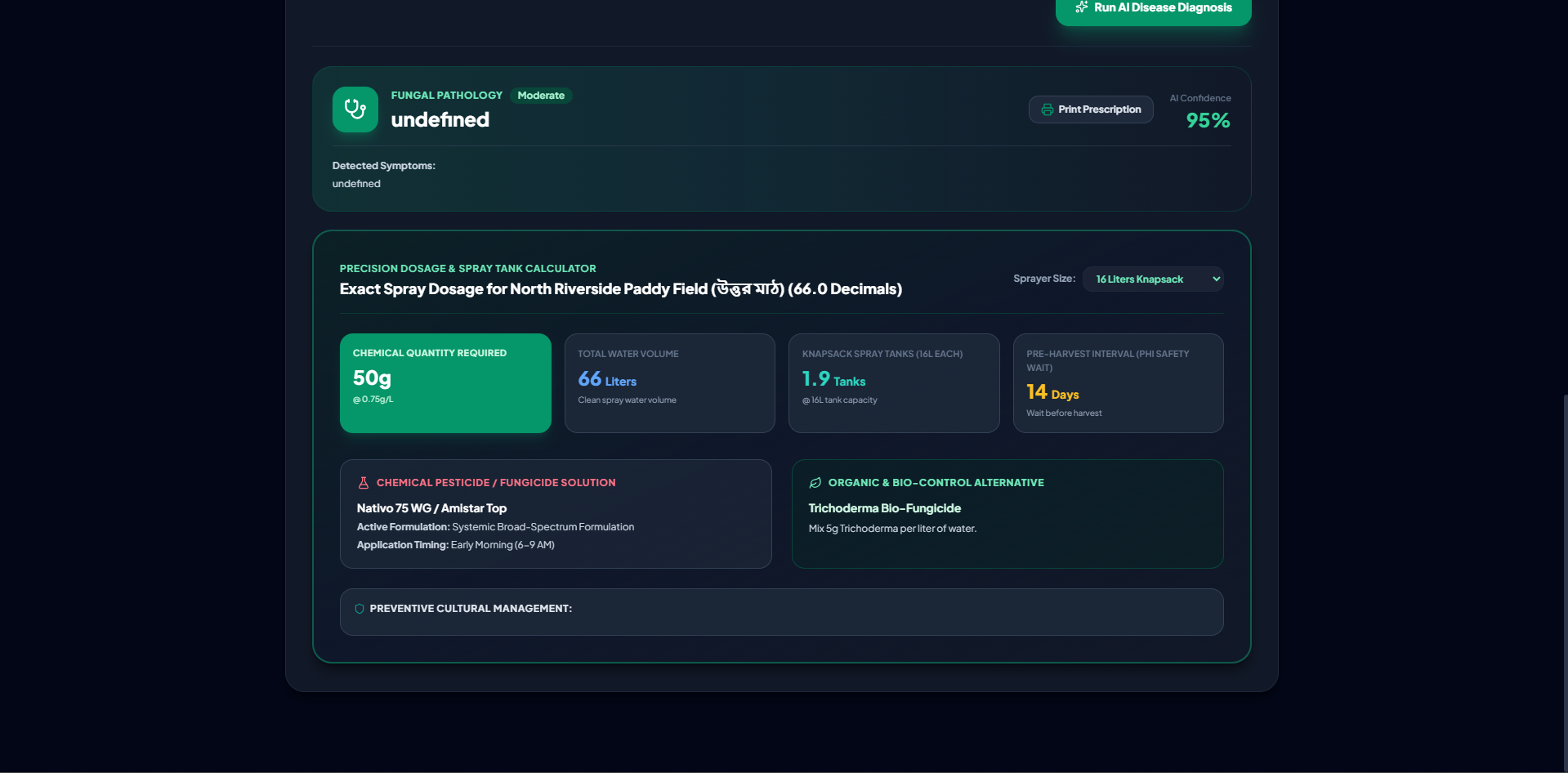
- Treatment Plan: A diagnostic tool where farmers input crop symptoms. Powered by AI, it identifies the disease, pinpoints the pathogen, and calculates the precise chemical or organic pesticide dosage required for the user's specific land size.
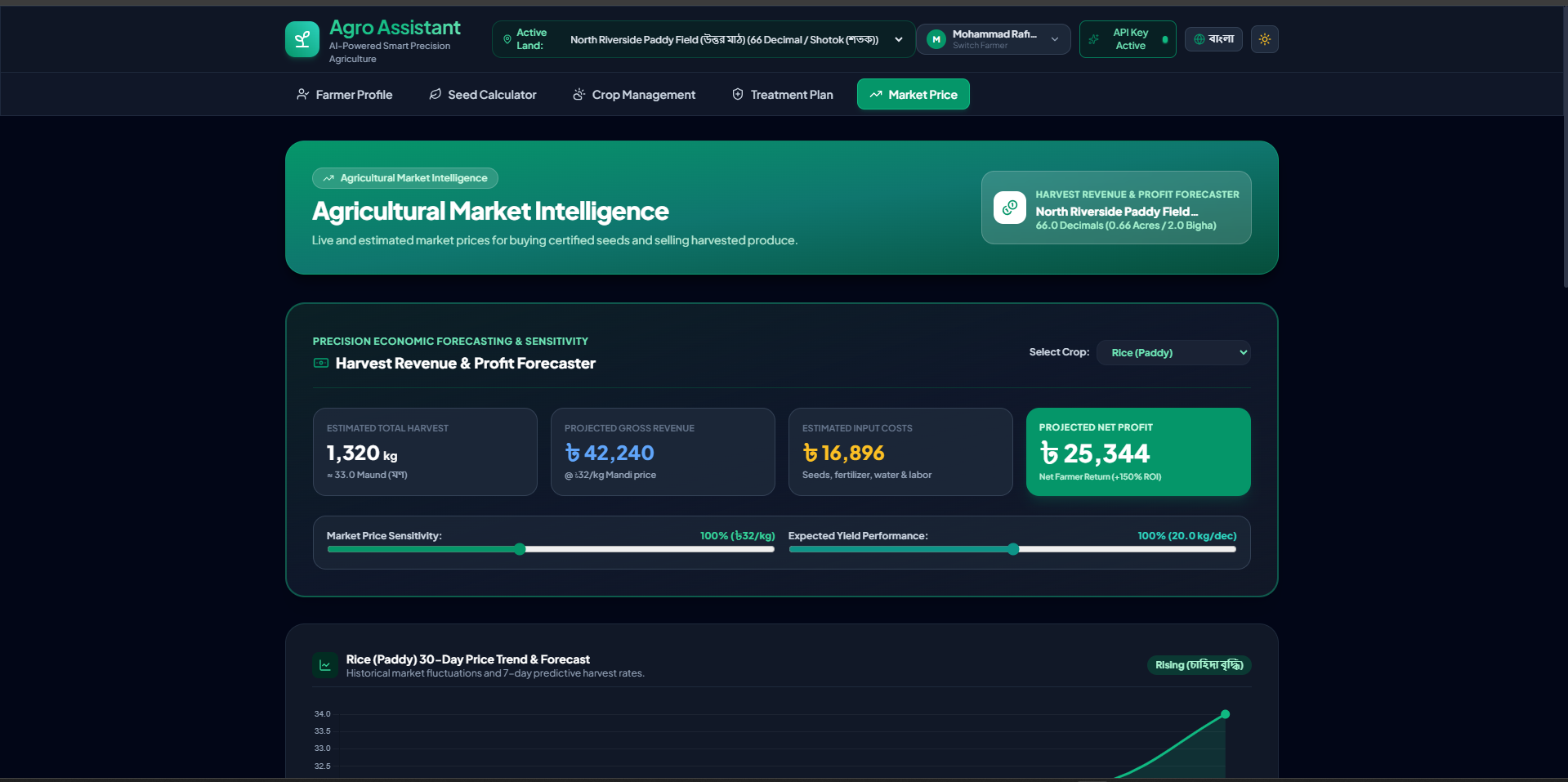
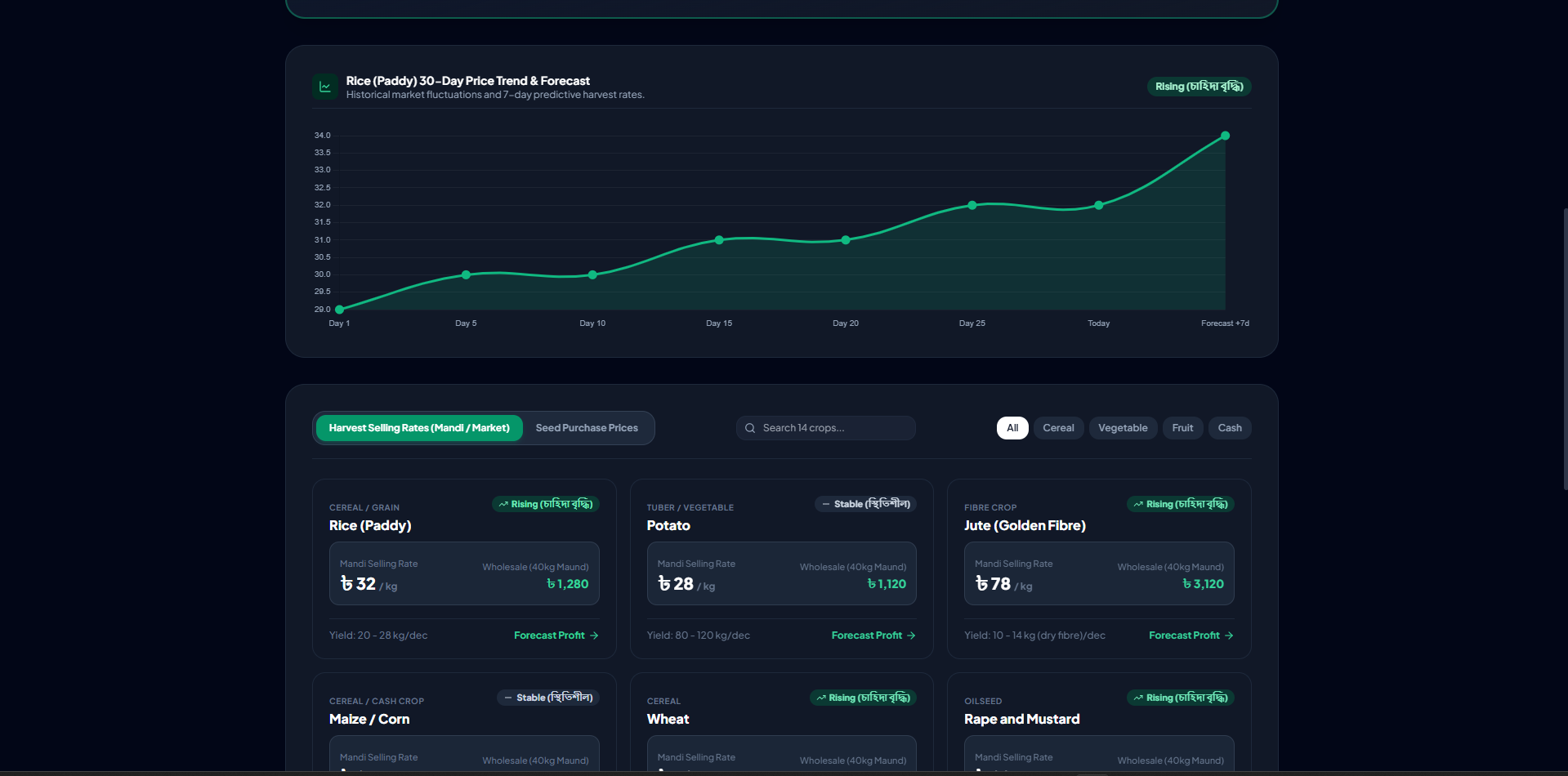
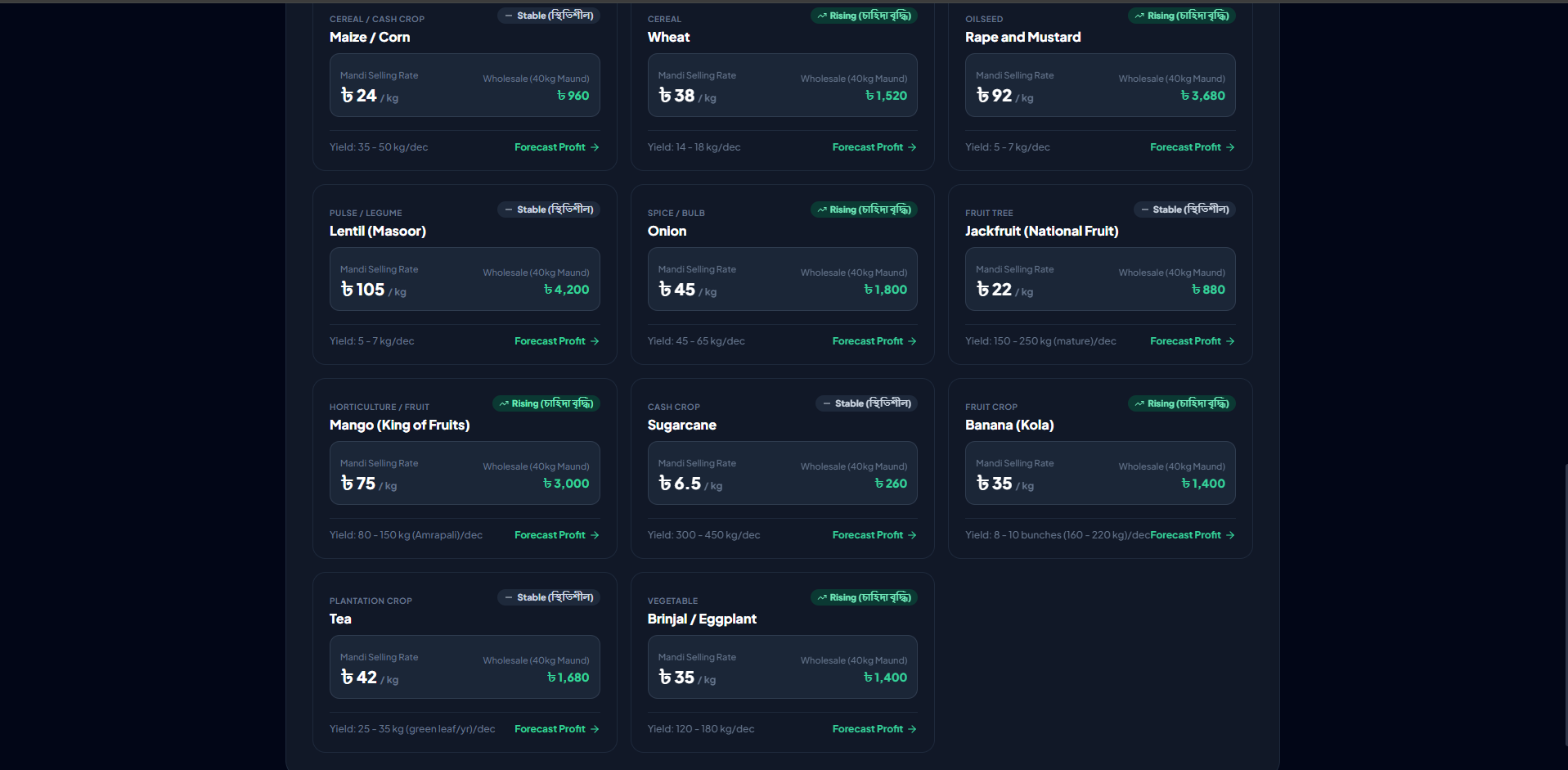
- Market Price: A dashboard displaying live/estimated prices for buying seeds and selling harvested crops to ensure fair trade.
How we built it
We built the frontend using plain HTML, JavaScript, and Tailwind CSS to ensure a clean, mobile-responsive, and accessible UI featuring Light and Dark modes. The backend is powered by a custom Python server handling the API routing. The core intelligence of the application relies on the Google Gemini API. We engineered strict system prompts to process text-based symptom inputs, analyze them against specific crop profiles, and return structured JSON data containing the disease diagnoses and calculated dosages.
Challenges we ran into
Integrating the AI vision models presented significant hurdles. Initially, we built an image-upload feature for disease diagnosis, but we encountered severe hallucination issues—the AI confidently diagnosed a piece of paper (a class routine!) as "Rice Blast" simply because rice was selected in a dropdown. When we added a strict validation "gatekeeper," it became overly paranoid and rejected valid close-up photos of leaves. With time running out, we had to make a critical pivot. We transitioned from image recognition to a robust, text-based symptom input system, which instantly made the application faster, more stable, and highly accurate for the final presentation.
Accomplishments that we're proud of
We are incredibly proud of successfully engineering the Gemini API prompt to return perfectly structured JSON that dynamically updates our frontend UI. Building the backend logic to accurately calculate precise pesticide and water tank dosages based on custom user land sizes (in decimals/acres) was a major technical win. Additionally, shipping a fully functional bilingual interface ensures the tool is genuinely accessible to the farmers who need it most.
What we learned
We learned that integrating Generative AI is less about making the API call and more about strict prompt engineering and data validation. Controlling AI hallucinations requires explicit instructions and fallback mechanisms. We also learned the immense value of adaptability in software development; when our computer vision approach became a bottleneck right before the deadline, pivoting quickly to a text-based system ultimately saved the project and resulted in a better user experience.
What's next for Agro Assistant
We plan to refine and reintroduce the computer vision features by fine-tuning a model specifically trained on local crop diseases so it can handle extreme close-ups without failing. We also aim to connect the market price dashboard to a live financial API and introduce an SMS-based query system. This will allow farmers without smartphones or internet access to text their crop symptoms and receive AI-driven treatment plans and dosage calculations directly via SMS.
Built With
- antigravity
- css
- geminiapi
- html
- javascript

Log in or sign up for Devpost to join the conversation.