Inspiration
AgroAI was born from a critical observation: while industrial agriculture was rapidly adopting AI-powered precision farming technologies, small-scale farmers—who produce approximately 80% of the world's food—were being left behind. These farmers face devastating crop losses due to diseases and pests, often lacking access to expert agronomists or expensive diagnostic tools.
The inspiration came from understanding that:
- Professional agricultural expertise is often expensive and geographically limited
- High-tech solutions exist but aren't accessible to small-scale farmers
- Crop diseases can wipe out entire harvests, affecting food security worldwide
- Every farmer deserves access to precision agricultural insights, regardless of their operation size
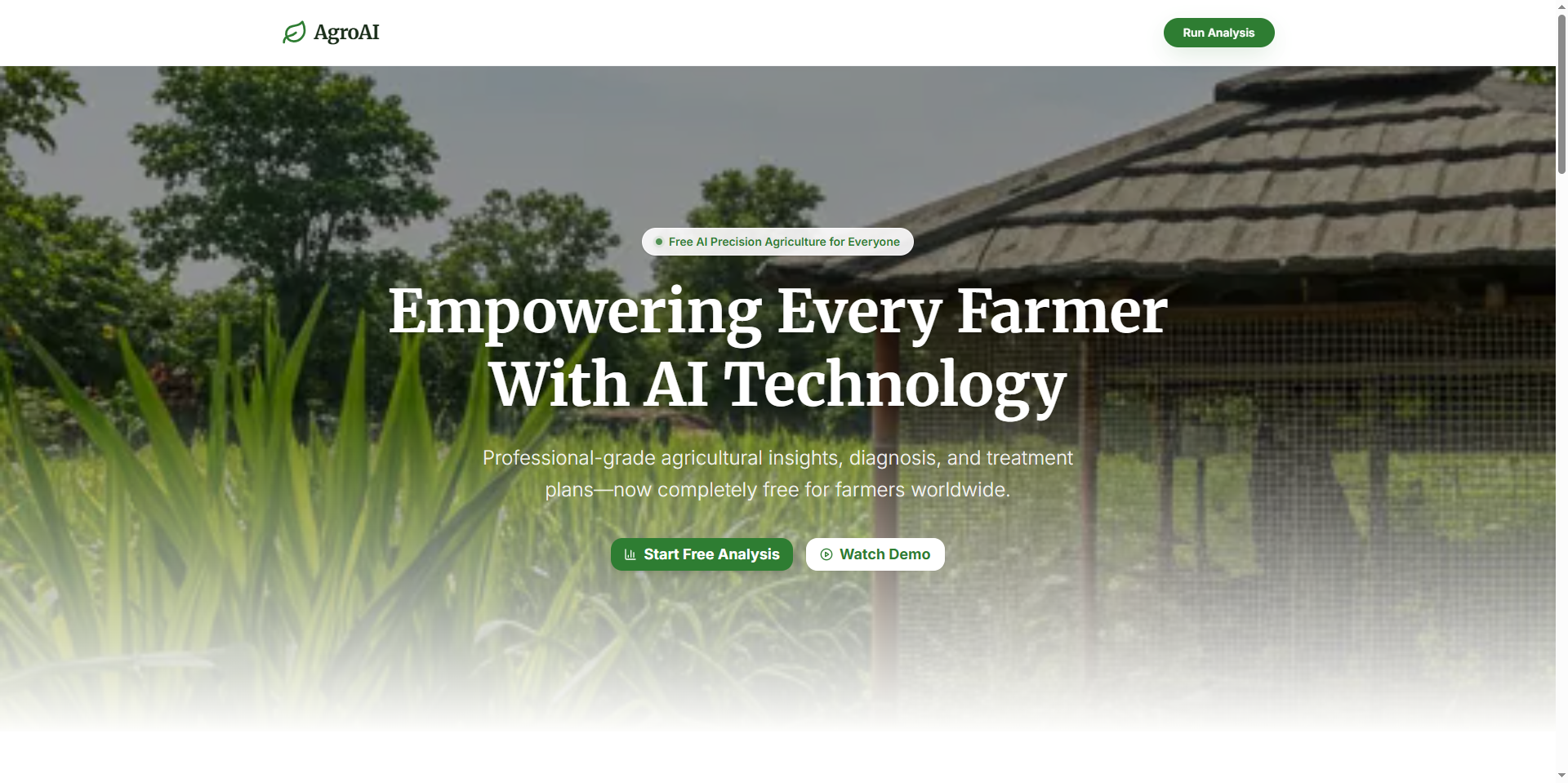
We envisioned a platform that could bring professional-grade agricultural intelligence to every farmer's smartphone, completely free of charge.
What it does
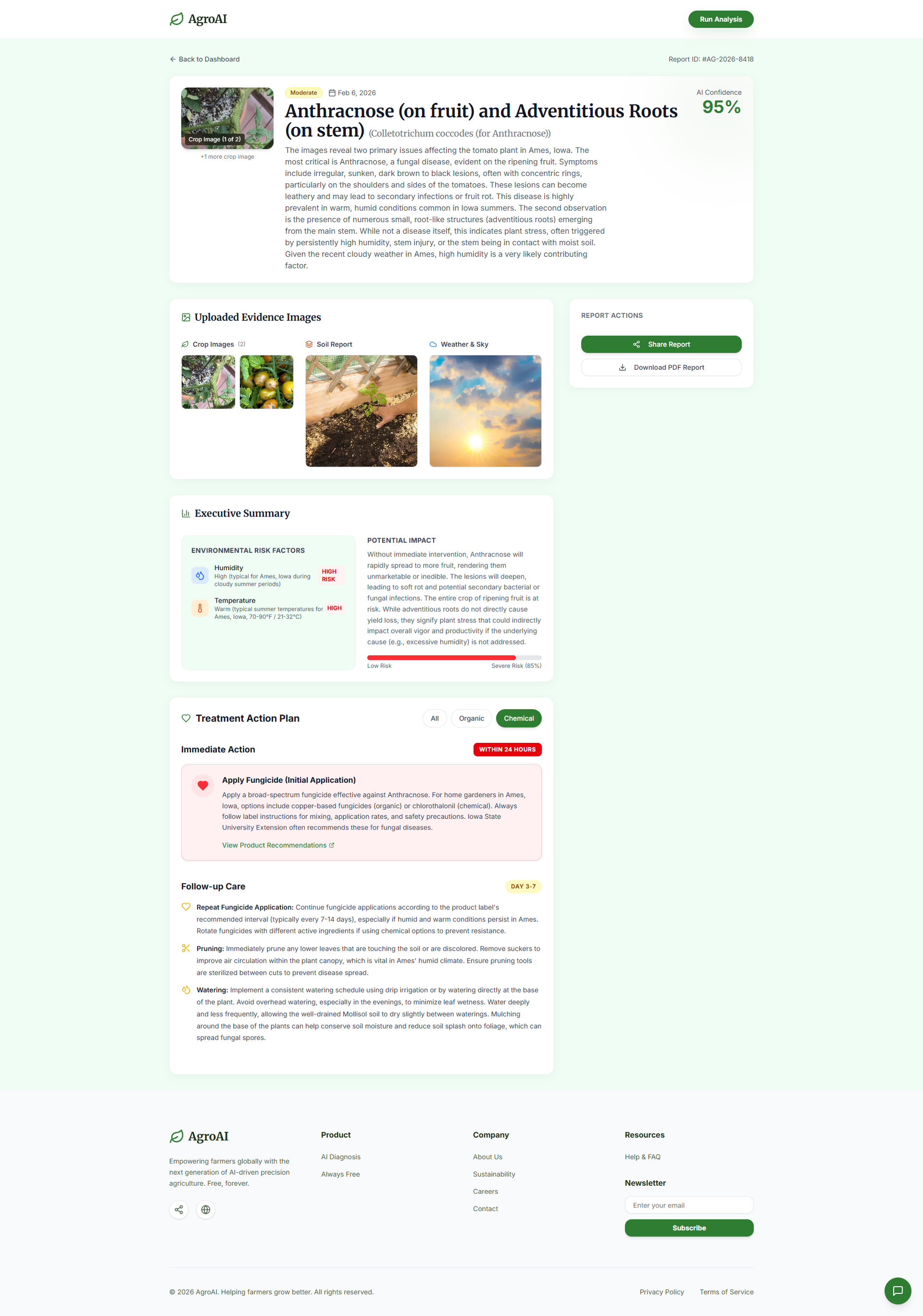
AgroAI is a free, AI-powered crop disease diagnosis platform that helps farmers identify crop problems and get personalized treatment plans. Here's what it does:
Multi-Factor Diagnosis: Farmers can upload crop images, soil reports, and weather photos. The system analyzes all this information together to provide accurate diagnoses.
AI-Powered Analysis: The platform uses AI to analyze crop images and combine them with environmental data like location, soil conditions, and weather patterns. It provides location-specific recommendations that consider regional characteristics.
Comprehensive Reports: Each diagnosis generates a detailed report with:
- Disease identification with confidence scores
- Severity assessment (Low, Moderate, High, Critical)
- Environmental risk factors analysis
- Step-by-step treatment plans (immediate actions within 24 hours, follow-up care, and prevention strategies)
- Impact assessment with yield loss estimates
Interactive AI Chat: Users can ask questions about their specific diagnosis and get personalized advice from an AI agronomist that understands their crop, location, and situation.
Accessibility: The platform works on any device—from smartphones to desktops—ensuring farmers can access it regardless of their technology. It's completely free, with no subscriptions or hidden fees.
How we built it
We built AgroAI with a user-centric approach, focusing on making complex agricultural knowledge accessible and easy to use:
User Interface: We created an intuitive, mobile-first design that guides users through the diagnosis process step-by-step. The interface includes helpful tips, clear instructions, and real-time validation feedback.
Multi-Modal Data Collection: The system accepts multiple types of input:
- Multiple crop images for comprehensive visual analysis
- Soil reports or photos for nutrient analysis
- Weather images for atmospheric risk assessment
- Environmental details like crop type, growth stage, location, and conditions
AI Integration: We developed a sophisticated system that combines:
- Image analysis to identify visual symptoms
- Regional soil databases for location-specific insights
- Climate pattern recognition for environmental risk assessment
- Context-aware recommendations based on crop type and growth stage
Report Generation: Each analysis produces a comprehensive, printable report that farmers can download as PDF, share with agricultural experts, or keep for their records.
Chat System: We implemented an interactive AI chat that maintains context about the user's specific diagnosis, allowing for personalized follow-up questions and detailed explanations.
Challenges we ran into
Making AI Understand Context: Getting accurate diagnoses that consider not just the images, but also location, soil conditions, weather patterns, and crop type was challenging. We solved this by developing a comprehensive prompt system that combines all available information, ensuring recommendations are location-specific and practical.
Handling Multiple File Uploads: Allowing users to upload multiple crop images, soil reports, and weather photos while maintaining good performance required careful implementation. We added file size limits, image previews, and efficient processing to ensure a smooth experience.
Complex Form Validation: Creating a form that handles conditional fields (like "Other" options that require custom input) while providing clear error messages was tricky. We built a validation system that checks dependencies between fields and provides real-time feedback.
Mobile Experience: Ensuring the platform works perfectly on mobile devices, where many farmers access it, required a mobile-first design approach. We created touch-friendly interfaces, adaptive layouts, and optimized the chat interface for small screens.
AI Response Reliability: Ensuring the AI always returns usable, structured responses even when processing complex or unclear images was important. We created robust error handling with fallback responses, so users always get helpful feedback.
Performance: Keeping the platform fast and responsive even when processing large images and complex AI analysis required optimization. We implemented loading states, efficient image handling, and progress indicators so users know the system is working.
Accessibility: Making sure the platform is usable by everyone, including users with disabilities, required careful attention to labels, keyboard navigation, screen reader support, and color contrast.
Accomplishments that we're proud of
Democratizing Agricultural Technology: We're proud to have created a platform that makes professional-grade crop diagnosis completely free and accessible to farmers worldwide, regardless of their operation size or location.
Location-Specific Intelligence: We built a system that provides recommendations tailored to specific regions, considering local soil characteristics, climate patterns, and common diseases. This makes the advice practical and actionable for farmers.
Comprehensive Treatment Plans: Our reports don't just identify problems—they provide detailed, step-by-step treatment plans with immediate actions, follow-up care, and prevention strategies. This gives farmers a complete roadmap to recovery.
User-Friendly Design: We created an intuitive interface that guides users through complex diagnosis processes without overwhelming them. The platform is accessible to farmers with varying levels of technical expertise.
Multi-Modal Analysis: Successfully combining image analysis, soil data, weather information, and environmental context into a single, cohesive diagnosis system was a significant achievement.
Mobile-First Approach: Building a platform that works seamlessly on smartphones—the primary device for many farmers—ensures maximum accessibility and impact.
Real-World Impact: The platform has the potential to help thousands of farmers protect their harvests, reduce crop losses, and improve food security globally.
What we learned
Agricultural Domain Knowledge: We gained deep understanding of common crop diseases, their symptoms, and treatment methods. We learned about soil characteristics, climate patterns, and agricultural practices across different regions.
AI Capabilities: We learned to integrate AI vision capabilities to analyze crop images alongside environmental data. We developed sophisticated approaches to combine multiple data sources for accurate diagnoses.
User Experience Design: We learned the importance of creating mobile-first interfaces that work seamlessly across all device sizes. We ensured accessibility with proper labels, keyboard navigation, and screen reader support.
Problem-Solving: We learned to handle complex file uploads, develop robust error handling systems, and create responsive designs that adapt to different screen sizes and devices.
Context Matters: We discovered that agricultural advice must be location-specific. What works in one region may not work in another due to different soil types, climate patterns, and common diseases.
Accessibility is Essential: Making the platform usable by everyone, including users with disabilities, taught us the importance of inclusive design from the start.
User Feedback is Critical: Building intuitive workflows that guide users through complex processes requires understanding their needs, limitations, and how they actually use the platform.
What's next for Agro AI
Real-Time Disease Tracking: We plan to add features that track disease outbreaks in real-time and send alerts to farmers in affected regions, helping them prepare and take preventive measures.
Predictive Analysis: Integration with weather APIs will allow us to provide predictive analysis, warning farmers about potential disease risks before they occur based on weather patterns.
Multi-Language Support: To truly serve farmers worldwide, we're working on multi-language support so the platform can be used in local languages across different regions.
Offline Mode: Many farmers work in areas with limited connectivity. We're developing an offline mode that allows basic diagnosis functionality even without internet access.
Community Features: We want to build a community where farmers can share knowledge, experiences, and solutions. This peer-to-peer learning can complement the AI-powered recommendations.
Supply Chain Integration: Future plans include integration with agricultural supply chains, helping farmers find and purchase recommended treatments, fertilizers, and equipment.
Expanded Crop Coverage: We're continuously expanding our database to support more crop varieties and regional agricultural practices, making the platform useful for more farmers globally.
Mobile App: Developing native mobile apps for iOS and Android will make the platform even more accessible and provide additional features like push notifications and offline capabilities.
Partnerships: We're exploring partnerships with agricultural organizations, NGOs, and government agencies to reach more farmers and provide additional resources and support.
Continuous Improvement: We're committed to continuously improving the AI's accuracy, expanding our knowledge base, and enhancing the user experience based on real-world feedback from farmers.
Built With
- gemini
- next.js
- tailwind
- typescript


Log in or sign up for Devpost to join the conversation.