-
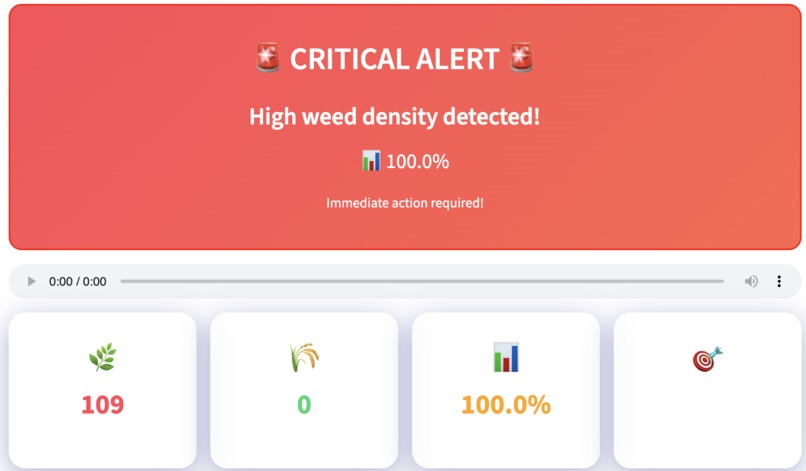
weed detected
-
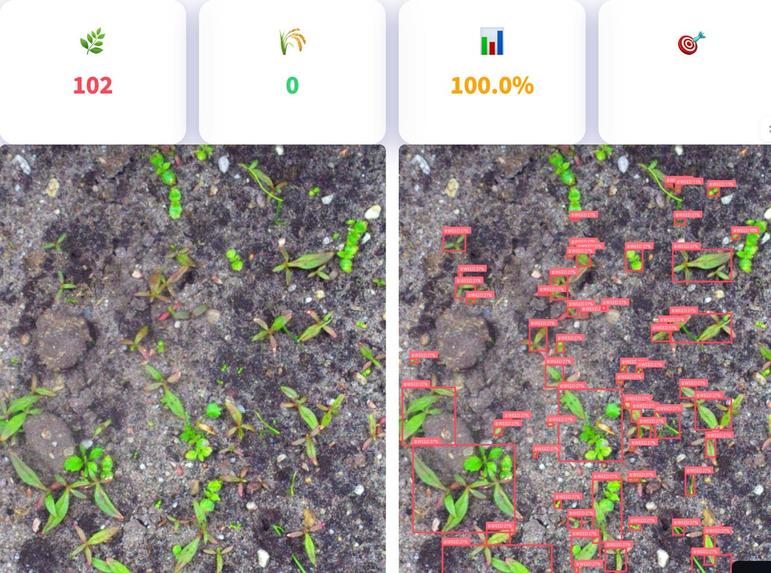
weed counted
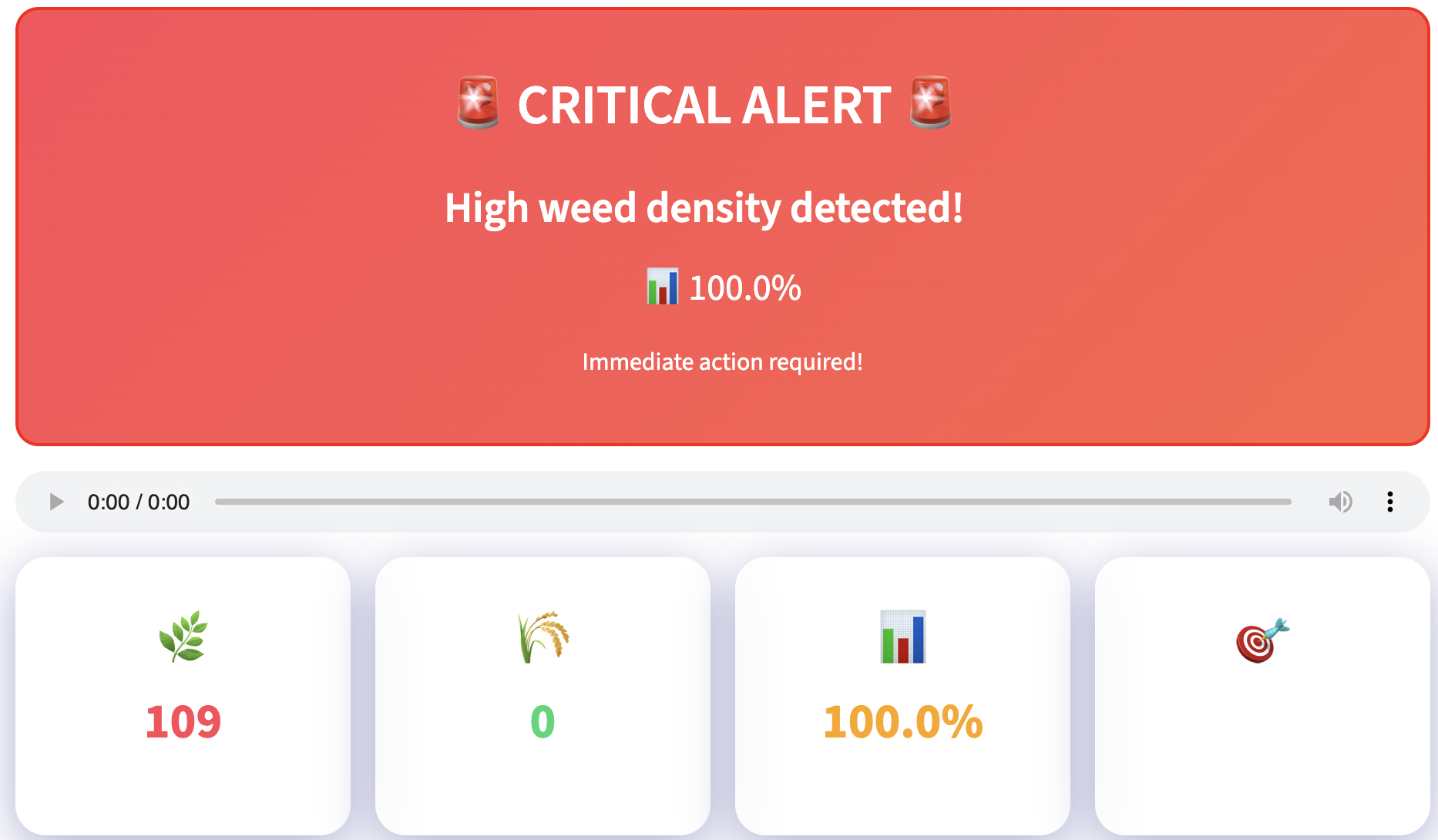
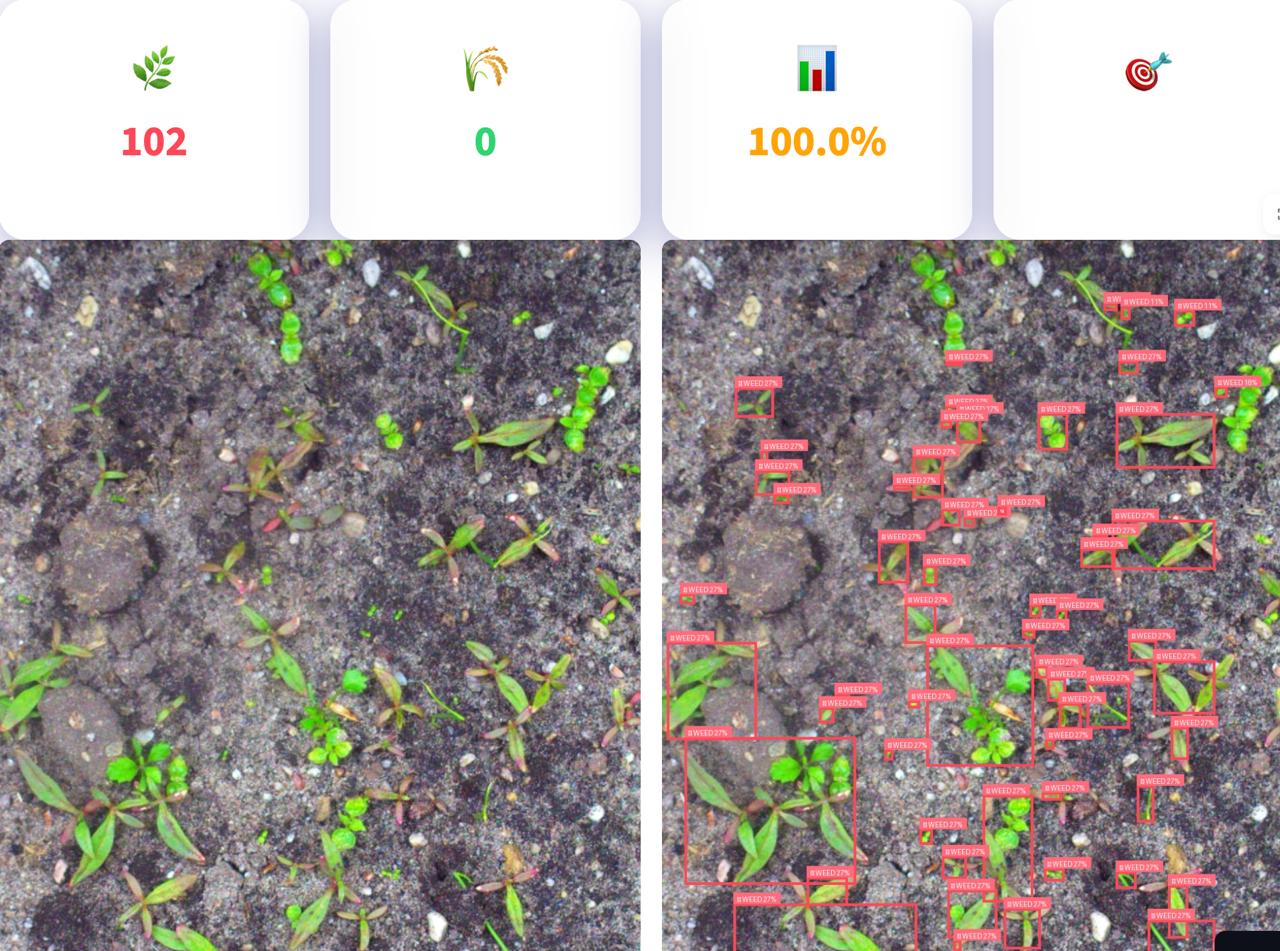
🌱 AgriVision AI — From Detection to Real-World Decisions
🚀 Inspiration
This project started from a simple question:
Why do AI models perform well in metrics, but struggle in real-world agricultural environments?
While exploring weed detection in crop fields, I realized that many existing approaches focus heavily on model accuracy, but overlook how these models behave under real conditions — especially when decisions directly affect physical outcomes such as crop damage.
This curiosity led me to build a system that not only detects weeds, but also evaluates how usable those detections are in practice.
🧩 Problem
During development, I discovered a key limitation:
The training dataset (from Kaggle) used large bounding boxes covering entire weed regions, rather than individual plants.
As a result, the model learned to detect aggregated weed areas instead of discrete plant instances.
This created several real-world issues:
- Over-detection in dense areas
- Large, imprecise bounding boxes
- Difficulty distinguishing crop vs weed
- Inflated weed counts
🛠️ Solution
Instead of treating this as a model-only problem, I approached it as a system-level challenge.
I introduced an OpenCV-based post-processing layer that:
- Filters unrealistic bounding boxes
- Applies Non-Max Suppression (NMS)
- Removes noise and extreme detections
- Refines detection outputs into more meaningful plant-level approximations
This significantly improved the practical usability of the model.
⚙️ How It Works
The system pipeline:
- Image input (field image or video frame)
- TFLite-based object detection model
- Output parsing and normalization
- Post-processing layer (filtering + NMS + heuristics)
- Visualization (bounding boxes, metrics, density)
- Decision support outputs (weed count, density, insights)
📊 Key Features
- 🌿 Weed detection with real-time visualization
- 🎥 Video frame analysis
- 📈 Weed density estimation
- 🧠 Post-processing for real-world reliability
- 📍 Insight layer for decision support
⚡ What Makes It Different
Most projects stop at “model prediction”.
This project focuses on:
Bridging the gap between model output and real-world usability
Instead of optimizing only for accuracy, it addresses:
- dataset limitations
- model behavior in field conditions
- practical interpretation of predictions
📚 What I Learned
- Dataset quality directly shapes model behavior
- High mAP ≠ usable system
- Post-processing is critical in real-world AI
- Understanding why a model behaves a certain way is more important than just improving metrics
🔥 Challenges
- Handling noisy detections and overlapping boxes
- Dealing with dataset-level limitations
- Preventing over-detection in dense scenes
- Balancing precision vs usability
🚀 Future Work
- Retrain model using datasets with per-plant annotations (e.g., DeepWeeds, CottonWeed)
- Improve crop vs weed classification
- Add GPS-based field mapping
- Integrate decision-making systems for precision agriculture
- Extend to real-time deployment on edge devices
💡 Final Thought
This project is not just about detecting weeds.
It is about designing AI systems that work reliably in the real world, where every prediction can lead to a physical action.
And that’s where true impact happens.


Log in or sign up for Devpost to join the conversation.