-
AgriverseAI: Intelligent Agriculture Platform
Inspiration
India is an agriculture-driven country, but there is a large gap between farmers and technology. Farmers still depend on traditional methods and do not have access to up-to-date information about crops, weather, irrigation, and market prices. This gap motivated us to create a solution that gives farmers the knowledge and digital tools they need in a simple, user-friendly way.
What it does
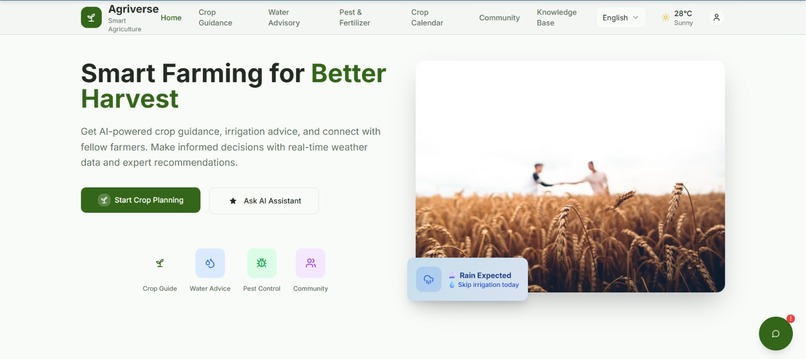
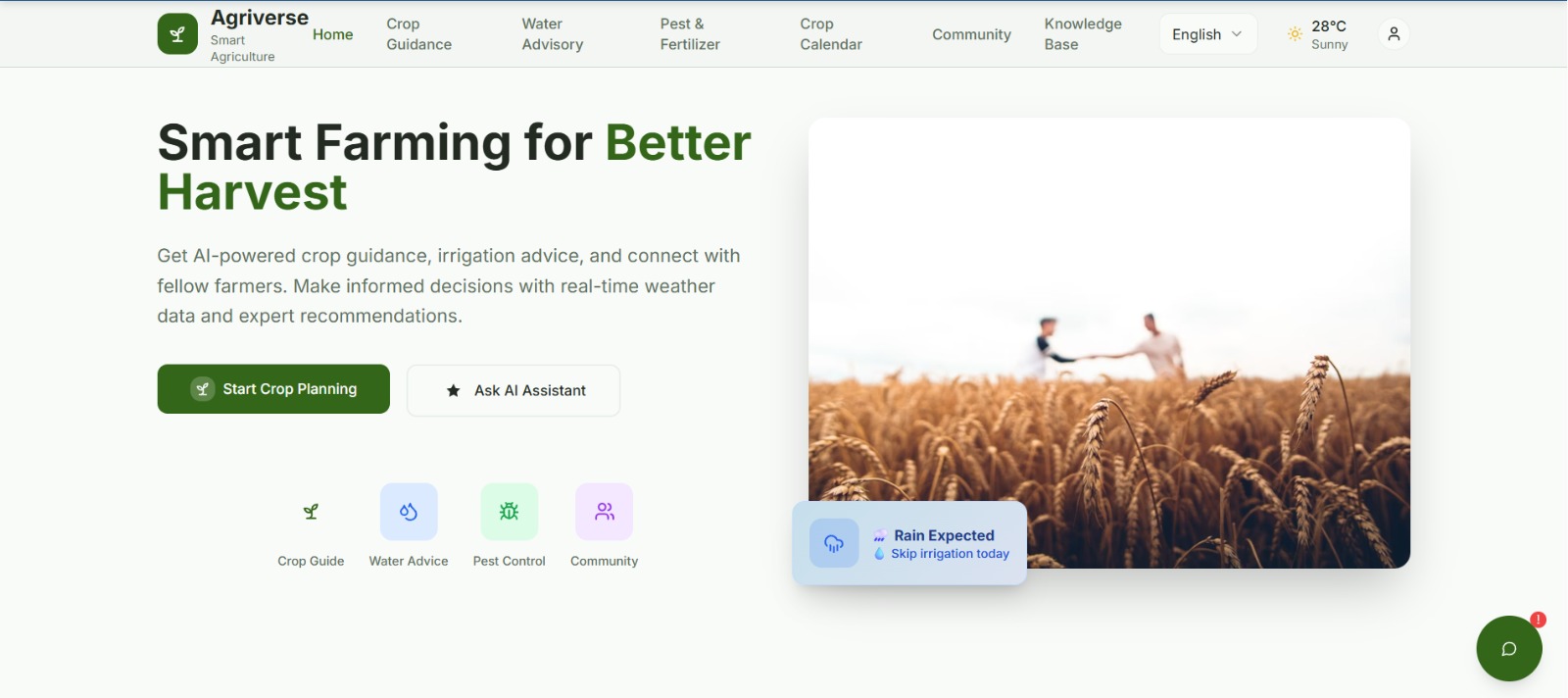
Our platform acts as a one-stop intelligent assistant for farmers. It provides: *Crop-specific guidance from sowing to harvesting. *AI-powered pest and disease detection using images. *Smart irrigation suggestions based on weather and soil data. *Real-time weather forecasts and alerts. *Market price updates from nearby mandis. *A farmer community space and expert support. In short, it helps farmers make better decisions, reduce risks, and increase profits
How we built it
We used React Native for the frontend to make it cross-platform, and Node.js with Firebase for backend and data storage. APIs such as OpenWeather and government market data sources were integrated for real-time updates. For AI features, we trained models with TensorFlow and OpenCV to detect pests and give recommendations. We worked collaboratively, dividing tasks between frontend, backend, AI/ML, and research on agriculture data.
Challenges we ran into
*Finding reliable agricultural datasets was tough. Most were massive, scattered, or unstructured, so cleaning and preparing them for training took significant time. *Deployment was another challenge—scaling the app for real-world users required optimization and careful testing. *Ensuring the app remained simple and usable for farmers with little technical experience also pushed us to rethink UI/UX design.
Accomplishments that we're proud of
*Successfully building an all-in-one agriculture platform that integrates multiple features instead of focusing on just one. *Making the platform multi-language and farmer-friendly to ensure accessibility. *Working as a team, overcoming dataset and deployment issues, and turning an idea into a working prototype.
What we learned
*How to work with large, unstructured datasets and clean them for AI/ML use. *Practical experience with deploying applications and handling scalability. *The importance of designing technology that is simple, localized, and user-first. *That teamwork and persistence can turn a rough idea into an impactful solution.
What's next for AgriverseAI: Intelligent Agriculture Platform
*Adding livestock management and expanding beyond crops. *Integrating government programs, subsidies, and crop insurance details to support farmers financially. *Partnering with agricultural universities, NGOs, and government organizations for reliable knowledge and broader reach. *Using satellite data and soil testing APIs for more accurate recommendations. *Scaling the app to reach farmers in various regions and languages.
Built With
- express.js
- html
- javascript
- json
- node.js
- react
- replit
- versal


