-
-
LOGO PAGE
-
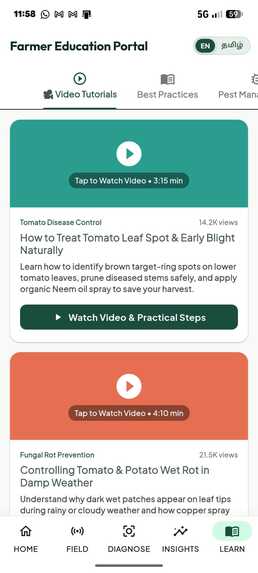
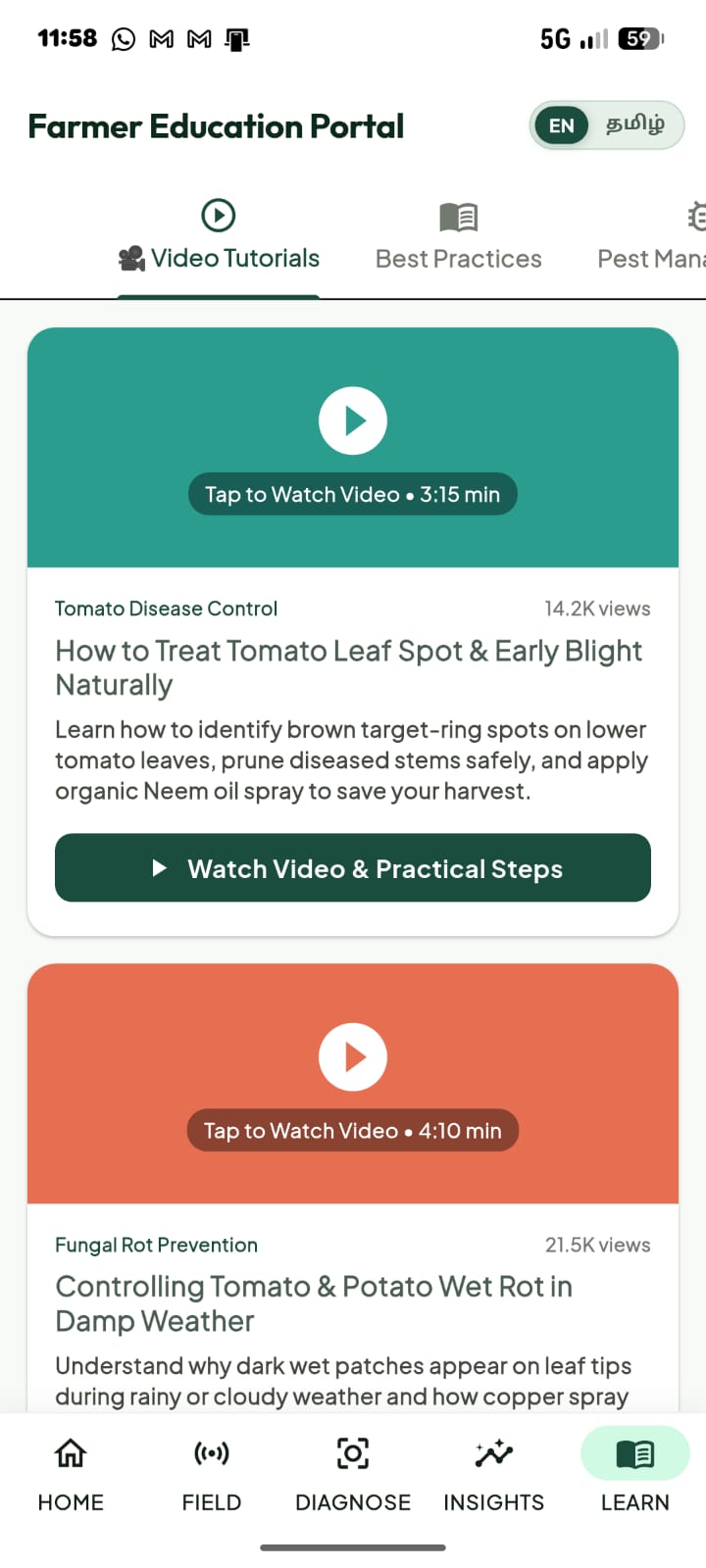
EDUCATION PAGE
-
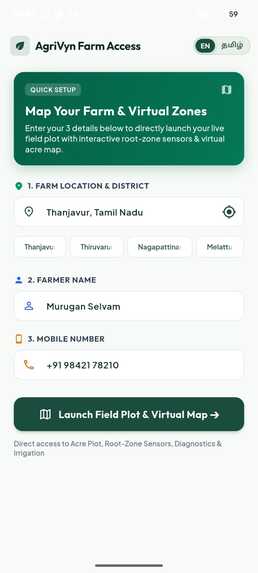
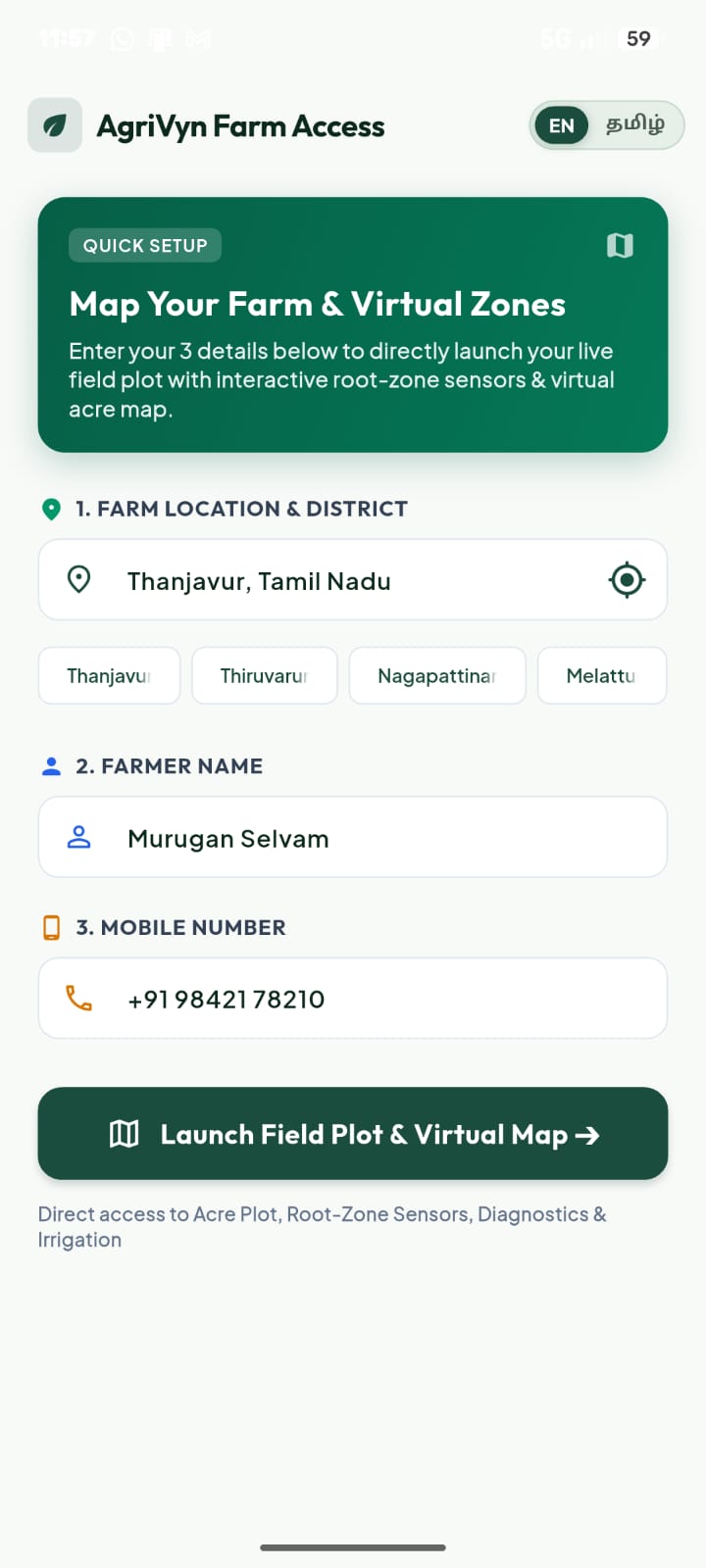
REGISTER SCREEN
-
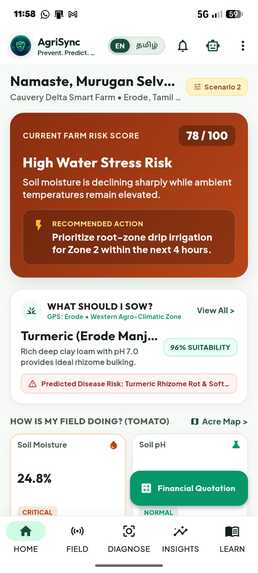
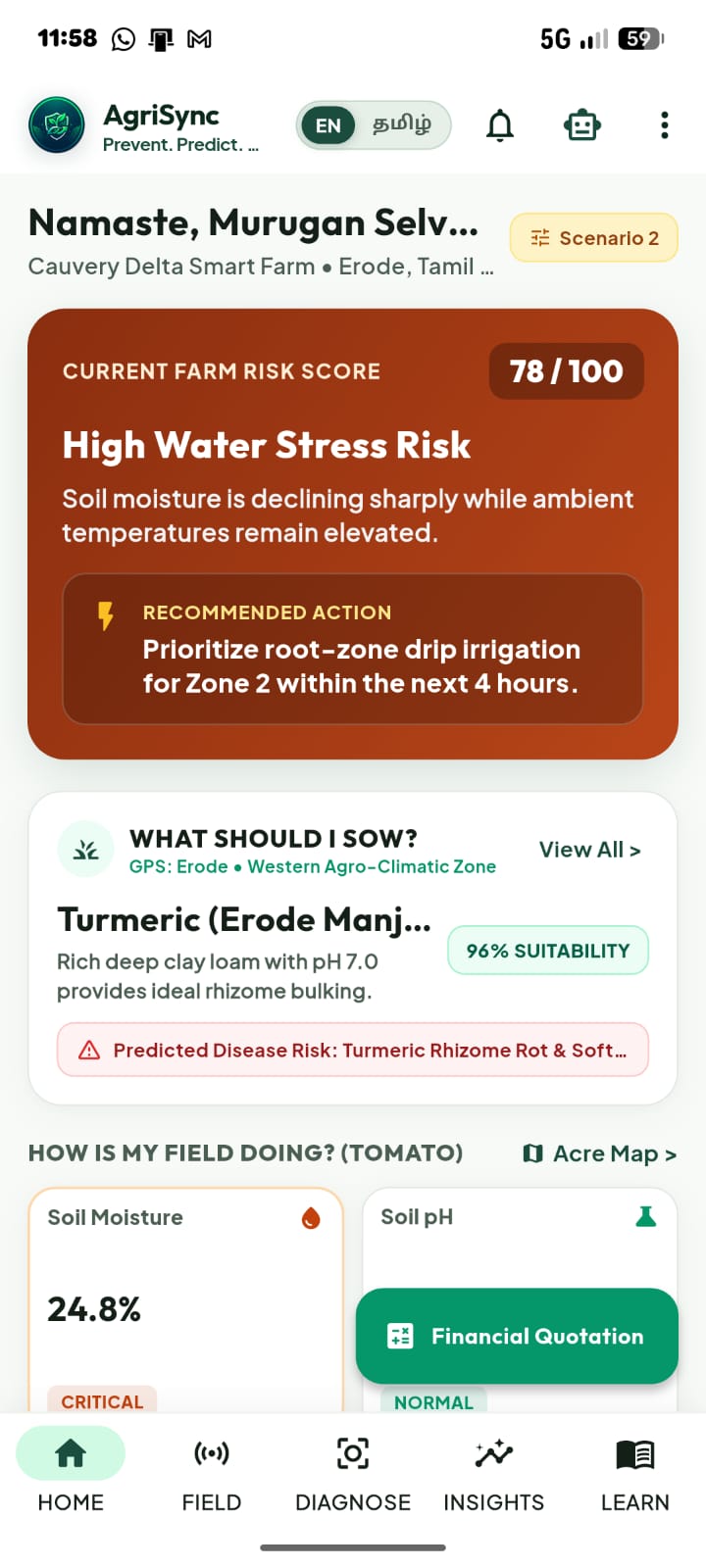
HOME PAGE
-
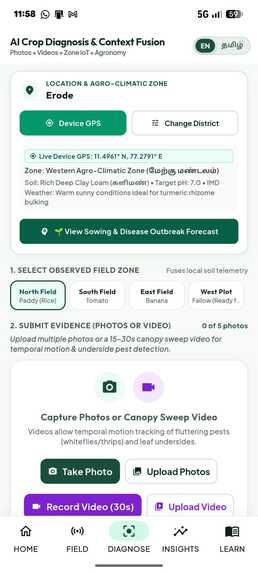
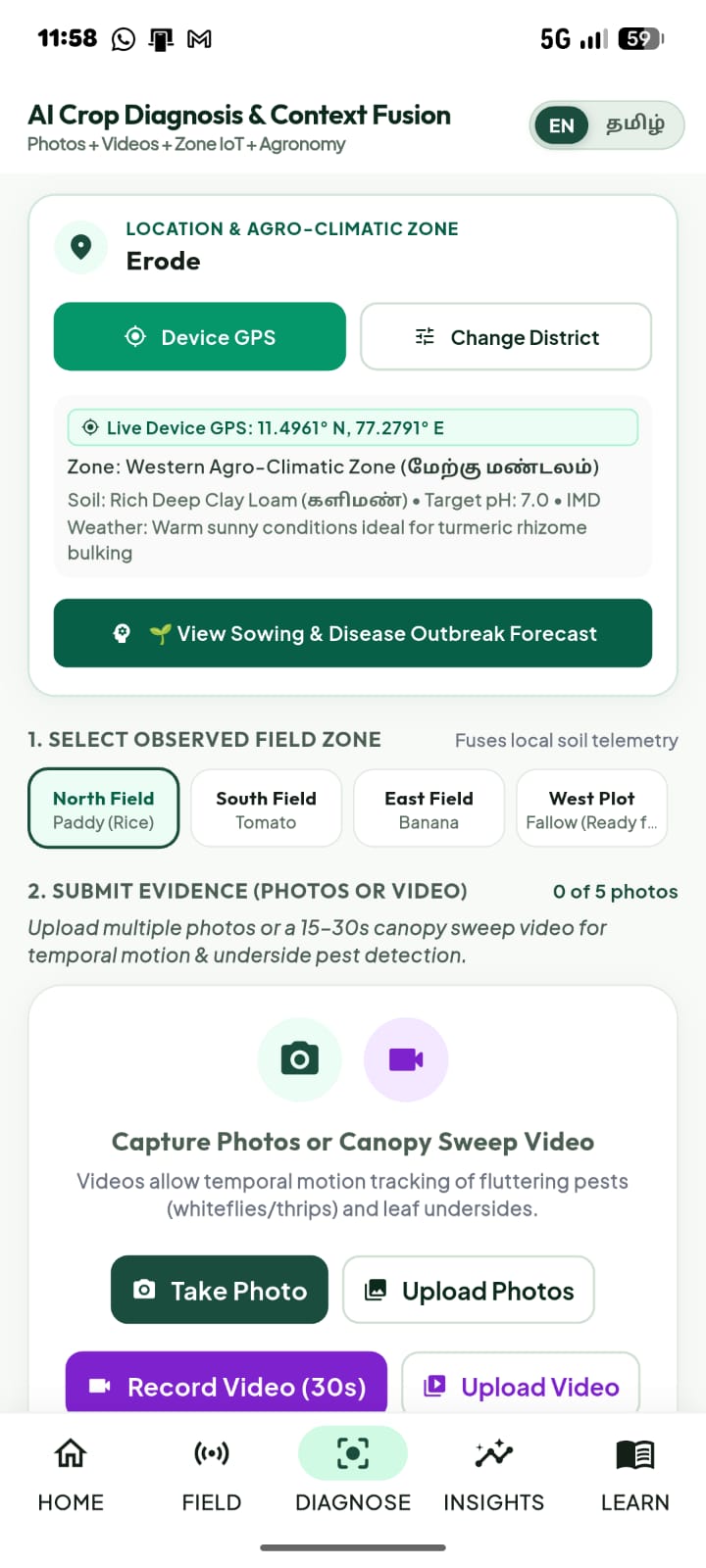
DIAGNOSIS PAGE (COMPUTER VISION)
-
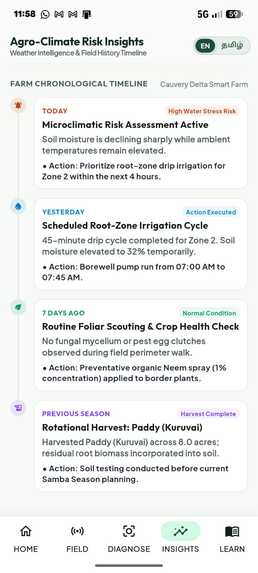
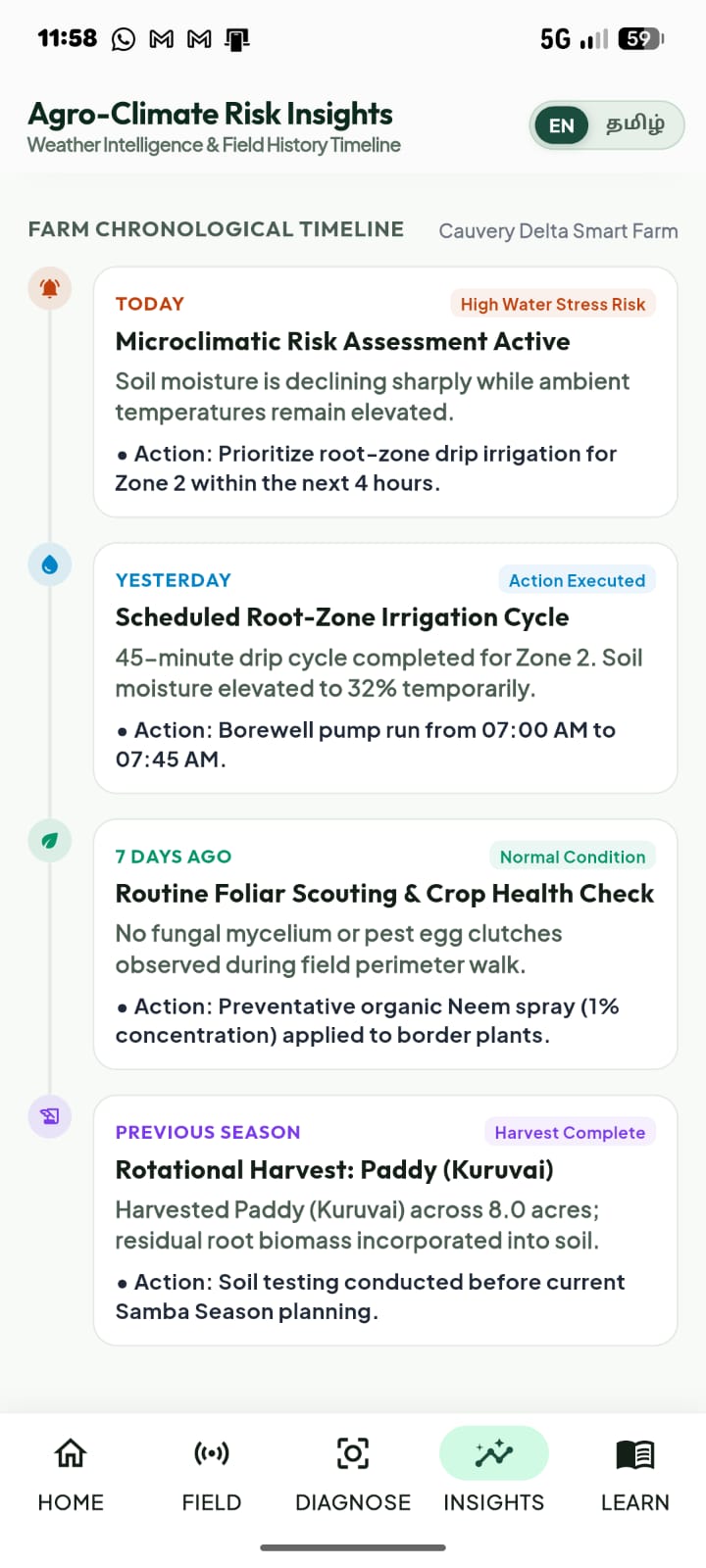
INSIGHTS
-
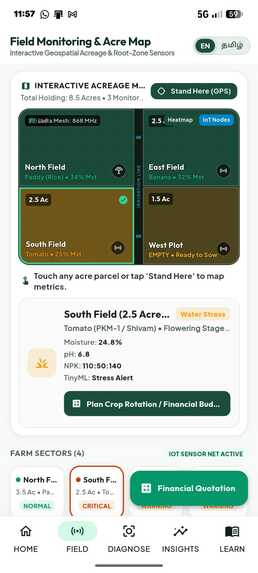
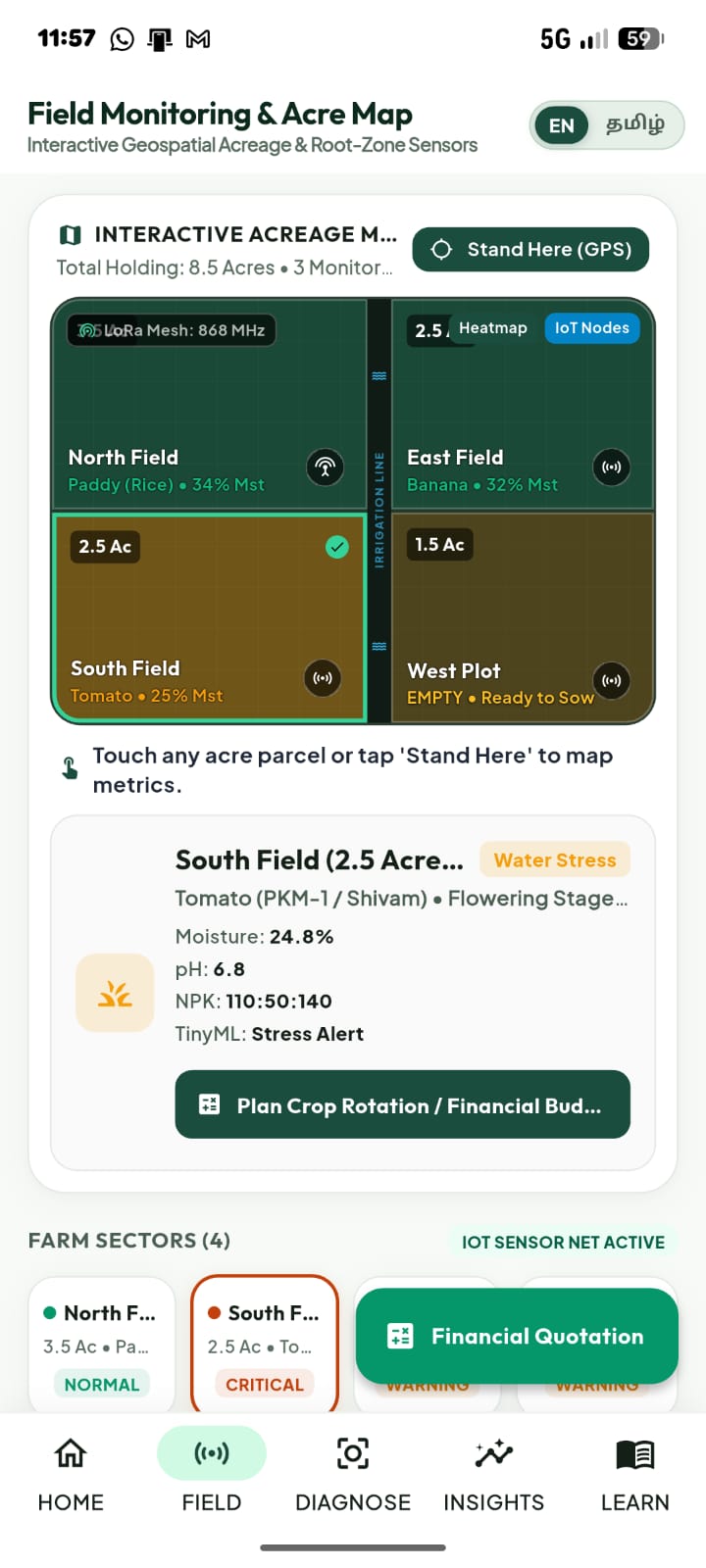
PLOTTING PAGE
Inspiration
Agriculture is increasingly affected by changing rainfall patterns, heat stress, drought conditions, excess rainfall and unpredictable weather. At the same time, many farm decisions are still made with incomplete information about what is actually happening at the field level.
During our interaction with agricultural stakeholders and while studying field conditions, we identified an important gap: regional weather information tells us what may happen around a location, while field sensors tell us what is actually happening in the soil and crop environment. Crop images provide another layer of evidence, but these signals are often disconnected.
This inspired us to build AgriSync — a system that brings these signals together using AI to help farmers understand climate-related risks earlier and take more informed actions.
Our goal is not to replace the farmer's experience. It is to give that experience better, continuous and field-specific evidence.
What it does
AgriSync is a portable, field-deployable IoT and AI system for climate-aware smart farming.
It combines:
- IoT field measurements — soil moisture, pH, NPK, soil temperature, air temperature and humidity.
- Official weather information — regional weather conditions and forecasts provide broader climate and weather context.
- Crop images — farmers can capture leaf or crop images through the mobile application for disease and pest screening.
- Farm context — crop type, crop stage, previous crop, farm history and farmer observations provide additional context.
- AI analysis — MobileNetV3 supports crop-image analysis, while XGBoost is used for structured field-data inference.
- Contextual data fusion — image, soil, weather and farm information are combined before generating a risk assessment.
- Actionable advisory — the system can support irrigation decisions, nutrient management, crop-health screening, environmental-risk awareness and pre-sowing crop/cropping-pattern recommendations.
Instead of giving the farmer isolated sensor readings or an image prediction, AgriSync aims to answer a more useful question:
"What is happening in this field, what risk is emerging, and what should the farmer consider doing next?"
How we built it
We designed AgriSync as a layered system connecting physical sensing with AI-driven decision support.
1. Field sensing
We developed a portable sensing setup using an STM32 Nucleo-based controller with sensors for soil moisture, pH, NPK, soil temperature, and air temperature and humidity.
The system is designed for representative spatial sampling, because one sensor point should not automatically be assumed to represent an entire field.
2. Field communication
Sensor data can be transmitted through LoRa-based low-power communication, making the architecture suitable for agricultural environments where conventional connectivity may be limited.
3. AI layer
For crop images, we selected MobileNetV3 as a lightweight computer-vision architecture for disease and pest-related crop-health screening.
For structured field measurements, we use an XGBoost-based machine-learning approach to identify patterns related to field conditions, irrigation requirements and agricultural risks.
4. Context fusion
The key part of AgriSync is not a single model. It is the connection between multiple evidence sources.
We combine:
Crop Image + IoT Field Data + Weather Context + Farm History + Farmer Input
to produce a more context-aware risk assessment.
5. Farmer-facing system
The intelligence is presented through a Flutter-based mobile application, supported by a web dashboard for field-level monitoring and provisions for SMS and automated voice/IVR communication.
This allows the same intelligence to reach users through different levels of digital access.
Challenges we ran into
Building a system that connects hardware, AI and agriculture created several practical challenges.
Sensor reliability: Soil sensors can experience calibration variation, drift and environmental interference. We learned that sensor readings cannot simply be treated as perfect ground truth.
Field variability: A farm is not uniform. Soil moisture, nutrients and other conditions can change across locations. This led us to adopt representative spatial sampling rather than assuming that one measurement represents an entire field.
Weather versus field conditions: Regional weather information and local field measurements are different types of evidence. We had to design the system so that official weather data provides broader context while IoT measurements describe local conditions.
AI uncertainty: A crop image alone cannot provide a complete agronomic diagnosis. Lighting, crop stage, image quality and unseen symptoms can affect model predictions. This motivated our confidence-aware and multimodal approach.
Connectivity: Agricultural environments may have unreliable connectivity. This influenced our edge-oriented architecture and use of low-power communication.
Hardware–software integration: Connecting sensors, microcontroller acquisition, communication, AI processing and the mobile interface into one workflow required iterative testing and debugging.
Accomplishments that we're proud of
We are proud that AgriSync has progressed beyond a software concept into an integrated hardware-and-AI prototype.
- Built a working sensor acquisition setup around STM32.
- Integrated soil and environmental sensing for field-level measurements.
- Established the LoRa-based communication workflow.
- Developed the software architecture for combining field data and crop images.
- Integrated MobileNetV3-based computer vision for crop-health analysis.
- Developed an XGBoost-based structured-data intelligence layer.
- Built a Flutter-based farmer application for crop diagnosis and field insights.
- Developed a web-based monitoring/dashboard concept for agricultural field personnel.
- Designed advisory delivery through mobile, SMS and automated voice/IVR channels.
- Introduced pre-sowing crop and cropping-pattern recommendation rather than limiting the system to reactive disease detection.
- Developed a multimodal approach that considers soil + weather + crop image + farm history + farmer observations.
Most importantly, we built AgriSync around a practical principle:
AI should provide evidence and explain risk; the farmer should remain in control of the decision.
What we learned
The biggest lesson was that building AI for agriculture is fundamentally different from building an AI model in isolation.
A high-performing model is not enough if the input data is unreliable, the field conditions are different from the training data, or the recommendation cannot be understood and acted upon by the farmer.
We learned to think about the complete chain:
Sense → Validate → Understand → Fuse → Assess Risk → Advise → Learn
We also learned that climate-aware agriculture requires combining different scales of information. Weather services provide regional context, while sensors provide local ground truth and farmers provide knowledge that cannot be captured completely by sensors.
Another important lesson was the importance of uncertainty. Instead of forcing the system to make a confident decision from weak evidence, AgriSync is designed to communicate confidence and supporting evidence so that uncertain cases can be reviewed.
What's next for AgriSync: AI Climate Intelligence for Smarter Farming
Our next step is to move from an integrated prototype toward validated field intelligence.
We plan to:
- Conduct systematic sensor calibration and reliability testing.
- Expand multi-point field sampling to better capture spatial variability.
- Collect diverse crop, disease, pest and environmental datasets from real field conditions.
- Improve confidence-aware multimodal risk assessment.
- Optimize suitable models for embedded/edge deployment.
- Integrate richer weather and climate-risk information.
- Develop stronger early-warning capabilities for heat, drought and excess-rain conditions.
- Evaluate irrigation and input-use recommendations through field trials.
- Measure real-world outcomes such as decision time, water efficiency, input efficiency and crop-health indicators.
- Improve local-language advisory and voice-based access for farmers with limited smartphone usage.
Our long-term vision is to build an AI climate intelligence layer for agriculture that does not simply tell farmers what happened, but helps them understand what is changing, why it matters to their field, and what action they can consider taking next.
AgriSync — Sense the Field. Understand the Risk. Act Earlier.
Built With
- ai
- climateintelligence
- computervision
- dart
- edgeai
- environmentmonitoring
- firebase
- flutter
- iot
- lora
- machine-learning
- mobilenetv3
- moisturesensor
- npksensor
- python
- restapi
- soilphsensor
- stm32
- tinyml
- wetherdata
- xgboost

Log in or sign up for Devpost to join the conversation.