Inspiration
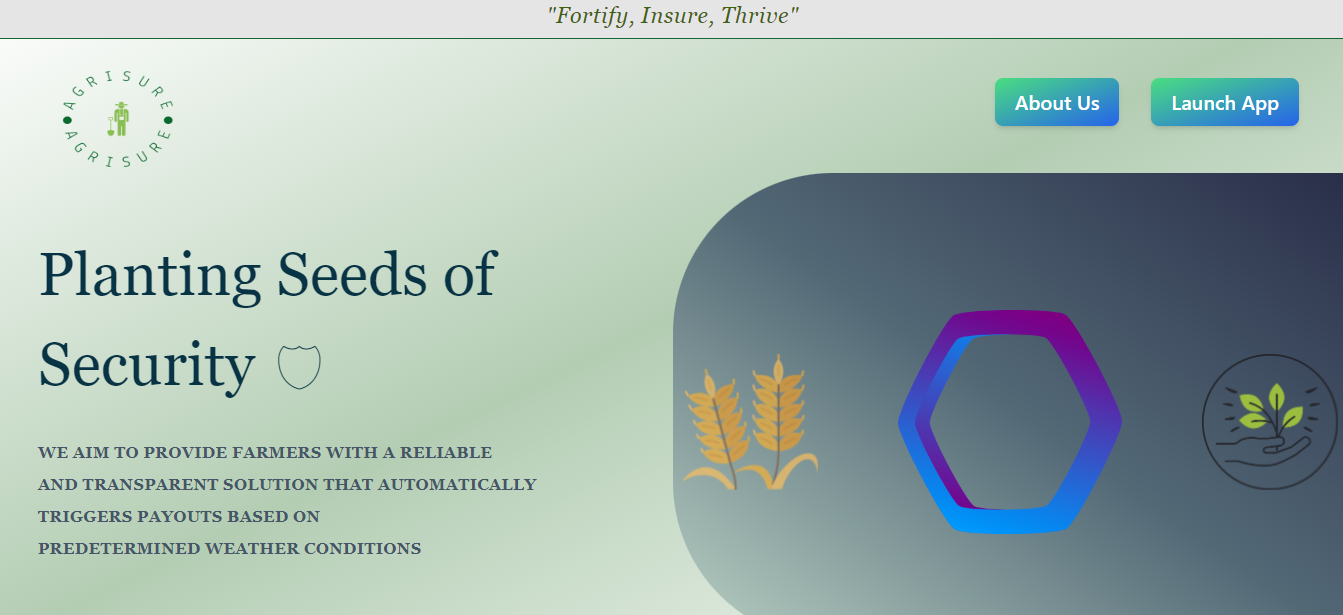
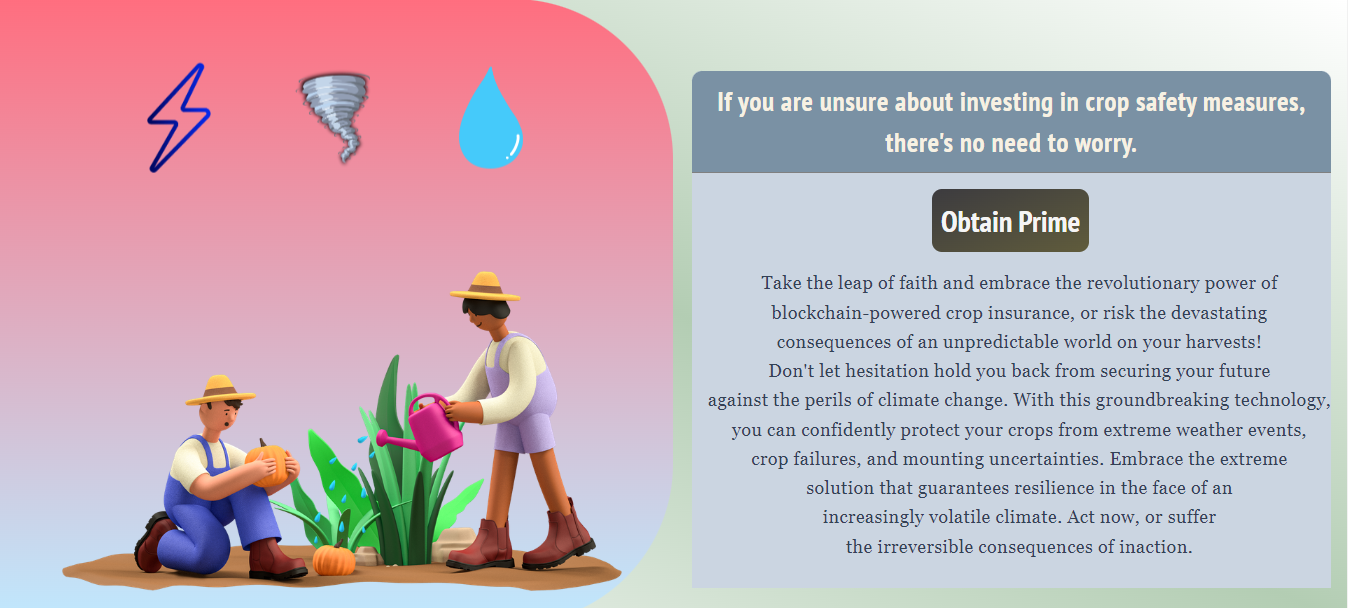
Once upon a time in a small town called Agrisure, a group of ambitious individuals embarked on a mission to create a revolutionary project based on crop insurance. Their goal was to provide farmers with a secure and efficient platform to protect their crops from unpredictable weather conditions and other farming risks.
The team was determined to build a robust system, but they soon encountered a major setback—they had no clear roadmap or blueprint to guide their development process. Frustration settled in as they realized they needed a solid foundation to proceed. They knew they had to find a solution, or their project would be in jeopardy.
One day, while sharing their concerns with a friend, an idea sparked. The friend suggested using blockchain technology as a potential solution. He explained that blockchain was a decentralized and transparent system that could provide security, immutability, and traceability—a perfect fit for the project's requirements.
Excited by this newfound possibility, the team dove headfirst into learning about blockchain technology. They studied its inner workings, understanding how it could be applied to crop insurance, and brainstormed ways to incorporate it into their project.
As they delved deeper into blockchain, the team realized the immense potential it held for their crop insurance platform. Blockchain's decentralized nature meant that no single entity would have control over the system. This feature resonated with their vision of creating a fair and transparent insurance platform for farmers.
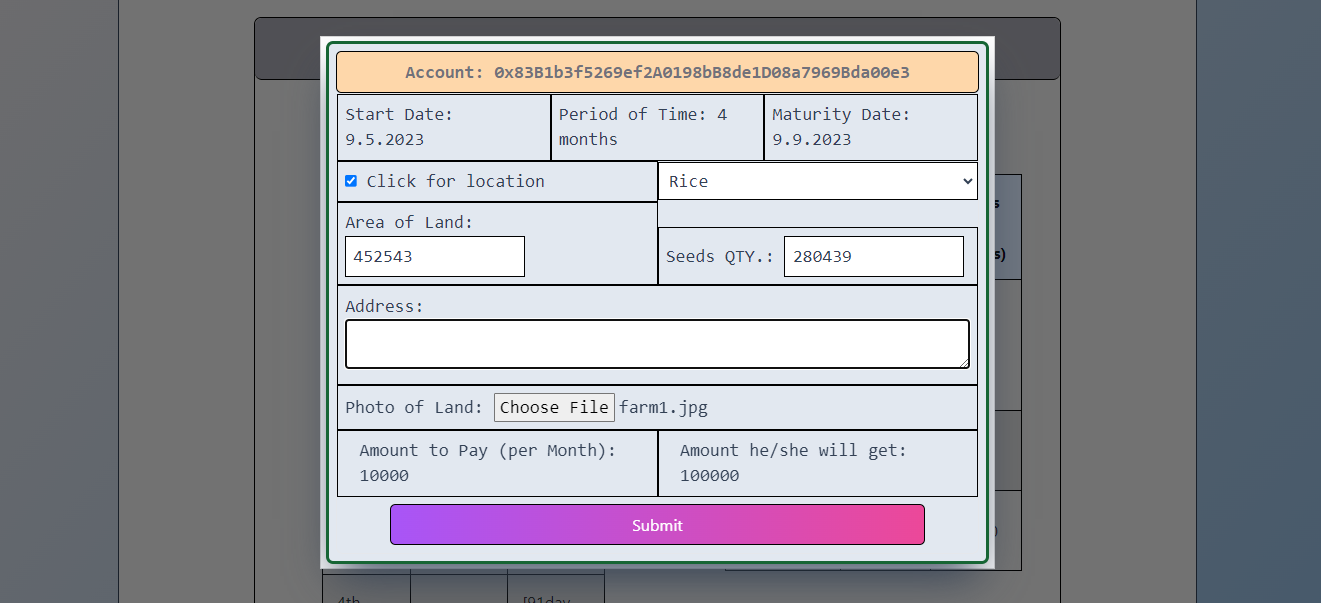
With their newfound enthusiasm, the team started designing the architecture of their blockchain-based crop insurance project. They envisioned a system where farmers could register their crops on the blockchain, and smart contracts would automatically execute insurance policies based on predetermined conditions such as weather patterns or pest infestations.
By leveraging the blockchain's transparent nature, the team could ensure that policyholders would have access to real-time updates and claim settlements. Farmers would be able to track the progress of their claims, removing any doubt or ambiguity from the insurance process.
Furthermore, the team understood that blockchain's immutability would eliminate the risk of fraudulent claims or tampering with policy details. This enhanced security measure would not only benefit the farmers but also instill trust in insurers and other stakeholders.
As the project progressed, the team faced numerous challenges. They encountered technical hurdles, had to navigate regulatory landscapes, and convince skeptical investors. However, their unwavering determination and belief in the power of blockchain propelled them forward.
Gradually, the project gained traction, and stakeholders began to recognize its potential. Investors came onboard, providing the necessary funding to bring the project to life. Regulatory bodies were impressed by the transparency and security features, facilitating smooth navigation through legal frameworks.
Word spread throughout the farming community about the upcoming blockchain-based crop insurance platform in Agrisure. Farmers eagerly anticipated a system that would safeguard their livelihoods and provide them with the support they desperately needed.
Finally, after months of hard work and dedication, the team successfully launched their blockchain-based crop insurance project. Farmers flocked to the platform, registering their crops and purchasing insurance policies with newfound confidence.
Over time, the project proved to be a resounding success. Farmers experienced smoother claim settlements, reduced instances of fraud, and greater trust in the insurance system. The town of Agrisure thrived, as its agricultural sector flourished under the protection of this innovative crop insurance platform.
The story of Agrisure's journey from uncertainty to success serves as a testament to the transformative power of blockchain technology. Through perseverance, creativity, and a little bit of serendipity, the team overcame obstacles and revolutionized the way crop insurance was conducted in their community. Their story inspired others to explore the potential of blockchain in solving real-world problems, leaving a lasting impact on the agricultural industry and beyond.
What it does
Crop insurance can benefit greatly from the implementation of blockchain technology. Here are some key ways in which blockchain can enhance the crop insurance industry:
Transparent and Immutable Records: Blockchain provides a transparent and immutable ledger that records all transactions and policy details. This ensures that policyholders, insurers, and regulators have access to accurate and tamper-proof information about insured crops, policy terms, premiums, and claim settlements. The transparency helps build trust and reduces disputes.
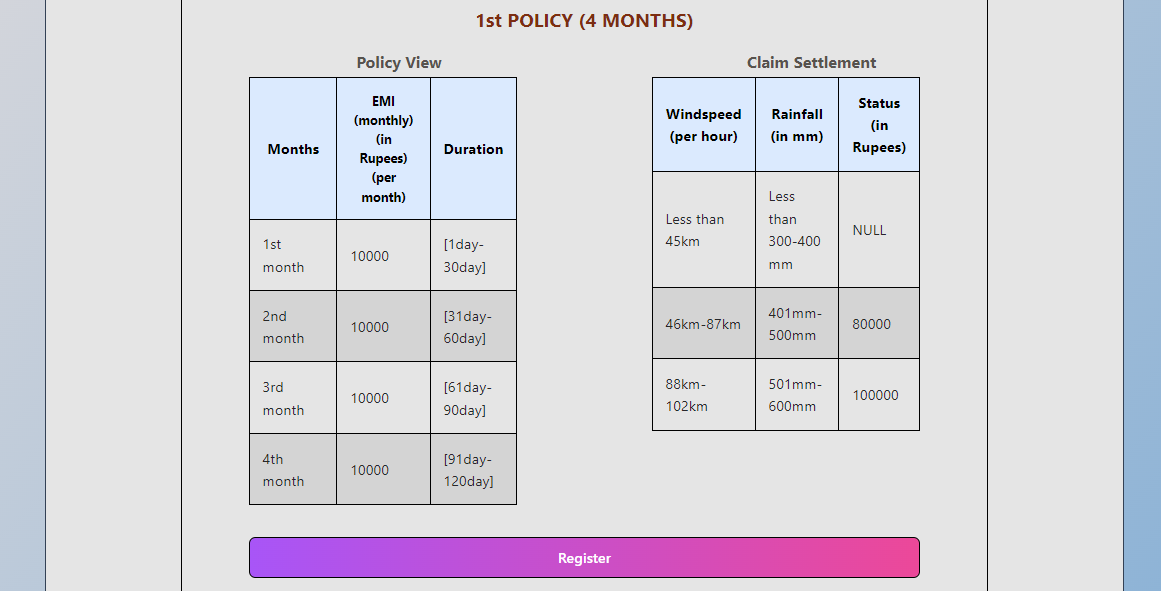
Smart Contracts: Blockchain enables the use of smart contracts, which are self-executing agreements with predefined conditions. In the context of crop insurance, smart contracts can automatically trigger policy payouts when certain predefined triggers, such as adverse weather conditions or crop loss, are met. This eliminates the need for manual claims processing and speeds up settlements.
Data Integrity and Verification: Crop insurance relies heavily on accurate and timely data, such as weather patterns, crop yields, and damage assessments. Blockchain's decentralized and distributed nature ensures that data is stored securely across multiple nodes, reducing the risk of data loss or manipulation. This helps in establishing data integrity and providing verifiable information for policy underwriting and claim assessments.
Fraud Prevention: Blockchain's immutability and transparency make it highly resistant to fraud. By recording every transaction and policy update on the blockchain, it becomes nearly impossible for individuals to manipulate policy terms, submit false claims, or engage in fraudulent activities. This helps protect both insurers and farmers from fraudulent practices, reducing losses and improving overall trust in the system.
Efficient Claims Processing: Blockchain streamlines the claims processing workflow by automating various manual tasks and reducing paperwork. Smart contracts automatically verify trigger events, initiate claim settlements, and facilitate the transfer of funds. This results in faster and more accurate claims processing, reducing administrative costs and improving the customer experience for farmers.
Risk Pooling and Peer-to-Peer Insurance: Blockchain can enable the creation of decentralized insurance networks where farmers can pool their risks and share insurance coverage directly with each other. This peer-to-peer insurance model eliminates the need for traditional intermediaries and reduces costs. Smart contracts can handle premium contributions, claims, and payouts within the network, ensuring transparency and efficiency.
Traceability and Supply Chain Integration: In some cases, crop insurance may be linked to specific supply chains, such as organic farming or fair-trade certifications. Blockchain can provide a transparent record of the entire supply chain process, including the origin of crops, cultivation practices, and post-harvest handling. This data can be integrated with crop insurance to offer incentives or customized coverage based on sustainable farming practices or quality standards.
By leveraging the capabilities of blockchain, crop insurance can become more efficient, transparent, and secure. Farmers can have access to fair and timely claim settlements, while insurers can mitigate risks effectively and reduce administrative costs. Ultimately, blockchain technology has the potential to revolutionize the crop insurance industry, benefiting both farmers and insurers alike.
How we built it
Our project incorporates a combination of cutting-edge technologies. In the frontend, we utilize Next.js and Tailwind CSS, enabling us to develop a dynamic and responsive user interface. Meanwhile, in the backend, we leverage the power of Solidity for smart contract development, integrating it with Ethers.js and Hardhat to interact with the Ethereum blockchain. Additionally, we integrate IPFS for decentralized and efficient storage of data.
Challenges we ran into
During our project, we encountered several challenges, the first being the lack of a clear blueprint or roadmap. Without a predefined plan, we had to carefully navigate the development process, making decisions and adjustments along the way.
Another significant challenge we faced was obtaining reliable weather data, particularly historical weather information. Accessing accurate historical weather data through APIs proved to be a hurdle, requiring extensive research and exploration of alternative sources to ensure the reliability and completeness of the data used in our crop insurance platform.
Accomplishments that we're proud of
We take pride in accomplishing our goal of developing a crop insurance platform within a 30-day timeframe. Throughout this journey, we have gained valuable knowledge and insights that have significantly contributed to our understanding of the crop insurance industry. The platform has provided us with a wealth of learning opportunities, allowing us to continuously enhance our skills and expertise in this domain.
What we learned
Through this project, we have acquired extensive knowledge in various technologies and gained a deep understanding of the intricacies of crop insurance. The experience has been particularly enlightening regarding the implementation and utilization of Chainlink oracles, which have played a crucial role in connecting our platform with external data sources. This project has provided us with valuable insights and expertise that we can apply to future endeavors in both technology and crop insurance domains.
What's next for Agrisure
Moving forward, our plans for the crop insurance platform include incorporating the following features:
Integration of satellite imagery API: We aim to enhance the accuracy and assessment of crop conditions by integrating a satellite imagery API. This will enable us to gather real-time and high-resolution images for improved risk evaluation and claims processing.
Expansion into reinsurance: We plan to expand our crop insurance coverage by partnering with reinsurance providers. This will help us further mitigate risks and ensure greater financial stability for our policyholders.
Introduction of purely predetermined crop insurance: We intend to introduce a new type of crop insurance that operates solely on predetermined conditions, such as weather patterns or crop growth stages. This will simplify the insurance process and provide farmers with more predictable coverage.
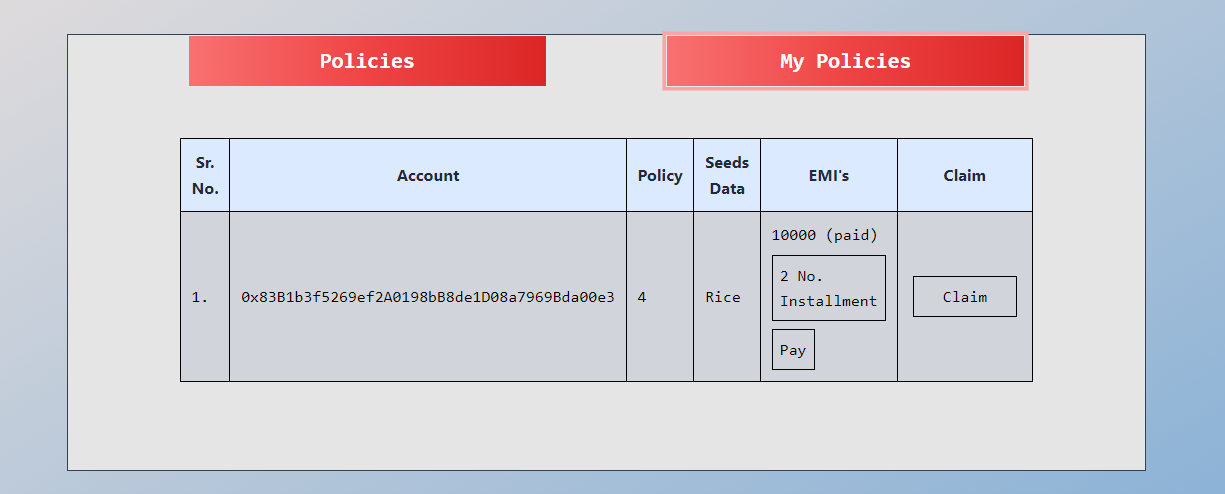
Implementation of a fine system: To encourage timely premium payments, we will introduce a fine system for farmers who miss their due dates. This will help ensure that policies remain active and provide an additional incentive for prompt payment.
Enhanced weather situation triggers: We plan to expand our range of weather situation triggers to provide comprehensive coverage for farmers. By incorporating additional weather parameters and events, we can offer tailored insurance policies that address specific risks faced by different crop types and regions.
These future developments will allow us to offer an even more robust and tailored crop insurance solution, empowering farmers with comprehensive coverage and streamlined processes.
Built With
- chainlinkoracle
- erc20-token
- ethers.js
- hardhat
- historicalweatherapi
- ipfs
- javascript
- next.js
- solidity
- tailwindcss


Log in or sign up for Devpost to join the conversation.