Inspiration
We started with a simple question:
What if a farmer could get most of the important information needed to make a farming decision in one place?
While working on the idea, we realized that a farmer may have to think about many things at the same time — crop health, weather, rain, market prices, demand, storage, and profit. Having all this information is useful, but it can still be difficult to decide what to actually do with it.
That is where the idea for AgriSense AI came from.
We wanted to build something that doesn't just show information, but helps connect the information and turn it into a useful recommendation.
What We Built
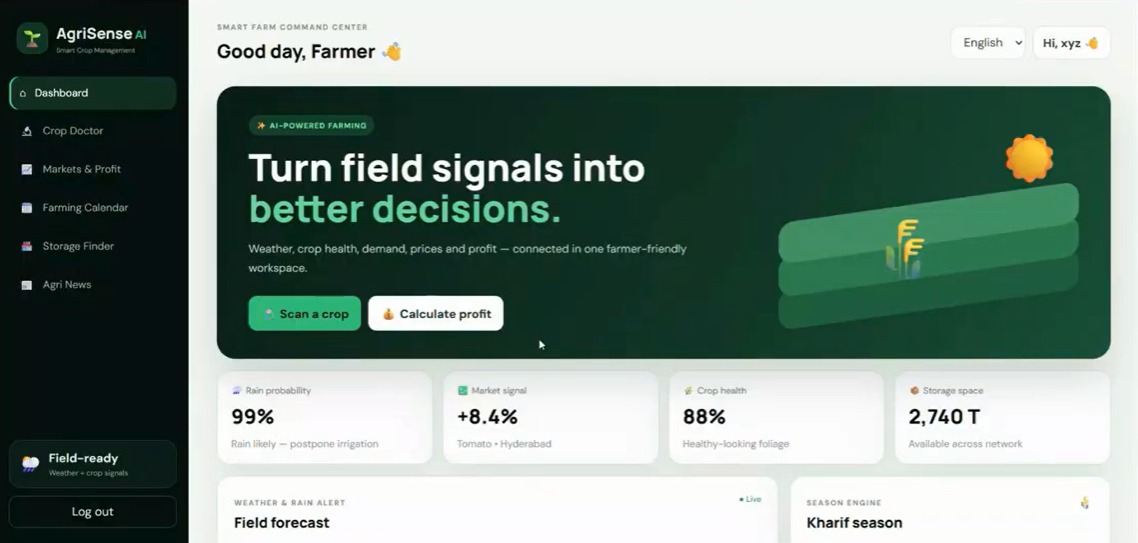
AgriSense AI is a smart crop management platform designed to bring different farming tools together in one place.
The main parts of our platform are:
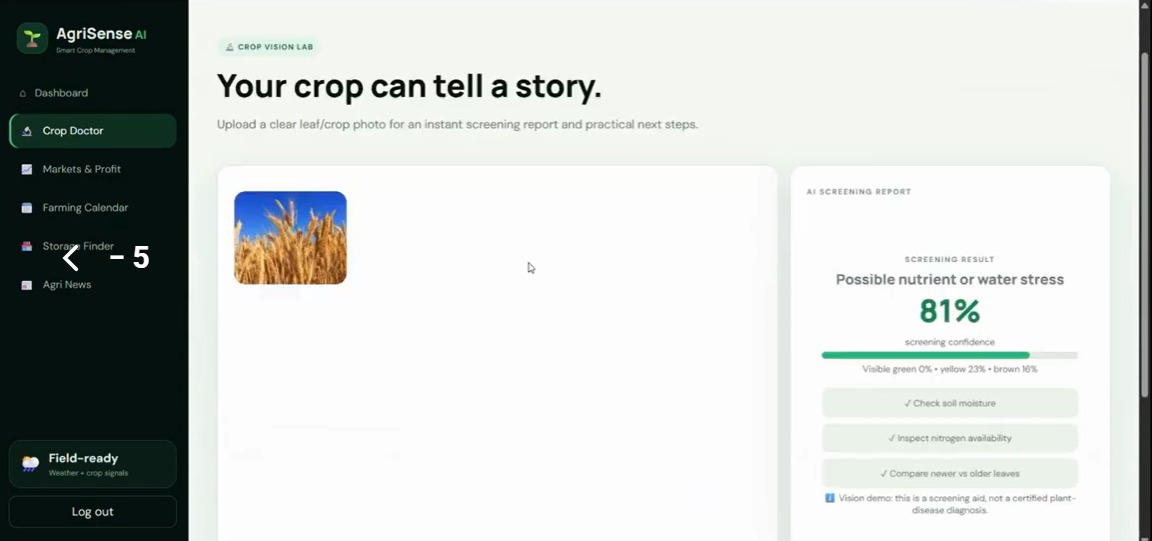
- 🌱 Crop Doctor – Farmers can upload a picture of their crop and get an analysis.
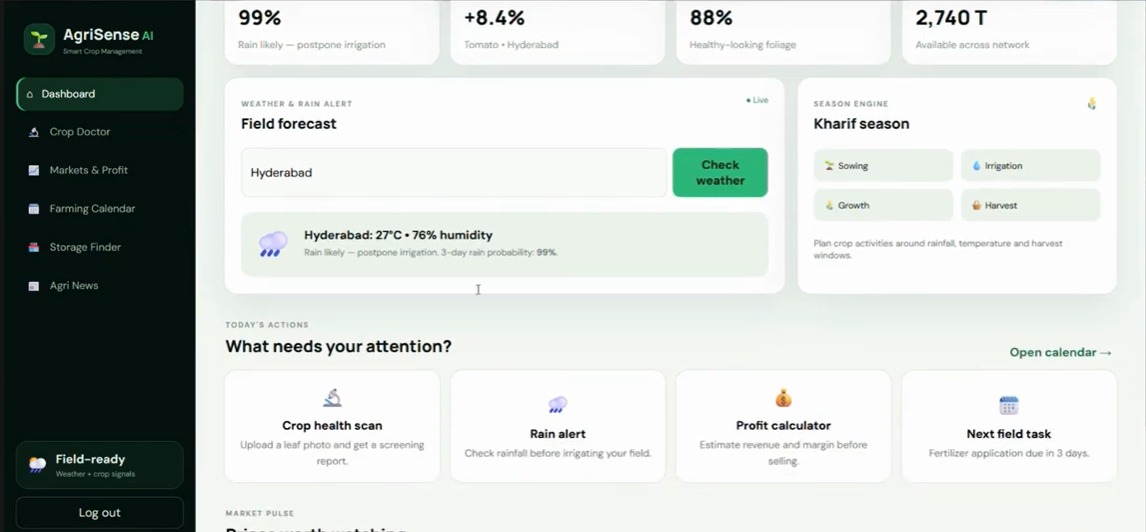
- 🌧️ Weather & Rain Alerts – Provides weather information and important rainfall alerts.
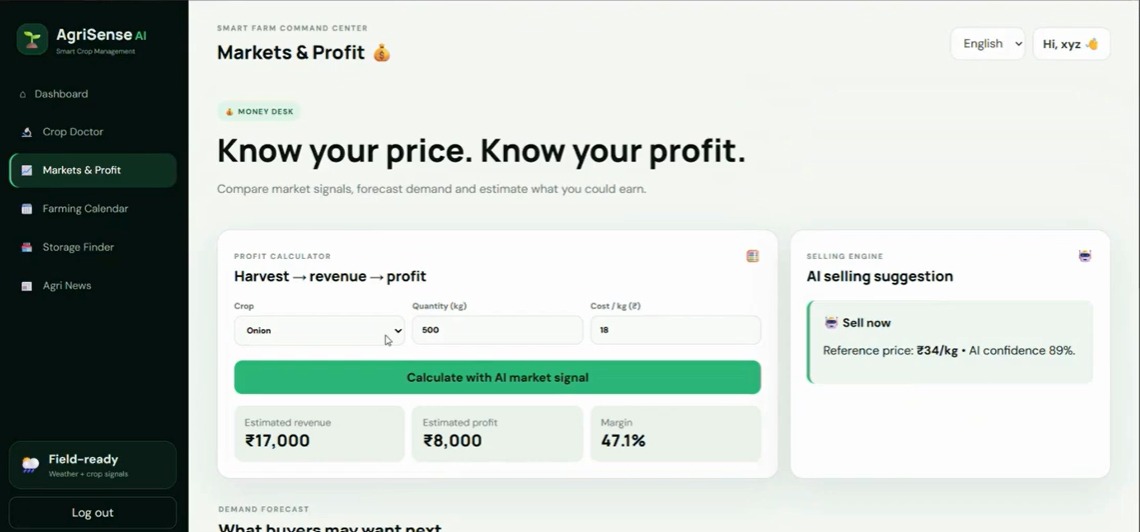
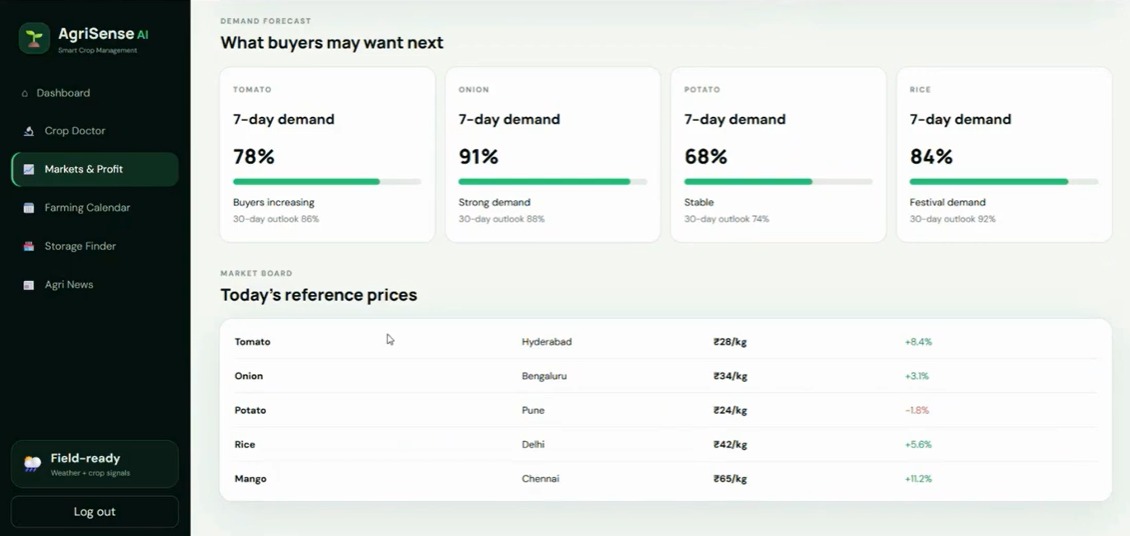
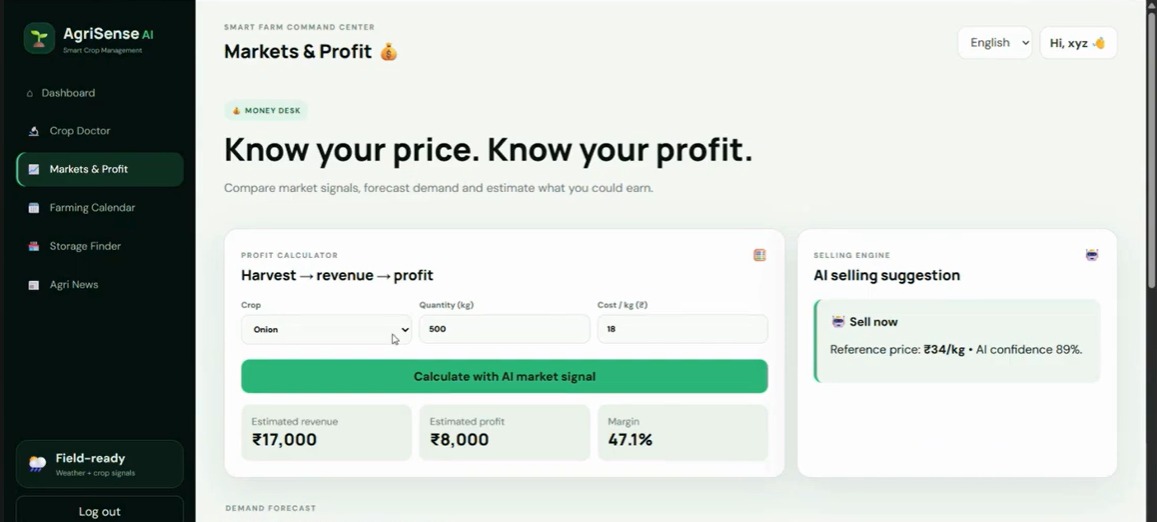
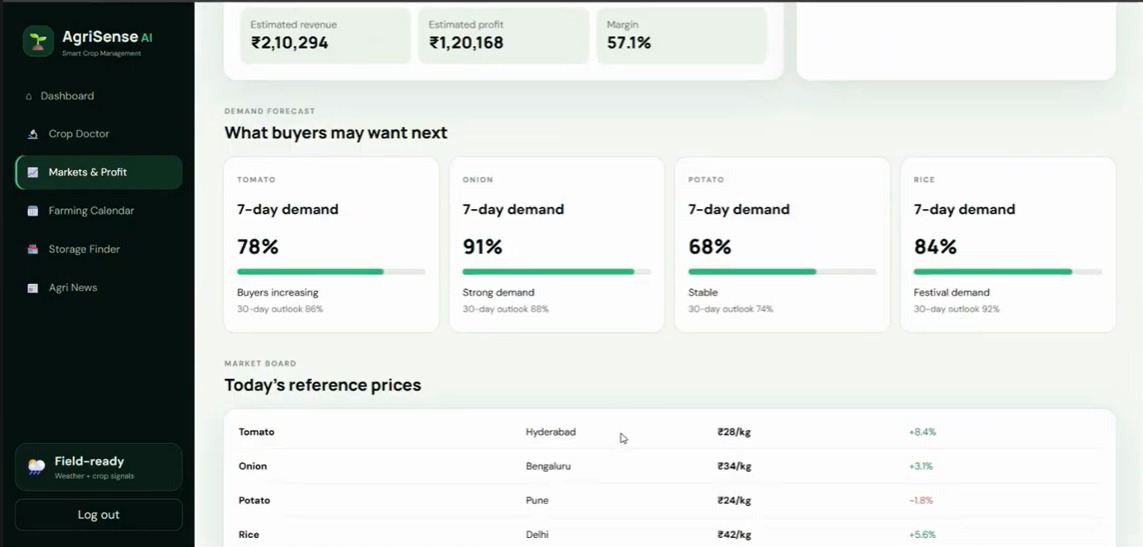
- 📈 Markets & Profit – Provides crop prices, demand information, and profit calculations.
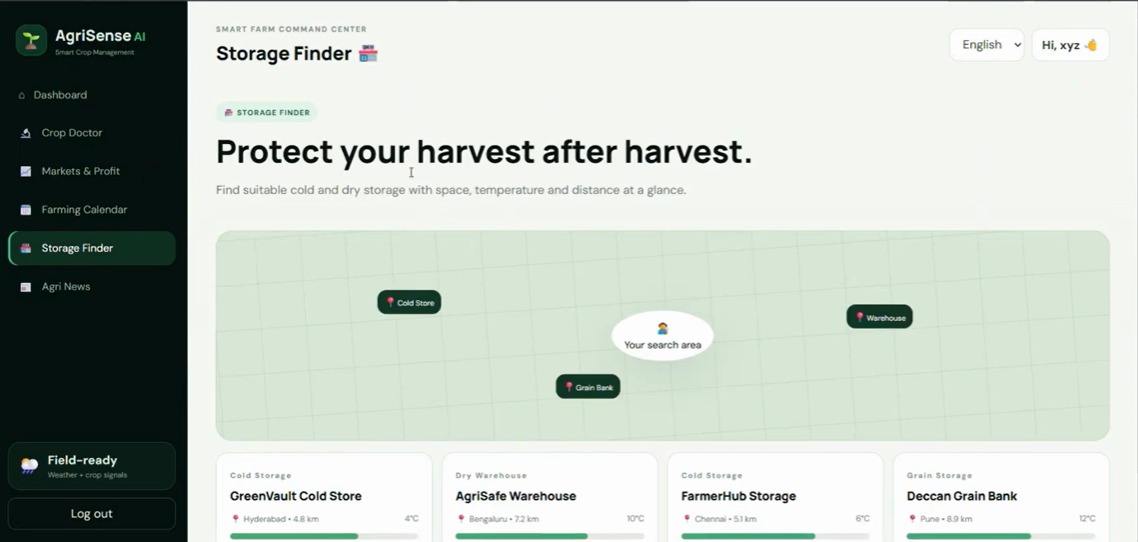
- 🏪 Storage Finder – Helps farmers find suitable storage facilities.
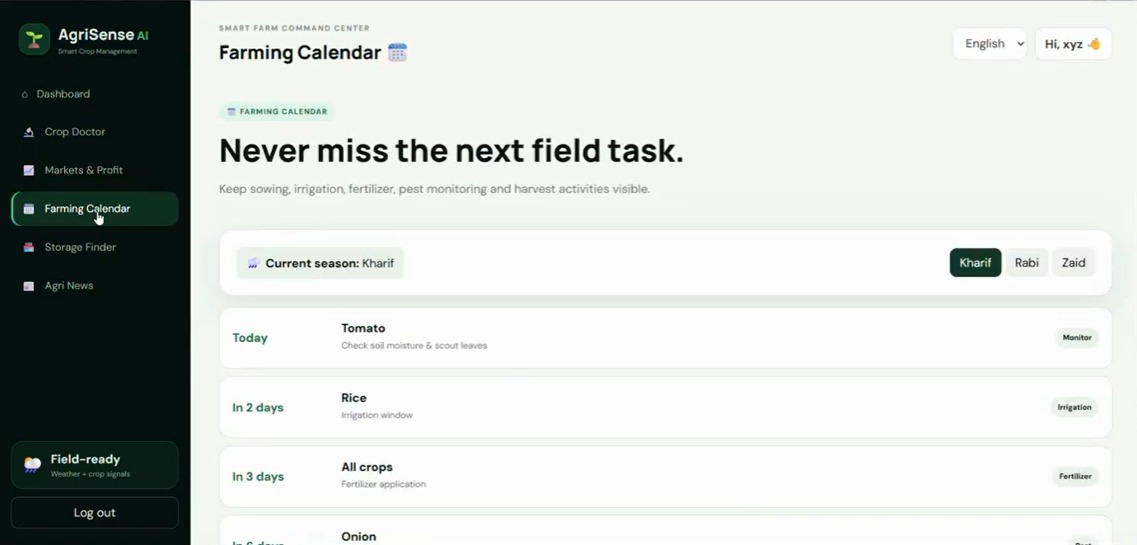
- 📅 Farming Calendar – Keeps track of important farming activities.
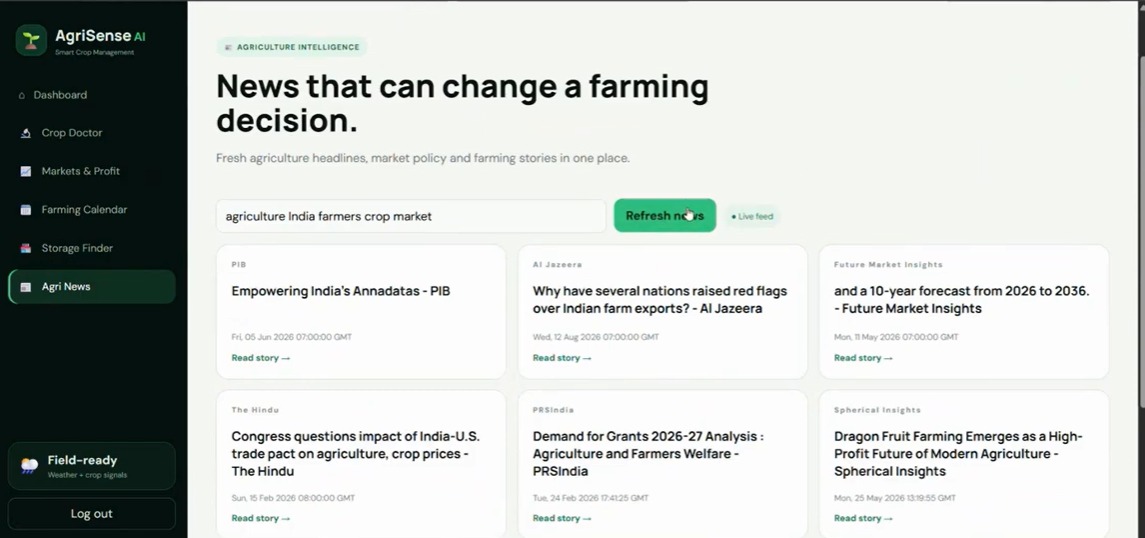
- 📰 Agri News – Provides agriculture-related news and updates.
- 🤖 AI Recommendations – Combines information from different parts of the platform to support farming decisions.
- 🌐 Language Support – Supports English, Hindi, Telugu, Kannada, and Tamil.
For example, if a farmer has tomatoes ready to sell, the decision shouldn't depend only on today's price.
Crop condition + weather + demand + storage availability + possible profit
can all affect the decision.
Our idea is to bring these factors together and help the farmer decide whether it makes more sense to sell, store, or wait.
How We Built It
We built AgriSense AI as a web application with separate frontend and backend components.
We started with the dashboard and then added the different sections one by one. We focused a lot on the interface because we wanted the platform to feel simple enough for someone who isn't very comfortable with complicated technology.
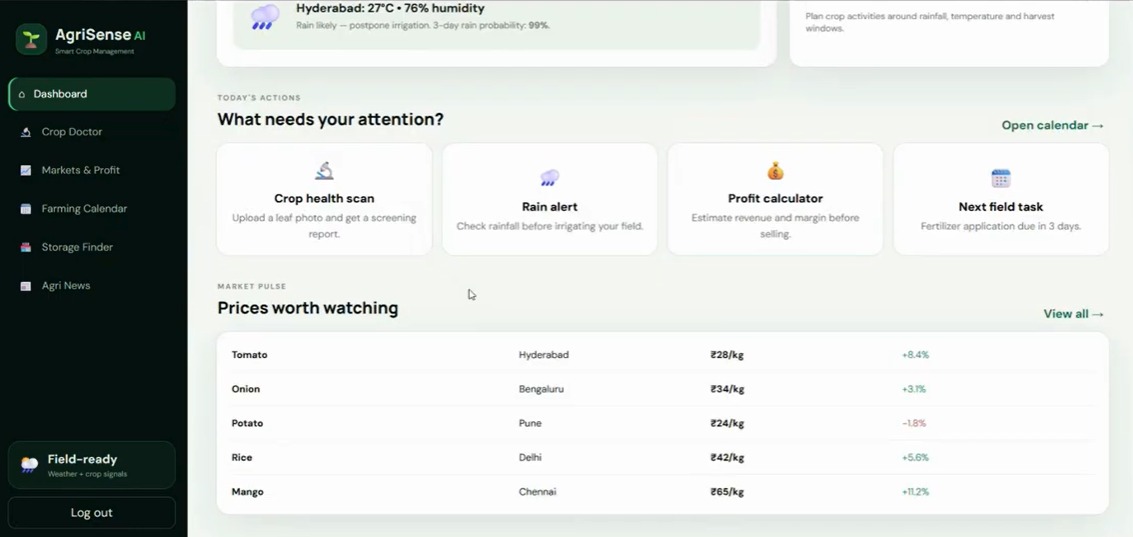
The Dashboard acts as the main page, while the other sections handle specific tasks such as crop analysis, market information, storage, weather, and farming activities.
We also designed the AI part around the idea of using these sections as different sources of information.
Our Decision-Making Flow
Farmer's Question
       ↓
  AgriSense AI
       ↓
Crop Health + Weather + Market
       ↓
Demand + Storage + Profit
       ↓
   Recommendation
       ↓
 SELL / STORE / WAIT
For example, a farmer could ask:
"Should I sell my tomatoes now?"
AgriSense can consider multiple factors before providing a recommendation instead of looking at only the current market price.
This is the part we want to develop further into a more complete AI agent capable of supporting end-to-end farming decisions.
What We Learned
One of the biggest things we learned was that building a project is very different from just coming up with an idea.
Initially, we thought about adding as many features as possible. As we worked on the project, we realized that the features needed to actually connect with each other.
We also learned more about how AI agents can be used for decision-making, instead of only answering questions.
On the technical side, we worked with:
- Frontend development
- Backend APIs
- Connecting different components
- Responsive web design
- Data-driven recommendations
- Designing a simple dashboard experience
We also spent time thinking about how to make information easier to understand through cards, alerts, dashboards, and simple actions.
Another important thing we learned was the importance of accessibility. Since agriculture involves people from many different backgrounds, we wanted language support to be part of the product rather than something added at the end.
Challenges We Faced
One of our biggest challenges was deciding what should actually be included in the project.
There are so many possible features for an agriculture platform, and it was easy for the scope to become too large. We had to keep coming back to one main question:
Will this actually help a farmer make a better decision?
Connecting all the features was another challenge.
Crop health, weather, market prices, demand, and storage are separate things, but they can affect the same farming decision. We had to think about how to bring them together without making the platform confusing.
We also had limited time, so we had to focus on building a working prototype instead of trying to build every possible feature perfectly.
What's Next
There is still a lot we would like to improve.
We want to:
- Connect the platform to more real-time agricultural and weather data
- Improve crop image analysis
- Make AI recommendations more personalized
- Add voice-based interaction
- Improve multilingual support
- Make the AI agent more proactive
In the future, the AI agent could identify important changes without waiting for the farmer to ask a question.
For example, it could detect:
Upcoming weather risk → Increasing spoilage risk → Significant market change
and notify the farmer before it becomes a bigger problem.
For us, AgriSense AI started as an idea about putting useful farming information in one place.
Through the project, it became more about connecting that information so that it can actually help with decisions.
AgriSense AI — Turning farm data into smarter decisions.


Log in or sign up for Devpost to join the conversation.