Inspiration
Nearly 500 million smallholder farming households produce a huge share of the world's food, yet most operate almost blind — no way to diagnose a sick crop early, no visibility into soil conditions, no warning before a frost or flood, and no access to fair prices or credit because they've never had a bank record. We kept seeing point solutions built for one piece of this (a disease-detection app here, a weather app there) but nothing that connected the dots. We wanted to build something where each piece of data a farmer generates — a diagnosis, a soil reading, a sale — actively makes the next decision easier, instead of living in five different disconnected apps.
What it does
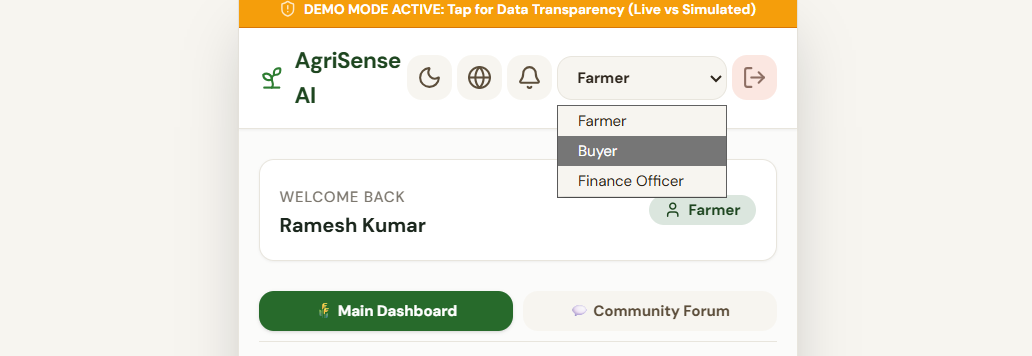
AgriSense AI is a single mobile-first platform with five connected modules:
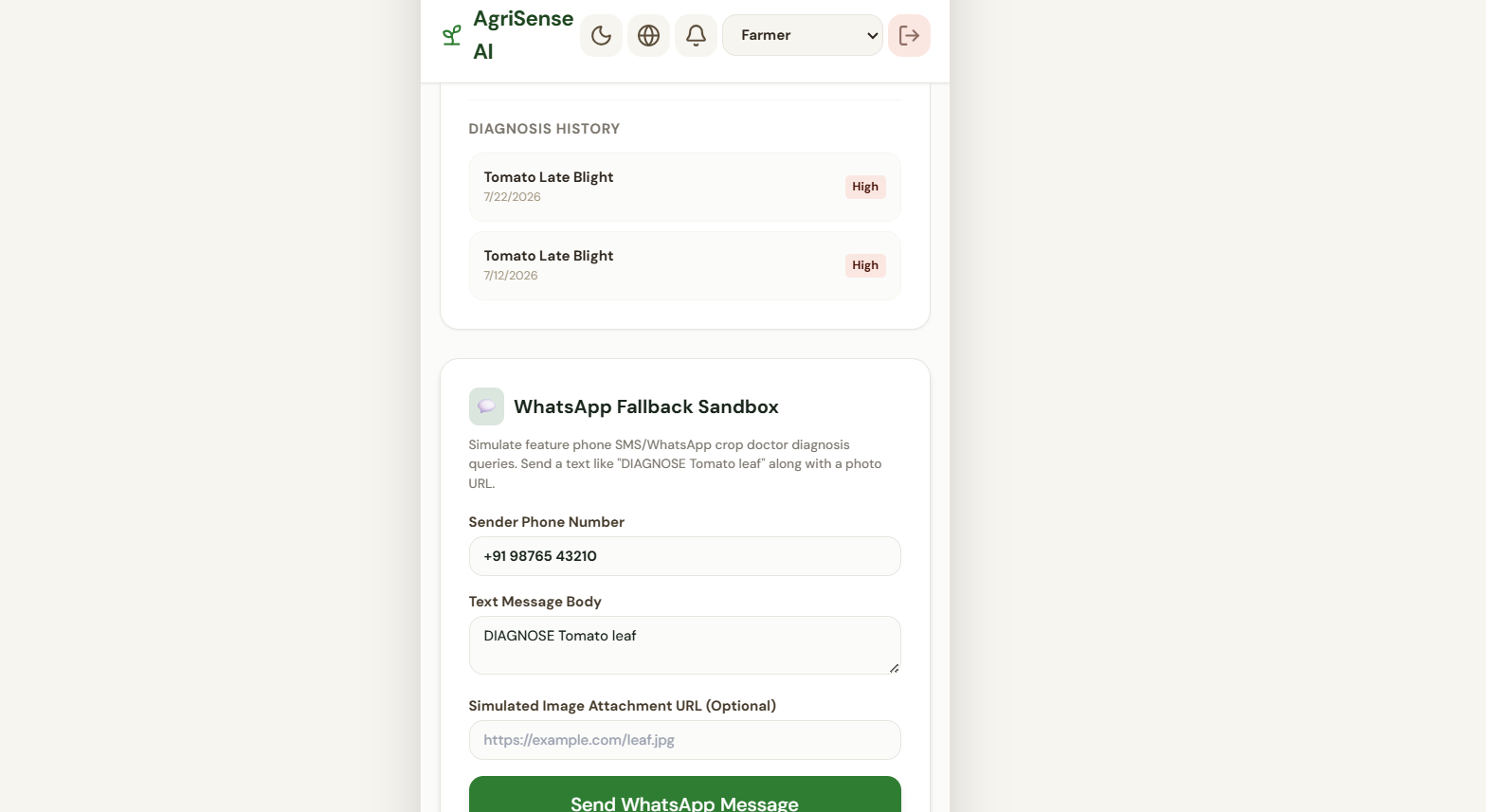
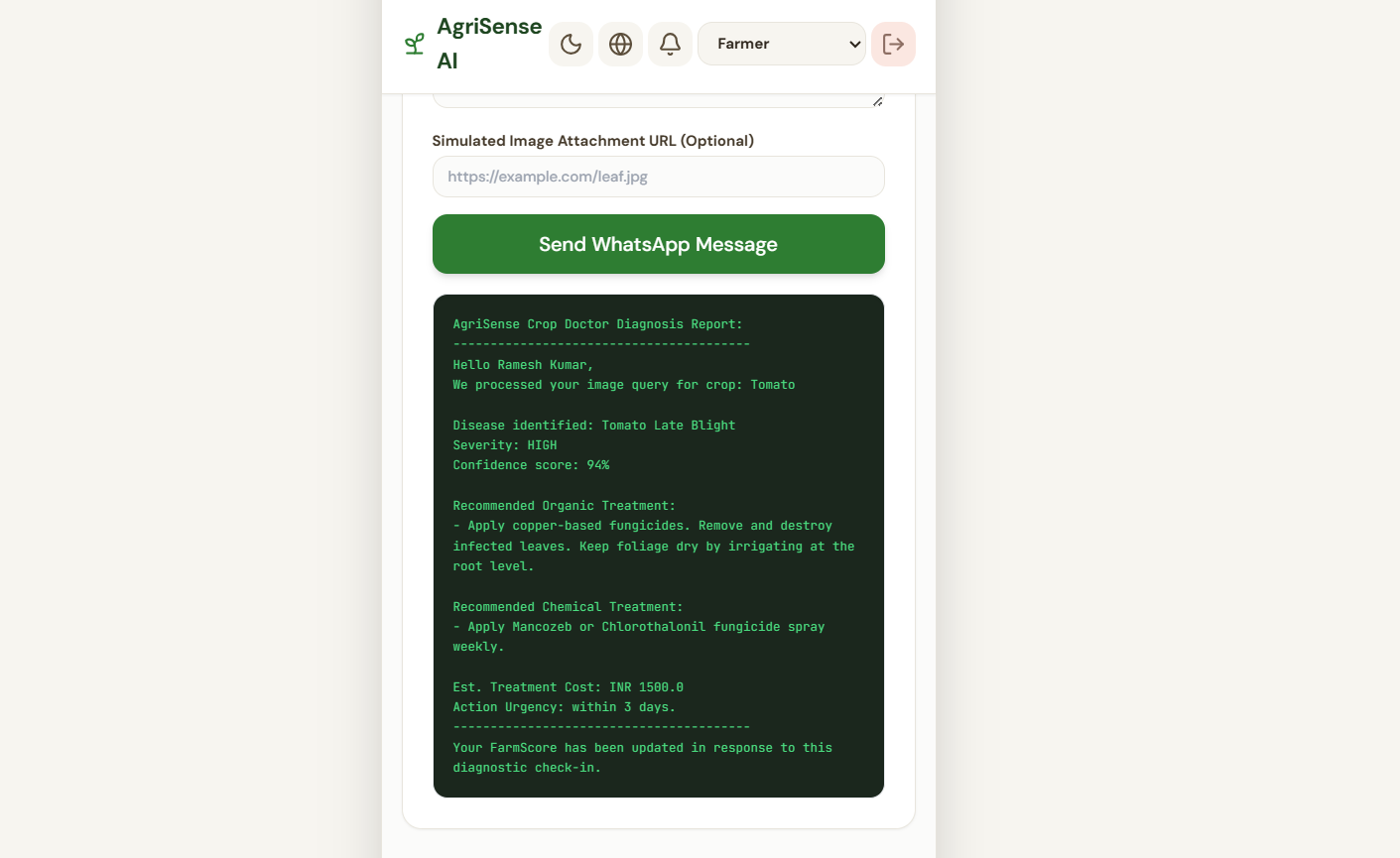
- AI Crop Doctor — a farmer photographs a leaf, and a vision model identifies disease or pest with a treatment plan (organic and chemical options, cost, urgency).
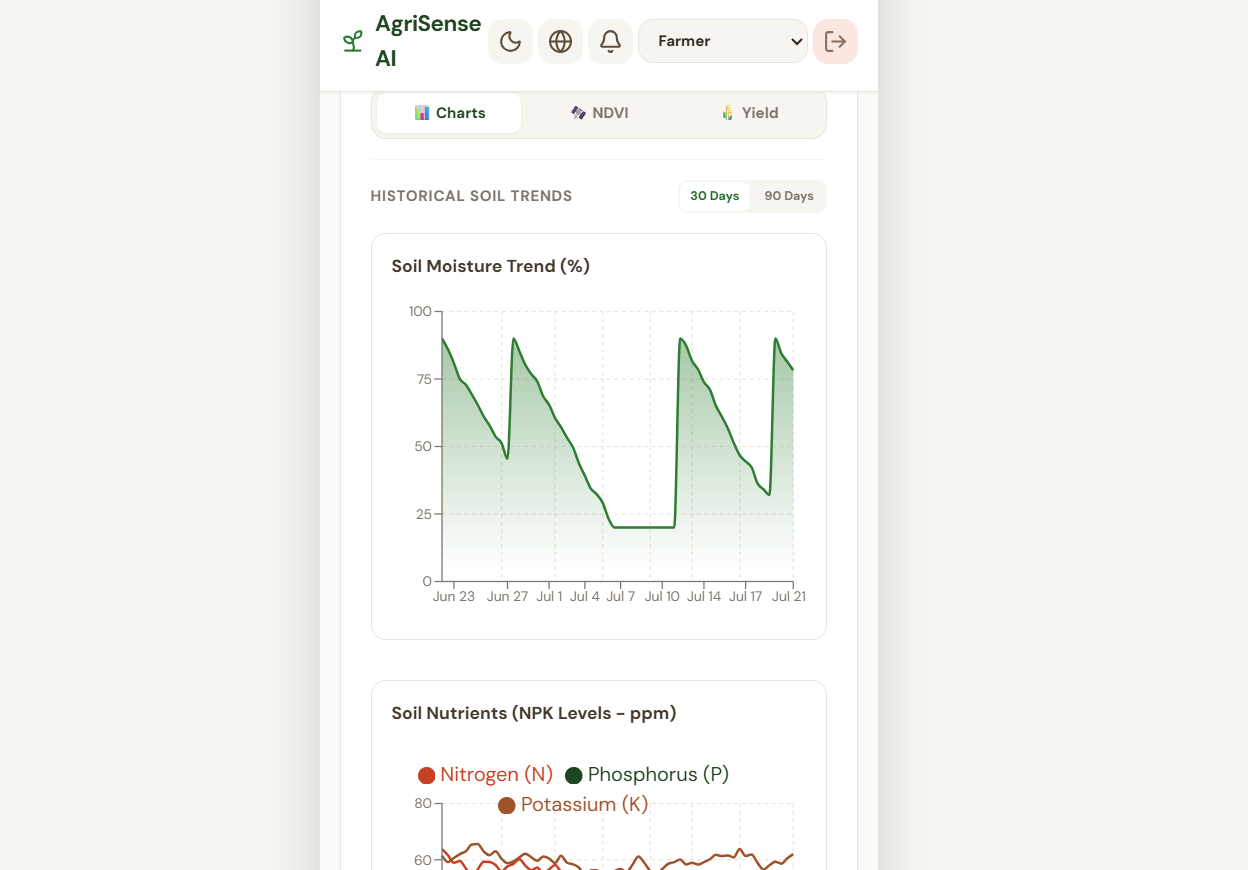
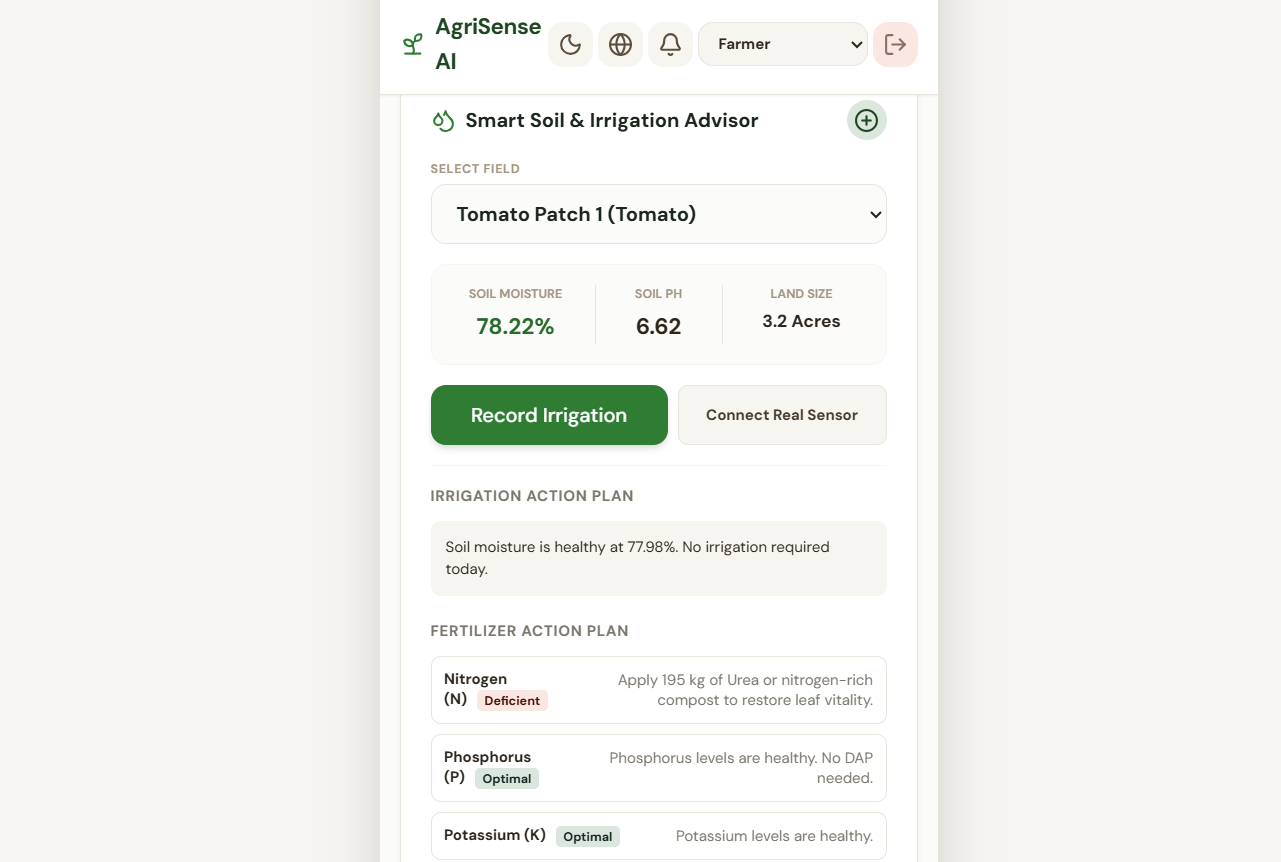
- Smart Soil & Irrigation Advisor — turns sensor (or manually entered) soil data into concrete irrigation and fertilizer recommendations.
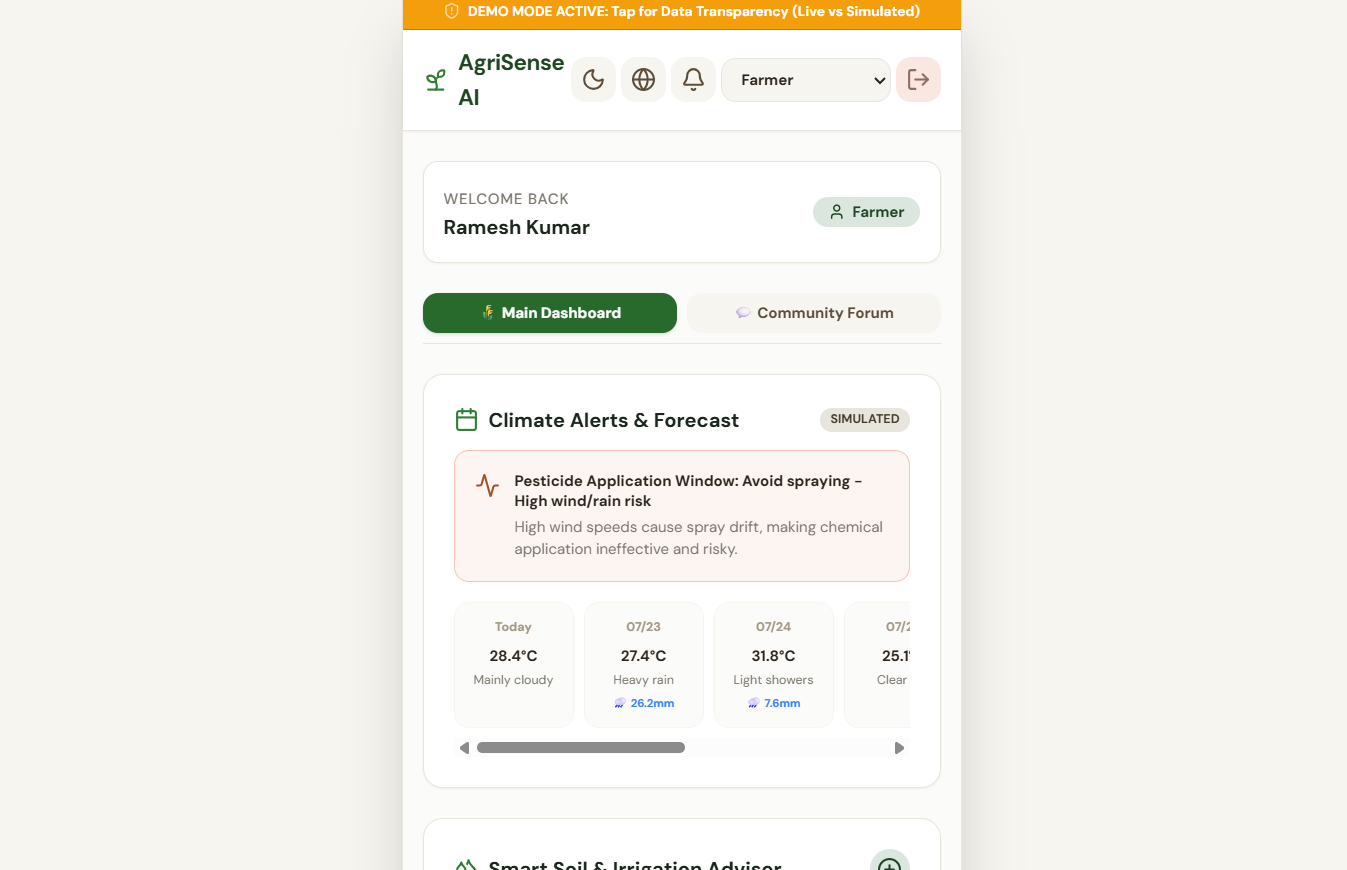
- Climate Risk Alerts — proactive frost, drought, and flood warnings pulled from live weather data.
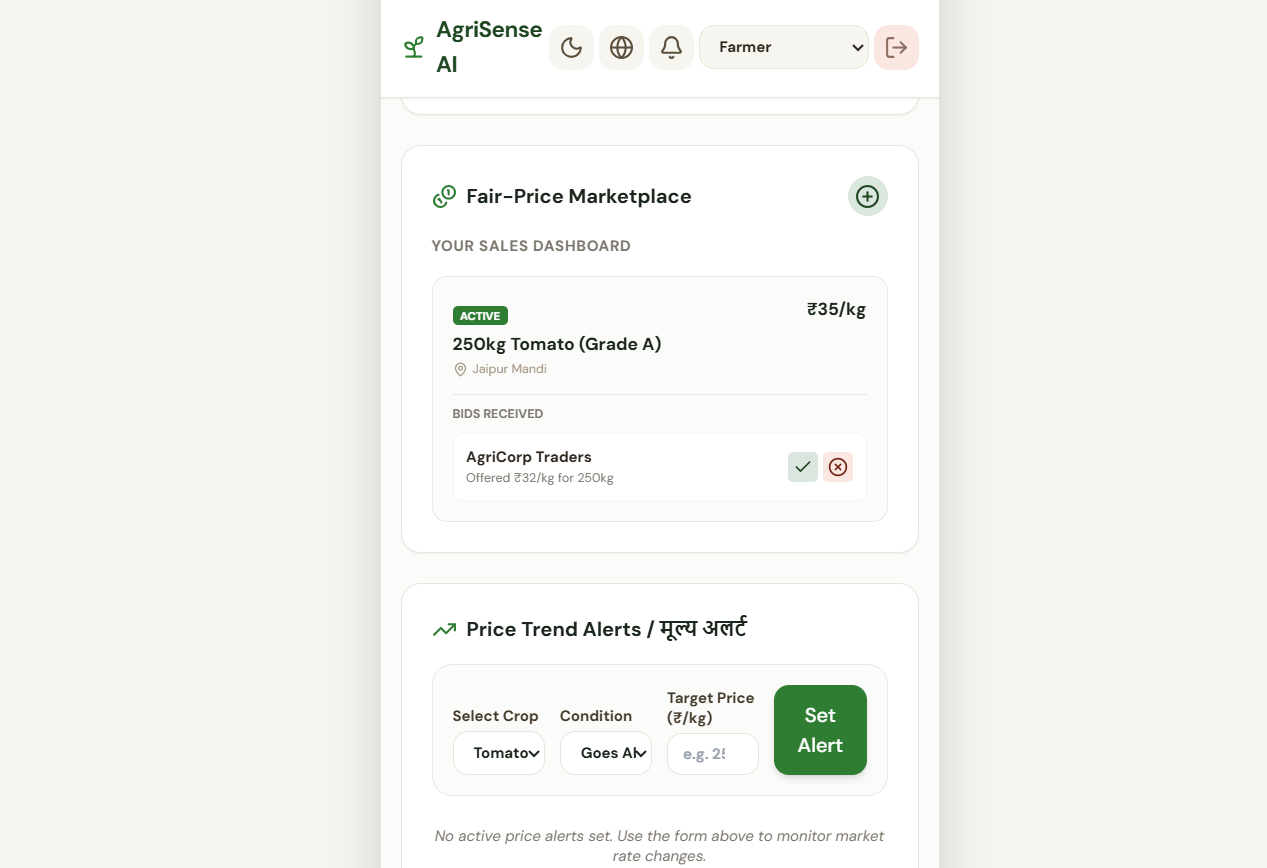
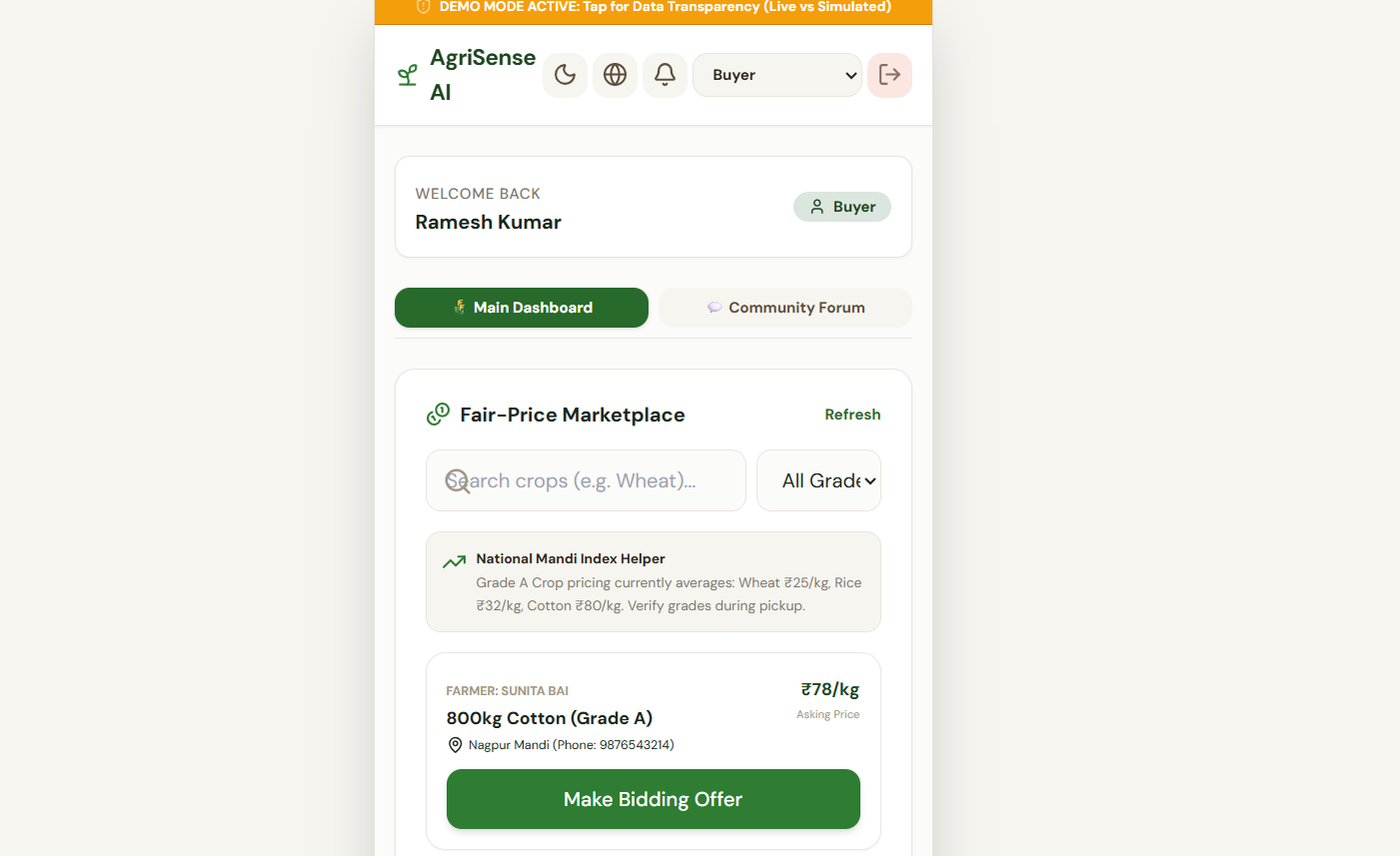
- Fair-Price Marketplace — lets farmers sell directly to buyers, with an AI pricing assistant benchmarking listings against regional market rates so middlemen can't underpay them.
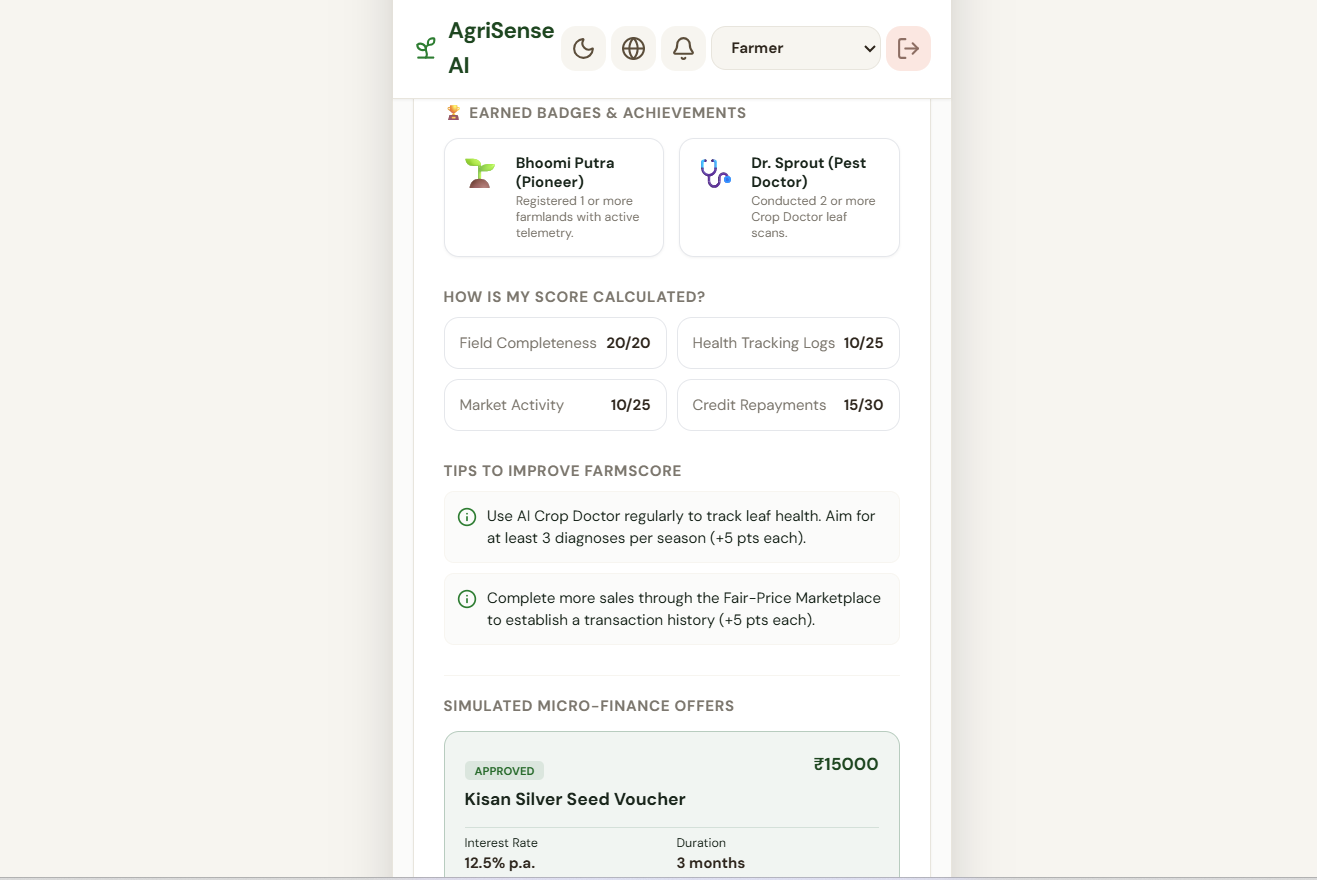
- Alt-Data FarmScore — builds a credit score from farm activity and transaction history instead of a bank record, unlocking micro-loan eligibility for the unbanked.
Together these close a loop: healthier fields → better yield and transaction data → stronger FarmScore → access to credit → reinvestment back into the farm.
How we built it
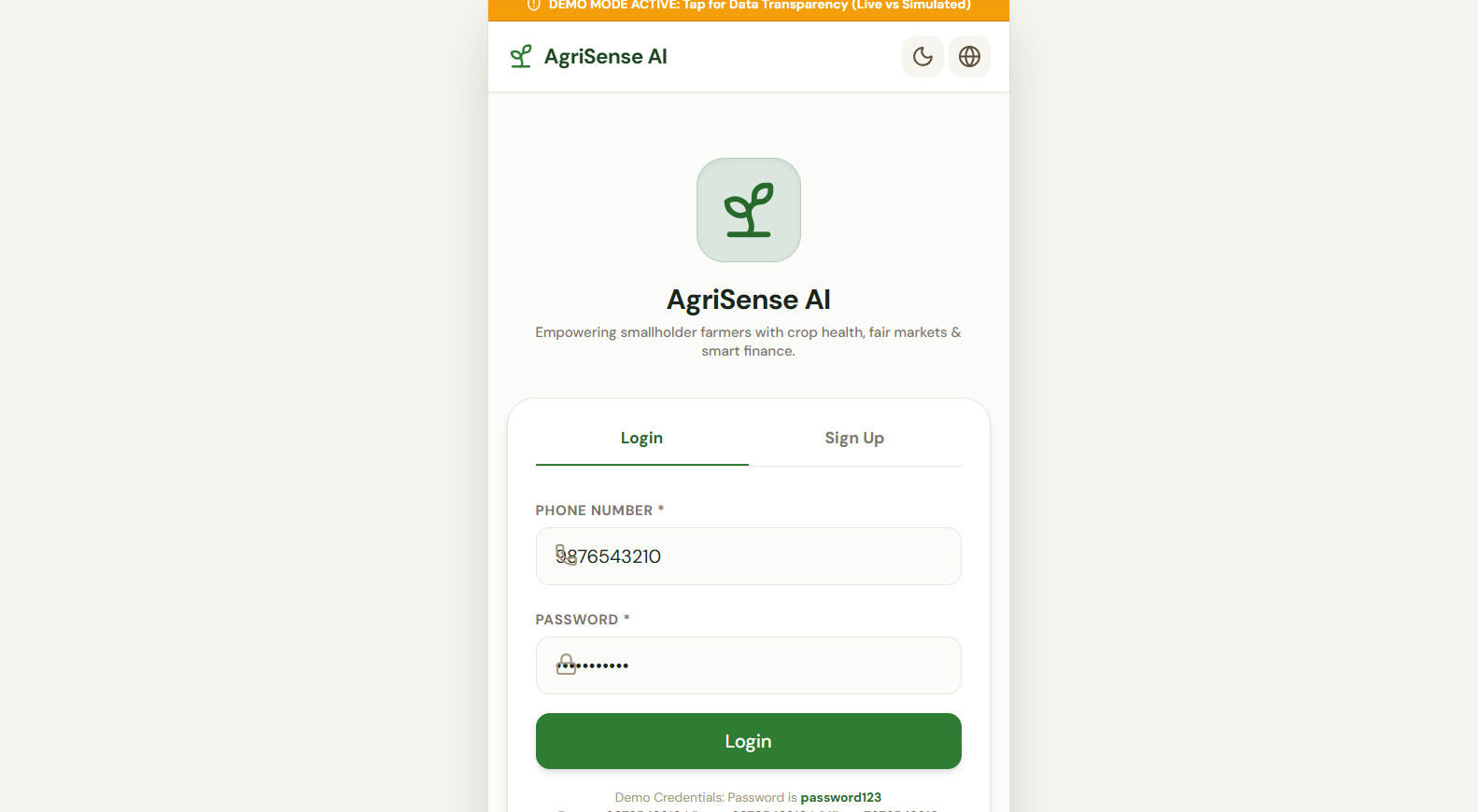
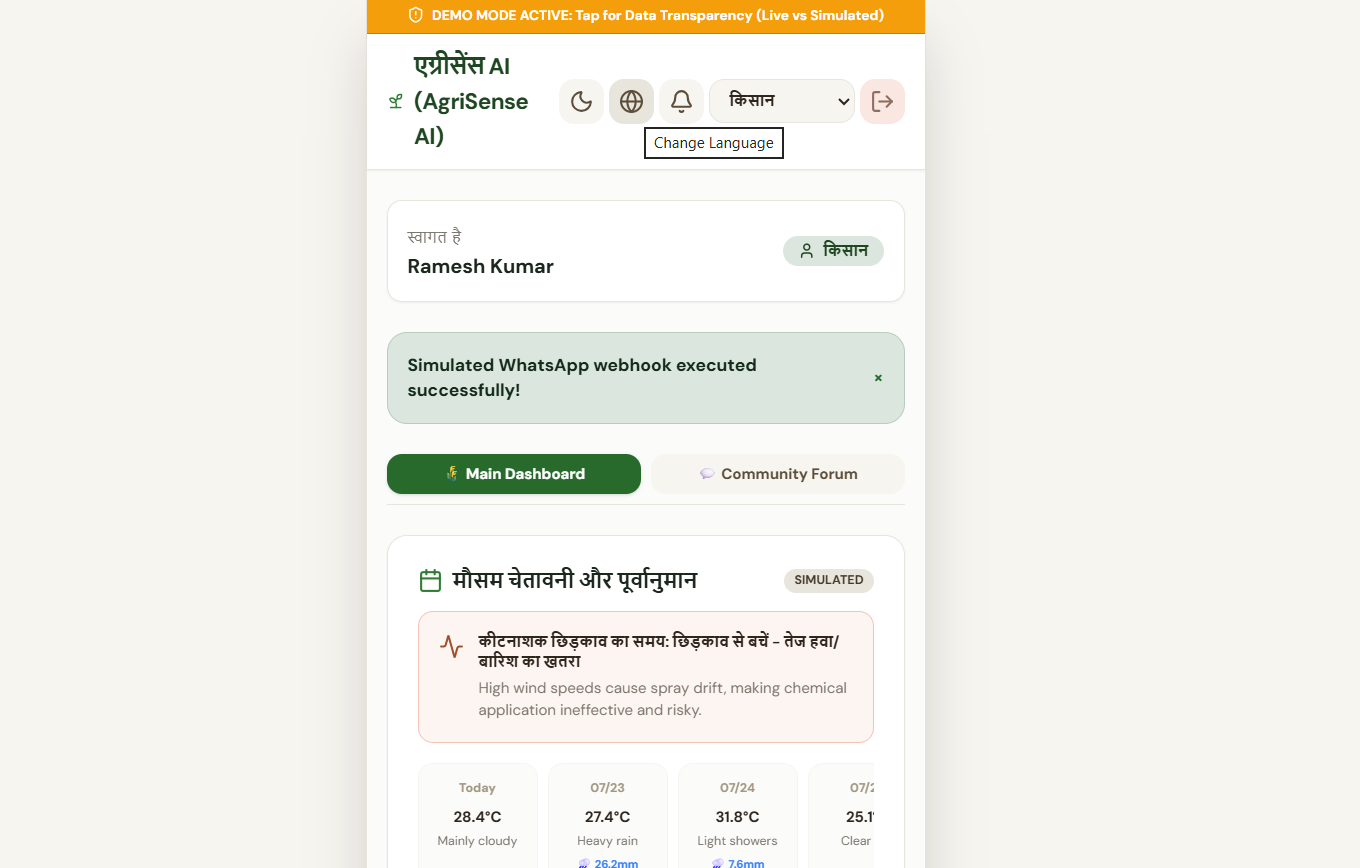
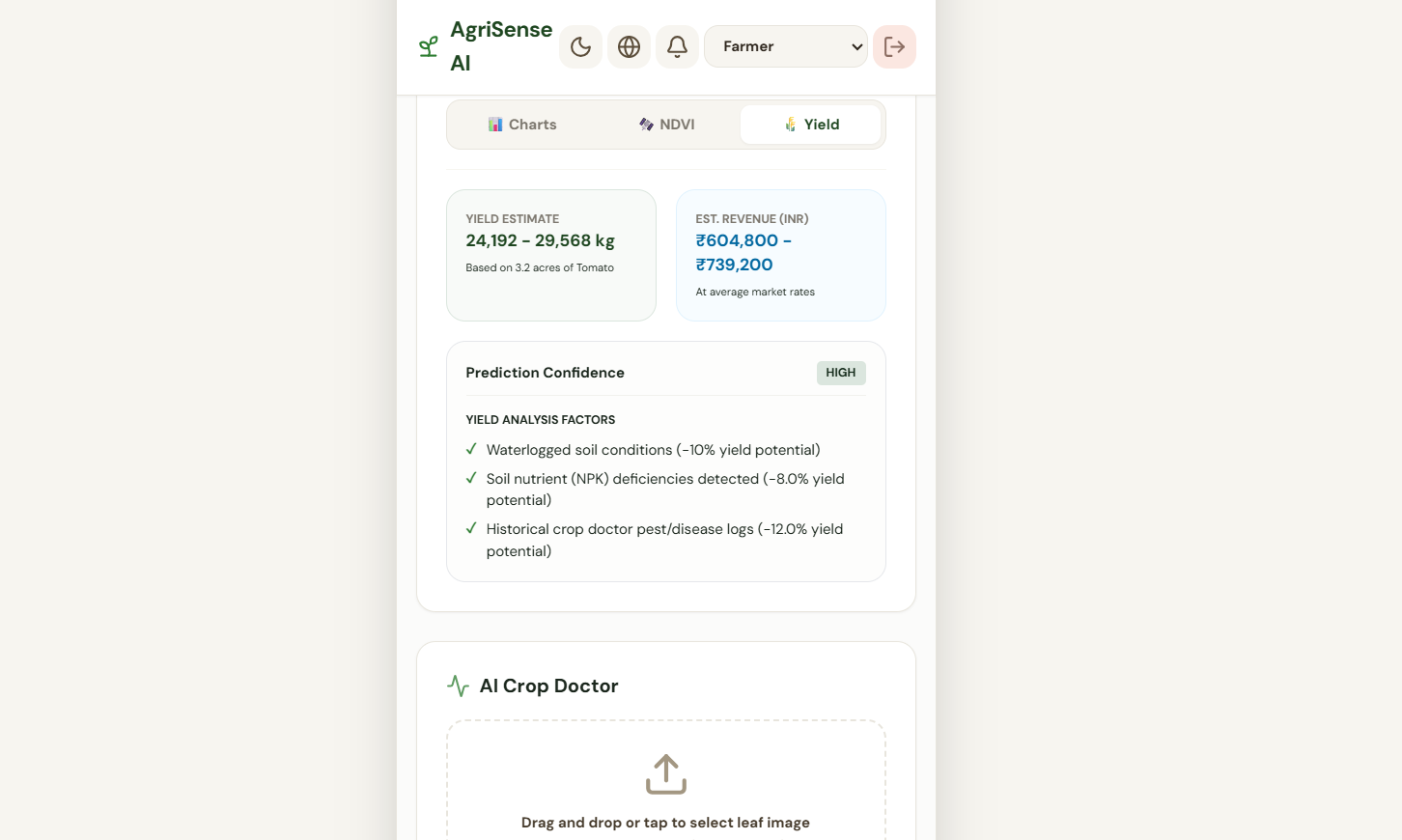
We built the frontend in React + TypeScript with Tailwind CSS, designed mobile-first for low-end Android devices and low-connectivity conditions, with multi-language support and a dark mode toggle. The backend is a FastAPI service backed by PostgreSQL, with a simulated IoT sensor layer generating realistic time-series soil data through a swappable interface, so real sensor hardware can be dropped in later without changing the data contract. The Crop Doctor uses a vision model for image-based diagnosis, while pricing and credit scoring use transparent, explainable logic rather than black-box outputs, since trust matters more than sophistication for this user base. We deployed the frontend on Vercel and iterated the whole build using Google Antigravity, working in staged passes — first the core feature set, then security hardening (bcrypt password hashing, JWT auth, rate limiting), then UI/UX polish (skeleton loaders, PWA support, accessibility), then additional features like community Q&A and yield prediction.
Challenges we ran into
Getting a full-stack app (React frontend + FastAPI backend + database) correctly split across deployment targets was harder than expected — our first Vercel deploy 404'd because a build-output path mismatch in our routing config pointed at the wrong directory, and we learned the hard way that a backend relying on a local SQLite file and a background thread for sensor simulation doesn't survive a serverless environment. We also had to be deliberate about designing for low digital literacy: every AI output (a diagnosis, a price suggestion, a credit score) needed a plain-language explanation next to it, not just a number or label, or it would be useless to the people we're building for.
Accomplishments that we're proud of
We're proud that AgriSense AI isn't five separate demo features stapled together — it's a genuine loop where data from one module strengthens another, most visibly in how marketplace and field activity feed directly into the FarmScore. We're also proud of how seriously we took accessibility and trust: multilingual support, explainable AI outputs, and a UI built around large tap targets and minimal text rather than assuming smartphone fluency.
What we learned
We learned that the hardest part of building for underserved users isn't the AI model — it's the last mile of making that intelligence trustworthy and usable to someone who may not read fluently or trust a black-box number. We also learned a lot about the real constraints of deploying a full-stack app with a stateful backend on serverless infrastructure, and why architecture decisions that look fine in local development can quietly break in production.
What's next for AgriSense AI
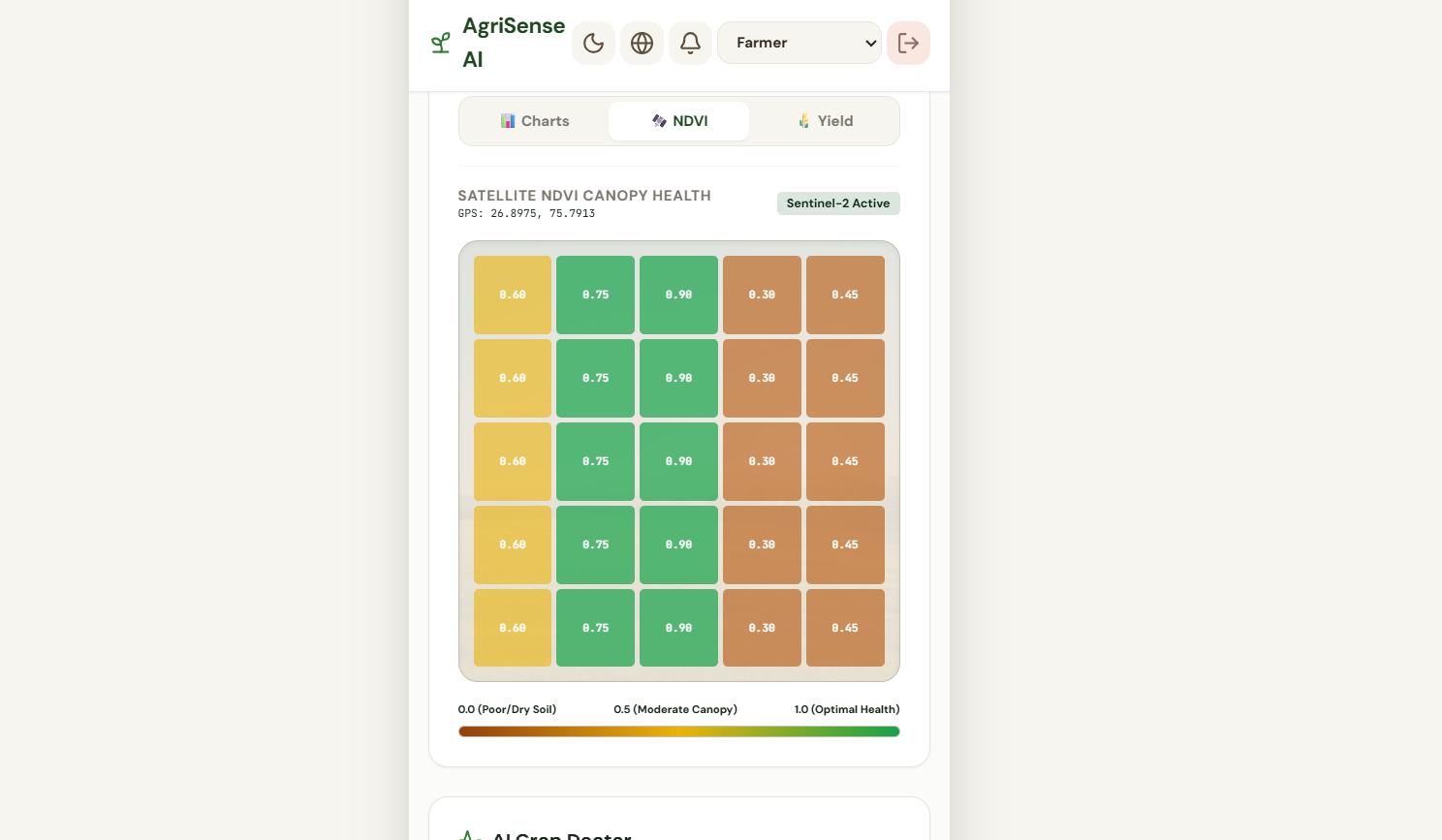
Our immediate roadmap is: integrating real IoT soil sensor hardware in pilot regions, adding a WhatsApp/SMS channel so the Crop Doctor works on feature phones, layering in satellite/NDVI imagery for field-level vegetation health, and forming partnerships with real microfinance institutions so a strong FarmScore can convert into an actual loan offer, not just a simulated one.
