-
-
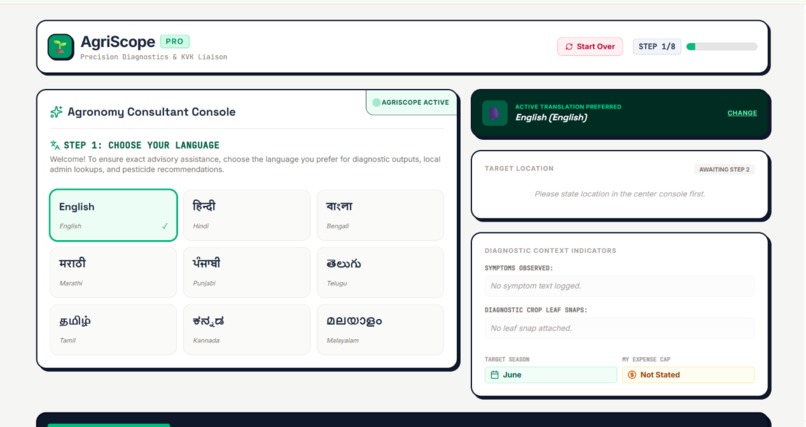
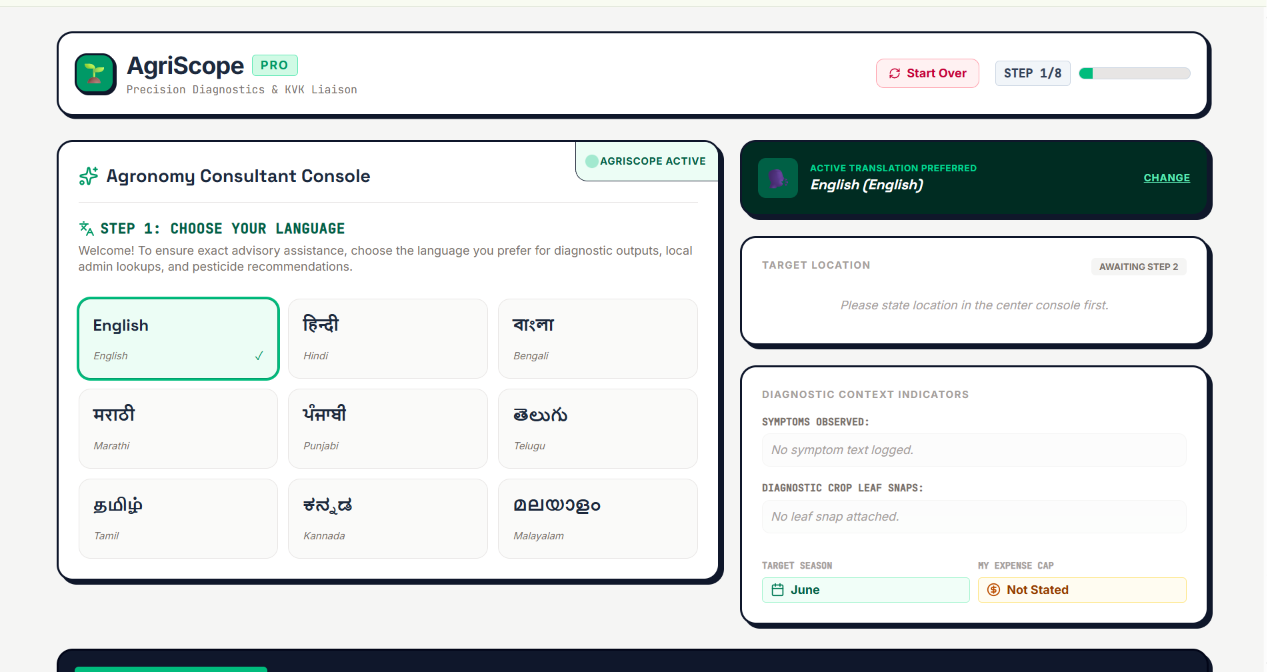
This page of AgriScope offers various language options.
-
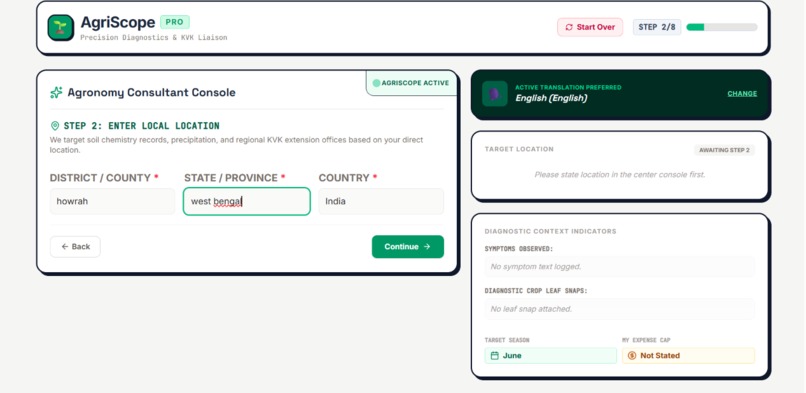
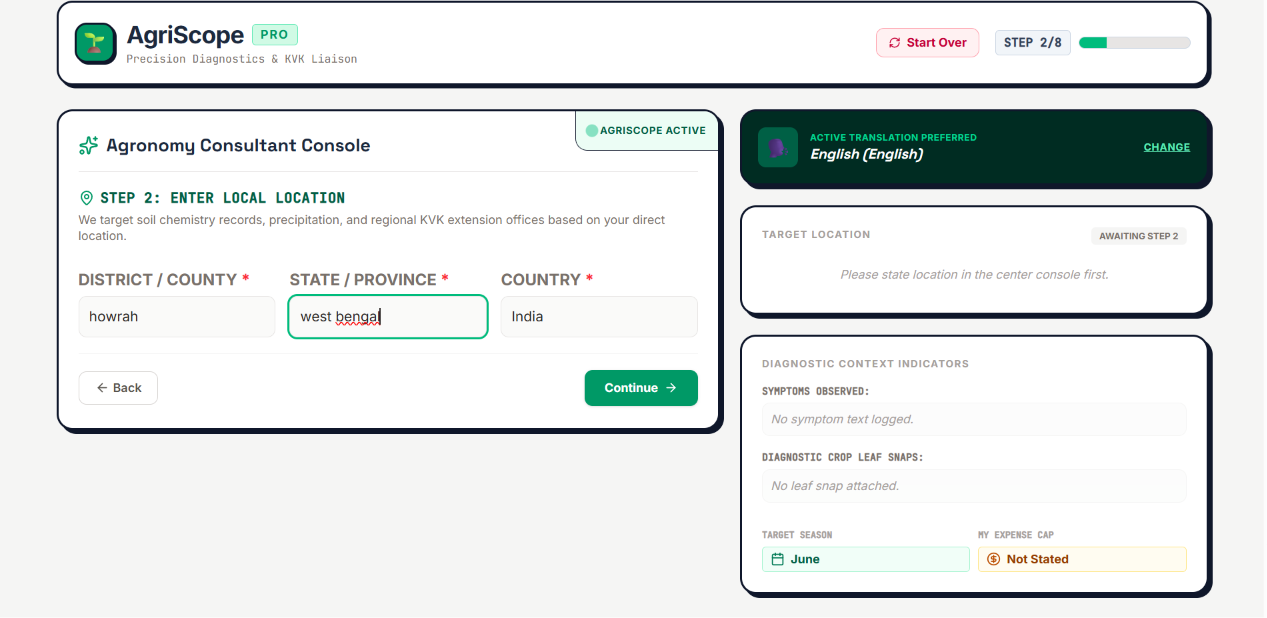
User inputs district, state and country here
-
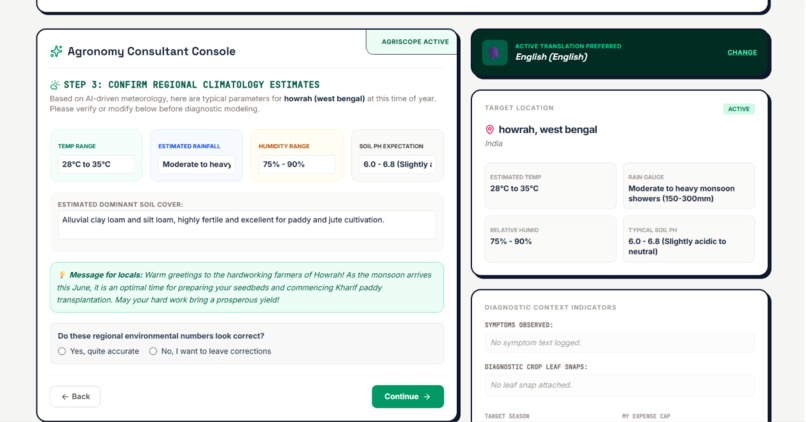
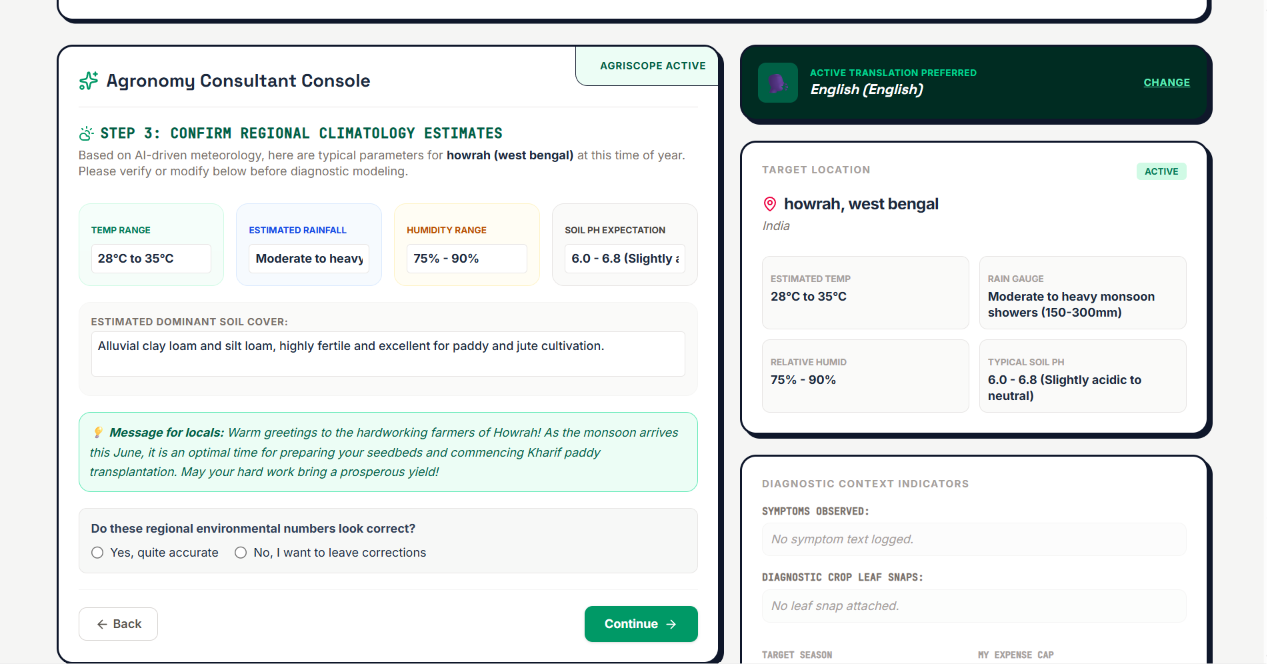
App provides temperature, rainfall, humidity and soil pH according to the location provided by the user
-
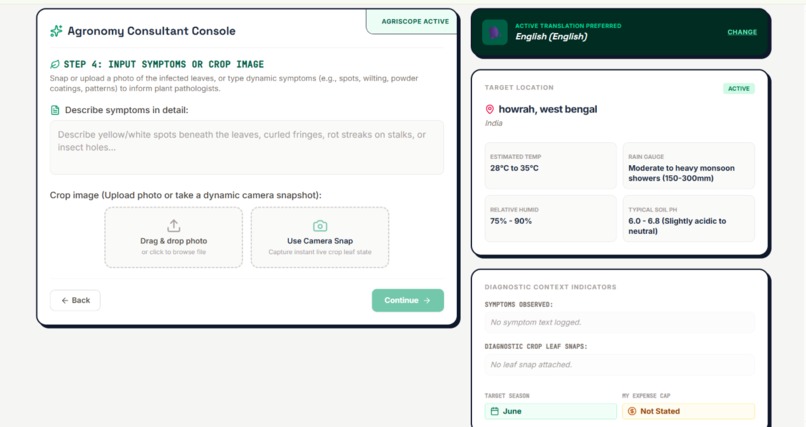
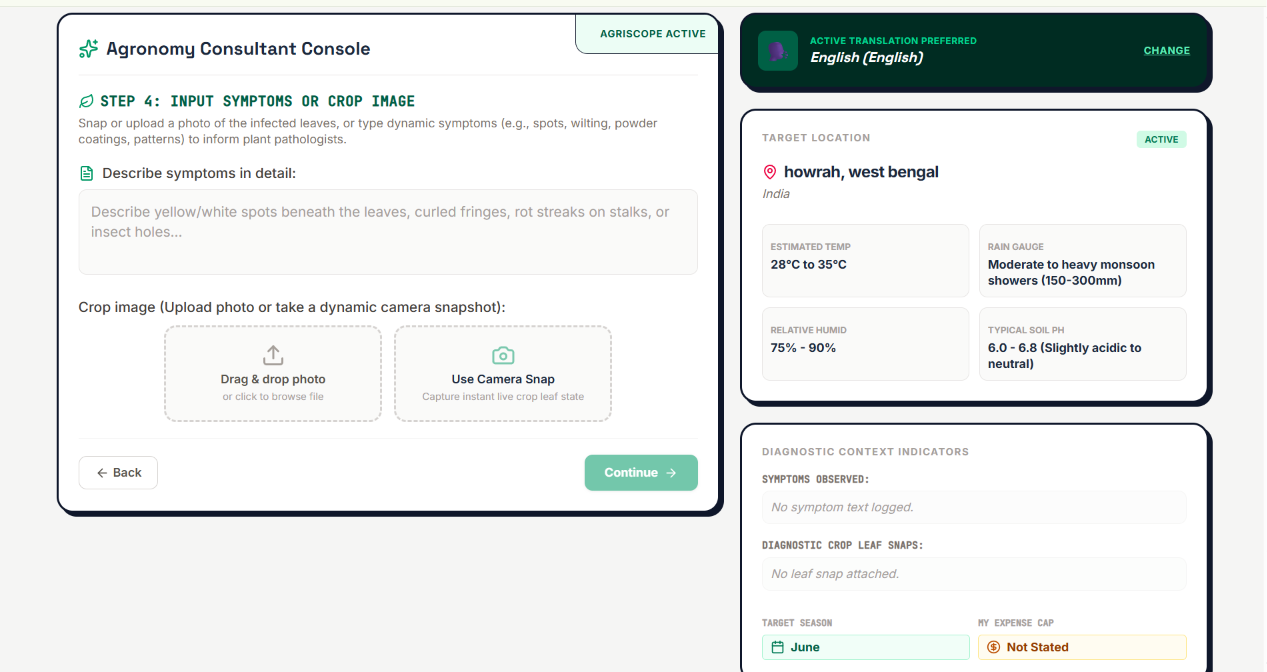
User can either upload the picture of the crop or can describe the symptoms in words
-
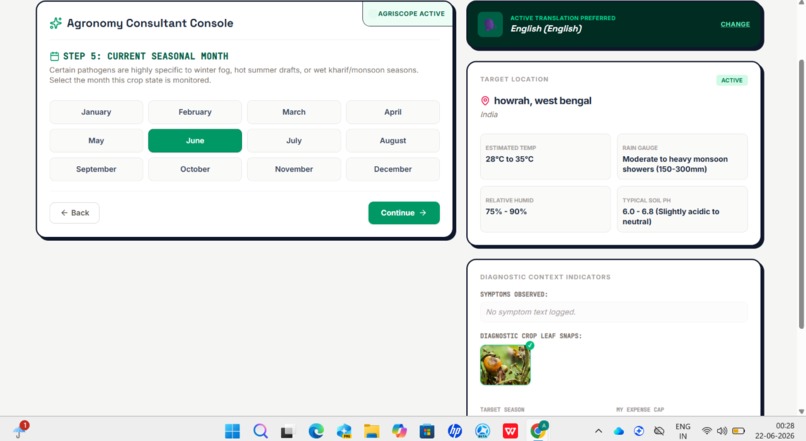
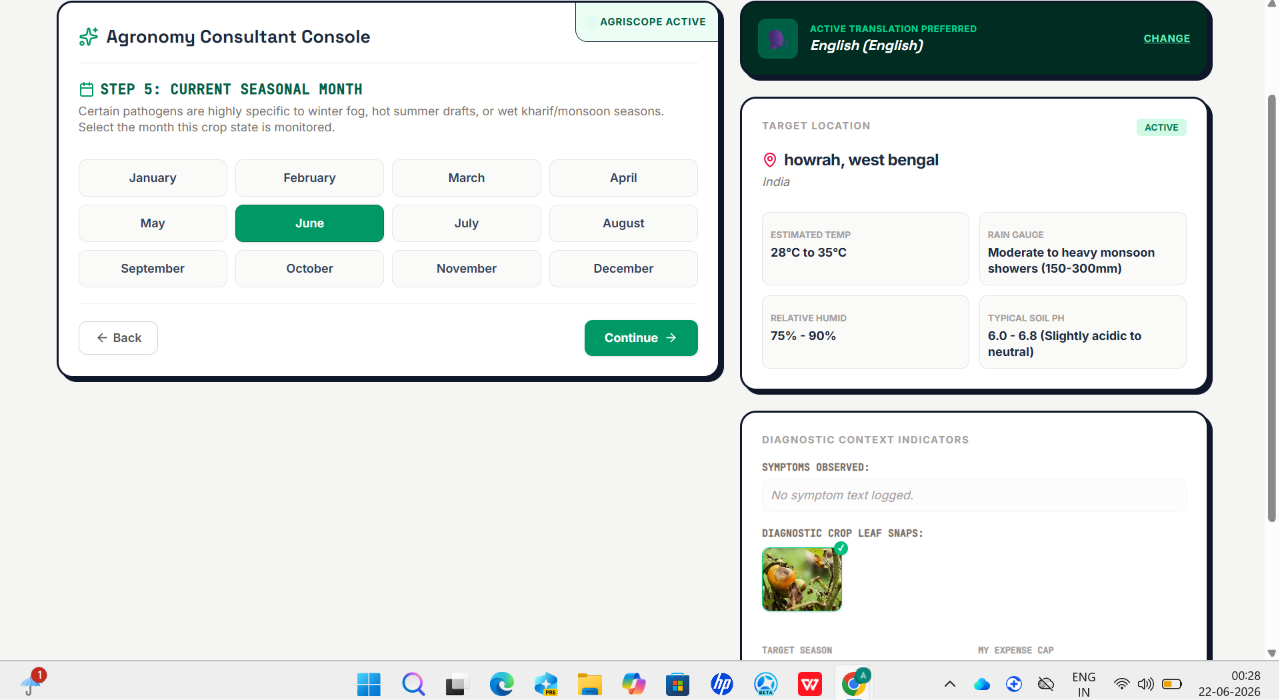
User has to provide the month
-
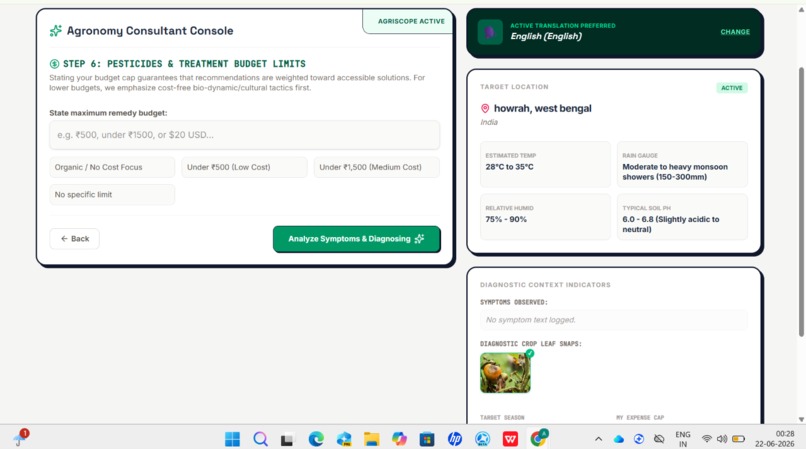
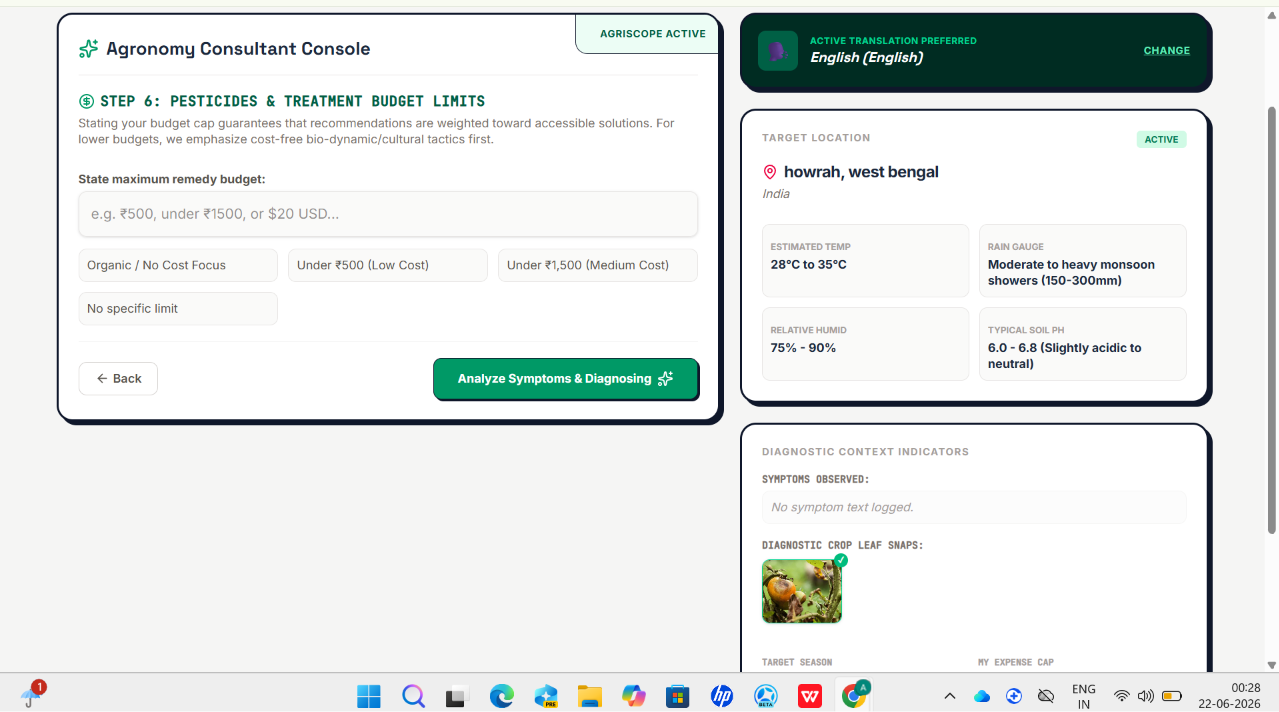
User has to provide the budget for remedies
-
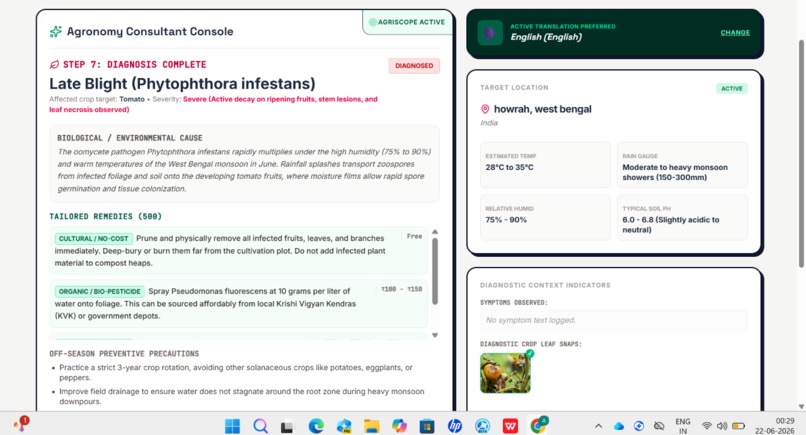
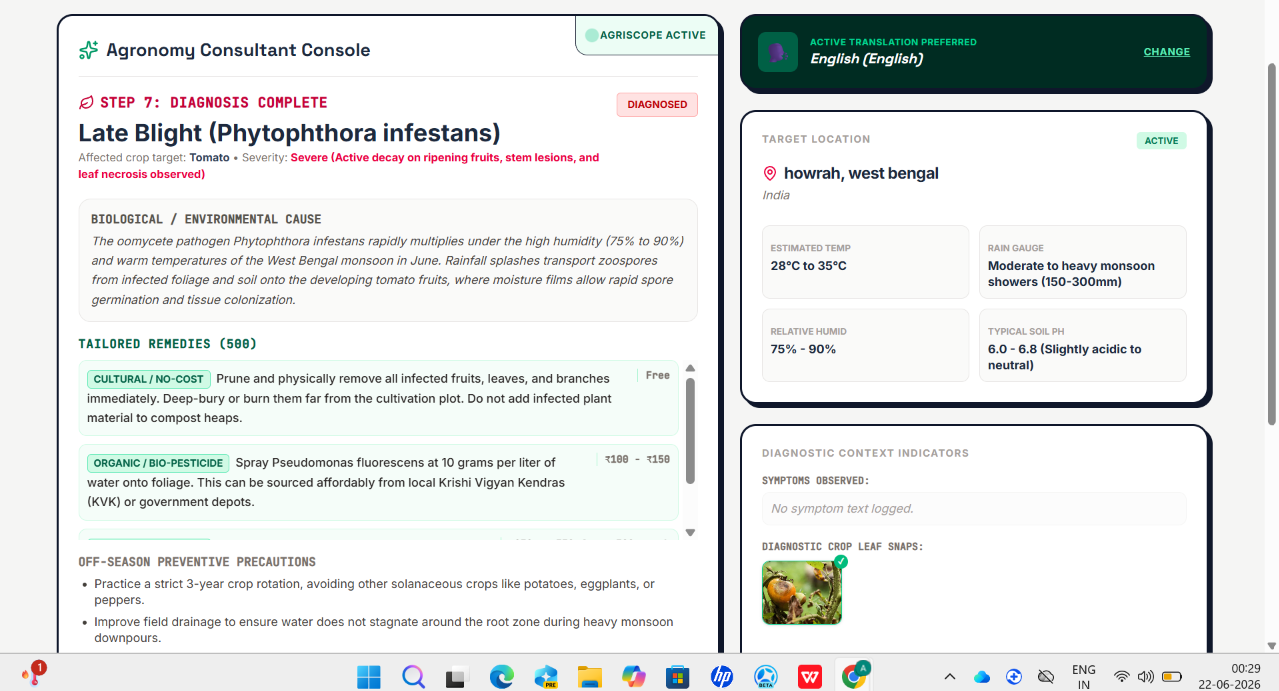
App provides the causes, remedies and further precautions of the that the user can take in the user's preferred language
-
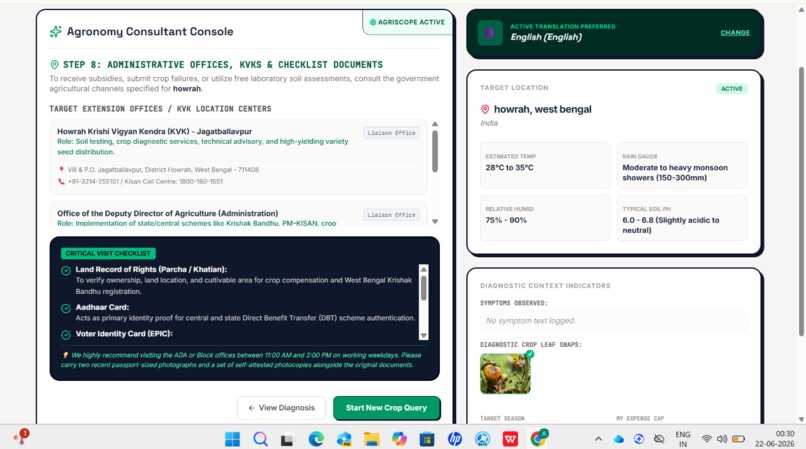
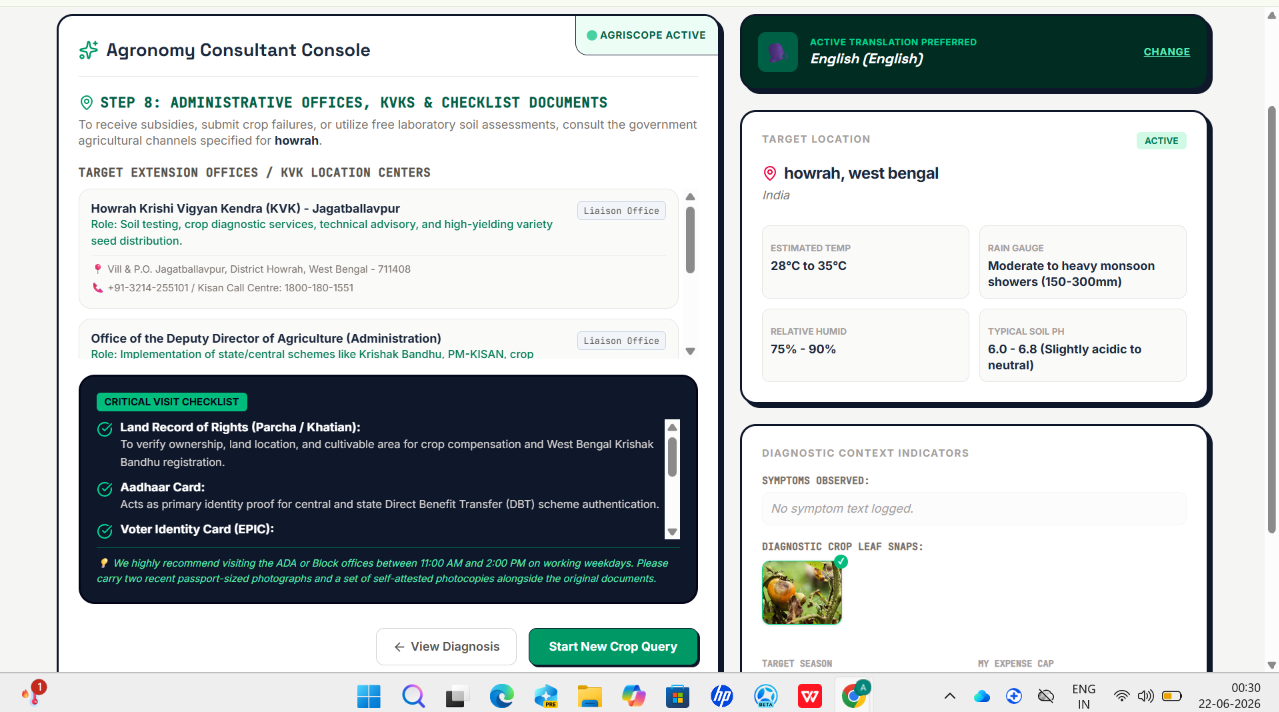
App also provides the information regarding nearest KVKs that the user can visit and the documents that he or she needs to carry
Inspiration
India is an agrarian economy, yet millions of farmers lose significant portions of their yield to crop diseases due to a lack of timely expert advice. While advanced AI models can diagnose plants, existing solutions are often trapped behind language barriers, complex UI, or generic recommendations that ignore a farmer's tight budget. We wanted to build a practical, empathetic "AI Crop Doctor" that speaks the farmer's language, respects their financial constraints, and provides a direct, actionable bridge to physical agricultural centers like Krishi Vigyan Kendras (KVK).
# How We Built It
We developed our application using Google AI Studio and Gemini models to handle multimodal inputs (both images and text symptoms). Multimodal Analysis: The model processes real-time crop photos or text-based symptom descriptions to identify anomalies.
Dynamic Language & Context Adaptation: The system initiates a conversational flow that locks into the user's regional language and extracts geographical coordinates to estimate vital environmental factors.
Algorithmic Filtering: It maps the remedies against a user-defined budget threshold, optimizing for cost-effectiveness.
#What We Learned
Building this project taught us how to design conversational AI for users who require strict step-by-step guidance rather than overwhelming walls of text. We gained deep insights into prompt engineering, particularly how to enforce state-machine logic within an LLM system prompt. On the technical side, we explored how environmental metrics—such as regional temperature variations, rainfall patterns, and optimal soil chemistry—correlate with rapid pathogen spread.
#Challenges We Faced
The biggest hurdle was maintaining strict turn-by-turn conversational flow without the model rushing ahead, hallucinating user inputs, or triggering API timeouts. We initially ran into JSON parsing errors when trying to structure outputs dynamically across multiple steps. To fix this, we refined our prompt architecture to isolate instructions step-by-step, ensuring the model halts and waits for user input after every query. Another challenge was anchoring the AI's recommendations to real-world local administration parameters, which we resolved by strictly defining context guidelines for geographic mapping.
What's Next for AgriScope
Moving forward, AgriScope will transition from a standalone conversational prototype to a fully integrated ecosystem. Our immediate roadmap focuses on integrating live agricultural IoT sensors and weather APIs to replace estimations with real-time, precise environmental data tracking. We plan to build out localized database integrations to dynamically pull exact, verified contact details for KVK centers across all districts. Furthermore, we intend to expand the application's offline capabilities using lightweight, on-device models to ensure farmers can diagnose crop health even in low-connectivity rural zones, ultimately making AgriScope a ubiquitous, accessible tool for sustainable farming.
Built With
- gemini-api
- google-gemini-ai-studio
- json
- llm
- react
- typescript
- vite


Log in or sign up for Devpost to join the conversation.