Inspiration
Sri Lanka’s smallholder farmers grow the vegetables the country eats, but they often lose a big share of the value between the field and the market. Vegetables like cabbage, tomato and beans spoil in hours, yet most farmers ship alone. Each one waits for a dedicated truck, pays for a mostly empty trip, and watches the produce wilt while they wait.
We noticed that the problem isn’t growing the food. It’s coordination. A collection-hub operator or cooperative coordinator already knows who has harvested what, where the trucks are and which markets pay best, but they plan it by phone calls and guesswork. When a truck breaks down, someone has to re-do the whole plan by hand and call every farmer.
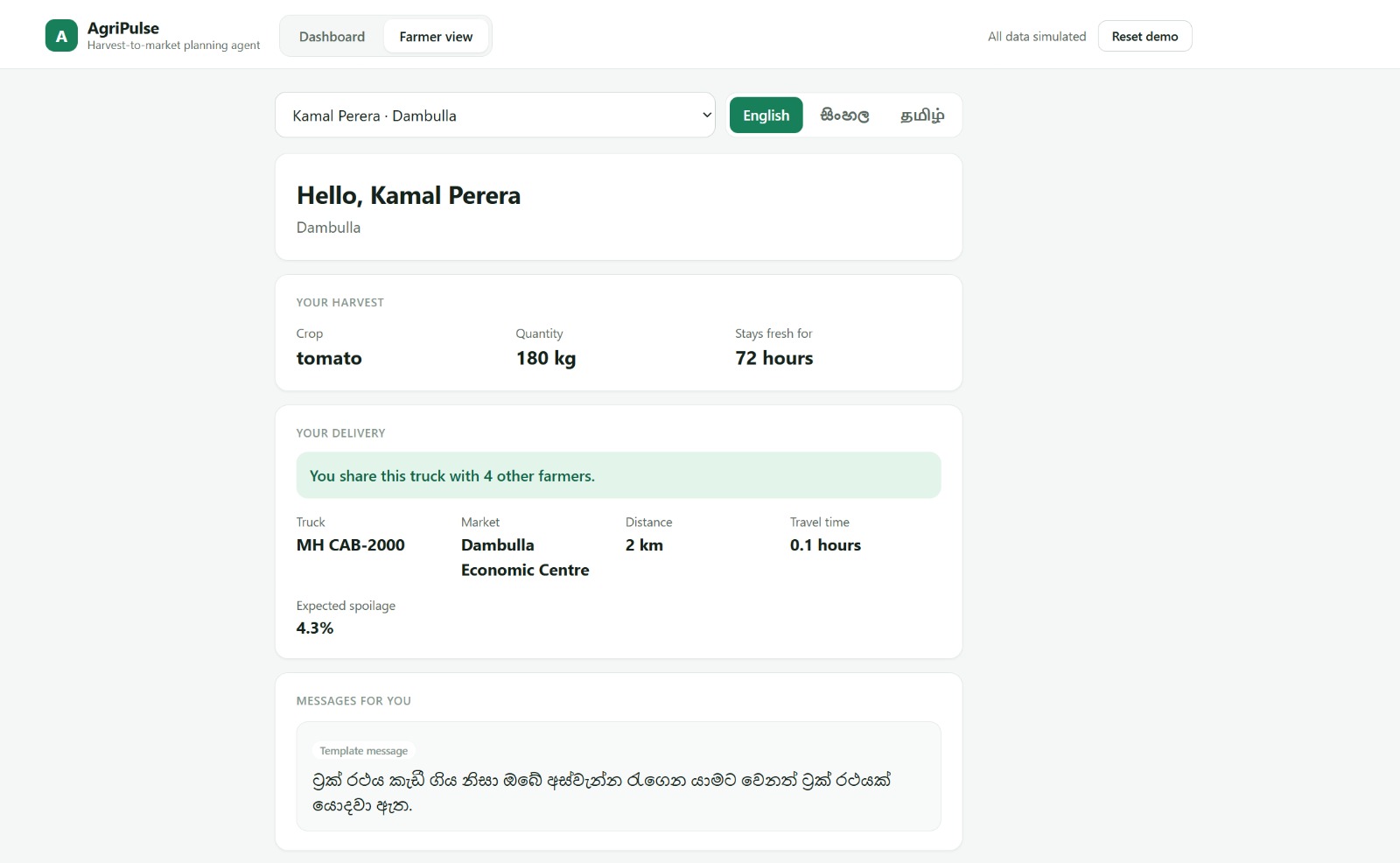
That led us to ask what a planning agent could do for that one person. It could pool nearby farmers onto shared, scheduled pickups. It could re-plan the moment something breaks. And it could tell each affected farmer in their own language, Sinhala, Tamil or English, over a plain message, so farmers need no app, no smartphone skills and no login.
We also wanted to build it responsibly. Farmers’ livelihoods depend on these numbers, so code decides every number (routes, spoilage, income, cost) and AI is used only for language: reading a farmer’s message, explaining a change, writing a reply. If the language model fails, a clearly labelled template message takes over, so the plan never breaks and nothing is invented.
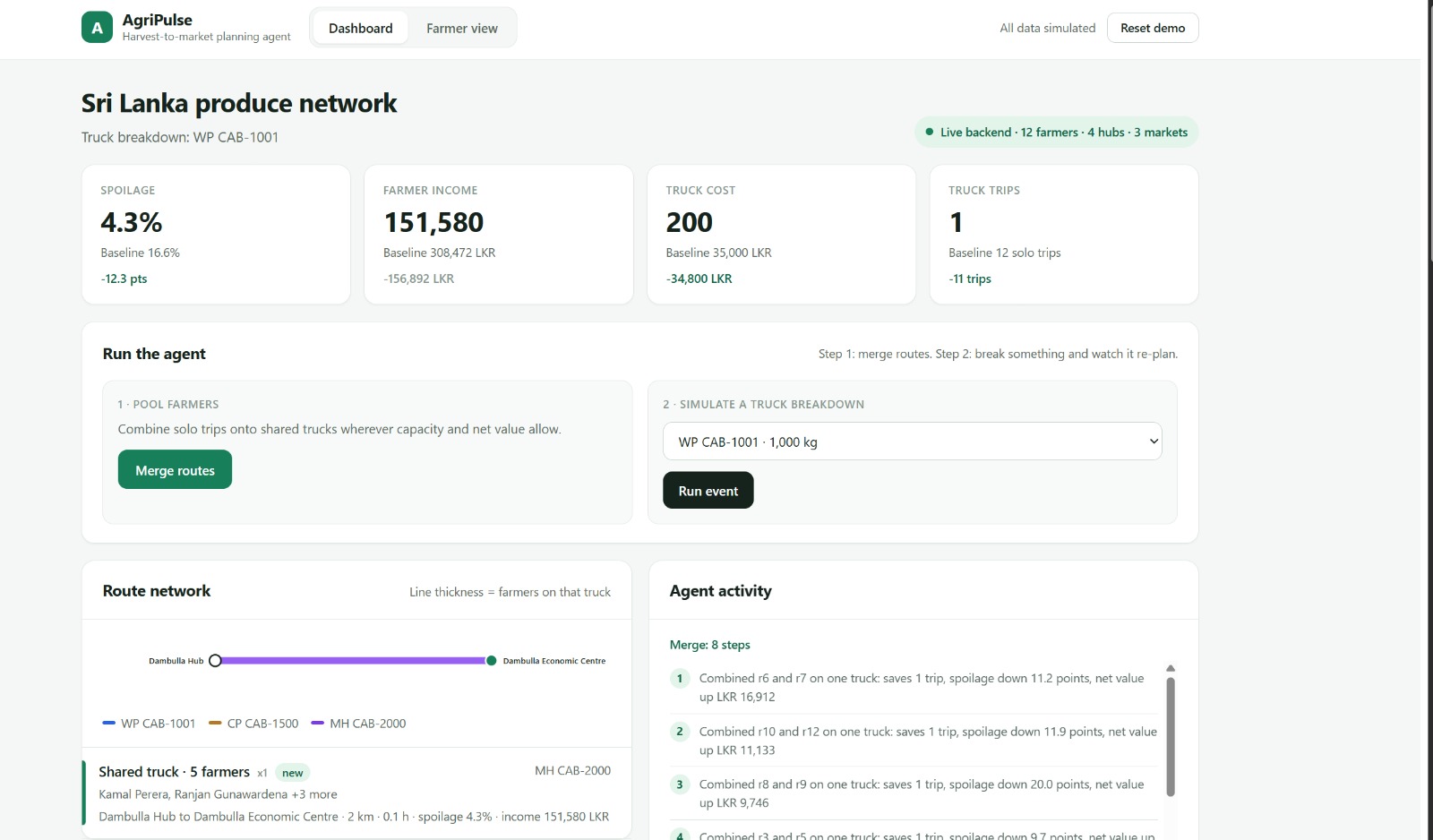
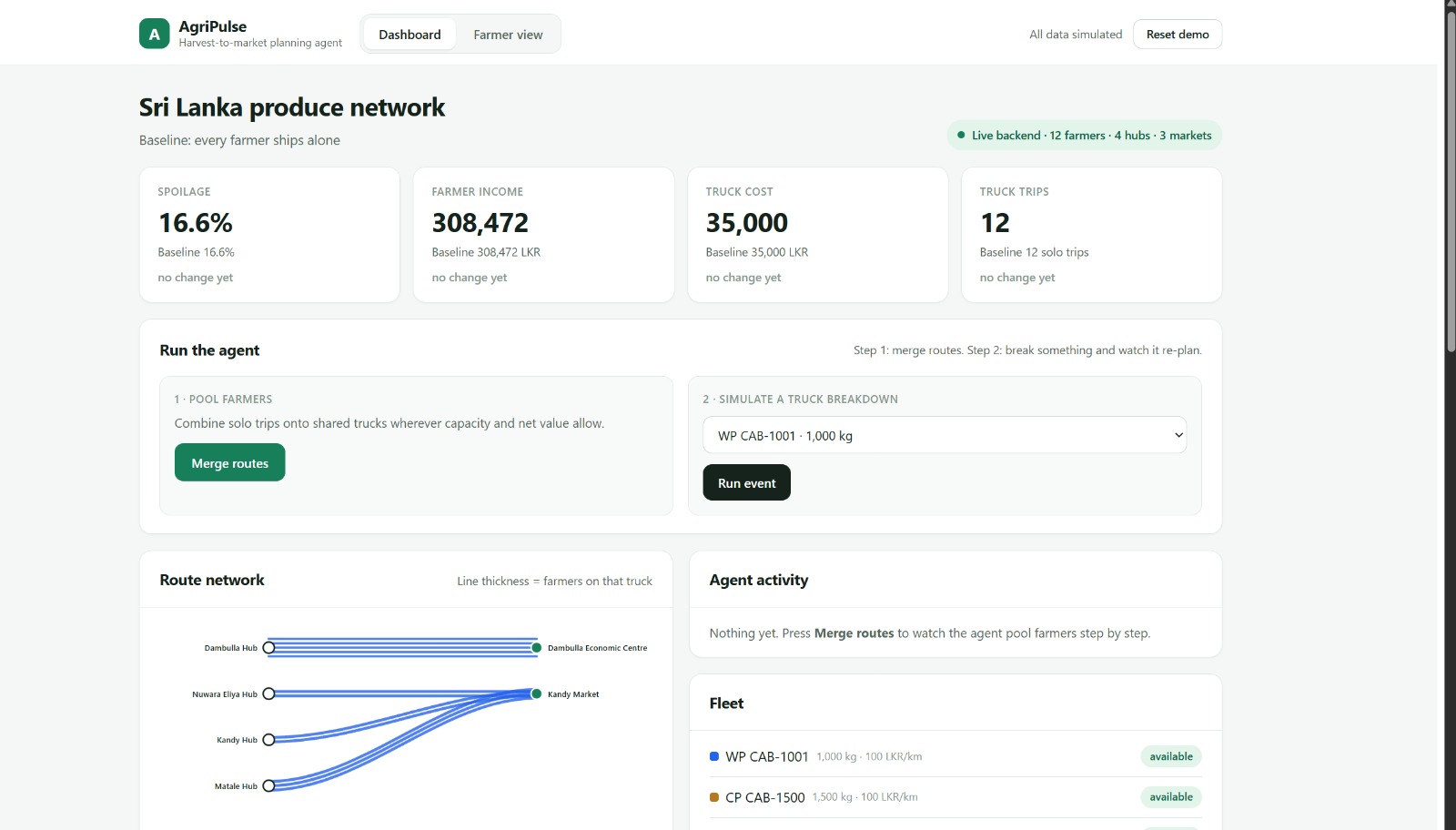
We built AgriPulse entirely in Jac, using its graph model for farmers, harvests, hubs, markets and trucks. All data is simulated and our assumptions are documented. On our simulated network, spoilage falls from 16.6% to 5.8%, truck trips from 12 to 4, and truck cost from LKR 35,000 to 11,000, while farmer income rises from LKR 308,472 to 348,688. The mechanism is the claim, not a measured real-world saving.
Built With
- jac

Log in or sign up for Devpost to join the conversation.