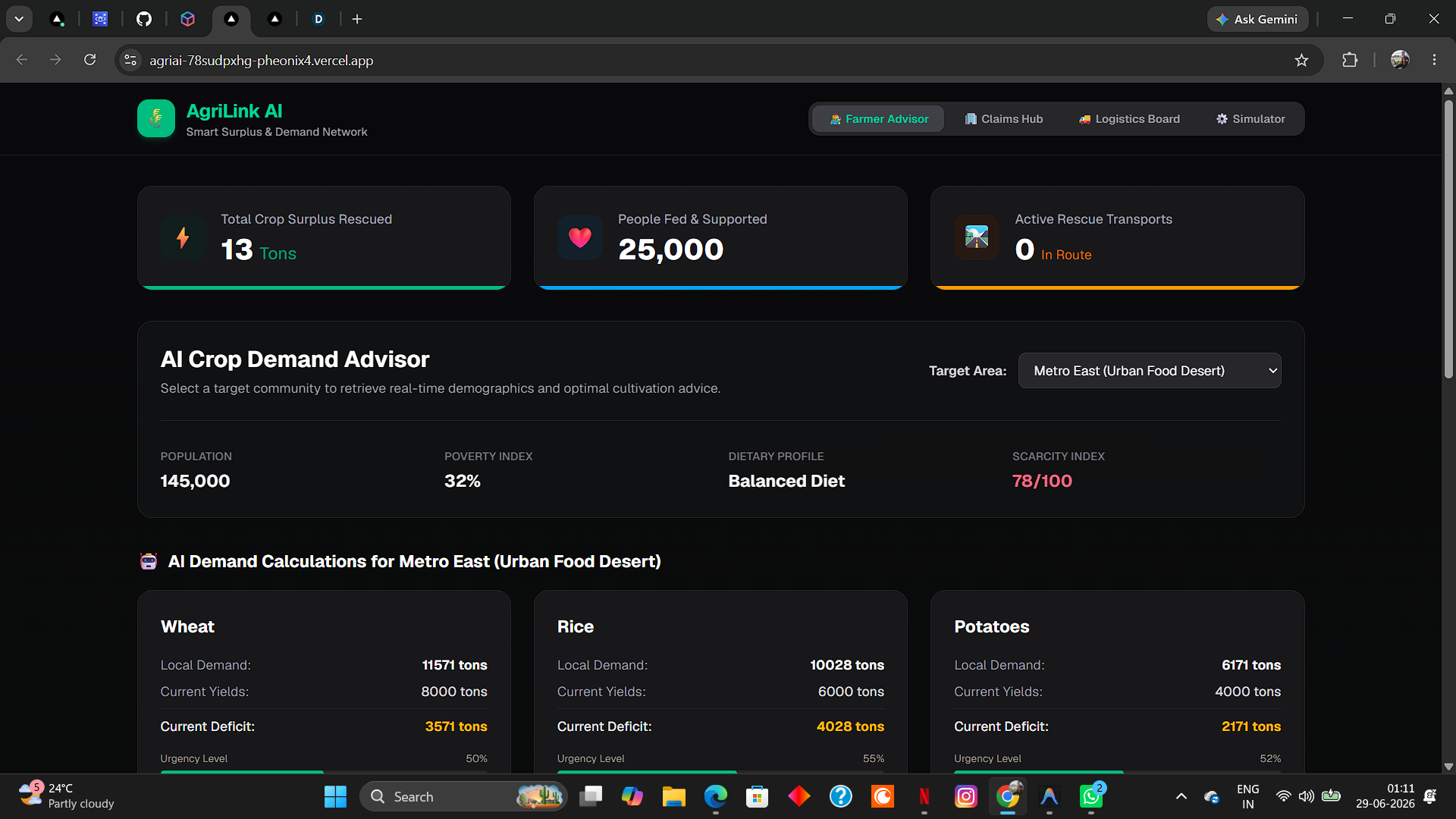
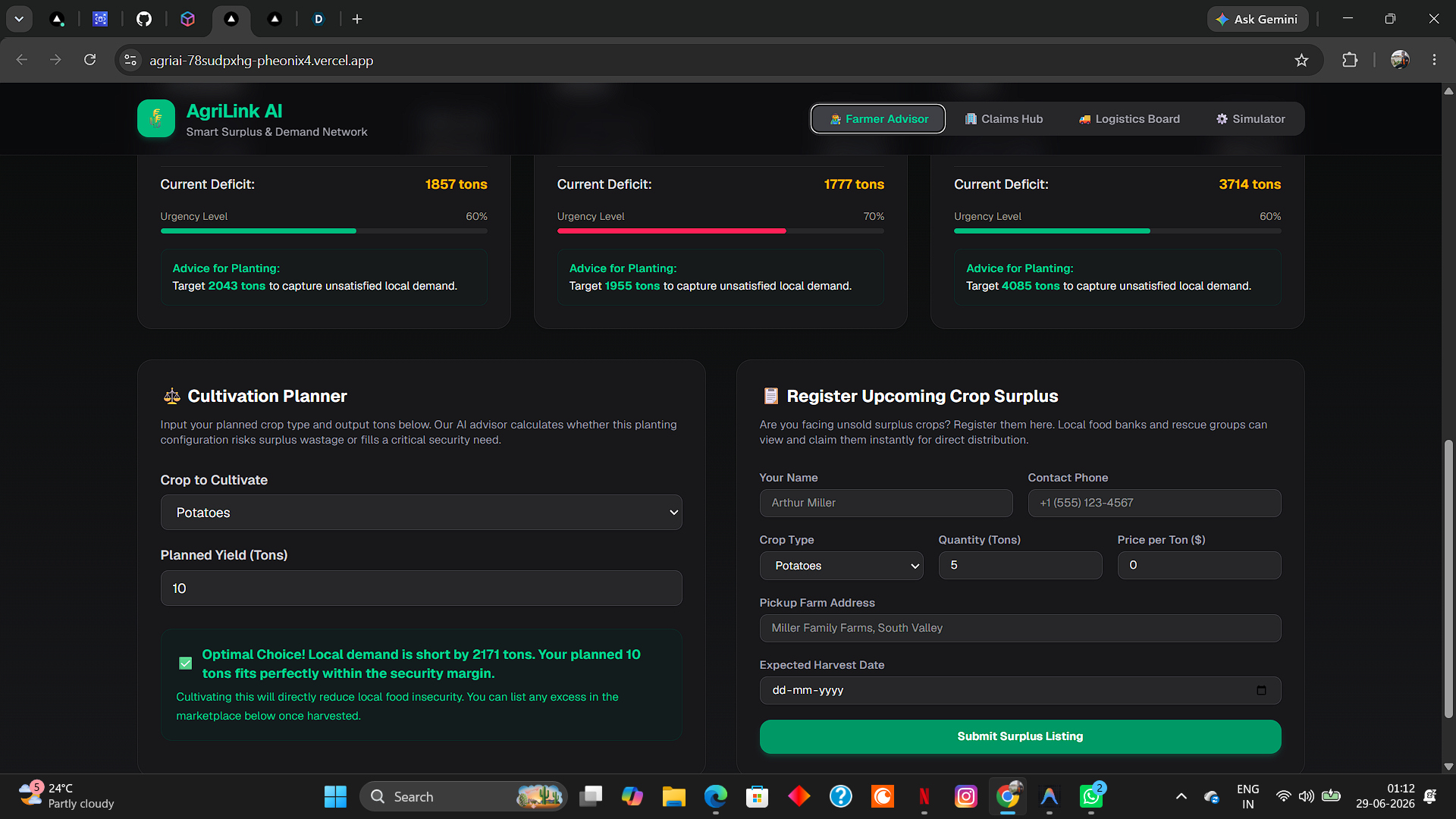
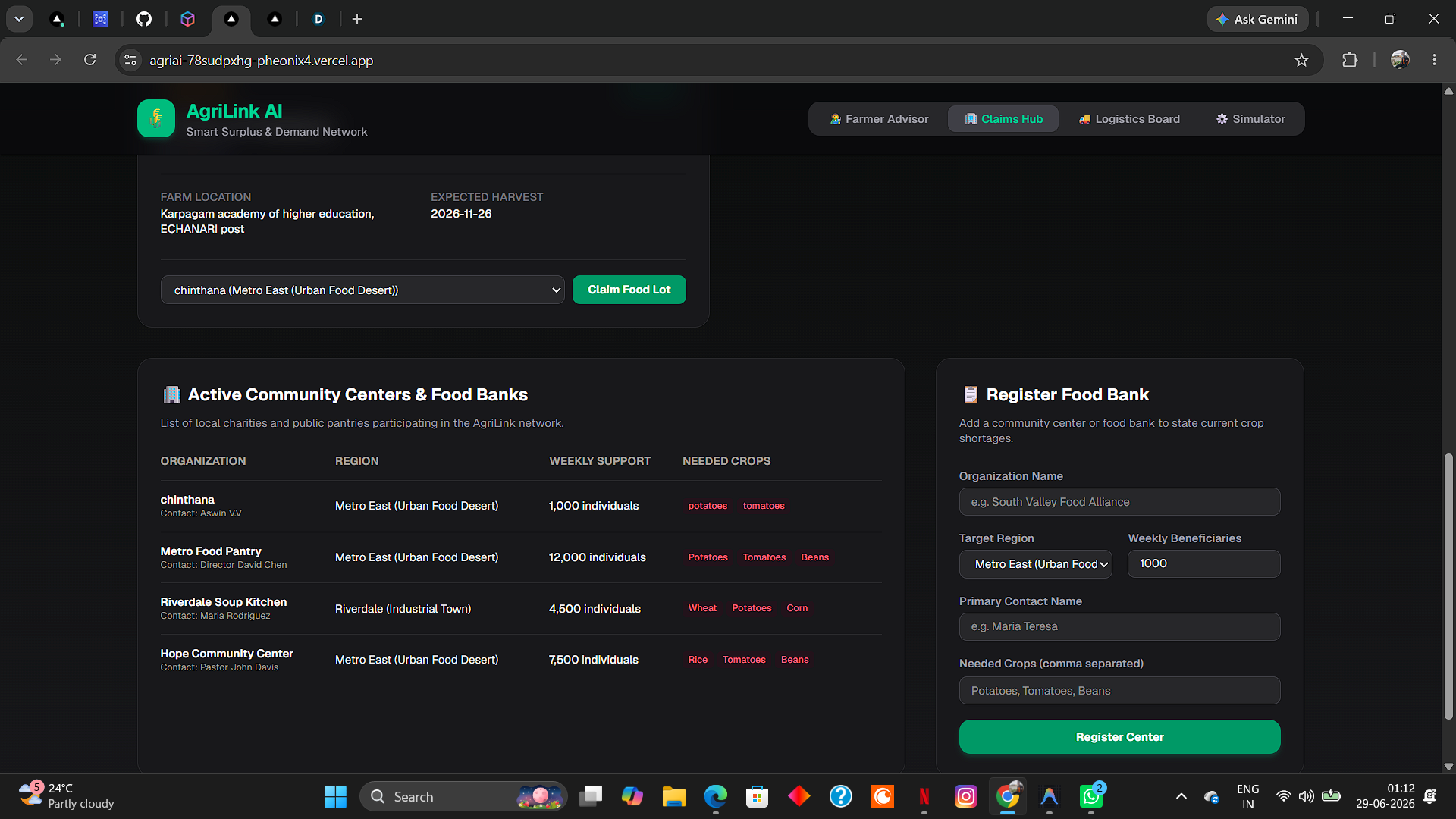
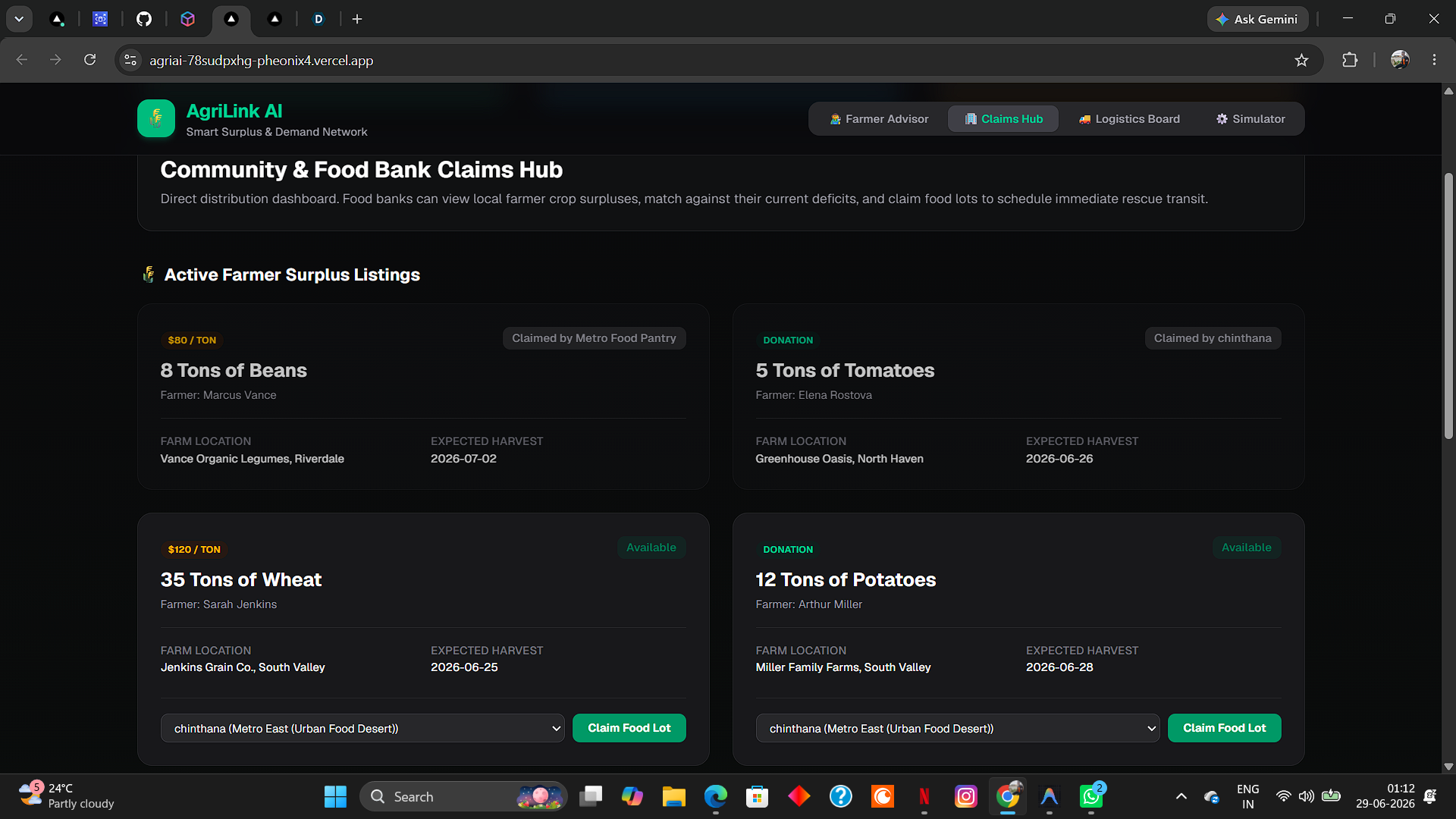
🌱 AgriLink AI – Bridging Farmers and Communities Through Data
Inspiration
Every year, millions of tons of fresh produce are wasted because farmers are unable to predict market demand or find buyers in time. At the same time, many communities struggle with food insecurity and limited access to nutritious food. This contrast inspired us to build AgriLink AI, a platform that connects surplus agricultural production with regions experiencing food shortages using intelligent, data-driven decision making.
Our goal was simple: reduce crop wastage while improving food accessibility.
What We Built
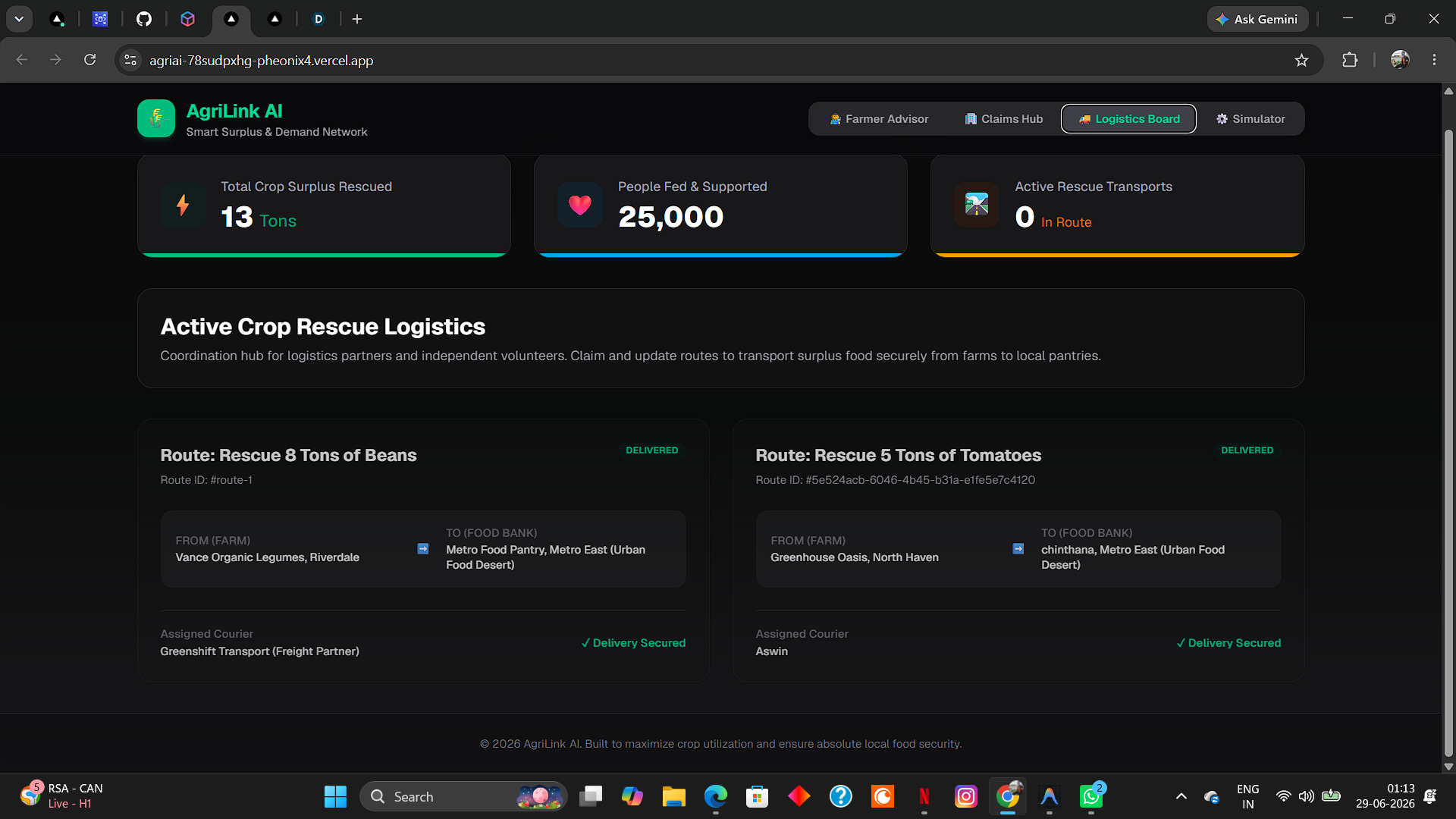
AgriLink AI is a web application that acts as a smart bridge between farmers, distributors, NGOs, and communities.
The platform combines:
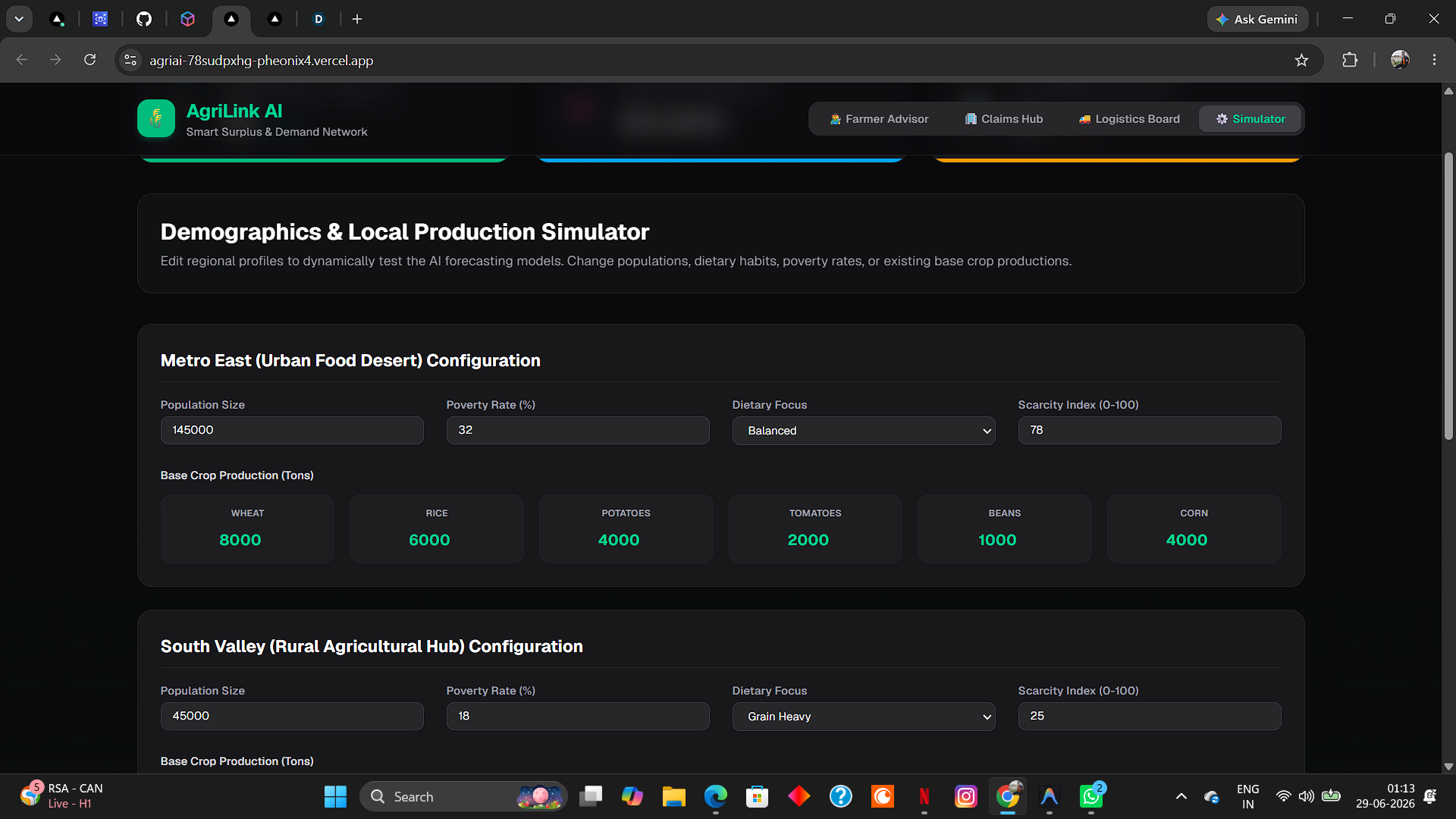
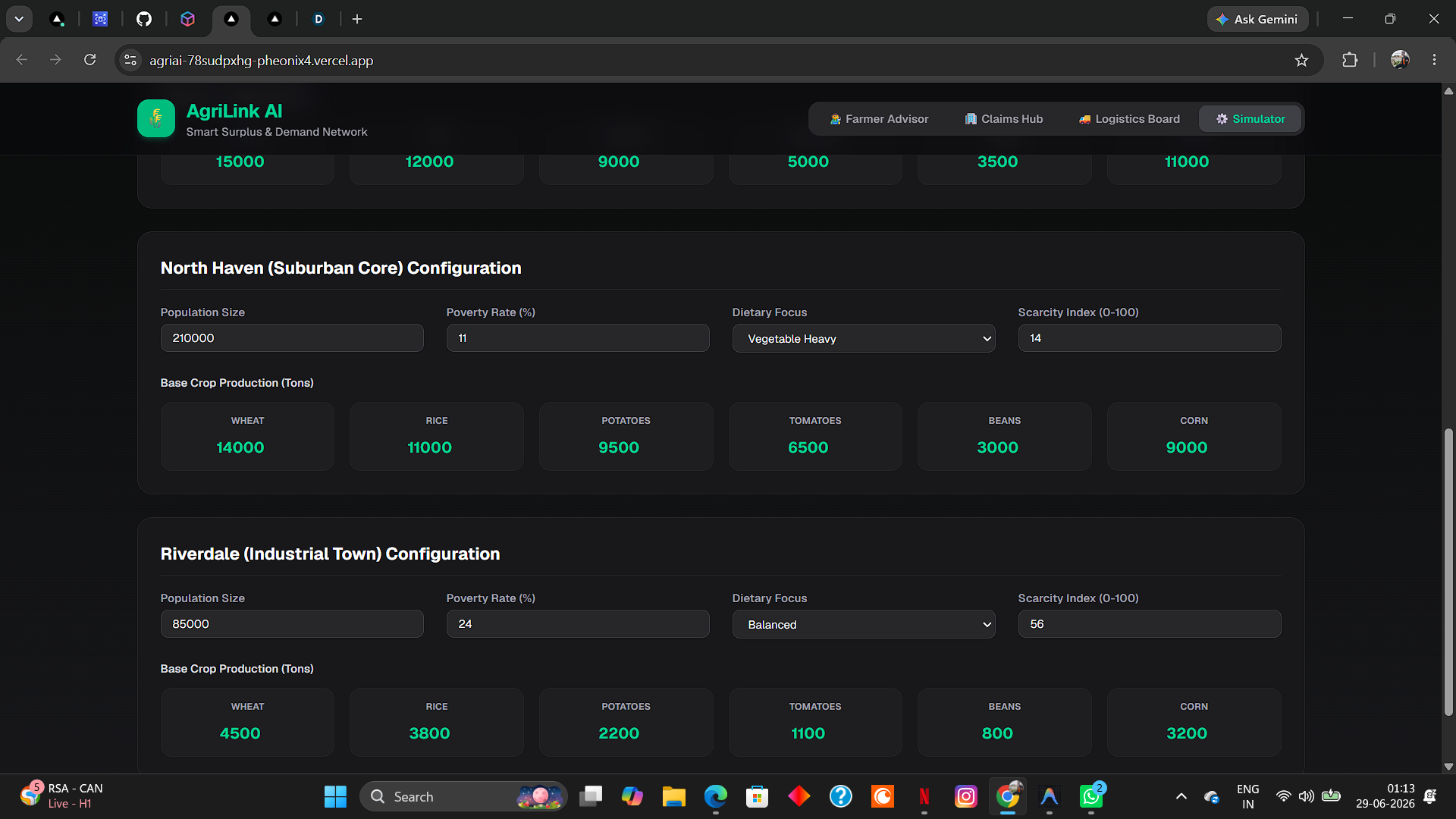
- Population and demographic data
- Historical crop production
- Demand forecasting using AI
- Farmer crop recommendations
- A marketplace for surplus crops
- Real-time analytics dashboard
Using predictive analytics, farmers receive recommendations about what crops to grow and how much to cultivate based on expected local demand.
If surplus production still occurs, the marketplace connects farmers directly with food banks, NGOs, retailers, and food-scarce regions, ensuring that edible produce reaches people instead of going to waste.
How We Built It
Our application was developed using modern cloud technologies.
Frontend
- Next.js
- React
- Tailwind CSS
- Vercel v0 for rapid UI development
Backend
- AWS Aurora PostgreSQL for structured agricultural and marketplace data
- AWS cloud infrastructure
- Server-side APIs using Next.js
AI & Data
The prediction engine analyzes multiple factors such as:
- Population growth
- Regional food demand
- Historical crop yield
- Seasonal production trends
- Market demand
A simplified demand estimation model is:
[ Demand = Population \times AverageFoodConsumption ]
The recommended cultivation quantity is calculated as:
[ RecommendedCrop = PredictedDemand - ExistingSupply ]
These predictions help farmers make informed planting decisions before the growing season begins.
Challenges We Faced
Building AgriLink AI involved several technical challenges:
- Connecting AWS Aurora PostgreSQL securely with the application
- Managing cloud authentication and database connectivity
- Designing an intuitive interface suitable for farmers
- Creating a scalable database structure for crops, users, demand, and marketplace data
- Balancing prediction accuracy with limited sample datasets during development
Each challenge helped us strengthen our understanding of cloud computing, databases, and AI-powered decision making.
What We Learned
Through this project we learned:
- Cloud database integration with AWS
- Full-stack development using Next.js
- Designing scalable data models
- Applying AI concepts to solve real-world agricultural problems
- The importance of data-driven decision making in sustainable farming
Most importantly, we realized that technology can create meaningful social impact when it connects the right people with the right information.
Future Scope
We plan to expand AgriLink AI with:
- Satellite and weather-based crop prediction
- IoT sensor integration for smart farming
- Mobile application support
- Multilingual regional language support
- Carbon footprint and food waste analytics
- Government and NGO integration for emergency food distribution
Impact
AgriLink AI helps farmers grow smarter, reduces food waste, improves food distribution, and contributes toward a more sustainable agricultural ecosystem.
By transforming agricultural data into actionable insights, our platform empowers farmers while helping communities access the food they need—creating a future where less food is wasted and more people are fed.
Built With
- amazon-web-services
- css
- github
- html
- iam
- javascript
- next.js
- node.js
- npm
- orm
- postgresql
- prisma
- rds
- react
- sdk
- signer
- sql
- tailwind
- typescript
- vercel


Log in or sign up for Devpost to join the conversation.