Inspiration
Agriculture is the backbone of many economies, yet farmers continue to face major challenges after harvesting their produce. Limited access to storage facilities, lack of transparency in warehouse availability, inefficient logistics coordination, and dependence on intermediaries often reduce farmer profits and increase food wastage. We were inspired to build AgriLink to bridge the gap between farmers, warehouses, logistics providers, and bulk buyers by creating a unified digital ecosystem that streamlines agricultural supply chain operations from farm to market.
What it does
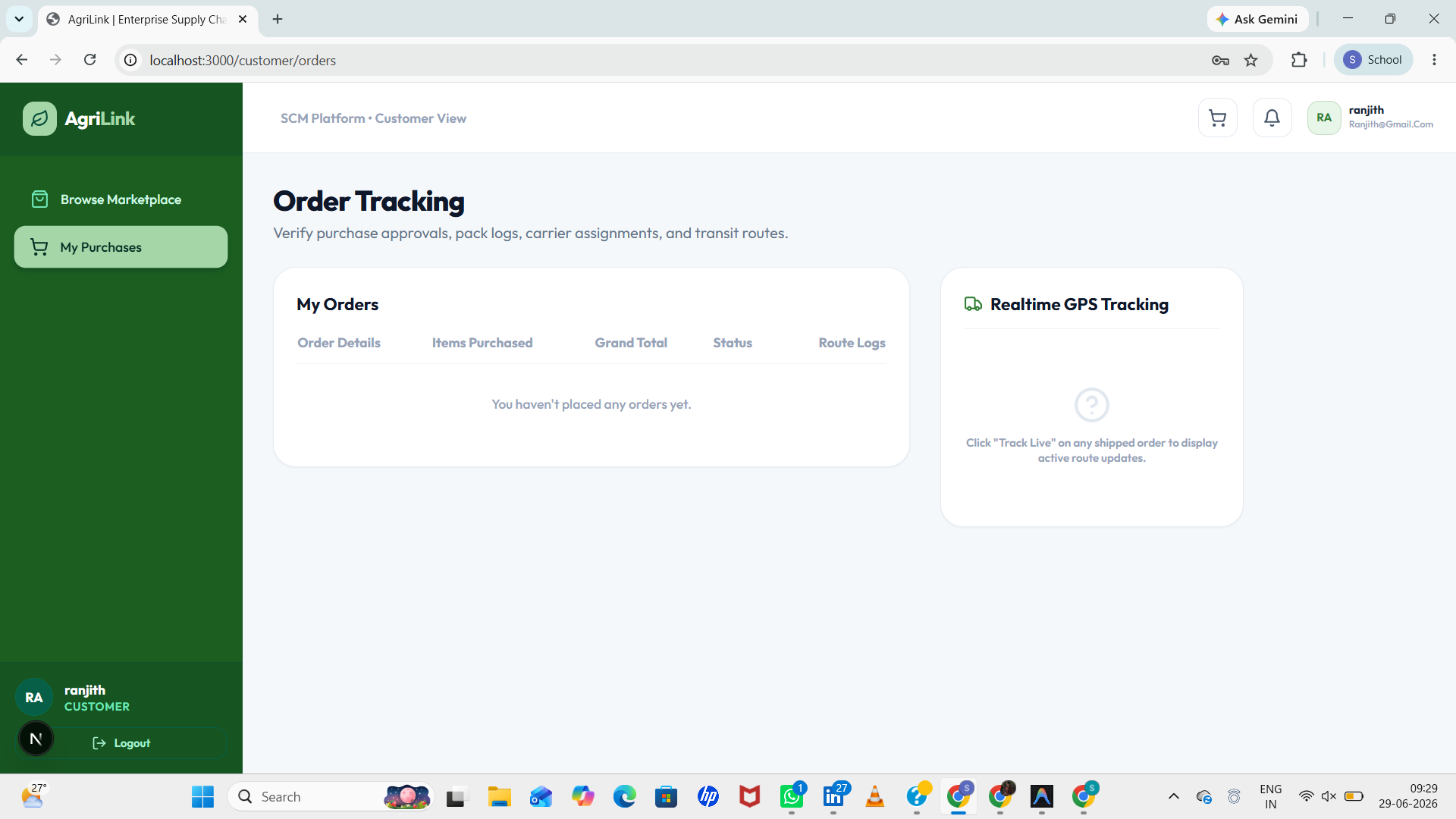
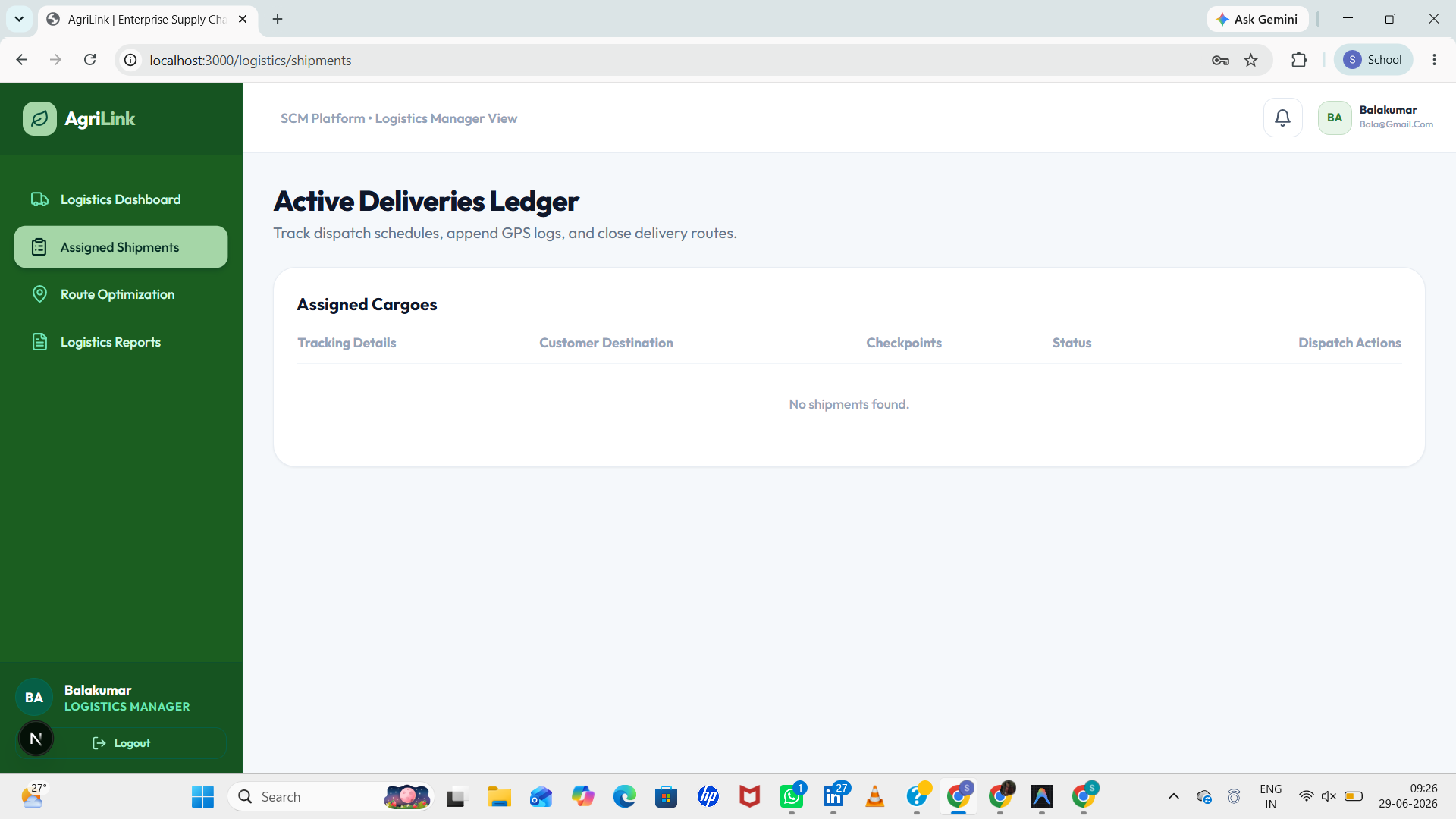
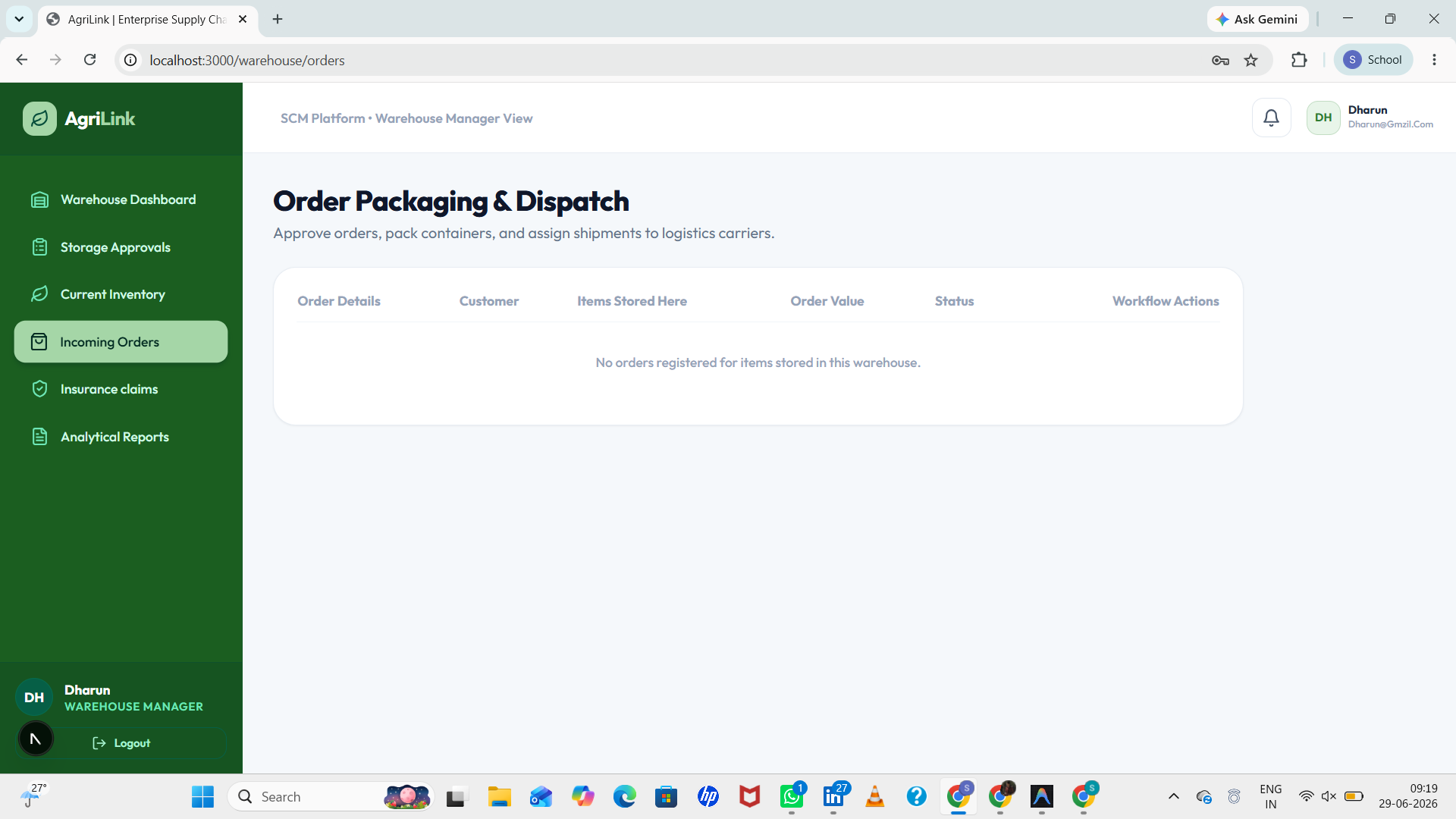
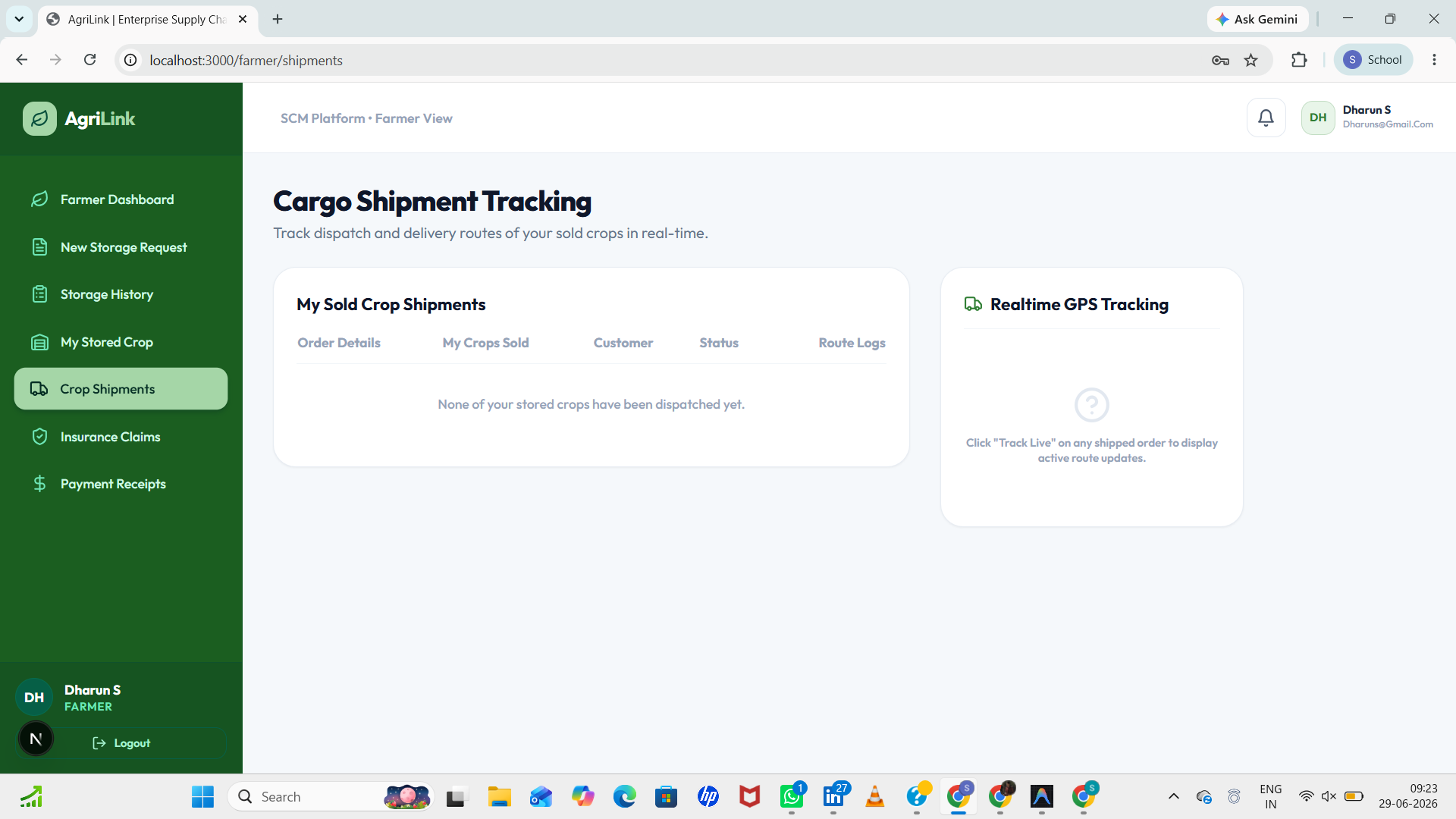
AgriLink is a smart agricultural supply chain management platform that connects all stakeholders involved in the post-harvest journey of agricultural products. The platform enables:
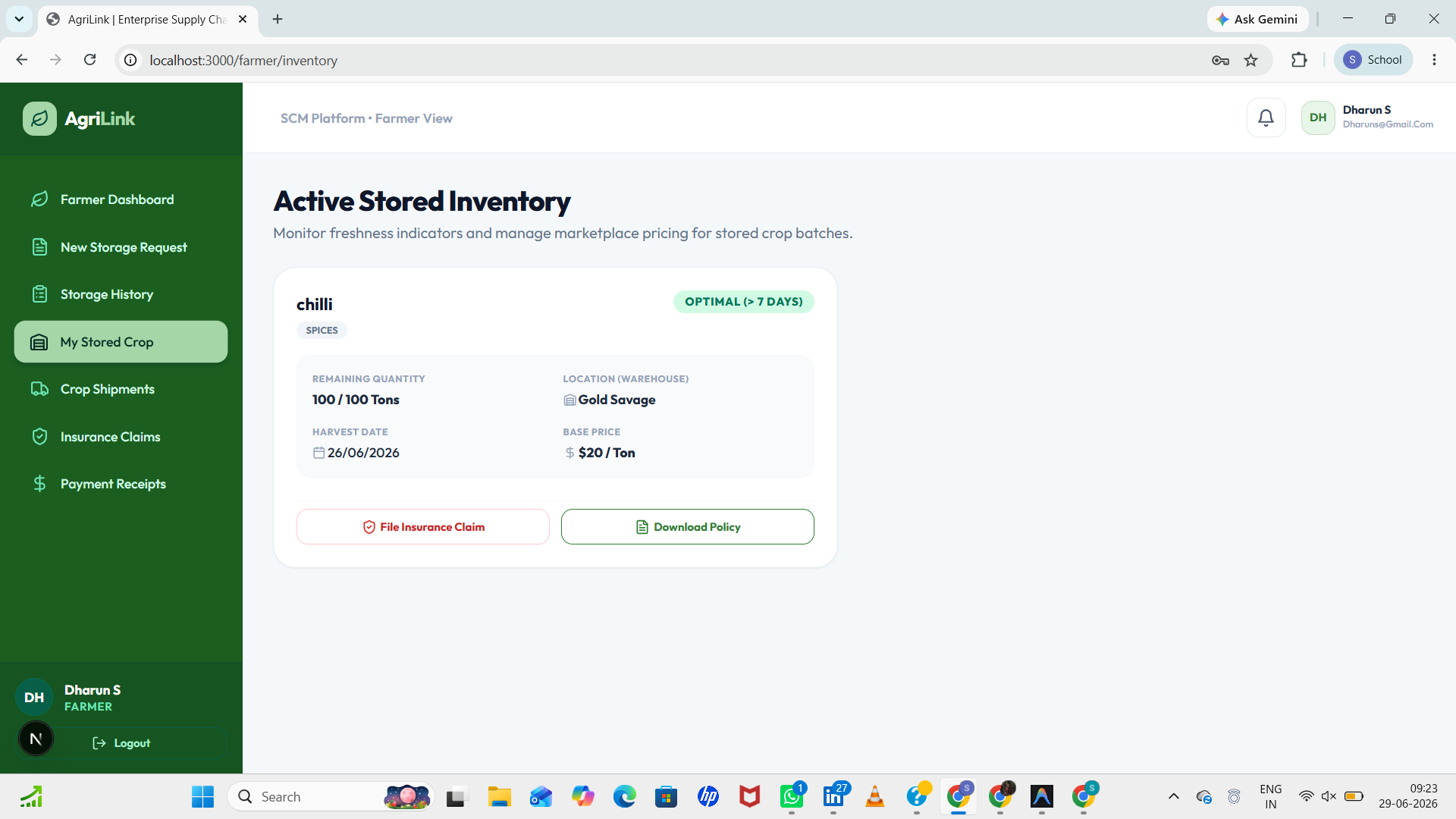
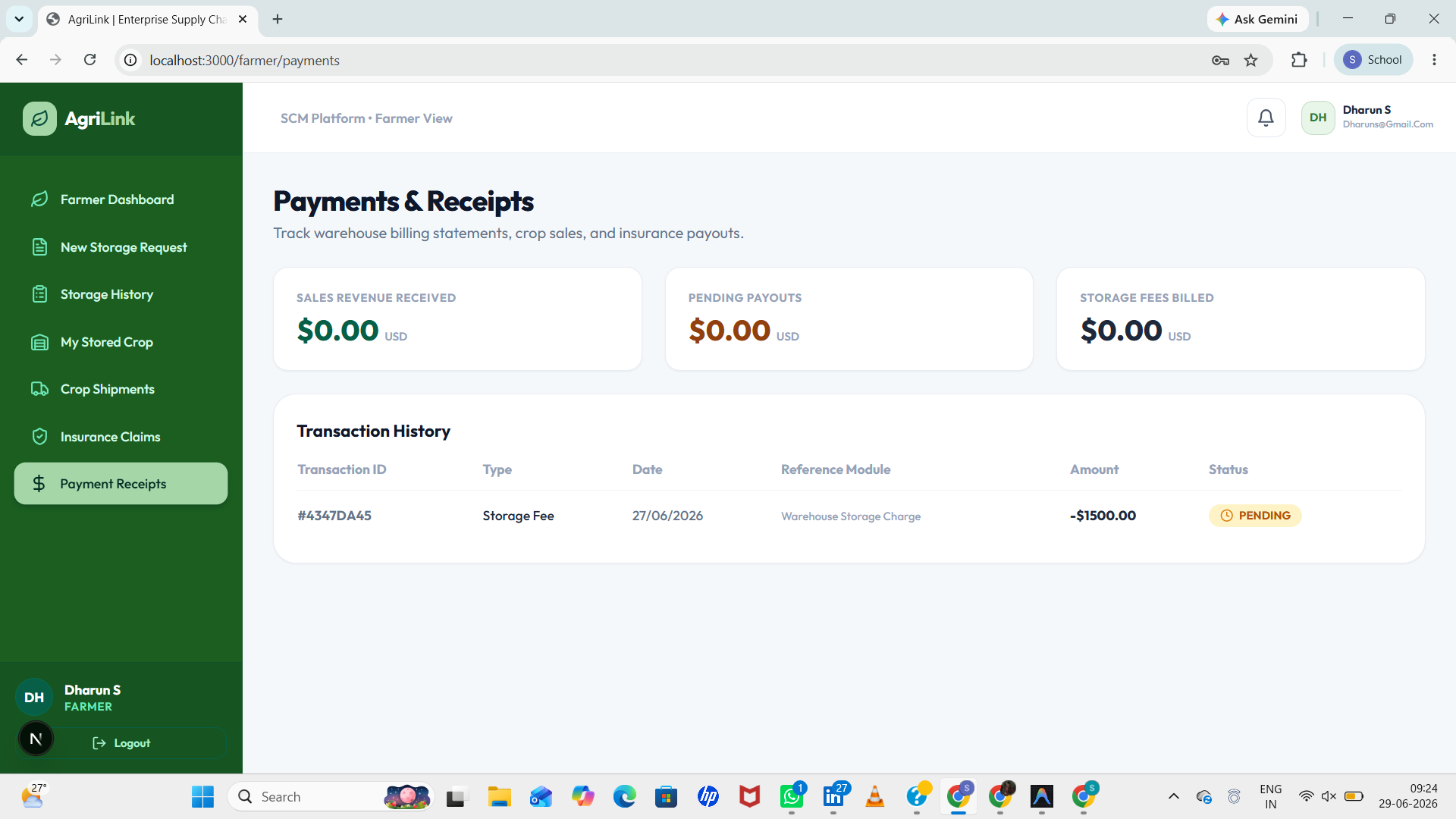
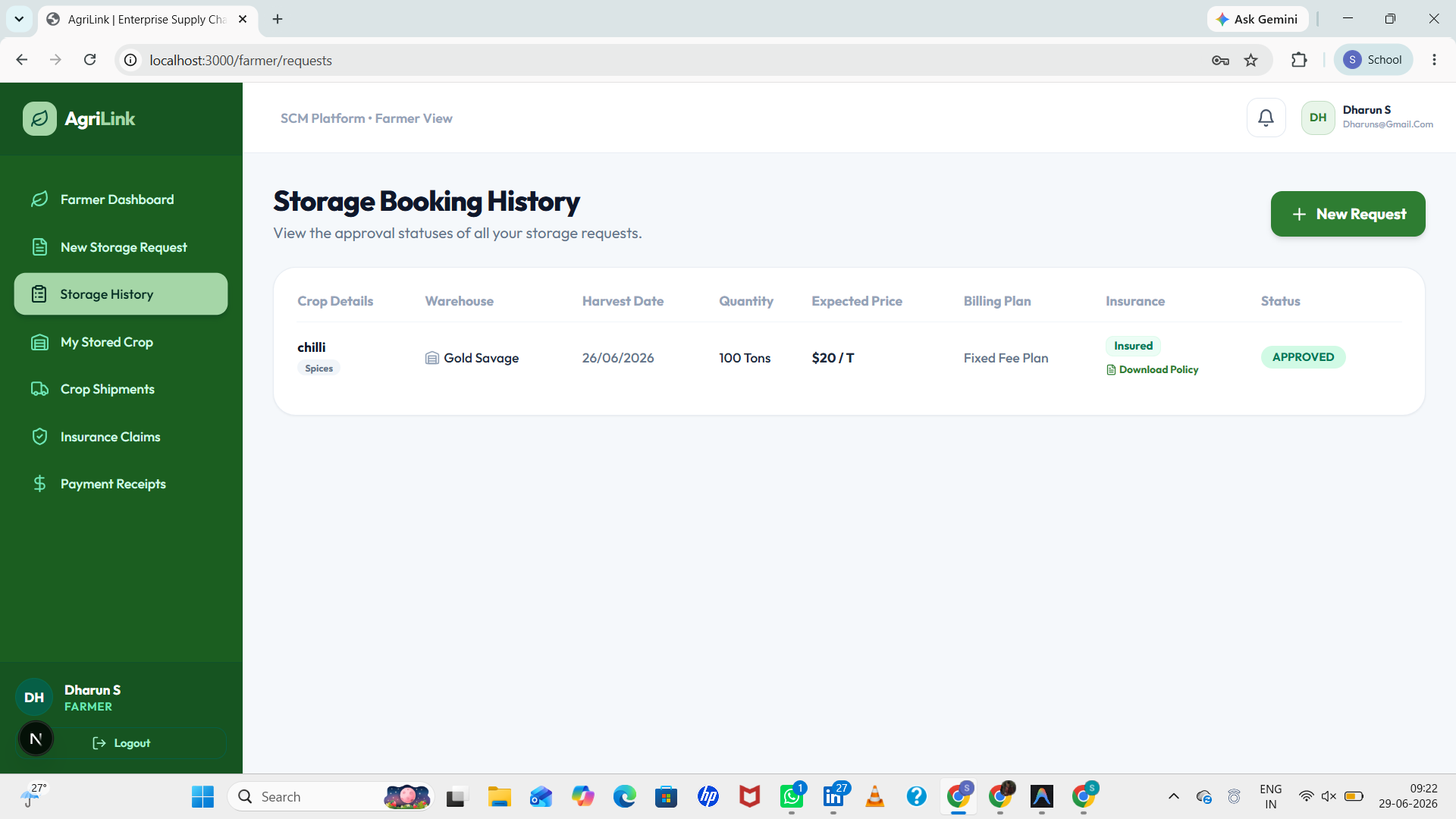
- Farmers to discover nearby warehouses and submit storage requests.
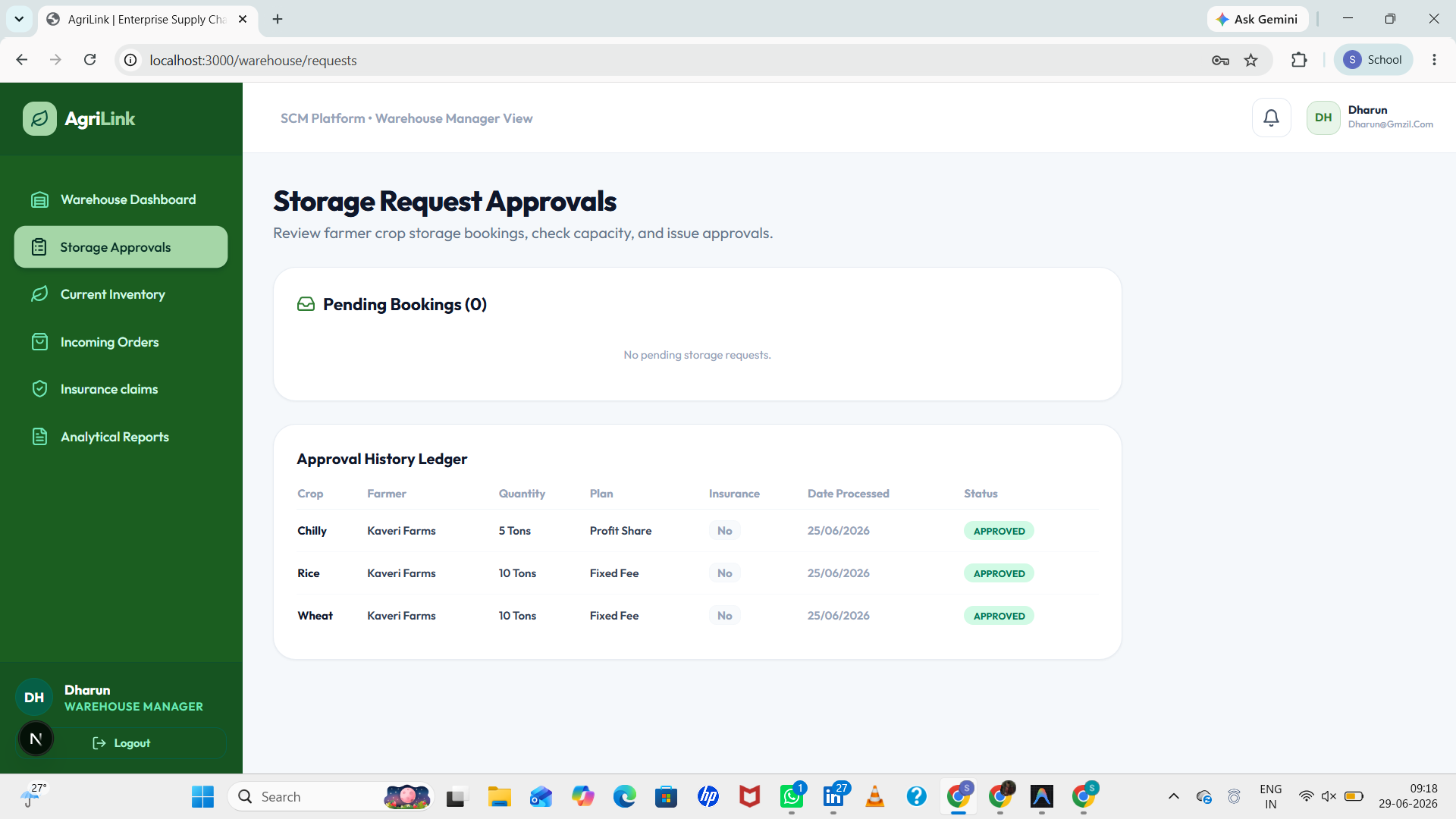
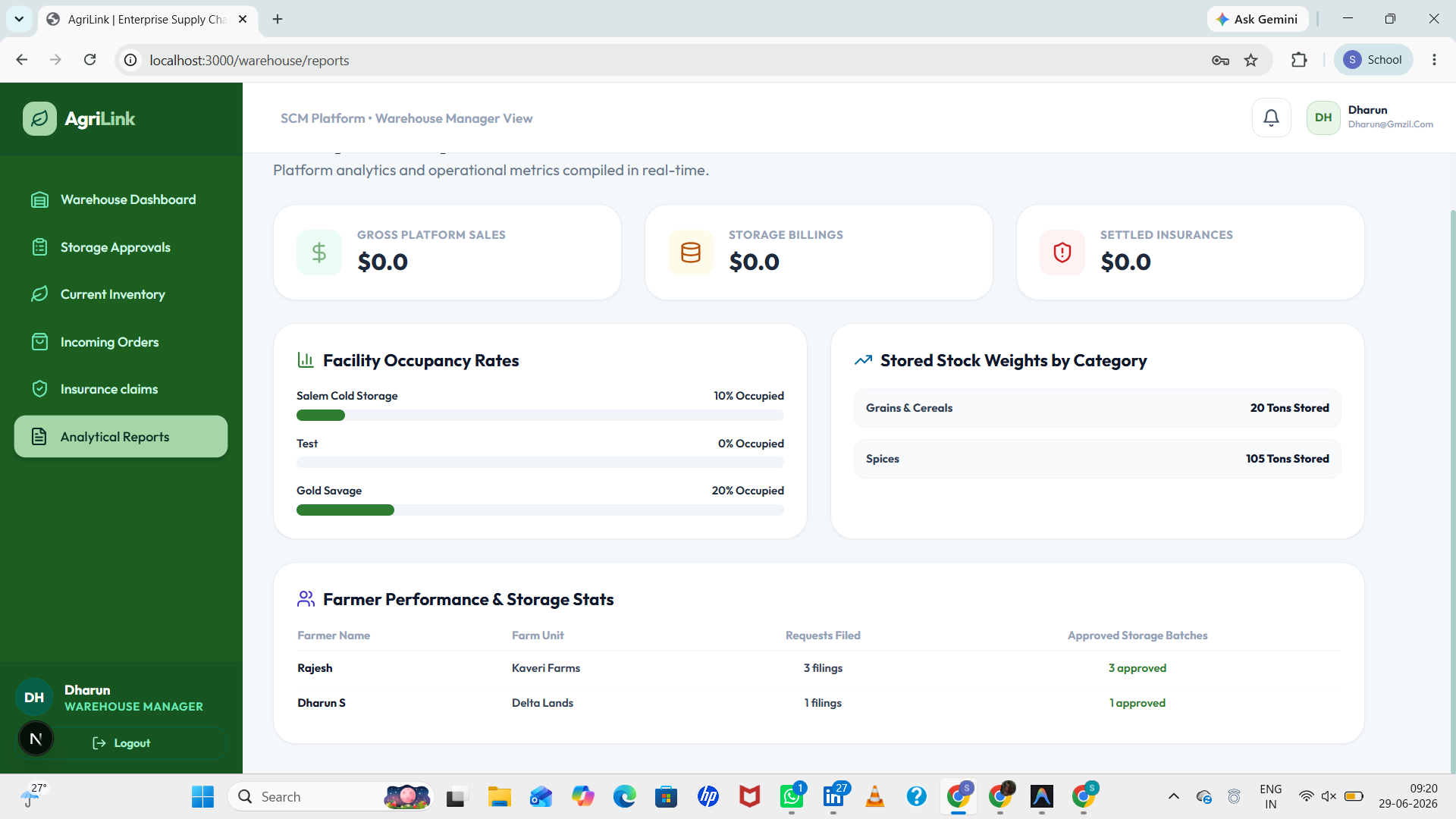
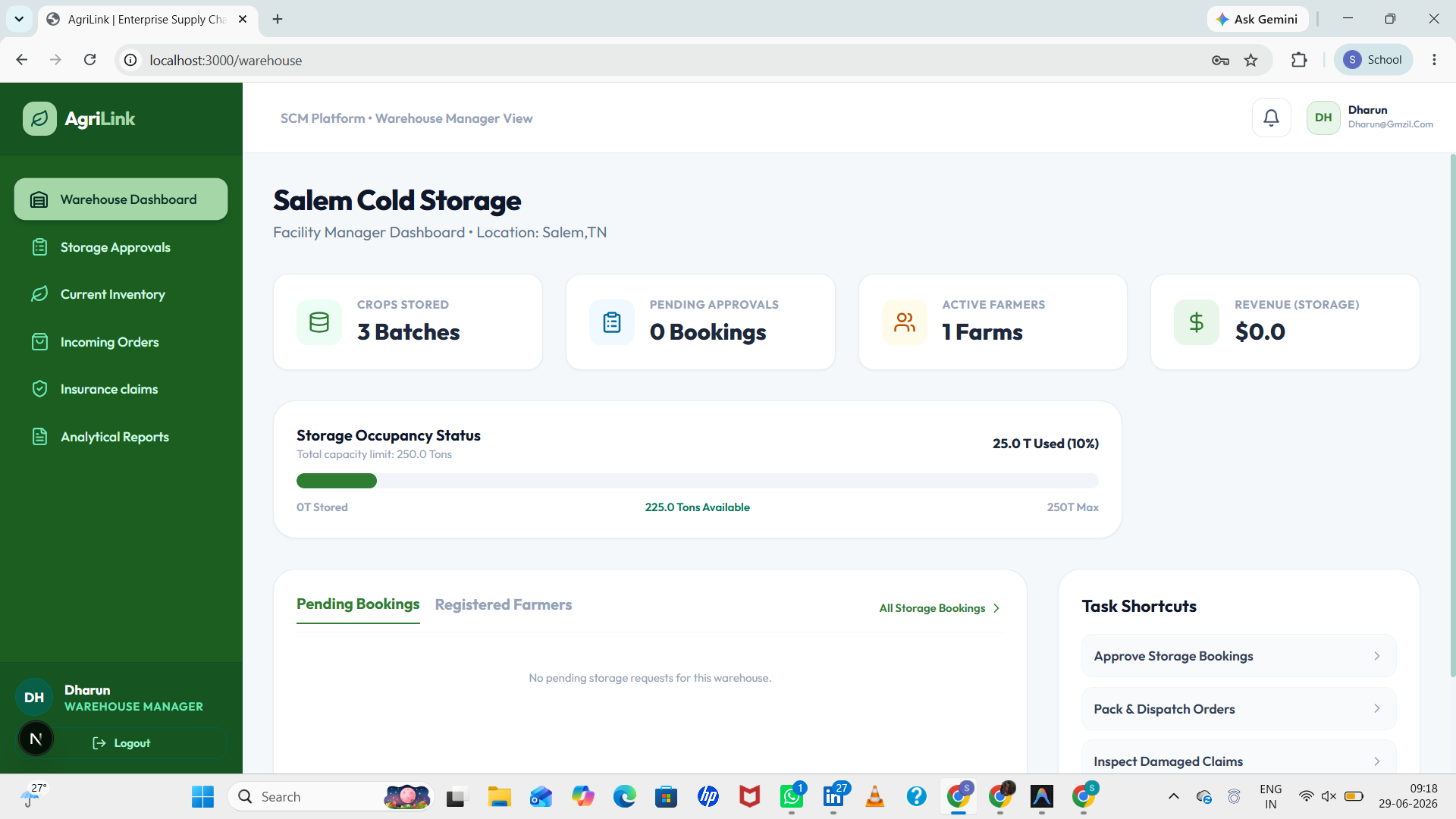
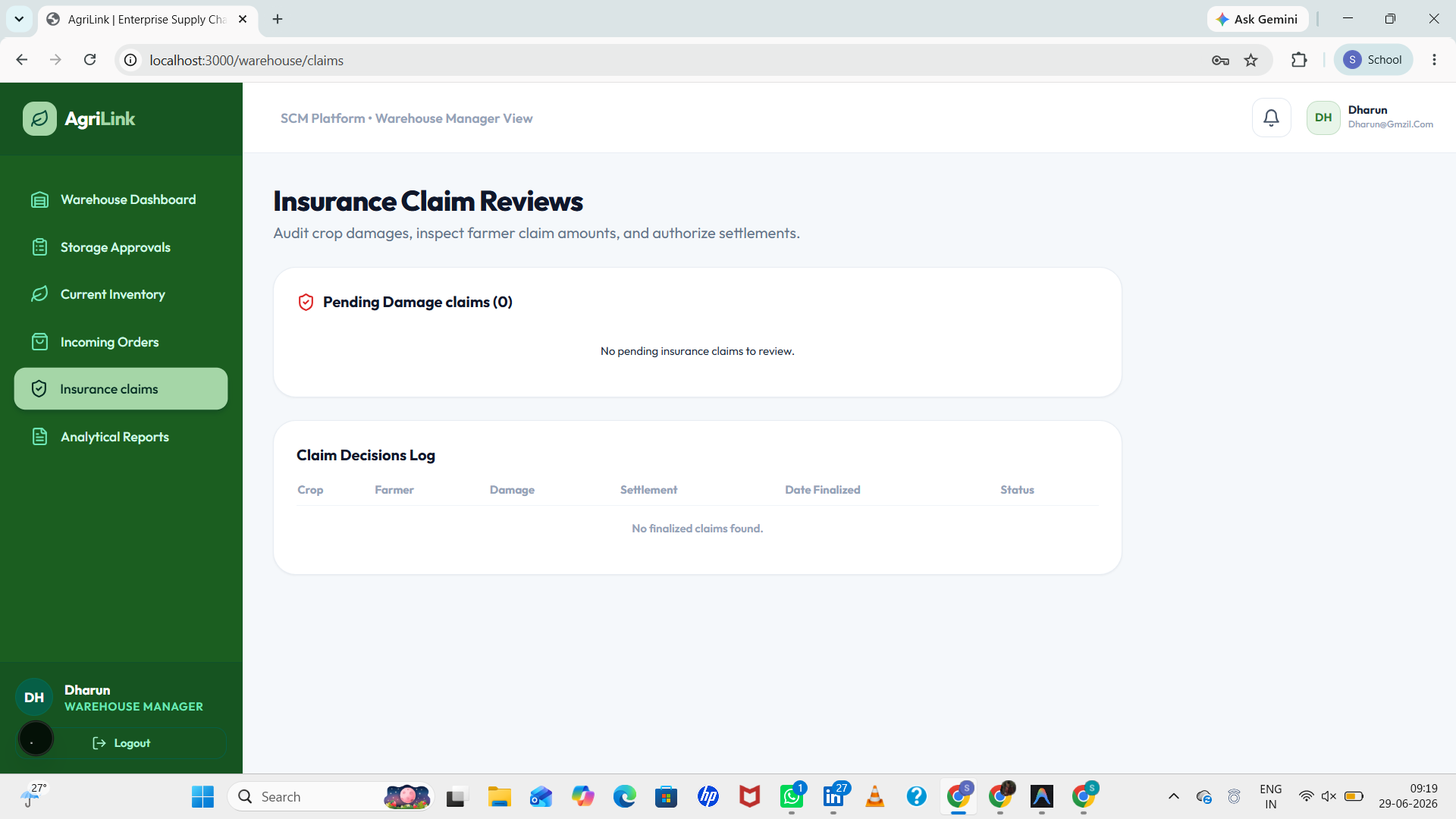
- Warehouse managers to approve storage requests and manage inventory efficiently.
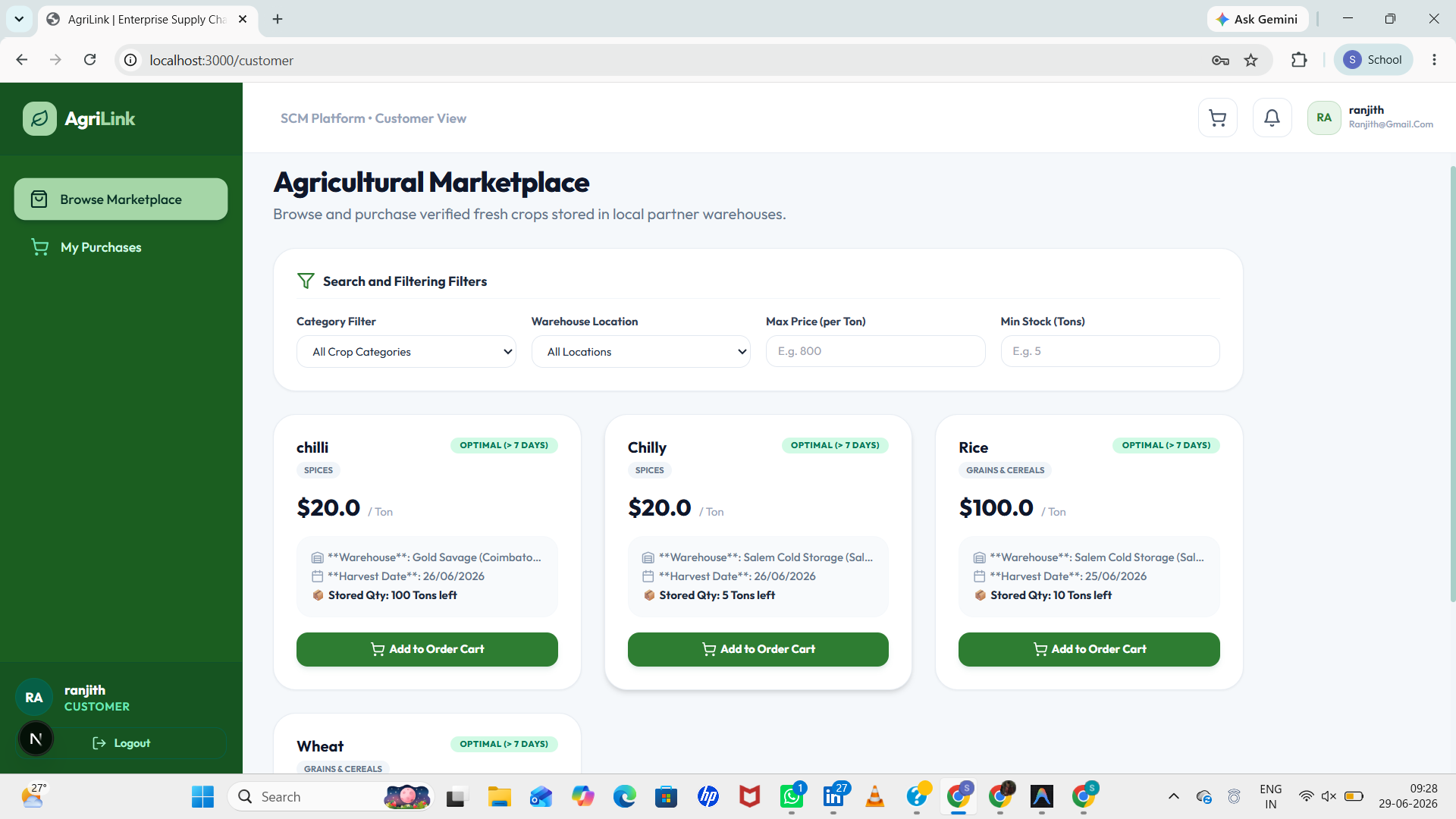
- Bulk buyers such as supermarkets, retailers, and marketplaces to purchase products directly from warehouse inventory.
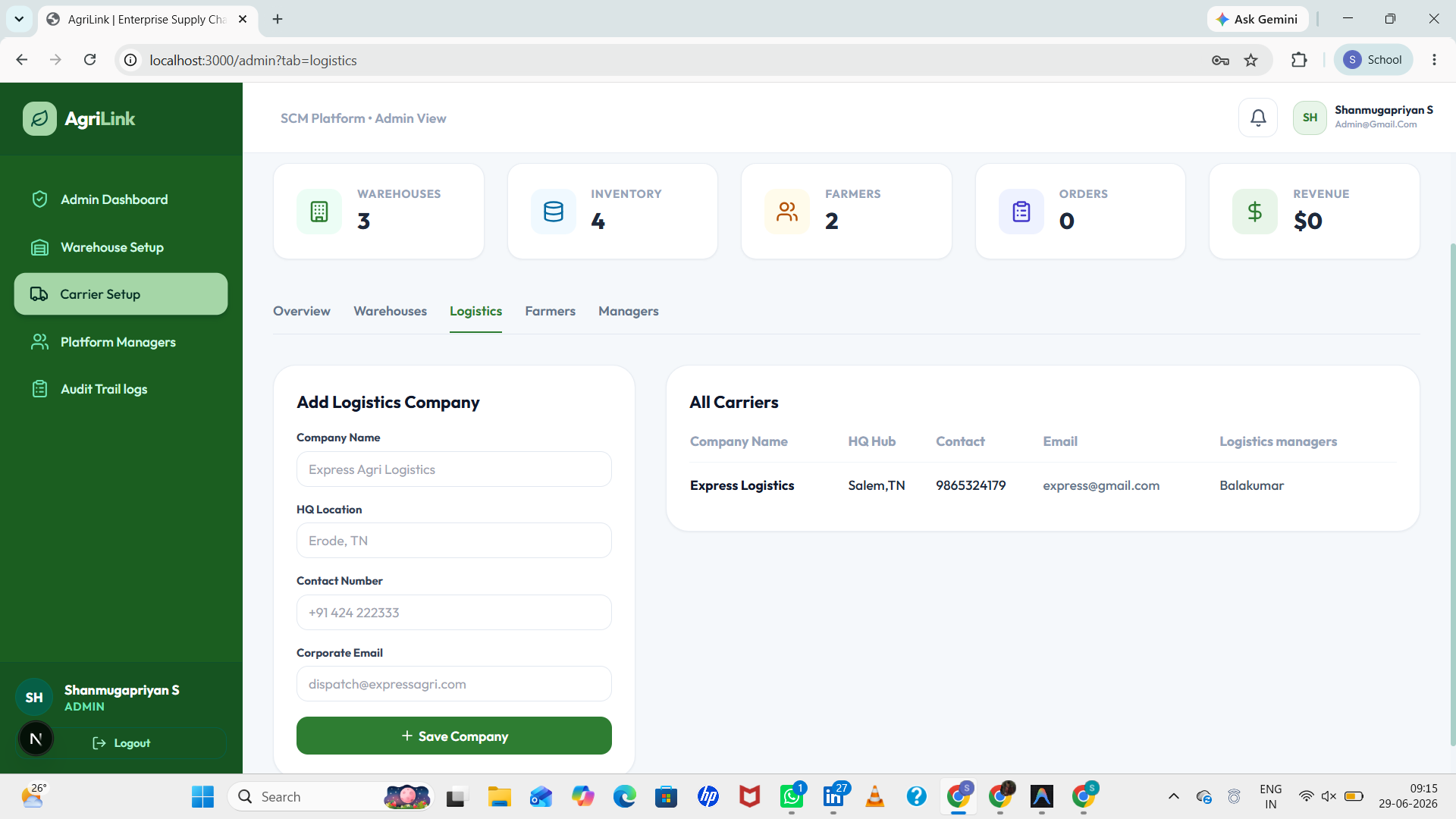
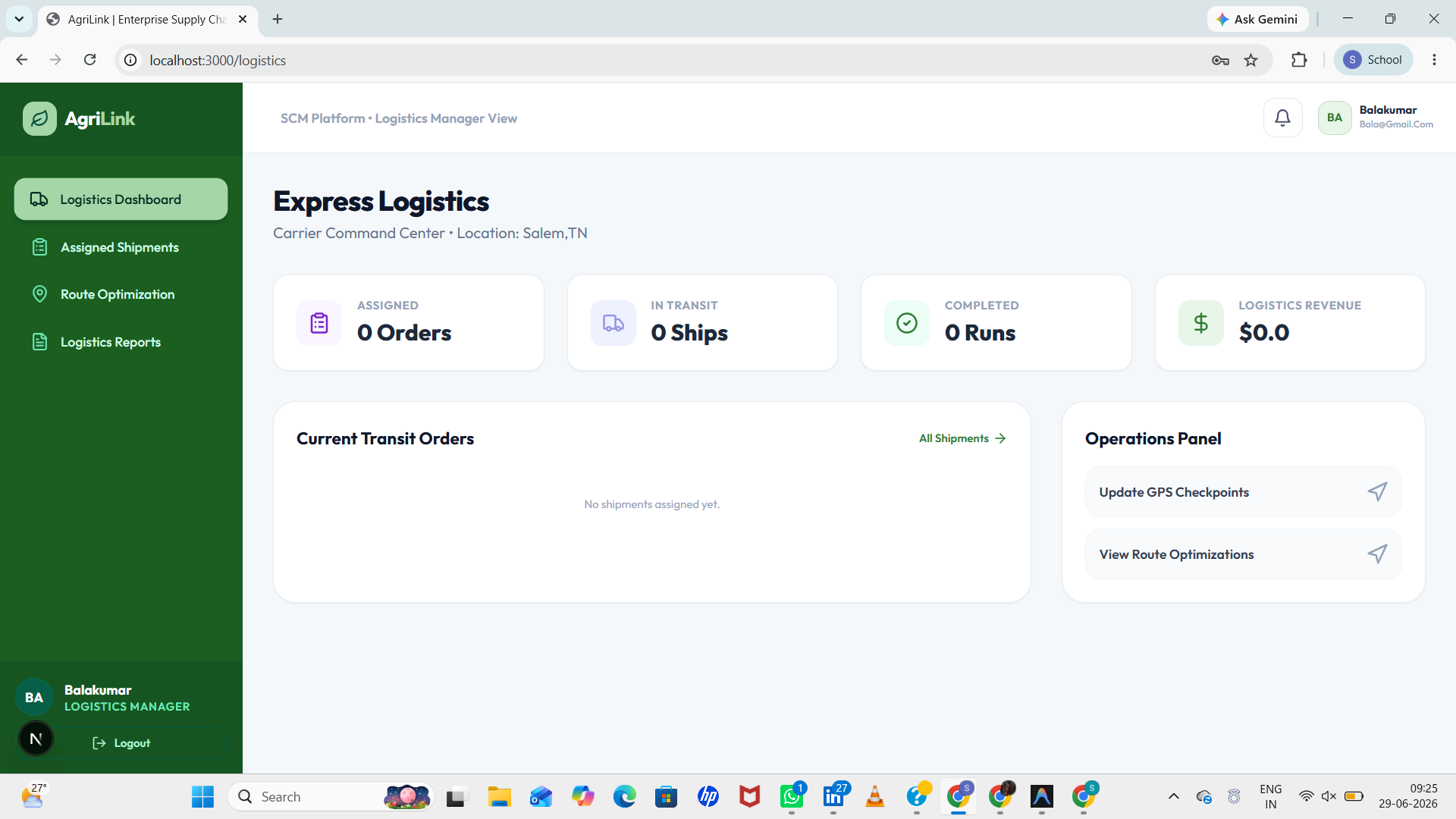
- Logistics providers to handle transportation and delivery operations.
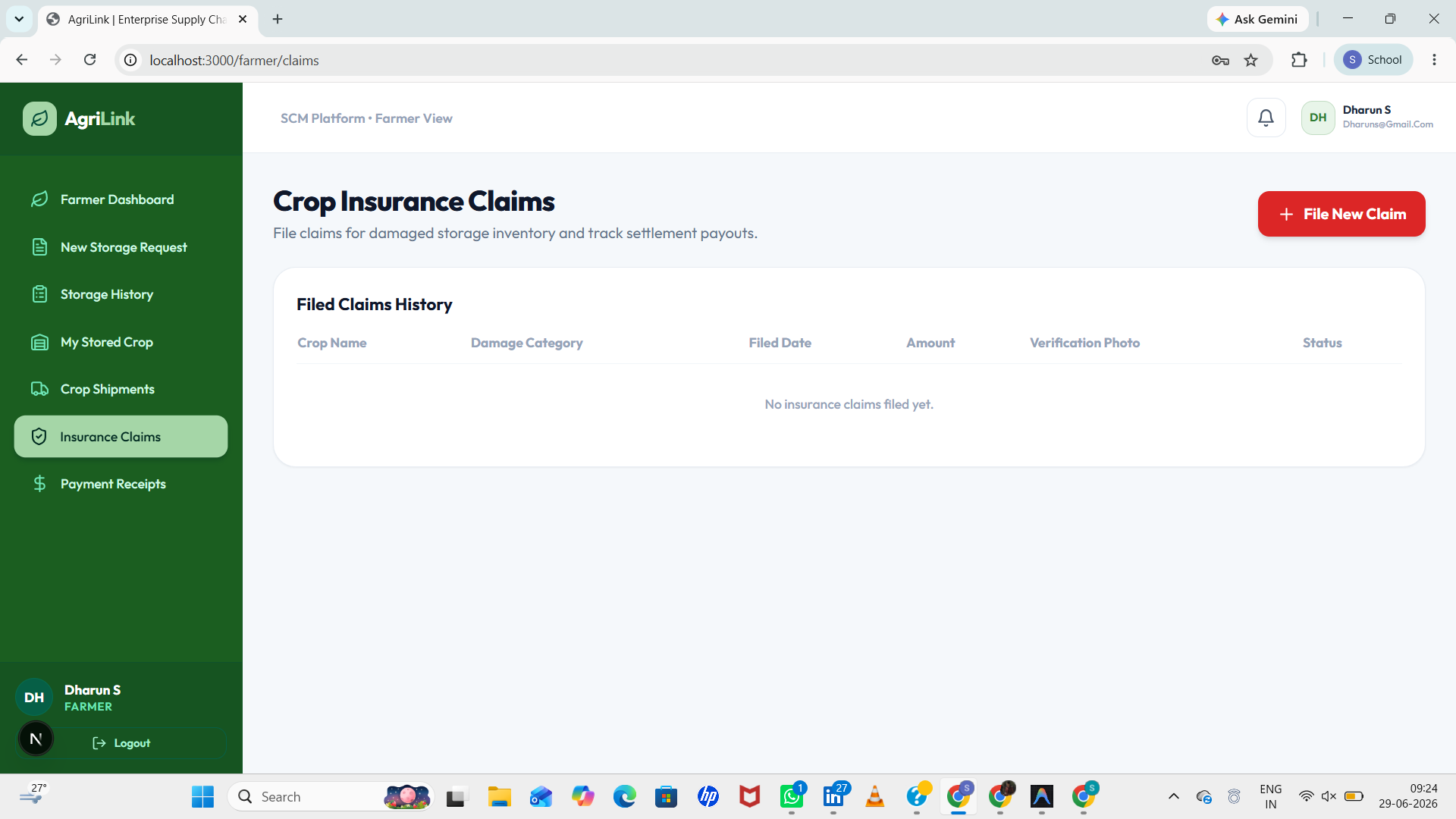
- Insurance support for farmers in case of warehouse incidents or product damage.
AgriLink provides complete visibility of product movement through every stage: $$ Farmer \rightarrow Warehouse \rightarrow Marketplace \rightarrow Logistics \rightarrow Customer $$ The platform also offers real-time order tracking, warehouse capacity monitoring, and inventory analytics.
How we built it
We built AgriLink using a modern cloud-native architecture designed for scalability and rapid development.
Frontend
- Next.js App Router
- React
- TypeScript
- Tailwind CSS
- shadcn/ui
- Vercel v0 for rapid dashboard generation
Backend
- Next.js API Routes
- Service Layer Architecture
Cloud Infrastructure
- AWS Aurora RDS for scalable data storage
- AWS S3 for storing product and document images
- AWS Cognito for authentication and role management
User Modules
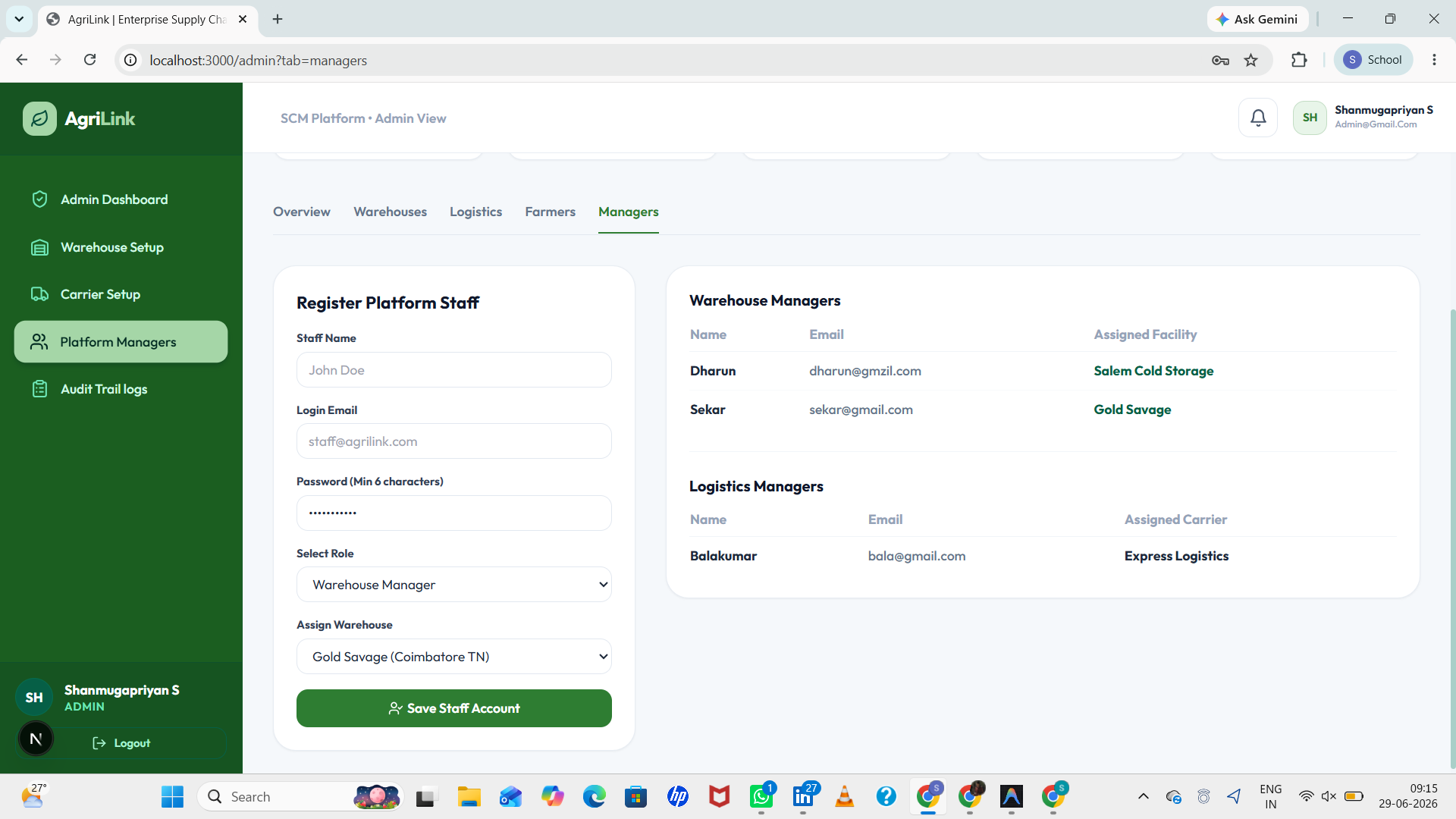
- Admin Module
- Farmer Module
- Warehouse Management Module
- Logistics Management Module
- Customer Marketplace Module The project was developed collaboratively using GitHub branches and pull requests, allowing each team member to independently build and maintain their assigned module.
Challenges we ran into
One of our biggest challenges was designing workflows that seamlessly connected multiple stakeholders while maintaining data consistency across modules.
Some of the challenges included:
- Designing a scalable database structure for multiple user roles.
- Synchronizing inventory updates with customer orders.
- Coordinating warehouse and logistics workflows.
- Managing role-based access across different dashboards.
- Building production-quality user interfaces within a limited hackathon timeline.
- Ensuring smooth collaboration between multiple team members working on independent modules.
Accomplishments that we're proud of
We are proud of building a complete end-to-end agricultural supply chain platform that goes beyond simple inventory management.
Some key accomplishments include:
- Developing dedicated dashboards for every stakeholder.
- Implementing warehouse capacity management and inventory tracking.
- Supporting multiple warehouse storage pricing models.
- Integrating insurance workflows for farmer protection.
- Creating a complete logistics and shipment tracking pipeline.
- Designing a scalable cloud-ready architecture using AWS services. Most importantly, we successfully transformed a complex real-world agricultural problem into a practical digital solution.
What we learned
Throughout this project, we gained valuable experience in:
- Full-stack application development.
- Cloud-native application architecture.
- Database design using Aurora RDS.
- Team collaboration using Git and feature branching.
- Rapid UI development with Vercel v0.
- Building scalable supply chain workflows. We also learned how important system design and modular architecture are when developing applications involving multiple interconnected stakeholders.
What's next for AgriLink - Smart Agricultural Supply Chain Management System
Our future roadmap for AgriLink includes:
- AI-powered demand forecasting for farmers.
- Dynamic pricing recommendations based on market trends.
- IoT-based warehouse monitoring for temperature and humidity.
- Route optimization for logistics providers.
- Blockchain-based product traceability.
- Predictive spoilage detection using machine learning.
- Carbon footprint tracking for sustainable agriculture.
Our long-term vision is to build a smarter, more transparent, and more efficient agricultural ecosystem that reduces post-harvest losses and improves profitability for farmers while ensuring better supply chain visibility for everyone involved.
Built With
- amazon-rds-relational-database-service
- amazon-web-services
- aws-cognito
- git
- github
- next.js
- next.js-api-routes
- typescript
- v0
- vercel


Log in or sign up for Devpost to join the conversation.