-
-
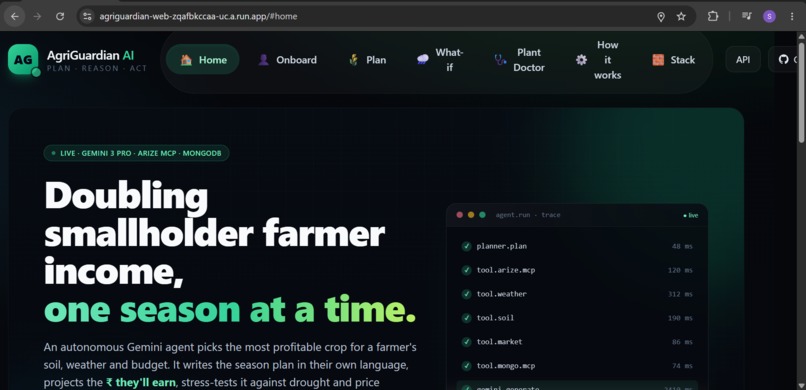
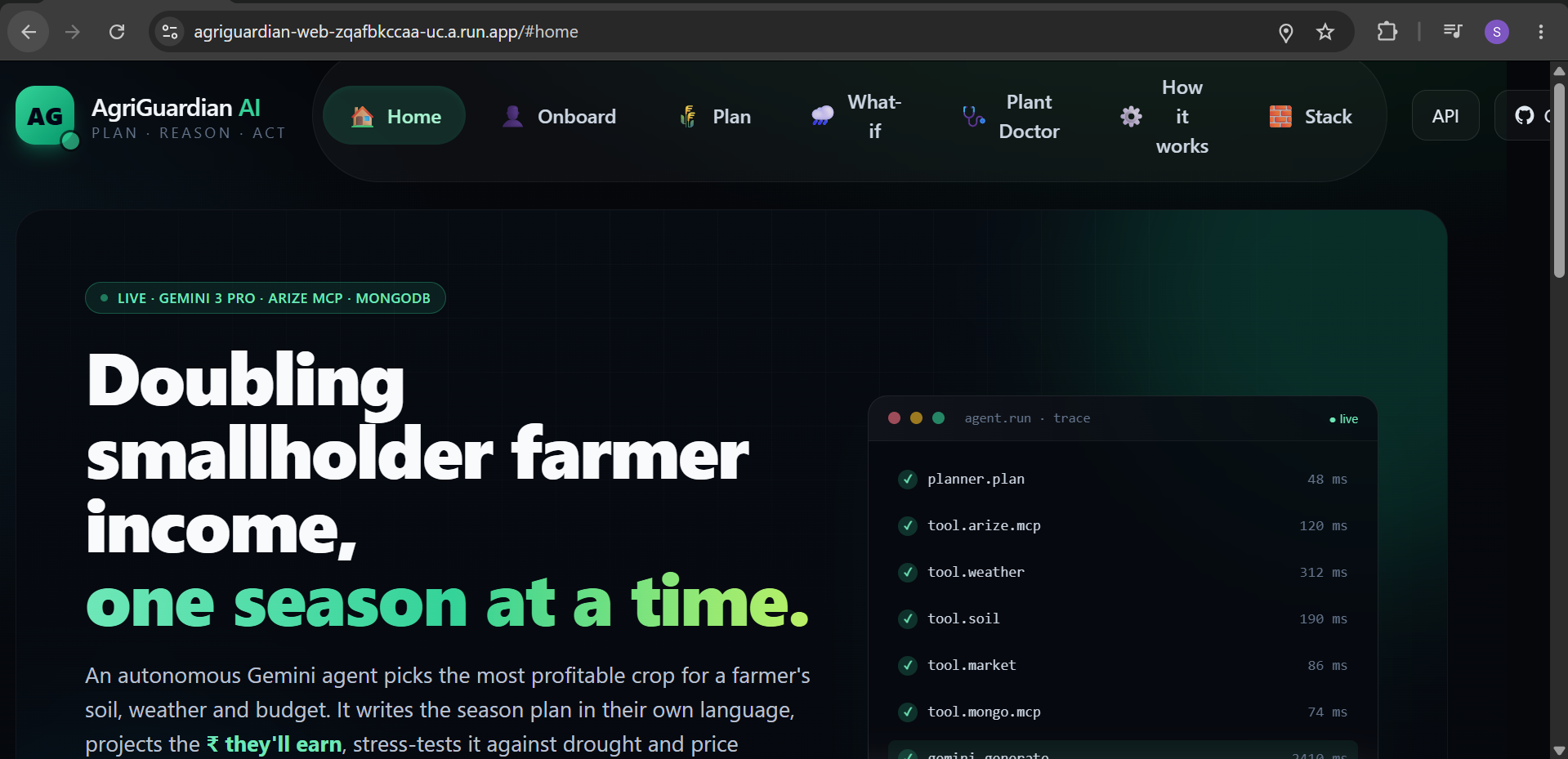
Home Page of Agriguardian AI
-
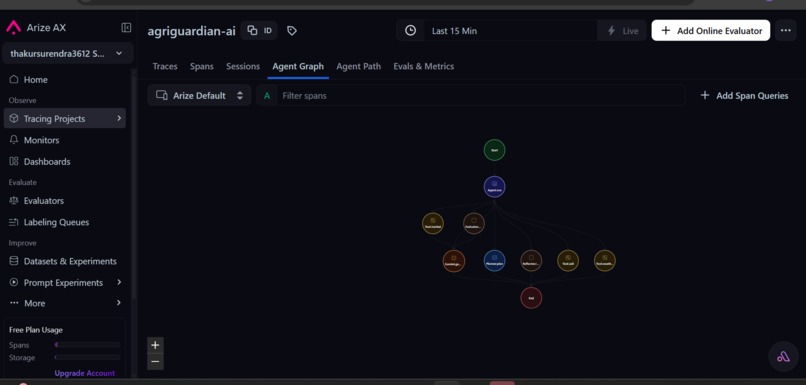
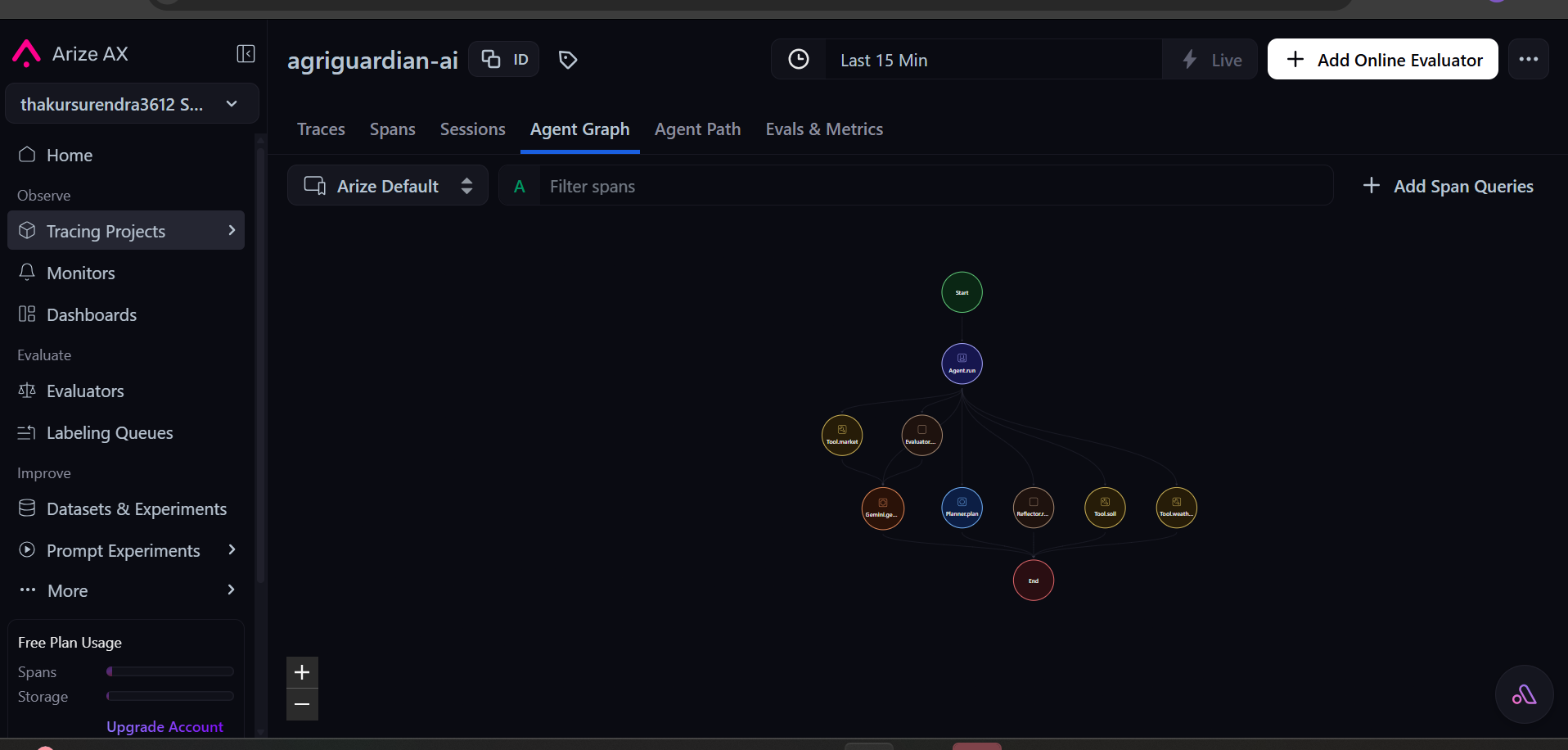
Flow diagram
-
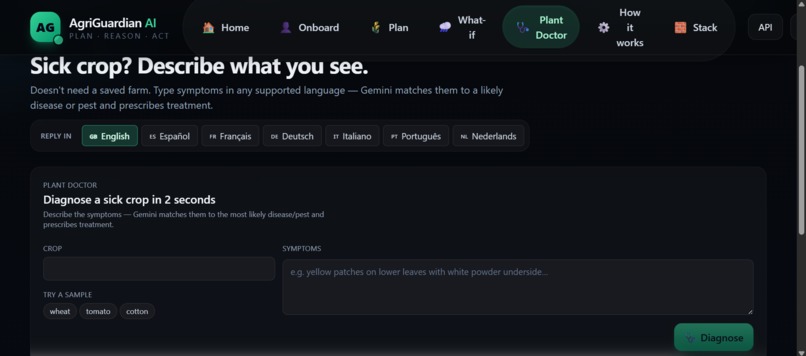
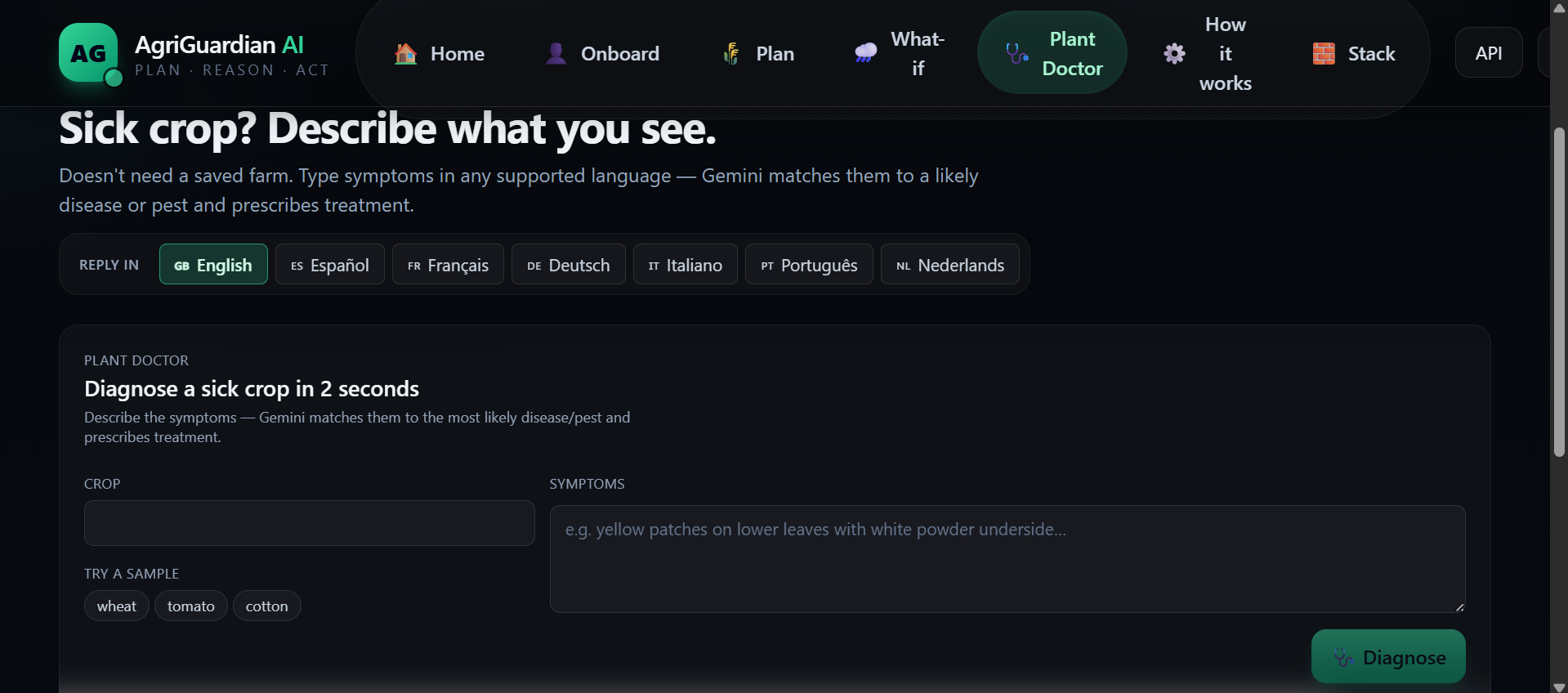
Diagonse of some issue comes
-
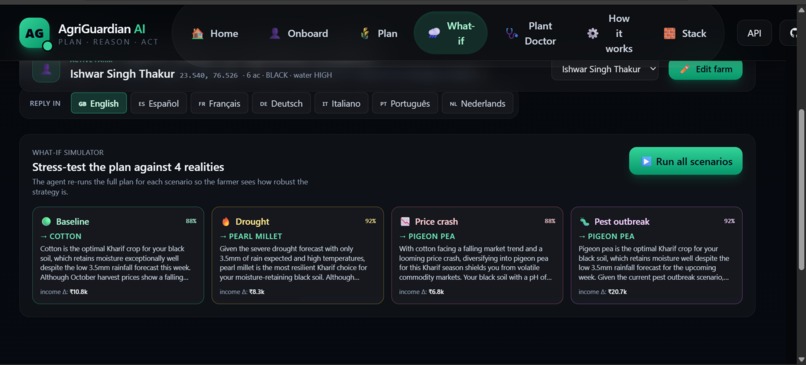
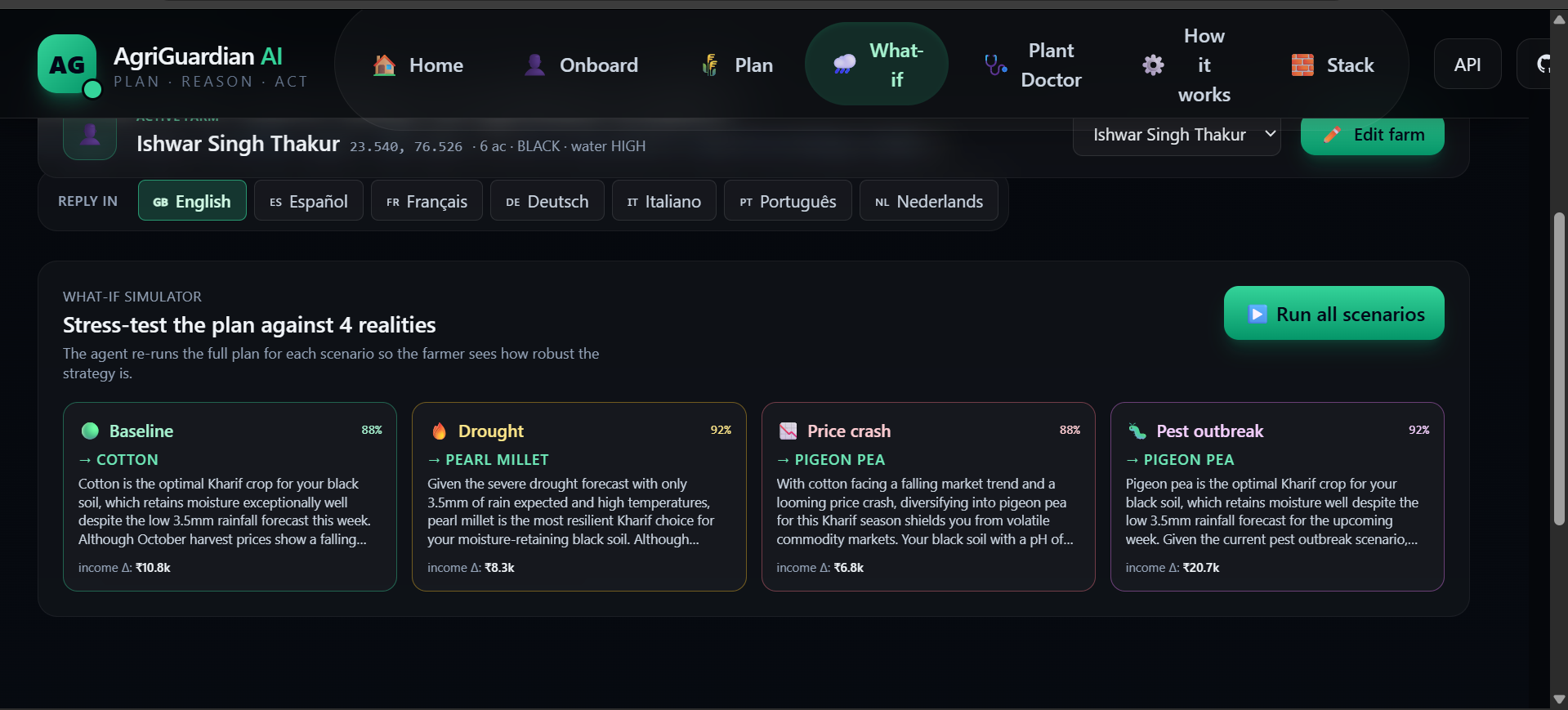
Running all the bad scenario
-
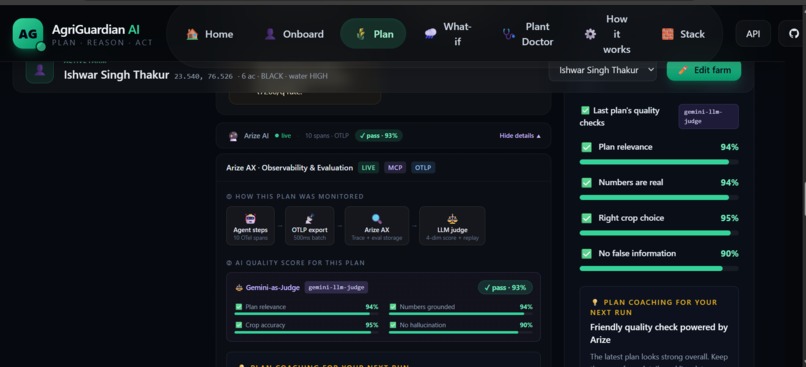
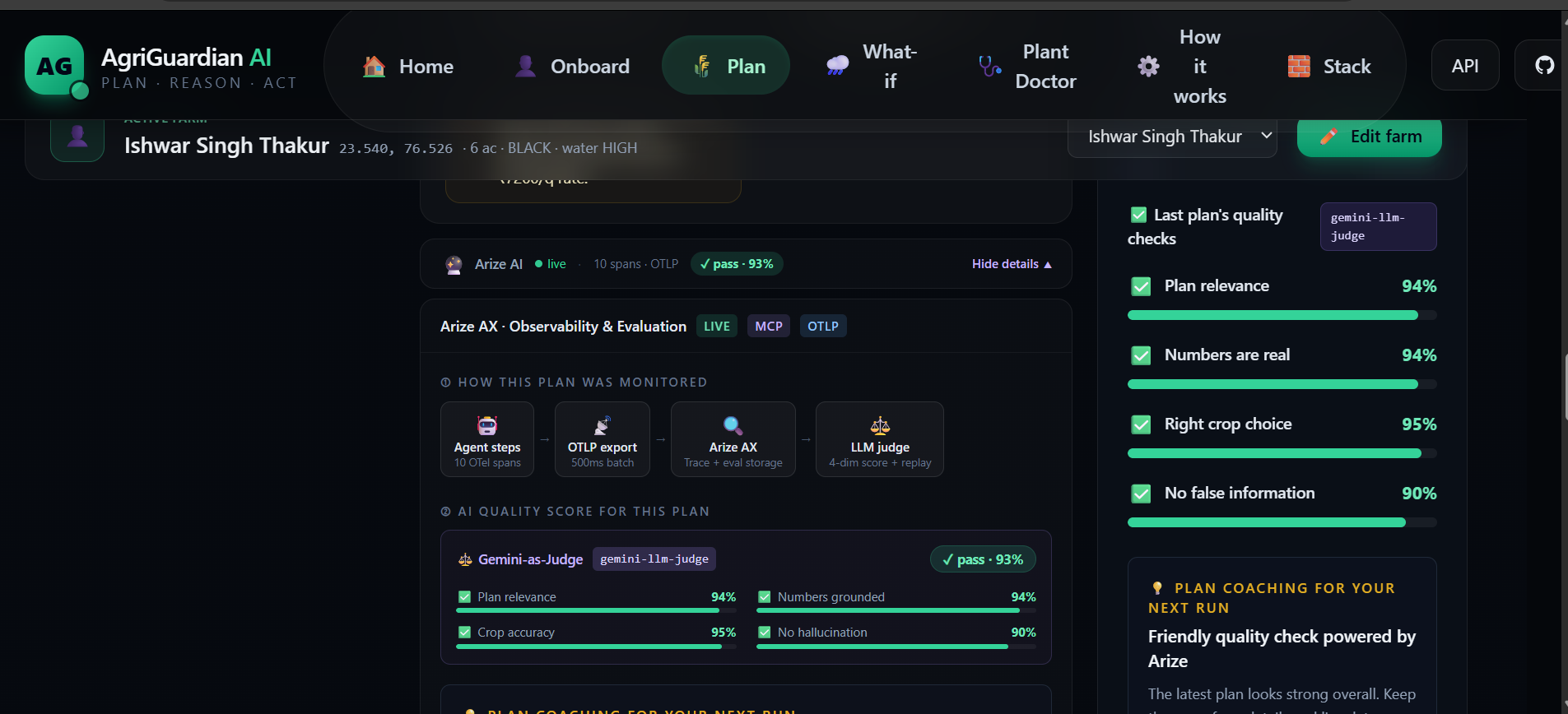
Checking the acurracy like how much each mcp and tool produce the correct result
-
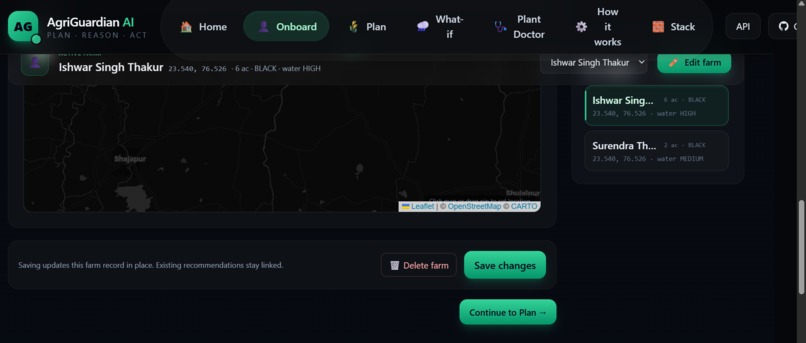
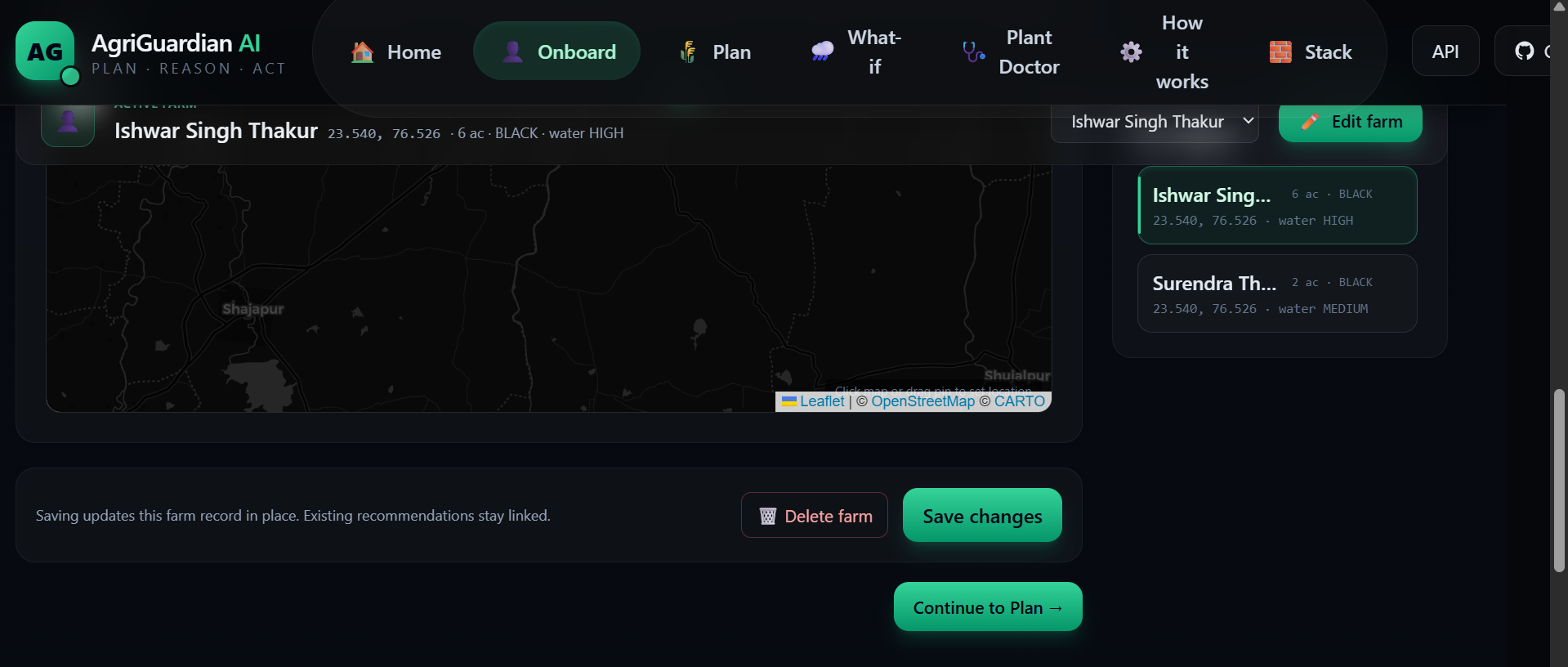
Continue to Plan
-
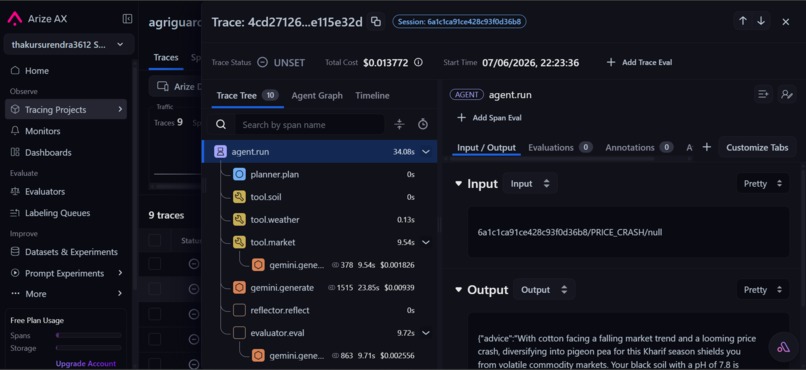
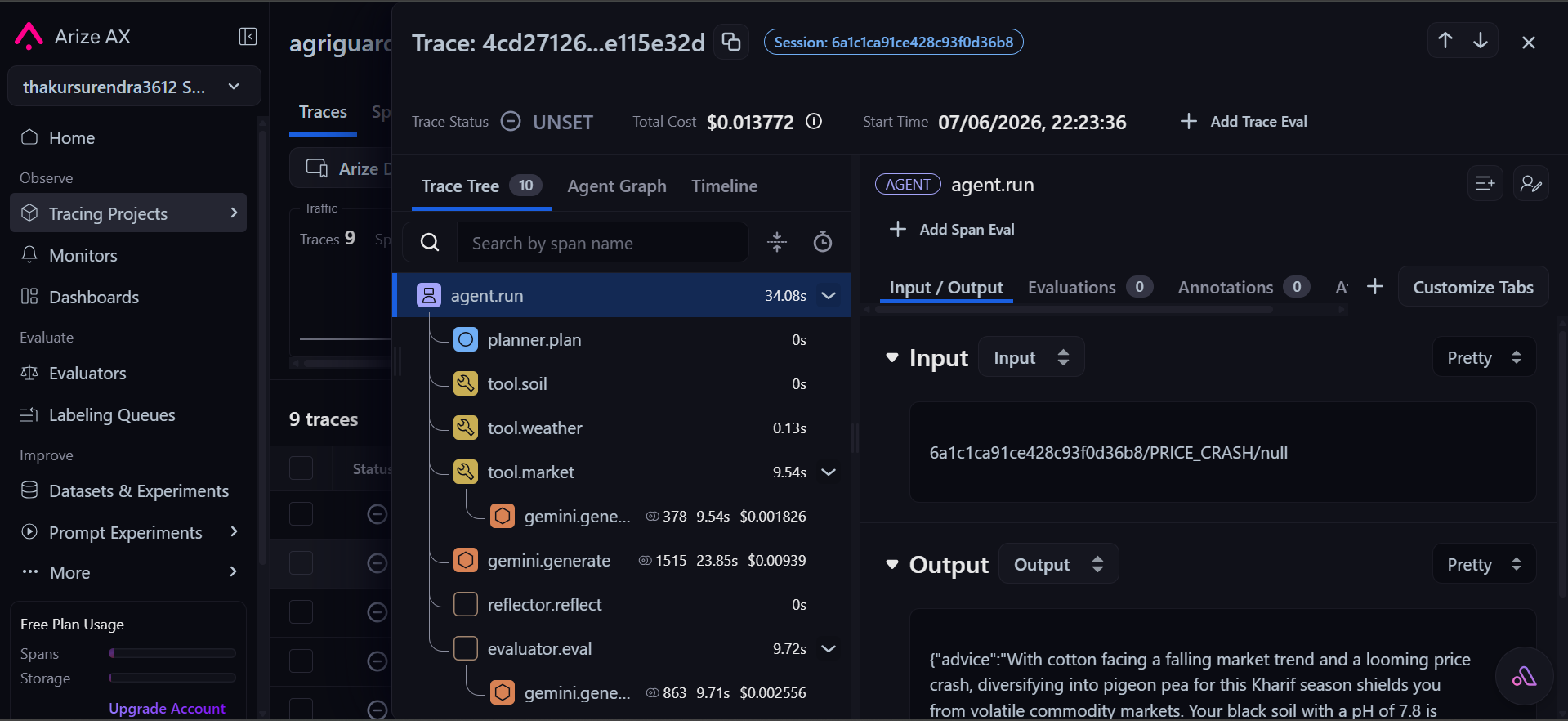
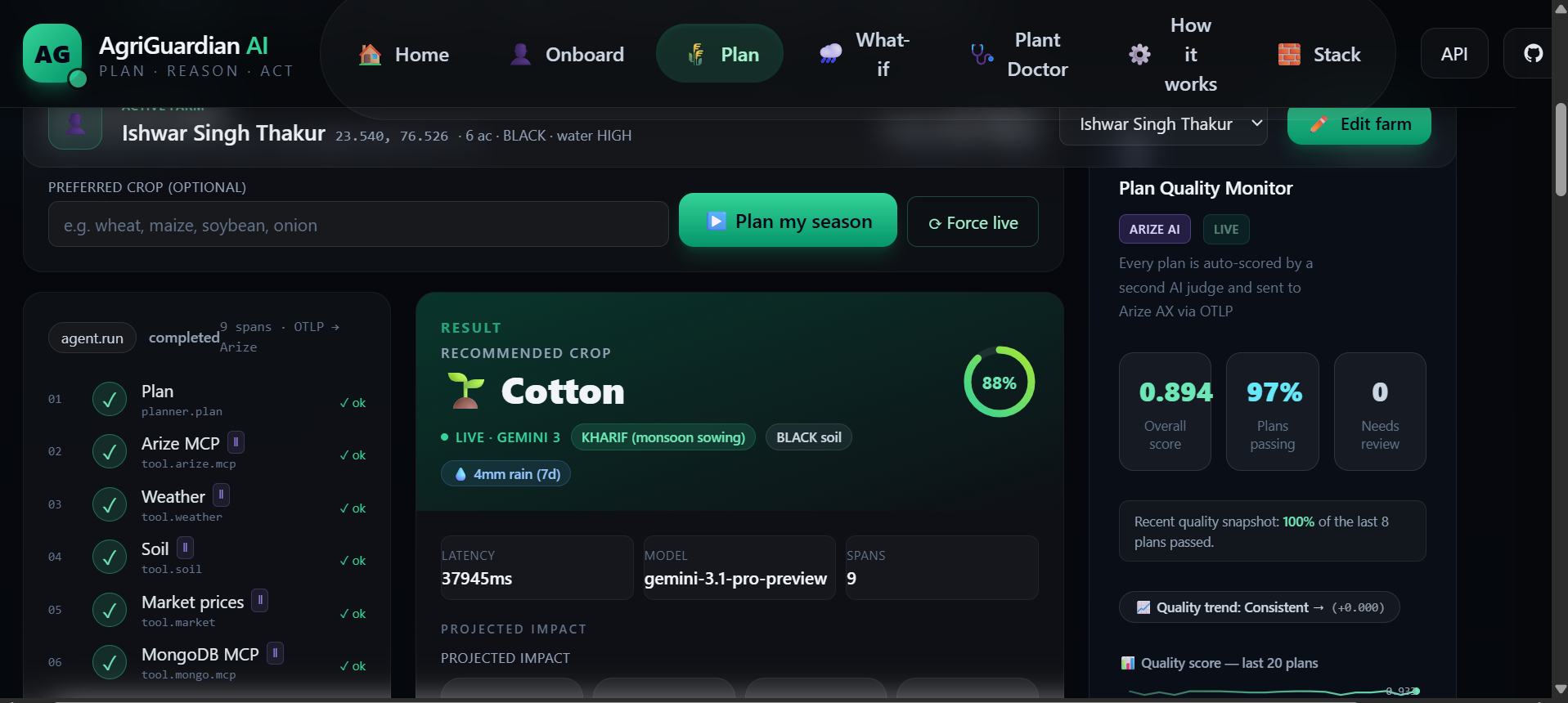
Mcp ,agen and their flow inside the Arize traces like for a particular input what output is generated for each mcp and tools
-
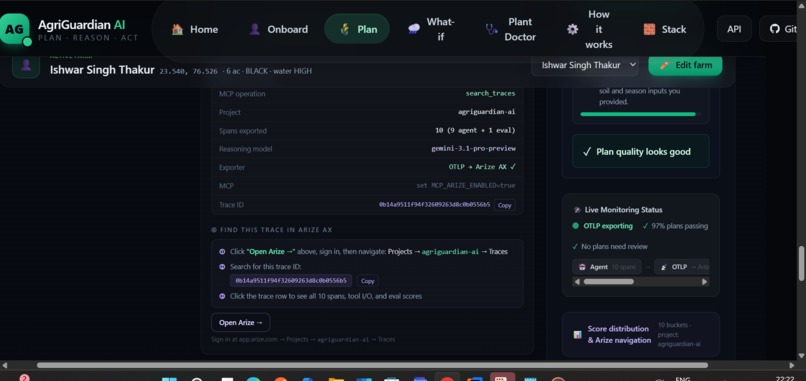
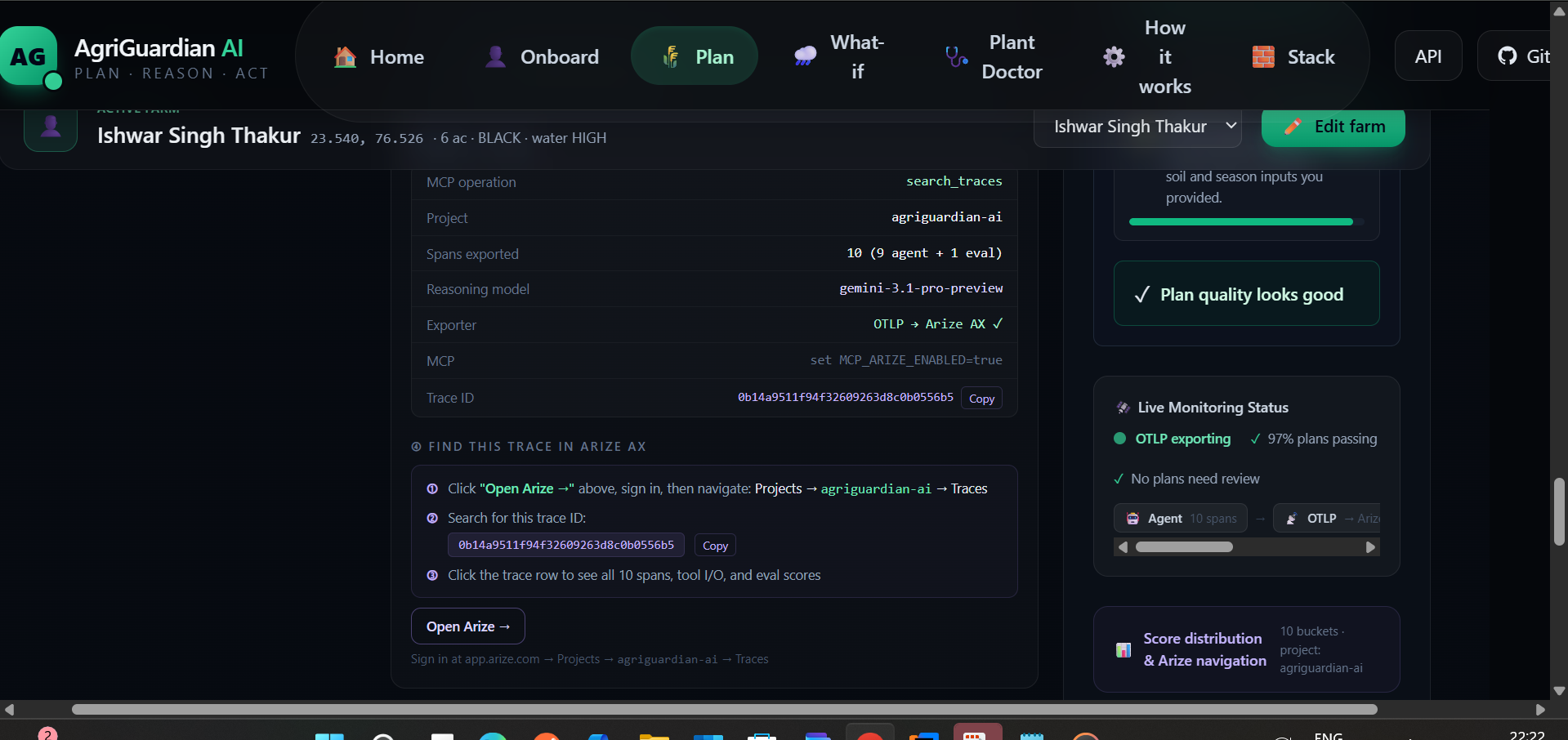
See the Arize score and link to open Arize after login to see Traces
-
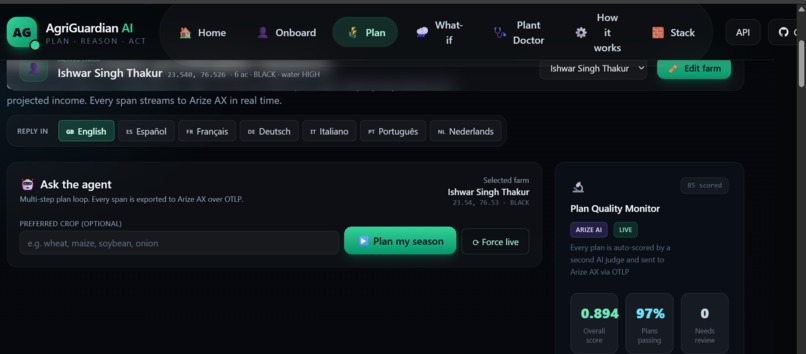
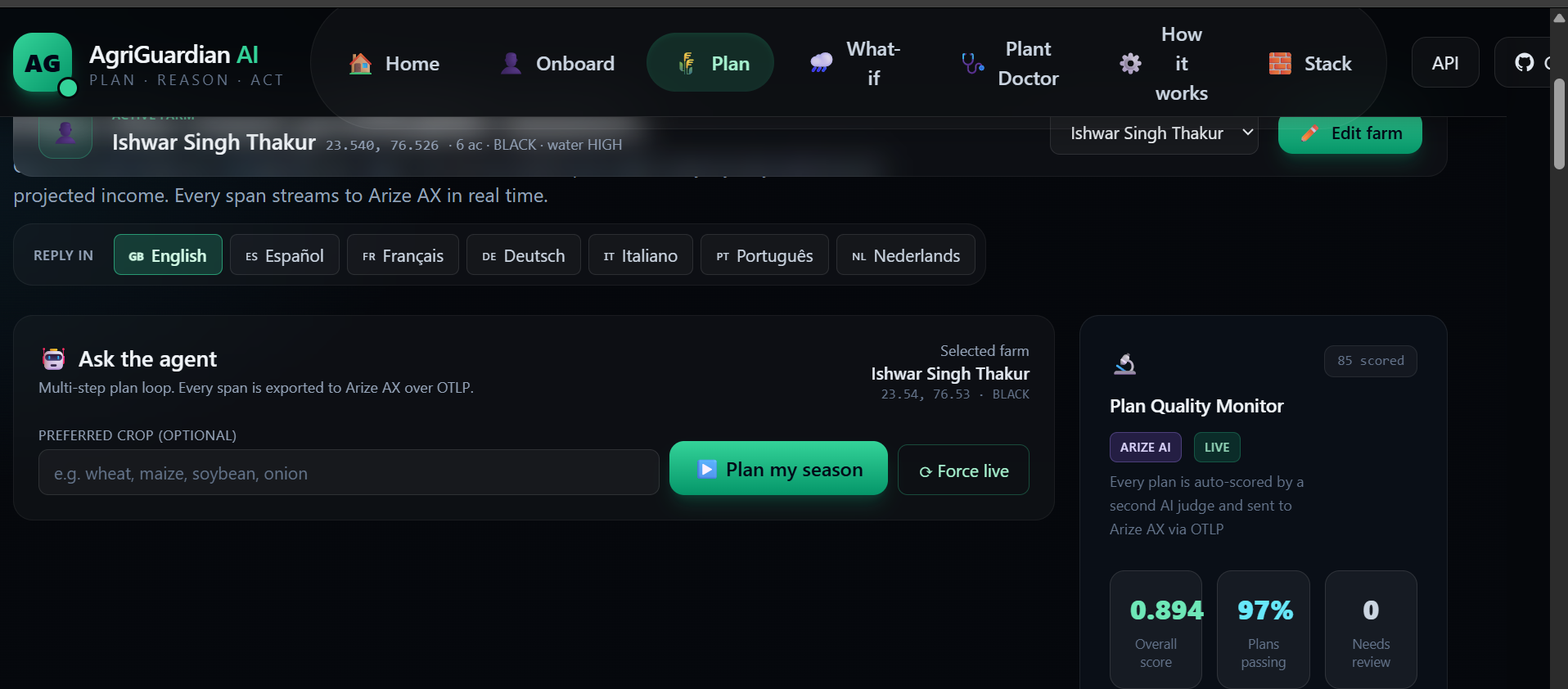
Plan my season it used all the fields like soil type ,water availability, date and all
-
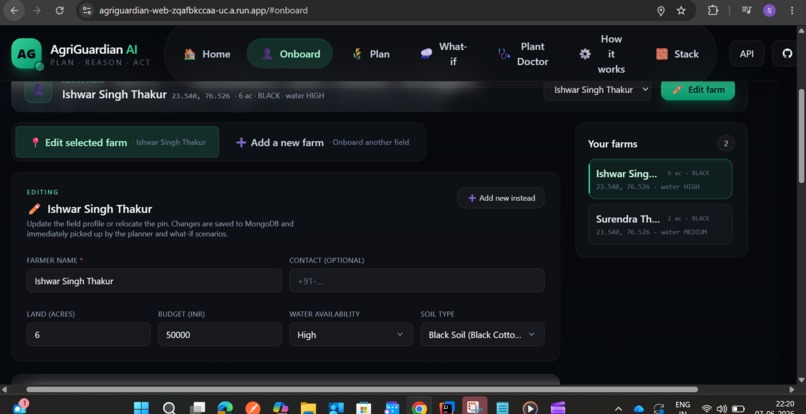
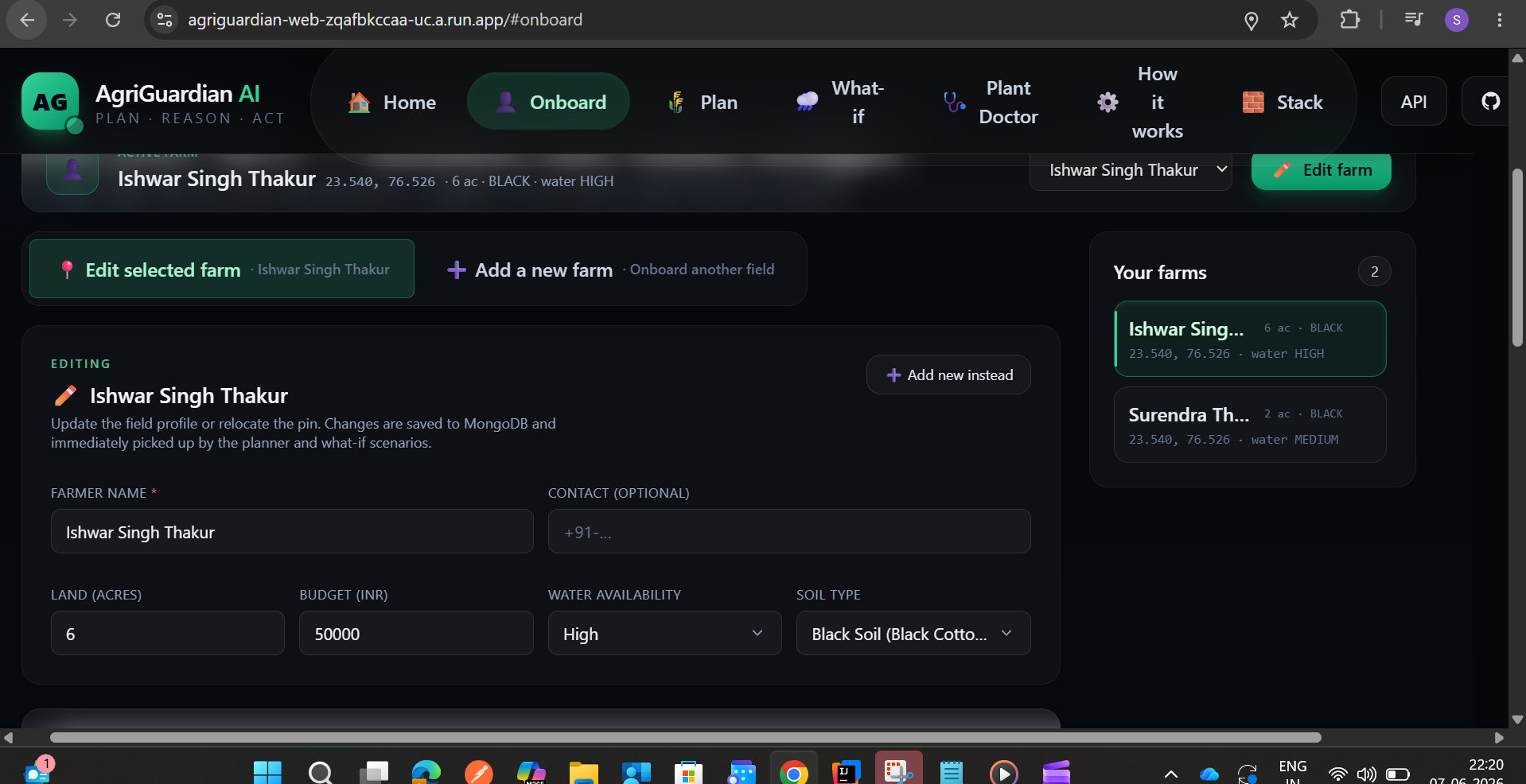
Onboarding the Farmer
-
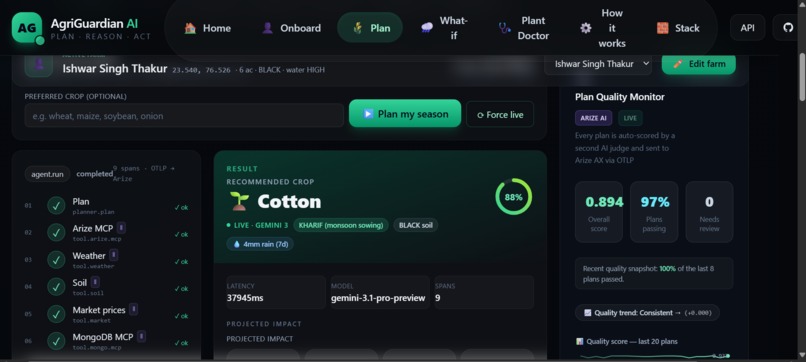
producing the most profitable crop
About the Project
AgriGuardian AI started with a simple observation: farmers make some of the most important decisions with limited and often scattered information. Weather conditions change unexpectedly, market prices fluctuate frequently, and accessing timely, personalized guidance is still difficult for many farmers.
We wanted to build something that could help simplify these decisions. Instead of just providing predictions, our goal was to create an AI-powered farming assistant that helps farmers understand their options, evaluate risks, and take informed actions every day.
The idea was to combine weather insights, market trends, and AI-driven recommendations into a single platform that farmers can actually use and trust.
What Inspired Us
While exploring existing agricultural solutions, we noticed that many tools either focus only on data or provide recommendations without explaining the reasoning behind them.
For farmers, trust is critical. A recommendation is only useful if the user understands why it is being made.
That inspired us to build AgriGuardian AI around three key principles:
- Help farmers make profitable decisions.
- Provide practical and actionable guidance.
- Explain recommendations in a simple and transparent way.
How We Built It
We developed AgriGuardian AI as a full-stack application consisting of a backend intelligence layer and an interactive web interface.
The backend analyzes farm conditions, weather information, and market data to generate recommendations. Based on these inputs, the system evaluates different crop options and identifies those that offer the best balance between profitability and risk.
The frontend allows users to:
- Get crop recommendations
- View daily farming guidance
- Explore different farming scenarios
- Understand why a recommendation was generated
- Share feedback on the recommendations
To monitor and improve the system, we integrated Arize for observability and tracing. This helped us track model behavior, analyze recommendation quality, and identify areas where the system could be improved.
At a high level, crop recommendations are ranked using factors such as expected profit, market demand, and climate risk:
Score = Profit Potential + Market Demand − Climate Risk
This makes the decision-making process more transparent and easier to refine.
Challenges We Faced
One of the biggest challenges was dealing with incomplete or inconsistent agricultural data. Real-world farming data is rarely perfect, so we had to design the system to remain useful even when some information was missing.
Another challenge was balancing automation with user trust. We wanted the AI to provide meaningful recommendations while still allowing users to understand the reasoning behind them.
Evaluating recommendation quality was also difficult because agriculture rarely has one correct answer. Different farmers may choose different strategies depending on their goals, local conditions, and risk tolerance.
Finally, we focused heavily on simplicity. Farmers need clear and practical guidance, not complicated technical outputs.
What We Learned
Throughout the project, we learned several valuable lessons.
Observability is extremely important when building AI systems. Without proper monitoring, it becomes difficult to understand how recommendations are being generated.
We also learned that evaluation should be an ongoing process rather than a one-time activity. Continuous testing and feedback are necessary to improve recommendation quality over time.
Most importantly, we learned that trust is just as important as accuracy. Even a strong recommendation has limited value if users do not understand or trust it.
Impact and Future Plans
AgriGuardian AI demonstrates how AI can support farmers by turning complex information into practical and actionable recommendations.
Moving forward, we plan to improve regional customization, add stronger multilingual support, and make recommendations more personalized based on farmer feedback and historical interactions.
Our long-term goal is to build an AI farming companion that helps farmers make smarter, more sustainable, and more profitable decisions throughout every stage of the farming cycle.
Built With
- agent
- api
- arize
- arize-ax
- arize-mcp
- bash-###-frontend-next.js-15-(app-router)
- bean-validation-###-ai-&-agent-framework-google-cloud-agent-builder
- builder
- caffeine-cache
- caffeine-cache-###-apis-&-integrations-open-meteo-weather-api
- css
- custom-agent-orchestration-###-observability-&-evaluation-arize-ax
- docker
- docker-compose
- gcp
- gemini
- gemini-3-pro
- google-cloud-agent-builder
- google-cloud-run
- gradle-###-reliability-&-performance-resilience4j
- java
- javascript
- mcp
- micrometer
- mongodb-mcp-###-infrastructure-&-deployment-google-cloud-run
- next.js-15
- open-meteo
- opentelemetry
- opentelemetry-(otlp)
- postcss-###-backend-spring-boot-4
- powershell
- prometheus
- prometheus-###-database-&-persistence-mongodb
- python
- react-19
- resilience4j
- spring-boot
- spring-data-mongodb
- spring-webflux
- spring-webmvc
- tailwind
- tailwind-css
- typescript


Log in or sign up for Devpost to join the conversation.