Project Story
Inspiration
AgriGuard was inspired by the growing need for smarter agriculture solutions. Farmers often face challenges in detecting early signs of plant diseases, which can significantly reduce crop yields. I wanted to create a tool that combines computer vision and AI to make early detection accessible to everyone, even in remote areas.
What it does
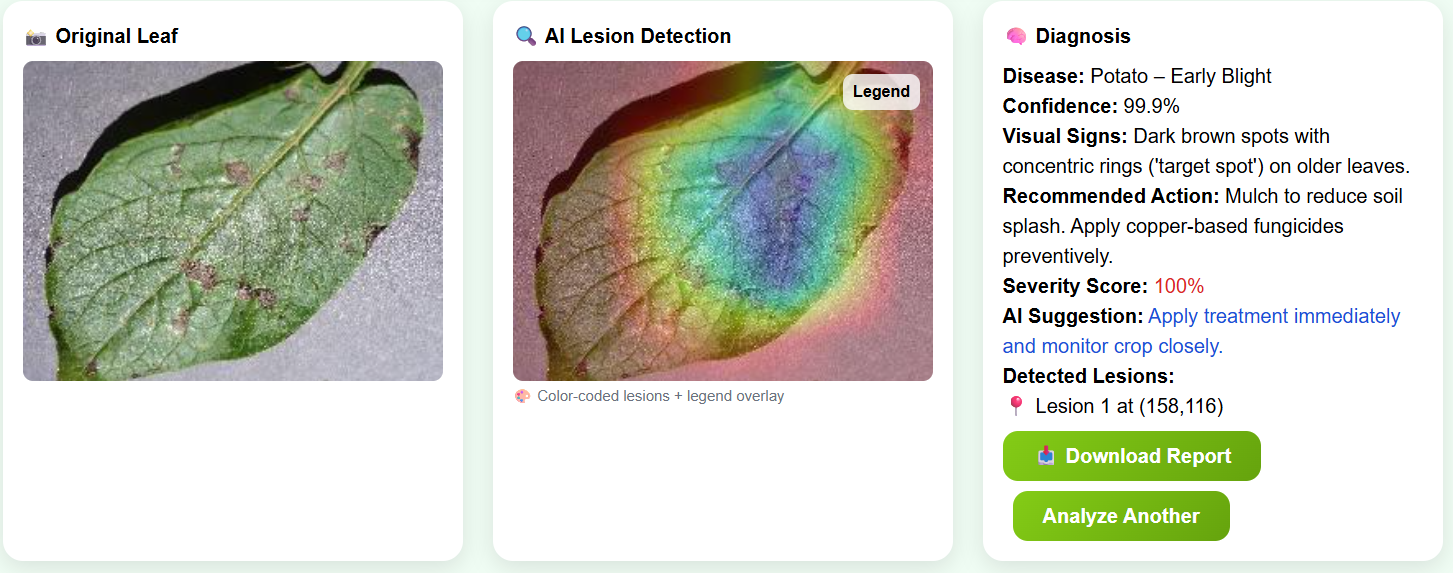
AgriGuard allows users to upload images of their crops and quickly identifies potential diseases. Using AI-powered image recognition, it provides actionable insights to help farmers take preventive measures. The system not only detects issues but also suggests solutions and resources for treatment, effectively acting as a virtual crop assistant.
How we built it
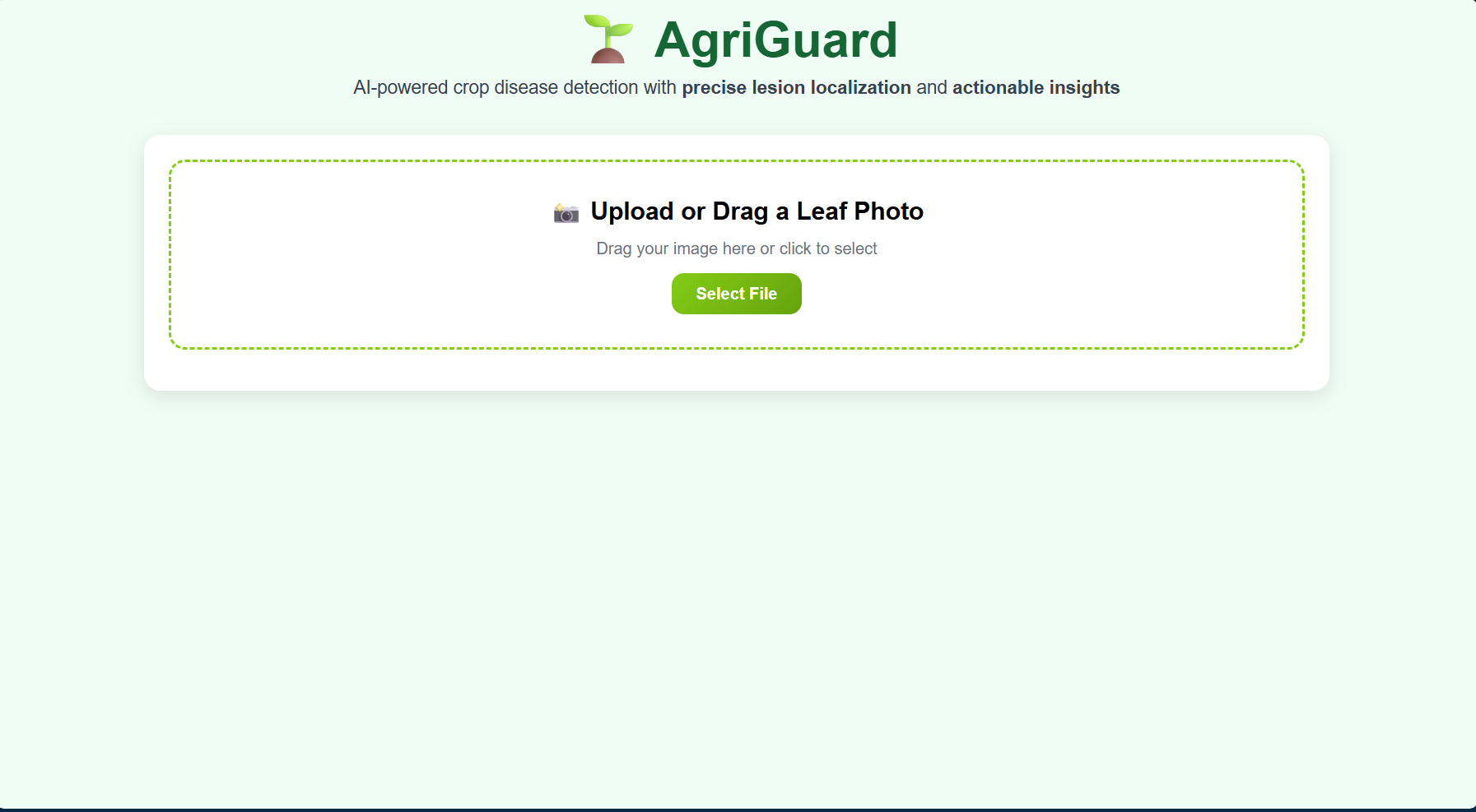
We built AgriGuard using Python and Flask for the web interface, TensorFlow for the AI model, and OpenCV for image preprocessing. Users can upload images through a simple, intuitive UI that displays results in real time. The backend preprocesses the images, passes them through the trained model, and returns the predicted disease with confidence scores.
The AI model was trained on a dataset of thousands of labeled plant images. We experimented with convolutional neural networks (CNNs) to optimize accuracy, using data augmentation techniques to make the model robust against variations in lighting and angle.
Challenges we ran into
One major challenge was obtaining a diverse dataset that covers multiple plant types and disease conditions. Additionally, balancing the model’s accuracy with computational efficiency for real-time predictions required careful tuning. Integrating the AI model with a responsive and visually appealing web interface was another hurdle, particularly ensuring smooth image uploads and quick feedback.
Accomplishments that we're proud of
We successfully built a functional prototype that can identify multiple crop diseases with high accuracy. The UI was designed to be farmer-friendly, with clear visuals and actionable insights. We also managed to optimize the AI model to run efficiently in a lightweight Flask application, making it accessible even on low-spec machines.
What we learned
Through building AgriGuard, we gained hands-on experience in deep learning, image processing, and web development. We learned how to preprocess and augment datasets effectively, optimize CNN models for real-world performance, and deploy AI models in a web environment. Additionally, we developed a deeper understanding of the challenges faced in agricultural technology and how AI can provide tangible solutions.
What's next for AgriGuard
Future plans include expanding the dataset to cover more crops and diseases, integrating mobile support for on-the-go detection, and adding predictive analytics for disease prevention. We also aim to implement a recommendation system that provides tailored treatment plans and real-time monitoring features for continuous crop health tracking.
Built with
- Languages: Python, HTML, CSS, JavaScript
- Frameworks: Flask, TensorFlow, OpenCV
- Platforms: Web, Local Deployment
- Other Technologies: Pandas, NumPy, Bootstrap, Jinja2
- Optional Services: Could integrate cloud storage for image uploads (AWS S3 or Google Cloud Storage)


Log in or sign up for Devpost to join the conversation.