-
-
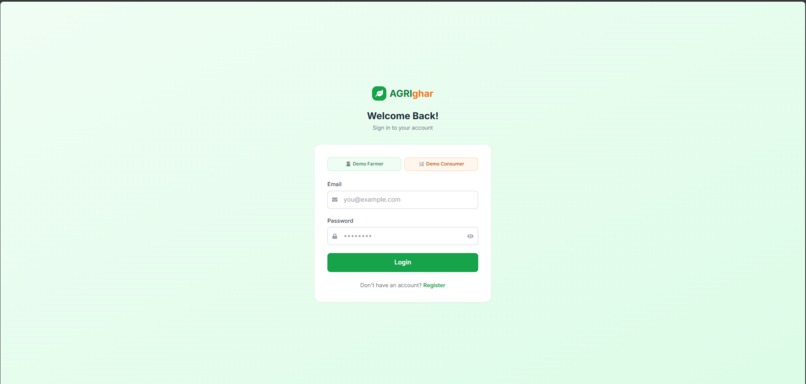
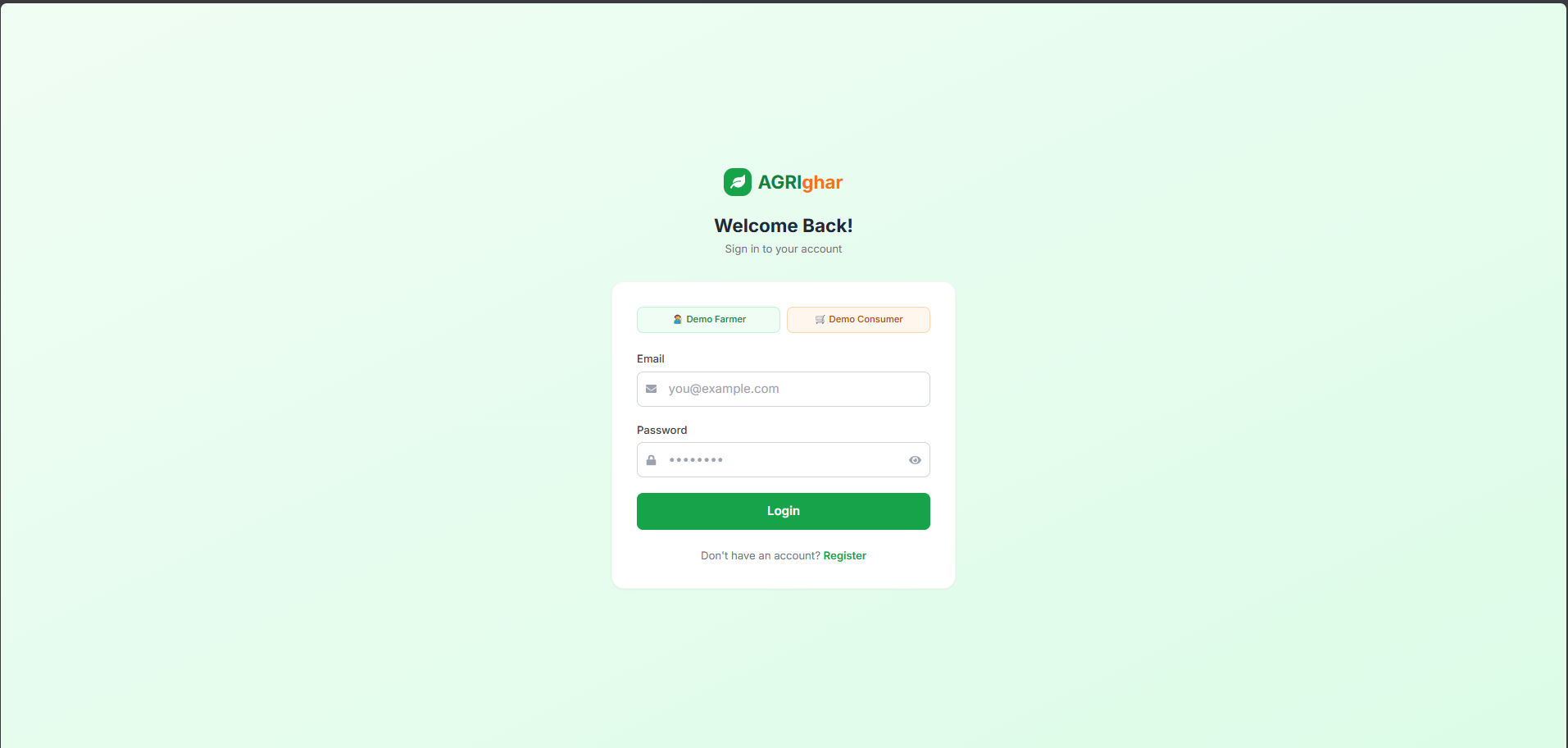
Login page or register
-
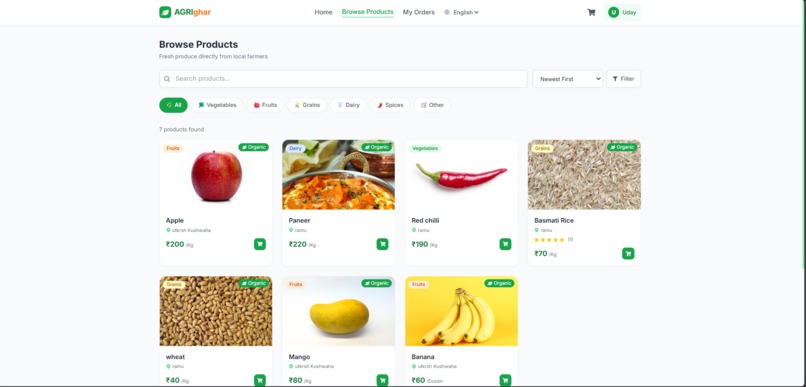
Customer Dashboard
-
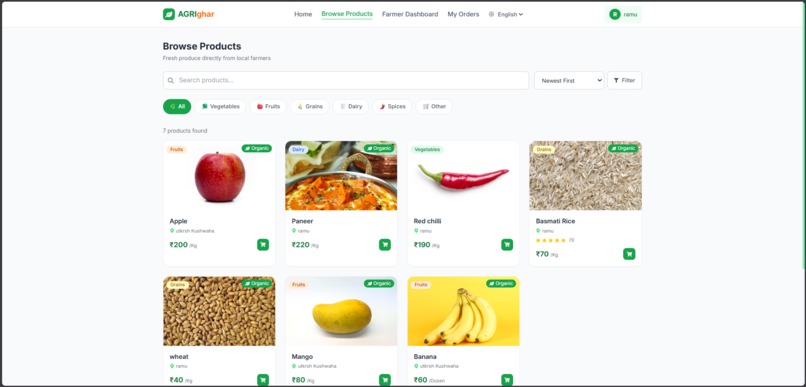
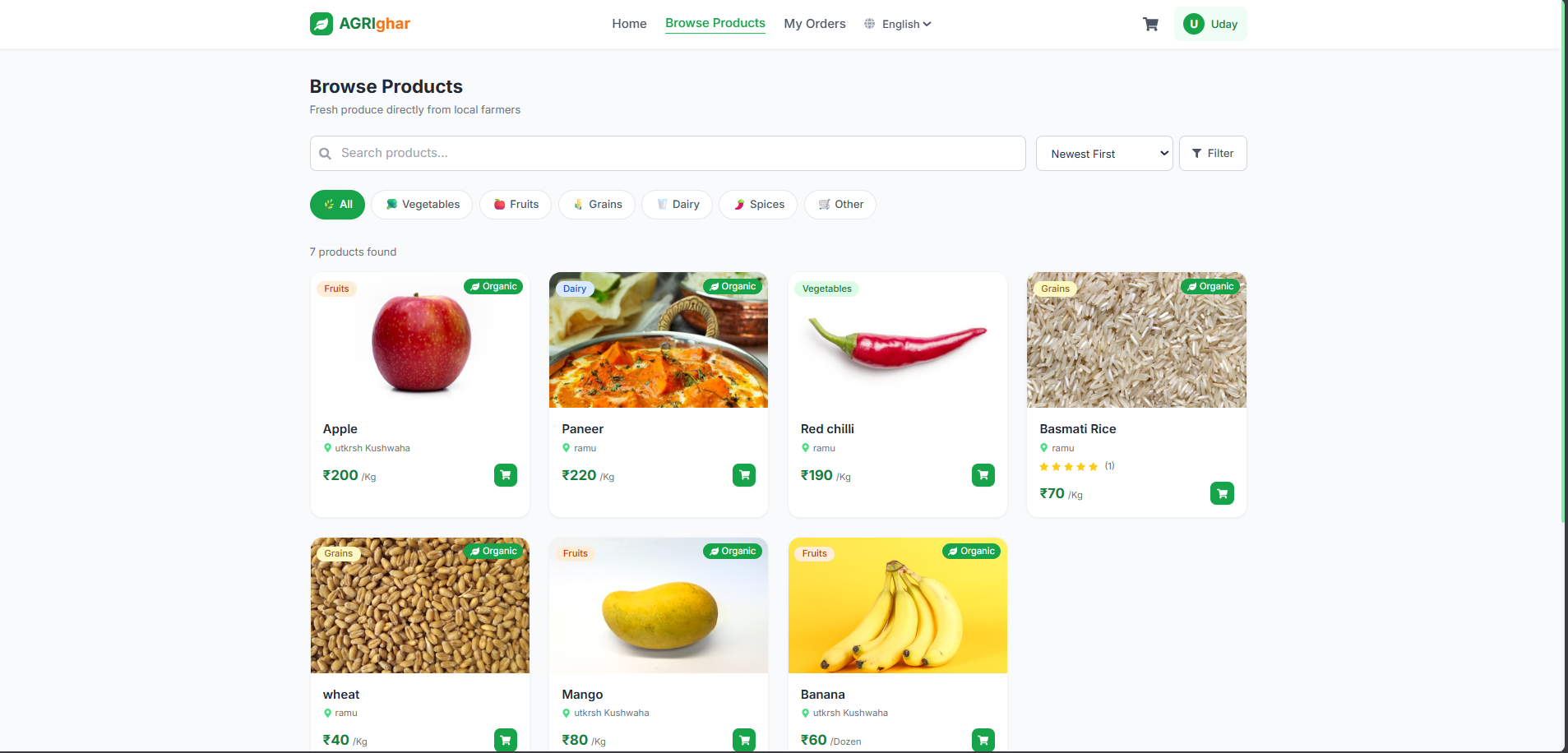
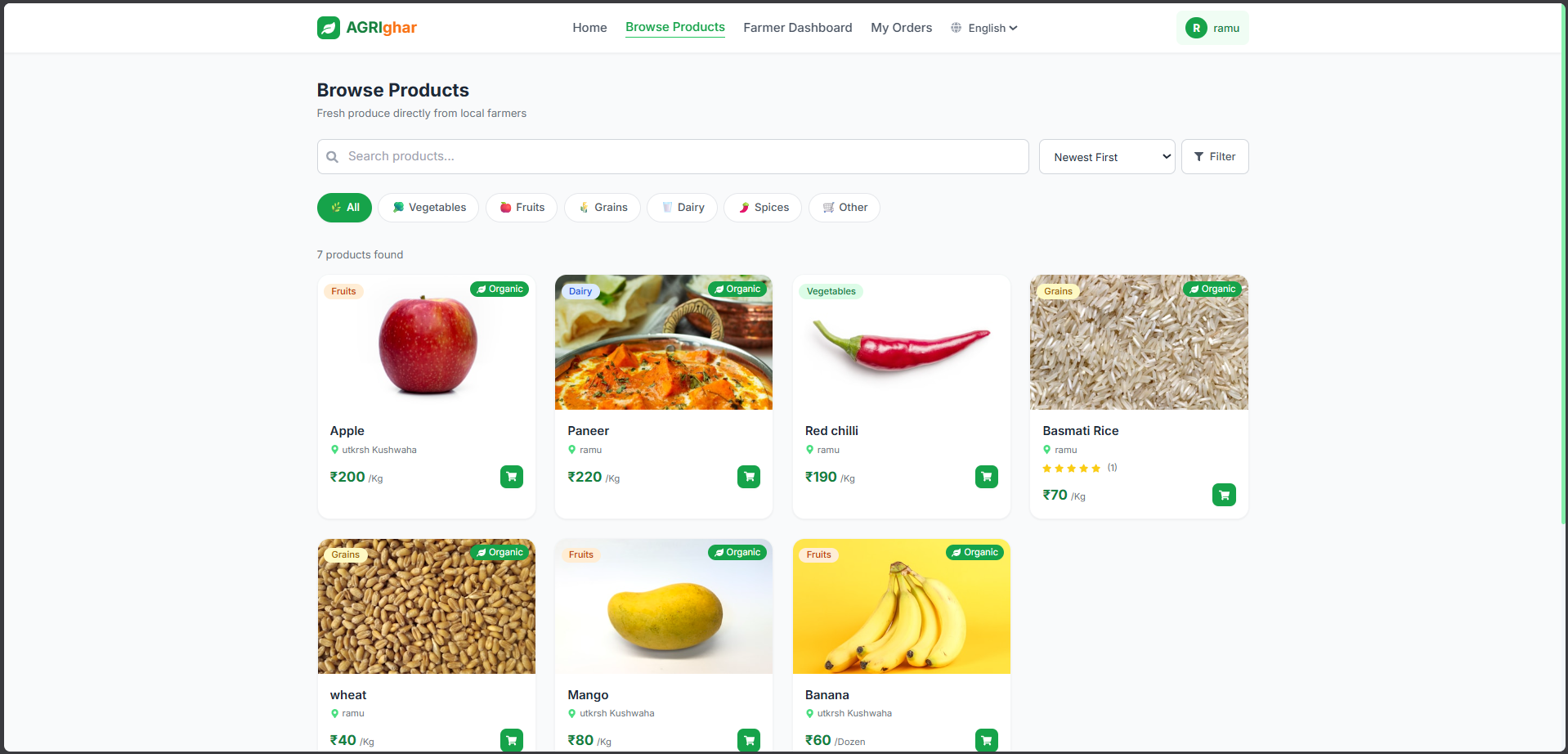
Browse Products
-
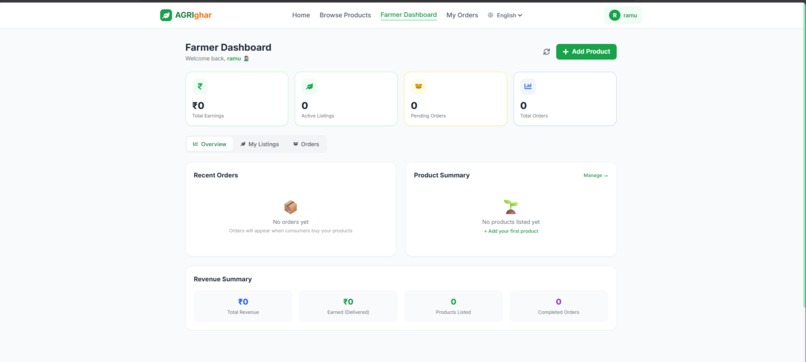
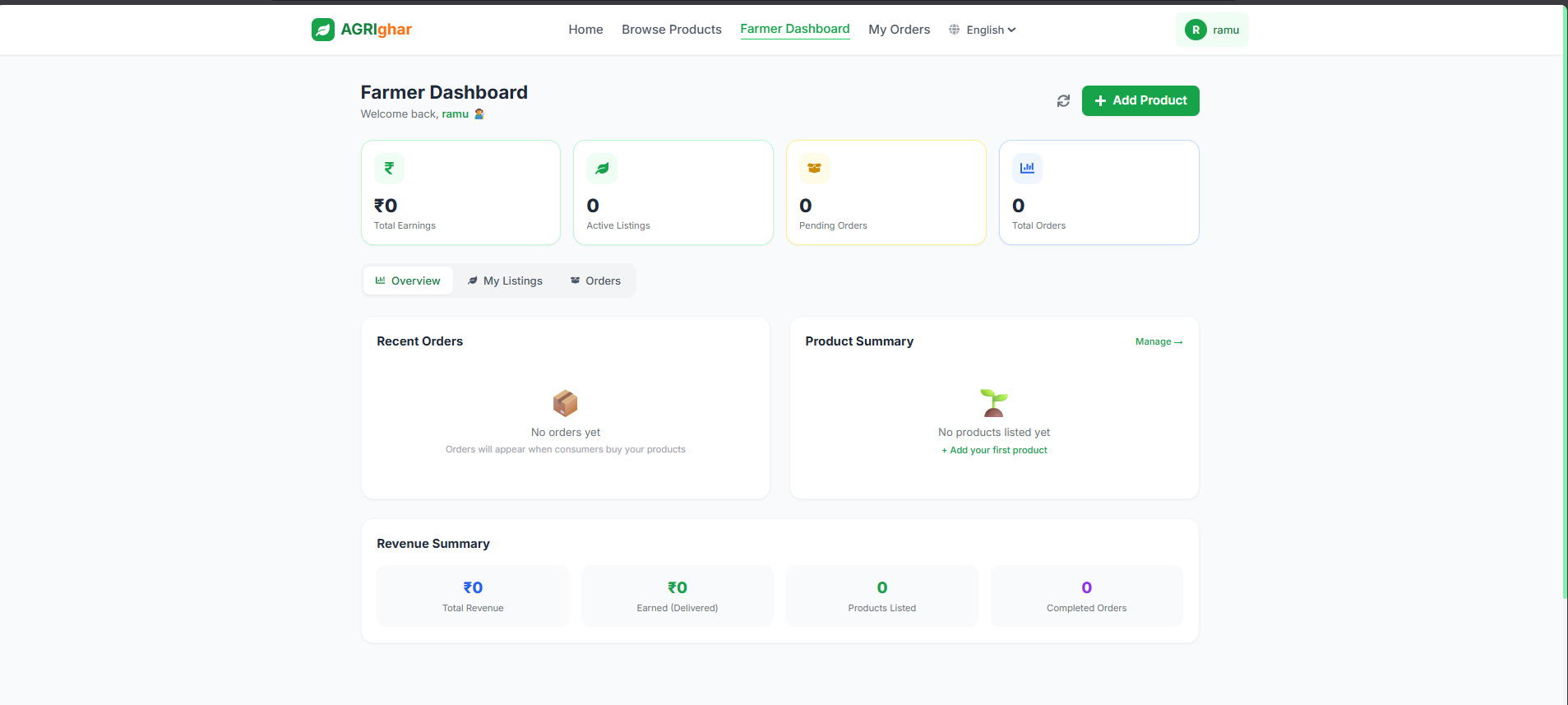
Farmer Dashboard
Inspiration
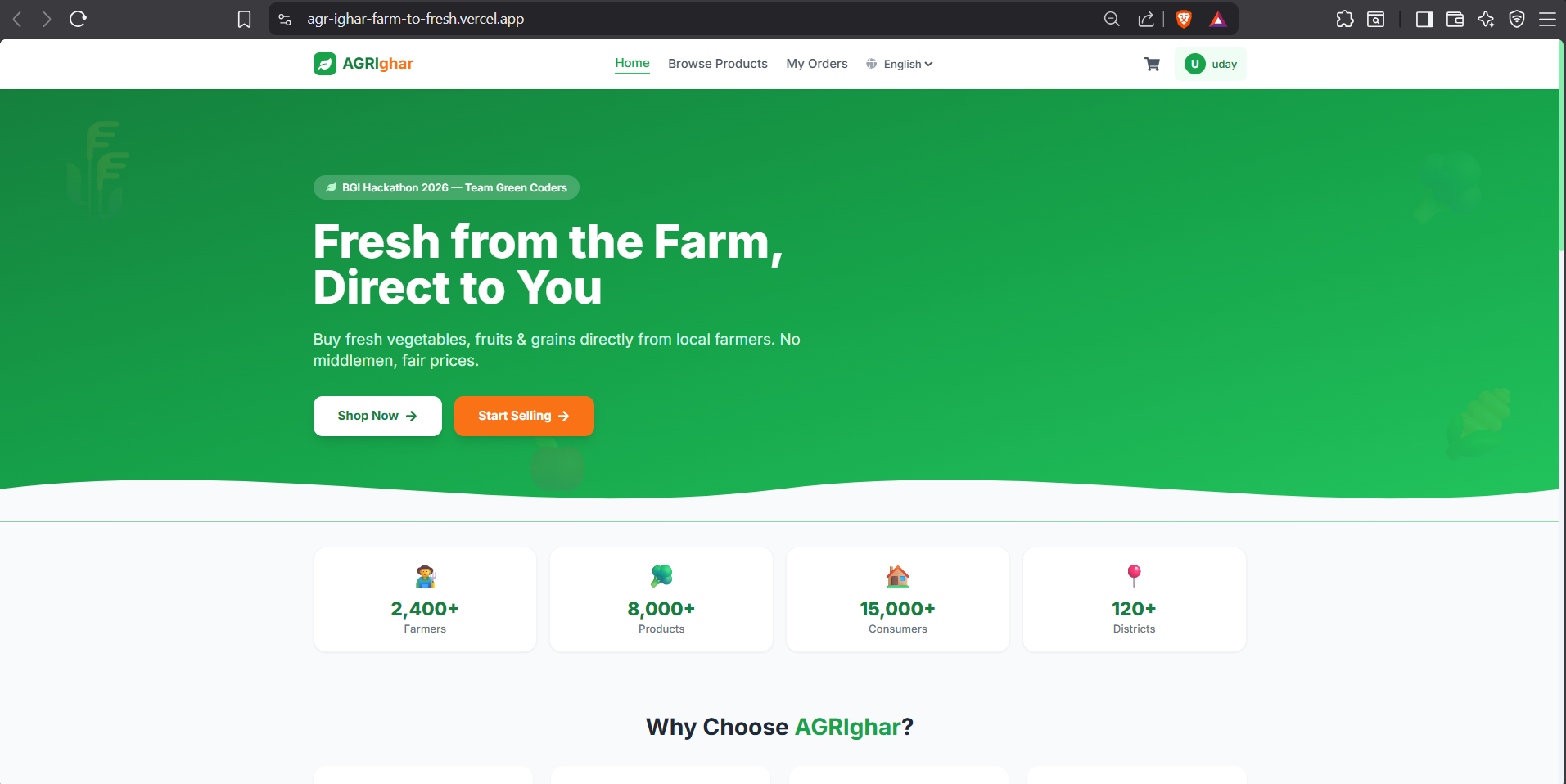
India’s agricultural sector heavily relies on traditional supply chains, which are often plagued by excessive intermediaries (middlemen). This fragmentation leads to two main issues: farmers receive a negligible share of the final consumer price, and consumers pay higher rates for produce that loses its freshness during long transit periods. The inspiration for AGRIGHAR ("Farm to Fresh") came from a desire to bridge this gap. By leveraging modern web technology, we wanted to build a transparent ecosystem that eliminates middlemen, ensures fair pricing for farmers, and brings fresh, farm-quality produce directly to the consumers' households.
What it does
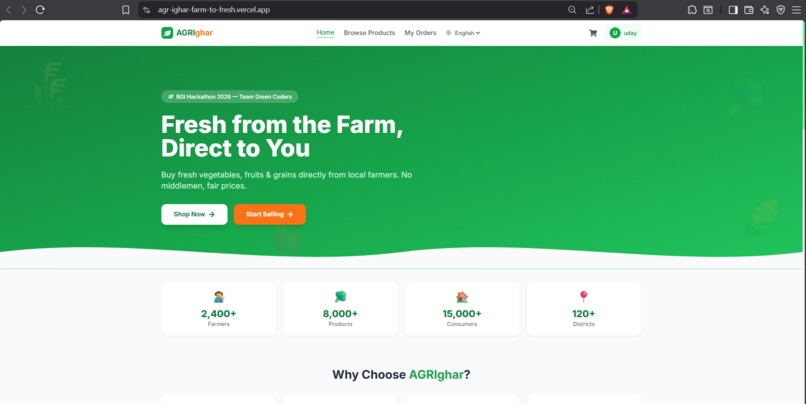
AGRIGHAR is a direct-to-consumer (D2C) agri-tech marketplace platform. For Farmers: It provides a seamless portal to list their harvested crops, set competitive yet profitable prices, and gain direct access to a wider consumer market without third-party exploitation. For Consumers: It offers an intuitive e-commerce interface to browse, select, and purchase fresh fruits, vegetables, and grains straight from local farms, complete with transparent tracking.
How we built it
We developed AGRIGHAR using a robust and scalable Full-Stack architecture: Frontend: Built with React.js and styled using Tailwind CSS/HTML, ensuring a highly responsive, modern, and user-friendly interface. Component logic was managed using modular JavaScript (.jsx). Backend: Powered by Node.js and Express.js to handle server-side logic, API routing, and user authentication safely. Database: Utilized MongoDB for flexible, document-based storage of product listings, user profiles, and order histories. Deployment: The application frontend is hosted on Vercel for lightning-fast delivery and global availability.
Challenges we ran into
State & Data Synchronization: Connecting the farmer’s inventory listings with the live consumer marketplace required careful API design and database indexing to prevent overselling of perishable goods. Localization and Accessibility: Designing an interface that is simple enough for rural farmers to navigate seamlessly while retaining the robust features required for urban consumers. Asynchronous Flow Management: Managing multi-step forms and state rendering within React components while handling complex database queries on the backend. Accomplishments that we're proud of Successful Team Leadership: Successfully coordinated the project development, assigned tasks effectively under pressure, and delivered a working web prototype. Functional Integration: Building a cohesive full-stack flow where changes in the backend database instantly reflect on the frontend user experience. Deployed Solution: Successfully hosting the live, accessible application preview on Vercel to demonstrate real-world feasibility.
What we learned
Full-Stack Competency: Deepened our hands-on knowledge of the MERN stack ecosystem and handling end-to-end web deployment pipelines. Agile Problem Solving: Learned how to quickly debug component-level rendering issues in React and address database connectivity roadblocks during active development. Product Mindset: Gained perspective on how software engineering can directly address socioeconomic issues, turning an abstract problem statement into a tangible, impact-driven solution.
What's next for AGRIghar
Smart Logistics Integration: Partnering with hyper-local delivery services to optimize the supply chain route, minimizing delivery times and preserving produce freshness. AI-Driven Price Prediction: Implementing basic Machine Learning models to help farmers predict optimal selling prices based on market demand and seasonal trends. Multilingual Support: Adding regional language toggles and voice-assisted commands to make the platform fully accessible to farmers across diverse linguistic backgrounds.

Log in or sign up for Devpost to join the conversation.