-
-
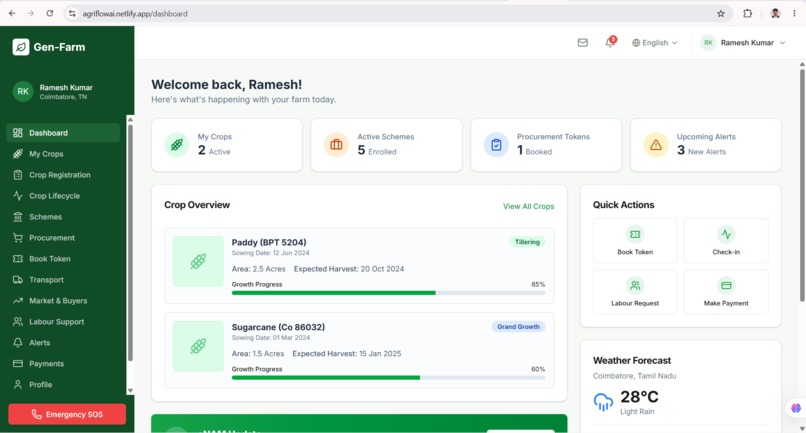
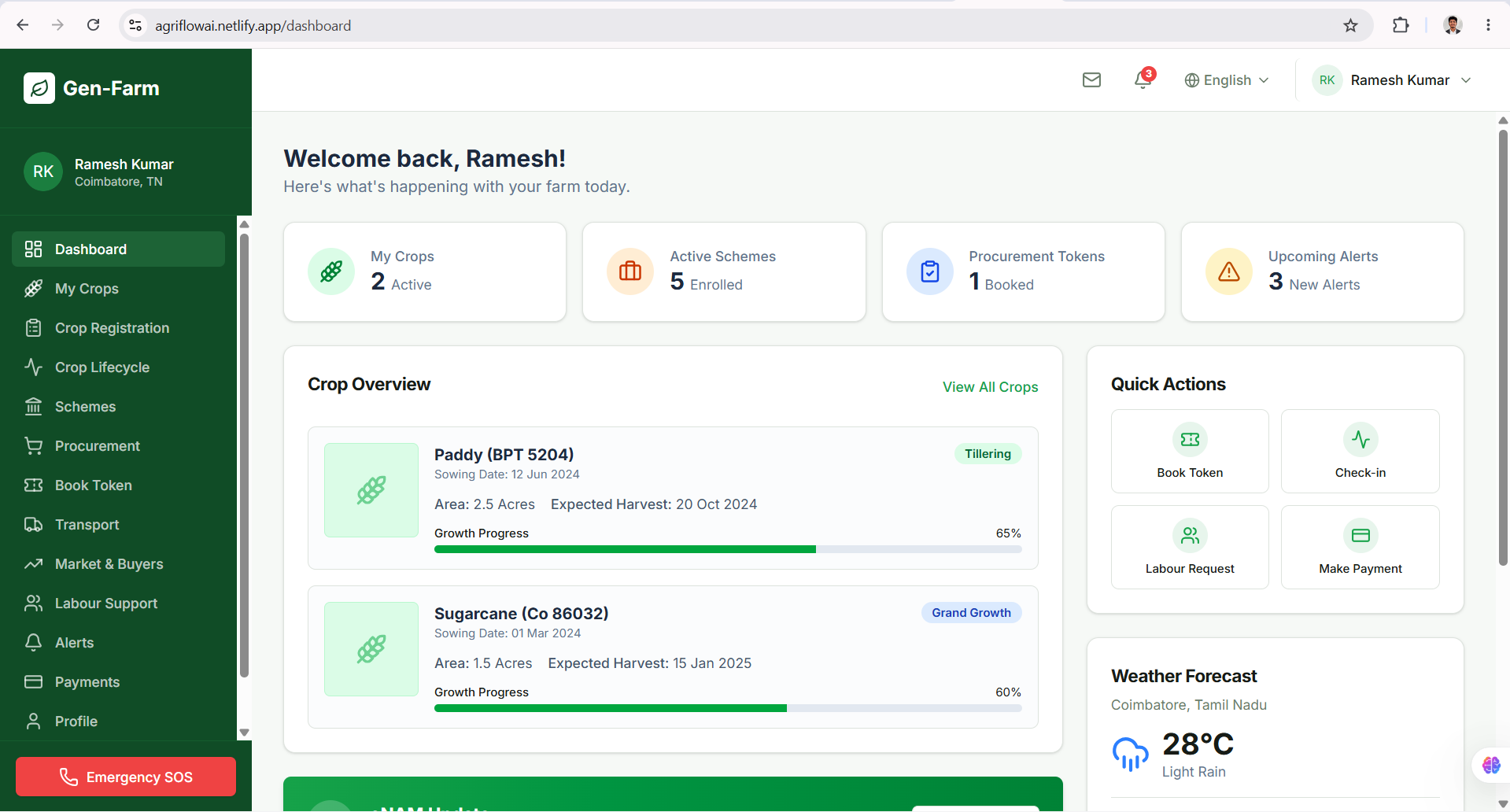
Dashboard Centralized farm management dashboard providing crop status, active schemes, procurement updates, weather forecasts, and services.
-
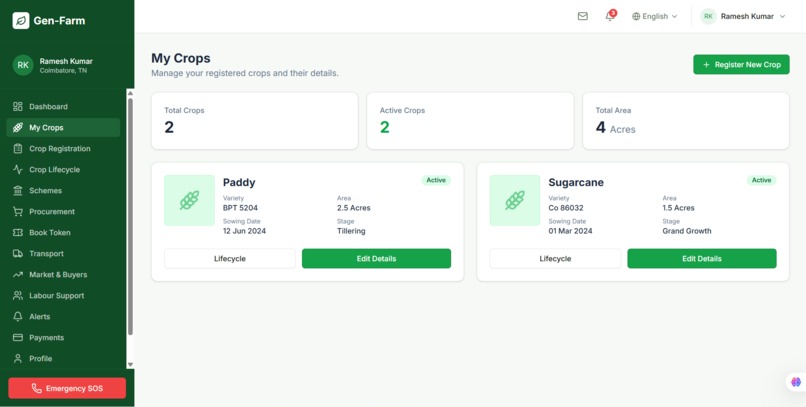
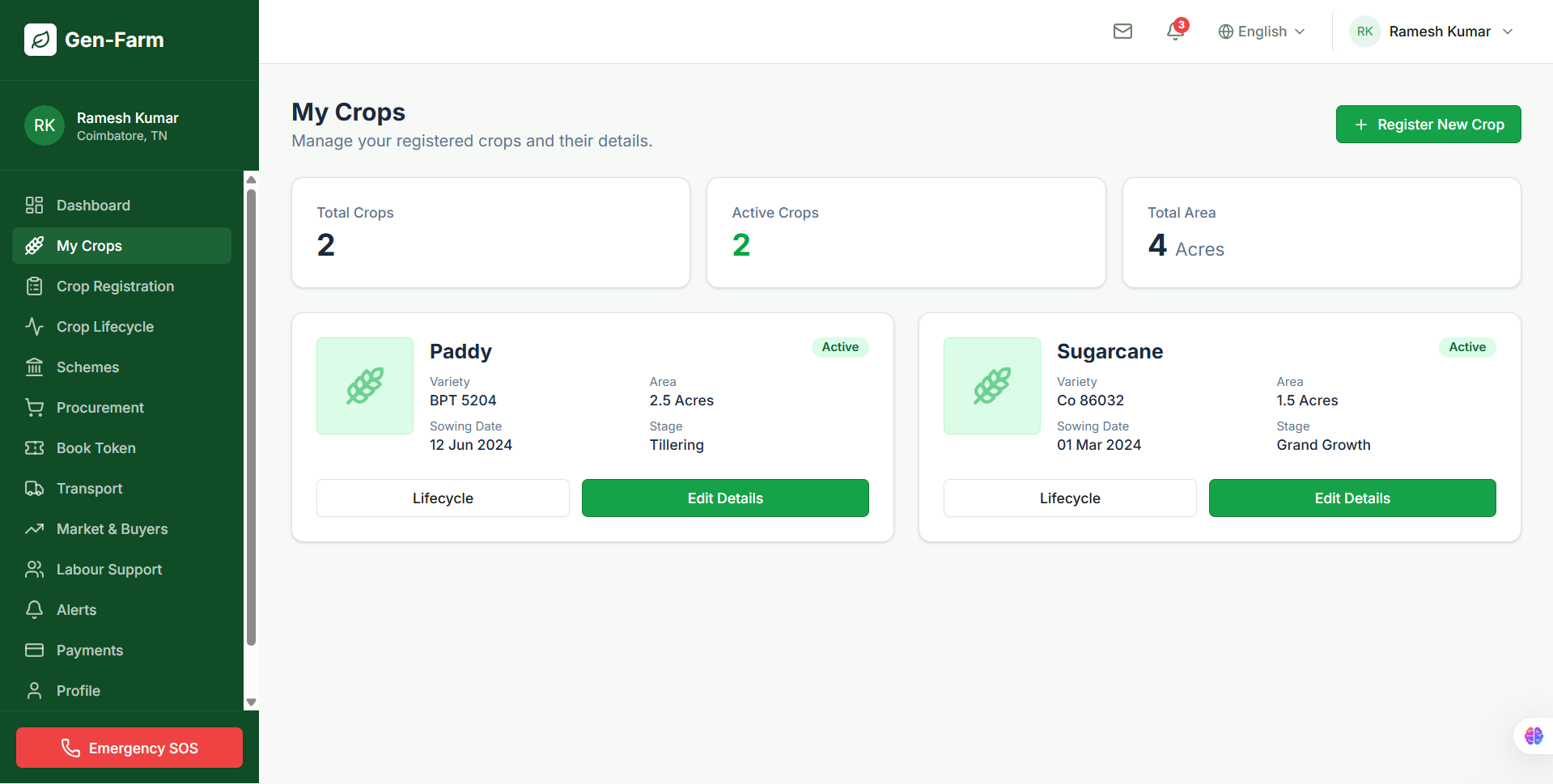
My Crops Displays registered crops, cultivation details, acreage, growth stage, and lifecycle tracking information.
-
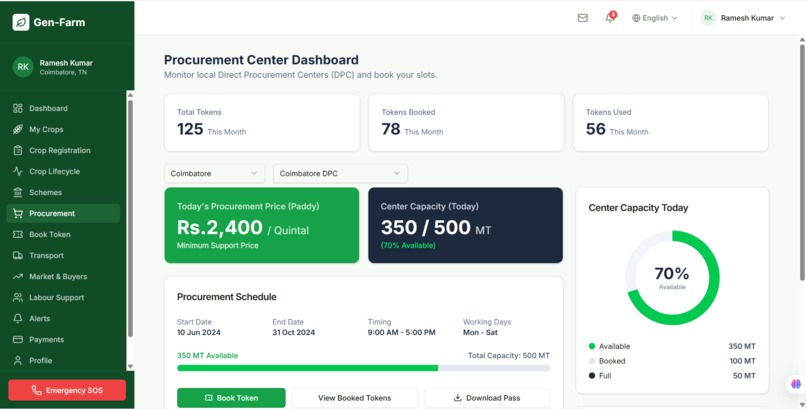
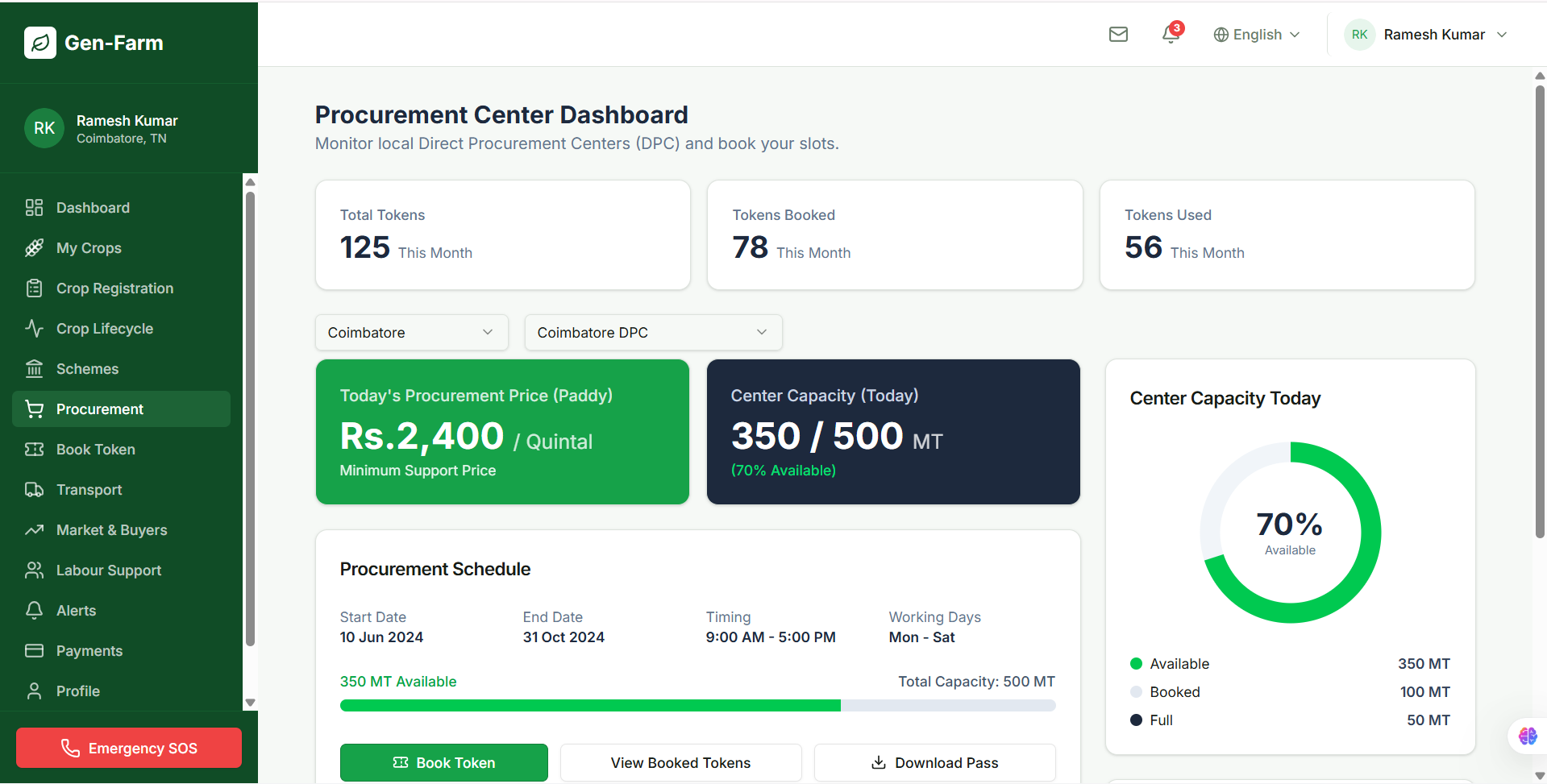
Real-time procurement center management interface showing MSP rates, capacity availability, schedules, and booking statistics.
-
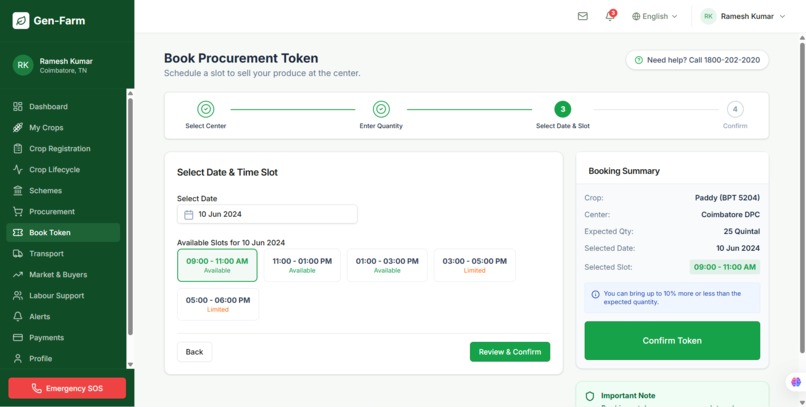
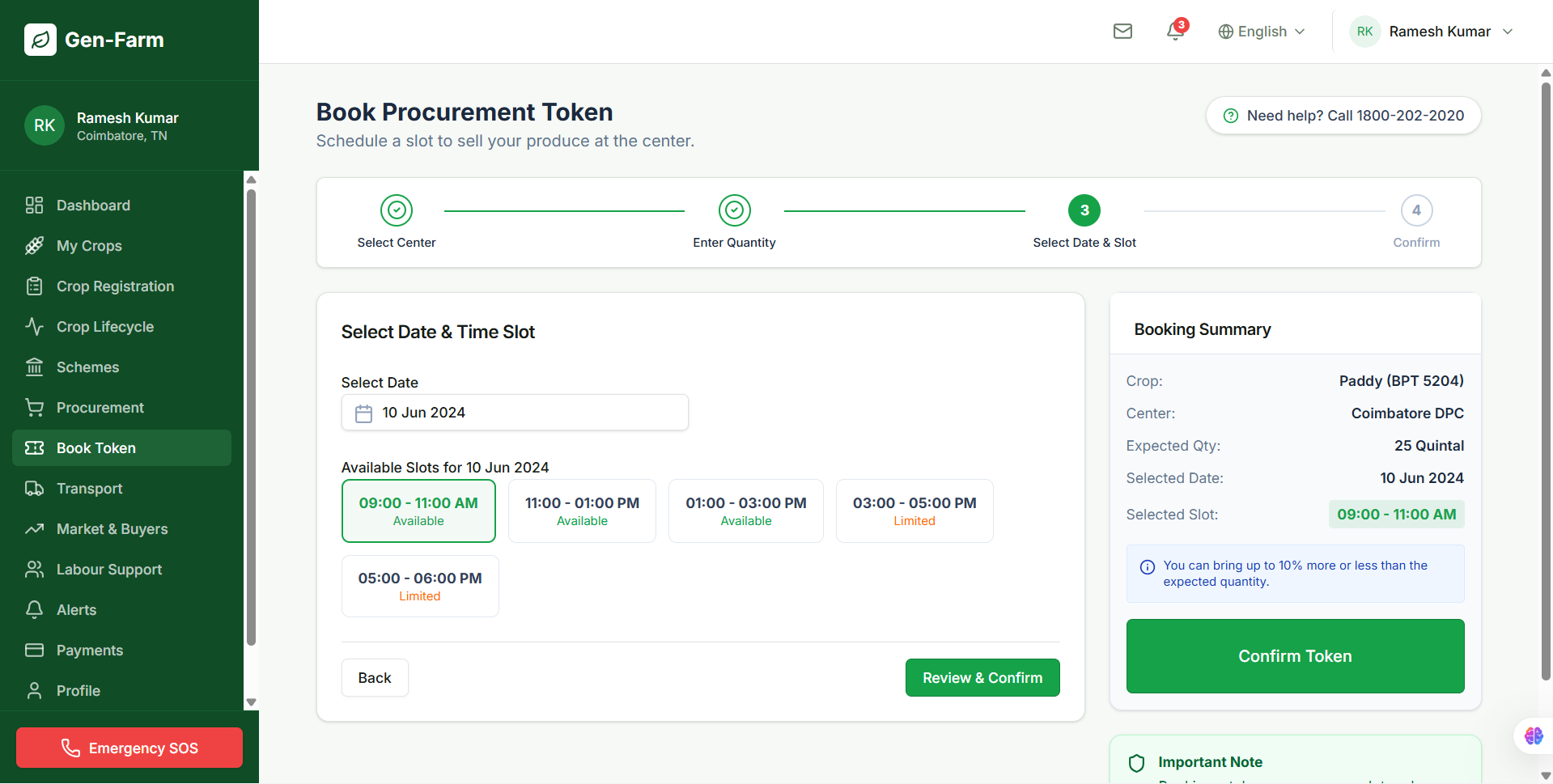
Book Procurement Token Smart appointment booking system enabling farmers to reserve procurement slots and avoid long waiting times.
-
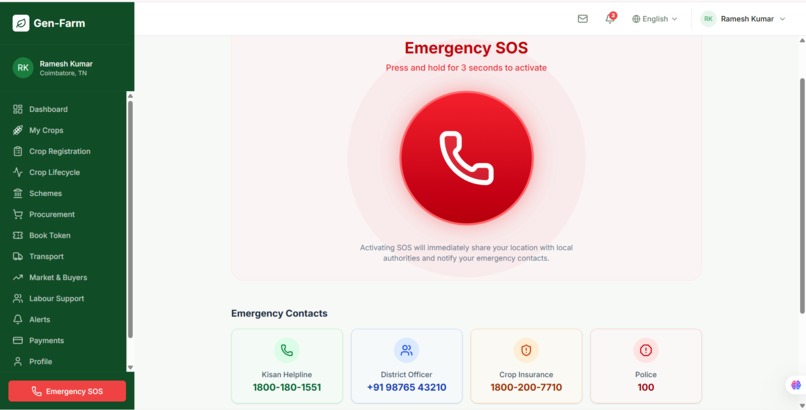
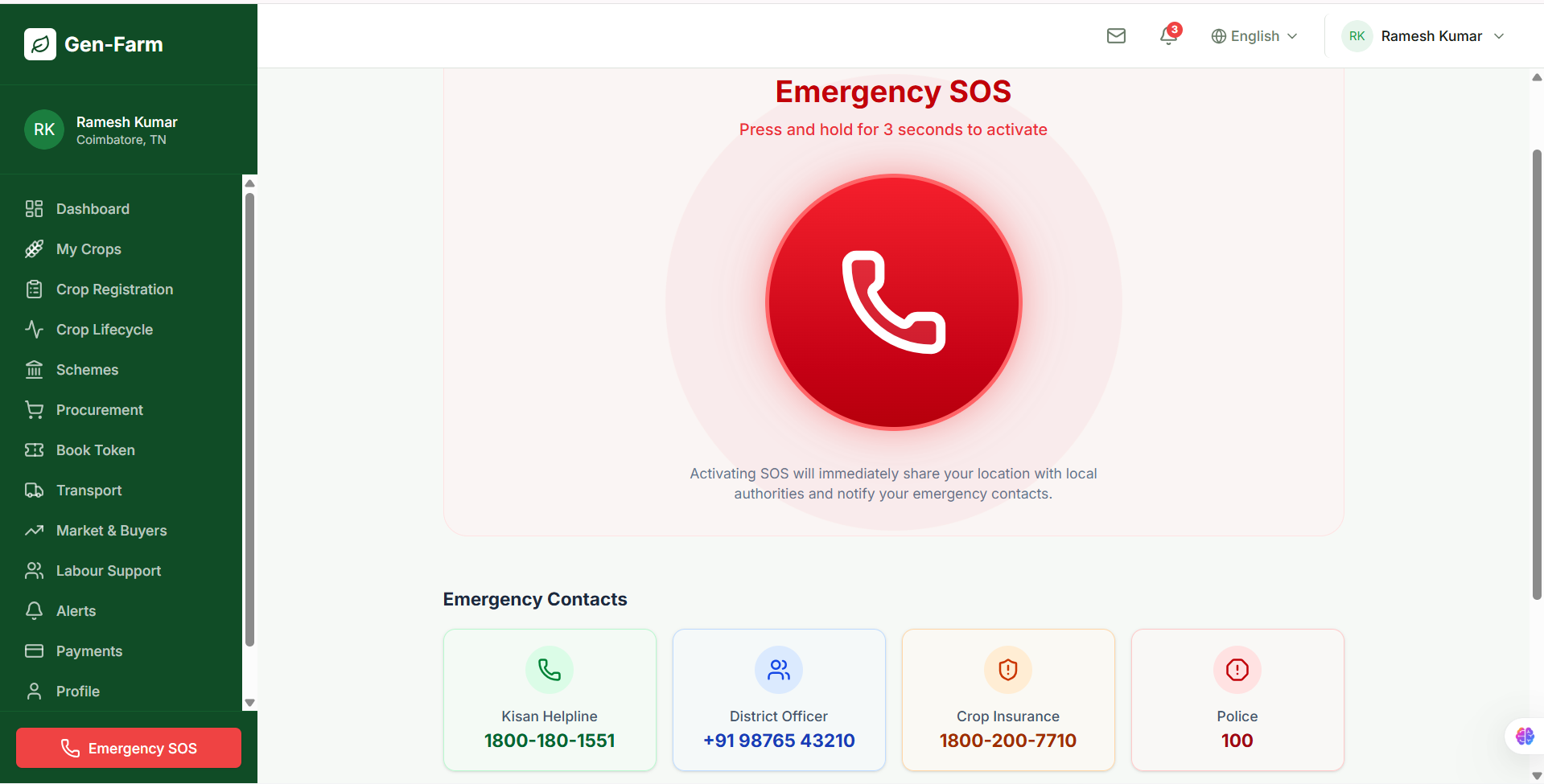
Emergency SOS One-touch emergency assistance module providing instant access to helplines, authorities, and critical support services.
-
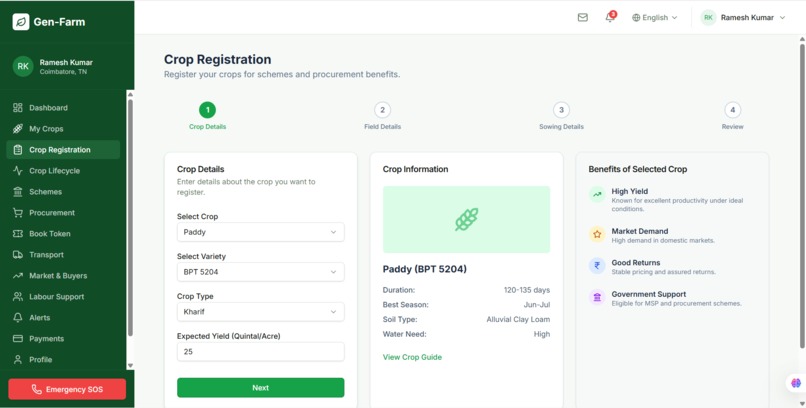
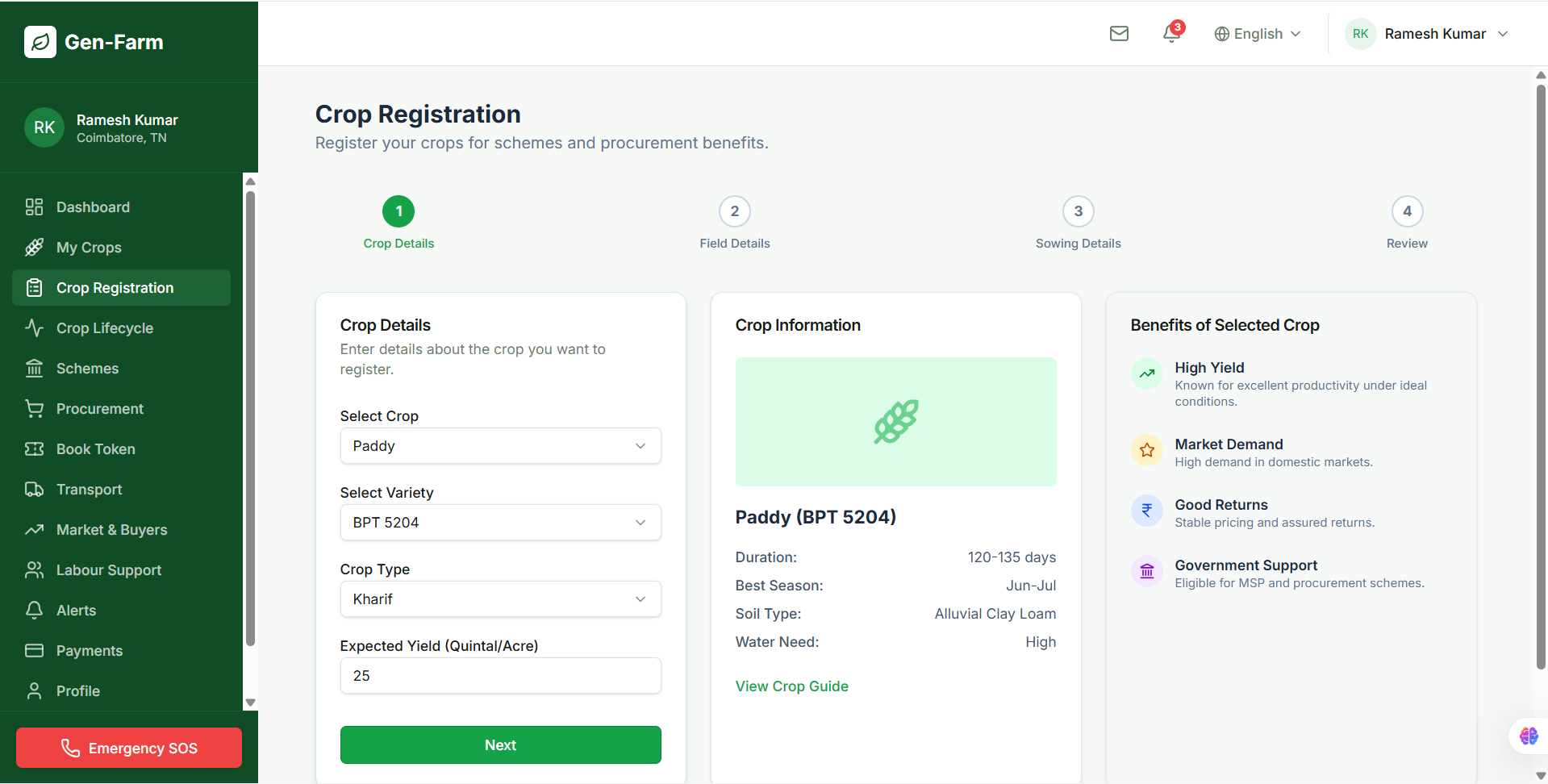
Crop Registration Multi-step crop enrollment system allowing farmers to register crops for government schemes and procurement benefits.
-
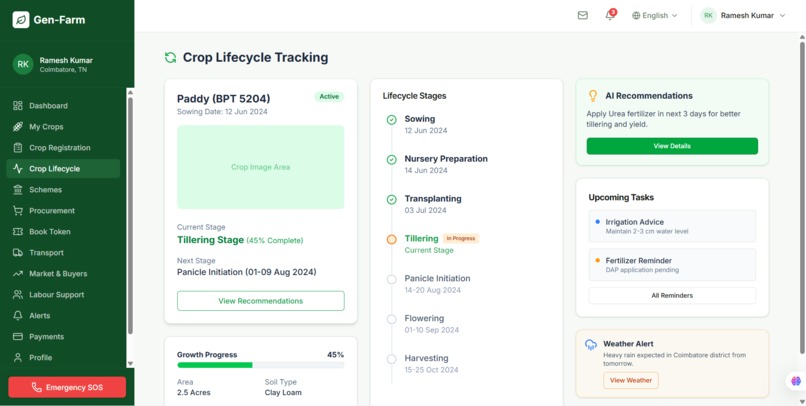
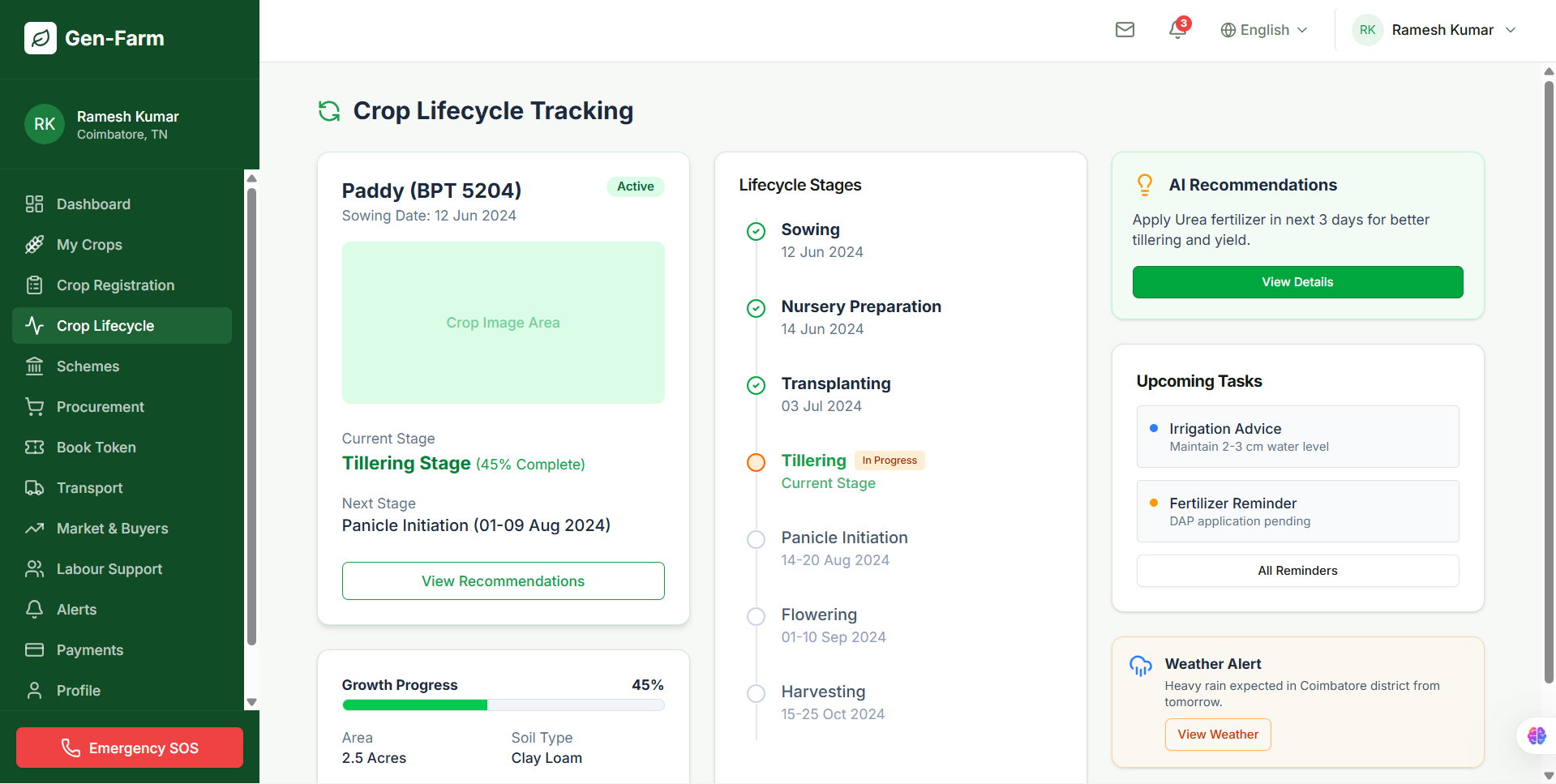
Crop Lifecycle Tracking assisted crop monitoring module providing growth stage updates, recommendations, task reminders, and weather alerts.
-
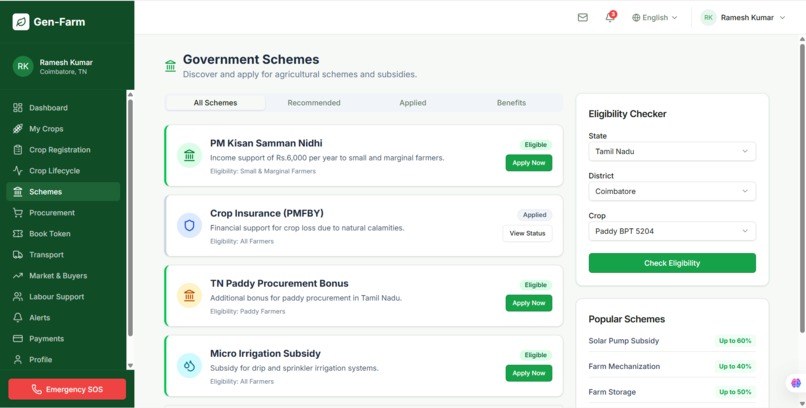
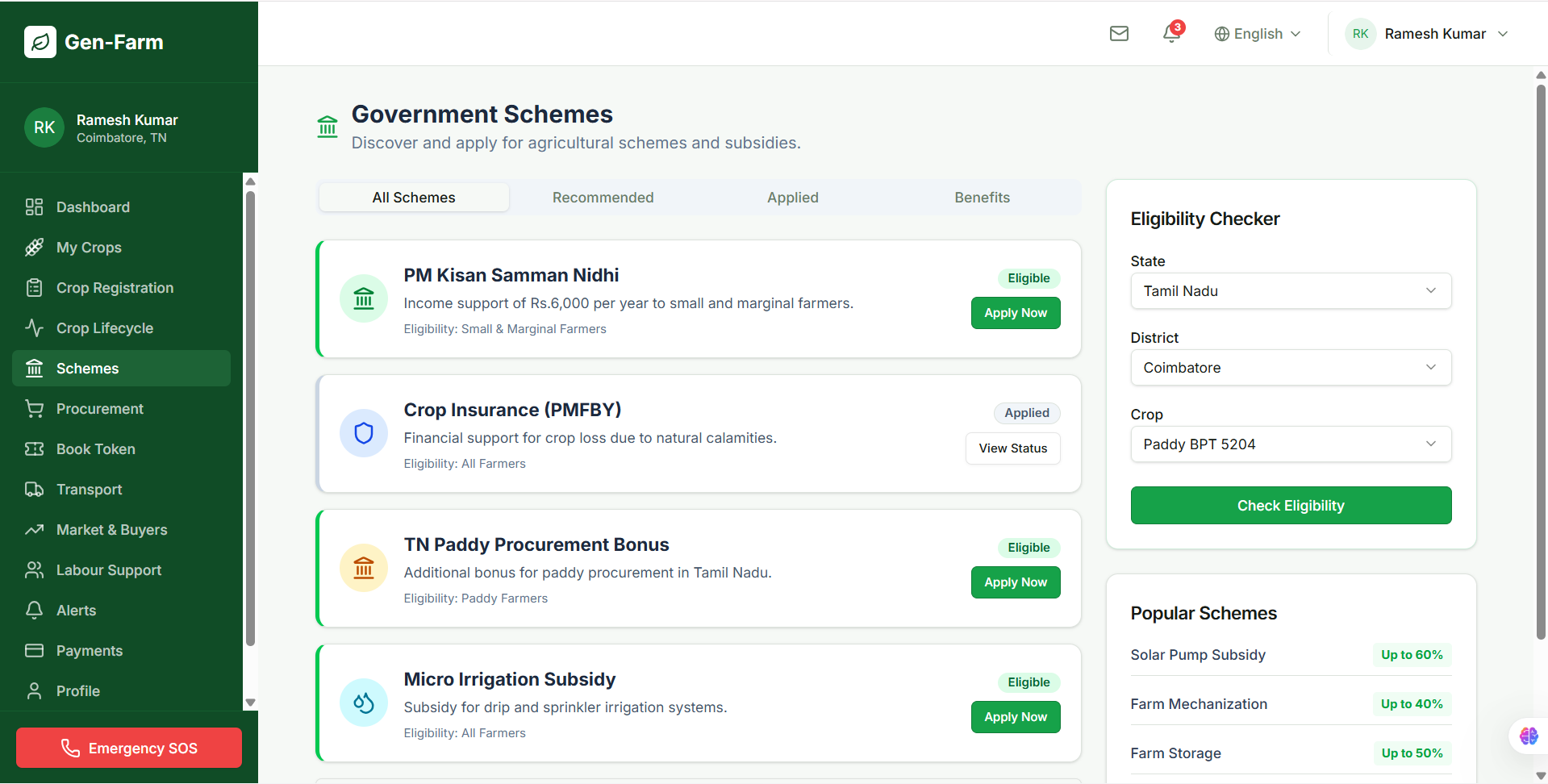
Personalized scheme discovery portal helping farmers identify and apply for eligible agricultural subsidies and welfare programs.
-
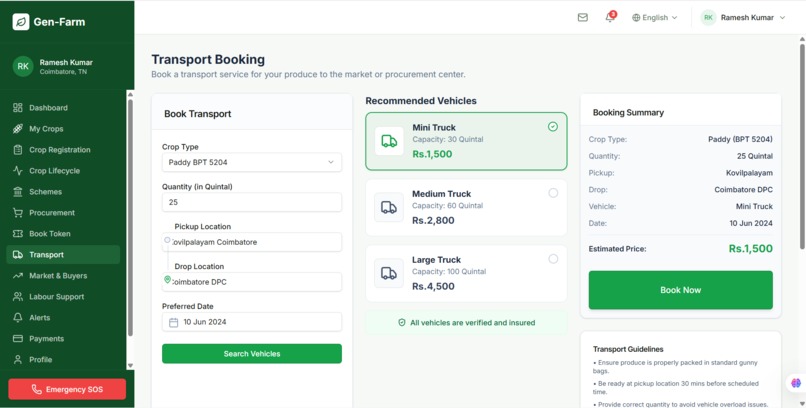
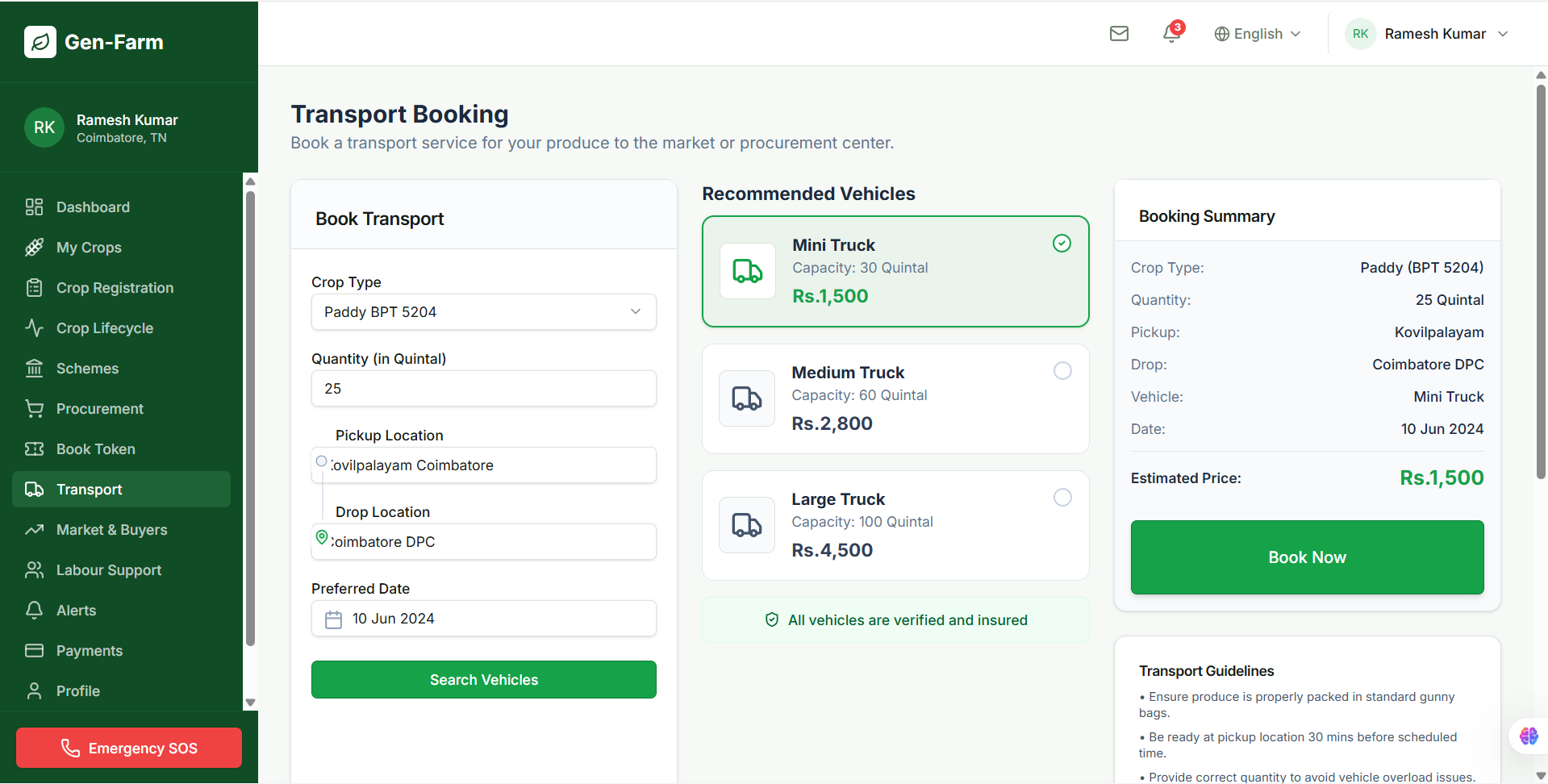
Transport Booking Integrated logistics platform connecting farmers with verified transport providers for produce movement.
-
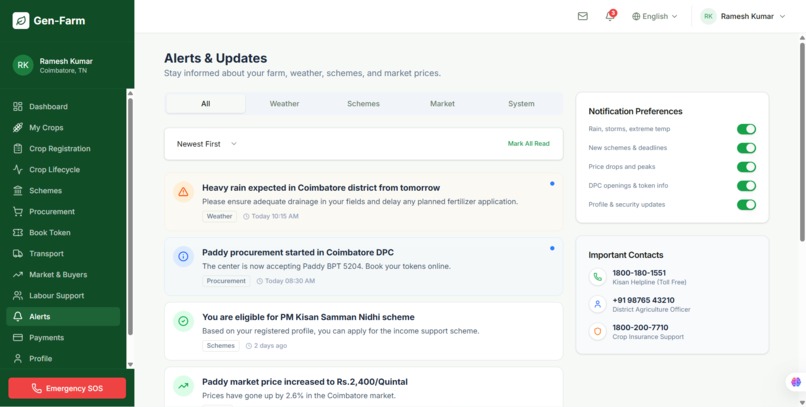
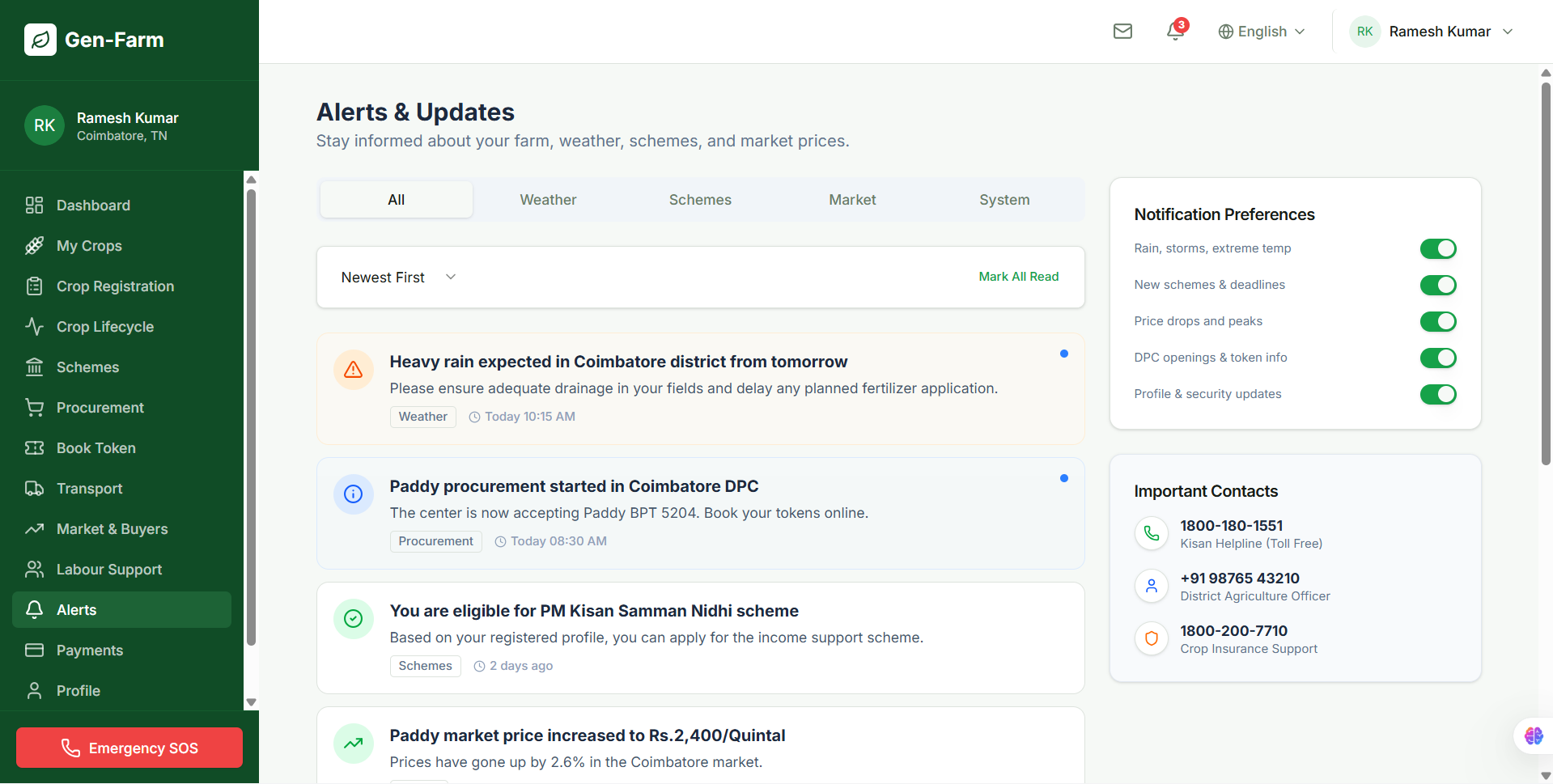
Alerts & Updates Notification center delivering weather alerts, market updates, procurement announcements, and scheme information.
-
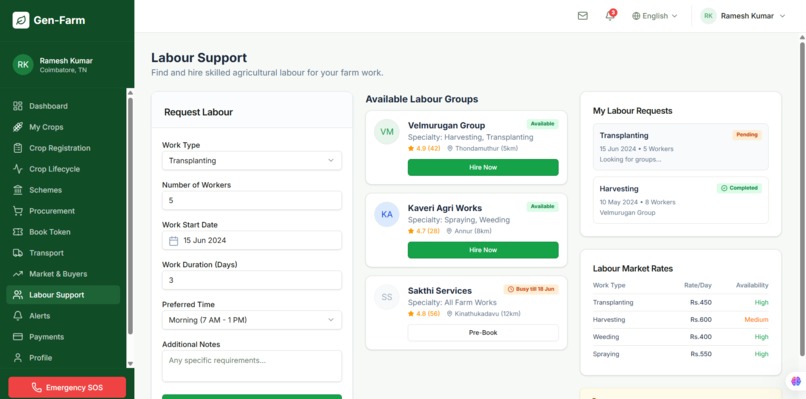
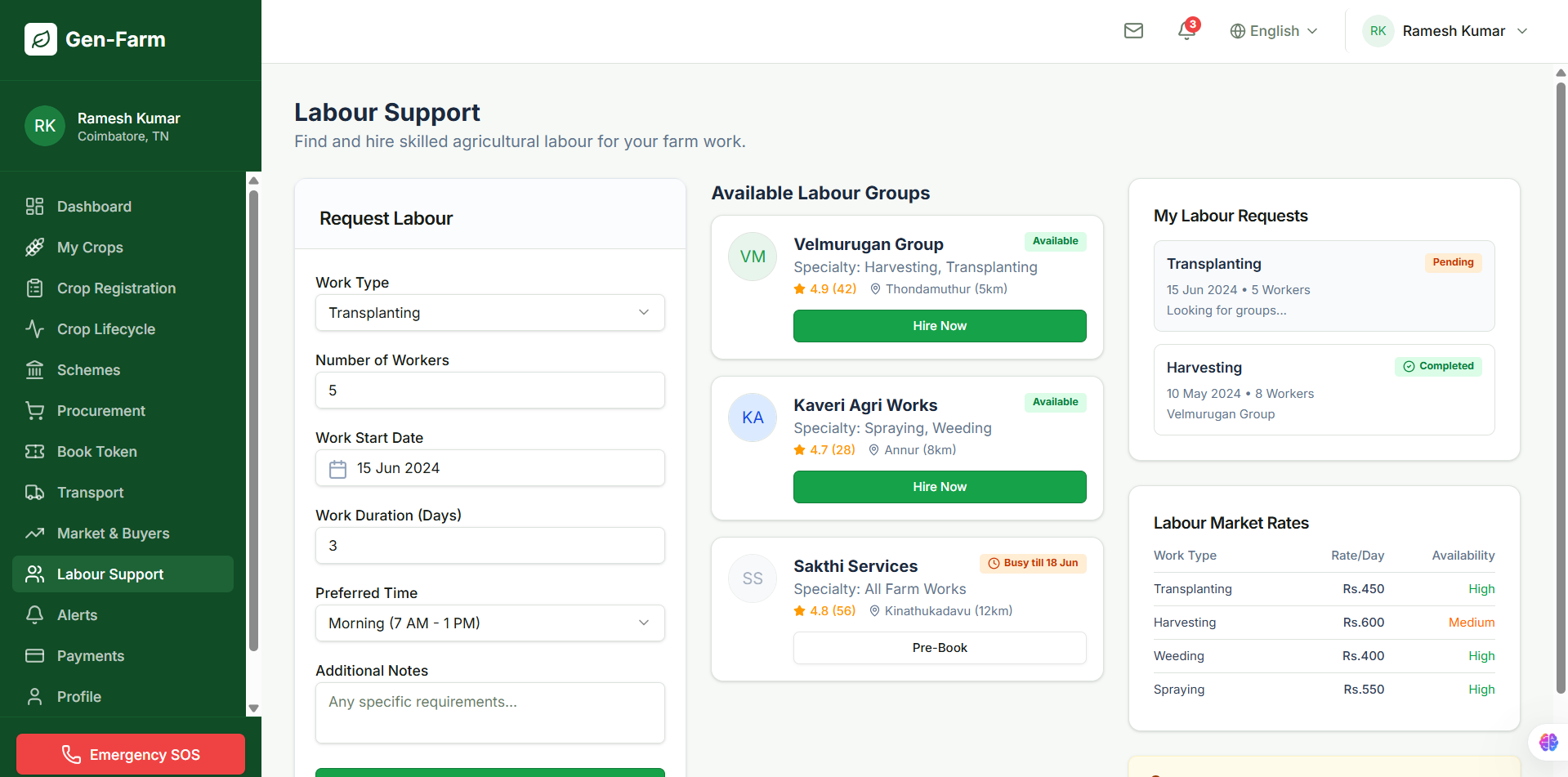
Labour Support Workforce management system for requesting agricultural labor and connecting with nearby verified worker groups.
-
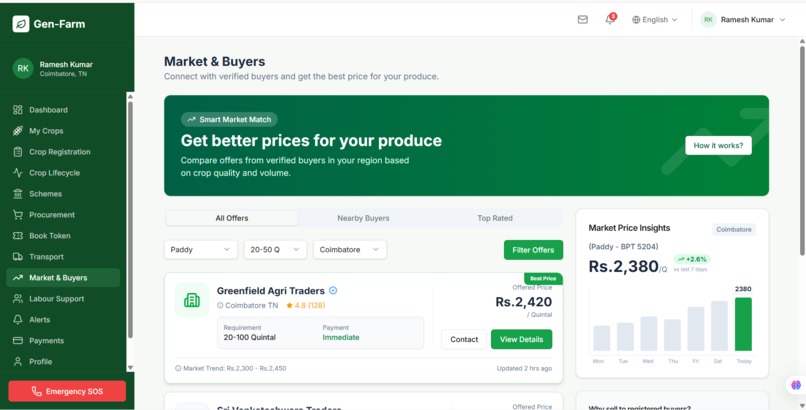
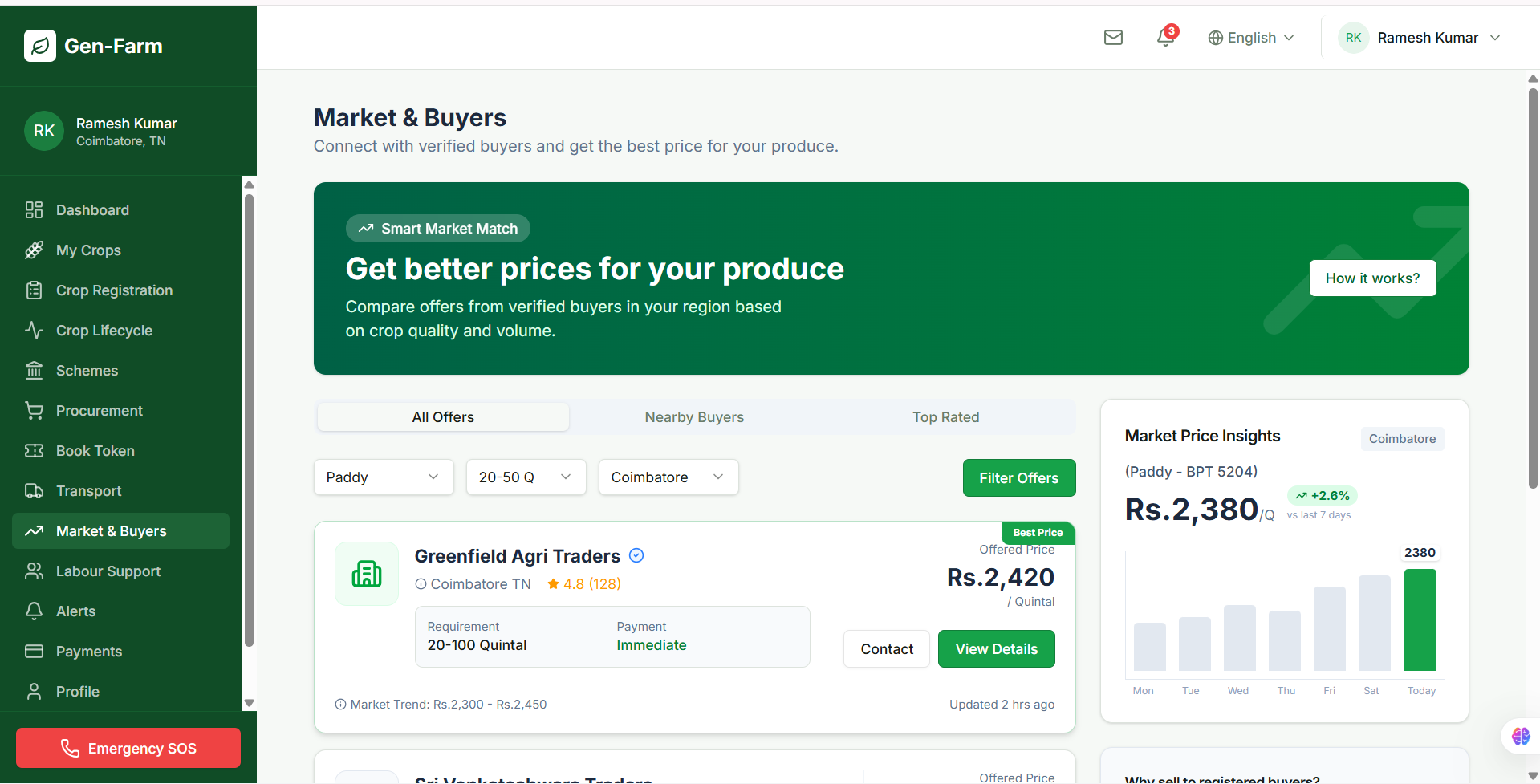
Market & Buyers Digital marketplace that matches farmers with verified buyers and provides real-time price intelligence.
Inspiration
Agriculture remains the backbone of rural economies, yet millions of farmers still struggle to access timely information about labor availability, government schemes, crop management, procurement opportunities, and emergency assistance. Most digital agricultural platforms rely heavily on text-based interfaces, which can be difficult for many farmers due to language barriers, literacy limitations, or lack of digital familiarity.
We were inspired by the idea that technology should adapt to farmers, not the other way around. Farmers naturally communicate through voice, and we envisioned a solution that allows them to interact with advanced AI systems as easily as speaking to another person. This led us to create AgriFlow AI, a multilingual voice-first agricultural assistant designed specifically for rural communities.
What it does
AgriFlow AI is a voice-powered agricultural assistant that enables farmers to access critical agricultural services through natural conversations in their native language.
The platform helps farmers:
Find labor and workforce availability Access government schemes and subsidies Receive crop-specific guidance Explore procurement opportunities Get emergency agricultural assistance Interact with AI using simple voice conversations
A farmer can speak a query, and AgriFlow AI automatically converts speech to text, understands the intent, routes the request to the appropriate AI agent, generates a contextual response, and delivers the answer back through natural voice output.
How we built it
AgriFlow AI was developed using a modular AI-agent architecture that combines speech processing, intelligent routing, domain-specific agents, and voice synthesis.
Our technology stack includes:
FastAPI for backend services Whisper for multilingual speech-to-text conversion Custom AI routing engine for intent classification Specialized agents for crops, labor, schemes, procurement, and emergencies Retrieval-Augmented Generation (RAG) for agricultural knowledge retrieval PostgreSQL for structured data management Piper TTS for natural voice responses Flutter-based mobile integration for farmer interaction
The system follows a complete voice-processing pipeline:
Farmer Voice → Speech Recognition → Intent Detection → Agent Routing → Knowledge Retrieval → Response Generation → Voice Synthesis → Farmer Response
This architecture allows AgriFlow AI to provide accurate, context-aware, and scalable assistance for multiple agricultural use cases.
Challenges we ran into
One of the biggest challenges was designing a system capable of handling multiple agricultural domains through a single conversational interface. Farmers often ask questions in different dialects, use informal terminology, and may switch topics during conversations.
Additional challenges included:
Building reliable multilingual speech recognition Designing accurate intent classification for agricultural queries Creating specialized AI agents for different agricultural services Optimizing response times for a natural conversational experience Integrating voice input and voice output into a seamless workflow Structuring agricultural knowledge for efficient retrieval through RAG
Ensuring that the system remained practical and accessible for rural users required extensive architectural planning and iterative testing.
Accomplishments that we're proud of
We are proud of successfully developing a complete end-to-end voice-based agricultural assistant that demonstrates how AI can become more accessible to underserved communities.
Key accomplishments include:
Building a multilingual voice-first farmer assistance platform Creating specialized agricultural AI agents Implementing Retrieval-Augmented Generation for domain knowledge retrieval Developing an end-to-end speech-to-speech workflow Designing a scalable architecture for future telephony integration Creating a solution that prioritizes accessibility and inclusivity for farmers
Most importantly, we transformed complex AI technologies into a simple conversational experience that can be used by farmers with minimal technical knowledge.
What we learned
Through this project, we gained valuable experience in conversational AI, speech technologies, agentic workflows, retrieval systems, and real-world problem-solving.
We learned that:
Voice interfaces can significantly improve accessibility in rural environments Domain-specific AI agents outperform generalized responses for specialized industries RAG systems are essential for delivering trustworthy agricultural information User-centric design is critical when building solutions for diverse populations Simplicity often creates more impact than adding excessive features
The project also strengthened our understanding of how AI can be applied to solve practical challenges in agriculture and rural development.
What's next for AgriFlow AI
Our vision is to evolve AgriFlow AI into a comprehensive rural intelligence platform that supports farmers throughout the agricultural lifecycle.
Future enhancements include:
Real-time mobile application deployment Toll-free voice access for farmers Live conversational streaming using WebSockets Regional language expansion Personalized farmer profiles and recommendations Market price prediction and analytics Weather-aware agricultural advisories Integration with government databases and procurement networks Offline and low-bandwidth support for rural regions
Ultimately, we aim to create an AI-powered agricultural ecosystem that empowers farmers with accessible, reliable, and timely information whenever they need it.
Built With
- android
- chromadb
- fastapi
- flutter
- natural-language-processing
- piper-tts
- postgresql
- python
- rag
- rest-apis
- sentence-transformers
- speech-to-text
- sqlite
- text-to-speech
- websockets
- whisper-ai

Log in or sign up for Devpost to join the conversation.