-
-
AgriFlow Farmer DashBoard
Inspiration
Managing a modern farm involves juggling daily field operations, long-term strategic decisions, financial tracking, and market access—a complex web of responsibilities that can quickly overwhelm even experienced growers. When I launched my own combined teak and coffee agroforestry project, I experienced these operational friction points firsthand. Existing tools were either overly complex enterprise software or simple digital notebooks that lacked actionable guidance. As a software developer, I knew AI could transform these disjointed administrative tasks into streamlined, intelligence-driven workflows. This inspired the creation of AgriFlow: an intelligent assistant designed to simplify farm administration, elevate traceability, and seamlessly connect local producers to the broader agricultural ecosystem.
What it does
AgriFlow serves as a comprehensive management hub and market bridge for agricultural value chains, bringing farmers, service providers, and off-takers into a single synchronized ecosystem.
Smart Operations & Record Keeping: Translates complex farm activities—such as input tracking, task execution, and yield tracking—into clear, structured records through natural conversational interfaces.
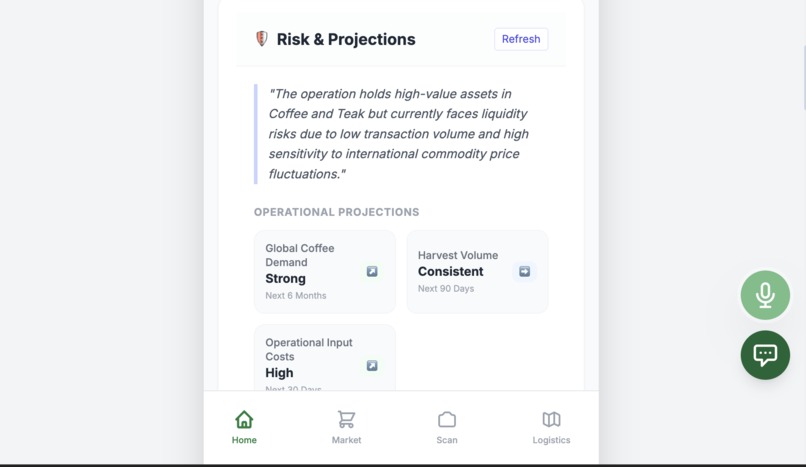
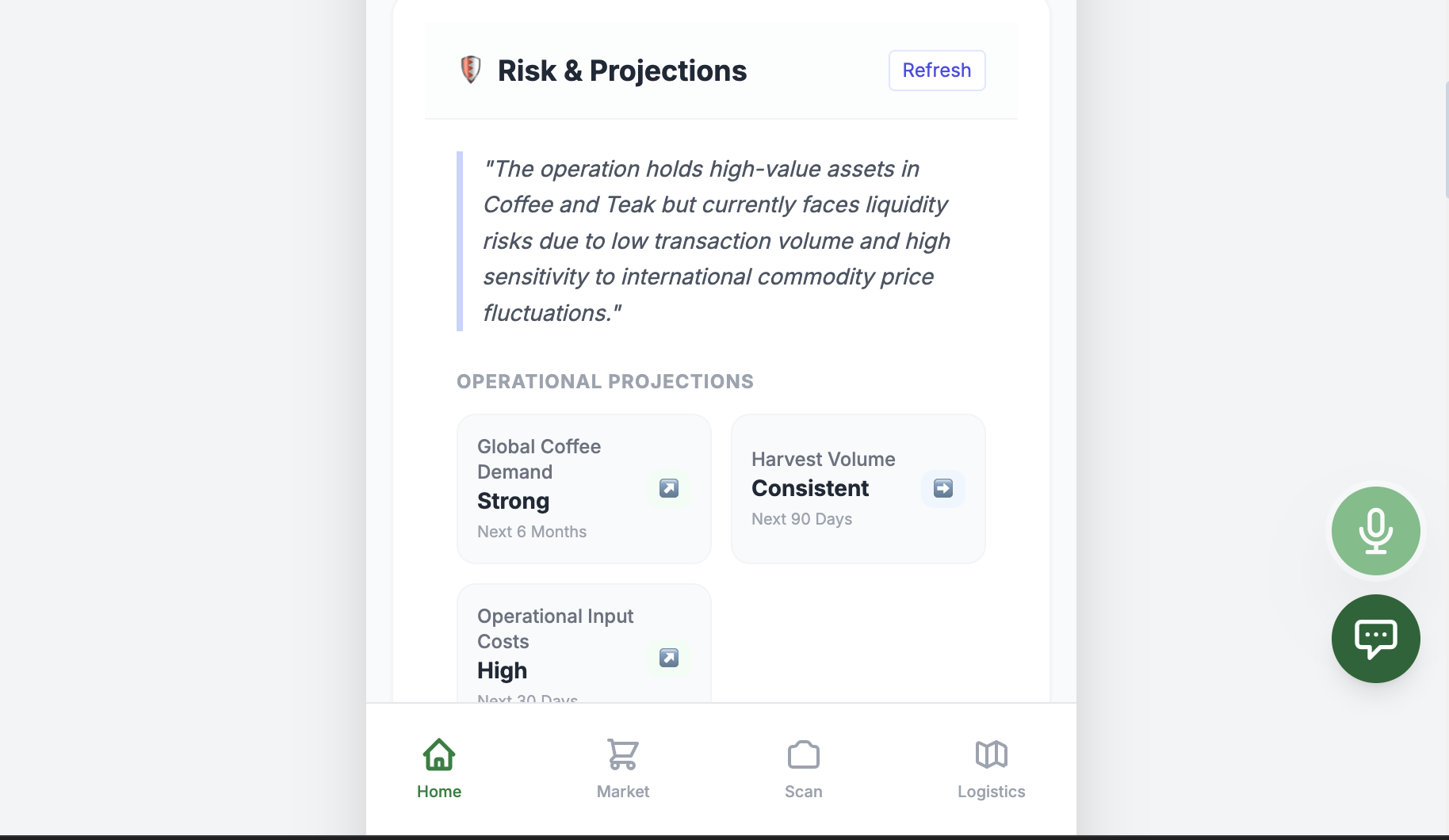
Farm Insights: Uses generative AI to deliver data-driven recommendations on crop management, soil health strategies, and operational optimization tailored to multi-crop and agroforestry setups.
Ecosystem Onboarding: Provides specialized management dashboards for three key stakeholder profiles:
Farmers: Track production schedules, monitor tasks, and keep accurate records.
Service Providers: Offer equipment, labor, and technical support to nearby operations.
Traders & Manufacturers: Verify crop quality, track origin, and streamline logistics for efficient sourcing.
Traceability & Verification: Logs verified production milestones to establish transparent, audit-ready supply chain records that unlock premium market opportunities.
How we built it
Vibe Coded using Google AI Studio and built on Gemini and Google Cloud Infrastructure including Google Cloud Run, Firestore
Challenges we ran into
Structuring Unstructured Inputs: Converting varied, informal field notes and regional agricultural terminology into uniform schema formats within Firebase required careful prompt engineering and validation pipelines.
Multi-Role Data Isolation: Designing a unified database schema that maintains strict access controls for private farm metrics while exposing required operational data to verified buyers and service providers.
Low-Connectivity Optimization: Balancing robust generative AI features with performance constraints common in rural network environments, necessitating optimized payload structures and aggressive client-side caching.
Accomplishments that we're proud of
End-to-End Value Chain Coverage: Successfully built a functional platform that unifies input tracking, production validation, and off-taker discovery within a single application framework.
Production-Grade Serverless Stack: Successfully architected and deployed a fully containerized Google Cloud Run and Firestore backend capable of handling dynamic AI requests with minimal latency.
Real-World Validation: Applying the platform’s core workflows directly to real agroforestry operations, validating that the software effectively addresses true operational friction points.
What we learned
Domain-Specific AI Guardrails: Generative models excel at conversational data capture, but precise prompt constraints and structured JSON parsing are essential when handling accurate agricultural quantities and transaction ledgers.
Ecosystem Interdependence: Farm productivity software gains significantly higher adoption when direct market incentives—such as verified buyer matching and service access—are integrated directly into daily record-keeping workflows.
What's next for AgriFlow
Field Trials with other farmer/farms for feedback and improvement.
Multimodal Field Diagnostics: Enhancing Gemini integration to support image-based crop disease identification, pest assessment, and soil quality evaluations directly from smartphone uploads.
Automated Market Matchmaking: Developing predictive algorithms that automatically match harvest projections with buyer purchasing requirements and nearby transport logistics.
Export & Compliance Modules: Introducing automated reporting tools tailored to international sustainability standards, deforestation regulations, and organic certification frameworks.
Offline-First Synchronization: Expanding offline storage capabilities to allow field managers to record logs without an active internet connection and sync seamlessly once reconnected.
Built With
- aistudio
- firebase
- firestore
- gemini
- google-cloud
- typescript


Log in or sign up for Devpost to join the conversation.