🌱 AgriCredAI – Agricultural Credit Intelligence Platform
Inspiration
Agricultural lending in India faces systemic challenges: fragmented data, unpredictable weather, fluctuating crop yields, and farmer credit risk assessment that relies heavily on limited financial history. Traditional methods often fail to capture the holistic risk profile of farmers, leading to both under-financing of deserving farmers and high default rates.
I was inspired to bridge this gap by leveraging AI, data analytics, and fintech principles to build a system that enables financial institutions to assess risk more accurately while also making credit more accessible to farmers. The vision is to create a transparent, scalable, and adaptive solution that can serve as the foundation for sustainable agricultural finance.
What I Learned
Building AgriCredAI gave me hands-on exposure to:
- Streamlit for rapid prototyping of AI dashboards.
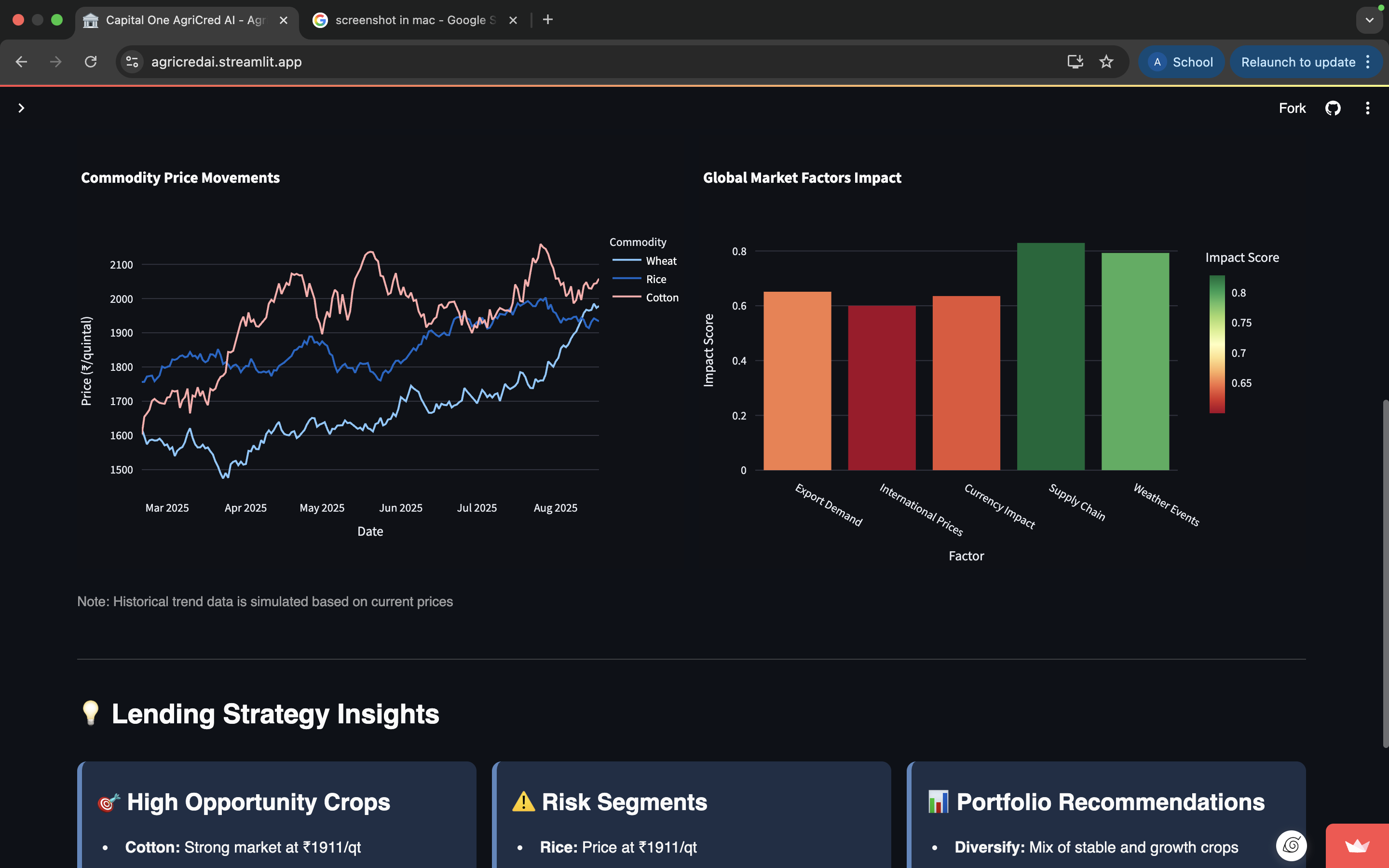
- Integration of multiple data sources (climate, yield, pricing, soil, credit history).
- Machine learning workflows for credit scoring and default probability prediction.
- Designing a scalable architecture that could be deployed on the cloud.
- Challenges around real-world datasets, especially handling missing, noisy, and incomplete information.
How I Built It
Data Simulation & Ingestion
Since real agricultural datasets were limited, I designed a simulation pipeline that mimics real-world farm metrics (yield, rainfall, soil fertility, and loan repayment patterns).AI Modeling
- Applied ML techniques to predict repayment likelihood.
- Developed scoring functions that combine multiple risk dimensions.
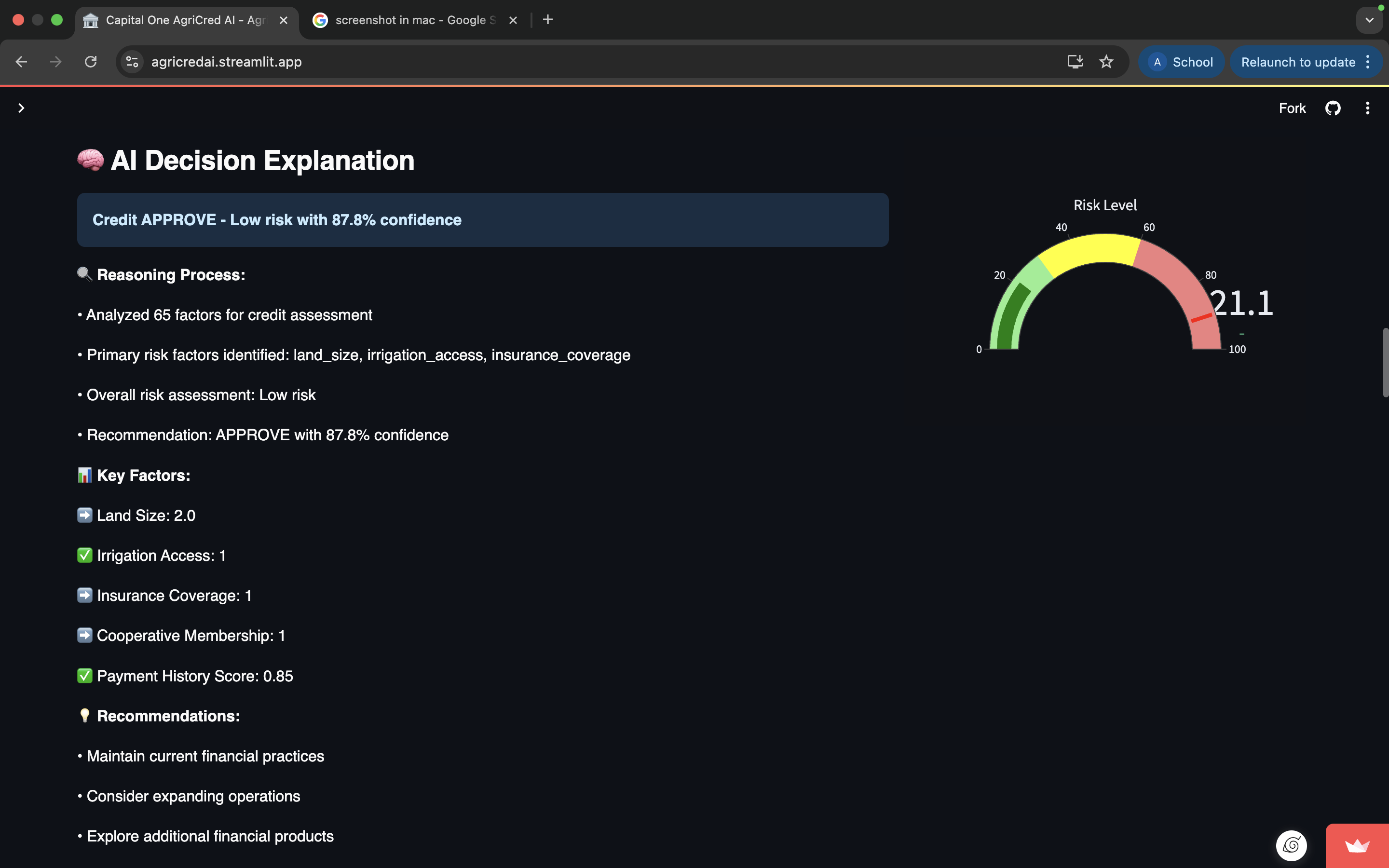
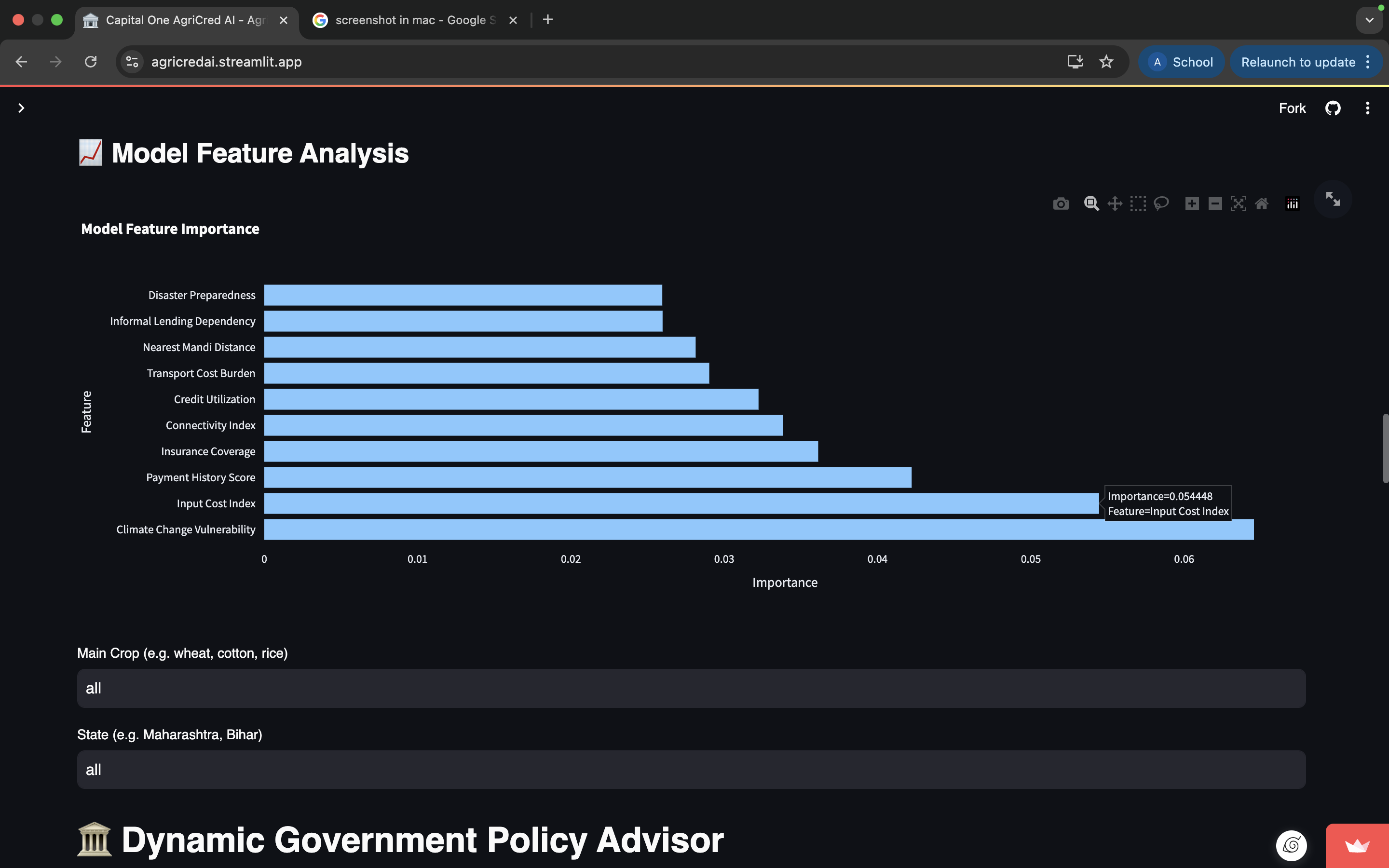
- Used explainability modules to ensure transparent AI (important for financial adoption).
- Applied ML techniques to predict repayment likelihood.
Frontend & Deployment
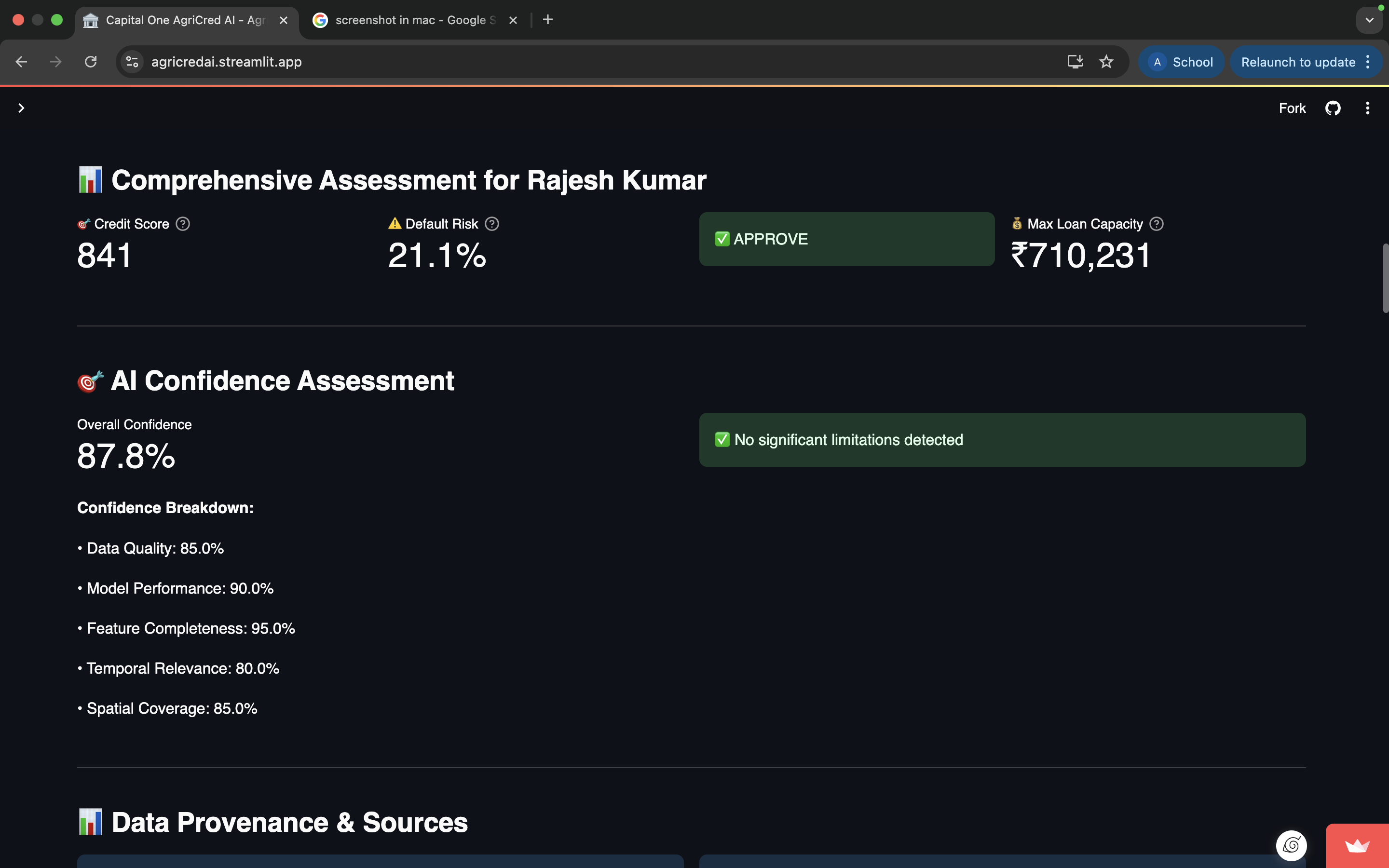
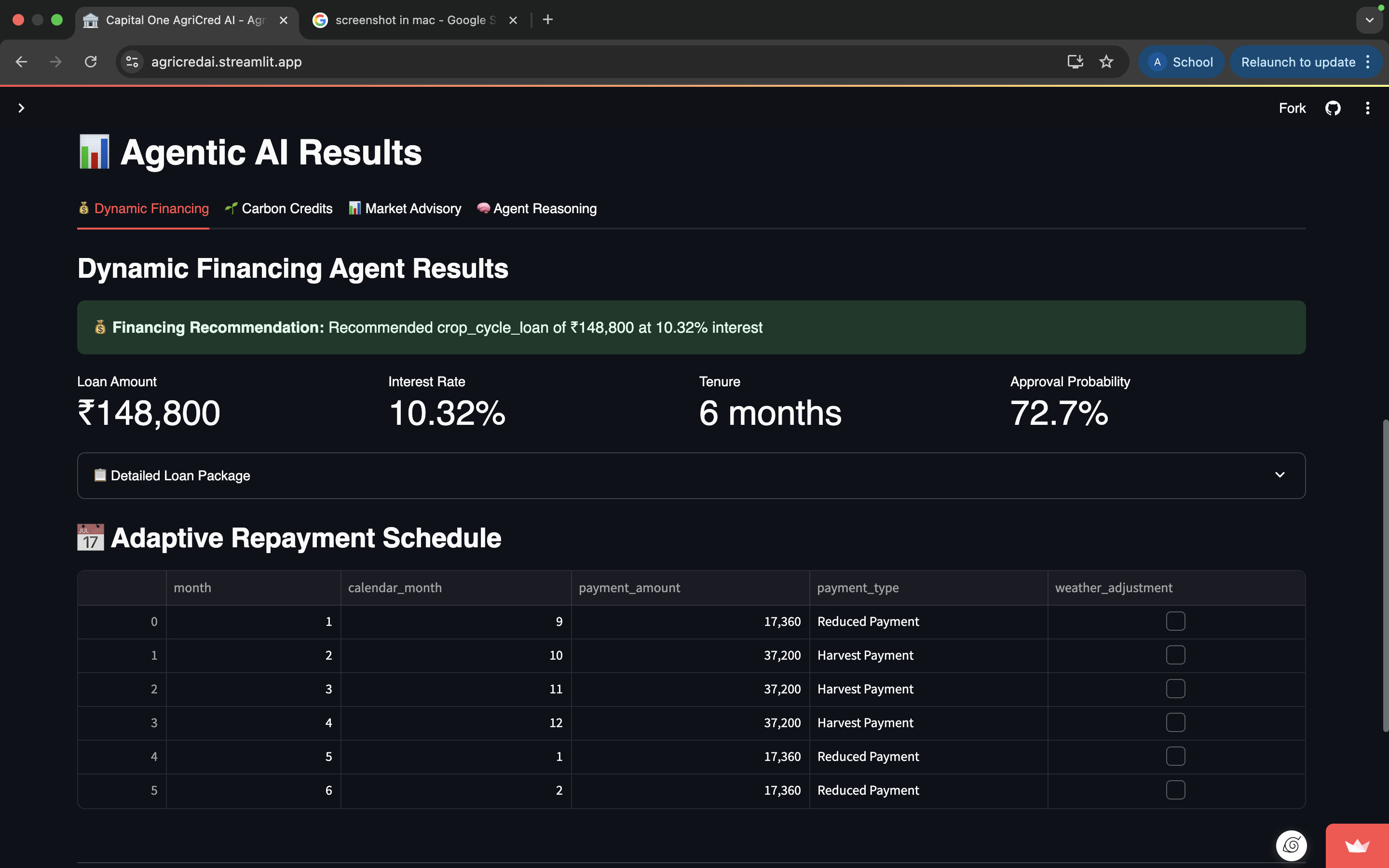
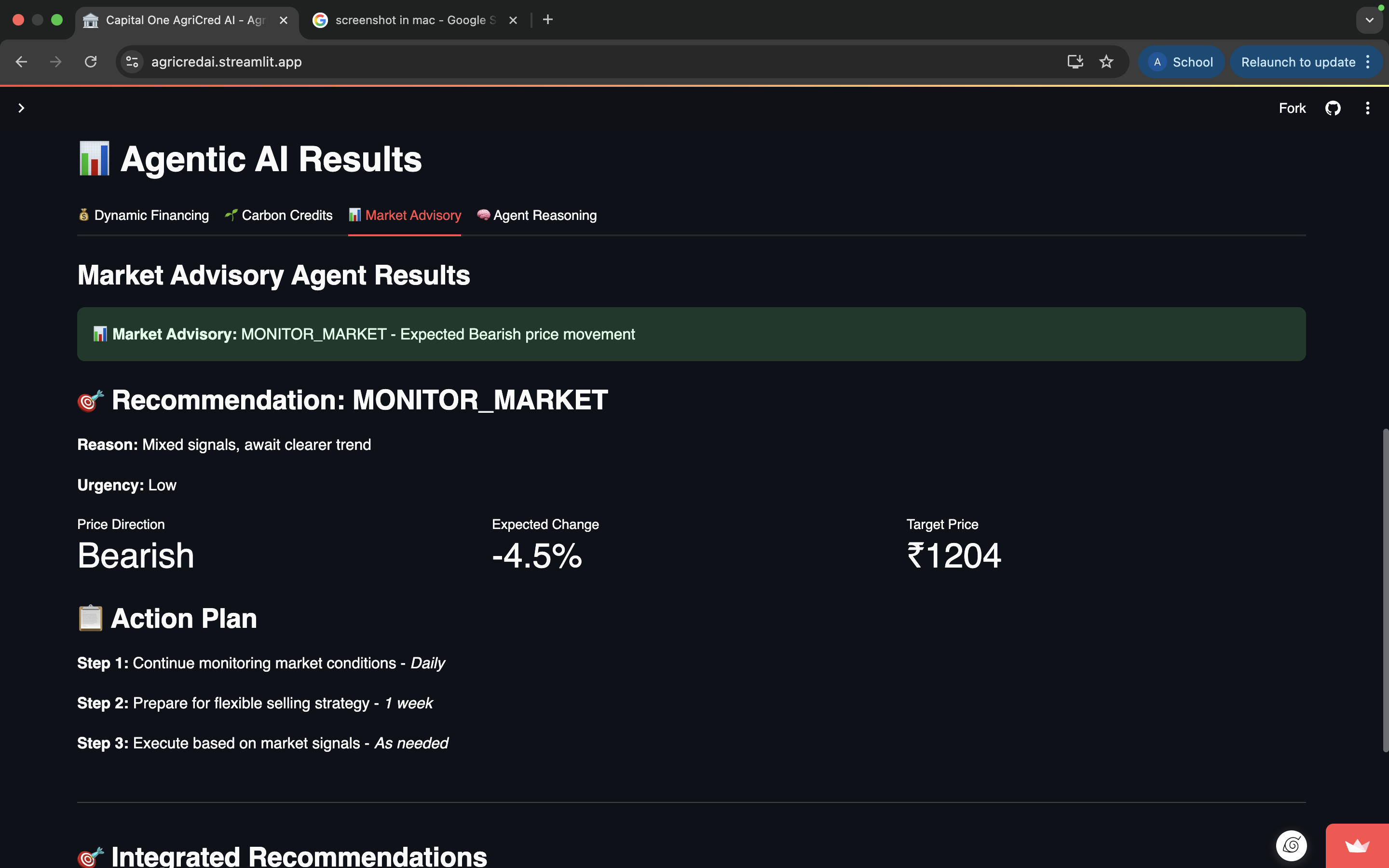
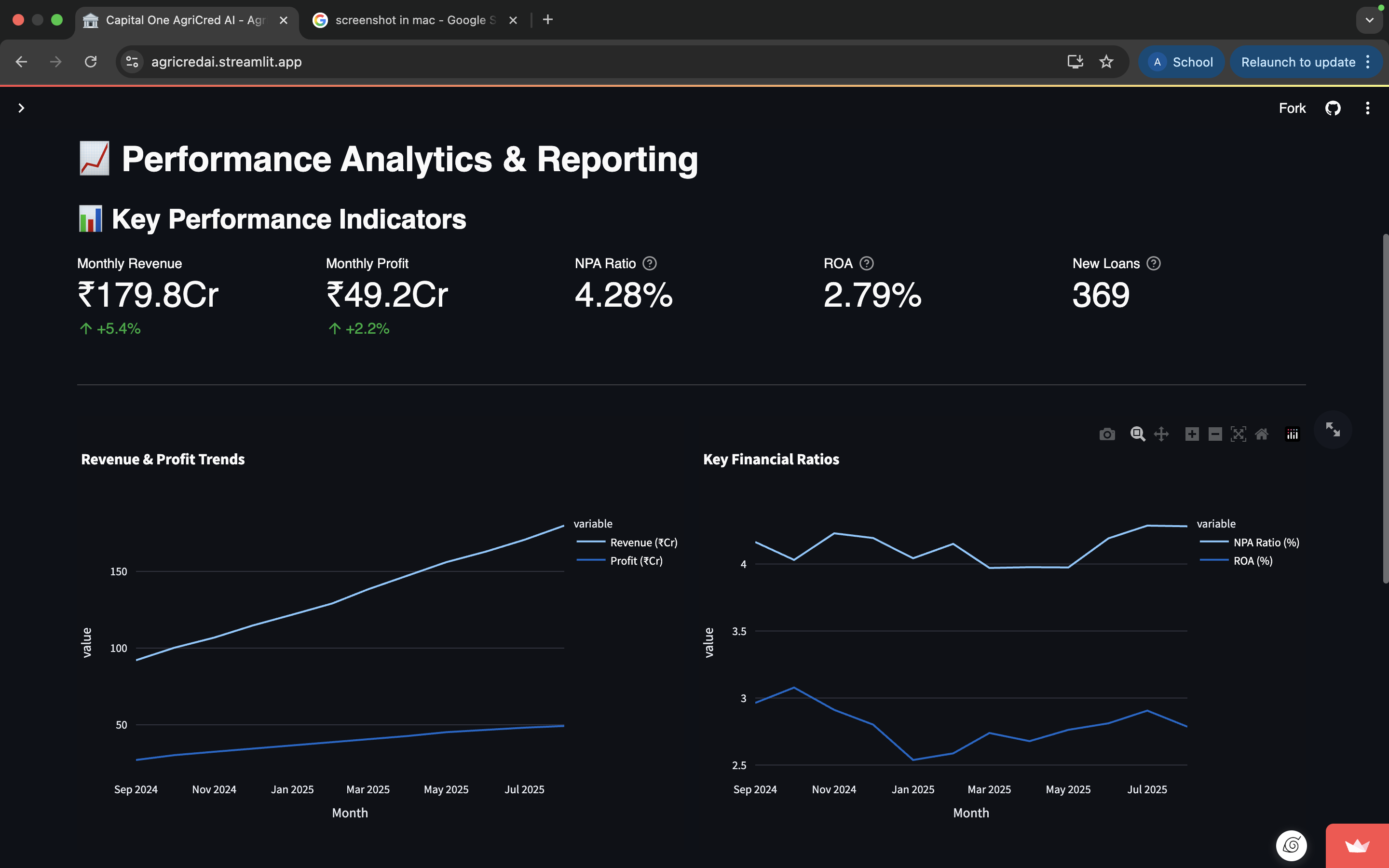
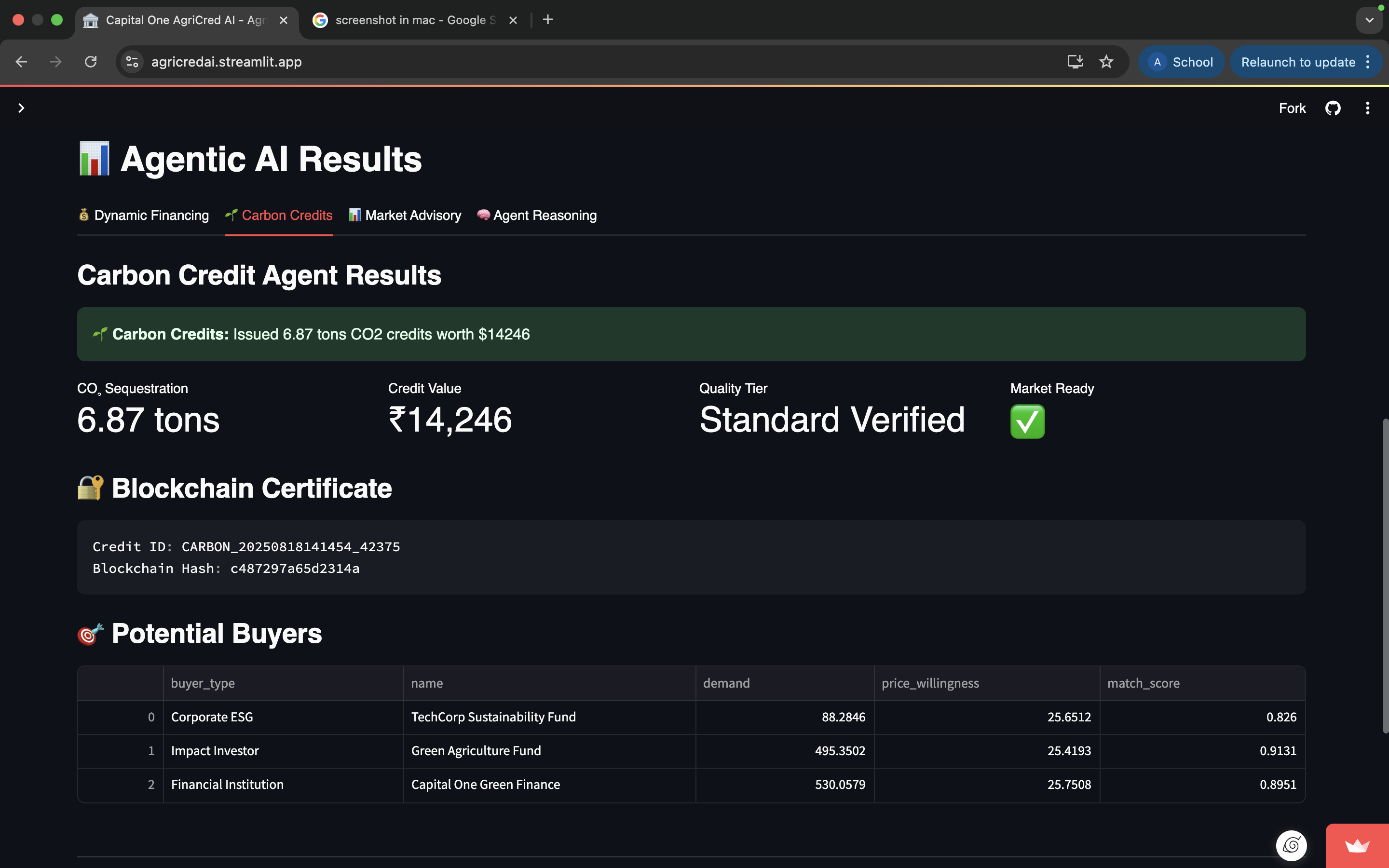
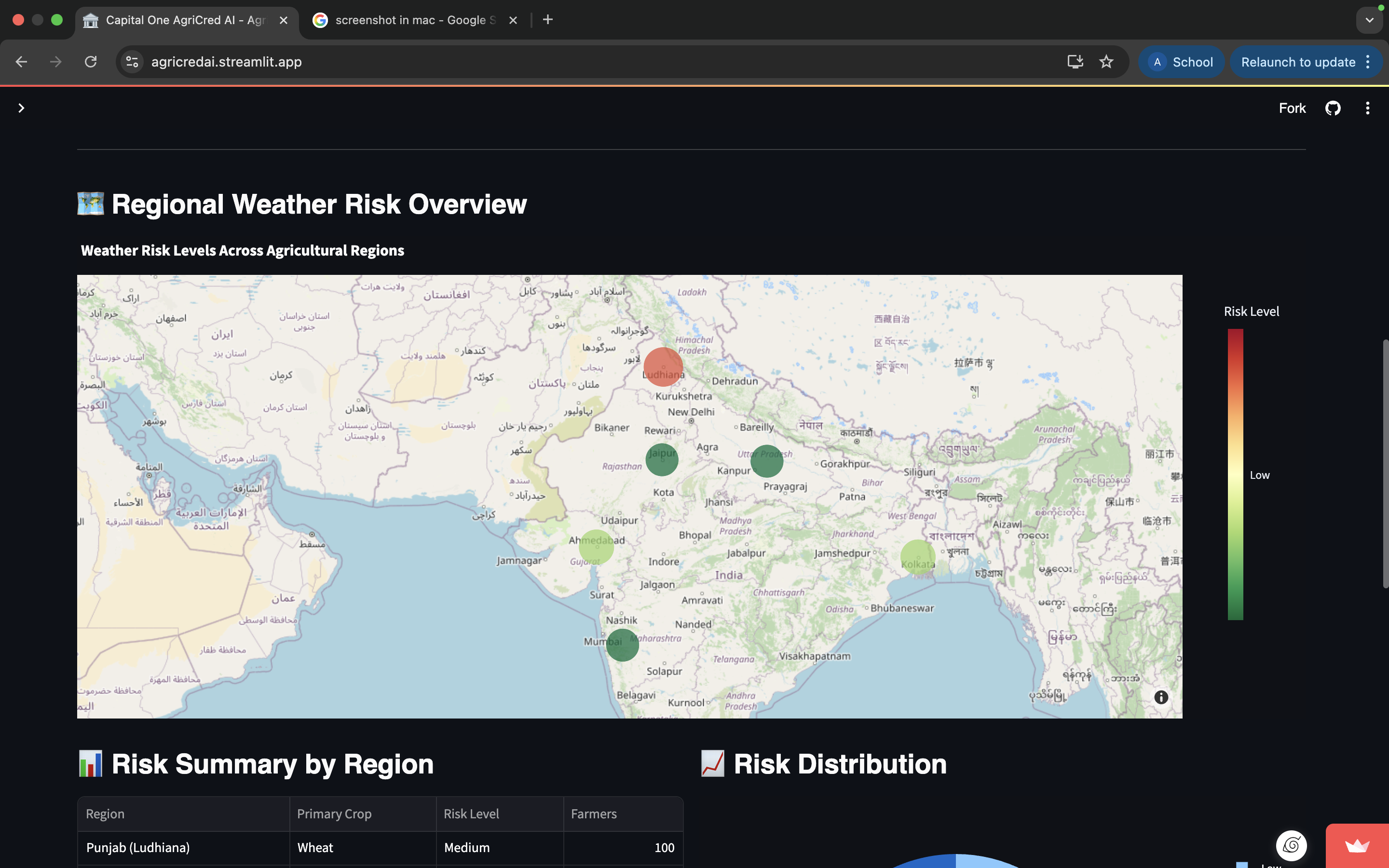
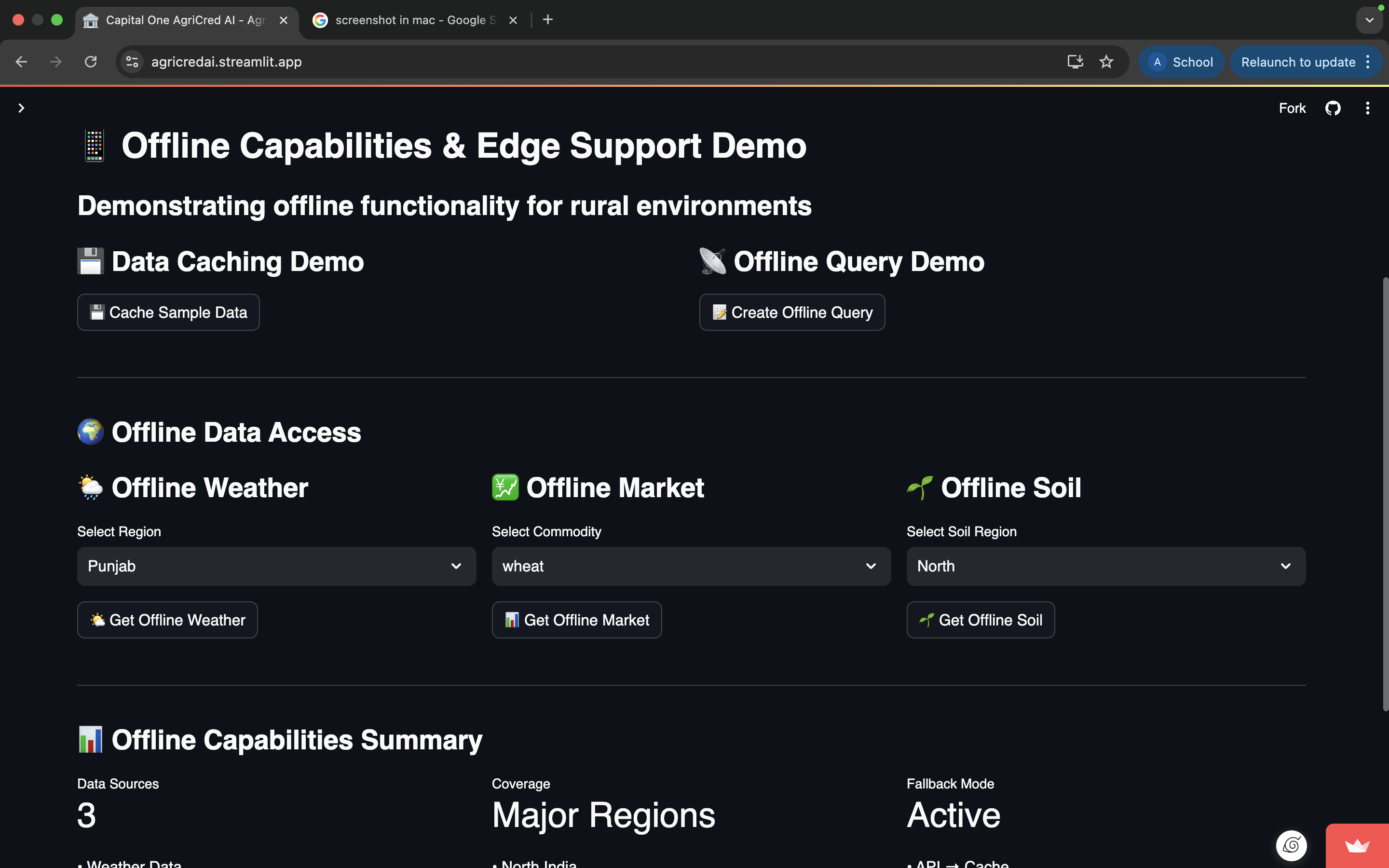
- Built with Streamlit, providing an interactive, real-time credit risk dashboard.
- Designed modular code for easy scaling to APIs and external integrations.
- Integrated multilingual support for wider accessibility.
- Built with Streamlit, providing an interactive, real-time credit risk dashboard.
Challenges Faced
- Data scarcity: Real agricultural loan data is sensitive and not easily available. I overcame this by generating synthetic datasets aligned with domain assumptions.
- Cloud deployment restrictions: Faced issues with read-only databases and API calls in hosted environments. Designed fallbacks and modular API layers to handle it.
- Balancing explainability with accuracy: Many AI models are “black boxes.” I worked on incorporating interpretability so lenders and policymakers can trust the system.
- Time constraints: Designing both frontend + AI pipeline in a short hackathon timeframe was intense, but it gave me end-to-end exposure.
Architecture
The system follows a three-layer design:
- Data Layer → External APIs, simulation engine, and preprocessing.
- AI Layer → Risk scoring models, explainability engines.
- Interface Layer → Streamlit dashboards for visualization and decision-making.
🚀 AgriCredAI is a step towards democratizing agricultural credit using AI and fintech innovation.
Built With
- fastapi
- machine-learning
- python
- sqlite
- streamlit
- xgboost

Log in or sign up for Devpost to join the conversation.