Inspiration
We are inspired by the opportunity to leverage technology and innovation to address pressing global challenges outlined by the United Nations Sustainable Development Goals (UN SDGs). The Global NGO Executive Committee (GNEC) and its vast network of subsidiaries have provided a platform for passionate engineers, technologists, and programmers to collaborate and make a tangible impact on the world.
VisionPay aims to address the significant accessibility barriers faced by visually impaired individuals in accessing digital payment services in India. The problem at hand is twofold: Limited Accessibility: Existing digital payment solutions often lack adequate accessibility features, such as complex QR code scans or small font sizes, making it challenging for visually impaired users to independently conduct transactions. Exclusion from the Digital Economy: The lack of accessible payment options excludes visually impaired individuals from fully participating in the digital economy, limiting their ability to make purchases, pay bills, and engage in financial transactions independently.
What it does
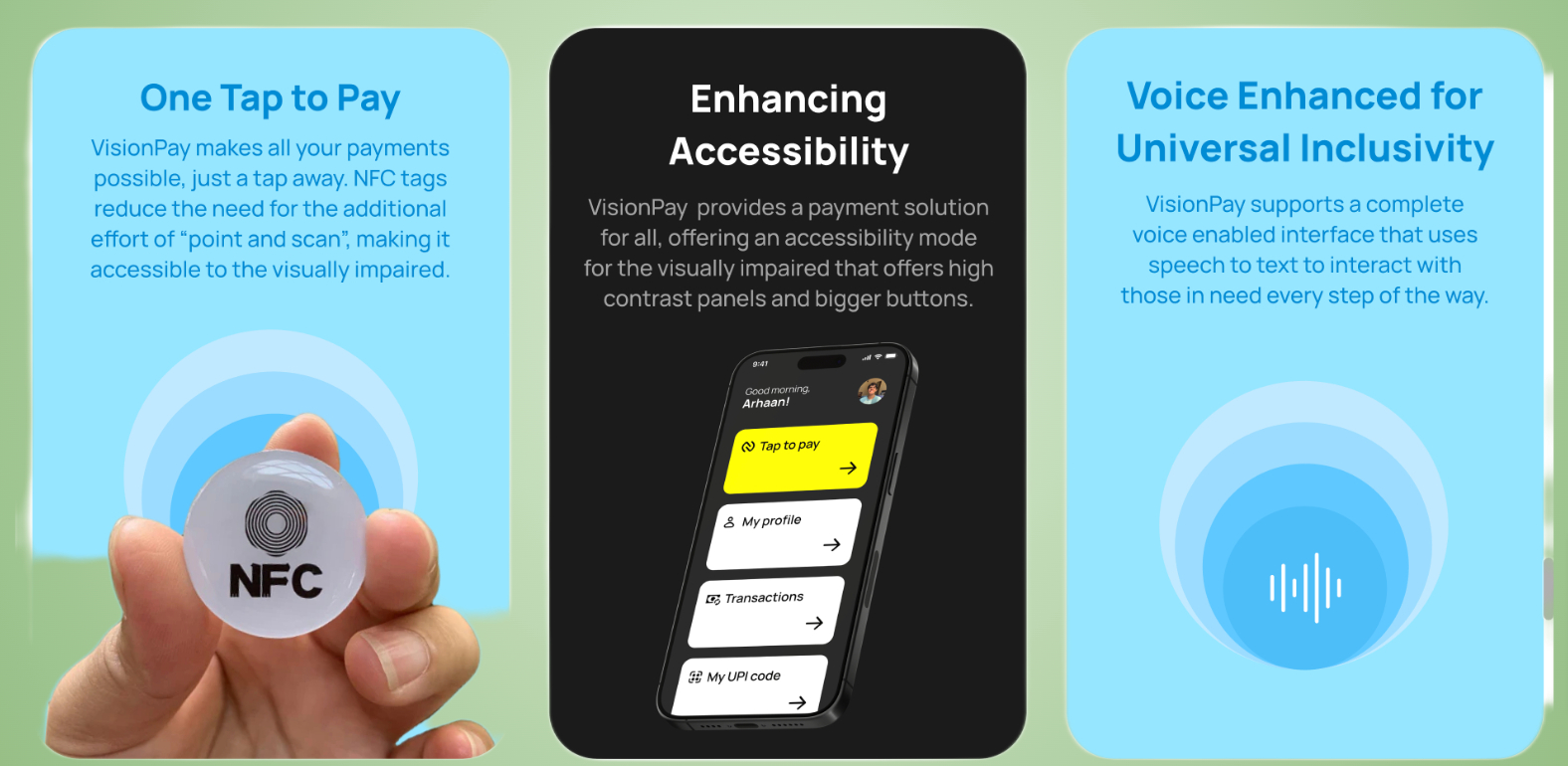
VisionPay is a revolutionary solution aimed at promoting financial inclusion and accessibility for individuals with disabilities, aligning with the UN SDGs related to poverty eradication, economic empowerment, and inclusive societies. By leveraging NFC technology and advanced accessibility features, VisionPay enables blind, visually impaired, and individuals with fine motor skill challenges to conduct seamless digital transactions independently.
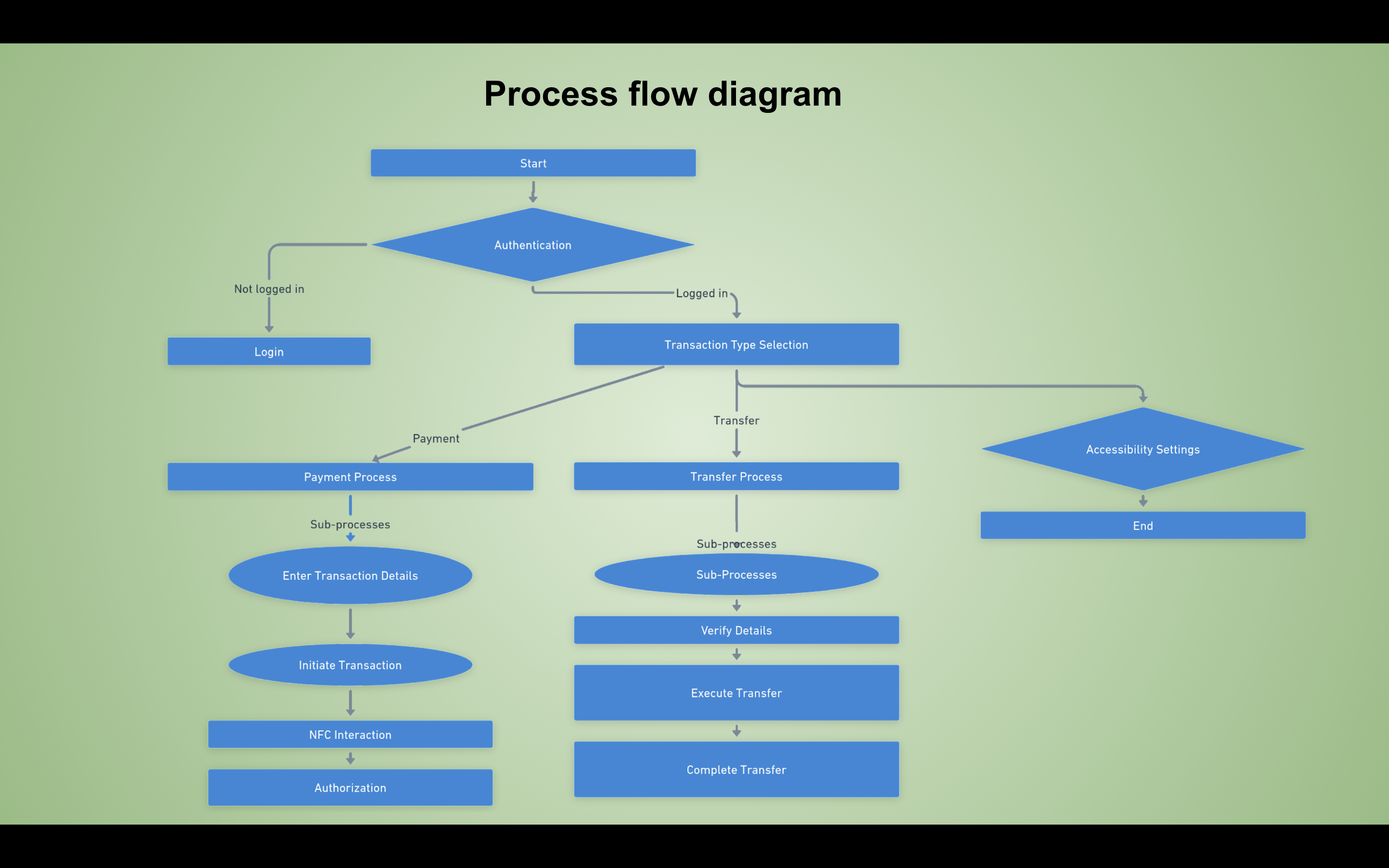
VisionPay: Revolutionizing UPI Payments with Accessibility VisionPay reimagines UPI payments in India, addressing the accessibility gap faced by visually impaired users. Our solution leverages NFC technology and inclusive design principles to create a seamless and empowering payment experience for all. Here's how VisionPay works:
- Tap-to Pay Simplicity: Users simply tap their phone against an NFC tag to initiate a payment. This eliminates the need for QR code scanning, which can be challenging for individuals with visual impairments.
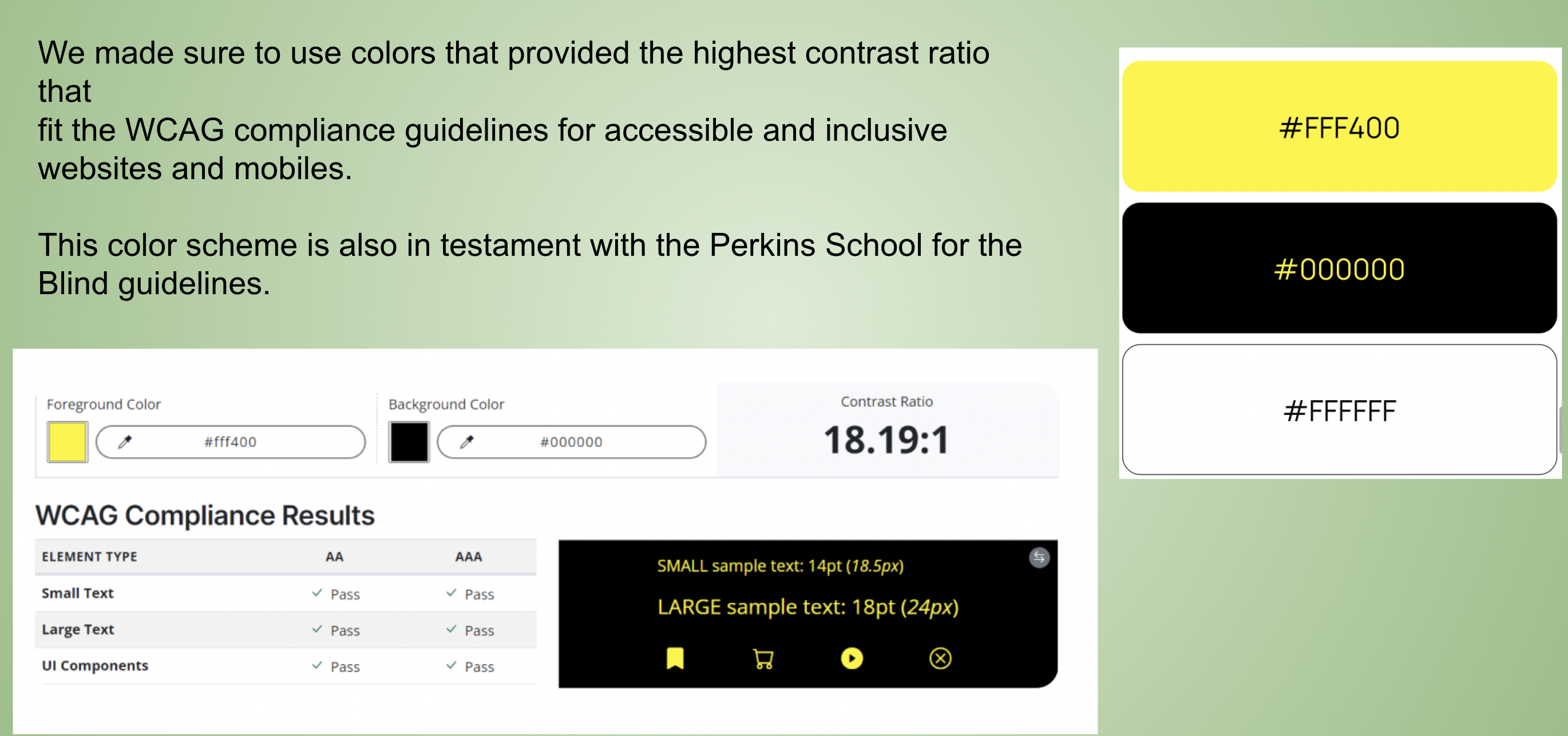
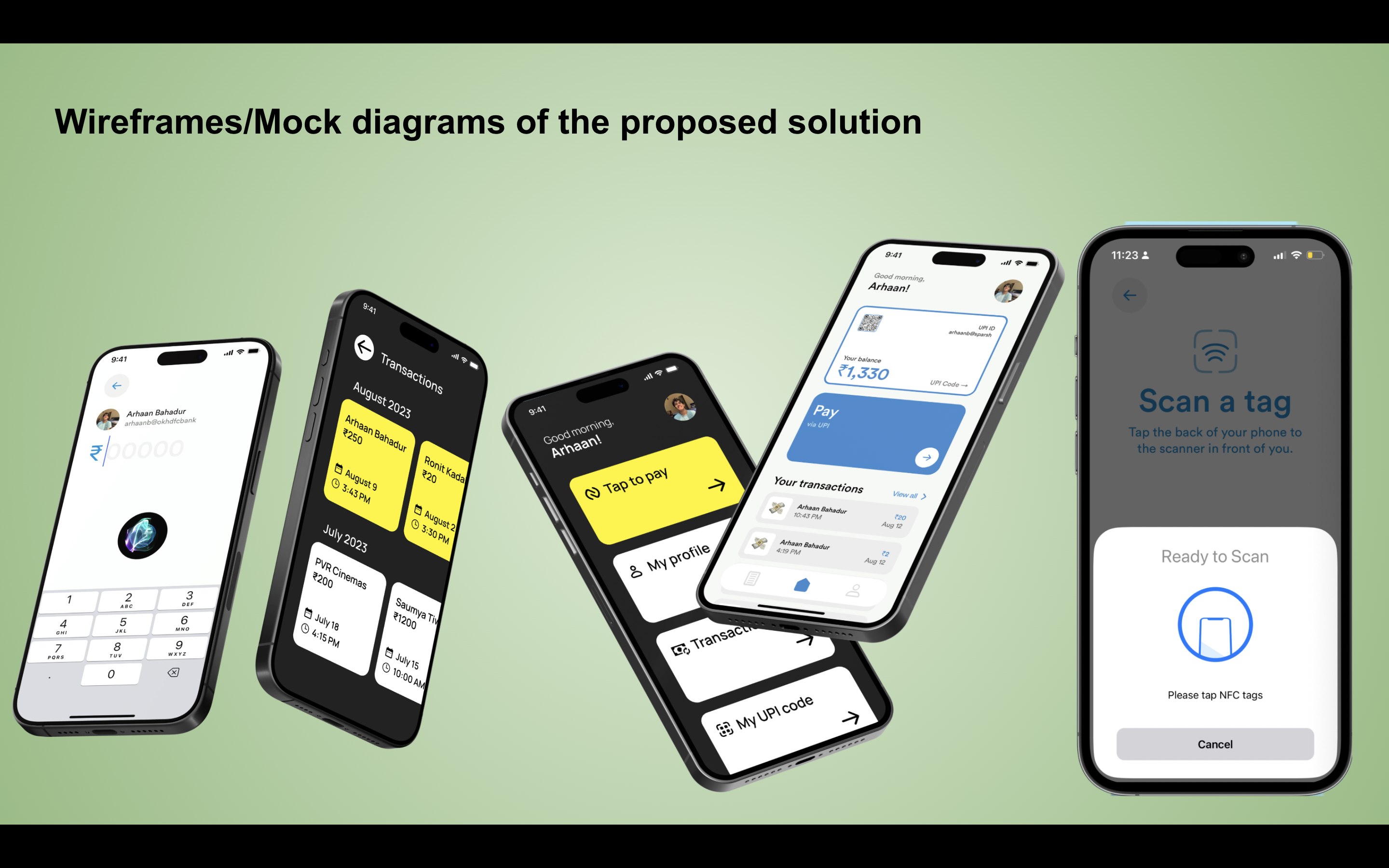
- Accessibility-First Design: VisionPay offers a range of features to cater to diverse needs: Voice-Assisted Interface: Users can navigate the app and complete transactions entirely through voice commands. Haptic Feedback: Subtle vibrations provide confirmation and guidance during interactions, enhancing the experience for users with limited vision. Customizable Interface: Options for larger text size, high contrast displays, and color schemes ensure optimal visibility and ease of use.
- Seamless Onboarding and Transactions: The onboarding process is straightforward and accessible, with options to enable accessibility features from the start. Users can make payments for pre-generated bills or manually enter amounts through voice or keypad input. A transaction history provides easy tracking and budgeting.
- Security and Compatibility: VisionPay prioritizes security with robust measures to protect user data and ensure secure transactions. The app is available on both iOS and Android platforms for wider accessibility. VisionPay goes beyond simply offering an alternative payment method. It's about empowerment, independence, and inclusion. By removing barriers and providing a user-friendly experience, VisionPay allows visually impaired individuals to participate fully in the digital economy and manage their finances with confidence.
How we built it
Technologies to be used in the solution The technology stack utilized in VisionPay includes: Frontend Development: React Native: For cross-platform mobile application development. Expo: For streamlining the development process and accessing native device features. Backend Development: Node.js: For building scalable and efficient server-side applications. Express: As a lightweight web application framework for Node.js. Integration: NFC Technology: Utilized for secure storage of user information and facilitating tap-to-pay transactions. Voice Recognition Libraries: Integrated to enable intuitive voice commands for navigation and interaction within the app. Text-to-Speech Functionality: Implemented to provide auditory feedback and enhance accessibility for visually impaired users. This technology stack enables VisionPay to deliver a seamless, accessible, and feature-rich mobile application experience for visually impaired users in India.
Challenges we ran into
One of the main challenges is integrating NFC technology into the app, as it required a deep understanding of hardware interactions and security protocols. Additionally, ensuring compatibility with a wide range of devices and operating systems poses a significant technical hurdle. However, through collaboration and perseverance, we can overcome these challenges and deliver a robust and user-friendly solution.
Impact Goals
Our primary goal with VisionPay is to promote financial inclusion and empowerment for individuals with disabilities, thereby contributing to the achievement of several UN SDGs, including Goal 1 (No Poverty), Goal 8 (Decent Work and Economic Growth), and Goal 10 (Reduced Inequalities). By enabling independent access to digital financial services, VisionPay aims to break down barriers and create a more inclusive and equitable society.
Impacting Lives and Transforming Payments : VisionPay’s impact extends beyond convenient transactions, creating a ripple effect of positive change for individuals and society: Empowerment and Independence: Visually Impaired Users: VisionPay empowers visually impaired individuals to take control of their finances, fostering independence and self-reliance. Increased Participation: The app removes barriers to entry, enabling visually impaired users to participate actively in the digital economy and access essential services. Social and Economic Inclusion: Bridging the Gap: VisionPay addresses the accessibility gap in the current UPI payment landscape, promoting financial inclusion for millions of visually impaired individuals. Market Expansion: By catering to an underserved segment, VisionPay expands the reach of digital payments, contributing to economic growth. Technological Advancement: NFC Adoption: VisionPay promotes the adoption of NFC technology in India, paving the way for future advancements in contactless payments and other applications. Accessibility Innovation: The app serves as a model for inclusive design and inspires further innovation in accessible technology solutions. Overall, VisionPay has the potential to create a more equitable and inclusive society where everyone can participate fully in the digital economy, regardless of their abilities.
Accomplishments that we're proud of
We are proud of the inclusive design principles that underpin VisionPay, as well as our successful integration of advanced accessibility features such as voice recognition and customizable UI settings. Additionally, our team's ability to navigate complex technical challenges and deliver a solution that meets the needs of our target users is a testament to our commitment to excellence and innovation.
What we learned
Throughout the development process, we gained valuable insights into the importance of inclusive design and the potential impact of technology on promoting social inclusion. We also learned the importance of collaboration and user feedback in creating solutions that truly meet the needs of diverse populations. Moving forward, we are committed to continuing our efforts to drive positive change and empower individuals with disabilities through technology.
What's next for VisionPay
In the future, we envision expanding the reach of VisionPay to new markets and scaling our impact globally. We plan to collaborate with financial institutions, technology partners, and advocacy organizations to further enhance the accessibility and functionality of VisionPay. Additionally, we aim to continue iterating and improving the app based on user feedback and emerging technological advancements, ensuring that VisionPay remains at the forefront of inclusive finance solutions.

Log in or sign up for Devpost to join the conversation.