-
-
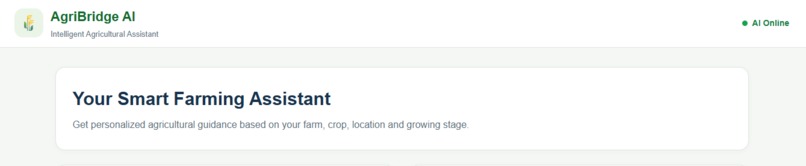
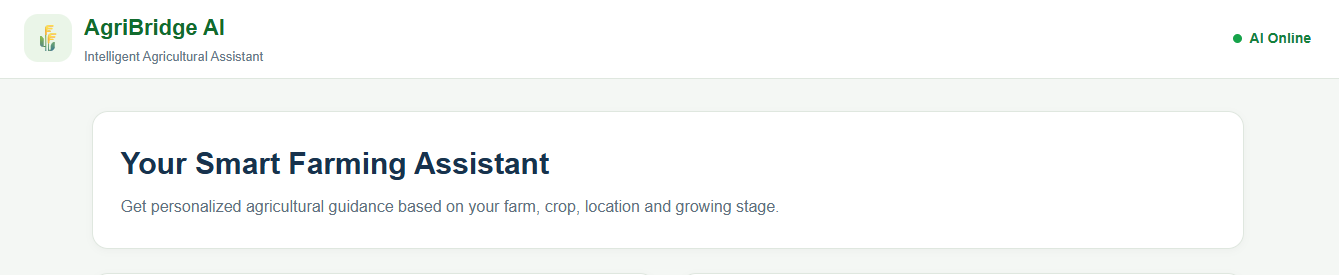
The main interface of AgriBridge AI
-
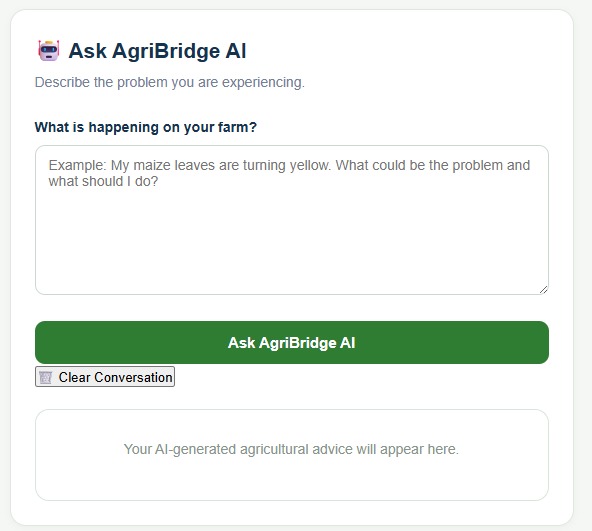
Farmers describe their farm problems and receive personalized AI-powered agricultural guidance.
-
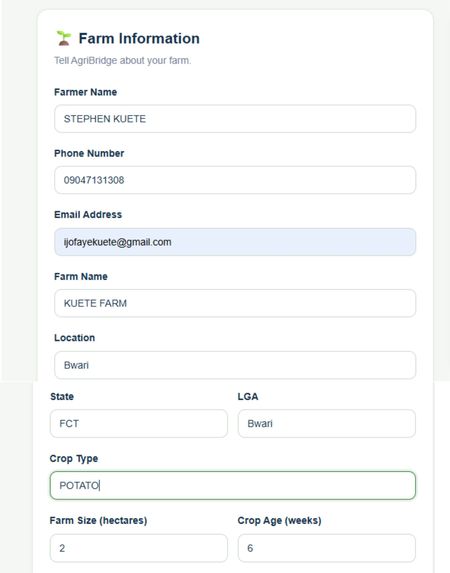
Farmers describe their farm problems and receive personalized AI-powered agricultural guidance.
-
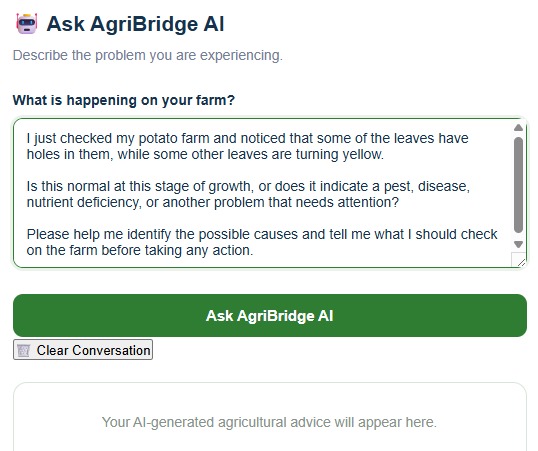
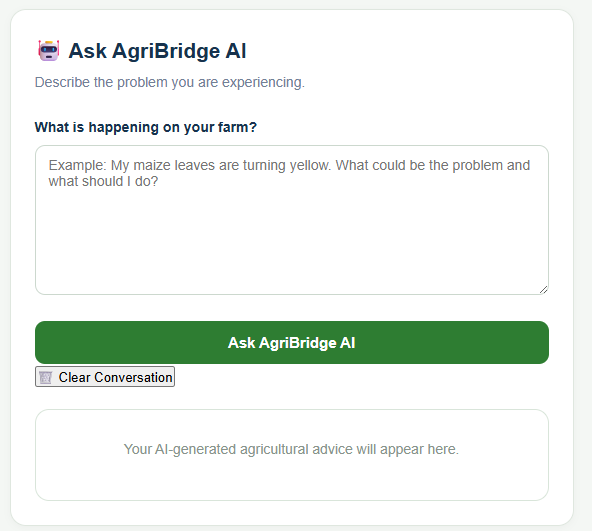
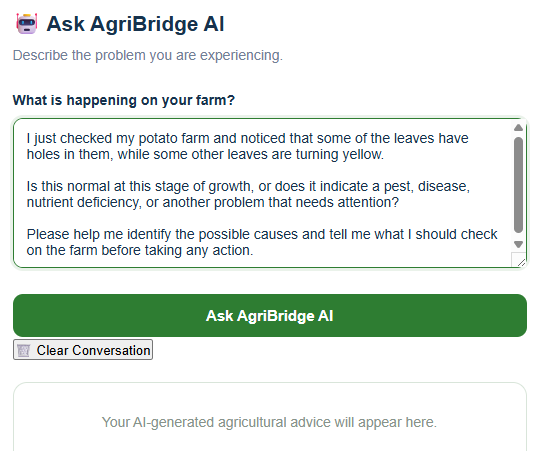
A farmer describes potato leaf damage and asks AgriBridge AI to identify possible causes and recommended checks.
-
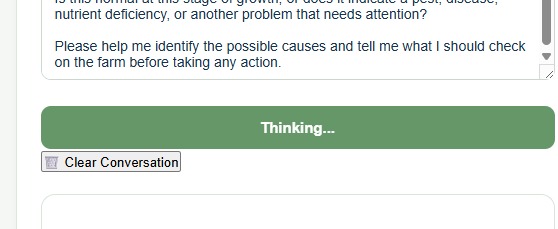
AgriBridge AI analyzes the farmer's question before generating a response.
-
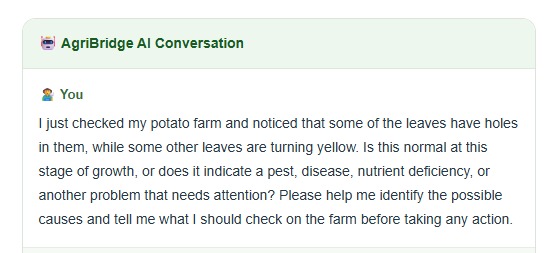
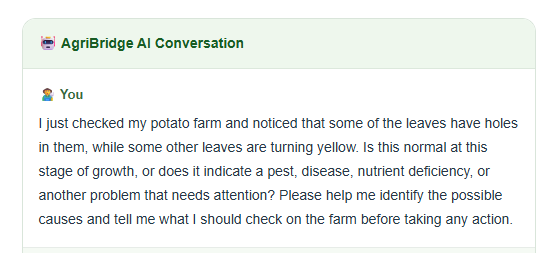
The conversation view records the farmer's question and prepares the context for AI-powered agricultural guidance.
-
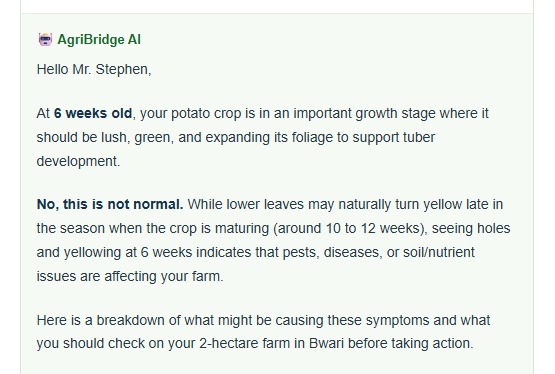
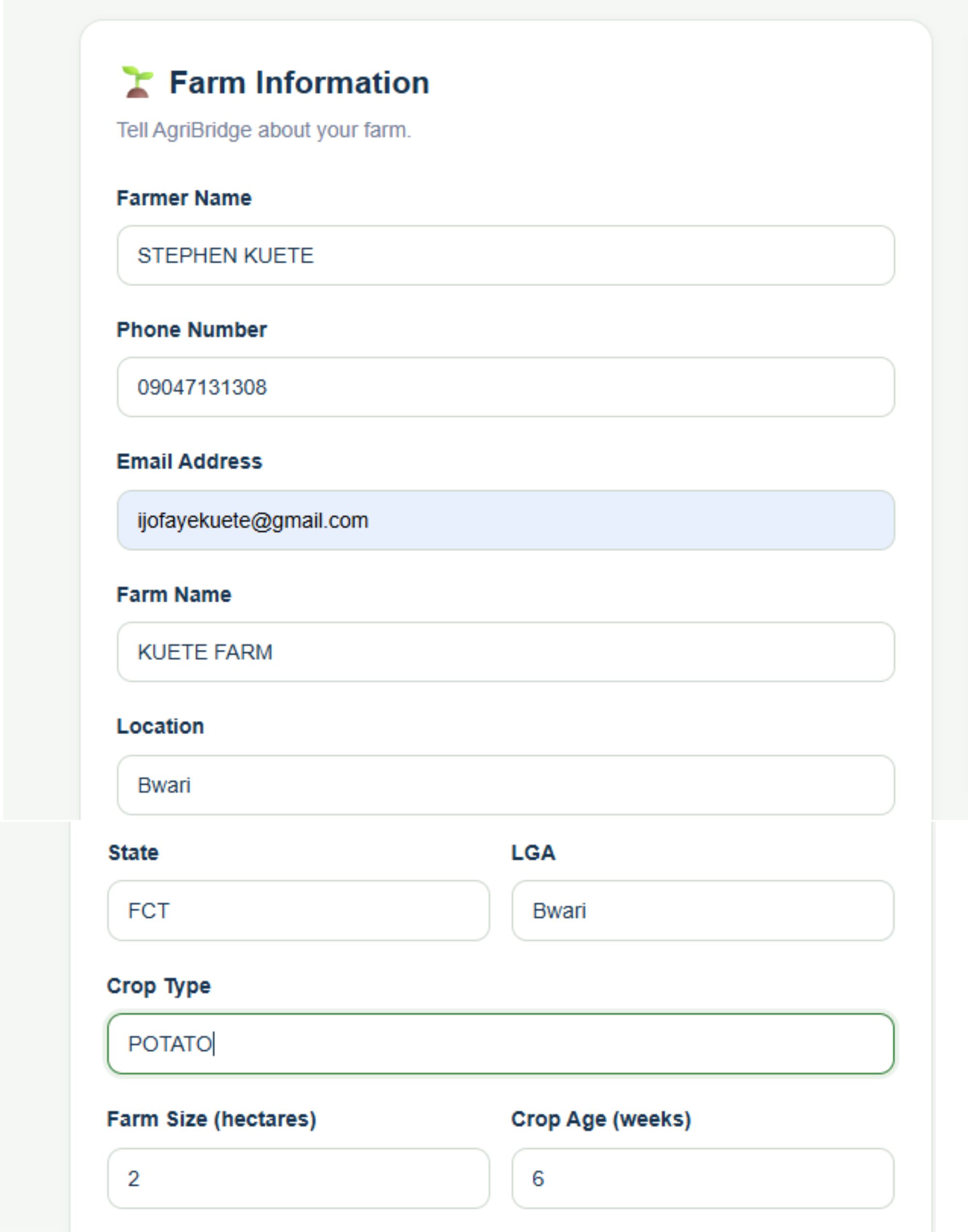
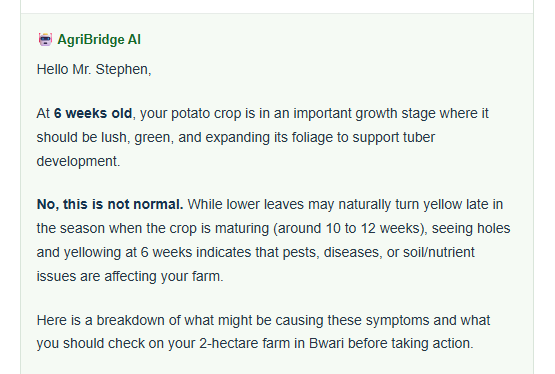
AgriBridge AI analyzes the farmer's crop age, location, farm size, and symptoms to identify likely causes and guide the next steps.
-
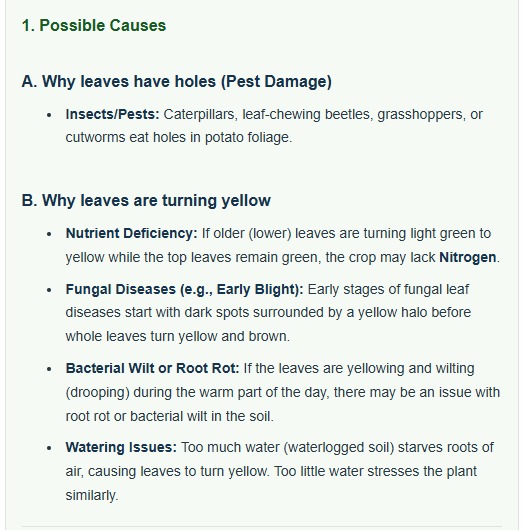
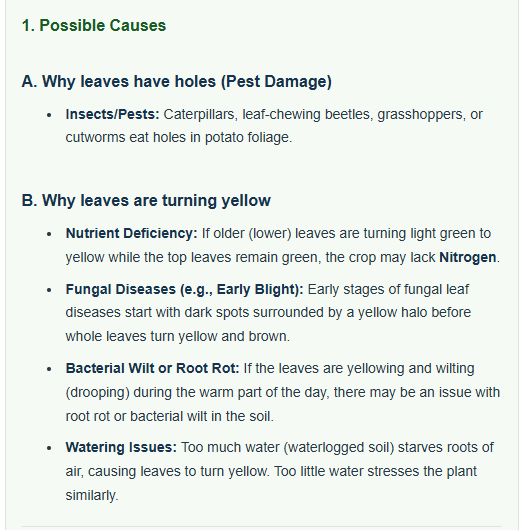
AgriBridge AI identifies possible pest, nutrient, disease, and water-related causes of the crop symptoms.
-
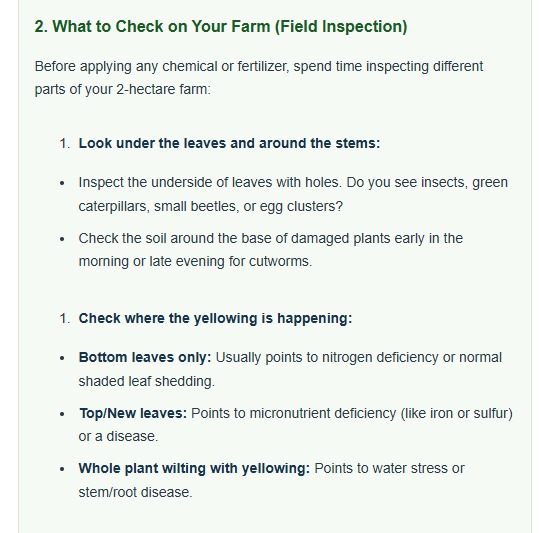
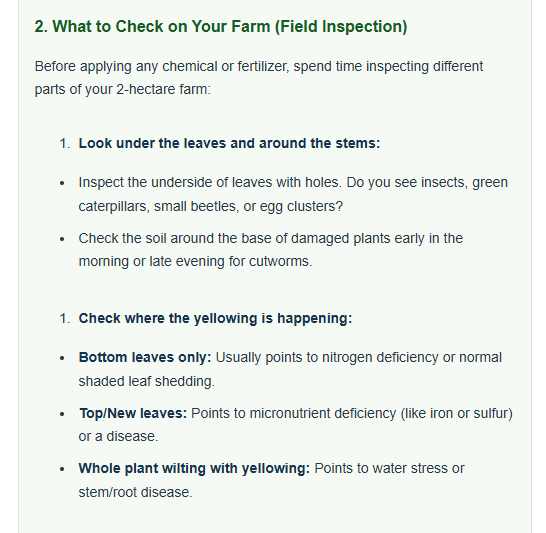
AgriBridge AI guides farmers through practical field checks to identify pests, nutrient deficiencies, diseases, and water stress.
-
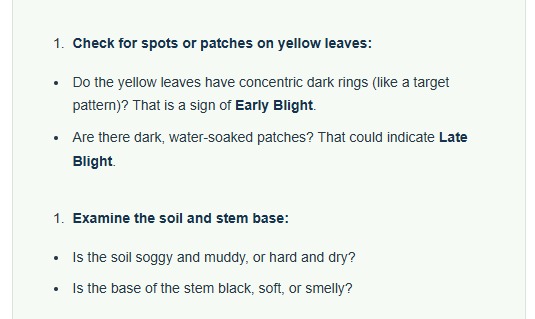
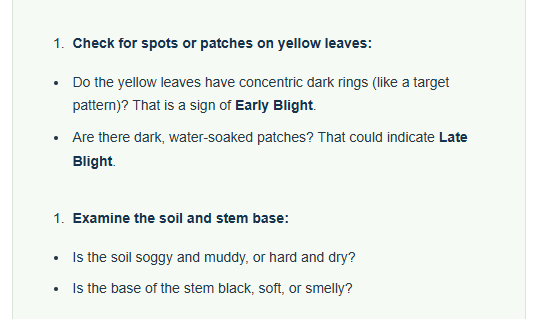
AgriBridge AI guides farmers to inspect leaf symptoms, soil conditions, and stem health to help identify possible crop diseases and root.
-
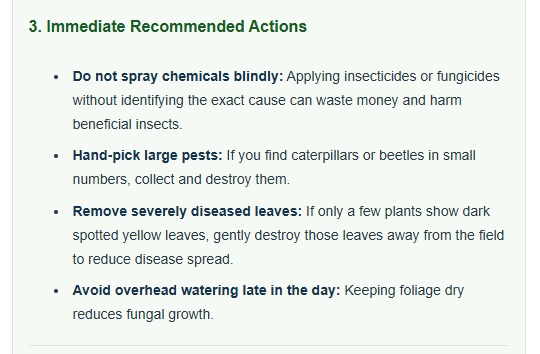
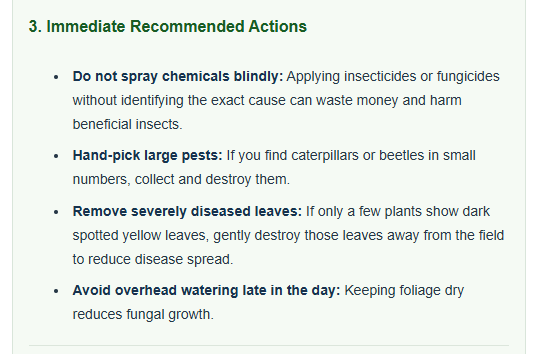
AgriBridge AI provides practical, responsible steps farmers can take before applying chemicals or treatments.
-
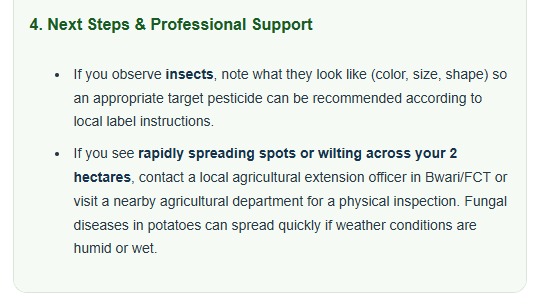
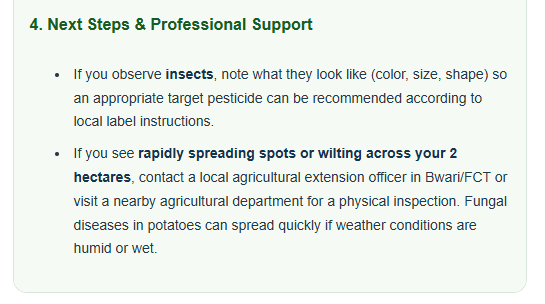
AgriBridge AI provides clear next steps and professional agricultural support when a problem requires on-site inspection intervention.
-
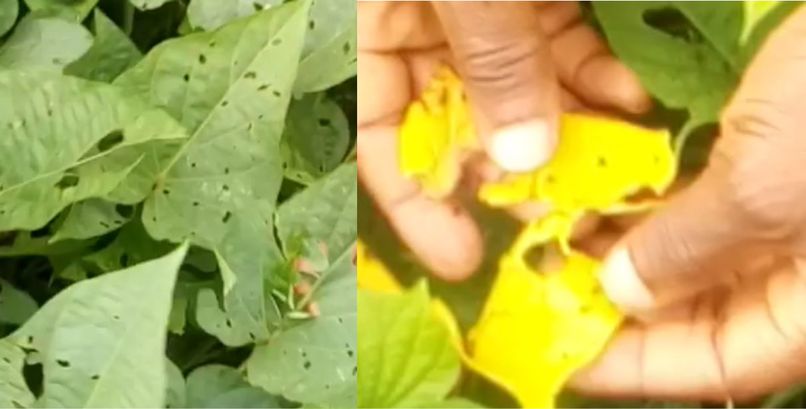
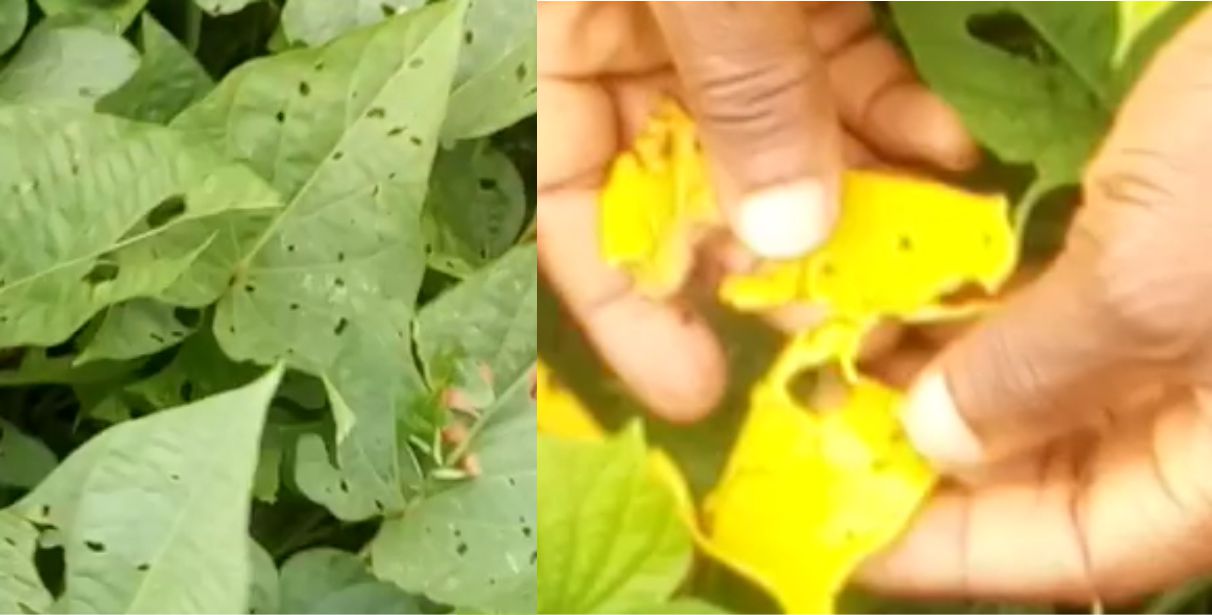
Close-up crop symptoms showing yellowing and leaf damage that can be investigated using AgriBridge AI.
-

Me, creator of AgriBridge AI, documenting real farm conditions and visible crop symptoms to help farmers assess.
-

AgriBridge AI is powered by Google Gemini to deliver intelligent, personalized agricultural guidance to farmers.


Inspiration
Agriculture is the livelihood of millions of people across Africa, yet many smallholder farmers do not have timely access to agricultural extension officers, agronomists, or reliable farming information. When a farmer notices yellowing leaves, pest damage, poor growth, or other problems, waiting for professional assistance can mean losing valuable time and reducing crop yields.
I was inspired to build AgriBridge AI to help close this gap by putting practical agricultural guidance within reach of farmers through an AI-poired assistant.
The idea was simple: instead of giving farmers generic information, AgriBridge should understand the farmer's actual situation, including their crop, location, farm size, crop age, and the problem they are experiencing, and use that context to provide more relevant guidance.
What it does
AgriBridge AI is an intelligent agricultural assistant designed to provide personalized farming guidance.
Farmers can enter information about their farm, including:
- Farmer name
- Farm name
- Location
- State and LGA
- Crop type
- Farm size
- Crop age
The application creates a Farm Snapshot from this information and allows the farmer to describe a problem they are experiencing.
AgriBridge AI then uses Google Gemini to analyze the farmer's question together with the farm context and generate practical agricultural guidance.
For example, a farmer can report that rice leaves are turning yellow after heavy rainfall. Instead of simply explaining what yellow leaves can mean, AgriBridge can consider the crop, growth stage, farm size, location, and reported conditions to discuss possible causes, field checks, practical actions, monitoring, and when professional assistance may be required.
The goal is not to replace agricultural professionals, but to provide farmers with an accessible first layer of decision support.
How we built it
I built AgriBridge AI as a ib-based application with a frontend, backend, database, and AI layer.
The frontend was developed using HTML, CSS, and JavaScript. It provides the farm information interface, Farm Snapshot, AI question interface, conversation display, loading states, and error handling.
The backend was built with Python and FastAPI. The backend receives the farmer's farm information and question, processes the request, and connects the application to Google's Gemini AI.
PostgreSQL was used for structured farm-related data, with pgAdmin used during development and database management.
Google Gemini provides the core generative AI capability. The application sends the farmer's question together with relevant farm context so that the AI can generate a response tailored to the farmer's situation.
The application was developed and tested locally before being deployed online. The project source code is maintained in GitHub, and the deployed application runs through our production backend.
Challenges we ran into
One of our biggest challenges was connecting all the components into one reliable system.
I had to work through issues involving the FastAPI backend, frontend-to-backend communication, database structure, environment variables, API authentication, and deployment.
I also encountered validation and server errors while testing requests betien the frontend and backend. Debugging these issues helped me understand how data needs to move correctly from the farmer's form, through the backend, into the AI service, and back to the user interface.
Another challenge was making the AI responses useful rather than simply producing generic agricultural information. I addressed this by providing the model with structured farm context such as crop type, crop age, farm size, and location alongside the farmer's question.
I also spent time improving the presentation of AI responses so that farmers can more easily read recommendations, numbered steps, headings, and practical actions.
Accomplishments that we're proud of
I are proud that i transformed the original idea into a functioning AI-poired agricultural application that can be accessed through the ib.
Some of our key accomplishments include:
- Building a complete agricultural AI assistant from the frontend to the backend.
- Integrating Google Gemini into the deployed application.
- Connecting the frontend to a FastAPI backend.
- Integrating PostgreSQL for structured farm information.
- Creating a Farm Snapshot that summarizes the farmer's current farming context.
- Implementing conversational interaction betien the farmer and AgriBridge AI.
- Generating responses that take the farmer's crop, location, farm size, and crop age into consideration.
- Deploying the application so that it can be demonstrated as a working product rather than only a prototype running locally.
One of the most rewarding moments during development was asking AgriBridge about a real rice farming scenario involving heavy rainfall and waterlogging. The system used the farmer's information and produced a structured response covering possible causes, field diagnosis, practical steps, monitoring, and when to seek professional assistance.
What we learned
Building AgriBridge AI taught me that creating a useful AI application involves much more than connecting an application to an AI model.
I learned how important structured user context is when building AI-poired solutions. The quality and relevance of an AI response can improve significantly when the model receives meaningful information about the user's actual situation.
I also learned about backend API development, database integration, environment variables, API security, frontend and backend communication, deployment, debugging, and production testing.
Most importantly, i learned that AI solutions should be designed around real human problems. The technology is valuable because it can help make useful knowledge more accessible, not simply because it can generate text.
What's next for AgriBridge AI
The current version of AgriBridge AI is only the beginning. My long-term vision is to develop it into a complete digital agricultural platform that connects farmers not only to knowledge and expert guidance, but also to the market.
The next stage is to build a system where farmers can manage important aspects of their farming activities and connect directly with buyers from their farms.
Future versions could include:
A digital marketplace where farmers can list their crops and available produce. Direct connections between farmers, buyers, wholesalers, processors, and retailers. Real-time information on market demand and crop prices. Farmers being able to indicate the quantity and expected harvest date of their produce. AI-powered recommendations on what crops to produce based on market demand and local conditions. Digital farm records that help farmers track production, expenses, harvests, and sales. Connections to agricultural input suppliers for seeds, fertilizers, equipment, and other farm needs. Logistics and delivery coordination to help move produce from farms to buyers. Digital payment and transaction support. AI assistance to help farmers make better production, pricing, and marketing decisions. Support for local languages and voice interaction to make the platform accessible to more farmers.
My long-term vision is for AgriBridge AI to become a digital bridge between the farm and the market — helping farmers move from simply producing crops to having better access to information, buyers, markets, and economic opportunities.
Ultimately, I want a farmer to be able to use AgriBridge AI from the farm, understand what to grow, how to grow it, when to harvest it, who needs it, and how to get it to the market.
Built With
- api
- css
- fastapi
- gemini
- github
- html
- javascript
- postgresql
- python
- render

Log in or sign up for Devpost to join the conversation.