-
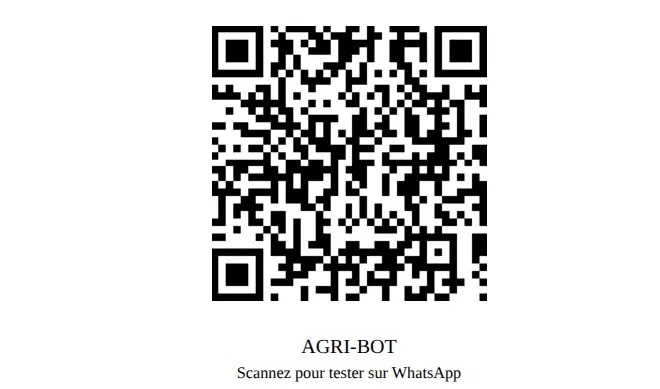
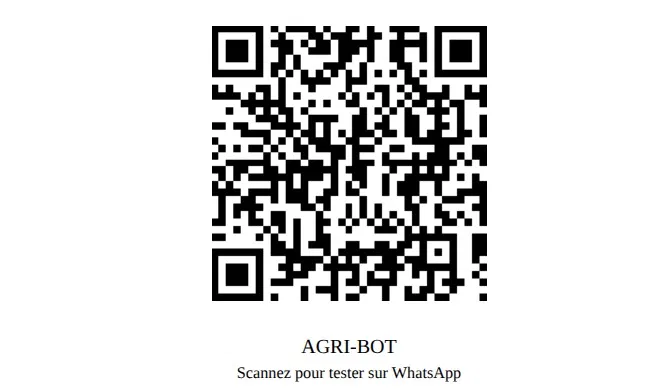
Explore and test our solution.
Inspiration
Agriculture is the backbone of many African economies. In Côte d'Ivoire alone, millions of smallholder farmers depend on their crops as their primary source of income. Yet when a disease appears on a cocoa tree, cassava leaves begin to yellow, or unexpected weather threatens a harvest, most farmers have no immediate access to an agricultural advisor.
Professional agronomists are often too few, too far away, or unavailable when decisions must be made. As a result, farmers rely on guesswork, informal advice, or delayed assistance, increasing the risk of crop losses and lower incomes.
At the same time, one technology is already present in nearly every farming community: WhatsApp.
Instead of asking farmers to download another application, learn a new interface, or purchase expensive digital tools, we asked ourselves a simple question:
What if every farmer could carry an agricultural advisor inside the application they already use every day?
That question became AGRI-BOT.
Our mission is simple:
Every farmer deserves access to expert agricultural guidance, regardless of their location, literacy level, or financial resources.
What it does
AGRI-BOT is an AI-powered agricultural assistant that works entirely through WhatsApp.
Farmers can interact naturally by sending:
- text messages,
- voice notes,
- or photos of their crops.
The assistant understands the request, remembers the conversation, and provides personalized recommendations within seconds.
Its main capabilities include:
- Plant disease identification from photos using multimodal AI.
- Agricultural question answering through natural conversation.
- Automatic voice responses for farmers with limited literacy.
- Local weather information and climate alerts.
- Context memory to remember crops and previous conversations.
- Practical recommendations adapted to the farmer's situation.
Unlike traditional agricultural platforms, AGRI-BOT requires no application installation.
If a farmer already uses WhatsApp, they already know how to use AGRI-BOT.
How we built it
AGRI-BOT was designed as a scalable AI system capable of serving thousands of concurrent WhatsApp conversations.
Our backend is built with Django, which manages authentication, APIs, business logic, and conversation workflows.
Time-consuming AI tasks are processed asynchronously using Celery with Redis, ensuring that users receive immediate feedback while image analysis, speech processing, and language generation happen in the background.
The AI pipeline combines several specialized models:
- Groq (Llama 3.3) for fast conversational reasoning.
- Google Gemini Vision for crop image understanding and preliminary disease identification.
- Speech-to-Text for voice transcription.
- Text-to-Speech for spoken responses.
- Weather APIs for localized forecasts and climate alerts.
Conversation history is stored to provide contextual answers instead of isolated responses.
The entire architecture was designed around one principle:
Keep the experience simple for farmers while making the technology sophisticated behind the scenes.
Challenges we ran into
Building AGRI-BOT was much more than integrating AI APIs.
One of our biggest challenges was designing an experience that remains simple for farmers while orchestrating multiple AI services behind the scenes.
Another major challenge was ensuring smooth asynchronous communication through WhatsApp. Image analysis, speech recognition, language generation, and voice synthesis all have different response times. Coordinating these processes without degrading the user experience required careful backend architecture.
We also faced challenges related to agricultural accuracy.
General-purpose AI models can provide useful guidance, but agriculture requires local context. We therefore designed AGRI-BOT to present its analyses as decision-support recommendations rather than definitive diagnoses, while planning to build our own validated agricultural knowledge base with agronomists.
Finally, we focused heavily on accessibility, ensuring that farmers with limited literacy could interact naturally through voice conversations instead of relying exclusively on text.
Accomplishments that we're proud of
We're proud to have transformed a complex collection of AI technologies into a product that feels simple enough for anyone to use.
Today AGRI-BOT can:
- operate entirely through WhatsApp,
- understand text, voice, and images,
- generate spoken responses,
- identify potential crop diseases from photos,
- provide contextual agricultural guidance,
- deliver localized weather information,
- and maintain conversational memory.
Most importantly, we've built a solution designed specifically for farmers rather than adapting a generic chatbot to agriculture.
What we learned
The biggest lesson we learned is that successful AI products are not defined by the sophistication of their models but by how naturally they fit into people's daily lives.
Farmers do not need another mobile application.
They need timely, trustworthy assistance using tools they already know.
We also learned that AI should support human decision-making rather than replace it.
Our goal is not to replace agricultural experts but to make basic agricultural guidance accessible to millions of farmers who currently have no immediate access to professional advice.
Finally, we discovered that building impactful AI products requires spending as much time understanding users as building technology.
What's next for AGRI-BOT
Our vision extends far beyond a WhatsApp chatbot.
Over the coming months, we plan to:
- Support local African languages such as Dioula and Baoulé.
- Build our own agricultural knowledge base with agronomists.
- Train specialized AI models using regional agricultural data.
- Expand weather-based predictive recommendations.
- Partner with agricultural organizations and cooperatives.
- Deploy AGRI-BOT across Côte d'Ivoire before expanding to Benin, Senegal, and the rest of Francophone Africa.
Our long-term ambition is clear:
to make expert agricultural knowledge accessible to every farmer in Africa through AI.

Log in or sign up for Devpost to join the conversation.