-
-
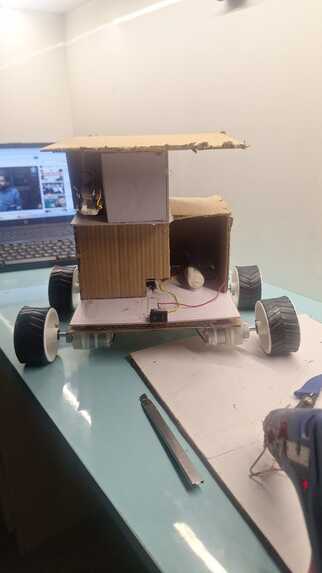
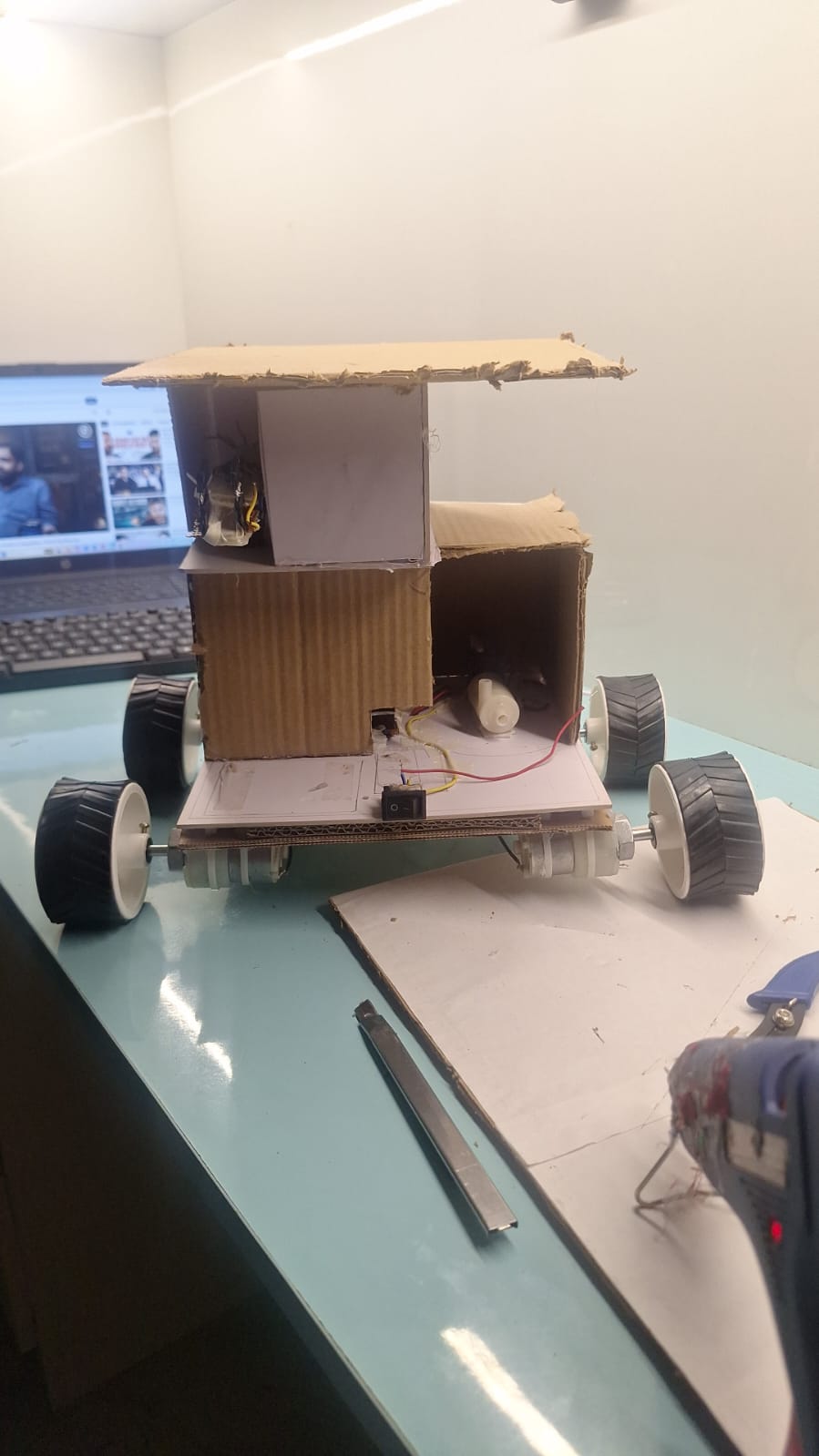
photo of prototype
-
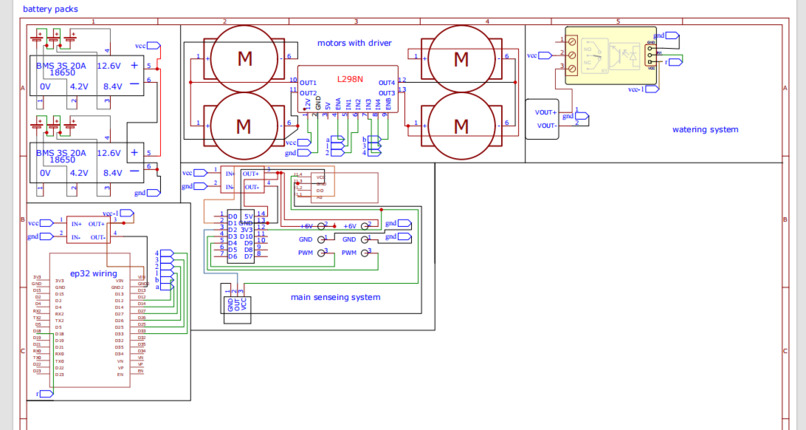
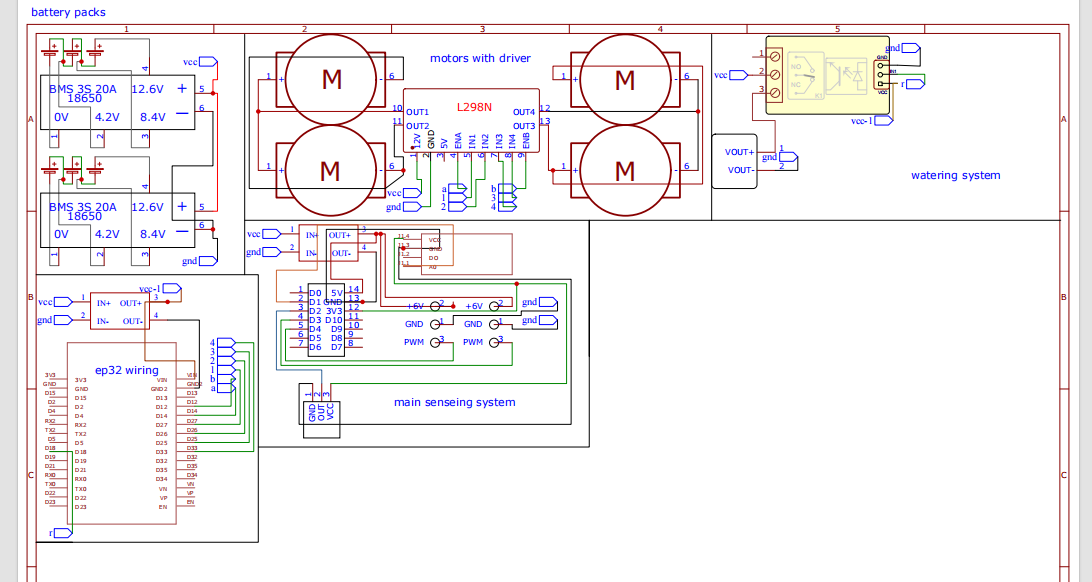
shematic
Inspiration
Smallholder farming is severely constrained by unmonitored resource waste, delayed crop disease identification, and labor-intensive manual field checks. We were inspired to build the Next-Gen AI Agricultural Rover to bring low-cost, real-time edge intelligence directly to small-scale agriculture, automating crop diagnostic feedback loops without requiring expensive industrial machinery or constant cloud connectivity.
What it does
The Agri-Rover is an autonomous, dual-module robotic system that continuously observes, diagnoses, and acts in real-time:
- Sense & Telemetry: Capacitive soil sensors gather live moisture levels while environmental safety sensors monitor for gas, flame, and motion risks.
- See (Edge AI Vision): An onboard camera module powered by the XIAO ESP32S3 Sense executes machine learning vision inferencing locally to detect crop health and disease indicators without cloud latency.
- Act (Targeted Irrigation): When moisture thresholds drop or crop stress is flagged, an integrated pump relay triggers micro-targeted irrigation directly where the plant needs it, saving up to 30% water.
How we built it
- Architecture: Designed a dual-controller layout dividing tasks between high-level vision inferencing and low-level actuation.
- Hardware Stack: Powered by a Seeed Studio XIAO ESP32S3 Sense module (vision/AI) and an ESP8266 controller paired with high-torque MG995 metal-gear servos, motor drivers, and an SSD1306 OLED readout.
- Power Management: Engineered a stable power rail using a 2S 18650 Li-ion battery pack protected by a 2S BMS and regulated through a step-down buck converter to prevent brownouts under high servo loads.
Challenges we faced
- Power & BMS Tripping: High initial current spikes from MG995 metal-gear servos caused voltage drops, tripping the BMS under load. We resolved this by integrating step-down buck voltage regulation and dedicated rail filtering.
- Logic Level Signal Limits: Solved L298N driver compatibility and PWM syntax constraints to ensure smooth motor and servo control from 3.3V logic outputs.
- Edge Optimization: Running vision processing locally on low-power micro-controllers required optimizing model size for smooth on-device execution.
What we learned
- Deepened hands-on expertise in multi-rail power distribution, battery balancing, and protection circuitry for robotics.
- Optimized micro-edge computer vision pipeline integration using ESP-NOW / low-latency microcontroller protocols.
- Mastered modular mechanical and electrical separation for robust field deployment.
What's next for Agri-Rover
- Integrating autonomous pathfinding, GPS waypoint navigation, and long-range LoRa wireless telemetry.
- Conducting pilot test deployments across local automated greenhouses and smallholder farming cooperatives.

Log in or sign up for Devpost to join the conversation.