🌱 Inspiration
Growing up and building tech in Nigeria, I’ve witnessed the untapped potential of rural communities—and the persistent barrier of limited access to timely, life-changing information. My work with platforms like TessyFarm Nexus and MedConnect revealed a hard truth: cloud-based solutions, while powerful, often collapse where they’re needed most—places with little or no internet connectivity.
This hackathon gave me the perfect chance to confront that challenge head-on. The release of the GPT-OSS-20B model was a breakthrough moment. Its local-first architecture and reasoning capabilities unlocked a path to build something that had previously felt out of reach: a fully decentralized, offline AI agent that could serve communities directly, without relying on the cloud.
🛠️ How We Built It
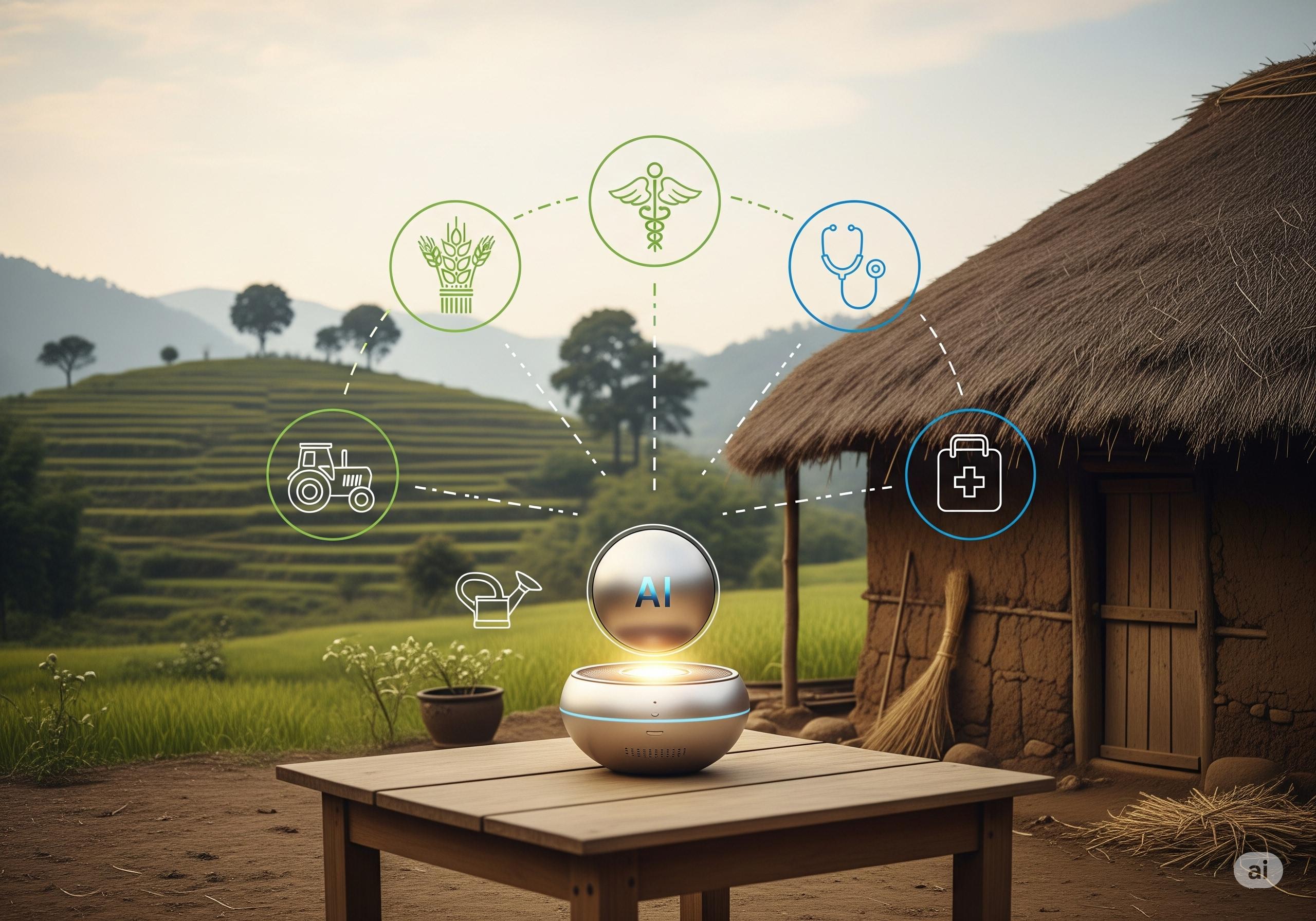
Agri-Nexus AI is a multi-agent system designed to run entirely on a single-board computer—making it a true “local agent.” At its core is the GPT-OSS-20B model, deployed locally via Ollama, which enables high-level reasoning and agentic behavior without any internet connection.
Fine-Tuning: We trained the model on a custom dataset rich in agricultural expertise (pest control, crop diagnostics) and rural health guidance (first aid, symptom triage). This specialization is what makes the agent truly useful in the field.
Hardware: We chose the Raspberry Pi 5 as our primary platform, pushing the boundaries of what’s possible on low-cost hardware. It’s compact, energy-efficient, and fits squarely into the “Weirdest Hardware” category—yet it delivers.
Local Vector Store: Using FAISS, we built a local vector database to store our fine-tuned knowledge. This enables fast, context-aware lookups entirely offline, simulating a real-world knowledge base without cloud dependency.
Interface: We developed a simple browser-based UI with voice and text input, ensuring accessibility for users regardless of literacy or technical background.
⚔️ Challenges We Faced
Our biggest challenge was optimizing GPT-OSS-20B to run smoothly on a Raspberry Pi. While the model is designed for edge deployment, we had to experiment with quantization techniques and lightweight inference frameworks to balance performance and accuracy.
Another major hurdle was curating localized datasets. Building a knowledge base that reflects the realities of agri-tech and health-tech in underserved regions required deep domain understanding and careful data sourcing.
🎓 What We Learned
This project proved that open-weight AI models can thrive at the edge. We learned that the future of AI isn’t confined to massive cloud infrastructures—it’s in purpose-built, localized systems that empower communities directly.
By combining the right model with targeted fine-tuning and smart hardware choices, we created a scalable, impactful solution that bypasses traditional infrastructure and puts intelligence where it’s needed most.
Built With
- faiss
- fastapi
- gpt-oss-20b
- olama
- python
- raspberry
- raspberry-pi

Log in or sign up for Devpost to join the conversation.