-
-
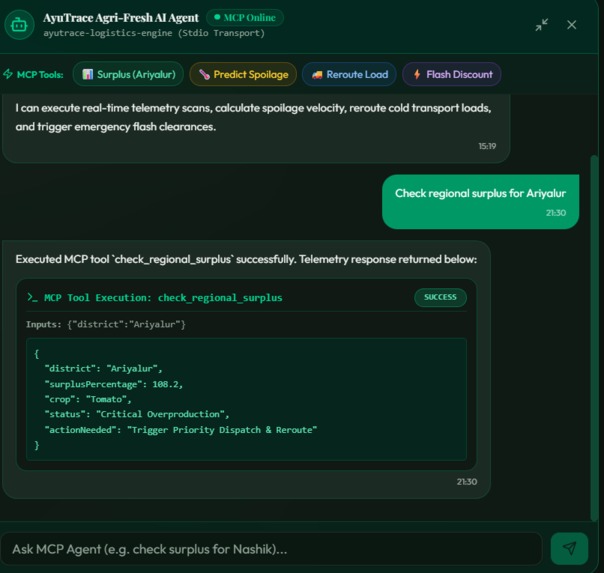
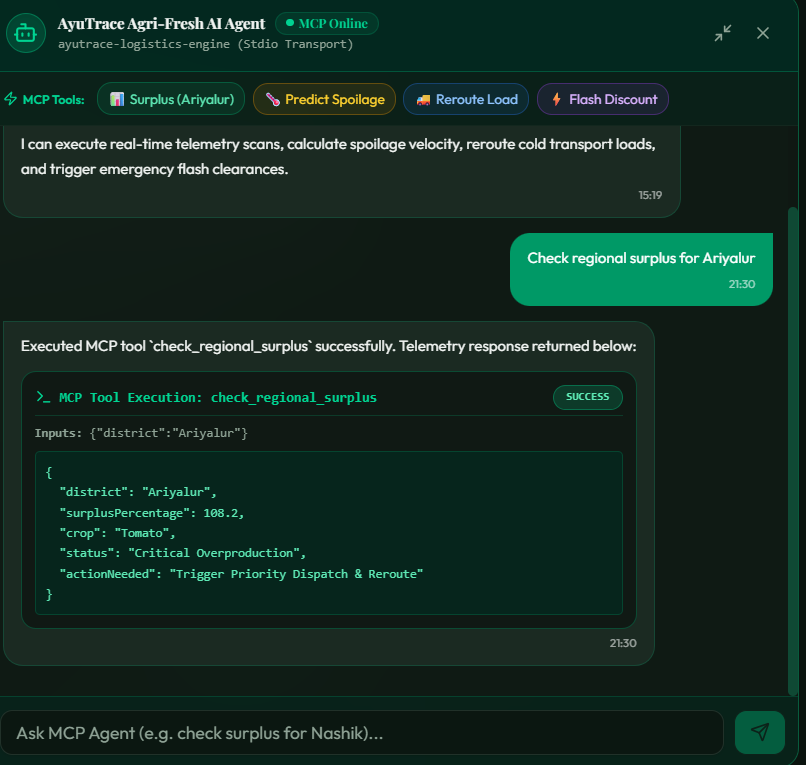
MCP AI Agent
-
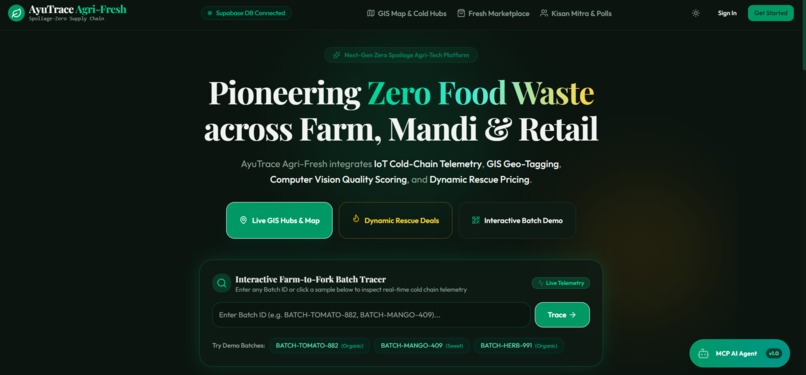
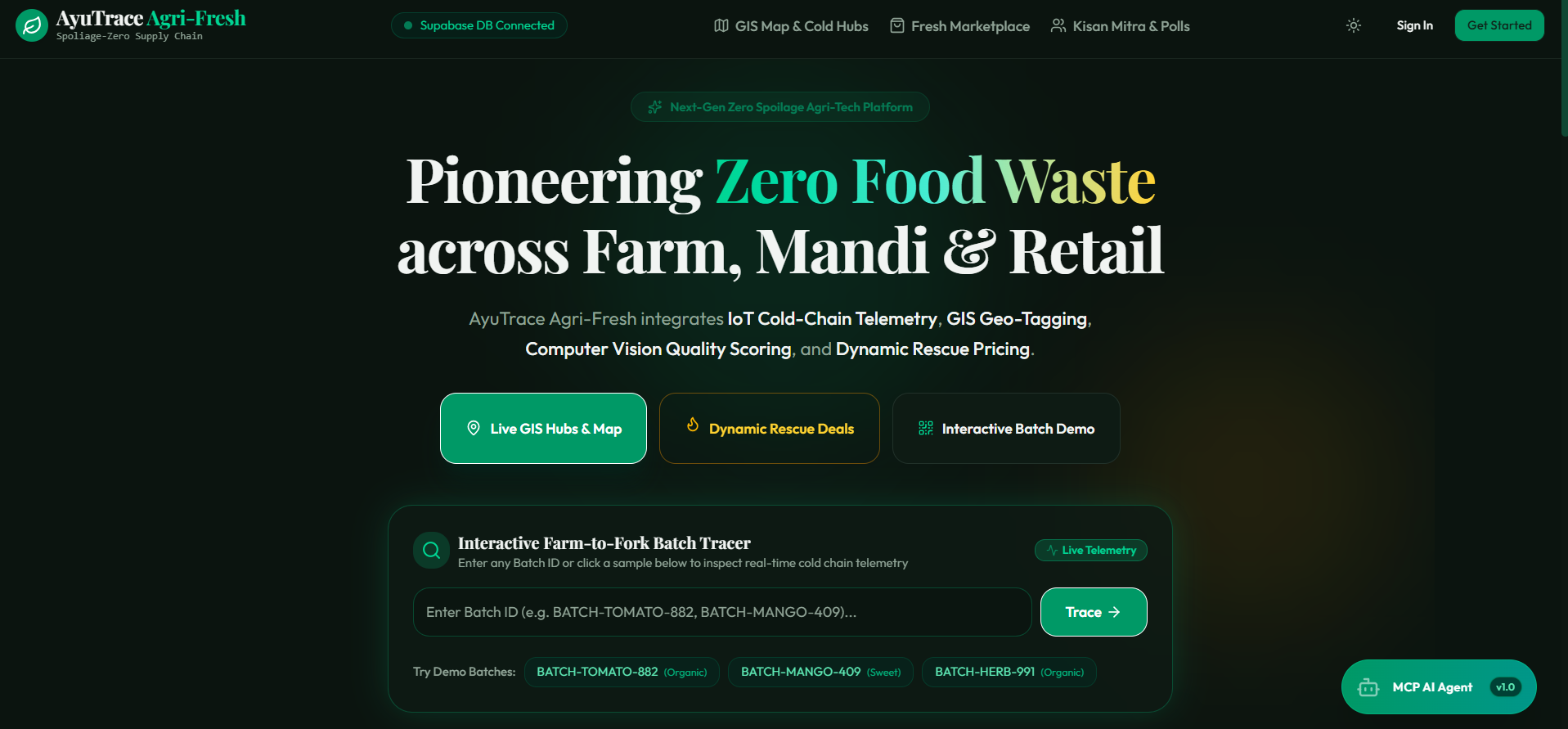
Project Home Page
Inspiration
Across agricultural supply chains, over 30–40% of fresh horticultural produce rots before ever reaching consumers. Smallholder farmers—who have minimal access to capital-intensive central cold storages—are forced into distress selling at heavily discounted rates to middlemen just to avoid total product loss. We set out to build AgriFresh to democratize cold-chain access and bridge the gap between rural farms and urban markets with a zero-spoilage model.
What it does
AgriFresh is an integrated, IoT-driven cold-chain management and marketplace platform designed to eliminate post-harvest decay:
Decentralized Solar Cold Hubs: Provides village-level, solar-powered micro-storage units at ₹1.50/kg/day to hold produce at optimal conditions.
IoT Shelf-Life Tracking: Continuously monitors temperature and humidity inside storage units and transit vehicles.
Unified Eco-Friendly Dashboard: Connects farmers, logistics operators, traders, and retail buyers on a single pane of glass, offering real-time inventory visibility, dynamic dispatch routing, and carbon-footprint metrics.
Direct B2B Marketplace: Bypasses exploitative middlemen to boost farmer profit realization by 25–35% while delivering fresher produce to urban retailers.How we built it
IoT Hardware & Edge Layer: Built sensor nodes using ESP32 microcontrollers coupled with DHT22 (temperature and humidity) sensors and GPS modules to transmit environmental telemetry over MQTT.
Predictive Shelf-Life Engine: Implemented kinetic decay models to project remaining produce life based on thermal exposure curves and auto-trigger rerouting before quality degrades
Full-Stack Dashboard: Developed responsive web and mobile interfaces using Next.js/React and Tailwind CSS for low-bandwidth environments, backed by Node.js, PostgreSQL, and Redis for low-latency state and route caching.
Challenges we ran intoIntermittent Rural Connectivity: Designing an edge-caching protocol so IoT nodes continue logging telemetry offline and sync seamlessly when network signals resume.
Energy Management Optimization: Balancing compressor cooling duty cycles with solar panel outputs and battery storage to keep micro-hub operating costs sustainable.
Multi-Stakeholder UX: Building a single system intuitive enough for first-time digital users (smallholders) while delivering detailed analytics for commercial B2B buyers.
Accomplishments that we're proud of Designed a functional, solar-compatible cold hub architecture that drops operational storage costs to an affordable micro-tier. Created an algorithmic dynamic dispatch workflow that proactively flags temperature deviations and reroutes shipments to closer buyers. Engineered a lightweight, eco- friendly dashboard tracking both financial throughput and carbon-offset metrics in real time. What we learnedDecentralizing infrastructure is far more effective for smallholders than expanding centralized mega-warehouses. Putting cold storage at the village level directly levels the economic playing field for farmers, turning spoilage risks into sustainable bargaining leverage.
What's next for Agri-Fresh
Computer Vision Quality Grading: Integrating smartphone-based computer vision models to assess crop ripeness and physical defects directly at hub drop-off.
FPO Pilot Expansion: Deploying 5 initial micro-cold hubs across high-density horticultural clusters to validate throughput and unit economics with registered Farmer Producer Organizations.
Smart Contract Settlements: Implementing automated escrow payments on milestone delivery to ensure instant, transparent cash-outs for farmers.
Built With
- antigravity
- css
- helasyn
- html
- javascript
- python
- react-native
- sql


Log in or sign up for Devpost to join the conversation.