-
-
download report
-
rice plant disease
Inspiration
Smallholder farmers in developing regions often work under extreme uncertainty—climate variability, crop diseases, limited access to expert advice, and unstable market prices. While modern AI tools exist, most of them are not designed for the real conditions farmers face, such as low connectivity, low literacy, and limited access to digital infrastructure.
I was inspired to build Agridoctor: AI-Nexus to bridge this gap. The idea was to create a single, intelligent assistant that not only helps farmers diagnose crop problems, but also supports them in making climate-smart and financially informed decisions. This project reflects the spirit of “vibe coding”—combining creativity, empathy, and rapid experimentation to build technology that feels human-centered and impactful.
🛠 What It Does
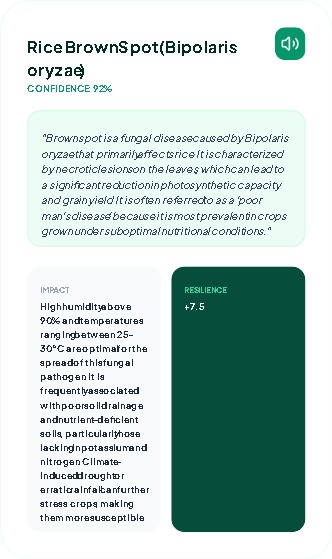
Agridoctor: AI-Nexus is an all-in-one, AI-powered, climate-smart farming assistant designed to help smallholder farmers improve productivity, resilience, and income.
It provides:
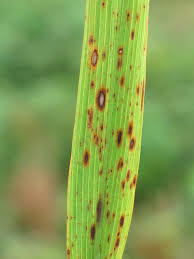
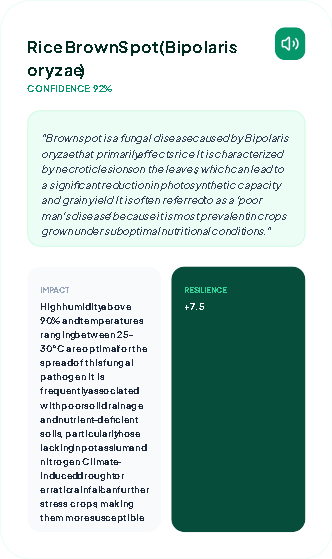
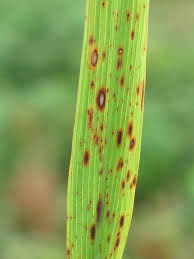
AI-powered crop diagnosis and advisory based on farmer-reported symptoms
Climate resilience scoring to guide sustainable crop choices
Market price intelligence with predictive sell/hold recommendations
Smart price alerts with automated email notifications
Voice-based accessibility (Text-to-Speech) for low-literacy and hands-free use
Offline-first support for low-connectivity rural environments
Downloadable reports for sharing with cooperatives and local agricultural offices
🏗 How I Built It
The project was built as a modern, modular web application with a strong focus on scalability, accessibility, and real-world usability.
The frontend was developed using React and TypeScript to create a clean, responsive interface that works smoothly across devices. The backend integrates the Google Gemini API to power the AI crop diagnosis, climate-aware advisory, and market intelligence logic.
For accessibility, Gemini Text-to-Speech (TTS) was implemented to convert AI responses into voice output, enabling farmers to receive guidance even in hands-free or low-literacy scenarios.
An offline-first architecture was achieved using local storage caching, allowing farmers to revisit their last diagnosis and market insights even when internet access is unavailable. Automated email APIs were used to deliver real-time price alerts and advisory notifications directly to farmers’ inboxes.
🚧 Challenges I Faced
One of the main challenges was balancing AI accuracy with fast response times, especially when integrating multiple AI-driven features like diagnosis, sustainability scoring, and market recommendations into a single workflow.
Designing for rural constraints was another major challenge. I had to rethink traditional “always-online” assumptions and build an experience that still felt useful in low-connectivity environments.
Ensuring that complex data—such as climate impact scores and market trends—was presented in a simple, understandable way for non-technical users also required several UI and UX iterations.
📚 What I Learned
This project helped me gain deeper experience in:
Building AI-powered full-stack applications
Designing for accessibility and low-connectivity environments
Integrating financial and sustainability insights into technical systems
Structuring modular architectures for future scalability
It also reinforced the importance of building technology that is not just innovative, but truly usable and meaningful for the people it is meant to serve.
🚀 What’s Next
Future development for Agridoctor: AI-Nexus includes:
Image-based crop disease detection using computer vision
Local language voice support (Nepali and other regional languages)
Government mandi API integration for verified real-time market prices
Weather forecasting and crop planning AI
A mobile Android app optimized for offline-first rural deployment
The long-term vision is to transform Agridoctor into a production-ready digital agriculture platform that empowers farmers with climate-smart, AI-driven decision support.
Built With
- alerts)
- api
- automated
- caching)
- charts
- deployment
- gemini
- local
- market
- offline
- price
- react
- storage
- text-to-speech
- trend
- tts)
- typescript
- visualization
- web

Log in or sign up for Devpost to join the conversation.